
A soapy aftertaste on dishes from a Bosch dishwasher almost always comes down to detergent amount, rinse aid, or water quality — rarely a genuine mechanical fault — which means most cases resolve with a settings or habit adjustment rather than a repair.
Below are 10 causes to check, starting with the most common before moving to less frequent but still plausible explanations.
1. Using Too Much Detergent
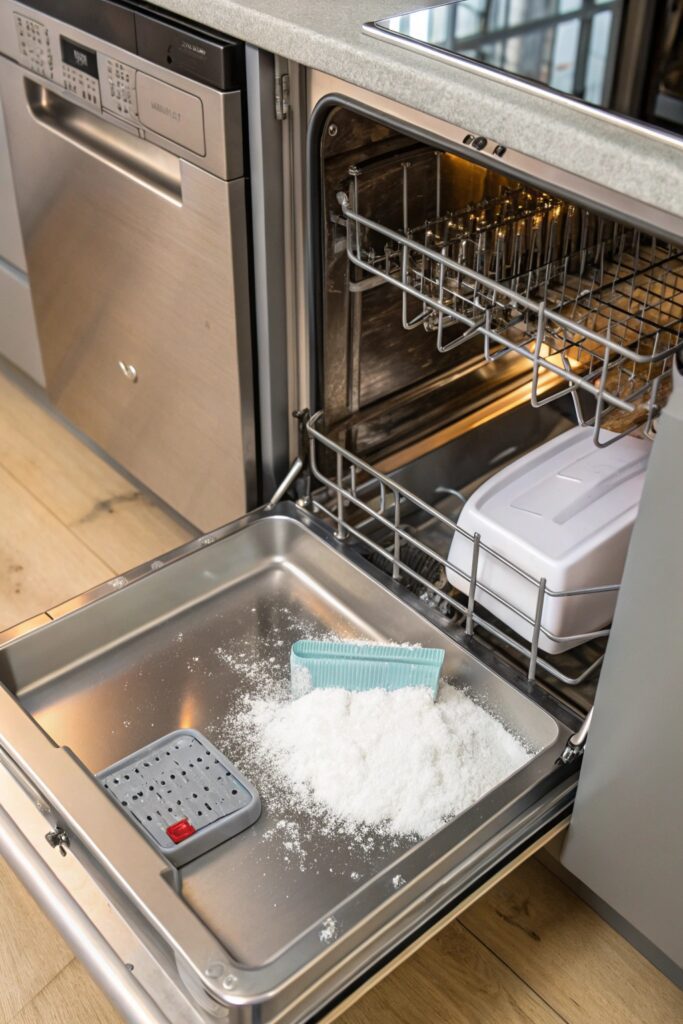
Modern dishwashers, including Bosch models, are designed for considerably less detergent than many people assume, especially with concentrated modern formulas — using a full detergent compartment when only a partial fill is needed leaves excess residue that doesn’t fully rinse away.
Check your specific detergent’s recommended amount (often less than what the dispenser compartment can hold) and measure rather than filling the compartment to capacity by default.
2. Using the Wrong Detergent Type
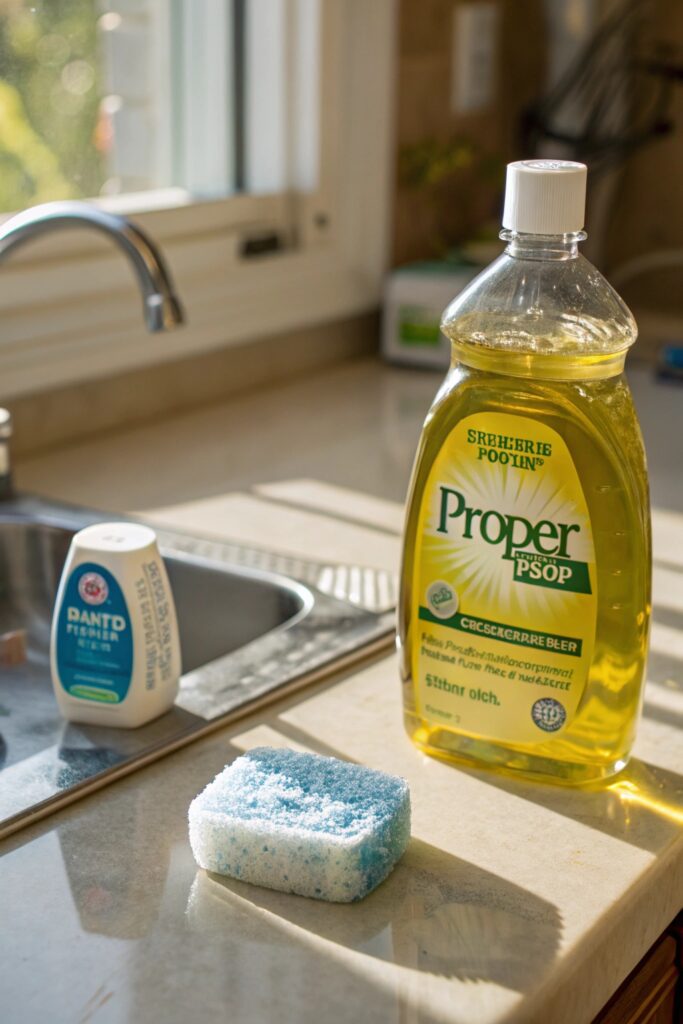
Detergent formulated for hand-washing or a different appliance type produces excess suds and residue in a dishwasher, since dishwasher-specific formulas are chemically different and designed to rinse cleanly in a way hand-soap formulas aren’t.
Confirm you’re using a detergent specifically labeled for dishwasher use, and if recently switched brands or formulas, that’s worth testing as the specific cause if the soap-taste issue started around the same time.
3. Skipping Rinse Aid Entirely
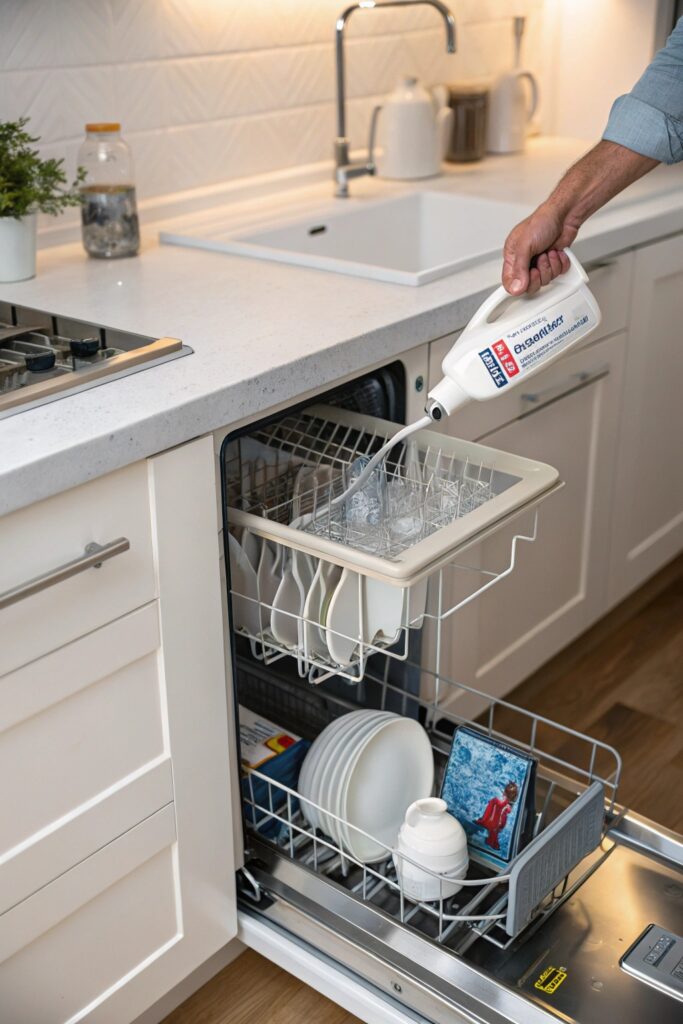
Rinse aid helps water sheet off dishes cleanly rather than forming droplets that can leave mineral and detergent residue behind as they dry — running a Bosch dishwasher without it is a common and often overlooked contributor to a soapy aftertaste.
Fill the rinse aid dispenser (usually a separate small compartment near the detergent dispenser) and confirm it’s dispensing properly, since a dispenser that’s clogged or set to the lowest release setting won’t provide much benefit even when filled.
4. Overloading the Dishwasher Rack
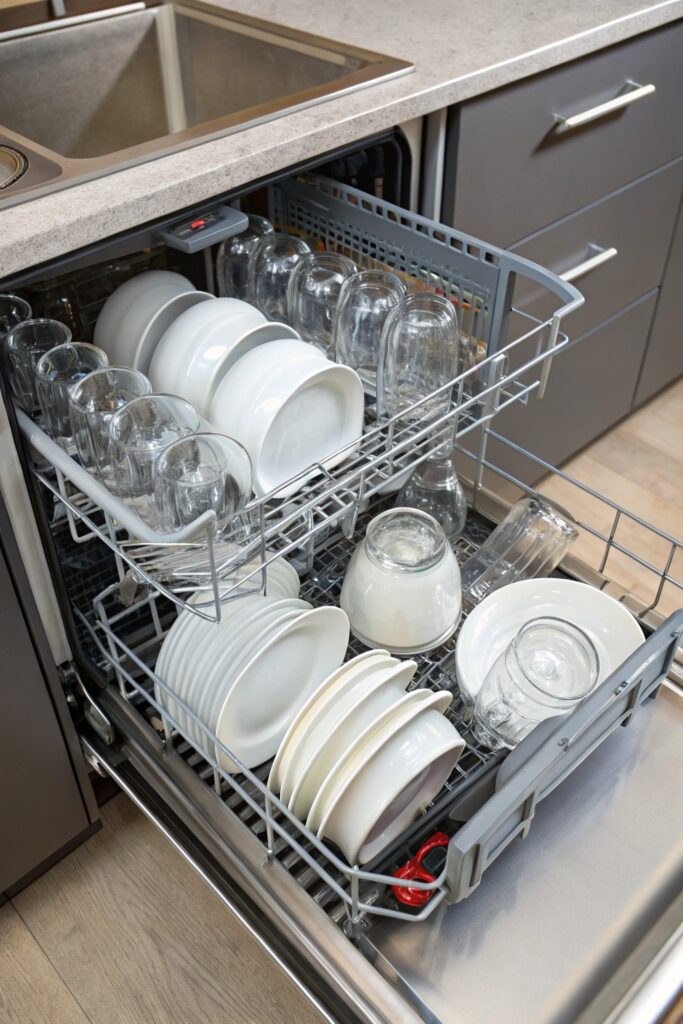
Packing dishes too tightly blocks water and detergent from reaching and then properly rinsing every surface, which can leave detergent residue on inadequately rinsed items even when the machine and detergent amount are both otherwise correct.
Leave adequate spacing between dishes, particularly ensuring nothing blocks the spray arms’ rotation, and avoid nesting bowls or plates too closely together.
5. Using Hard Water Without Proper Settings
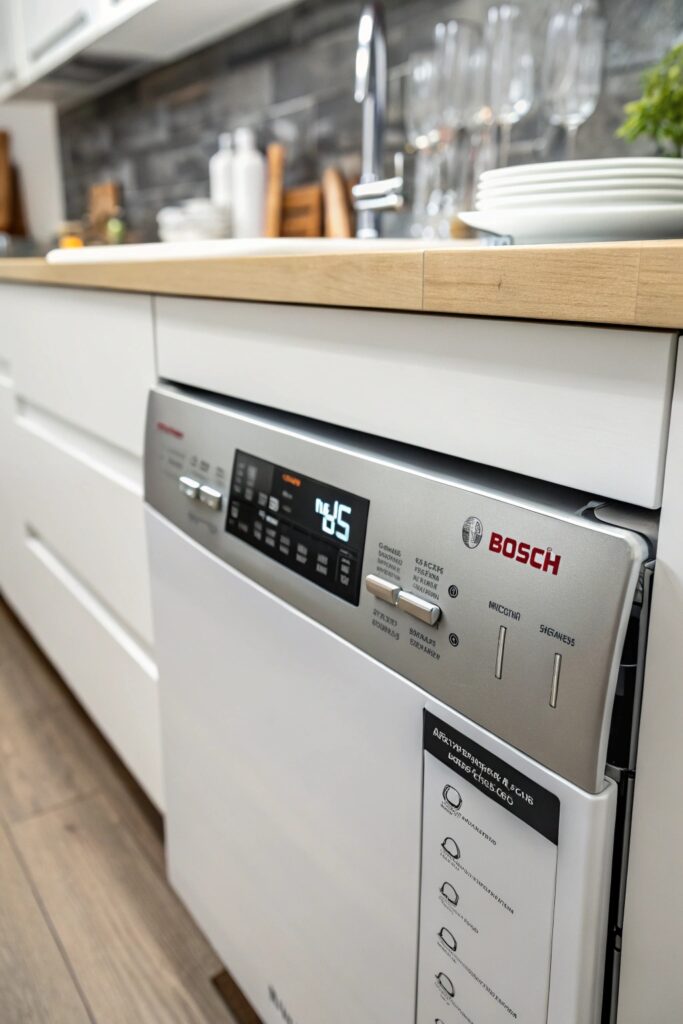
Hard water interferes with detergent’s ability to rinse cleanly, often leaving a filmy residue that can taste soapy even when the correct detergent amount was used — many Bosch models have an adjustable water hardness setting specifically to compensate for this.
Check your local water hardness (often available from your water utility) and adjust your dishwasher’s hardness setting accordingly, typically found in the machine’s settings menu or initial setup configuration.
6. Low Water Temperature

Detergent needs adequately hot water to fully activate and then rinse away — water that’s too cool (either from your home’s water heater setting or from running the dishwasher immediately after other hot water use elsewhere in the house) can leave detergent incompletely dissolved and rinsed.
Run the kitchen faucet until the water runs hot before starting the dishwasher, which ensures the first fill cycle starts with adequately heated water rather than initially cool water from the pipes.
7. Clogged Spray Arms
Mineral deposits or food debris blocking the small holes in the spray arms reduce water pressure and coverage during the rinse cycle, which can leave detergent residue on dishes even when everything else about the cycle is set correctly.
Remove the spray arms (usually a simple twist-off mechanism) and clear any visible blockages in the holes with a toothpick or thin wire, then run a rinse-only cycle to confirm improved water flow.
8. Using an Off-Brand or Expired Detergent
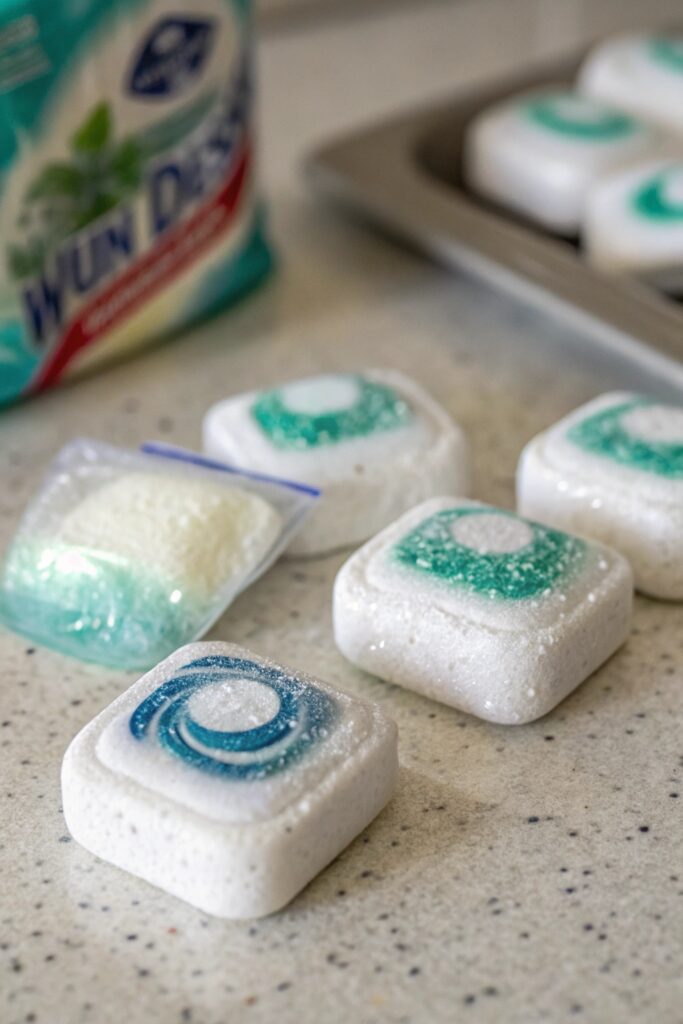
Detergent formulations vary considerably between brands, and generic or expired detergent can have degraded surfactants that don’t rinse as cleanly as fresh, name-brand formulas specifically designed and tested for consistent rinsing performance.
Check the detergent’s expiration date if using an older product, and consider testing a different brand temporarily to see if the soap-taste issue resolves, which helps isolate detergent quality as the specific cause.
9. Running an Incomplete or Interrupted Cycle
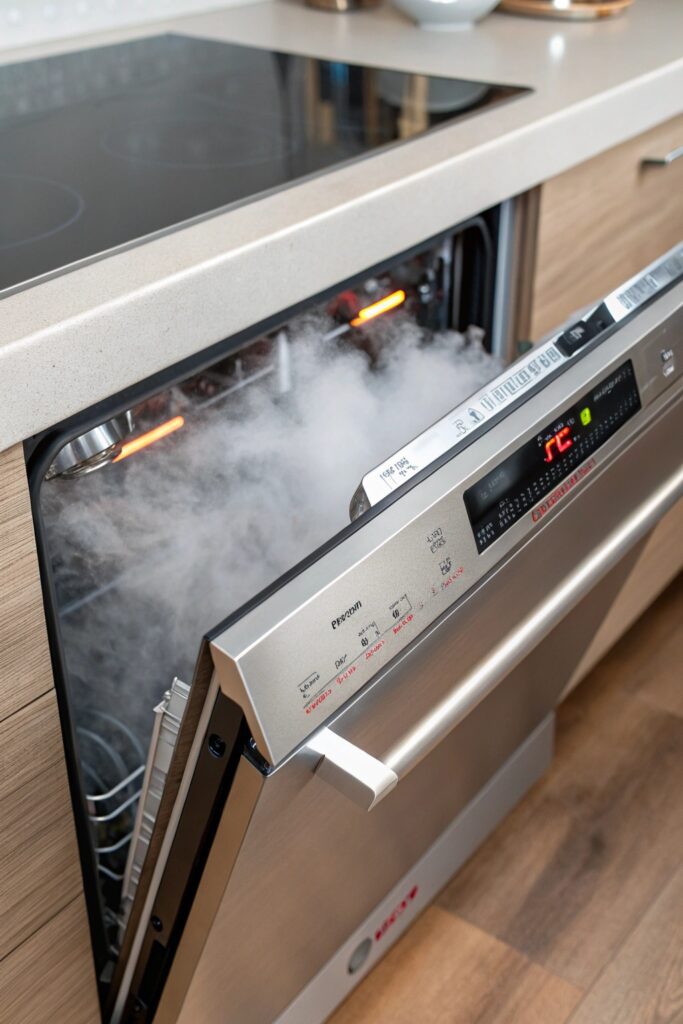
If a cycle is stopped early (a power interruption, accidentally opening the door, or manually canceling) before the full rinse phase completes, dishes can be left with detergent residue that a completed cycle would have fully rinsed away.
Avoid opening the dishwasher door mid-cycle unless necessary, and if a cycle was interrupted, rerun a full cycle (even with an already-clean-seeming load) rather than assuming the interrupted one finished adequately.
10. Dirty Filter Causing Residue Recirculation
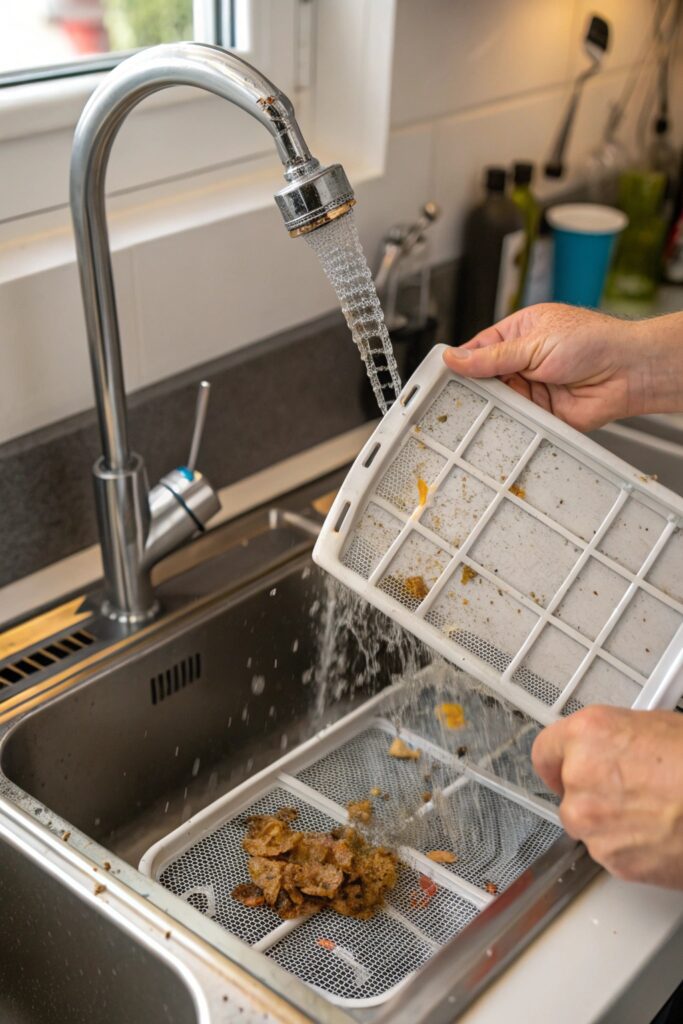
A dirty or clogged filter allows food debris and detergent residue to recirculate through the wash water rather than being properly filtered out, which can redeposit residue onto dishes throughout the cycle rather than rinsing it away.
Most Bosch models have a removable filter at the bottom of the tub — check your manual for the specific removal process, and clean it under running water at least monthly for regular use.
Quick Checklist Before Your Next Wash
Run through detergent amount, rinse aid level, and water hardness setting together rather than testing one variable at a time, since a soapy taste is often the combined result of two mild issues (slightly too much detergent plus empty rinse aid, for instance) rather than one single major cause.
If dishes still taste soapy after adjusting all of the above, run one full cycle completely empty with just a dishwasher-safe cleaning tablet — this clears any accumulated residue throughout the system and gives you a clean baseline to test your next actual load against.
Wrapping It Up
Detergent amount and rinse aid are worth checking first, since together they account for the large majority of soap-taste complaints and require no tools or disassembly to address. If those don’t resolve it, working through water hardness settings and spray arm cleanliness next covers most of the remaining common causes.