
A Bosch dishwasher door that won’t stay open at its intended angle is almost always a spring or hinge issue, though a few less common causes are worth ruling out if a straightforward spring replacement doesn’t fully resolve the problem.
Below are 10 causes to check, starting with the most common before moving to less frequent but still plausible explanations.
1. Worn-Out Door Springs
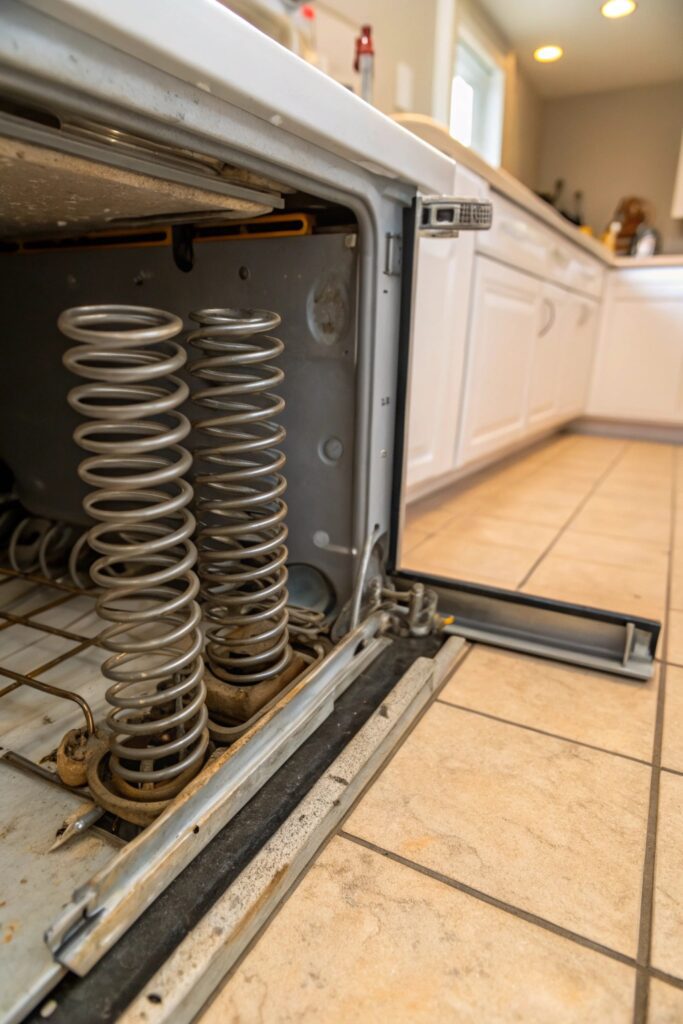
The two coiled springs on either side of the door, which counterbalance its weight and hold it open at a set angle, gradually lose tension over years of regular use — this is the single most common cause of a Bosch dishwasher door that slowly droops or falls open past horizontal.
Replacement spring kits ($15-30 for a pair) are a moderately involved DIY repair — the springs sit under tension during installation, so following the specific model’s service instructions closely matters for safety, not just for correct function.
2. Broken or Stretched Door Cables
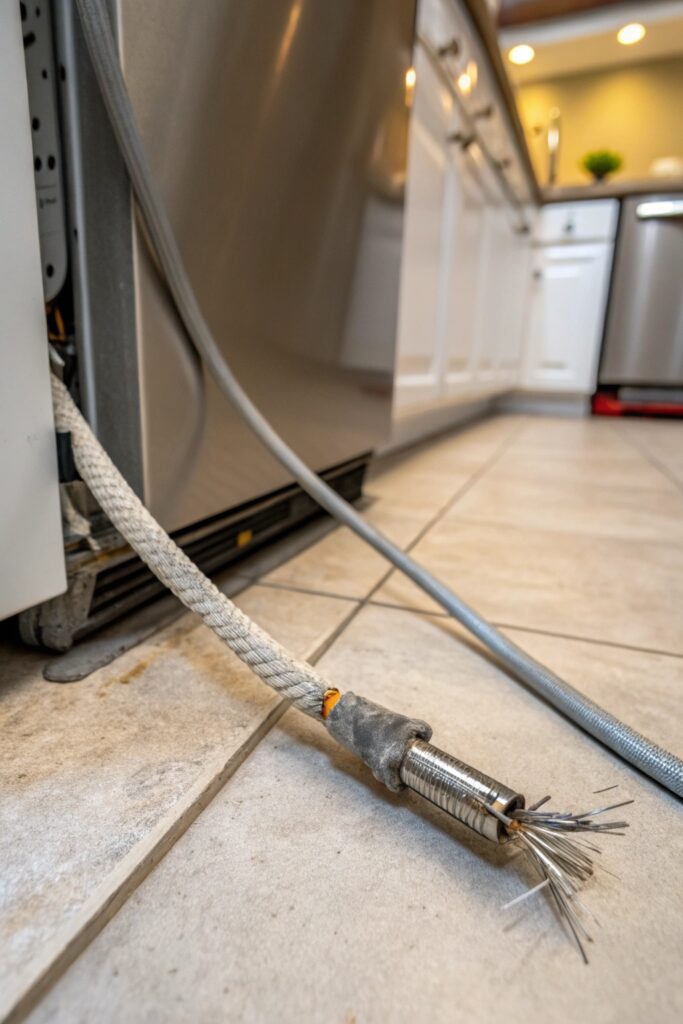
Some Bosch models use cables in addition to or instead of springs to control door movement, and these cables can fray, stretch, or snap entirely with age, causing the door to swing open uncontrolled or fail to hold its position.
Inspect the cables (visible along the sides of the door frame when the door is open) for visible fraying or slack — a cable that’s clearly stretched longer than its counterpart on the opposite side is a strong sign it needs replacement.
3. Loose or Damaged Hinges
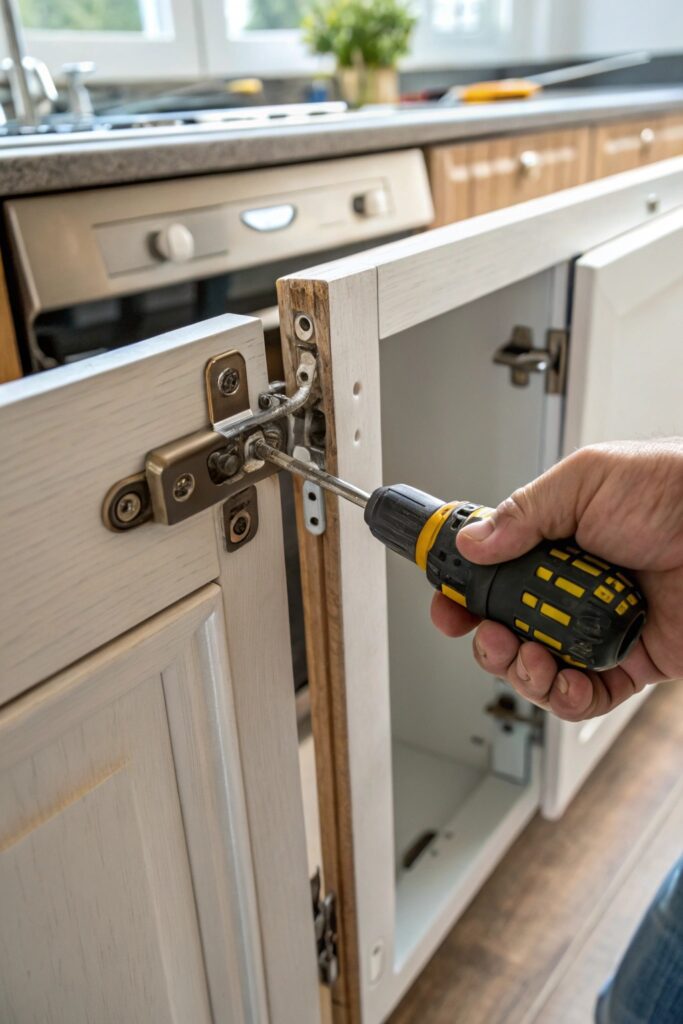
Hinges that have loosened from repeated use, or that have developed wear in the pivot point, can allow the door to shift out of its intended resting angle even when the springs themselves are still functioning correctly.
Check for any visible play or wobble when gently moving the open door side to side — genuine hinge wear (versus a spring issue) tends to show up as looseness in the pivot itself, not just a gradual drooping of the door’s angle.
4. Misaligned Door After Reinstallation
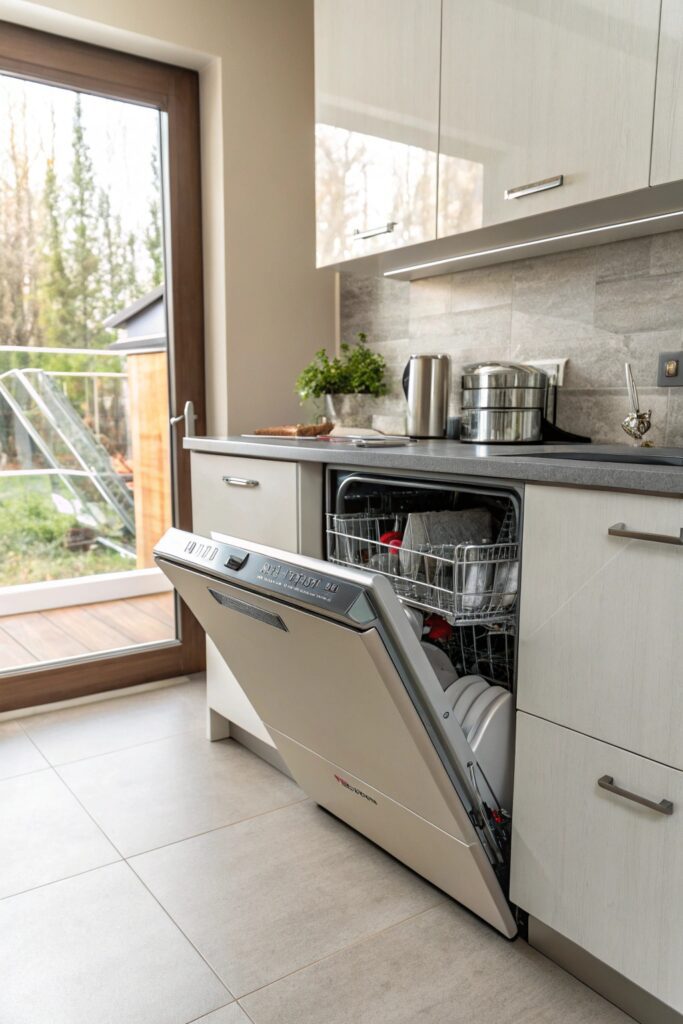
If the dishwasher was recently uninstalled and reinstalled (during a kitchen renovation, floor replacement, or countertop work), the door mechanism can be thrown out of alignment even without any actual part failure, simply from the unit being moved or the door removed and reattached.
Check the door’s alignment against the cabinet opening and confirm all mounting screws are properly tightened — a door that’s slightly askew can bind or fail to hold its resting angle even with fully functional springs and hinges underneath.
5. Worn Spring Tension Adjustment
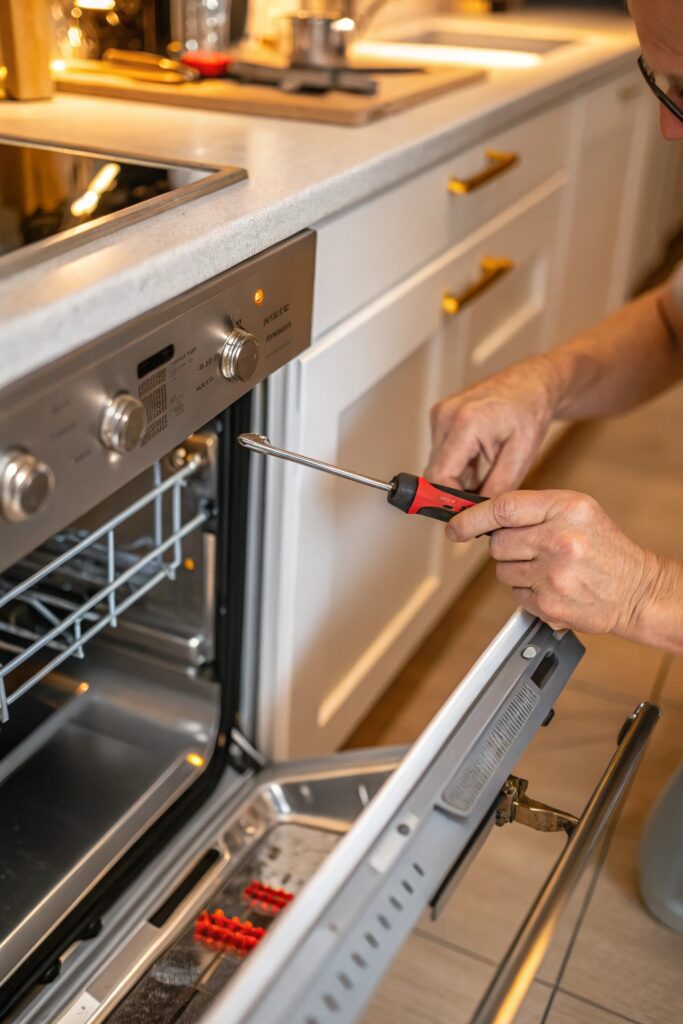
Many Bosch models have an adjustable tension screw or mechanism specifically for fine-tuning how firmly the door holds its open position, and this adjustment can loosen gradually over time from the door’s regular opening and closing motion.
Check your specific model’s manual for the tension adjustment location (often near the base of the door hinge) before assuming a full spring replacement is necessary — a simple tightening adjustment resolves this cause without needing any new parts.
6. Heavy Items Placed on the Door
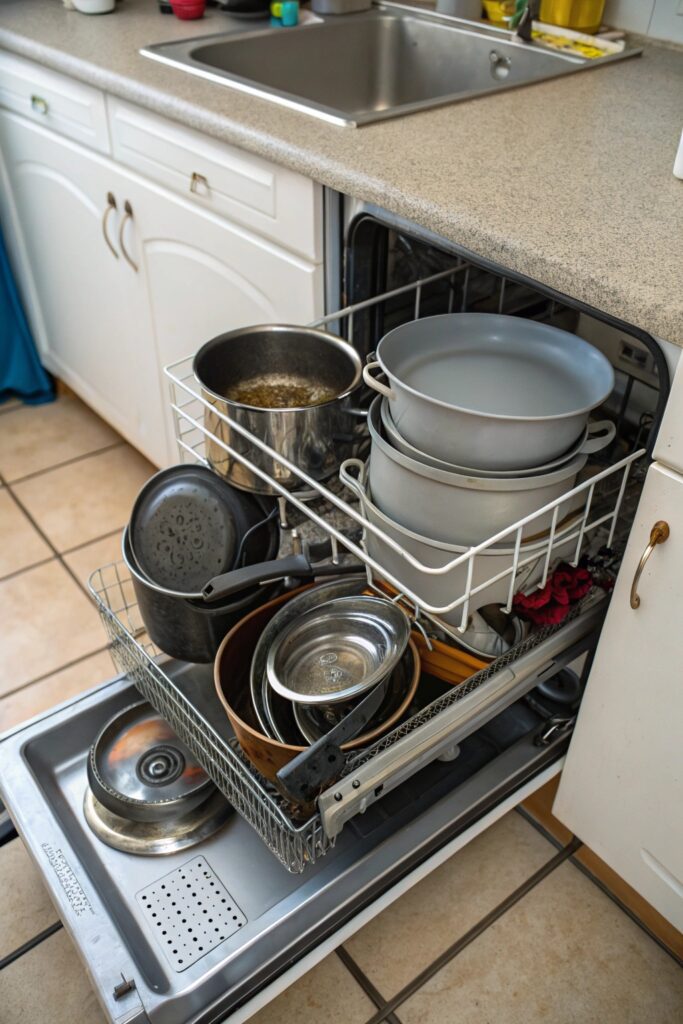
Regularly using the open dishwasher door as a step stool, or setting heavy pots and cookware on it while loading dishes, puts repeated stress on the spring and hinge mechanism beyond what it’s designed to handle, accelerating wear considerably faster than normal use alone.
If this has been a regular habit in your household, it’s worth changing going forward even after any repair, since it will simply cause the same wear pattern to recur on newly replaced components.
7. Door Springs Installed Incorrectly
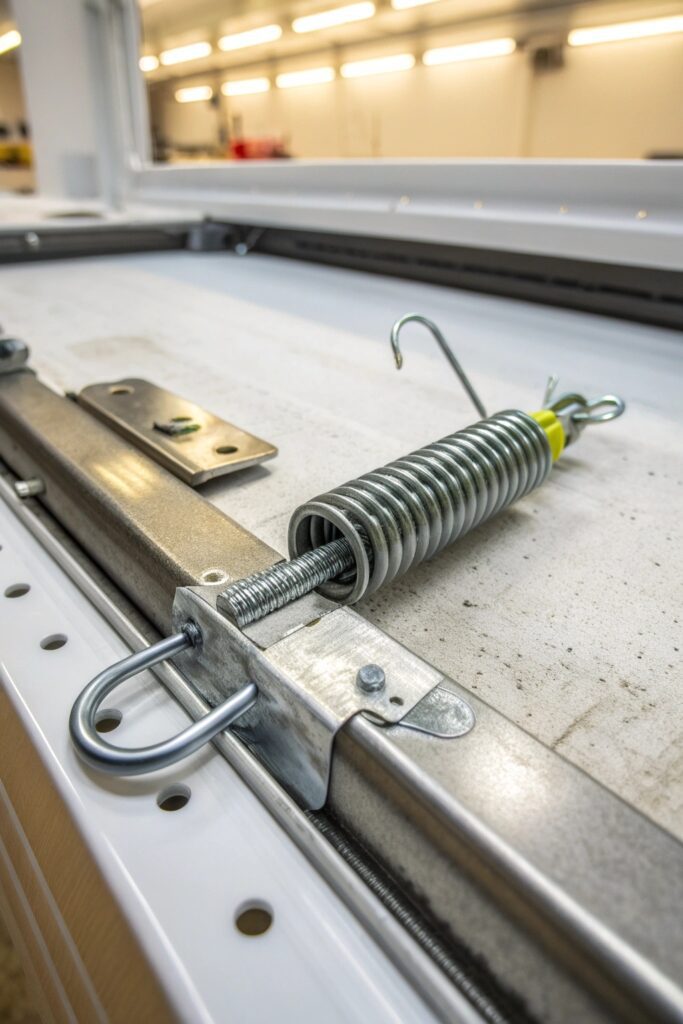
If springs were recently replaced (by you or a previous repair) and the door still won’t hold open properly, incorrect installation — springs swapped left-to-right, or not fully seated in their mounting brackets — is a common and easily overlooked cause.
Double-check that any recently installed springs match the orientation shown in your specific model’s service diagram, since left and right springs are sometimes not interchangeable despite looking identical.
8. Worn-Out Door Balance Mechanism
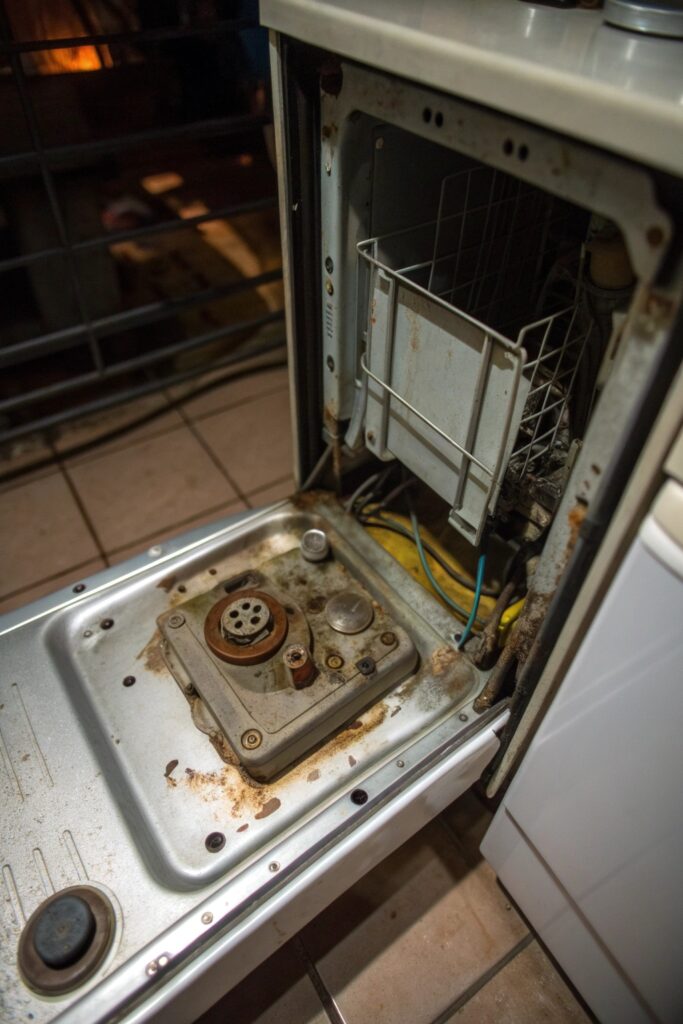
Beyond the springs themselves, some models have a separate balance mechanism — a system of small pulleys or a counterweight — that can wear out independently and cause the same door-drooping symptom even with functioning springs.
This is a less common cause but worth checking if spring replacement alone doesn’t resolve the issue, since it requires a different specific part rather than another round of spring replacement.
9. General Wear from an Older Unit
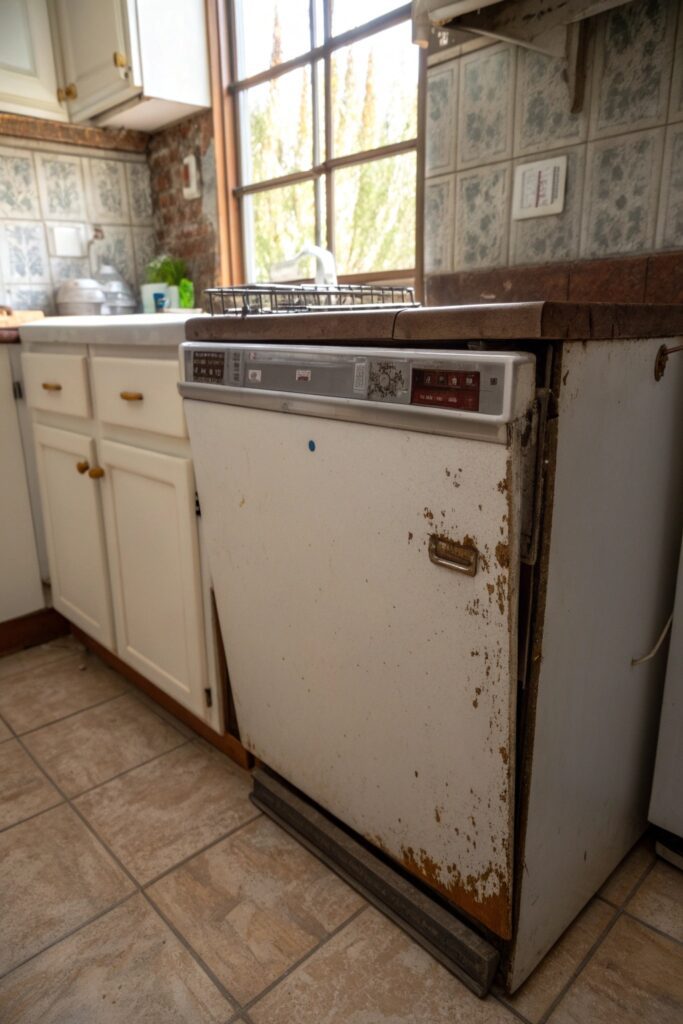
Dishwashers beyond 10-12 years old accumulate wear across multiple door-related components simultaneously, and sometimes a persistently problematic door is the combined result of several minor issues rather than one single clear cause worth chasing individually.
If repair costs for diagnosing and fixing an older unit’s door mechanism start approaching a significant fraction of a new dishwasher’s cost, replacement is often the more practical choice rather than continuing to troubleshoot an aging unit part by part.
10. Manufacturing Defect or Recall Issue
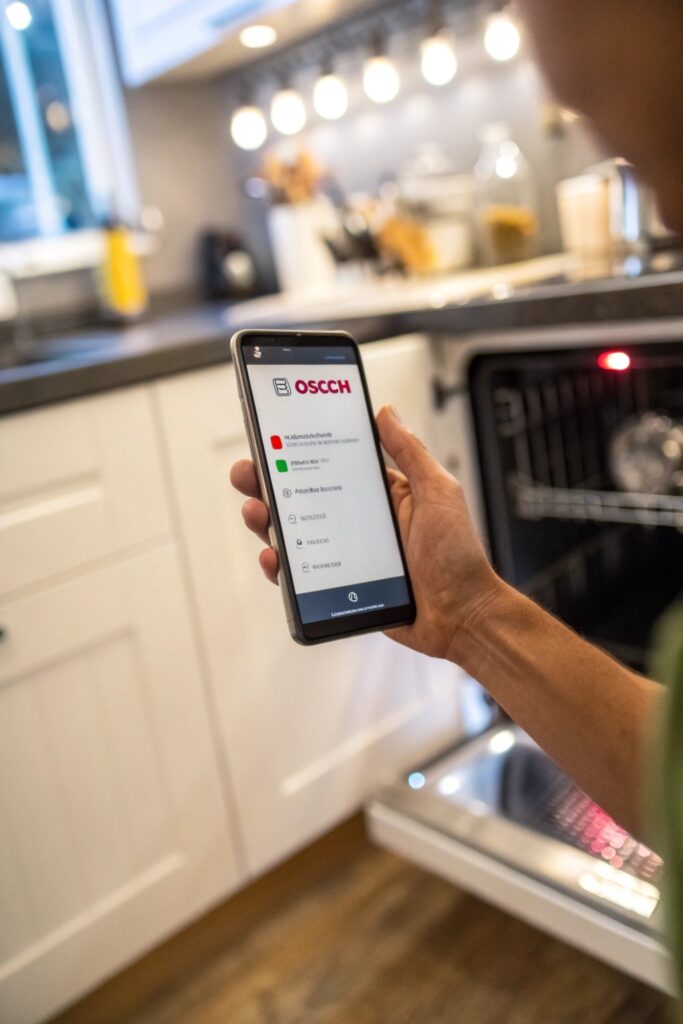
In rare cases, certain Bosch model years or production batches have had documented door mechanism issues addressed through manufacturer recalls or extended warranty programs — worth checking directly with Bosch if the door issue developed unusually early in the unit’s life.
Have your model and serial number ready when contacting Bosch support, since recall and warranty coverage is checked against these specific identifiers rather than general model line information.
Final Thoughts
Worn springs account for the large majority of cases, and a replacement kit is a moderately involved but genuinely DIY-feasible repair for most comfortable with basic appliance work. If a fresh spring replacement doesn’t resolve the issue, check installation orientation and hinge condition next before assuming a more unusual cause is responsible.