
The duvet-versus-comforter question comes up constantly for first-time dorm shoppers, and the practical difference matters more for dorm living specifically than it does at home, given communal laundry facilities and limited storage.
What Is a Comforter?
A comforter is a single quilted piece — the outer fabric and the fill are sewn together as one unit, meant to be used as-is or with a decorative cover on top. Washing a comforter means washing the entire thing, fill included, which usually requires an oversized capacity washer and dryer — most dorm laundry rooms have machines sized for this, but check before assuming.
What Is a Duvet?
A duvet refers to just the fill insert (down, down-alternative, or synthetic), used inside a separate removable cover — similar to how a pillow insert works inside a pillowcase. The cover is what you wash regularly (it fits in a standard machine easily), while the insert itself needs washing far less often, which is a genuine practical advantage in a dorm setting.
Which One Should You Choose?
Duvets make more sense for dorm living specifically because the cover alone fits in standard laundry machines and can be swapped for a different look without buying new bedding — genuinely useful if you want to change your room’s aesthetic partway through the year. Comforters are simpler (no separate cover to manage or lose) and are usually the cheaper upfront option, which matters if budget is the primary constraint.
Below are 10 specific bedding options across both categories, with real price ranges to help you shop with a clear budget in mind.
1. A Classic White Duvet Cover Set

A white or off-white duvet cover ($30-50 for a twin XL set) is the most versatile base for dorm bedding, since it works with any accent color scheme and shows less visible wear from repeated washing than darker colors, which fade unevenly over time.
2. A Reversible Comforter Set
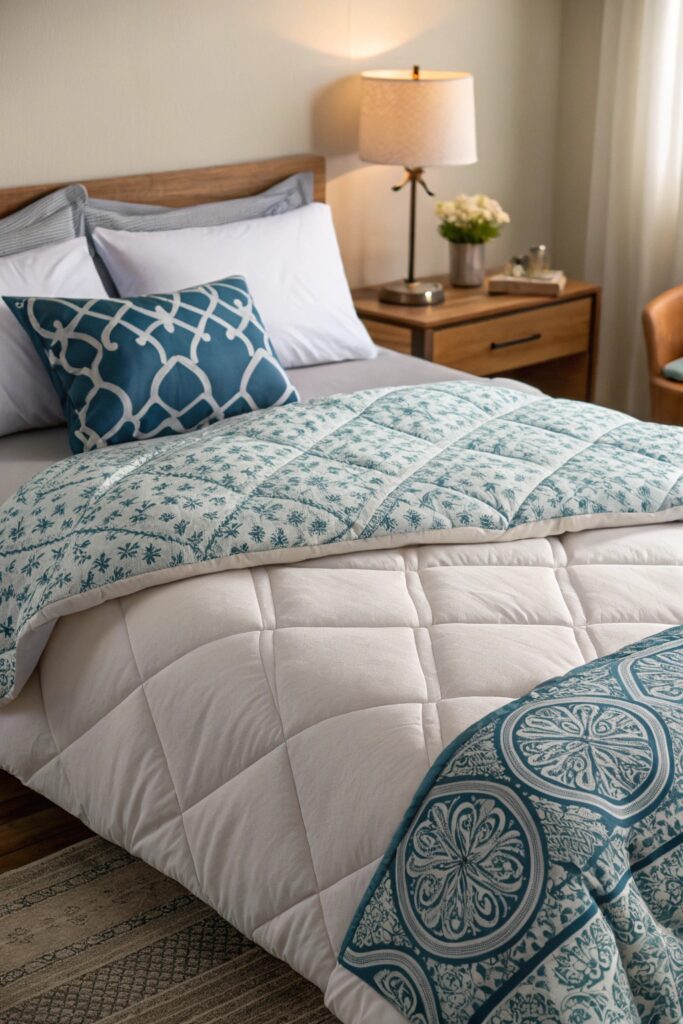
A comforter with two different colors or patterns on each side ($35-60) functions as two bedding looks in one purchase, useful for dorm rooms where storage for a second full comforter isn’t realistic.
3. A Chunky Knit Comforter
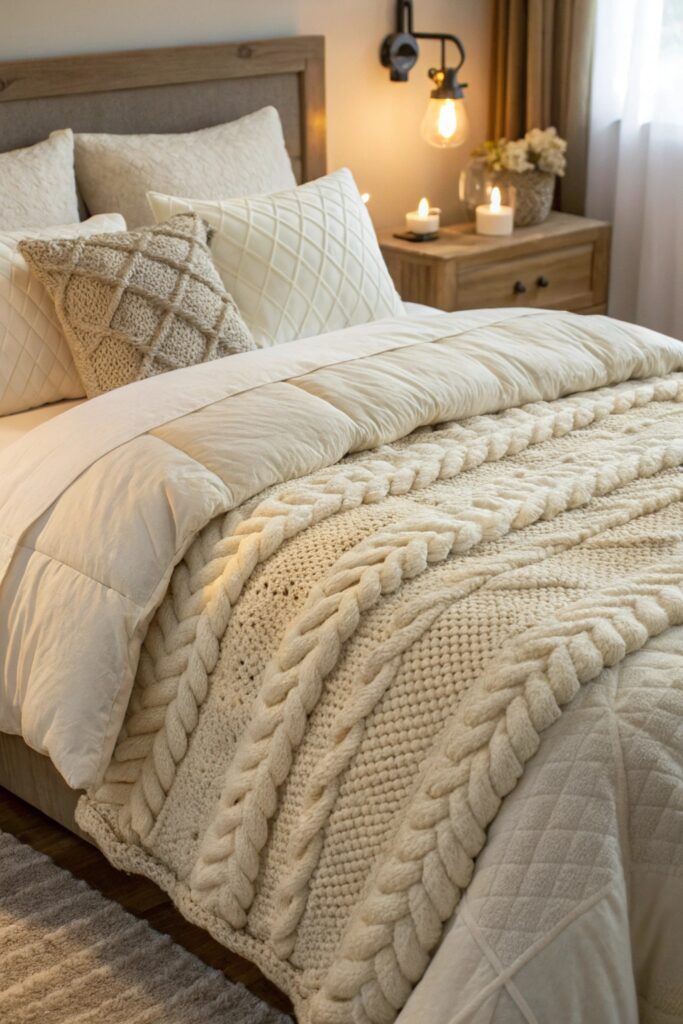
A textured knit comforter ($50-80) adds visual warmth and dimension that a flat quilted comforter doesn’t, though the looser weave traps more dust and requires more frequent washing than a tightly woven alternative — worth factoring in if you have allergies.
4. A Microfiber Duvet Cover
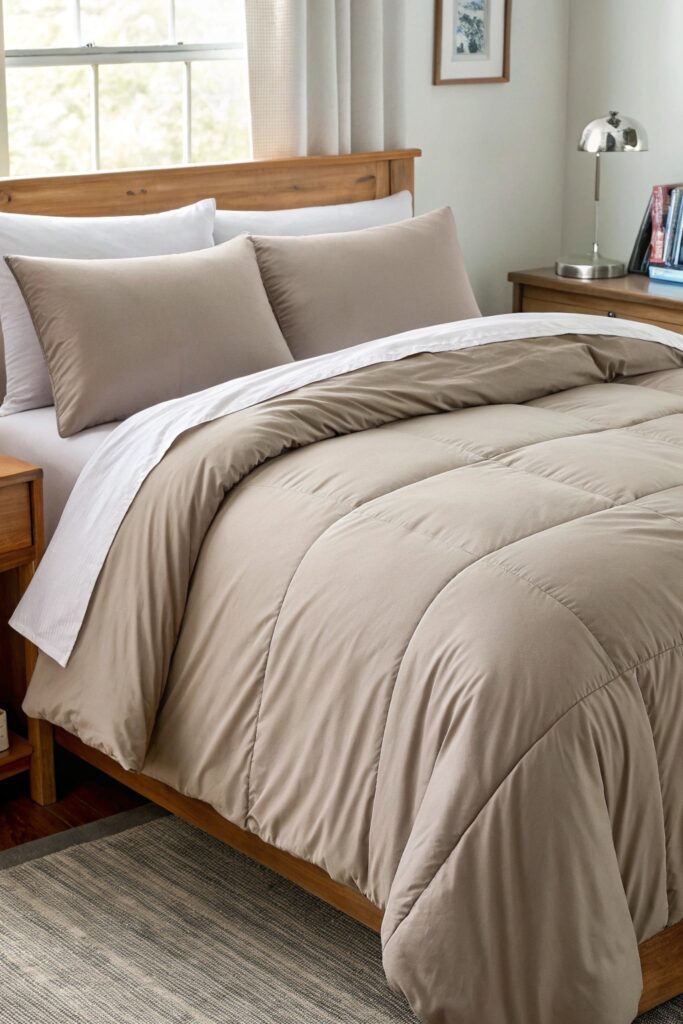
Microfiber duvet covers ($20-35) are among the most budget-friendly options and hold up well to frequent washing without the shrinkage or wrinkling issues natural fibers can show, though they don’t breathe as well as cotton in warmer dorm rooms without air conditioning.
5. A Linen-Blend Duvet Cover

A linen-cotton blend duvet cover ($40-70) breathes better than pure microfiber, which matters in dorms without air conditioning specifically, though it wrinkles more visibly and needs a slightly longer dry cycle.
6. A Bold Patterned Comforter

A comforter in a bold print or color ($40-70) works as the room’s main visual statement, letting everything else (curtains, rug, wall decor) stay simpler and more neutral by comparison, rather than competing for attention.
7. A Cooling Duvet Insert

A duvet insert specifically designed with cooling or moisture-wicking materials ($40-70) is worth the extra cost for dorms without air conditioning or for anyone who tends to sleep hot, since standard down-alternative inserts trap more heat.
8. A Velvet-Trimmed Comforter Set

A comforter set with velvet piping or trim ($45-75) adds a more elevated, less obviously dorm-issue look for relatively little extra cost over a plain comforter, since the trim detail alone changes how finished the whole set reads.
9. A Lightweight Summer-Weight Duvet
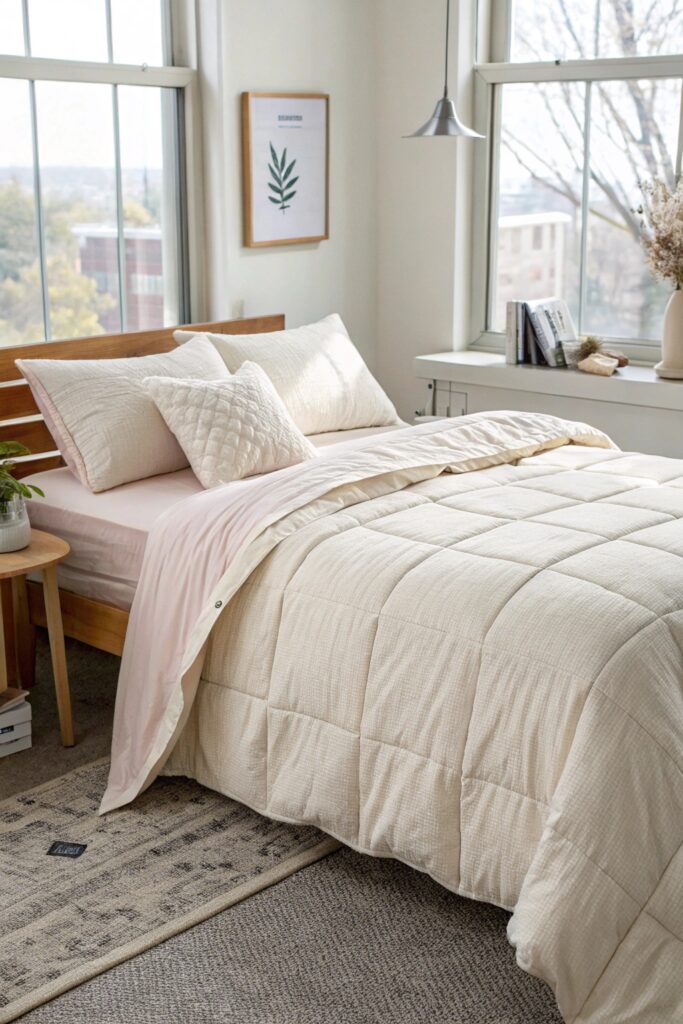
A lighter-fill duvet insert ($25-45) suits warmer climates or move-in during late summer, and swapping just the insert (keeping the same cover) for a heavier one in winter is more economical than buying two full bedding sets.
10. A Matching Bed-in-a-Bag Set
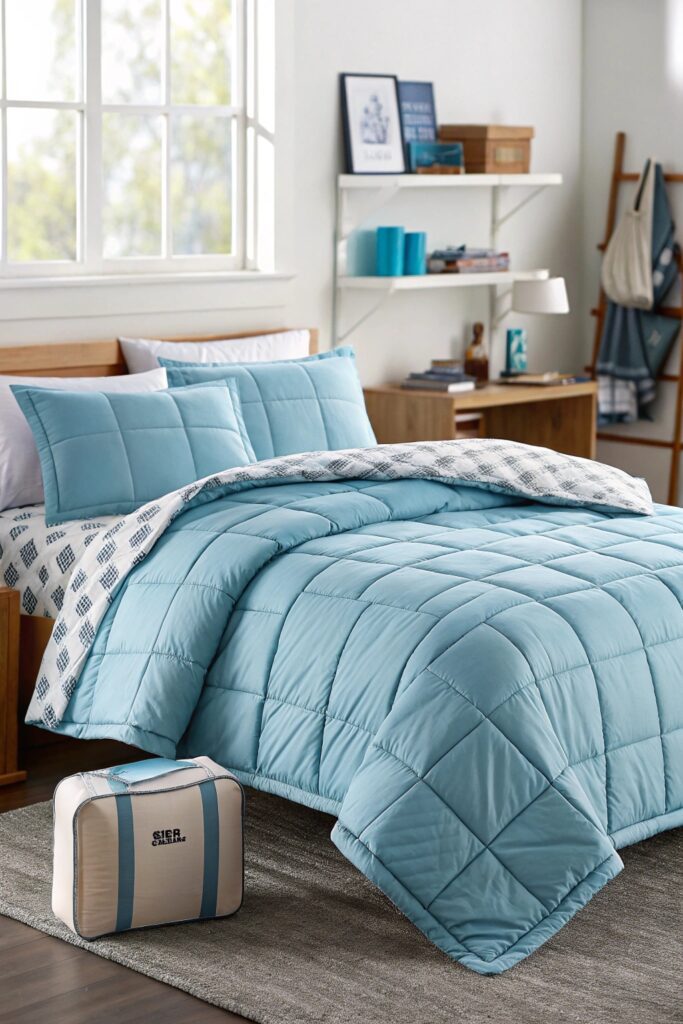
A complete bed-in-a-bag set ($40-80, typically including a comforter, sheets, and pillowcases in one coordinated package) is the simplest option for anyone who wants to avoid separately matching pieces, though the included sheets are often lower quality than a set purchased separately.
Washing and Care in a Dorm Setting
A duvet cover genuinely simplifies laundry in a shared dorm laundry room, since you’re washing a lighter cover rather than the full bulky insert most weeks.
A comforter, by contrast, needs an occasional trip to a larger machine to wash the whole piece, which is worth planning for if your dorm’s washers are on the smaller side.
What These Options Cost
A basic comforter set typically runs $30 to $70, while a duvet cover plus insert usually costs more upfront, often $50 to $120 combined.
The duvet route can be more economical over time if you plan to reuse the insert for several years and only replace the cover when you want a style refresh.
Check your specific dorm’s mattress dimensions before ordering, since many dorm beds use an extra-long twin size that differs from a standard twin, and a mismatched bedding size is a genuinely common ordering mistake.
Final Thoughts
If you’re unsure which to choose, a duvet cover system is generally the better long-term investment for a multi-year dorm or apartment situation, since you can update the cover without replacing the insert. A comforter is the simpler, lower-effort choice if you’d rather not manage a separate cover at all.