
Wallpaper is a bigger commitment than paint, both in cost and in the effort required to remove or replace it later, so material choice and installation method matter as much as the pattern itself. The details below cover the practical trade-offs for each style, from application method to how different materials hold up over time.
Below are 14 wallpaper directions worth considering, with the specifics for each.
1. Floral Wallpaper for a Soft Romantic Vibe
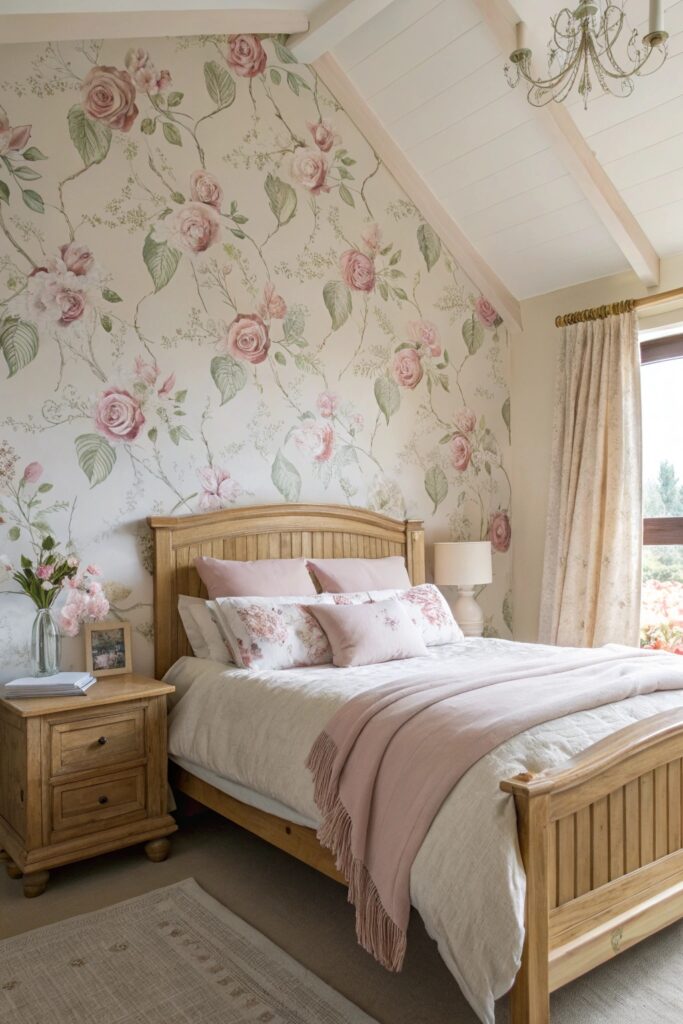
Peel-and-stick versions are considerably easier to remove without damaging the wall underneath, making them a practical choice for renters, while traditional paste-applied wallpaper tends to hold up better over years of use and is worth the extra installation effort for a more permanent room.
Order roughly 10 to 15 percent more material than your exact wall measurements suggest, since matching a repeating floral pattern at seams creates waste that a solid color or random pattern wouldn’t.
2. Textured Grasscloth Wallpaper for Natural Warmth
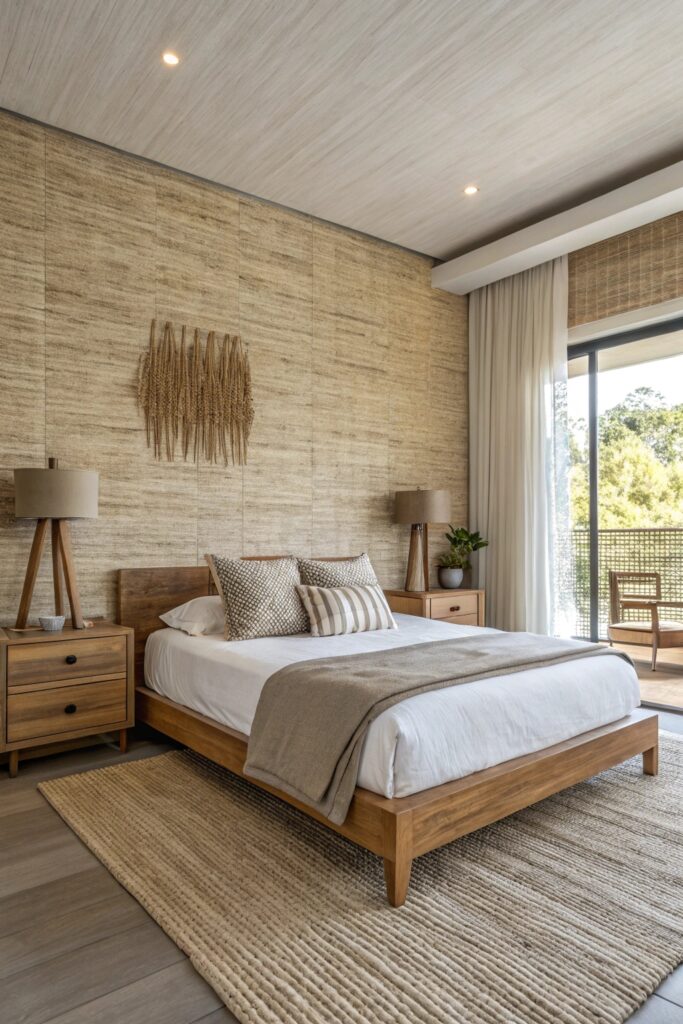
Grasscloth is a natural woven material — often jute, sisal, or arrowroot fiber — which means no two panels match exactly, and seams show more visibly than they would with printed paper wallpaper. It isn’t moisture-resistant, so it’s better suited to a bedroom than a bathroom, and it can’t be spot-cleaned the way a vinyl-coated wallpaper can.
3. Bold Geometric Patterns for a Modern Edge
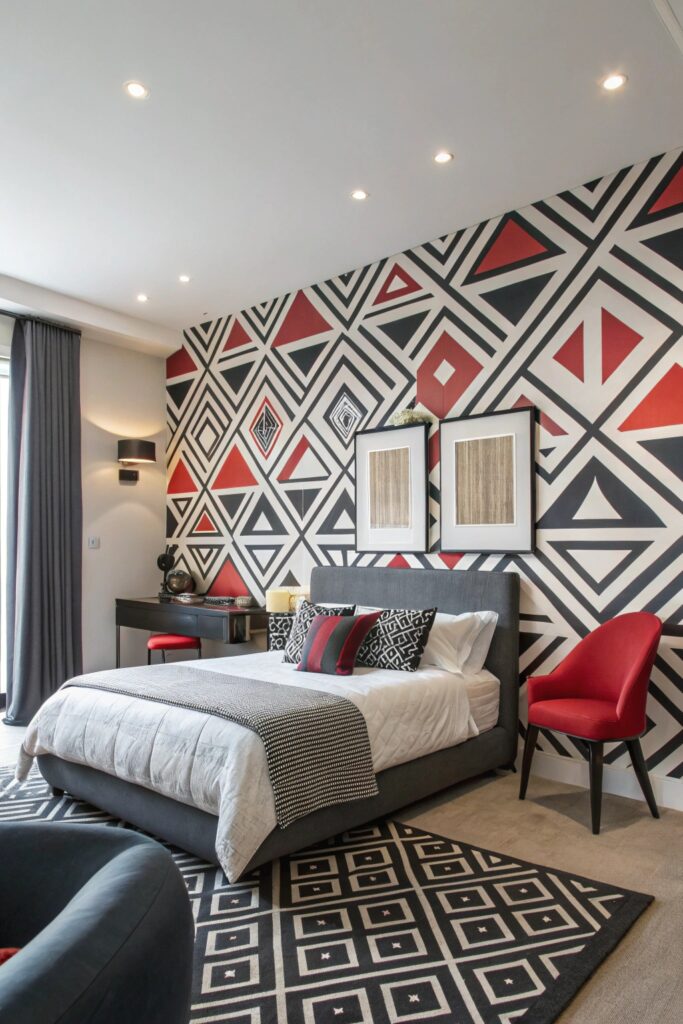
A larger-scale pattern can visually overwhelm a smaller bedroom, while a very small, tightly repeated pattern can read as busier than intended once it covers a full wall. Using a plumb line during installation matters more with geometric patterns than with an organic design, since any slight misalignment is considerably more noticeable in straight lines and repeated shapes.
4. Dark Moody Wallpaper for Dramatic Elegance
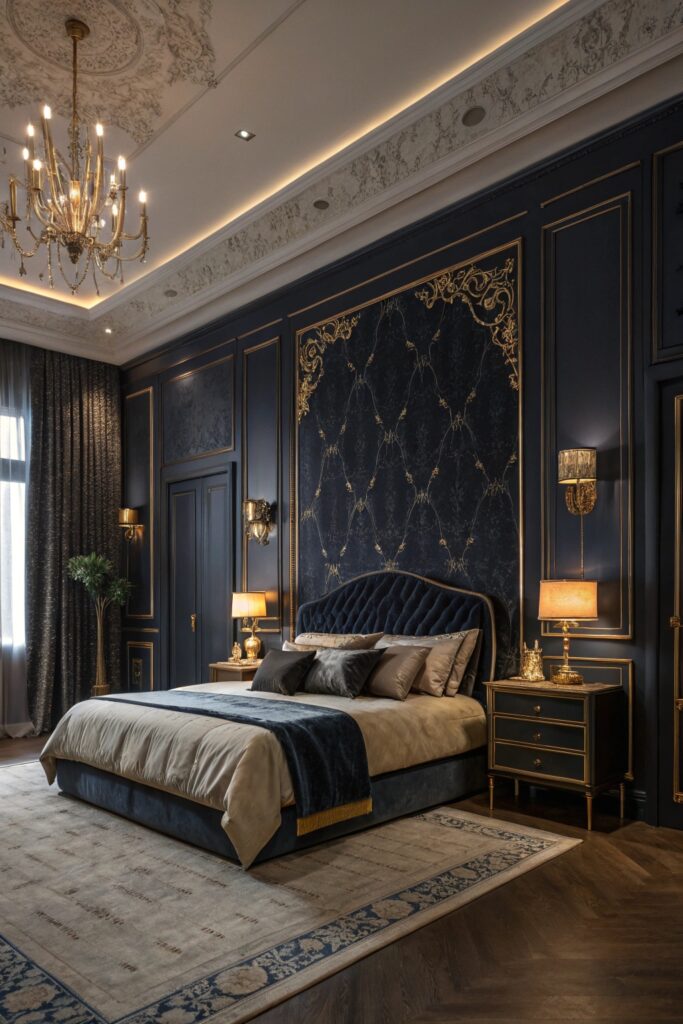
Dark wallpaper absorbs more light than a lighter pattern, similar to a dark paint color, so layering in additional lamp or accent lighting helps prevent the room from feeling underlit once the wallpaper is up.
5. Striped Wallpaper for a Height Illusion
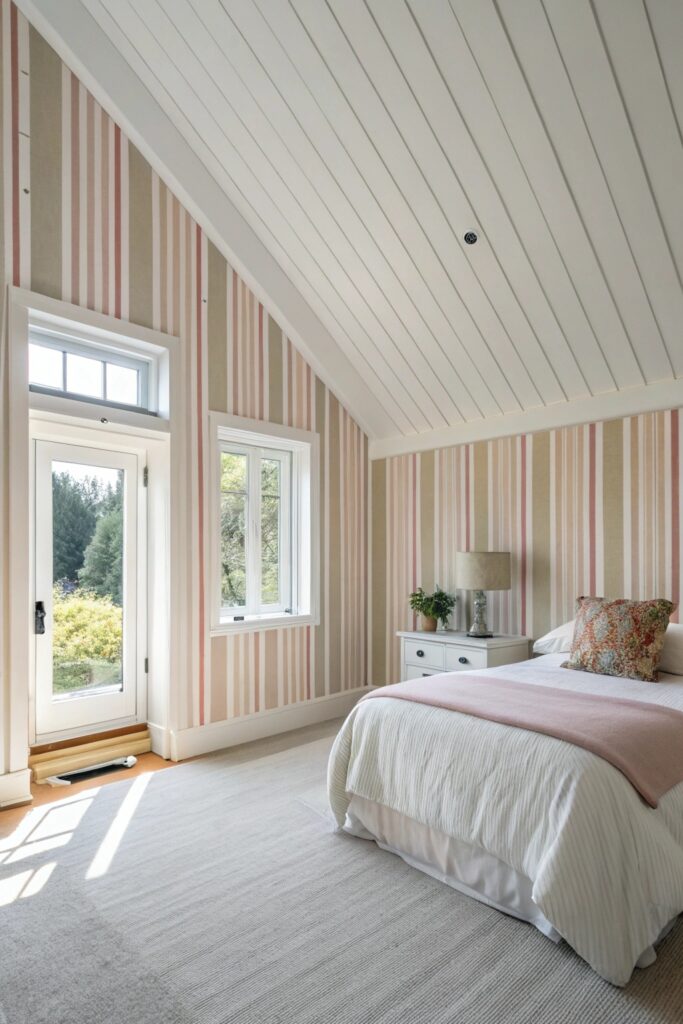
Vertical stripes draw the eye upward and can make a ceiling read taller than it is, while horizontal stripes tend to visually widen a narrower room. Wider stripe spacing generally suits a larger room better, while a tighter, narrower stripe can work well in a smaller space without feeling overly bold.
6. Metallic Wallpaper for a Touch of Glam
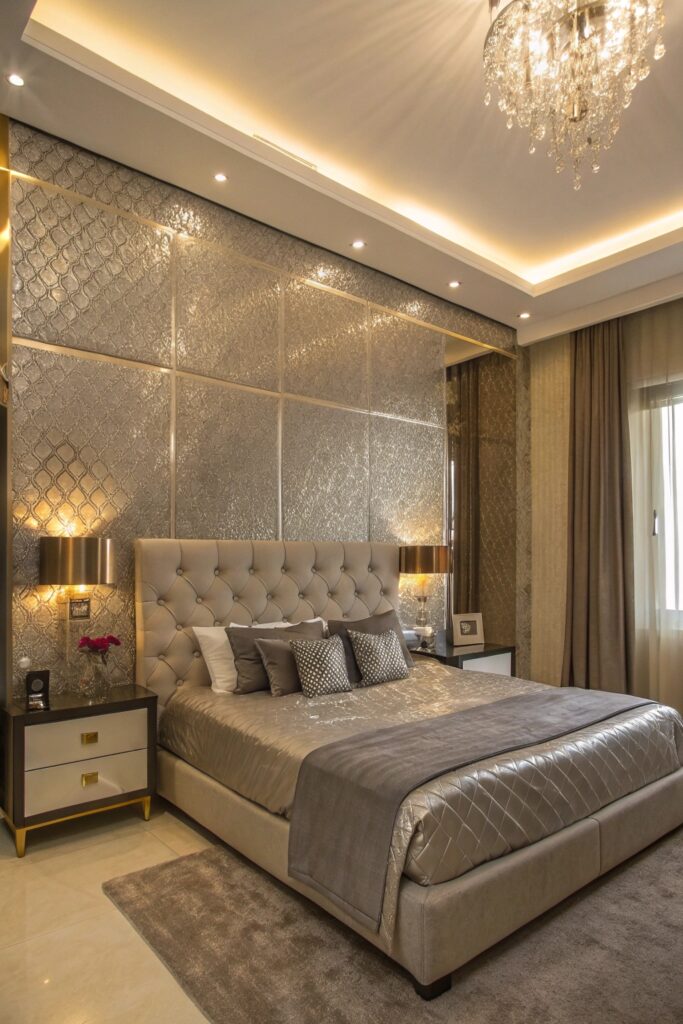
Mylar or foil-backed wallpaper reflects light in a way that highlights wall imperfections — bumps, seams, uneven texture — more than a matte paper would, so proper wall prep matters more here than with most other wallpaper types. This reflective quality also makes seams slightly more visible, which is part of why professional installation is often recommended for this material specifically.
7. Botanical Prints for a Fresh Feel
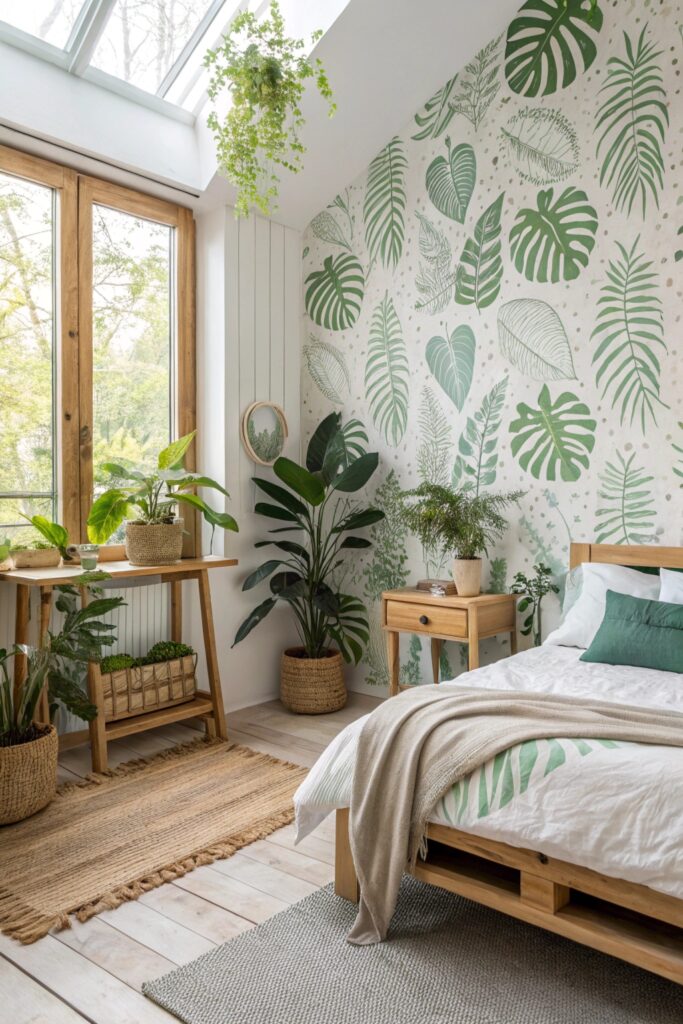
Large-scale botanical motifs can crop awkwardly at corners or around windows if the pattern isn’t planned around the room’s actual layout ahead of installation, so it’s worth mapping out where the pattern will fall before committing to a starting point on the wall.
8. Vintage Damask for Classic Elegance
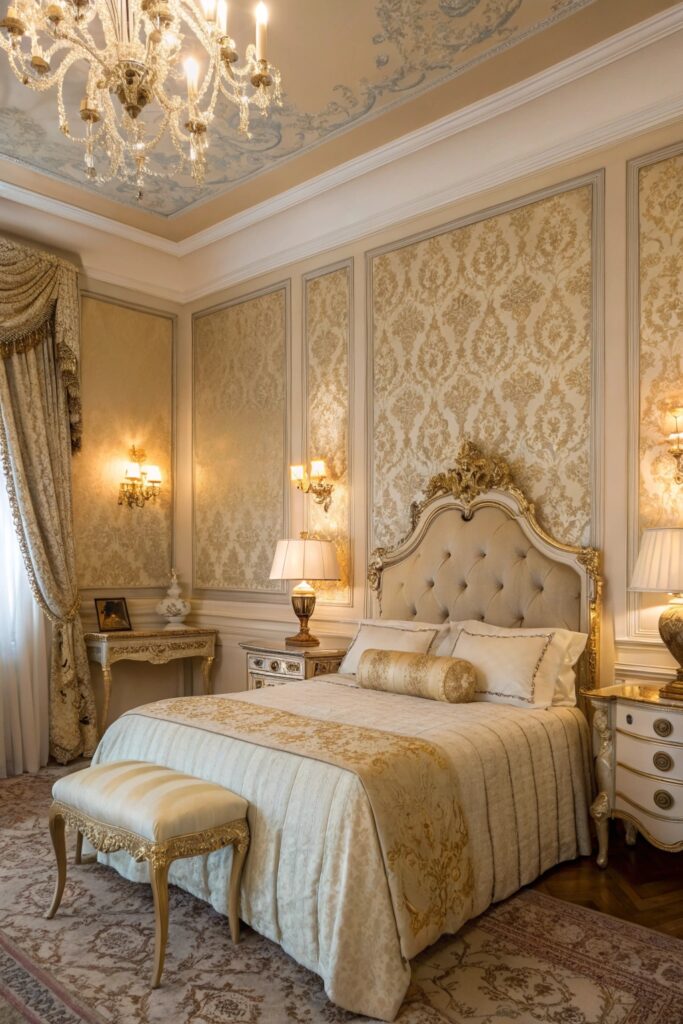
Damask wallpaper typically uses a paste-the-wall or paste-the-paper application depending on the specific product, and it’s worth confirming which method a given roll requires before starting, since using the wrong technique can affect how well the paper adheres and how easily air bubbles are avoided.
9. Minimal Neutral Wallpaper for Calm Spaces
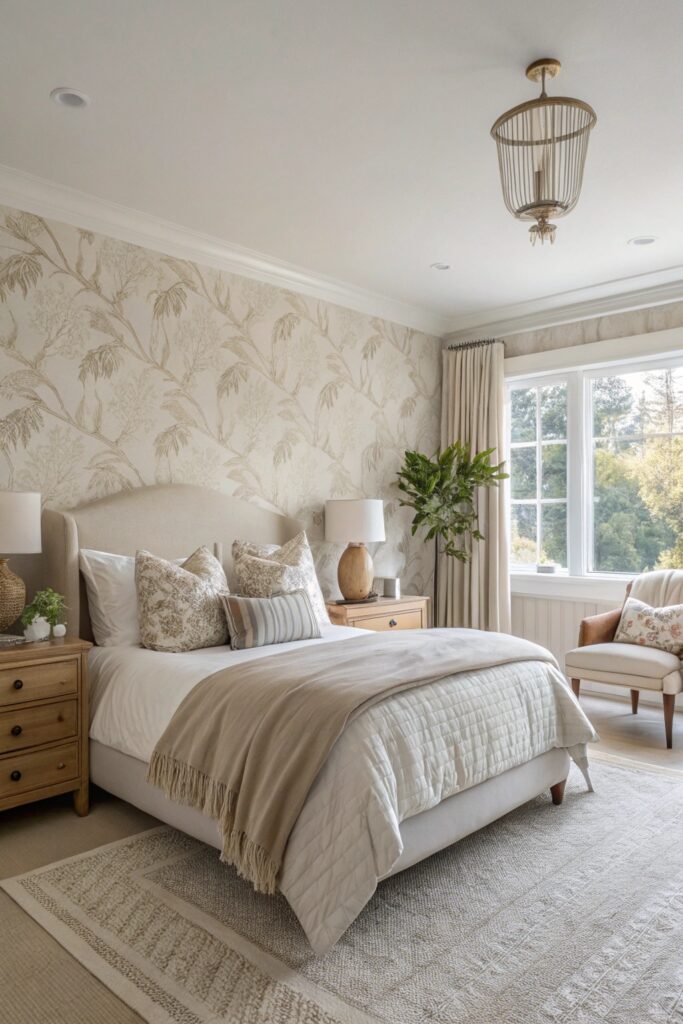
A subtle neutral pattern reads as texture rather than a bold design choice from a distance, which suits a room meant to feel restful rather than visually active. Testing a sample against the room’s actual furniture and existing textiles helps confirm the undertone works with what’s already there.
10. 3D Wallpaper for Depth and Texture
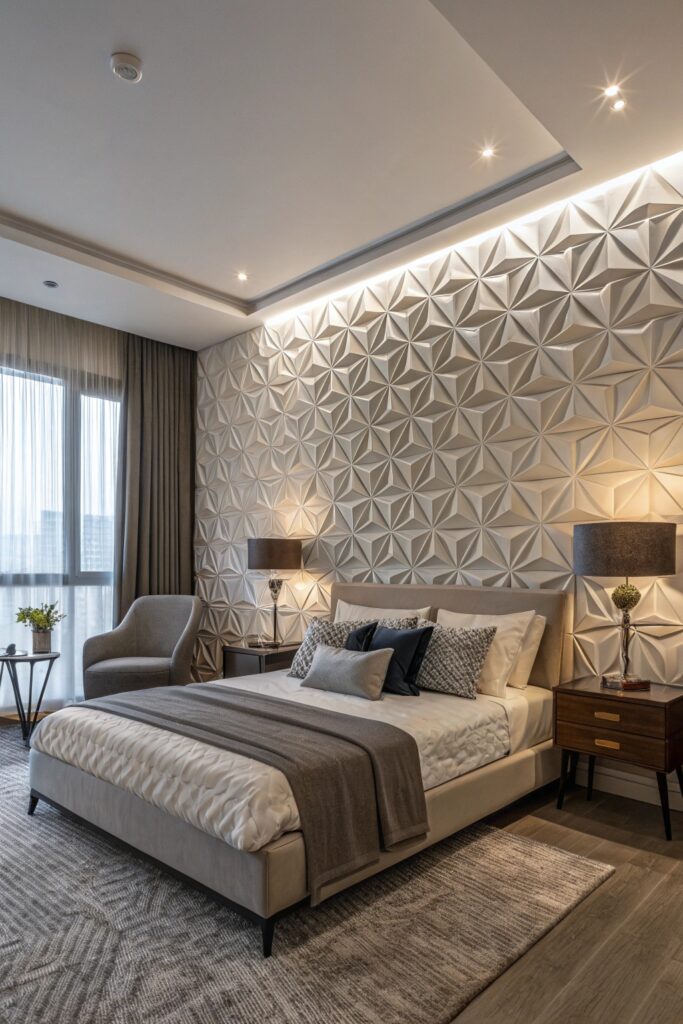
Raised or embossed wallpaper is more prone to visible damage from furniture bumping against it, and the texture itself traps dust more than a flat surface, meaning it needs more regular dusting to stay looking fresh. Some heavier 3D and textured materials also require a different adhesive than standard wallpaper, worth confirming before purchase.
11. Pastel Wallpaper for a Soft Cozy Look
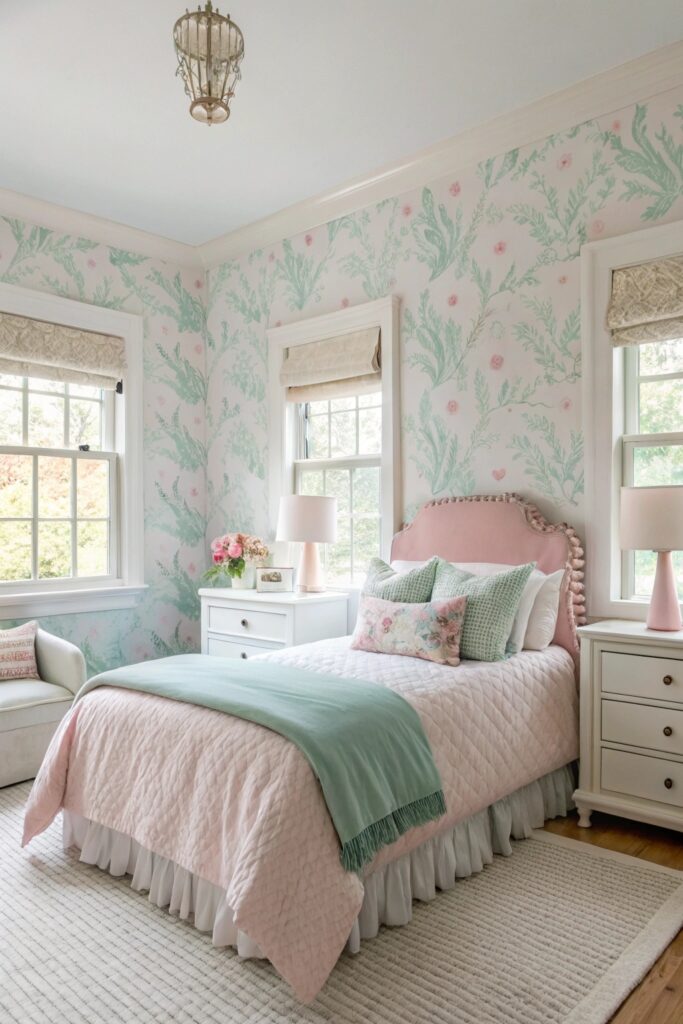
A full-room pastel wallpaper reads considerably softer and more immersive than the same color used only as a small accent, so it’s worth viewing a large sample rather than judging from a small swatch alone before committing to full coverage.
12. Monochrome Wallpaper for Modern Simplicity
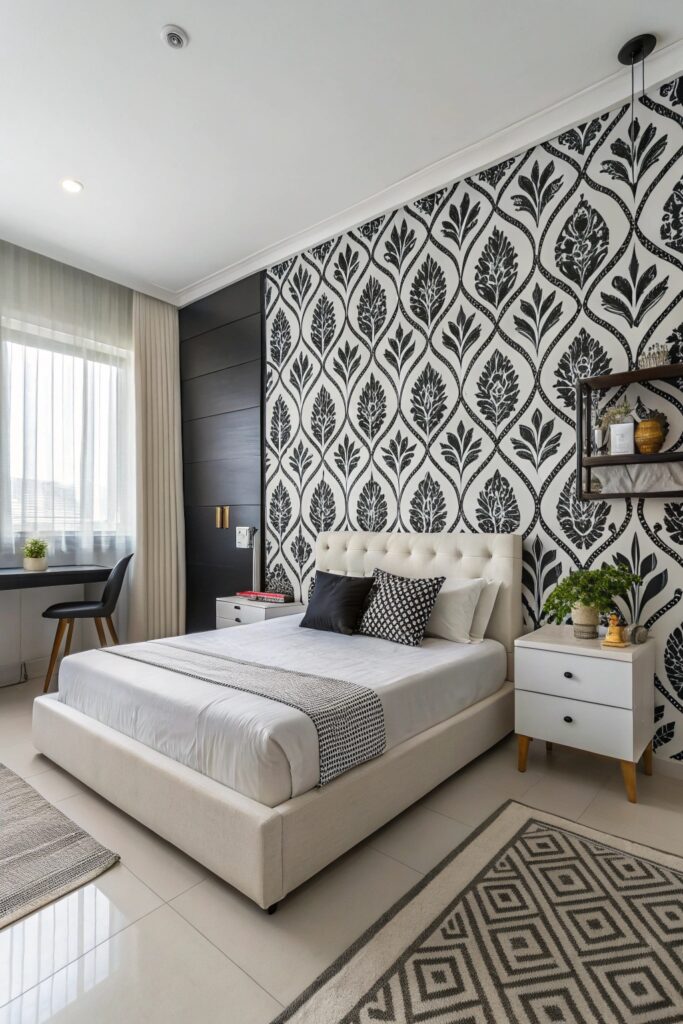
A subtle sheen finish on monochrome wallpaper can shift how the pattern reads depending on the room’s lighting throughout the day, sometimes appearing almost invisible in flat light and more pronounced under angled or direct light.
13. Abstract Art Wallpaper for Creative Spaces
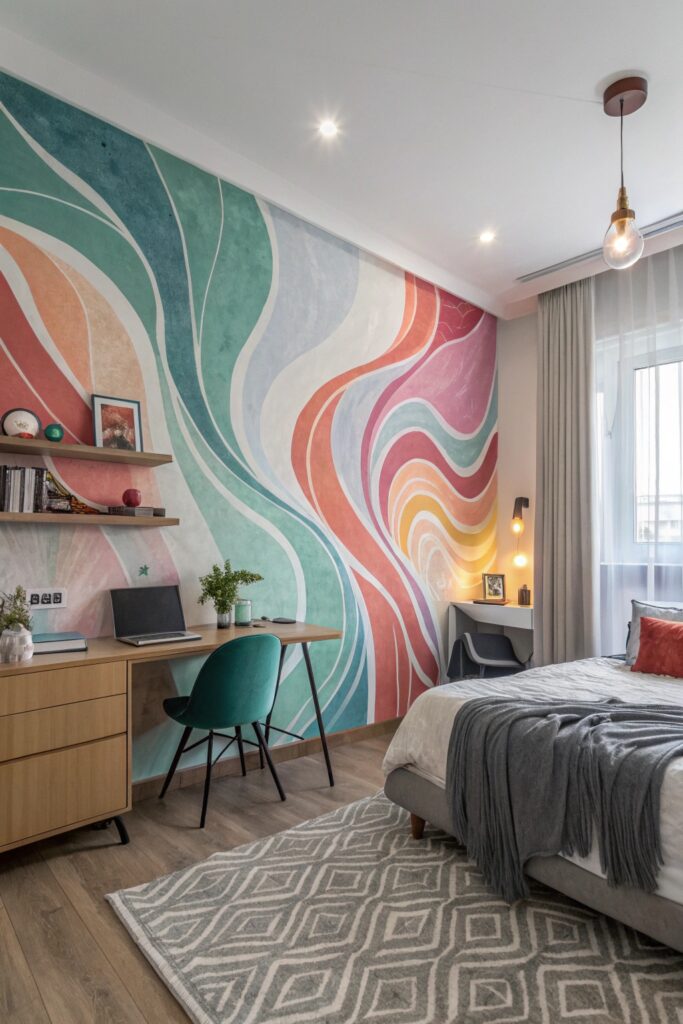
An abstract pattern works best as a genuine focal point, so keeping additional wall art minimal on that same wall avoids visual competition between the wallpaper itself and separately framed pieces.
14. Murals for a Statement Bedroom Wall
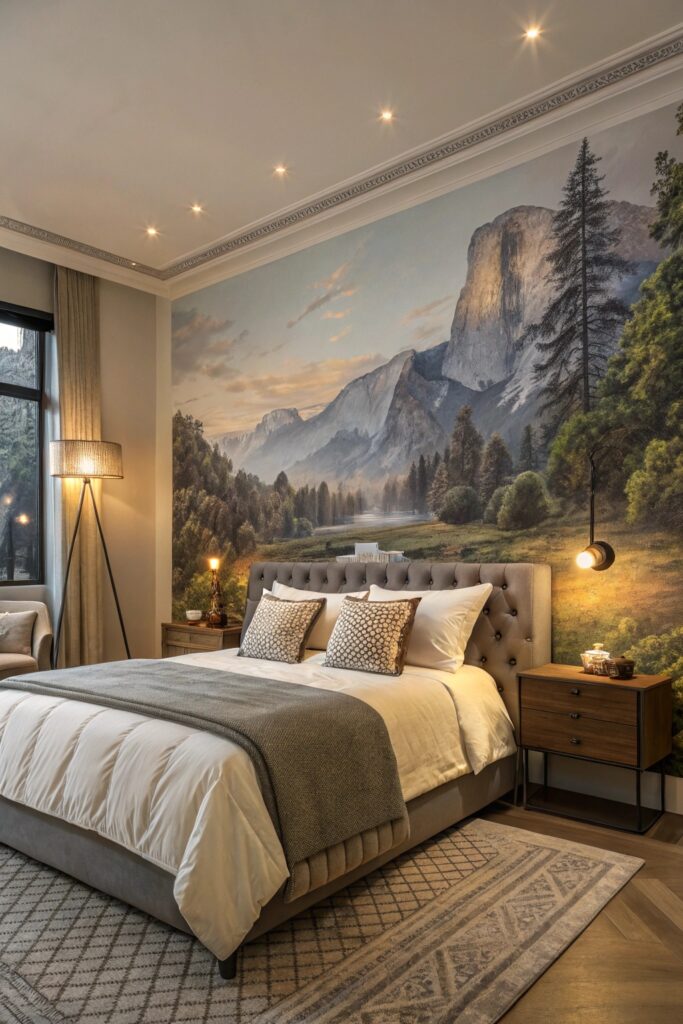
Murals are typically custom-sized to a wall’s exact dimensions rather than sold as a repeatable pattern by the roll, so precise measurements matter more here than with standard wallpaper — remeasuring the wall yourself before ordering, rather than relying on a builder’s floor plan, avoids a costly sizing mismatch. Panel seams need careful alignment during installation to keep the image continuous rather than visibly broken at the joins.
Wall Prep Makes or Breaks the Final Result
Wallpaper shows imperfections in the wall surface underneath more than paint does, since light hitting a patterned or textured surface tends to catch bumps and dents that a flat paint finish would hide. Filling holes, sanding rough patches, and applying a wallpaper primer specifically — rather than just a standard paint primer — gives the adhesive something more consistent to bond to and helps prevent bubbling or peeling at the seams down the line.
Freshly painted walls need time to fully cure before wallpaper goes up — typically at least a few weeks — since applying wallpaper too soon over paint that hasn’t fully cured can lead to adhesion problems as the paint continues to off-gas and settle.
What a Wallpaper Project Costs
A basic DIY wallpaper job with a standard peel-and-stick product typically costs $150 to $500 in materials for an average bedroom.
Higher-end materials like grasscloth or a custom mural, especially with professional installation, run considerably higher, often $800 to $2,500 or more depending on the specific product and the room’s total wall area.
Consider Removal Before You Commit to Installation
Traditional paste-applied wallpaper often requires steaming or scoring to remove without damaging the wall underneath, which is worth knowing before committing to a pattern you might want to change in a few years. Peel-and-stick and other strippable wallpapers are considerably easier to remove cleanly, making them a lower-commitment option if you’re not certain you’ll want the same pattern long-term.
Whatever material you choose, order a sample or a single roll to view in the room’s actual lighting before purchasing enough for the full wall — wallpaper patterns often look noticeably different in a showroom or online listing than they do once installed under your bedroom’s specific light conditions.