
Coastal style leans on a specific combination — blue and white as the base, natural materials for texture, and restraint on literal beach imagery — to read as relaxed rather than themed.
Below are 10 elements that build this look, with practical notes for each.
1. Go Big on Blue and White
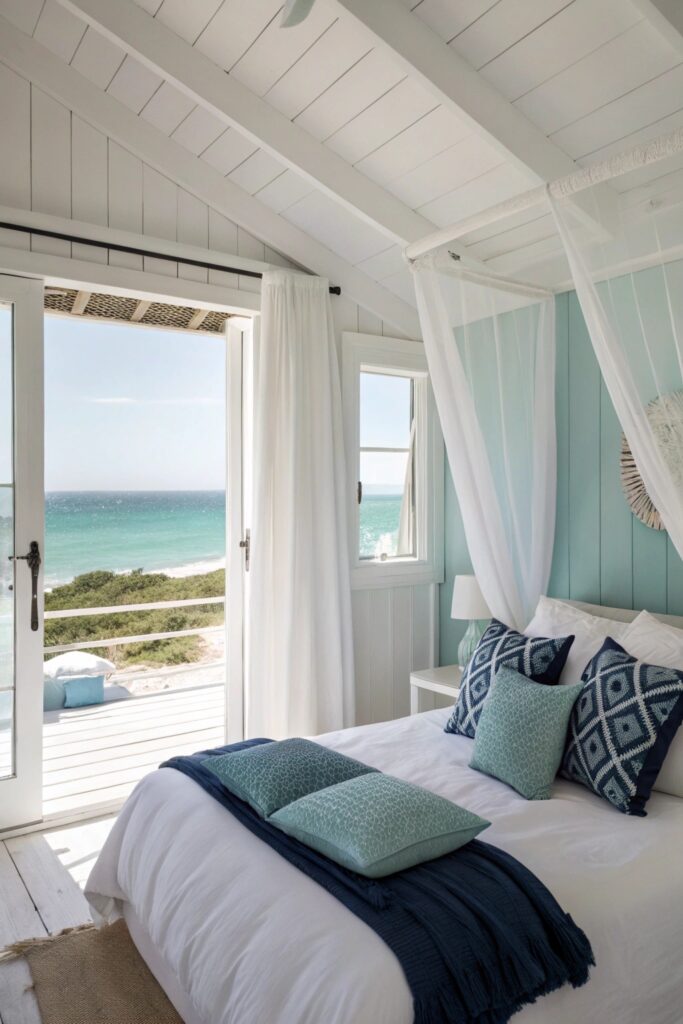
This pairing is the foundation most coastal rooms build on, since the contrast reads as fresh and airy without needing any other color to carry the palette.
Try an 80/20 split — mostly white with blue used as an accent — if a fully saturated blue feels too bold for the space.
2. Bring in Natural Textures
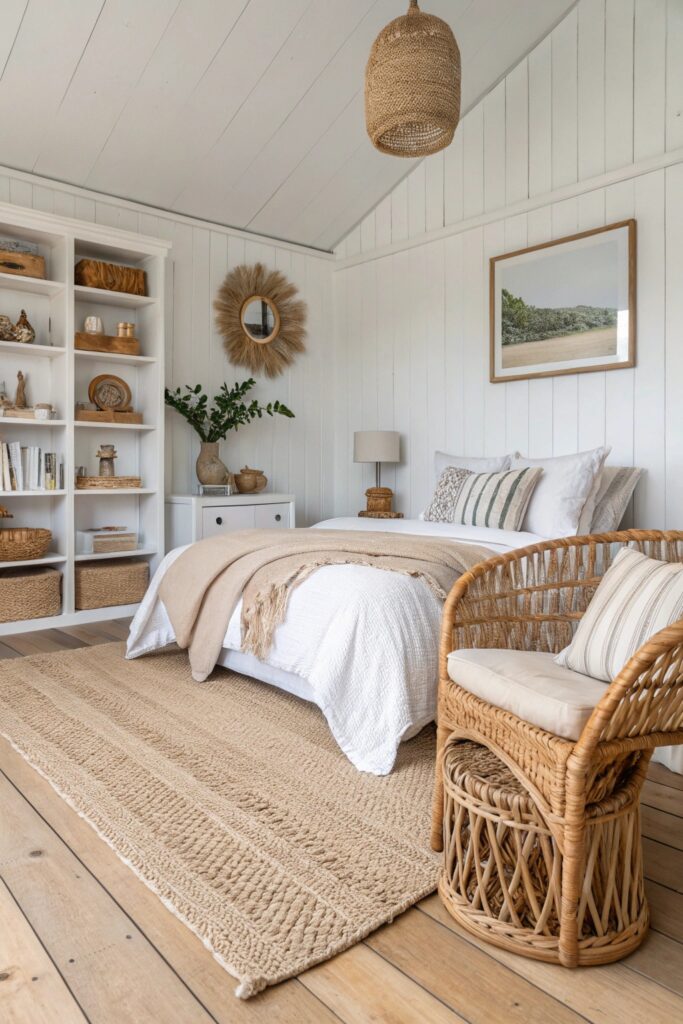
Jute, rattan, and linen add tactile variety that keeps a blue-and-white palette from feeling flat or overly cool.
Woven baskets work double duty here, adding texture while also giving you a practical spot to store extra throws or magazines.
3. Hang Up Some Coastal Wall Art
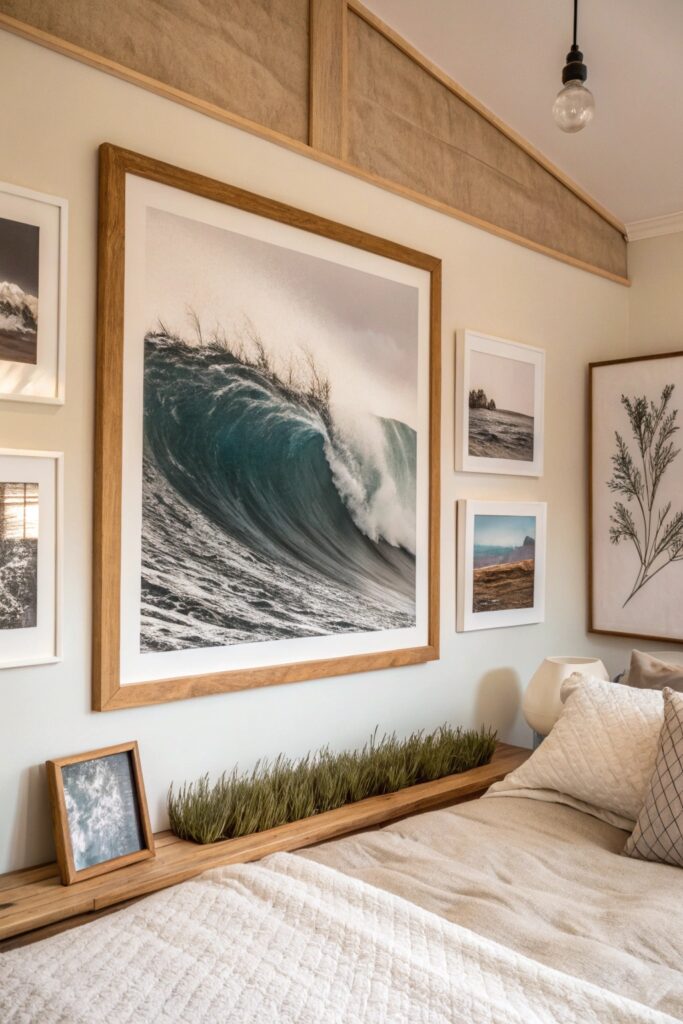
A print or photograph of open water, sand, or shoreline reinforces the mood without leaning into overly literal beach decor like anchors or shells on every surface.
Look for art with a loose, painterly quality rather than a sharp photograph, which tends to feel calmer and less staged.
4. Introduce Indoor Plants
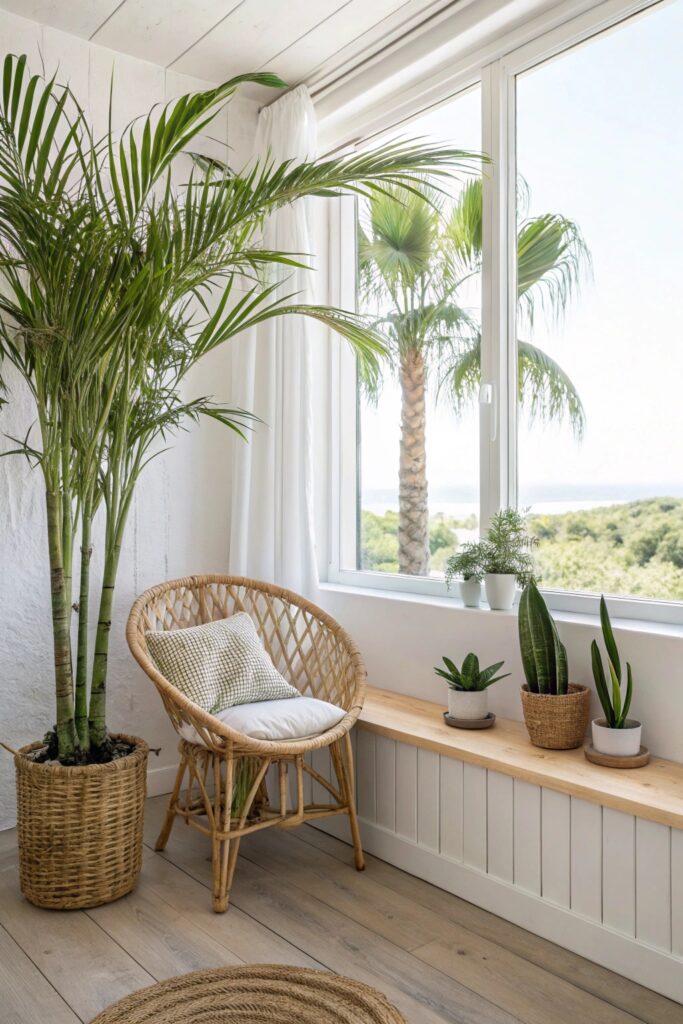
A few palms or trailing greenery bring the room’s connection to the outdoors full circle, pairing well with the natural materials already in the space.
Pothos and spider plants tolerate lower light better than most tropical varieties, making them a practical pick if the room doesn’t get direct sun.
5. Use Sheer, Breezy Curtains
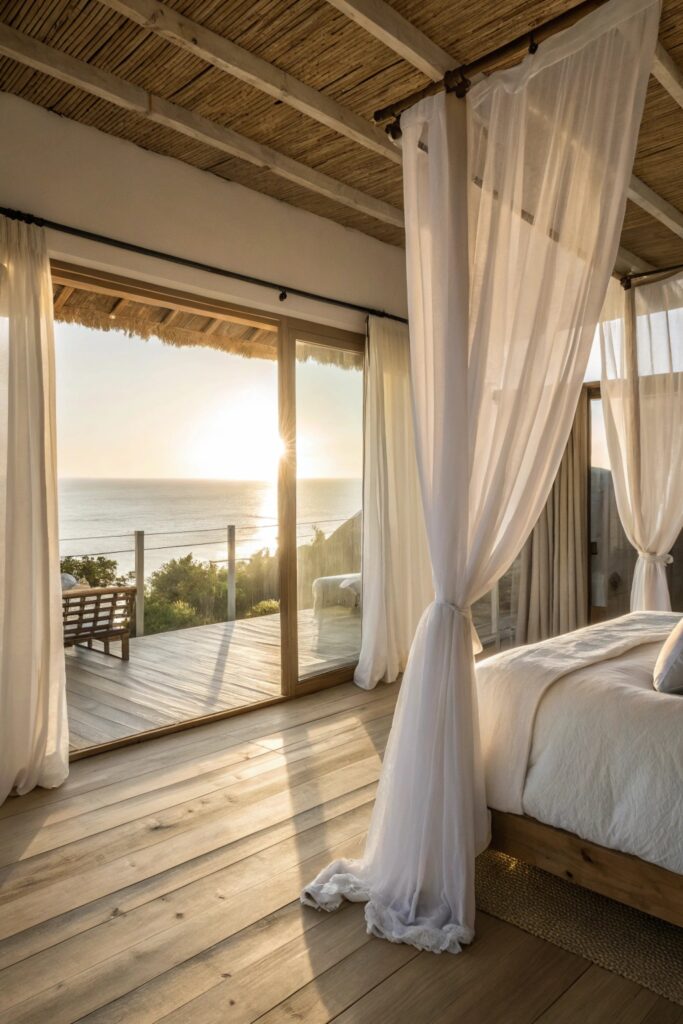
Lightweight, semi-transparent fabric lets in soft daylight and moves with any airflow, which does more for a relaxed coastal feel than heavier drapery ever could.
Pair sheers with a simple blackout liner behind them if the room needs to darken fully for sleep, keeping both function and look intact.
6. Incorporate Subtle Nautical Elements
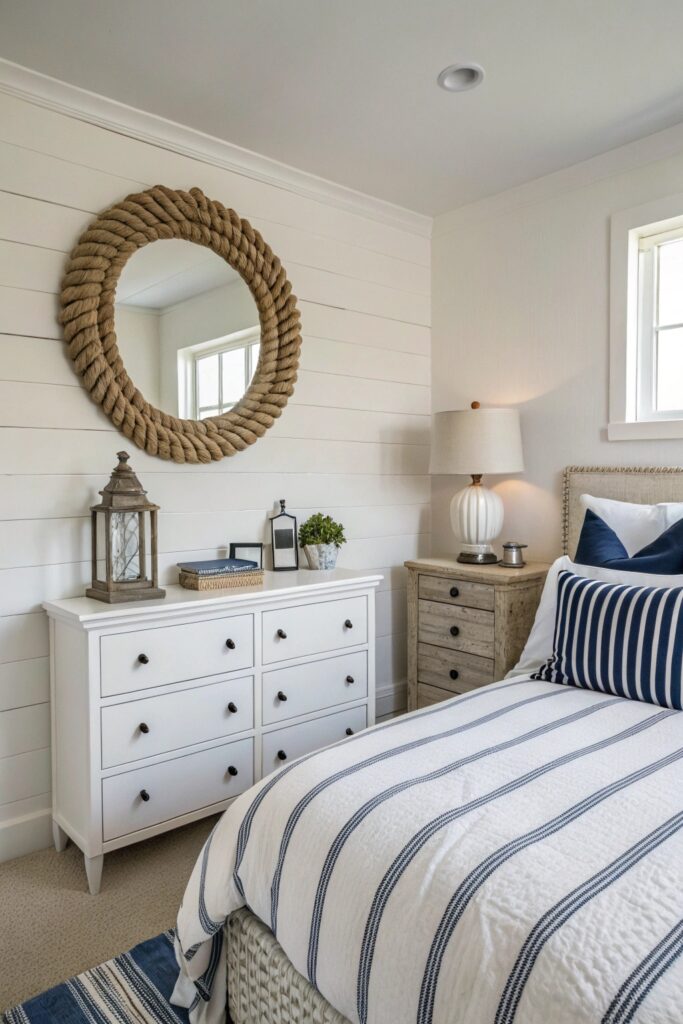
A single rope detail or a woven basket references the theme without tipping into a costume-like beach house cliché.
A single piece of rope-wrapped decor, like a mirror frame or a lamp base, is usually enough — more than that starts to feel like a costume.
7. Choose Light, Driftwood-Toned Furniture
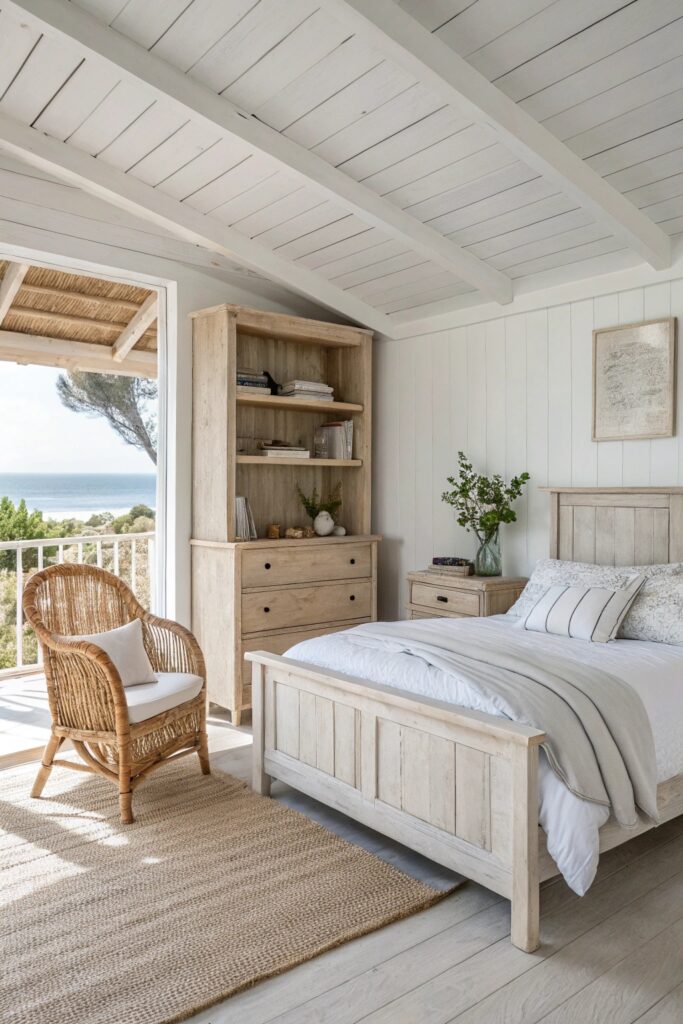
Furniture in a pale, weathered wood finish keeps the room’s overall palette light, standing in contrast to darker traditional wood tones.
Whitewashed oak and bleached pine are both easy to find and hold up well against a blue-and-white backdrop.
8. Add Sea-Inspired Accessories
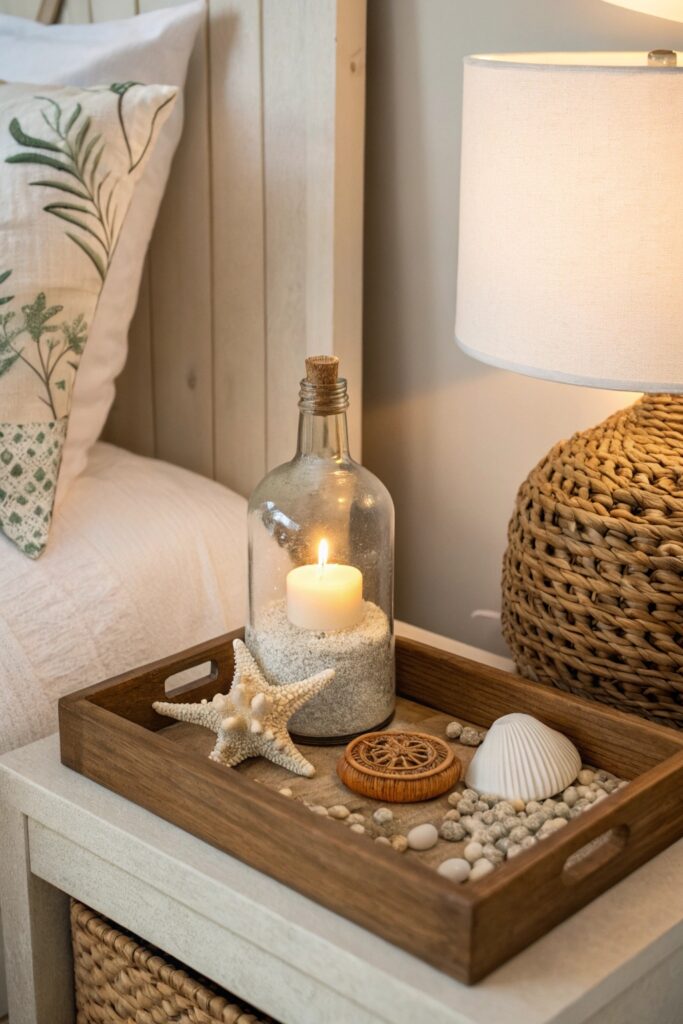
A few genuine shells, coral pieces, or glass floats displayed sparingly add texture without turning the room into a themed display case.
Cluster smaller pieces on a shelf or tray rather than spreading them across every surface, which keeps the display from feeling scattered.
9. Layer Your Bedding Like a Seaside Hotel
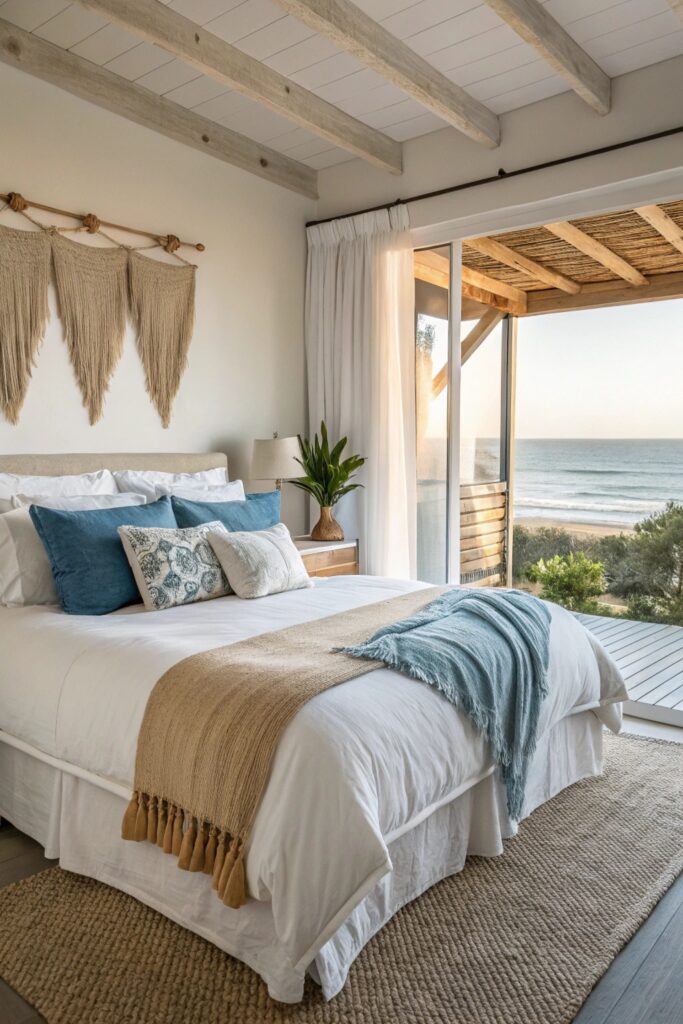
Crisp white linens with a textured throw and a few accent pillows recreate the effortless, put-together look of a boutique coastal hotel room.
Stick to two or three colors in the pillow mix at most, since too many patterns can undercut the crisp, uncluttered look you’re going for.
10. Play With Soft, Warm Lighting
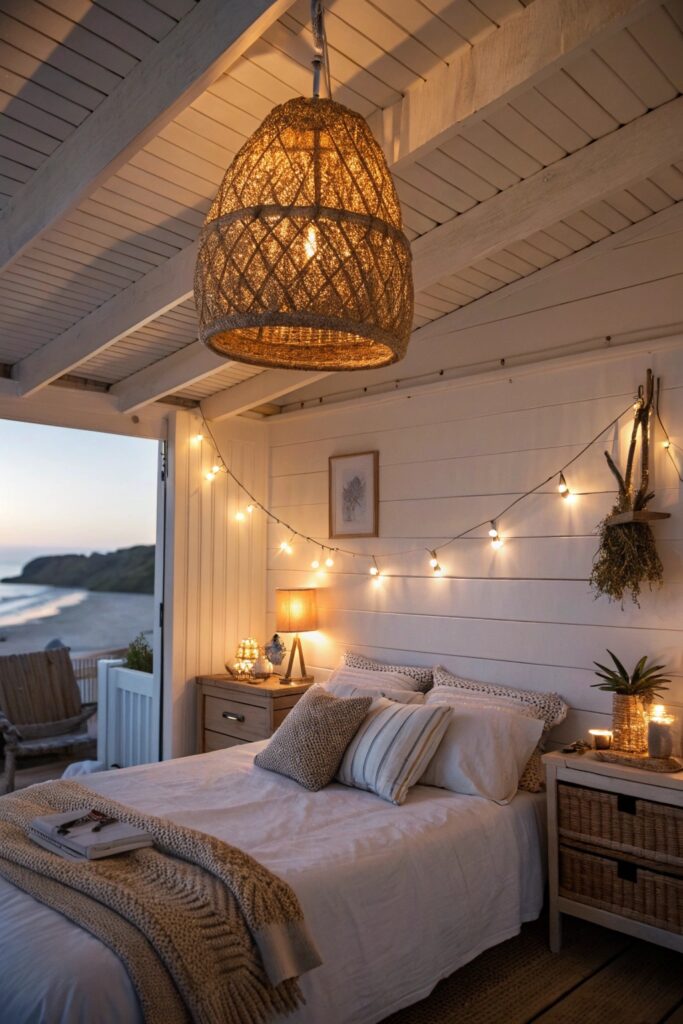
Warm-toned bulbs and a mix of table lamps keep the room from feeling clinical, balancing the cooler blue palette with genuine evening warmth.
Avoiding the Theme-Park Trap
The line between coastal-inspired and beach-themed comes down to restraint. A room stuffed with anchors, life preservers, and starfish reads as costume decor rather than a genuine reflection of coastal living.
Pick one or two literal references — a rope detail, a single framed map — and let everything else do the work through color, texture, and light instead.
What This Style Costs
A full refresh with new bedding, a rug, and a couple of furniture swaps typically lands between $400 and $900, depending on how much you’re replacing versus restyling with what you already own.
Paint, textiles, and a few accessories alone can shift a room’s mood for under $150, which is worth trying first before committing to furniture changes.
A Word on Climate and Location
This look reads differently depending on where you actually live. A room in a genuinely humid, seaside climate can lean into the airy, breezy elements without much extra effort, since the light and air already support the mood.
In a drier or landlocked setting, the same palette still works, but plants and layered textiles matter more since they’re doing the job the actual climate would otherwise handle for you. Neither version is more correct — it’s really about which details you lean on to carry the feeling.
Where to Start If You’re Overwhelmed
Bedding and one wall of art are usually the fastest way to see whether this look actually suits you before investing in bigger furniture pieces. Both are easy to swap back if the palette doesn’t land the way you hoped.
Once those two elements feel right, add texture through a rug or curtains, then layer in plants and smaller accessories last. Building it in that order keeps you from overspending on a full room before you’ve confirmed the direction works.
Secondhand shops are worth checking for the driftwood-toned furniture pieces specifically, since older wood furniture often already has the faded, weathered look this style depends on rather than needing to be distressed artificially.
Revisit the room every few months and swap out whichever accessory feels the most dated — a pillow cover, a small print — rather than treating the whole setup as permanent. Small refreshes keep the space feeling current without requiring another full redo.
Take a photo of the finished room before making further changes, so you have a clear before-and-after reference the next time you want to tweak the palette.
Wrapping It All Up
Texture does more work than color alone in this style, since jute, linen, and driftwood tones are what separate a considered coastal room from one that simply painted the walls blue. Keep literal beach imagery to a minimum — a shell here, a rope detail there — and let the materials and palette carry the mood instead.