
Pond styles range from a simple container water garden to a full koi ecosystem requiring real excavation and equipment investment — the right choice depends heavily on your yard size, climate, and how much ongoing maintenance you’re realistically willing to take on.
Below are 12 pond styles, with real cost ranges, maintenance considerations, and the reasoning behind each approach.
1. The Classic Koi Pond
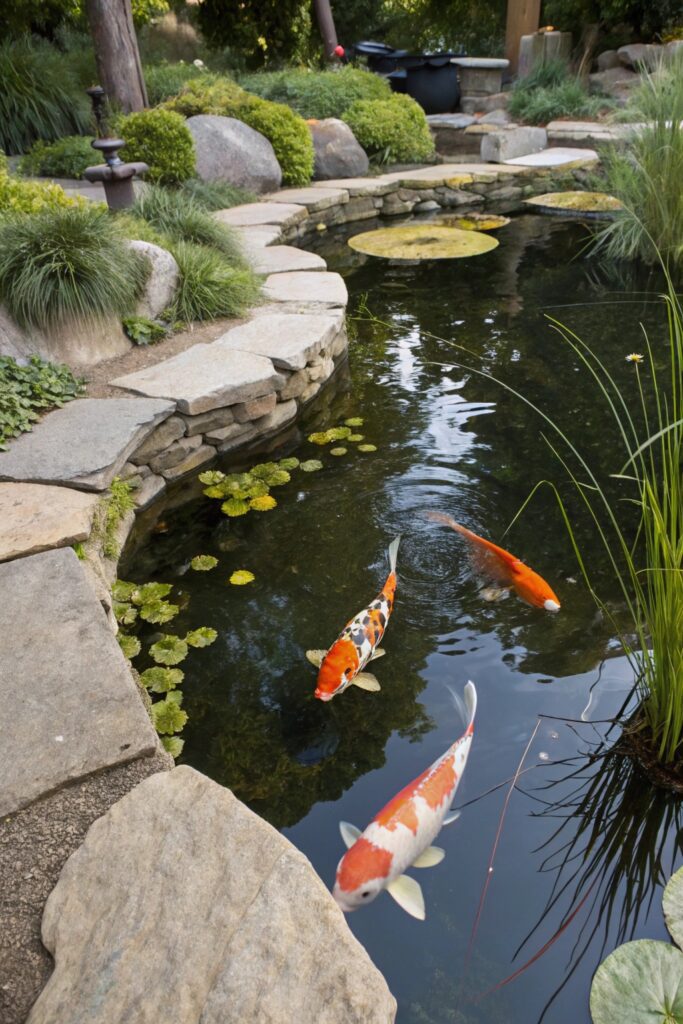
A dedicated koi pond needs real depth (at minimum 3 feet, ideally 4+ in colder climates) so fish can survive winter below the frost line, along with a filtration system sized to the pond’s actual gallon capacity — undersized filtration is the most common reason koi ponds turn cloudy or develop algae blooms. Budget $3,000-8,000+ for a professionally installed pond in the 500-1,000 gallon range, considerably less for a DIY build with a pre-formed liner.
2. Minimalist Container Water Gardens
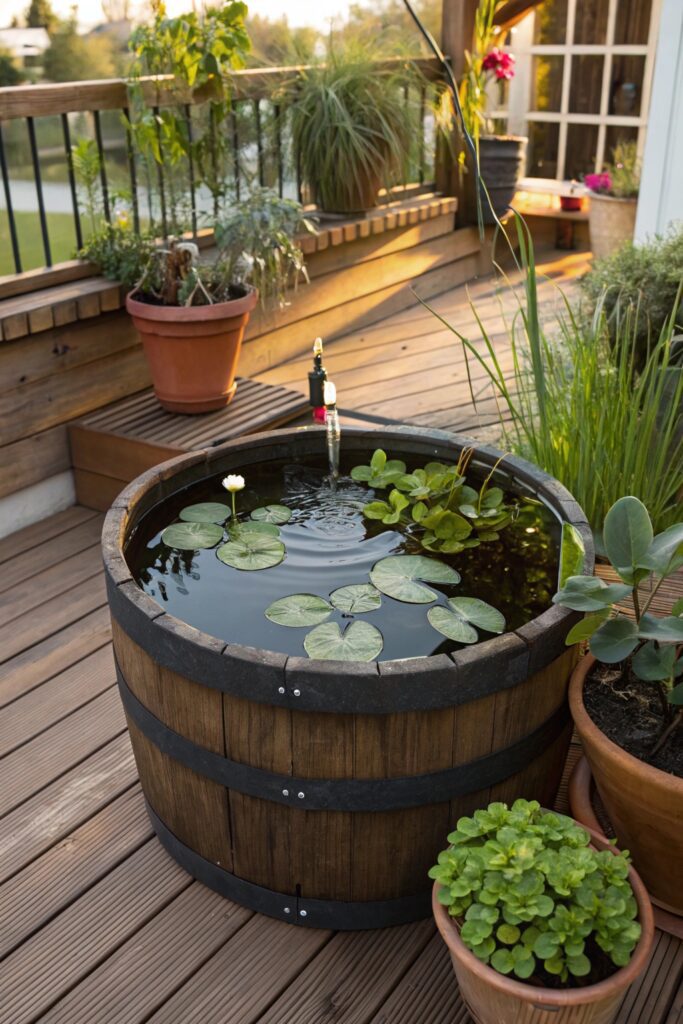
A single large ceramic or resin container ($40-100) with a small submersible pump and a few aquatic plants creates a water feature with none of the excavation or long-term maintenance a full in-ground pond requires. This works especially well on a patio or balcony where a dug pond simply isn’t an option.
3. Naturalistic Wildlife Ponds
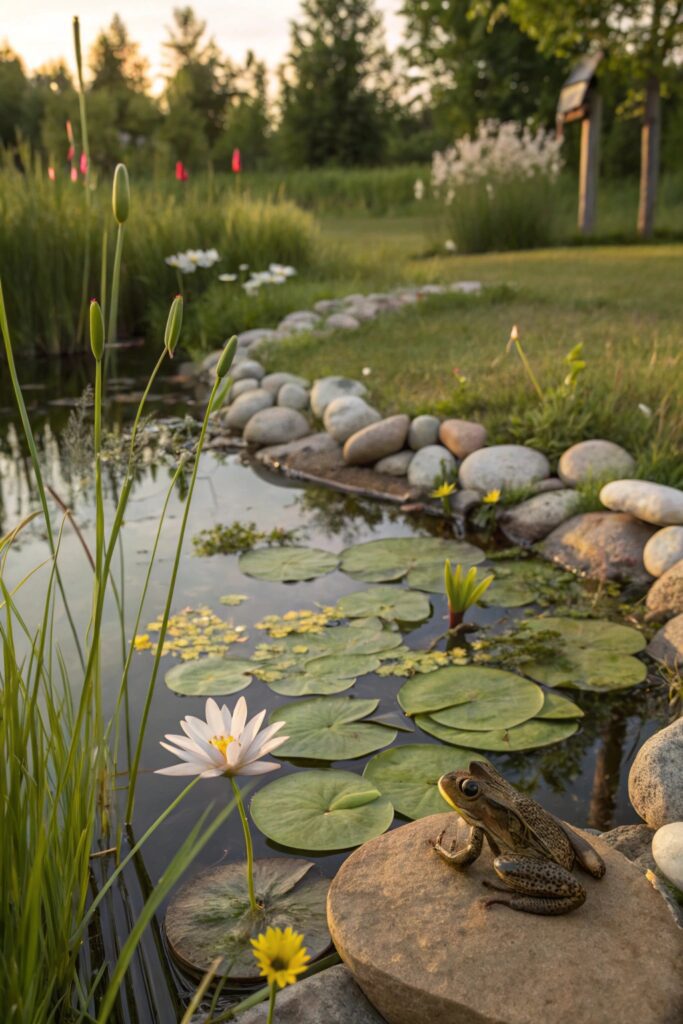
Designed with gently sloped edges (rather than steep walls) and native aquatic plants, wildlife ponds prioritize supporting birds, frogs, and beneficial insects over ornamental fish, which also means significantly less filtration equipment and maintenance than a koi-focused pond. Skip fish entirely in this style if attracting wildlife is the actual goal — fish will eat many of the insect larvae and amphibian eggs that make a pond ecologically active.
4. Raised Ponds for Small Yards
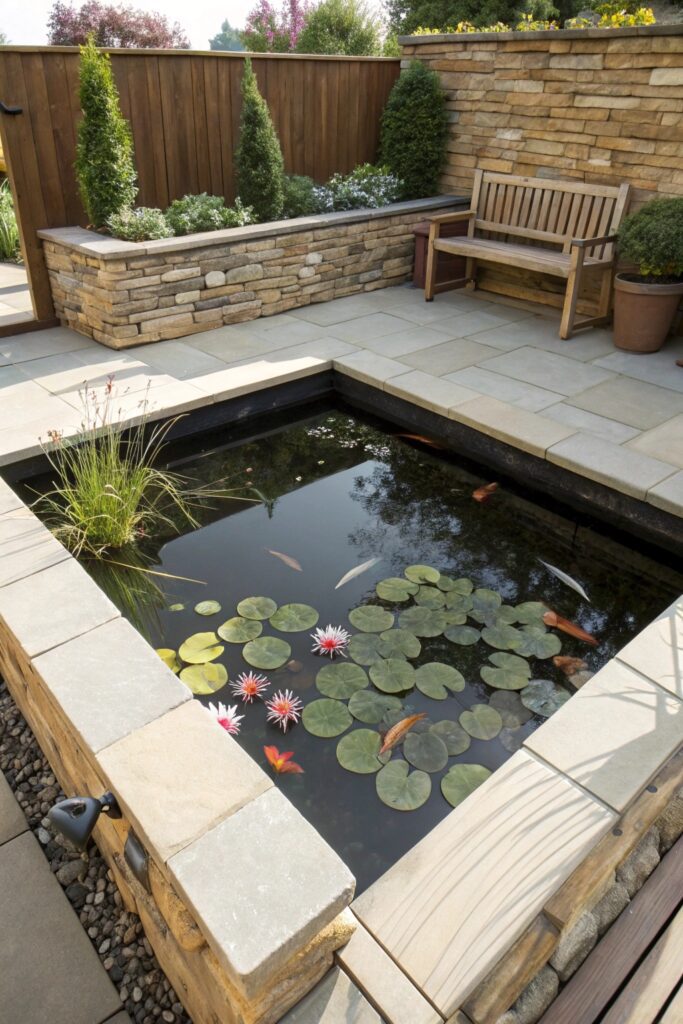
A raised pond (built with a retaining wall of stone, brick, or timber rather than dug into the ground) works in yards with poor drainage, high water tables, or simply limited digging space, and it adds a seating-height edge that doubles as a place to sit. Raised construction generally costs more per gallon of capacity than an in-ground pond due to the wall materials required.
5. Fire and Water Combo Features
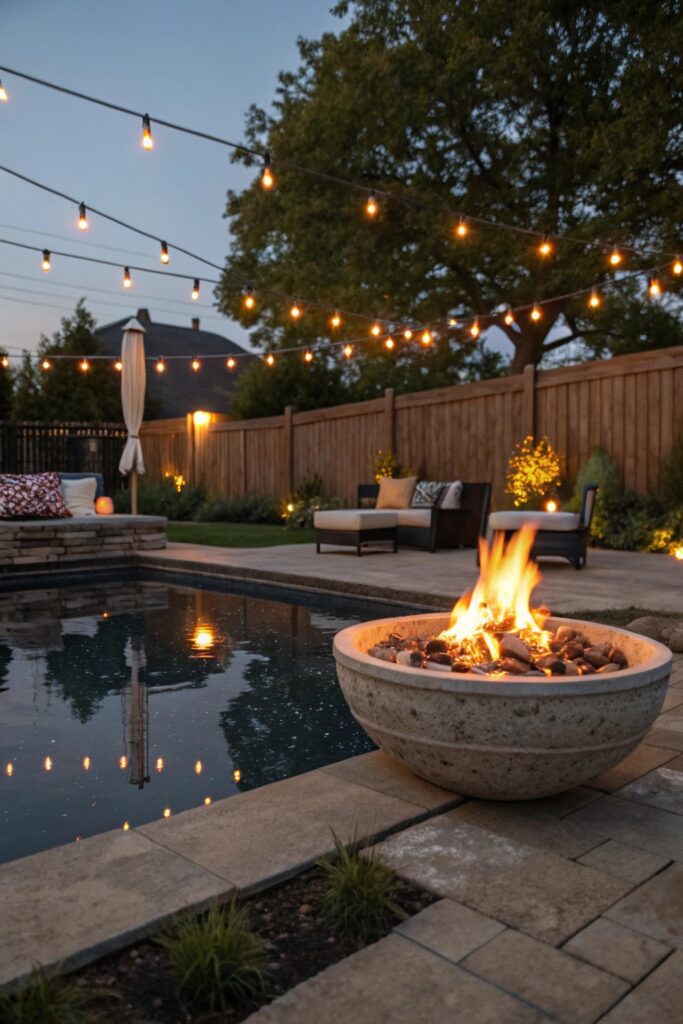
Pairing a small fire bowl or fire pit adjacent to a water feature creates a striking visual and sound contrast, and it’s become a popular addition to smaller ponds and fountains specifically because it extends outdoor evening use into cooler months. Propane-fed fire features integrate more easily near water than wood-burning ones, since they don’t require the same ventilation clearance.
6. Formal Reflecting Ponds
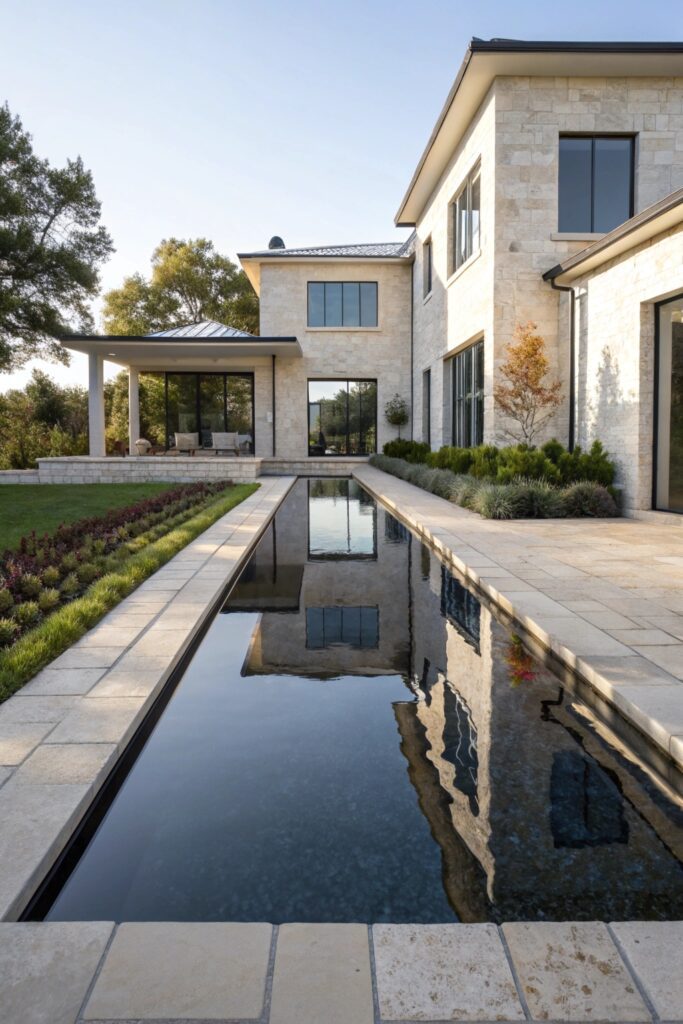
A shallow, geometrically shaped pond with still, dark-bottomed water (often lined in black rather than a lighter color) creates a mirror-like reflecting surface, working best as a symmetrical focal point in a more formal garden layout rather than a naturalistic one. Minimal or no fish and plants keep the water’s reflective quality clear, since active aquatic life tends to disturb the surface and cloud the water.
7. Waterfall-Fed Ponds
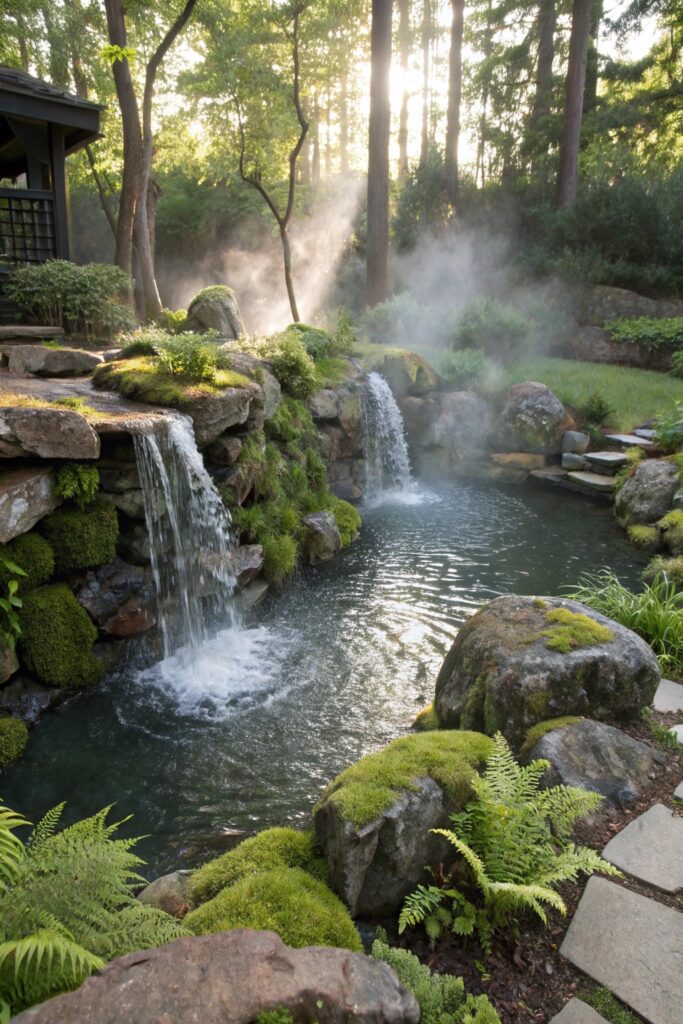
A small waterfall feeding into a pond adds both visual movement and the sound of running water, which also helps oxygenate the water for any fish or plants living in it. Waterfall height and flow rate need to match pump capacity — an underpowered pump produces a weak trickle rather than the intended cascading effect, so sizing the pump to the specific waterfall height matters more than most first-time builders expect.
8. Bog Gardens and Filter Ponds
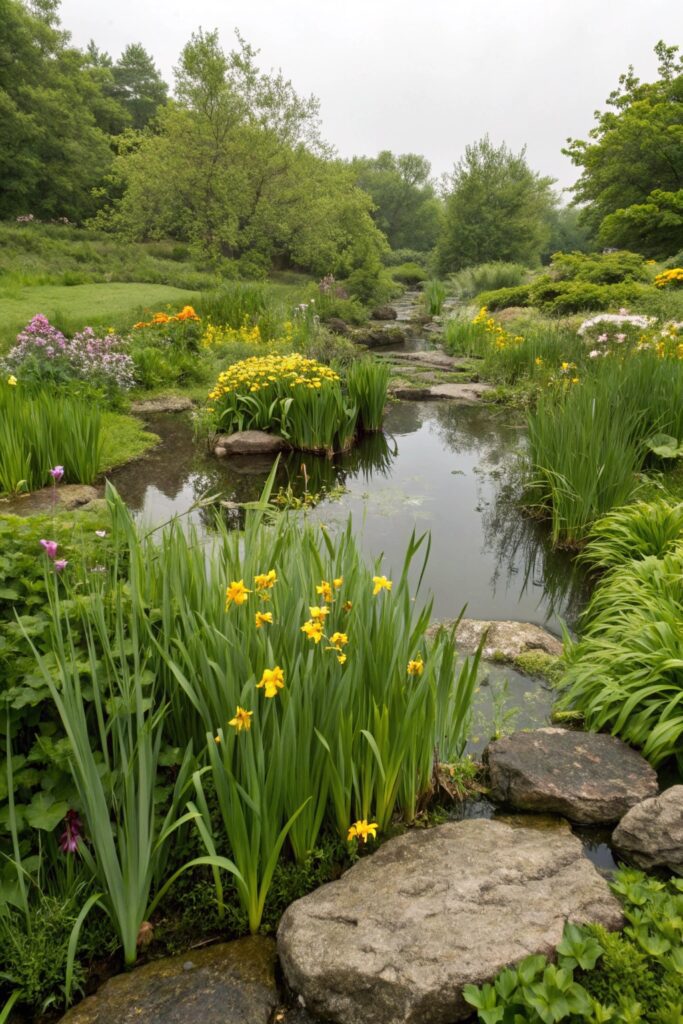
A bog garden — a shallow, planted area that water flows through before or after the main pond — provides natural biological filtration through plant roots, reducing the mechanical filtration load and creating additional planting space beyond the pond’s open water. This works well paired with a wildlife pond specifically, since bog plants also provide additional habitat.
9. Container Ponds With Solar Fountains
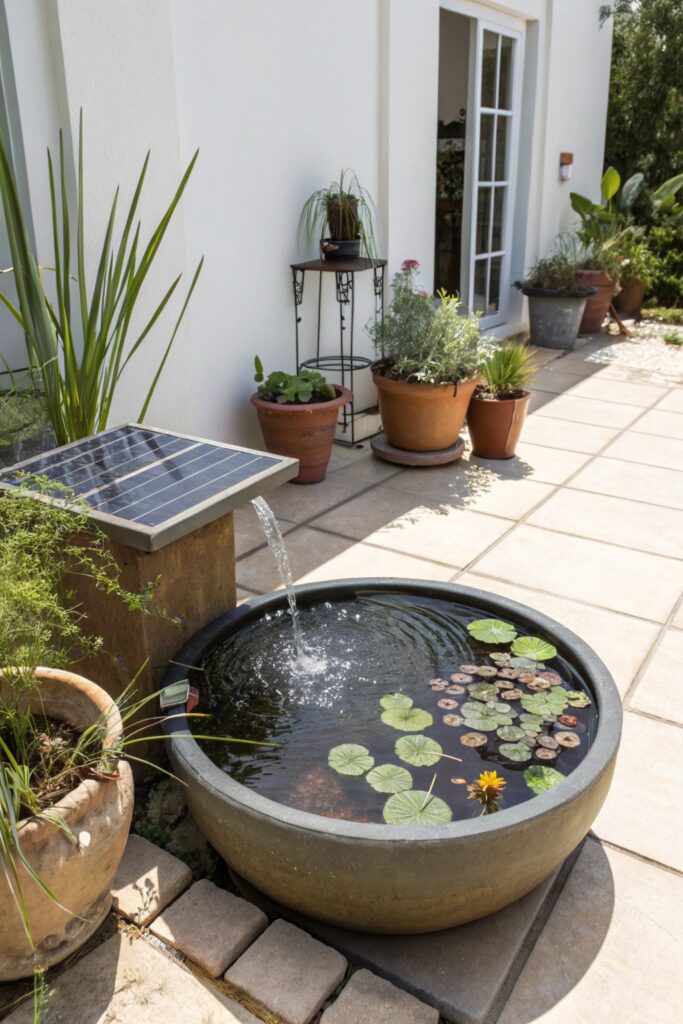
A solar-powered fountain pump ($25-50) eliminates the need to run electrical wiring to a container pond, making this one of the most installation-friendly options on this list, though output varies with sunlight and stops entirely after dark unless paired with a small battery backup.
10. Koi and Plant Balanced Ecosystem Ponds
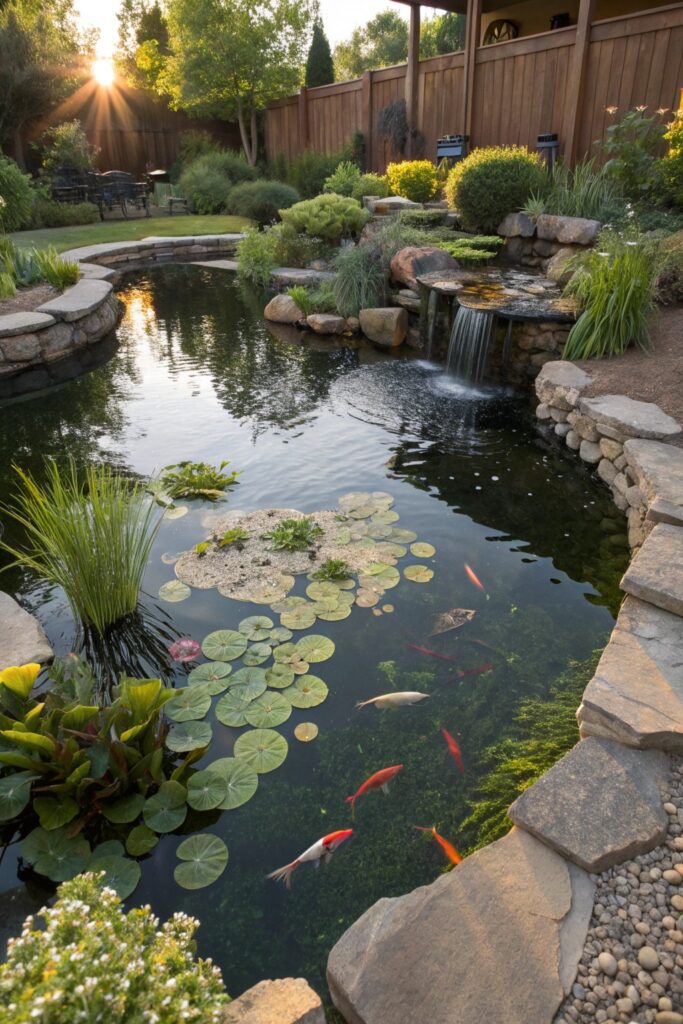
A pond designed around the balance between fish waste (which fertilizes plants) and plant growth (which filters water for fish) reduces reliance on mechanical filtration once established, though it takes several months for this biological balance to stabilize after initial setup. This approach requires more research into stocking density and plant coverage ratios than a simpler fish-only or plant-only pond.
11. Winter-Ready Ponds With De-Icers
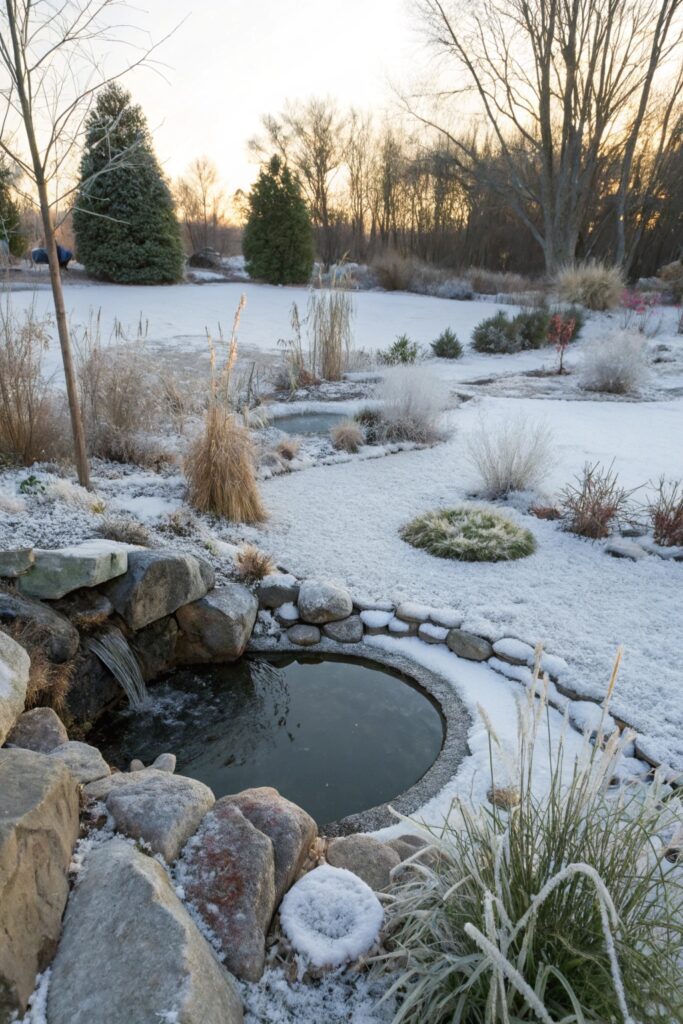
A floating pond de-icer ($30-60) keeps a small opening in the ice through winter, which is necessary for gas exchange in ponds housing fish or other aquatic life through cold months — a fully frozen surface can lead to fish loss from oxygen depletion. This is a genuine necessity rather than an optional upgrade for anyone keeping fish in a pond in a climate with hard winter freezes.
12. Container Ponds With Night Lighting
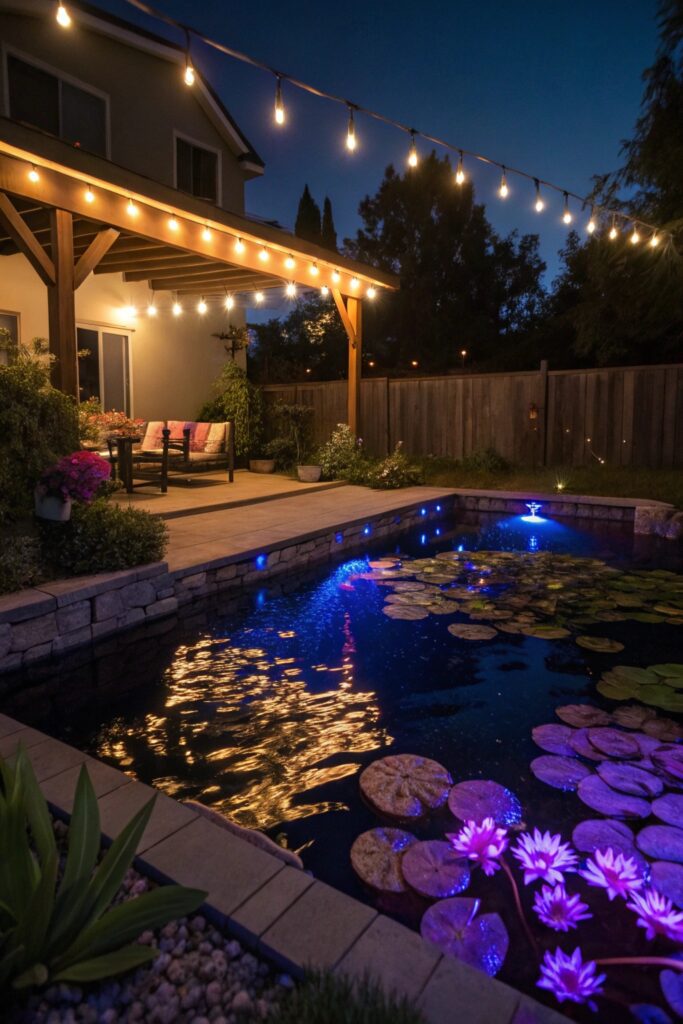
Submersible LED lights ($20-40 for a basic set) placed in a container pond or small water feature extend its visual impact into evening hours, and low-voltage or solar-powered options avoid the need for a dedicated electrical run to a patio or garden area.
Wrapping It Up
Container ponds are worth starting with if you’re unsure how much pond maintenance you actually want to take on — they let you test whether you enjoy the upkeep of moving water and aquatic plants before committing to the excavation and equipment cost of an in-ground pond. Winter preparation (de-icers, adequate depth) is non-negotiable if you’re keeping fish in a cold climate, regardless of which style you choose.