
A mudroom’s storage systems need to match your actual household’s habits — how many people share the space and how much daily gear passes through it — rather than a generic template that doesn’t account for your specific routine. The details below cover both the organizational approach and these practical specifics for each idea.
Below are 10 mudroom entryway ideas worth considering, with the specifics for each.
1. Install a Built-In Bench with Storage Underneath
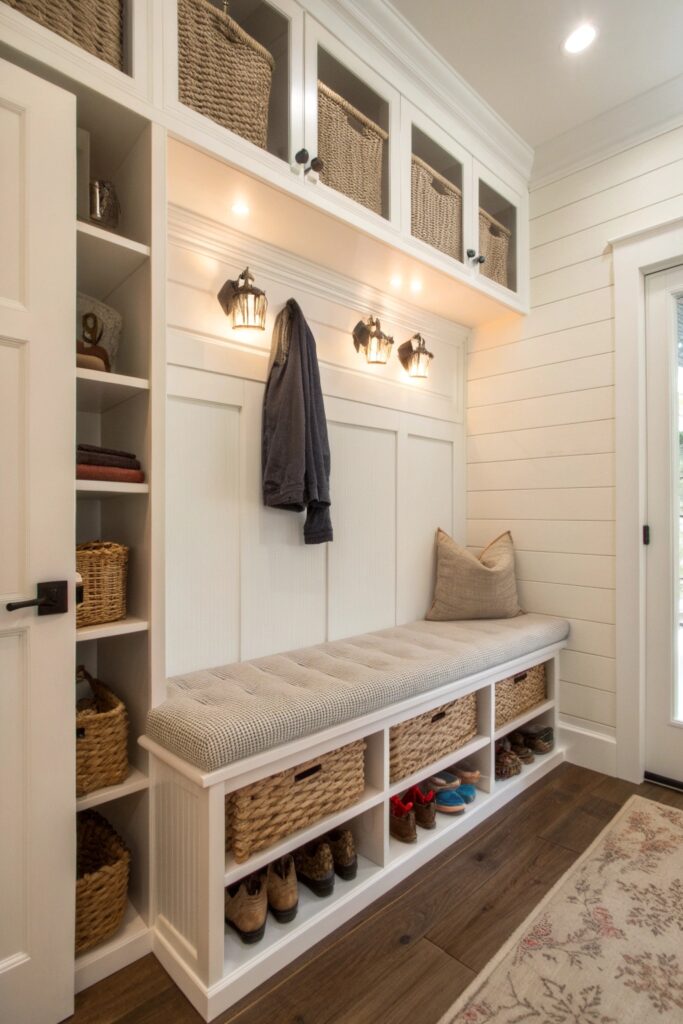
A bench needs a weight rating for repeated daily sitting, not just static load, and any hinged storage lid should have soft-close hardware or a lid support to prevent the slamming that leads to pinched fingers over time.
2. Add Hooks at Every Height Level
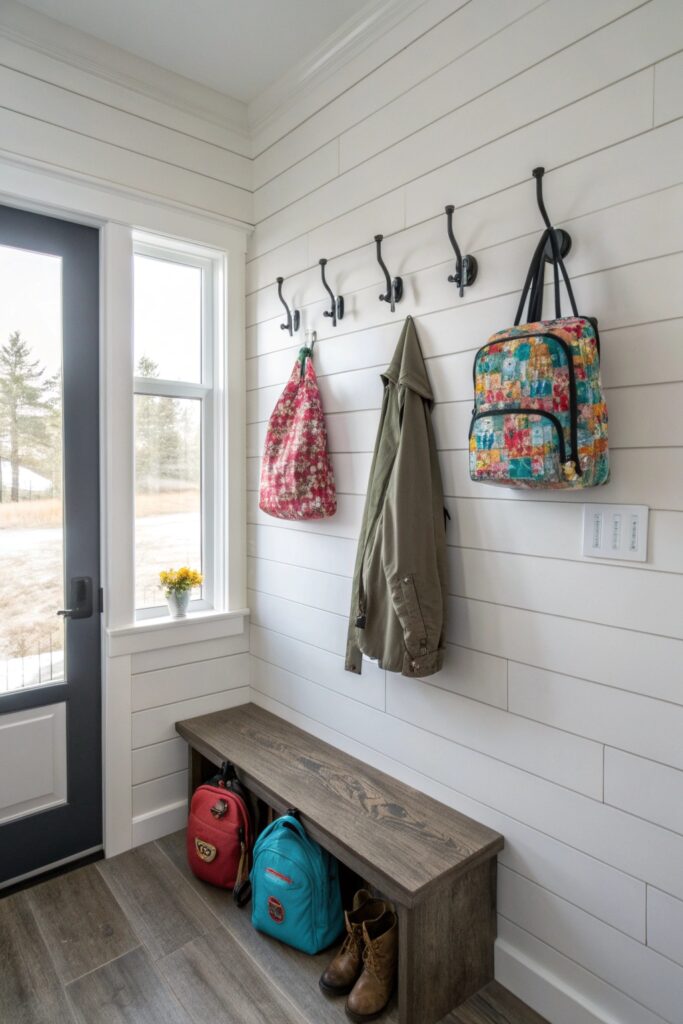
Lower hooks meant for kids need mounting into studs or properly rated drywall anchors, since the repeated tugging and pulling force from a child hanging a backpack is considerably harder on hardware than a lighter adult coat hung more gently.
3. Use a Vertical Shoe Organizer or Rack
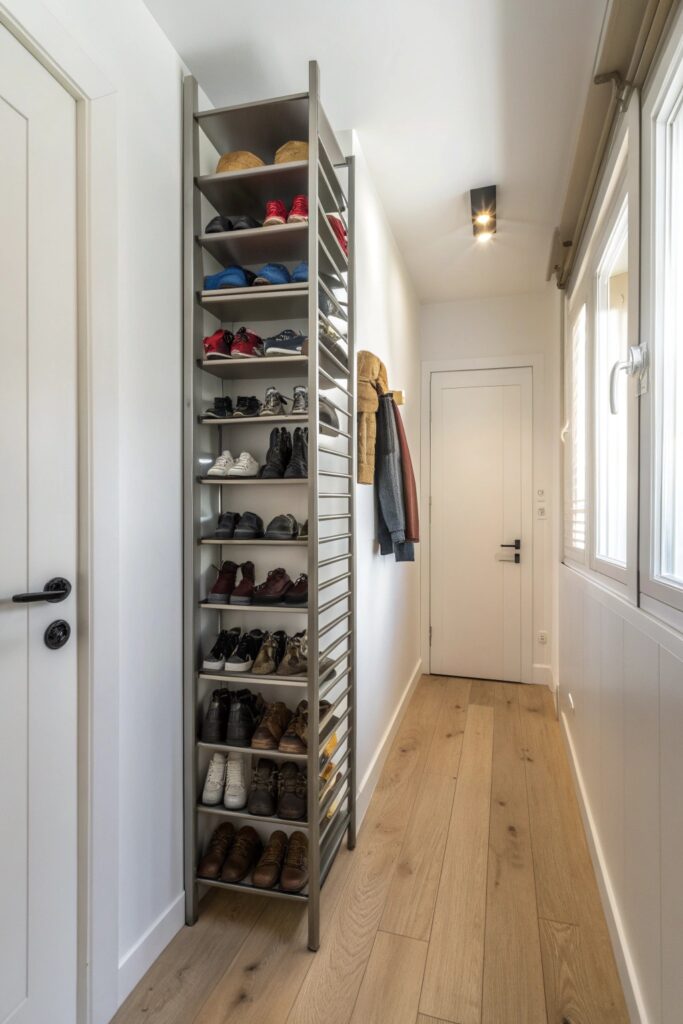
Choose a rack with a drip tray or water-resistant base material, since shoes coming straight from outside carry real moisture and mud that an open wire rack alone won’t contain, letting it drip straight onto your floor.
4. Create Dedicated Cubbies for Each Family Member
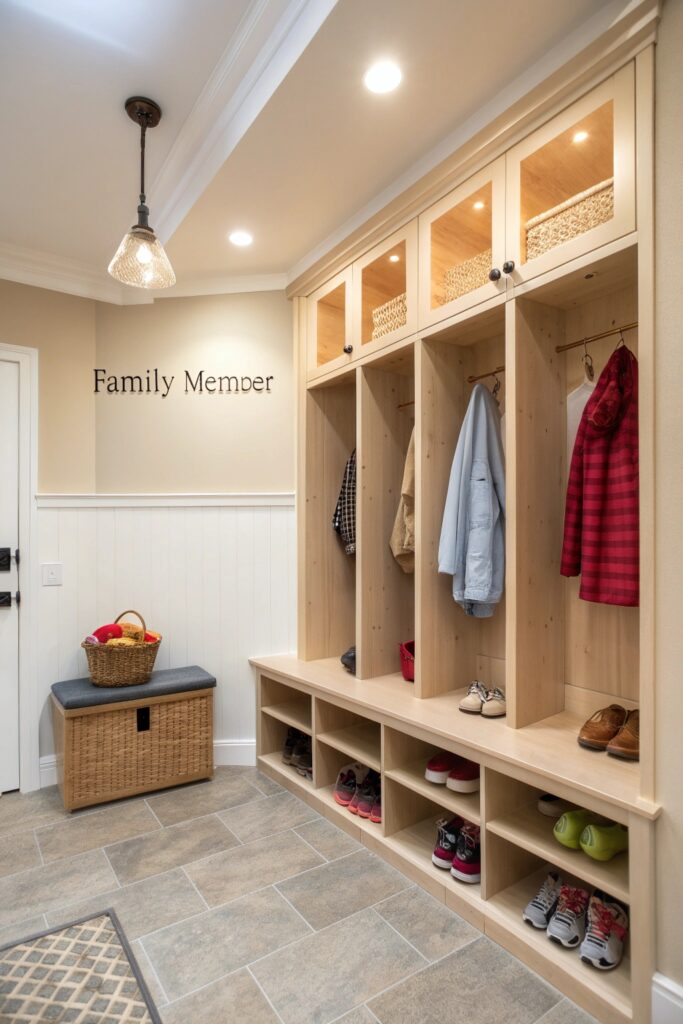
Labeling each cubby with a name or tag noticeably increases the odds kids actually use their assigned spot rather than dropping items in whatever cubby is nearest the door.
5. Hang a Pegboard for Maximum Flexibility
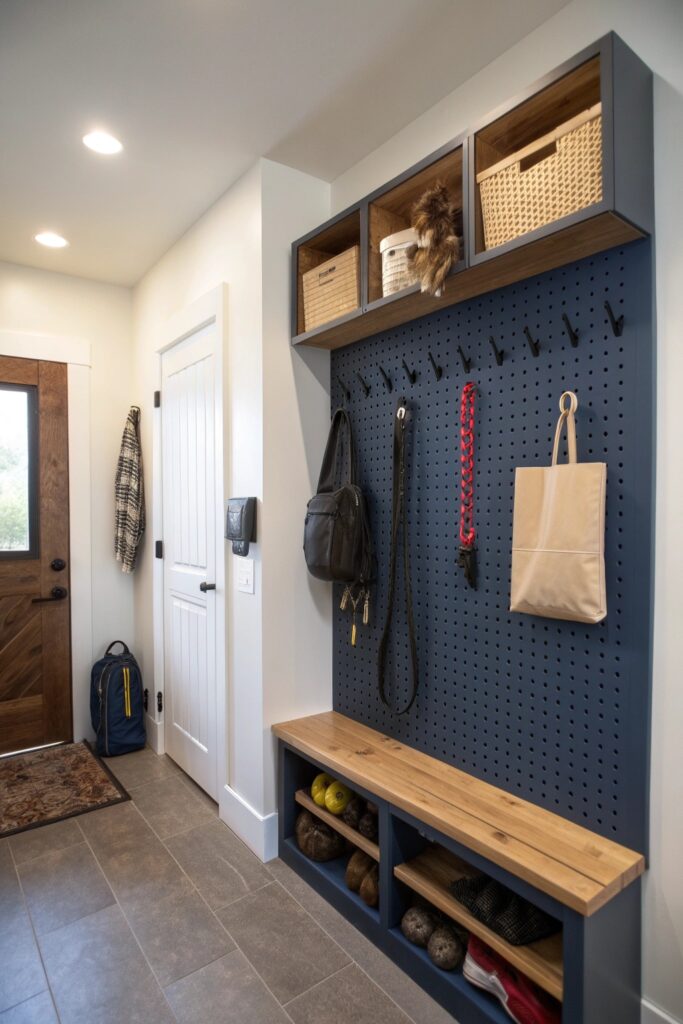
Pegboard needs a quarter to half inch of standoff spacing from the wall for hooks to insert and hold securely, the same requirement that applies to pegboard used anywhere else in the house.
6. Add a Drop Zone for Keys, Mail, and Daily Essentials
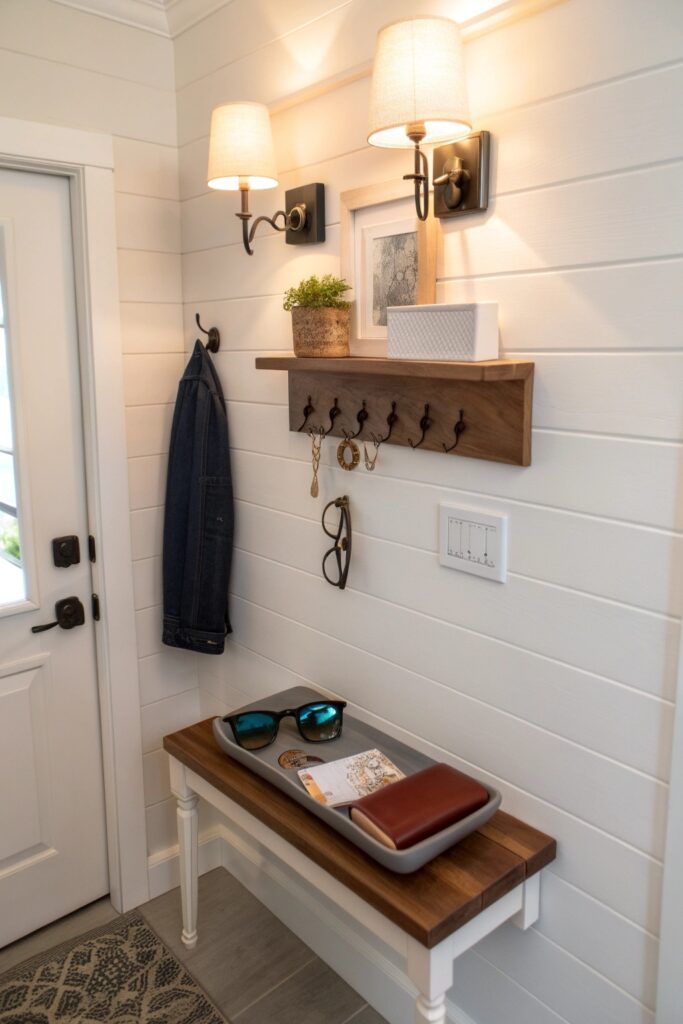
Position the drop zone somewhere visible from the door but out of the direct walking path, since a small dish or tray placed on the floor or a low surface in a high-traffic entry becomes a real trip hazard.
7. Incorporate a Coat Closet with Smart Interior Organization
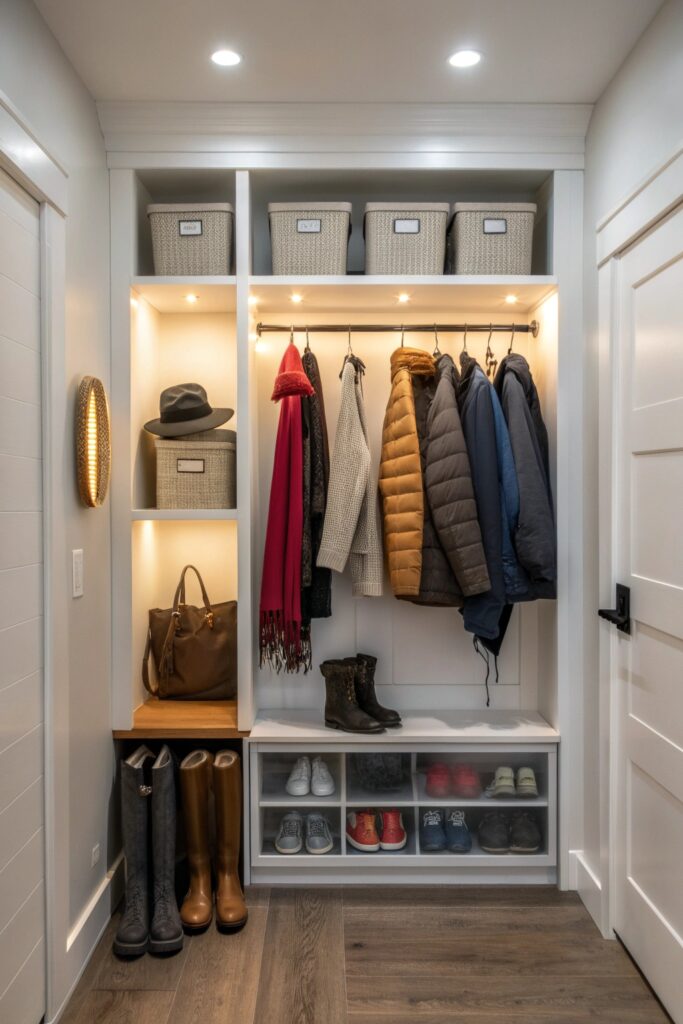
A single rod height forces either kids or adults to rely on floor hooks instead of the closet, so adding a second, lower rod specifically for shorter coats makes better use of the space if closet depth allows for it.
8. Use Baskets and Bins to Corral the Small Stuff
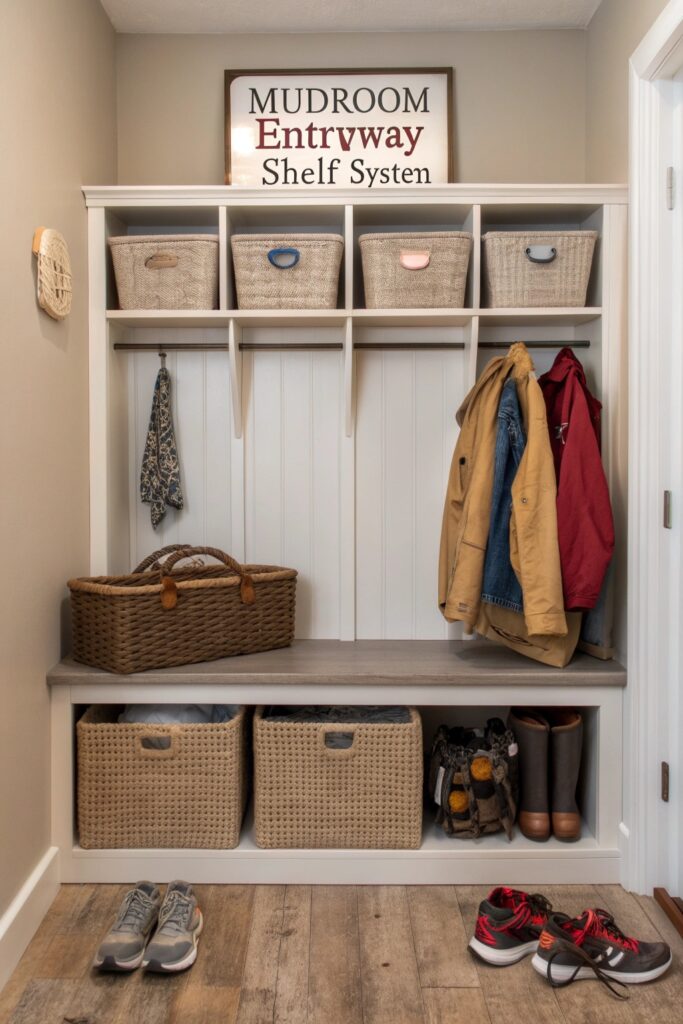
Bins meant to hold heavier items like boots or sports gear need real structural shelving support rated for that weight, not just a decorative open shelf meant for lighter display pieces.
9. Layer in Lighting for Function and Ambiance
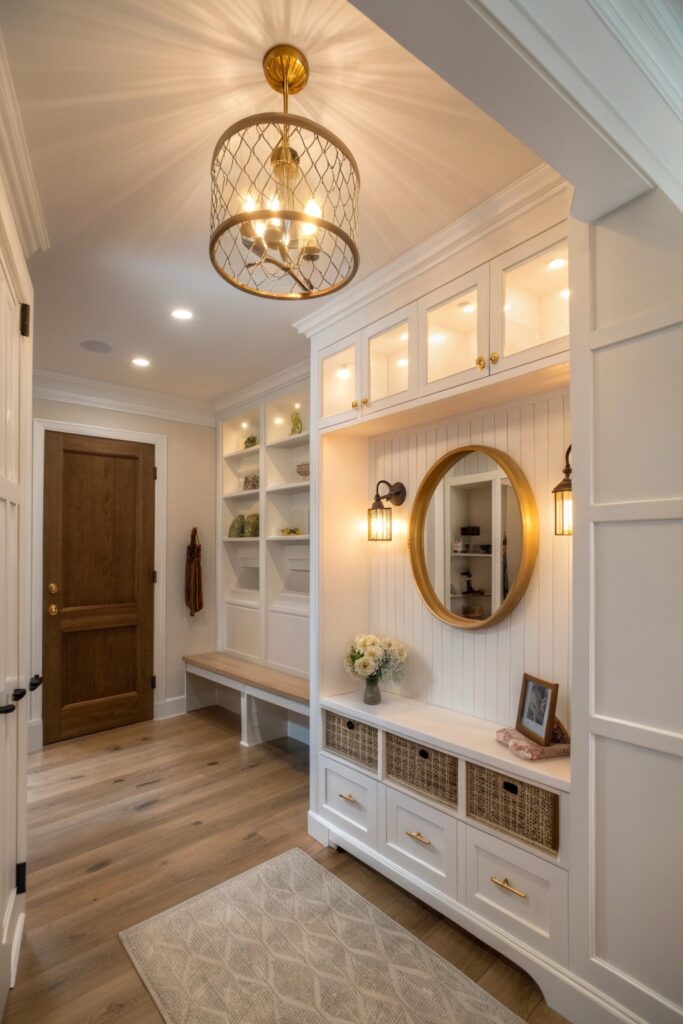
Mudrooms frequently lack windows, so a light with a higher color rendering index helps you actually see true colors when checking an outfit or grabbing an item on your way out, which matters more here than in a room used mainly for atmosphere.
10. Bring in a Durable, Easy-Clean Rug
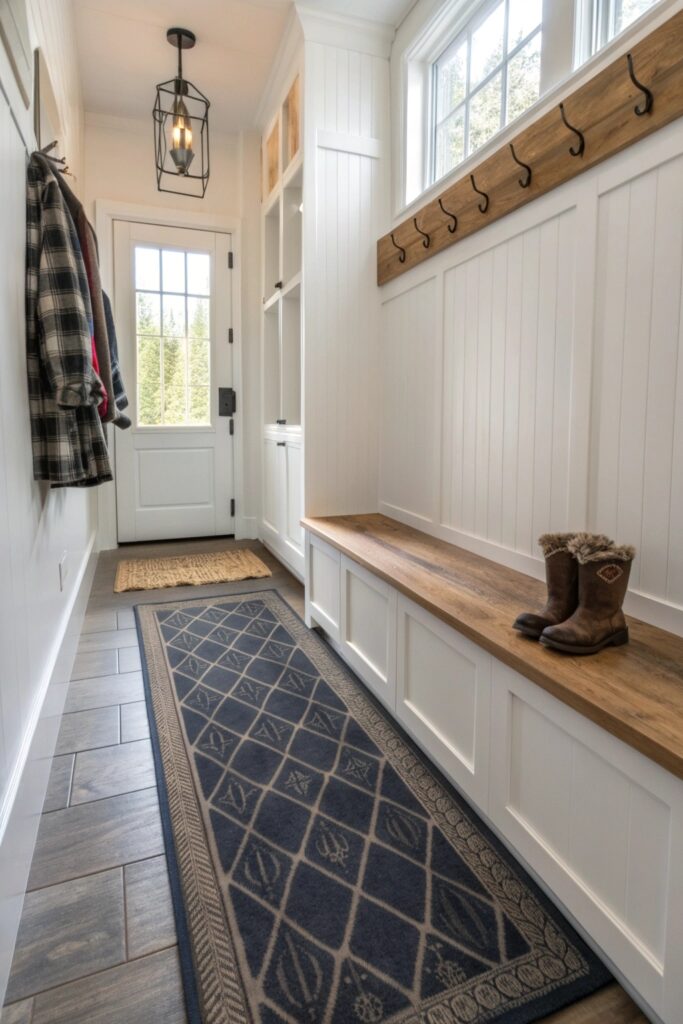
A rug positioned directly inside the entry door needs a non-slip backing specifically rated for wet conditions, since this specific spot sees more regular water and mud crossing it than almost anywhere else in the house.
Flooring That Handles Real Daily Traffic
Tile, sealed concrete, or luxury vinyl plank hold up to the wet shoes, mud, and pet paws a mudroom sees far better than carpet or unsealed hardwood, which absorb moisture and stain more easily in this specific location.
A slightly textured floor finish provides better traction than a high-gloss surface when the floor is wet, which is worth prioritizing over a purely aesthetic choice given how often this room actually gets wet.
What a Mudroom Organization Update Costs
A basic refresh using hooks, baskets, and a small bench typically costs $150 to $500 depending on material quality.
A fuller build-out including custom cubbies, a built-in bench, and closet reorganization runs considerably higher, often $2,000 to $6,000 or more depending on the scope.
Ventilation Matters More Than People Expect
Wet coats, damp shoes, and muddy boots all release moisture into a relatively enclosed space, so a mudroom without a window or exhaust fan can develop a musty smell or even mold over time if that humidity has nowhere to go.
A small dehumidifier or even a well-placed fan running for a while after everyone comes in from wet weather helps manage this, particularly in a mudroom that connects directly to a garage or basement with less natural airflow.
Building a Habit Around the Space
Even the best-designed storage system only works if everyone in the household actually uses it consistently, so involving kids in setting up their own cubby or hook, rather than assigning it without input, tends to improve follow-through.
A quick nightly reset — putting shoes back on the rack, hanging up coats, clearing the drop zone — takes only a couple of minutes but keeps the space from sliding back into clutter within the first week.
Getting quotes from at least two or three contractors before starting a larger built-in project helps confirm both pricing and their familiarity with the specific storage systems you have in mind, since custom cubby and bench work varies considerably in complexity depending on the design.
A mudroom that actually works tends to reduce daily stress in a way that’s easy to underestimate until it’s in place — fewer scrambles for missing shoes or keys on the way out the door adds up to real time saved over the course of a week.
Seasonal gear rotation is worth planning for too — swapping heavy winter coats and boots for lighter jackets and rain gear as the seasons change keeps the space from becoming overcrowded with items that only get used a few months out of the year.
Whichever combination of these ideas fits your entryway and household size, the underlying goal is the same — a system your family will actually use consistently tends to matter more than one that simply looks organized in photos but doesn’t hold up to daily reality.
A well-organized entryway is one of the more practical investments a busy household can make.
Wrap It Up: Your Organized Entryway Starts Now
Starting with the one or two systems that address your household’s biggest daily friction point — a shoe pile by the door, backpacks dropped in the hallway — tends to produce more lasting change than trying to overhaul the entire entryway at once.
Revisiting the setup every few months as your family’s needs shift, particularly as kids grow and their gear changes, keeps the space working as well in a year as it does on the day you first organize it.