
A nursery calls for a different design approach than any other room in the house, since real safety standards — crib slat spacing, cordless window coverings, anchored furniture — need to guide the aesthetic choices rather than the reverse. The details below cover both the decorating direction and the specific safety guidelines worth knowing for each element.
Below are 12 elements worth focusing on, with the practical details for each.
1. Soft Neutral Color Palette for a Calm Vibe
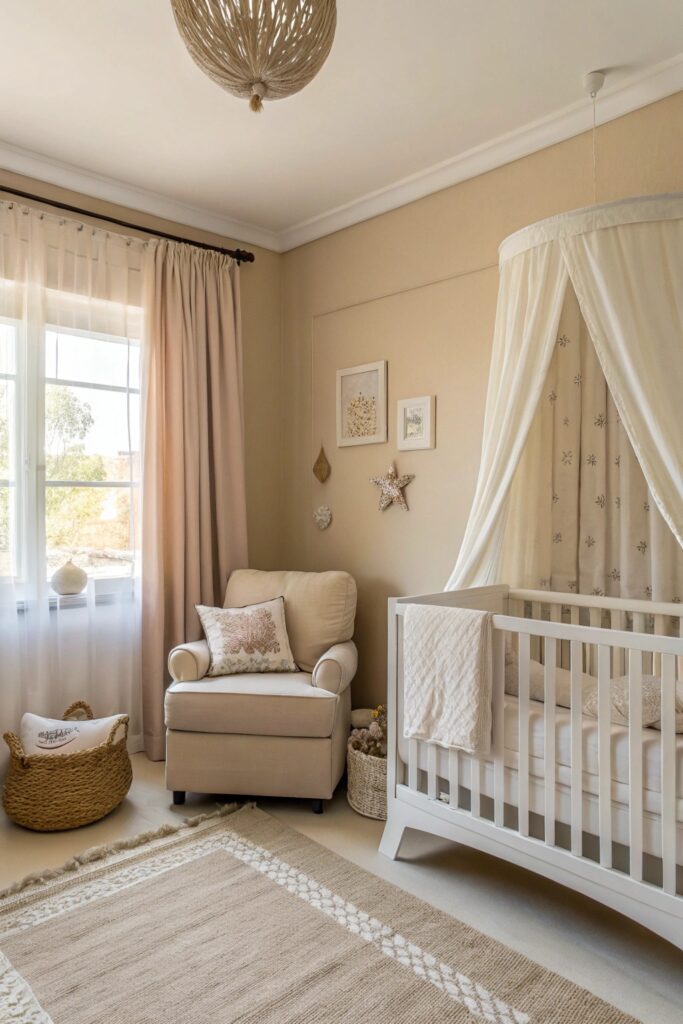
Colors with a higher light reflectance value, generally above 60, keep a nursery feeling bright even with the smaller windows many nurseries have. Neutral palettes also age well as the child grows, avoiding the need to repaint every time a color trend shifts.
2. Cozy and Safe Crib Styling
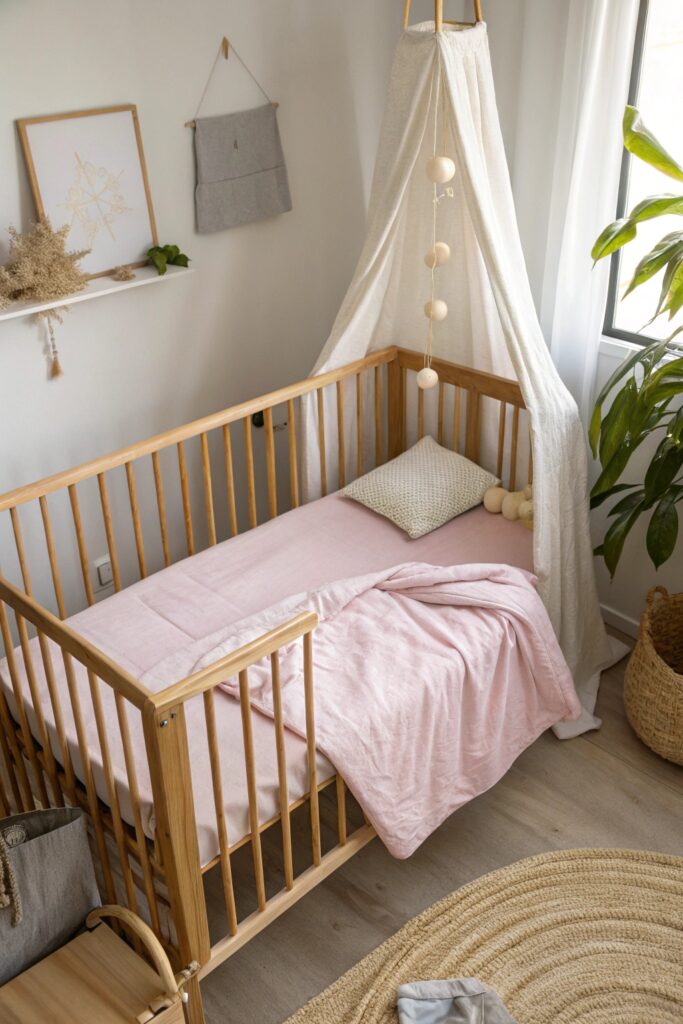
Current pediatric safety guidelines recommend keeping cribs free of loose bedding, bumpers, and pillows for infants under 12 months, since soft bedding in the sleep space is associated with increased suffocation risk. Federal crib safety standards also require slat spacing no wider than 2 and 3/8 inches, and a mattress that fits snugly enough that no more than two fingers fit between it and the crib frame.
Styling within these guidelines still leaves plenty of room for a coordinated look — a crib skirt, a wall-mounted design above the crib, or coordinating nursery furniture finishes all work well without compromising sleep safety.
3. Cute Wall Art That Sparks Joy
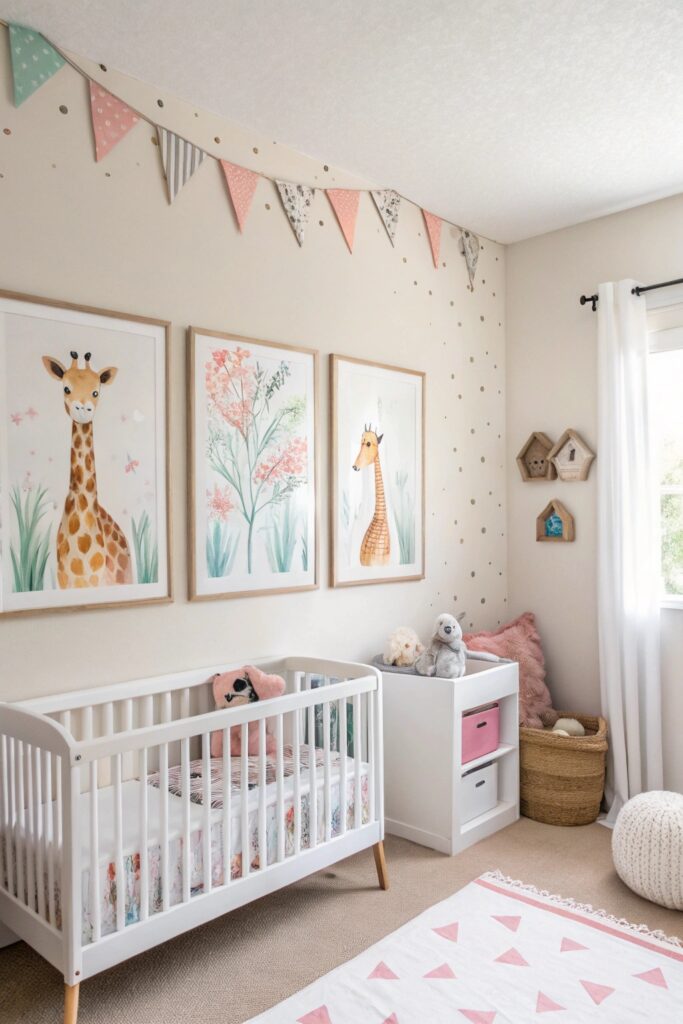
Keep any hanging art or decor with strings, ribbons, or cords well away from the crib itself, since these present a strangulation risk if a child can reach them. Anchoring frames into wall studs, rather than relying on drywall anchors alone, keeps larger pieces secure as a child grows and becomes more mobile.
4. Functional Yet Stylish Storage Solutions
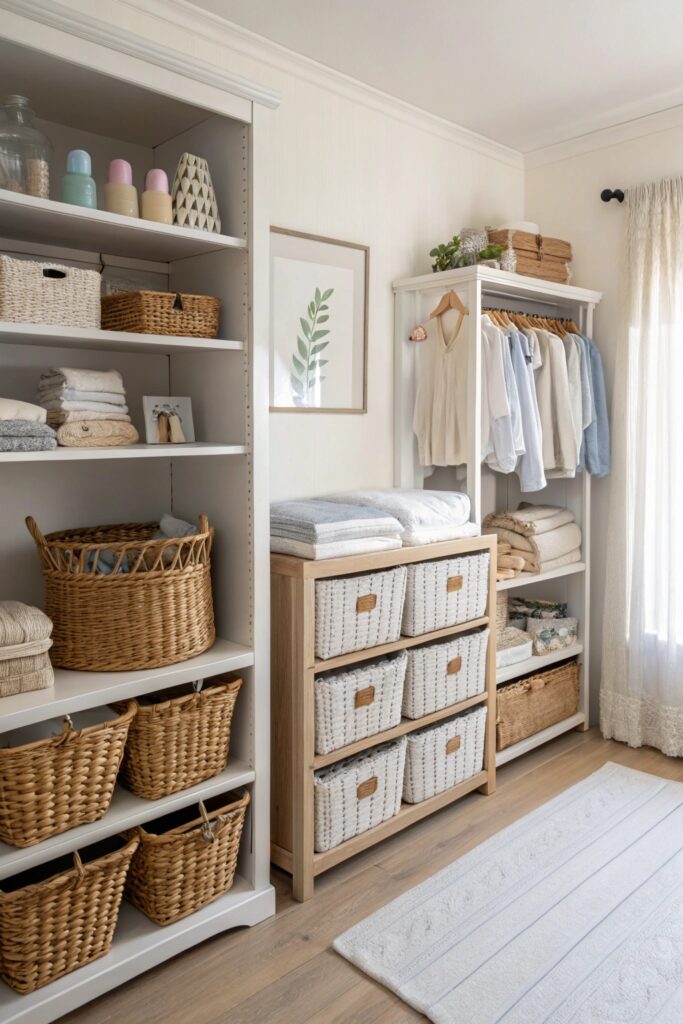
Anchoring dressers and taller storage furniture to the wall is a genuine safety requirement, not just a suggestion — furniture tip-overs are a recognized hazard once a child starts pulling up to stand, and anchoring kits are inexpensive and straightforward to install. Soft-close drawers and doors also reduce the risk of pinched fingers as a child gets older and starts exploring the furniture themselves.
5. Soft Lighting for a Relaxing Atmosphere
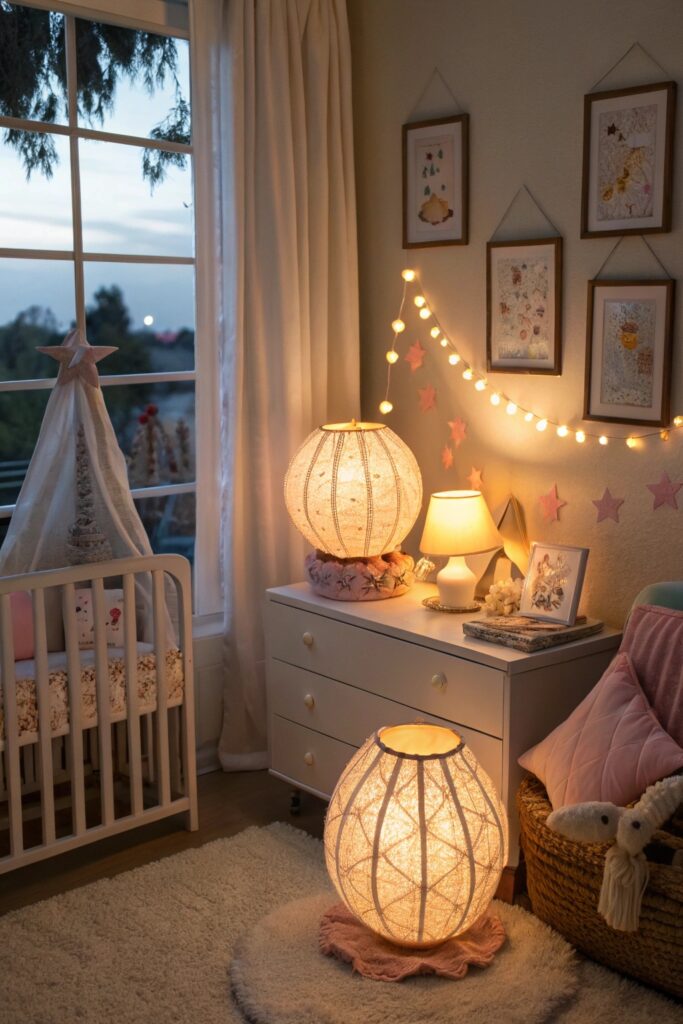
A dimmable fixture makes middle-of-the-night feeds considerably easier to manage without fully waking anyone with bright overhead light. Warmer-toned bulbs, similar to candlelight, are generally preferable to cooler blue-toned light in the evening, since blue-heavy light has a more disruptive effect on the body’s natural sleep signals.
6. Add a Comfortable Nursing Chair
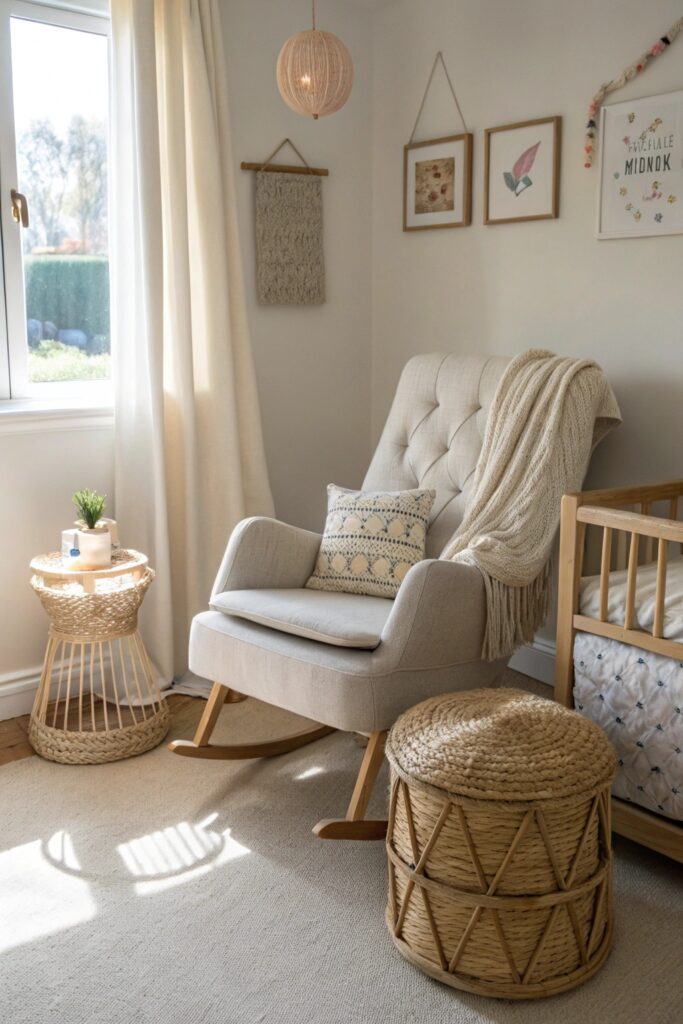
Look for armrests at a height that lets your arms rest comfortably while holding a baby for extended periods, since nursing or bottle sessions often run considerably longer than a typical seated task. A washable or easily wipeable fabric holds up better to spit-up and spills than a delicate upholstery that requires professional cleaning.
7. Playful Rugs for Warmth and Texture
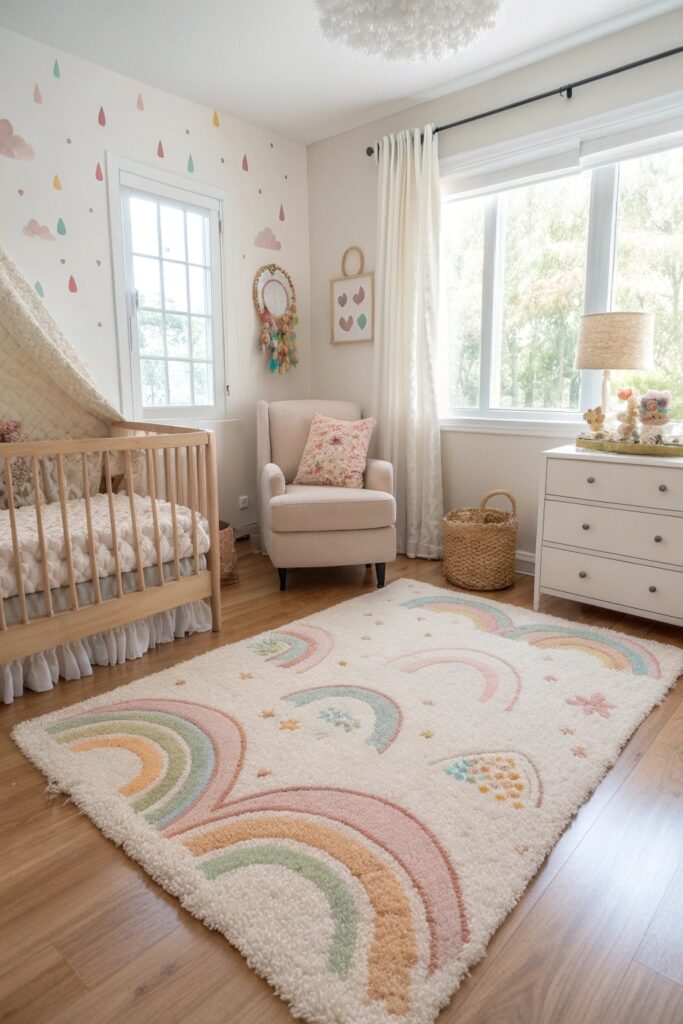
A low-pile rug is easier to keep clean and provides a more stable surface once a baby starts crawling than a high-pile or shag style. Looking for a rug certified low-VOC or specifically tested for indoor air quality is worth the extra step, since a baby spends considerable time at floor level breathing air closer to any off-gassing materials.
8. Personalized Decor for a Special Touch
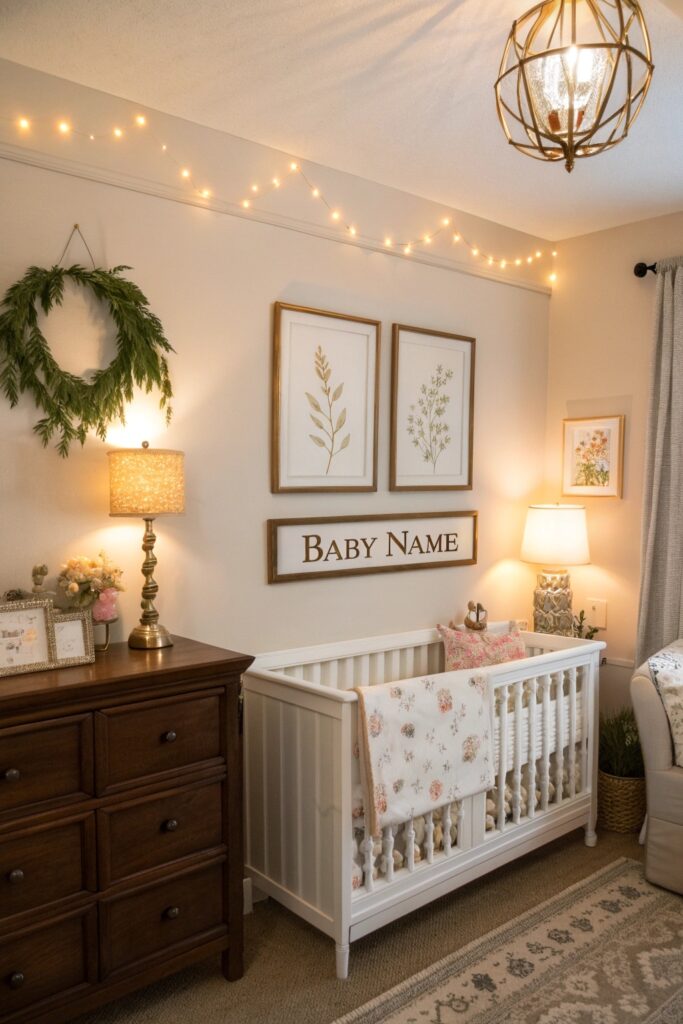
A name sign, a custom piece of art, or a family heirloom incorporated into the room gives it genuine meaning beyond a generic nursery template. Keep any small decorative objects out of crib and floor-level reach once the child becomes mobile, since small parts present a choking hazard for infants and toddlers.
9. Floating Shelves for Display and Storage
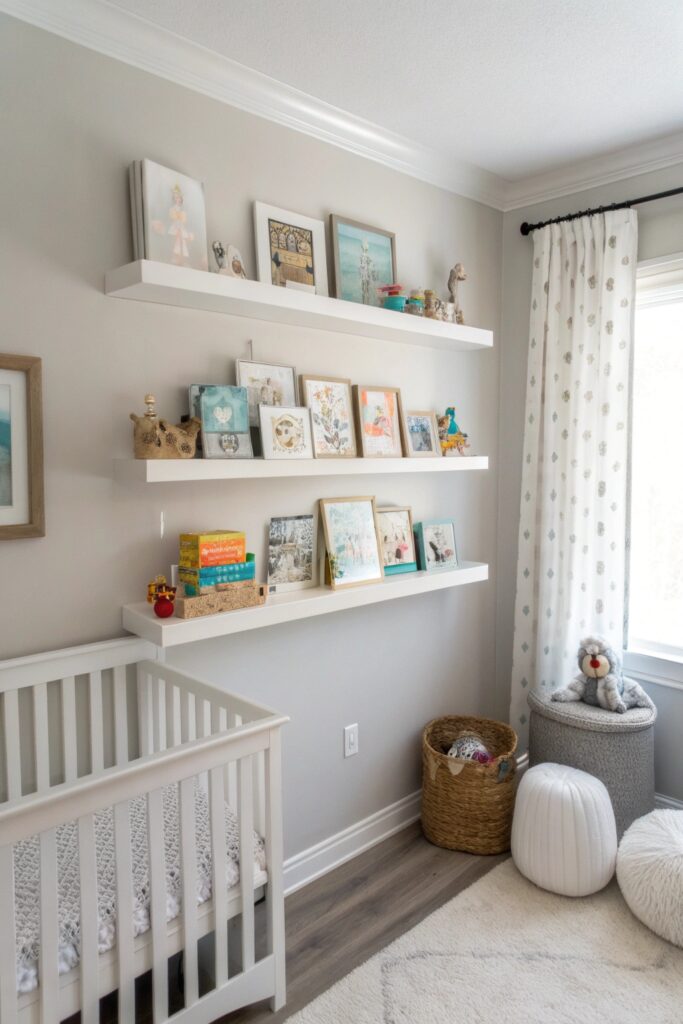
As with wall art, anchor shelves into studs and keep them positioned away from the crib, both to prevent tip-over risk and to keep items out of an increasingly mobile child’s reach as they grow.
10. Soft Curtains for Light Control
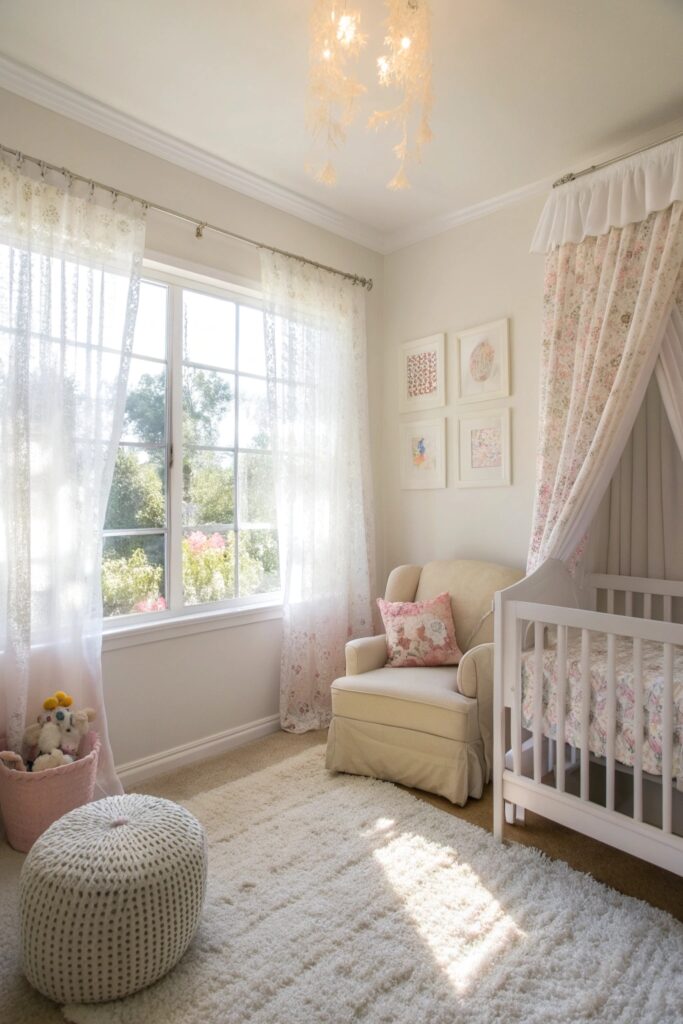
Cordless window treatments are the current safety standard for any room a child spends time in, since corded blinds have long been recognized as a strangulation hazard. Blackout-lined curtains help considerably with daytime naps, blocking enough light to support sleep even during bright afternoon hours.
11. Nature-Inspired Elements for a Fresh Feel
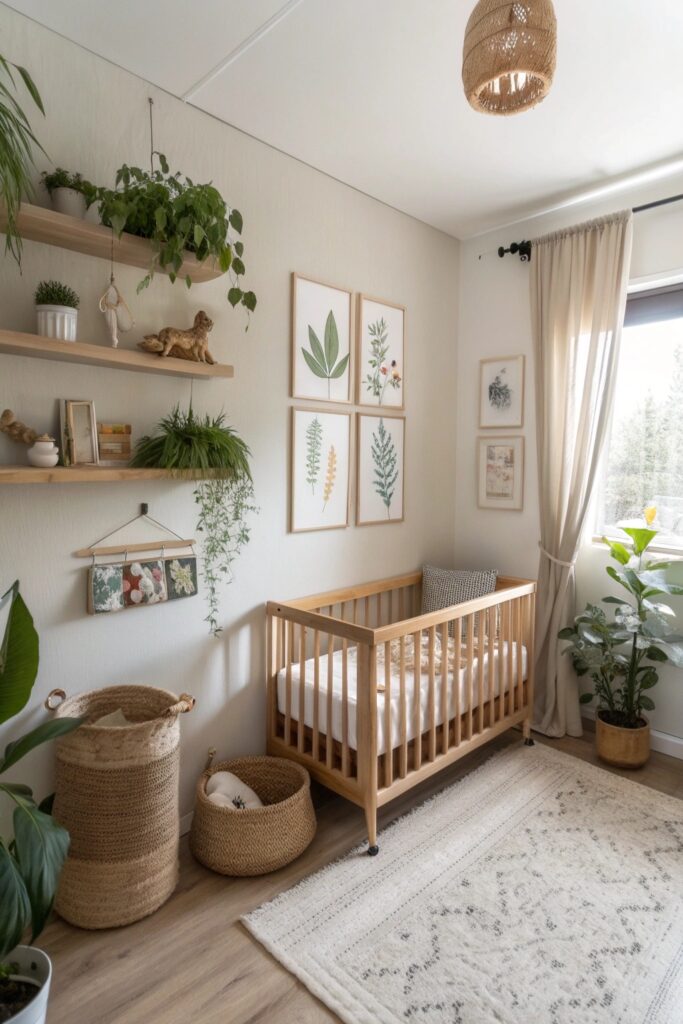
If including real plants, keep them positioned well out of reach on a high shelf, since some common houseplants aren’t safe if ingested and a nursery is a room where curious hands and mouths explore everything within reach. Faux botanical elements avoid this concern entirely while still bringing in the same visual softness.
12. Keep It Minimal and Clutter-Free
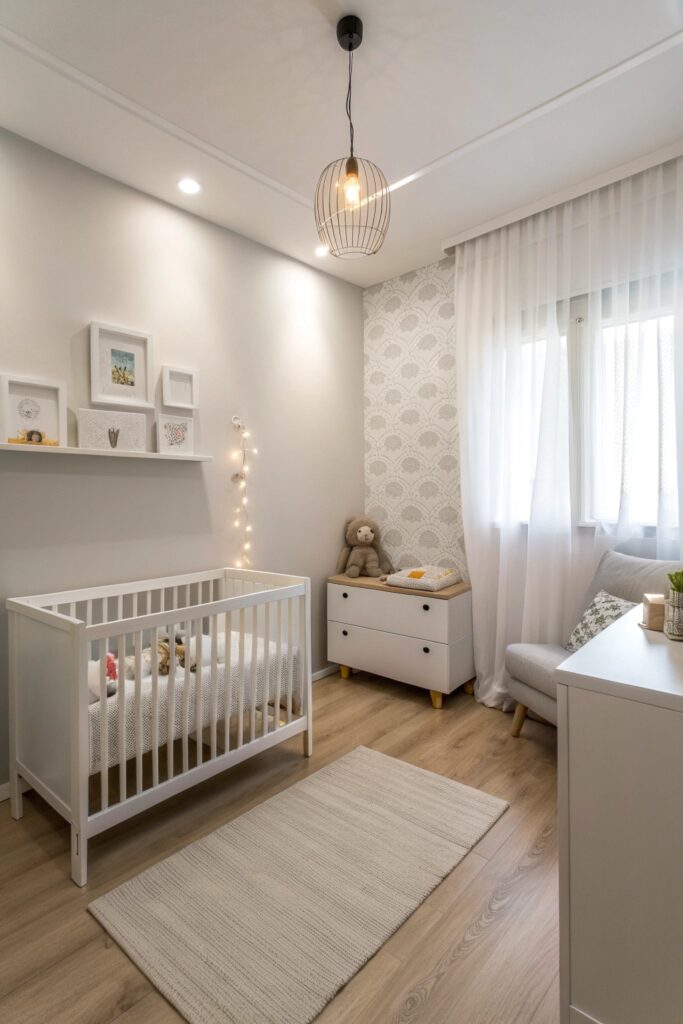
Keeping the floor clear of small objects and loose decor becomes more important as a baby starts crawling and later walking, since floor-level clutter both presents a hazard and makes the room harder to actually use day to day.
Checking Secondhand and Hand-Me-Down Furniture
Cribs and other nursery furniture passed down or bought secondhand should be checked against current safety standards before use, since recall notices and updated regulations happen more often than people expect. A quick search of the manufacturer and model against the Consumer Product Safety Commission’s recall database takes just a few minutes and confirms the piece hasn’t been flagged for a safety issue.
Older cribs — particularly anything manufactured before 2011, when federal crib safety standards were significantly updated — are worth extra scrutiny, since slat spacing and drop-side mechanisms from that era don’t always meet current requirements.
What a Nursery Setup Costs
A basic nursery with a crib, dresser, and simple decor typically costs $800 to $2,000 depending on furniture quality.
A fuller room including a glider, custom wall treatments, and higher-end textiles runs considerably higher, often $2,500 to $6,000 or more, with the crib and nursing chair usually representing the largest individual expenses.
It’s also worth confirming smoke and carbon monoxide detectors are installed and working near the nursery specifically, and testing them on the same schedule as the rest of the home. This is easy to overlook amid furniture and decor planning, but it’s one of the more meaningful safety steps for any room where a family member sleeps regularly.
Safety Standards Come Before Style in Every Case
Of everything covered here, a handful of choices are non-negotiable rather than style preferences: crib slat spacing and bedding guidelines, anchored furniture, and cordless window treatments. These reflect actual published safety standards from pediatric and consumer safety organizations, not just cautious suggestions, and they’re worth confirming before finalizing any nursery purchase, even secondhand furniture that might predate current standards.
Once those fundamentals are covered, the room has plenty of room for personal style — color, art, textiles, and the smaller decorative touches that make a nursery feel prepared for the family moving into it rather than a generic template.