
A nursery deserves the same real safety attention as any room a baby spends unsupervised time in, since aesthetic choices like a canopy or macrame hanging carry documented infant safety considerations that don’t apply the same way elsewhere in the house. The details below cover both the design direction and these practical safety specifics for each idea.
Below are 11 baby girl nursery ideas worth considering, with the specifics for each.
1. Soft Pink & Neutral Color Palette
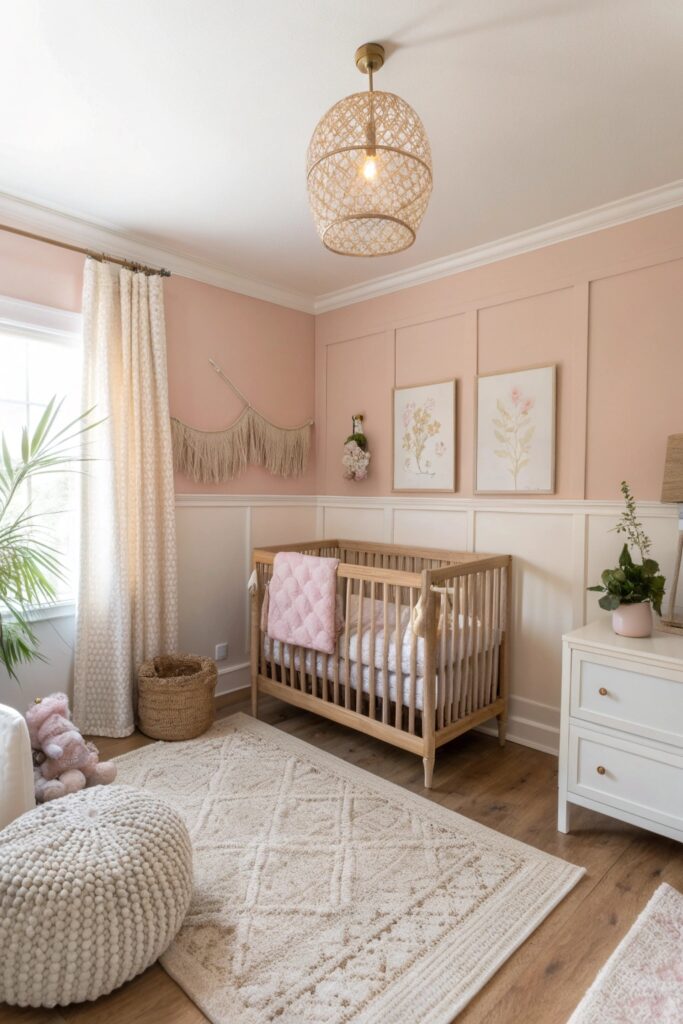
Choose a low-VOC, matte-finish paint specifically for this room, given how much time an infant spends breathing the air here compared to almost any other room in the house.
2. Floral Accent Wall for a Sweet Touch
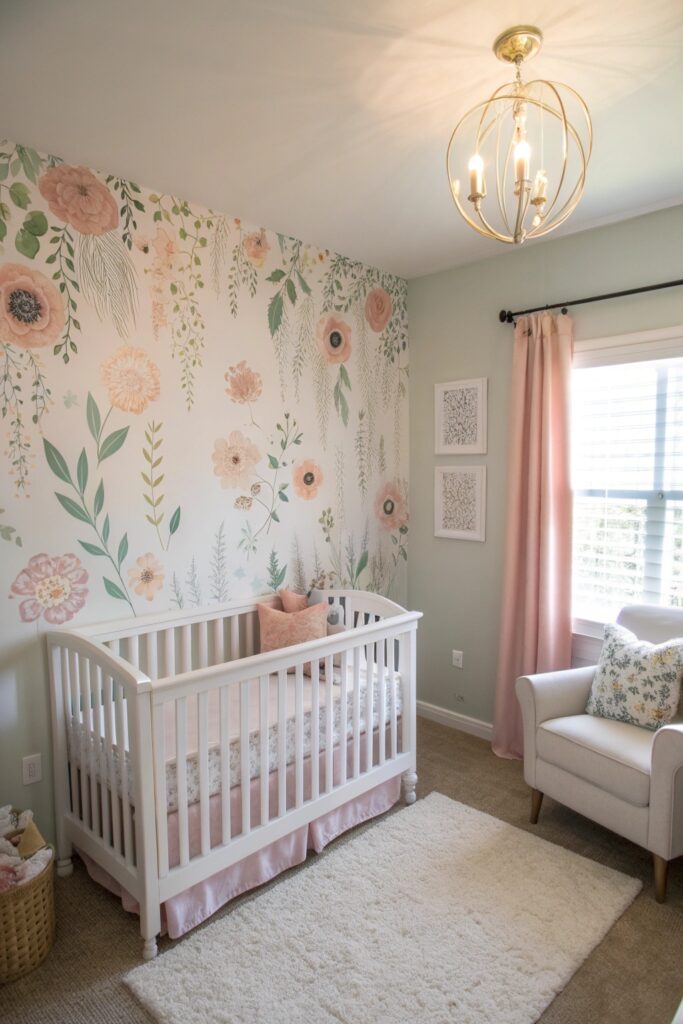
Choose wallpaper or decals rated non-toxic and securely adhered if placed within crib reach, since infants explore surfaces by mouth once they’re mobile enough to reach the wall.
3. Minimalist Scandinavian Nursery
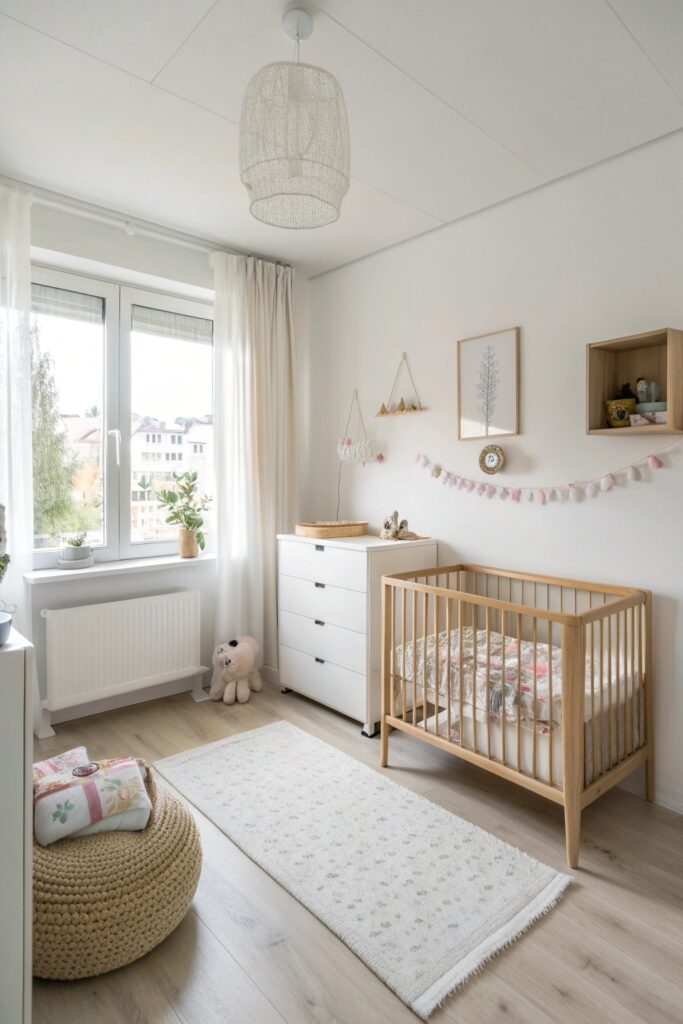
A pared-back aesthetic doesn’t reduce the need for anti-tip furniture anchors — any dresser or shelving unit still needs to be secured to the wall regardless of how minimal the overall room design is.
4. Canopy Over the Crib for a Dreamy Look
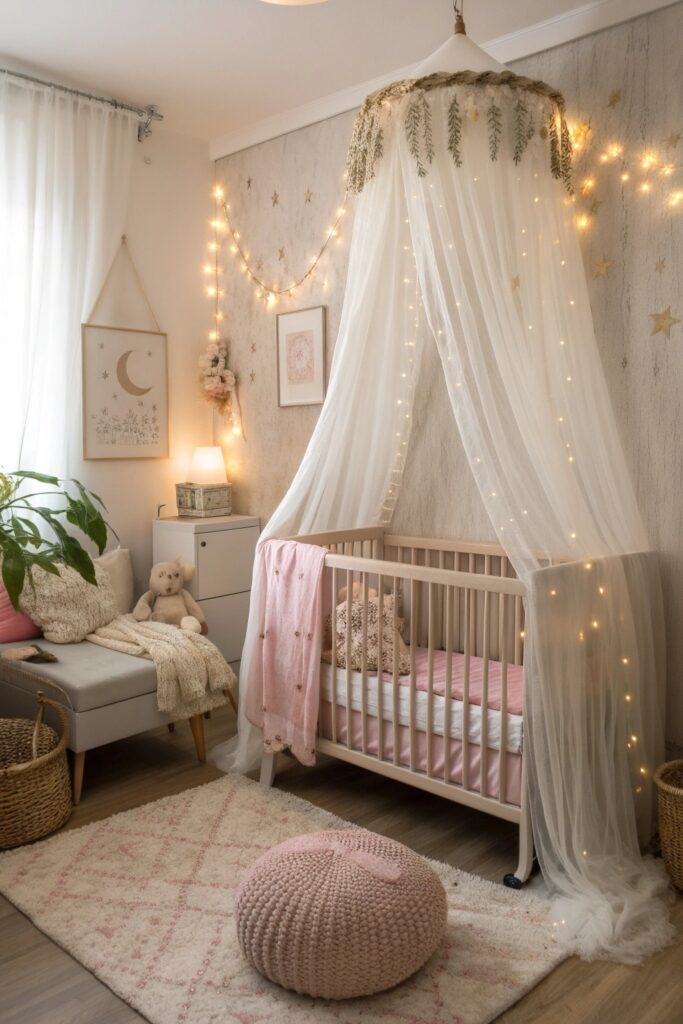
Mount any canopy well out of the crib’s reach or choose a rigid frame positioned high above, since soft fabric hanging low enough for a baby to grab poses a real strangulation risk pediatric safety guidance specifically warns against.
5. Personalized Name Decor
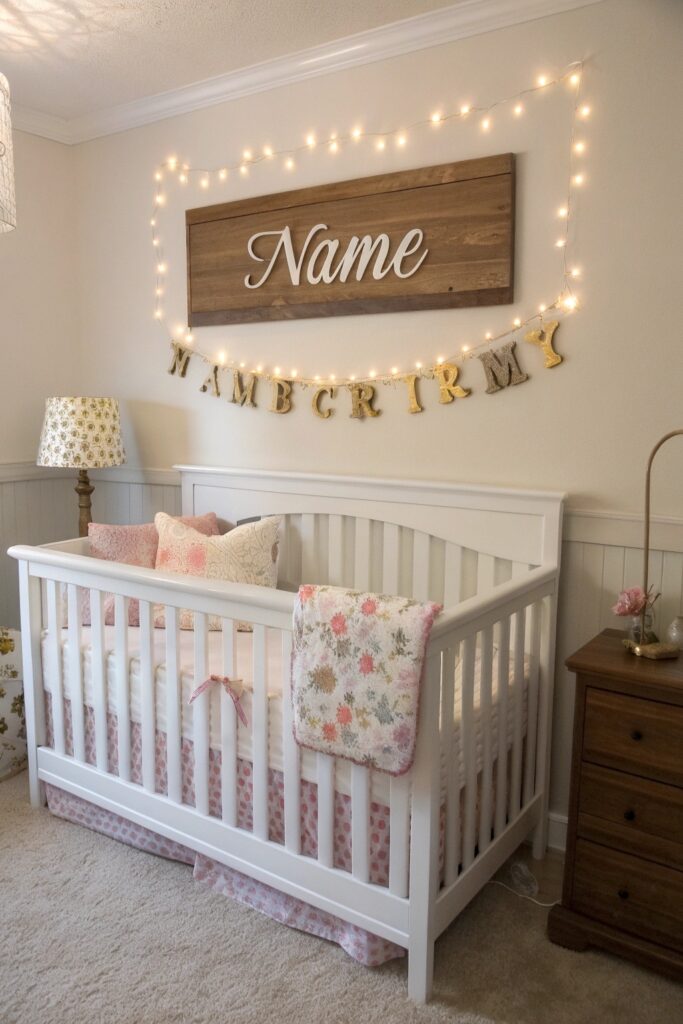
Wall-mounted letters need anchoring appropriate to their weight and material, the same standard that applies to any wall-mounted piece elsewhere in the house.
6. Cozy Reading Nook Corner
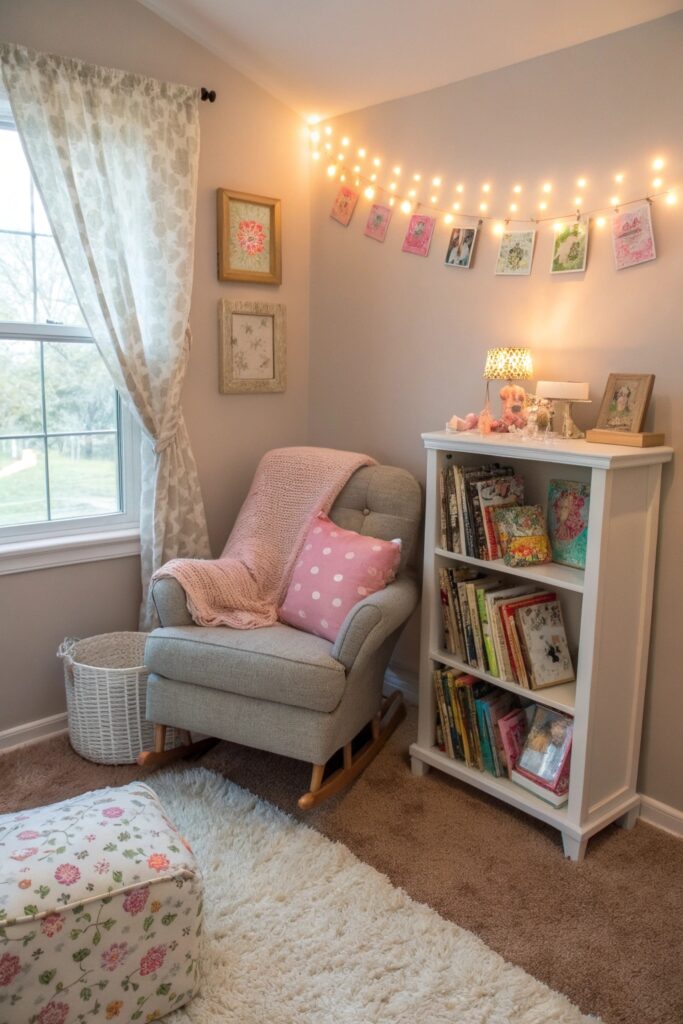
Choose a glider or chair with a truly stable, non-tip base, since this seat sees regular late-night use while holding an infant, a different demand than a decorative chair used occasionally.
7. Cute Animal Theme Nursery
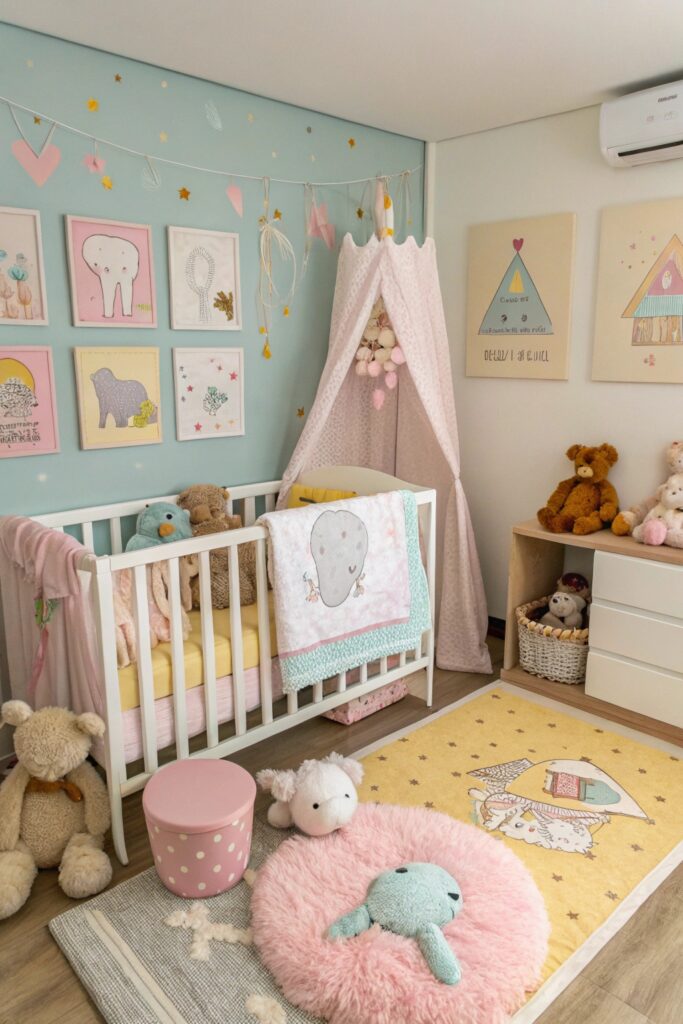
Confirm any themed decor pieces within reach of the crib or changing table use the same non-toxic materials and secure mounting as the rest of the room’s furnishings.
8. Vintage-Inspired Nursery Design
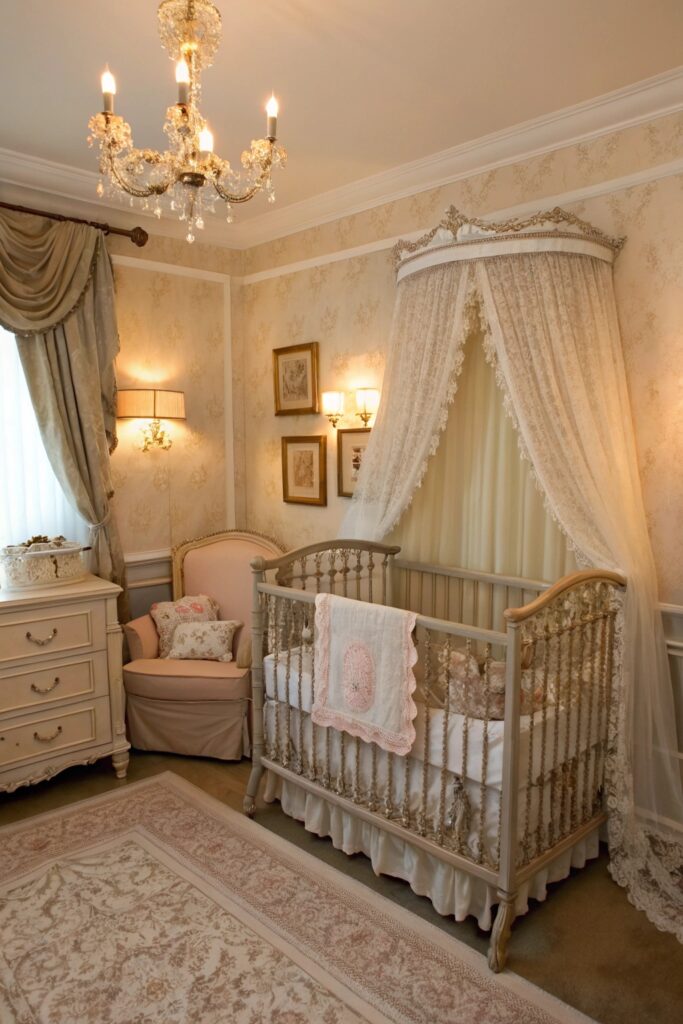
Confirm any genuine vintage crib meets current safety standards before actual infant use, since older cribs can have slat spacing or drop-side mechanisms that no longer meet today’s requirements — vintage dressers or shelving repurposed as decor or storage don’t carry this same restriction.
9. Boho Chic Nursery Vibes
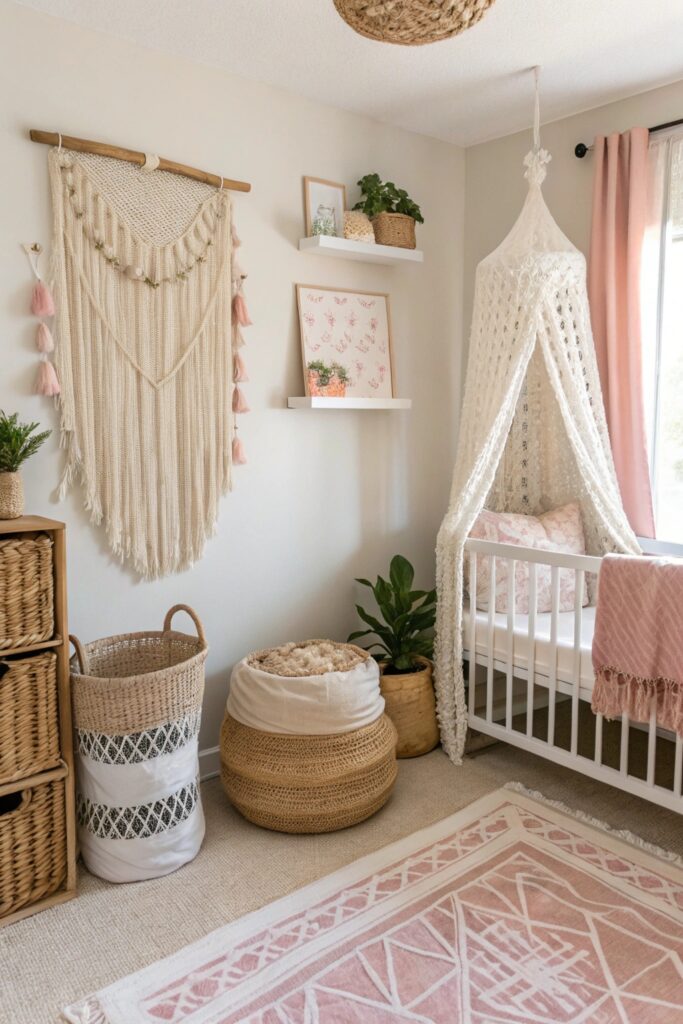
Mount macrame or woven wall hangings well out of crib reach, since the cord and rope material common to this style poses a real strangulation risk once a baby becomes mobile enough to reach and pull on it.
10. Smart Storage That Looks Cute
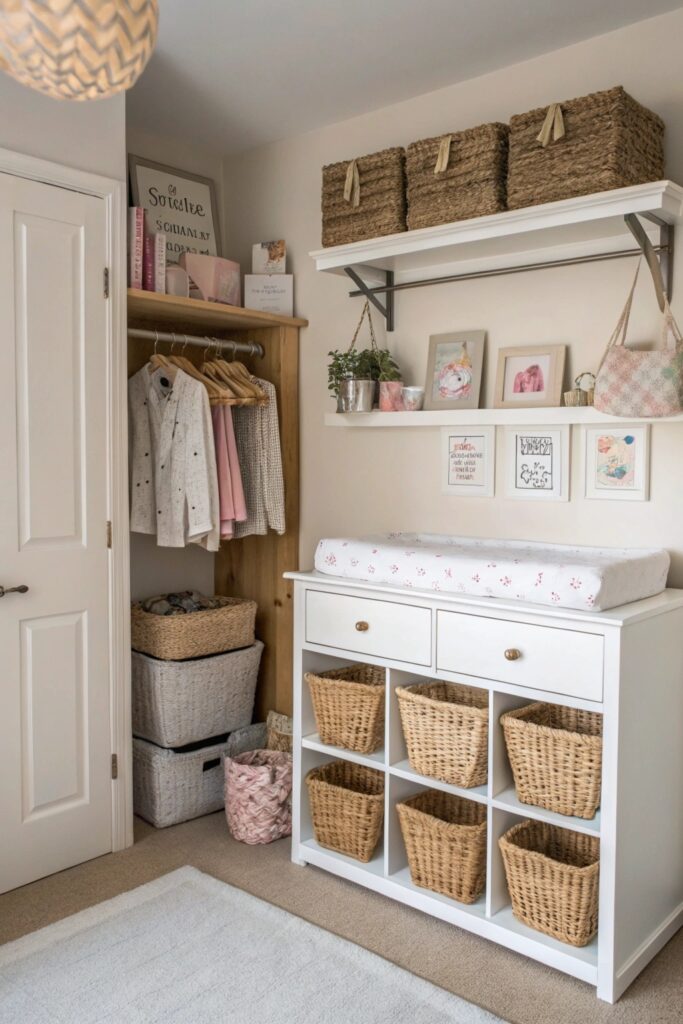
Choose soft-close hardware for any storage near the changing table specifically, since this area sees frequent one-handed access while holding a baby, making a slamming drawer or door more of a real hazard here than elsewhere.
11. Soft Lighting for a Calm Atmosphere
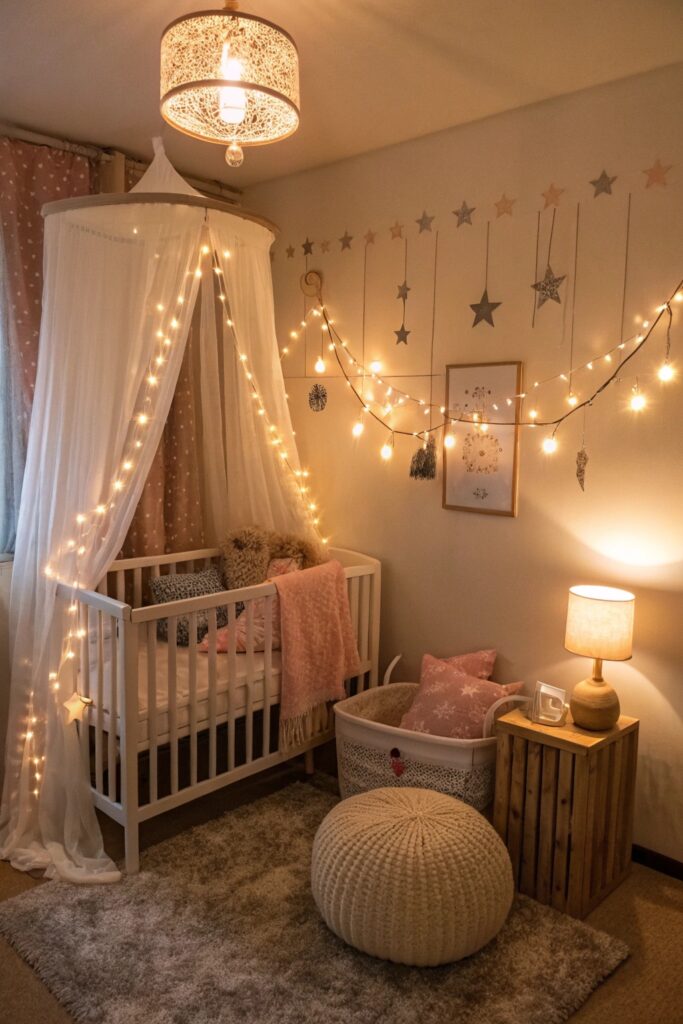
Keep cords and outlets positioned well outside crib reach, and a dimmer switch helps considerably for nighttime feeds without needing to turn on a harsh overhead light.
Designing for Growth, Not Just Infancy
A nursery designed with slightly more flexibility — furniture that transitions to a toddler room, decor that isn’t strictly baby-themed — tends to save real cost and effort compared to a full redesign just a year or two after the initial setup.
A convertible crib that transitions to a toddler bed is worth the higher upfront cost if you’re planning to use the same room for several years, since it delays one of the more disruptive furniture swaps in early childhood.
What a Nursery Setup Costs
A basic nursery using a crib, dresser, and a few decor pieces typically costs $800 to $2,000 depending on quality.
A fuller nursery including a glider, custom wall treatment, and coordinated storage runs higher, often $3,000 to $7,000 or more depending on the scope.
Positioning the Crib Thoughtfully
Keep the crib away from windows, blinds, and any cords, since window covering cords pose a documented strangulation risk and direct window drafts can affect a baby’s comfort through the night.
Positioning the crib where you can see it clearly from the doorway also makes middle-of-the-night checks easier, a small layout detail that matters more in practice than it might seem when first planning the room.
Temperature and Air Quality Matter
Most pediatric guidance suggests keeping a nursery between 68 and 72 degrees Fahrenheit, cooler than many people naturally keep their homes, since overheating is a factor pediatricians associate with sleep safety in infants.
A simple room thermometer helps you monitor this more reliably than relying on how the room feels to an adult, since comfortable temperature for a fully clothed adult moving around differs from what’s appropriate for a swaddled, sleeping infant.
Setting up the room a few weeks before your due date, rather than rushing to finish at the very last minute, gives you time to live with the layout and catch small adjustments — like realizing the changing table needs to be closer to the storage holding diapers and wipes — before the baby actually arrives.
Asking family and friends for gift suggestions tied to specific storage or furniture pieces you still need, rather than purely decorative items, tends to fill practical gaps in the nursery faster than hoping the right pieces show up on their own.
A well-planned nursery tends to support new parents just as much as it does the baby, since a room that’s easy to navigate during exhausted middle-of-the-night routines noticeably reduces daily stress during an already demanding stretch.
Getting quotes from at least two or three sources before ordering custom wall treatments or built-in storage helps confirm both pricing and lead time, since some specialty nursery items take several weeks to arrive, worth accounting for if you’re working toward a specific due date.
Whichever combination of these ideas fits your space and budget, a nursery built around real safety fundamentals first tends to feel just as sweet and stylish as one designed purely around aesthetics, without the added worry.
These small details add up to a nursery that works as well in practice as it looks in photos.
Bringing It All Together
Revisiting the room’s safety details as your baby grows and becomes more mobile matters just as much as getting the initial newborn setup right, since a nursery that was safe for a sleeping infant isn’t automatically safe once that same child is standing and reaching.
Checking the Consumer Product Safety Commission’s current recall list for any crib, furniture, or decor you’re considering, particularly secondhand or vintage pieces, is worth the few minutes it takes before bringing something into this specific room.