
A closet’s storage capacity depends far more on how efficiently the existing space is used than on the closet’s actual square footage, since most closets have considerably more usable capacity than a typical hanging-rod-and-single-shelf setup takes advantage of.
Below are 15 ways to genuinely double a closet’s functional storage, with practical notes for each.
1. Switch to Slim Velvet Hangers
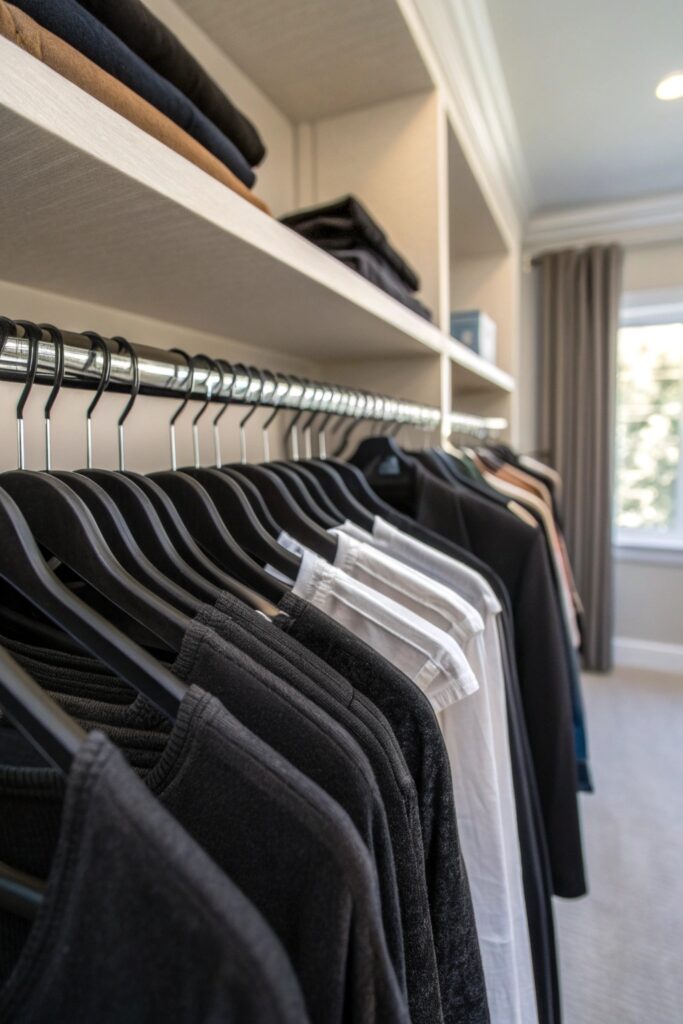
Slim velvet hangers ($15-30 for a set) take up meaningfully less rod space than bulky plastic or wire hangers, letting you fit noticeably more clothing into the same closet width.
This is one of the lowest-cost, highest-impact swaps on this list, since the hangers themselves cost relatively little relative to the meaningful capacity increase they provide.
2. Add a Double Hanging Rod
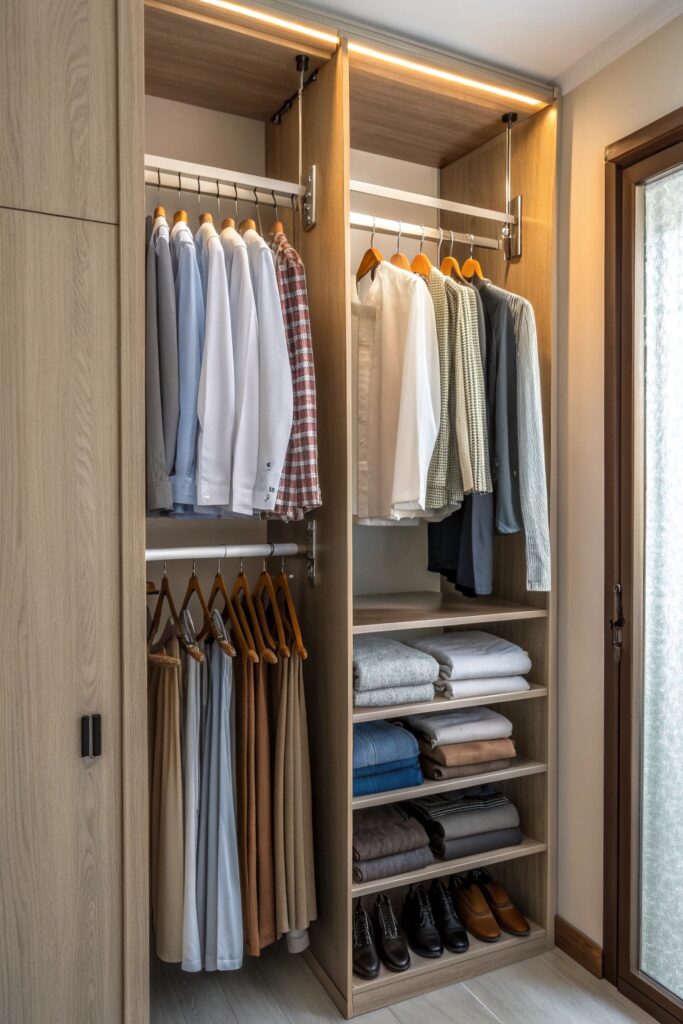
A second rod installed below an existing one ($20-50) doubles hanging capacity for shorter items like shirts and folded pants, using vertical space that’s otherwise left empty above.
Choose a rod height that accommodates your actual shirt and pant lengths specifically, since setting it too high or low wastes some of the added capacity this change is meant to provide.
3. Use Vertical Space With Stackable Shelves
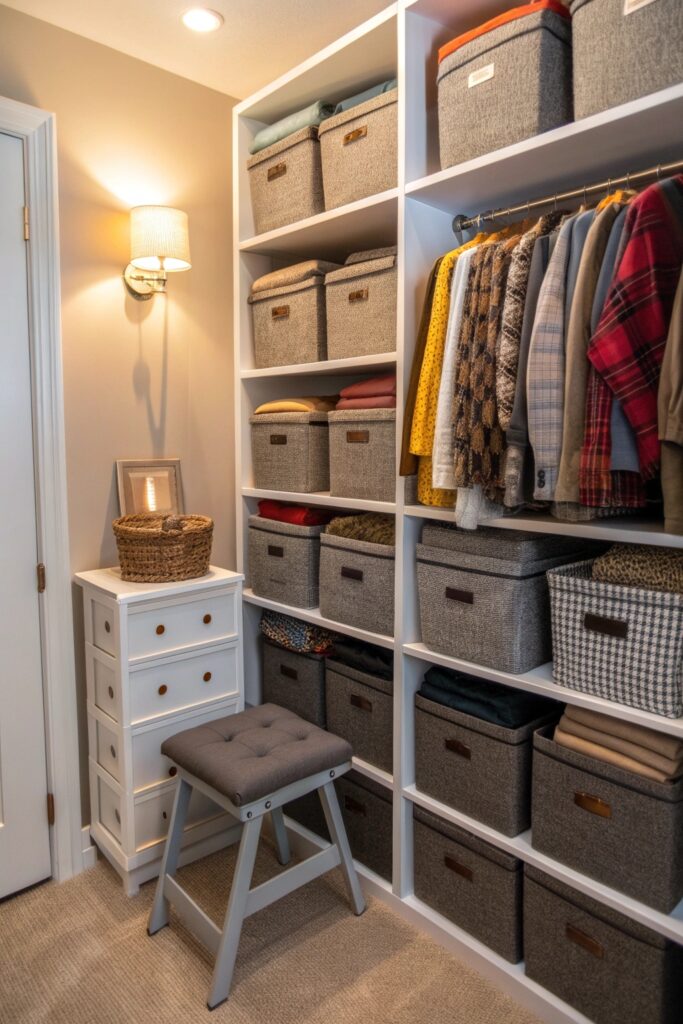
Stackable shelf units make full use of a closet’s floor-to-ceiling height, which most closets don’t use efficiently with a single fixed shelf configuration.
Look for shelving with adjustable heights specifically, which lets you fine-tune the configuration as your storage needs change rather than committing to fixed spacing.
4. Install an Over-the-Door Organizer
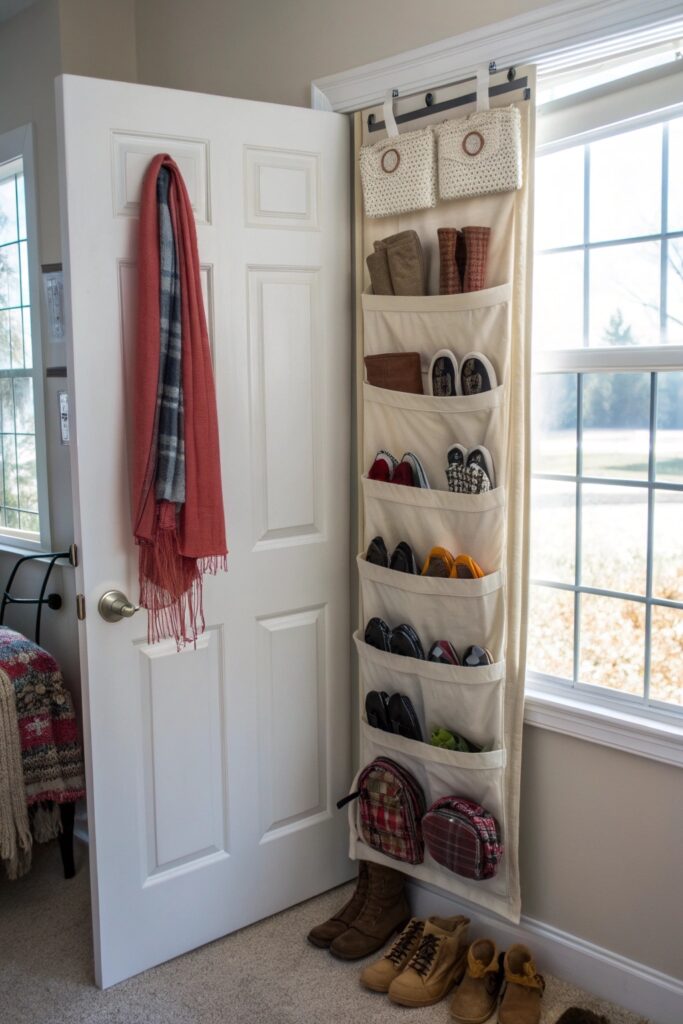
An over-the-door rack ($15-35) uses space that’s completely unused in most closets, working well for shoes, accessories, or smaller folded items.
Choose an organizer style that matches what you’re storing — shoe pockets for shoes, a mixed-pocket design for smaller accessories — rather than a generic option that doesn’t fit your actual needs well.
5. Use Clear Storage Bins Instead of Boxes
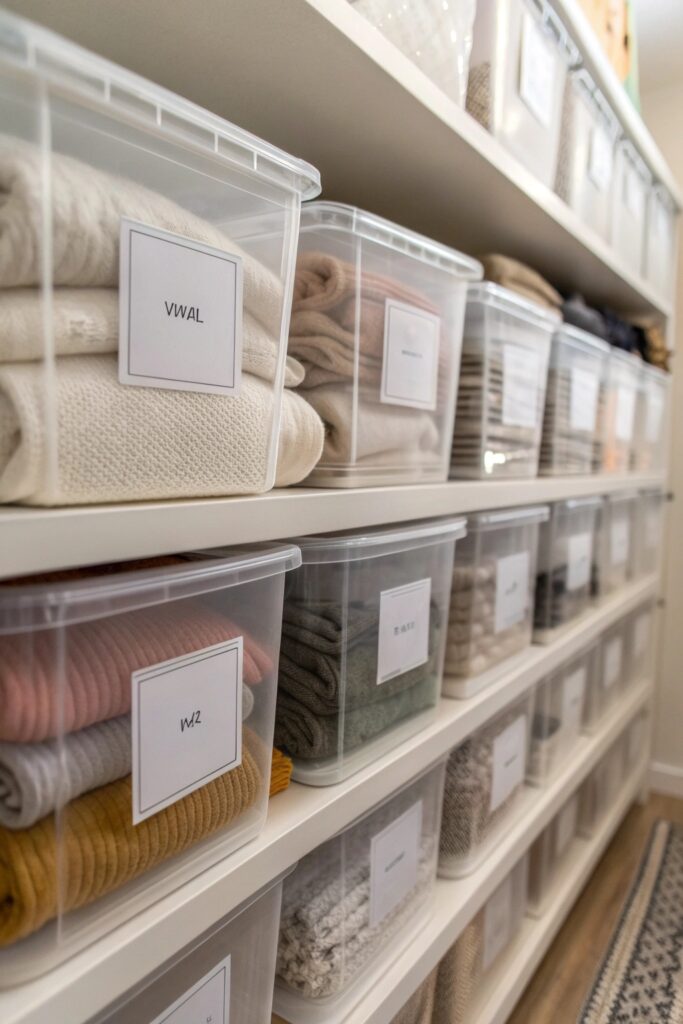
Clear, uniform bins let you identify contents at a glance without pulling every container down, which matters considerably in a closet where items are stored above eye level.
Label bins clearly even though the contents are visible through clear plastic, since quick identification matters more than pure visibility when you’re moving quickly to find something specific.
6. Add Velvet-Lined Jewelry Drawers
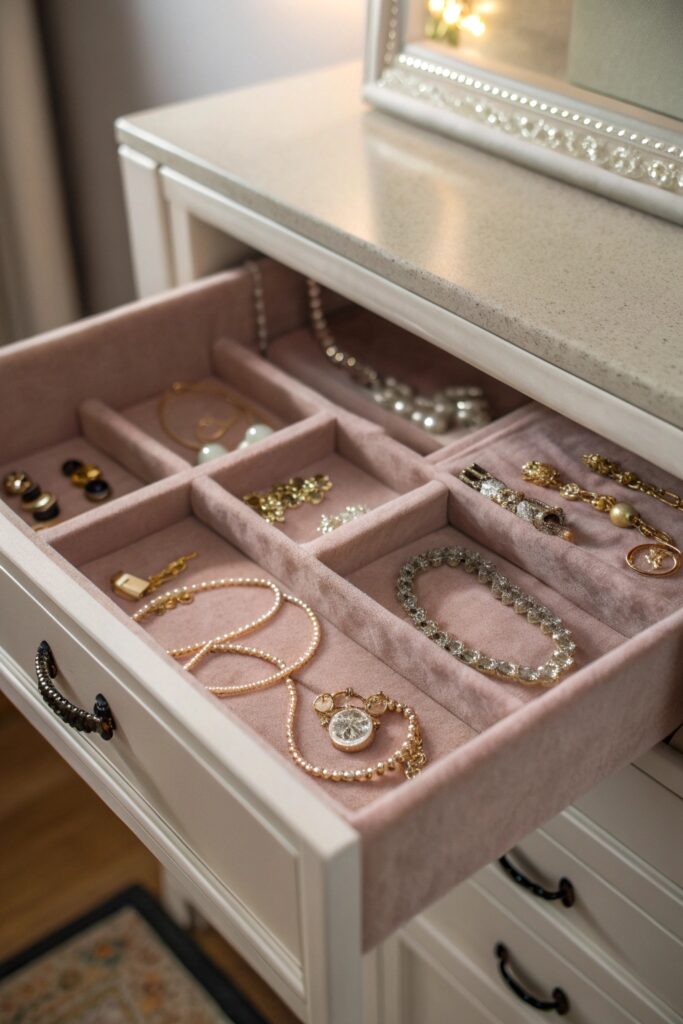
A small drawer insert with velvet-lined compartments keeps jewelry genuinely organized and tangle-free, using minimal space within an existing dresser or closet system.
This is a genuinely underused organizational trick, since jewelry often ends up loose in a drawer or basic tray without any dedicated system.
7. Install Pull-Out Shoe Racks
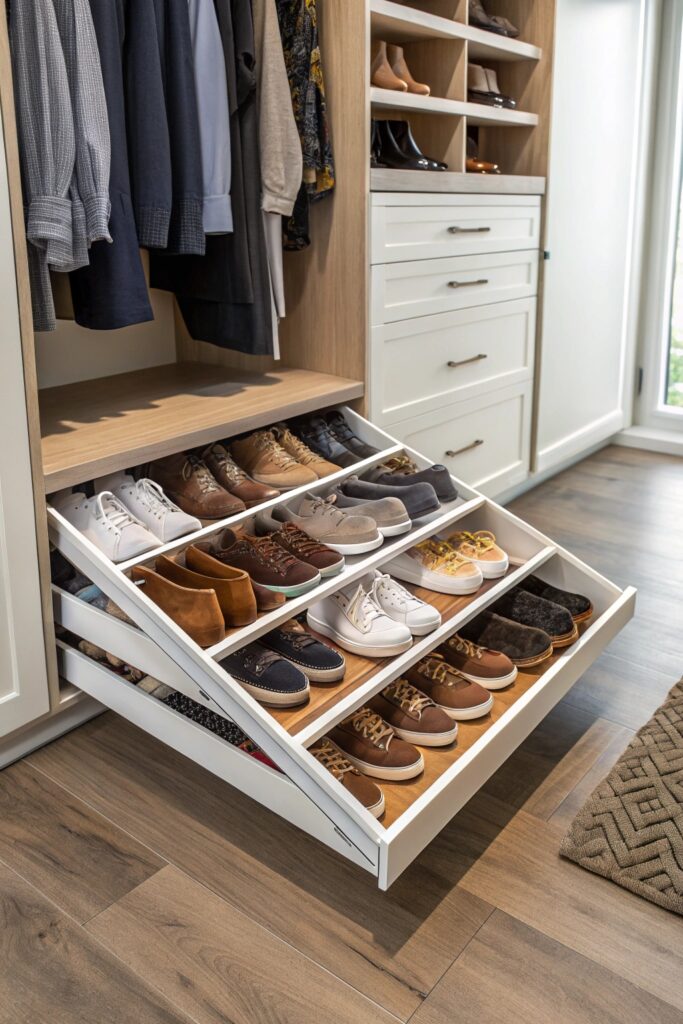
A pull-out rack brings shoes stored at the back of a closet into easy reach, solving the accessibility problem deep closet shelving creates for footwear specifically.
Confirm the rack’s weight capacity matches your actual shoe collection before installing, since an overloaded rack is a common and avoidable failure point.
8. Use Drawer Dividers for Folded Clothes
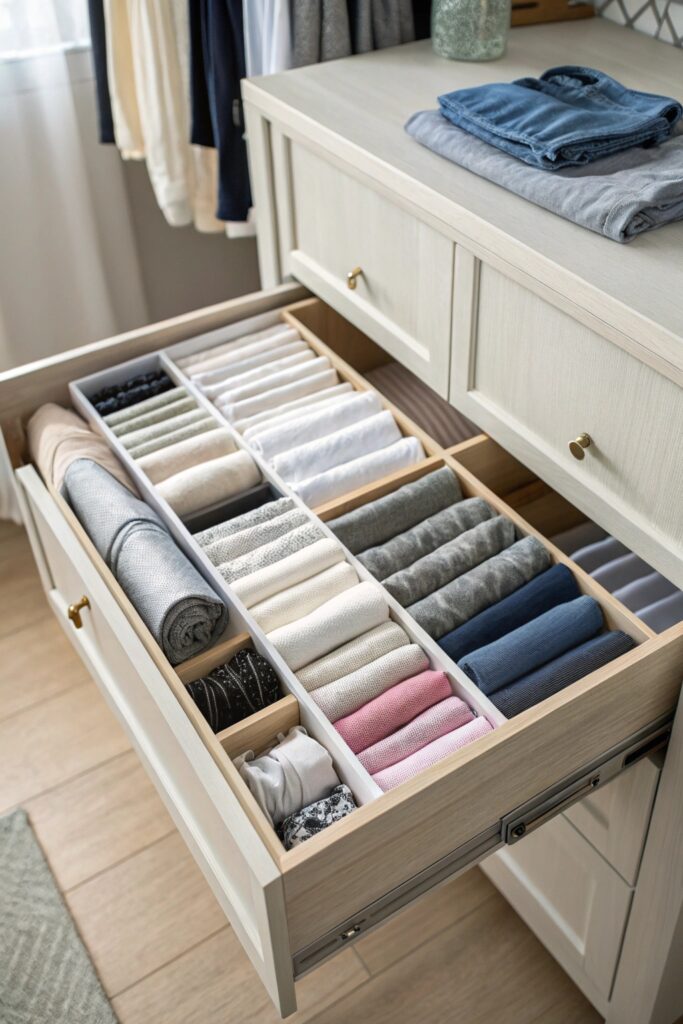
Dividers prevent folded items from sliding into a jumbled pile every time a drawer opens, keeping a genuinely organized fold-and-file system intact over regular daily use.
Measure the drawer’s interior dimensions before buying dividers, since ill-fitting ones shift or fail to actually contain items properly.
9. Add a Belt and Tie Rack
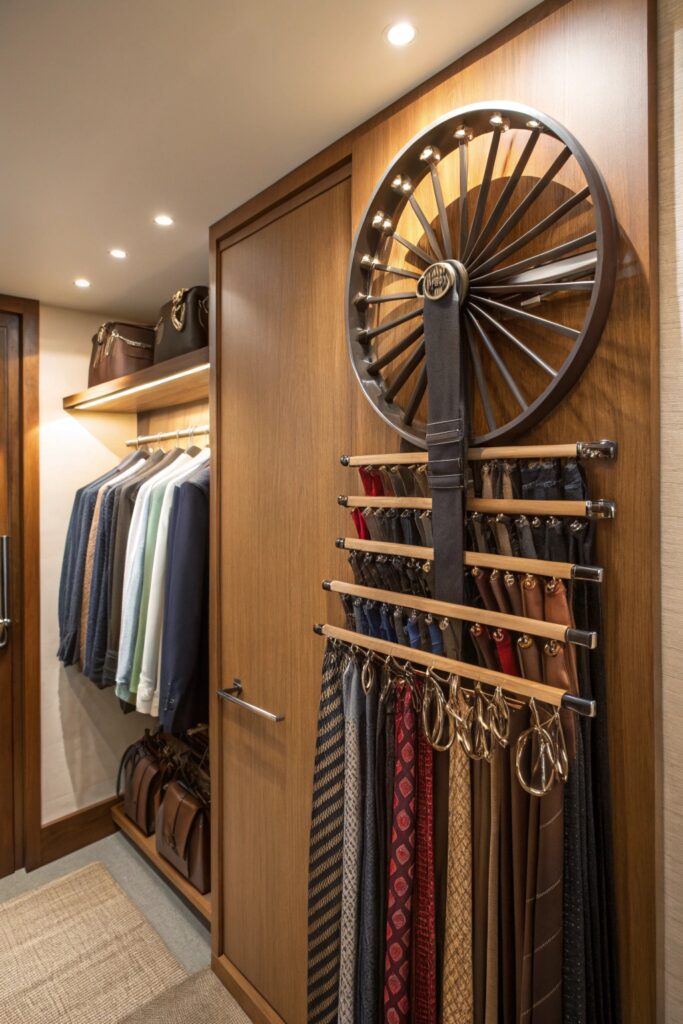
A dedicated rack for belts and ties ($10-25) keeps these smaller accessories from tangling in a drawer or getting lost among larger clothing items.
A wall-mounted rack keeps these items visible and prevents the tangling that happens when they’re stored loose in a drawer together.
10. Use Under-Shelf Baskets
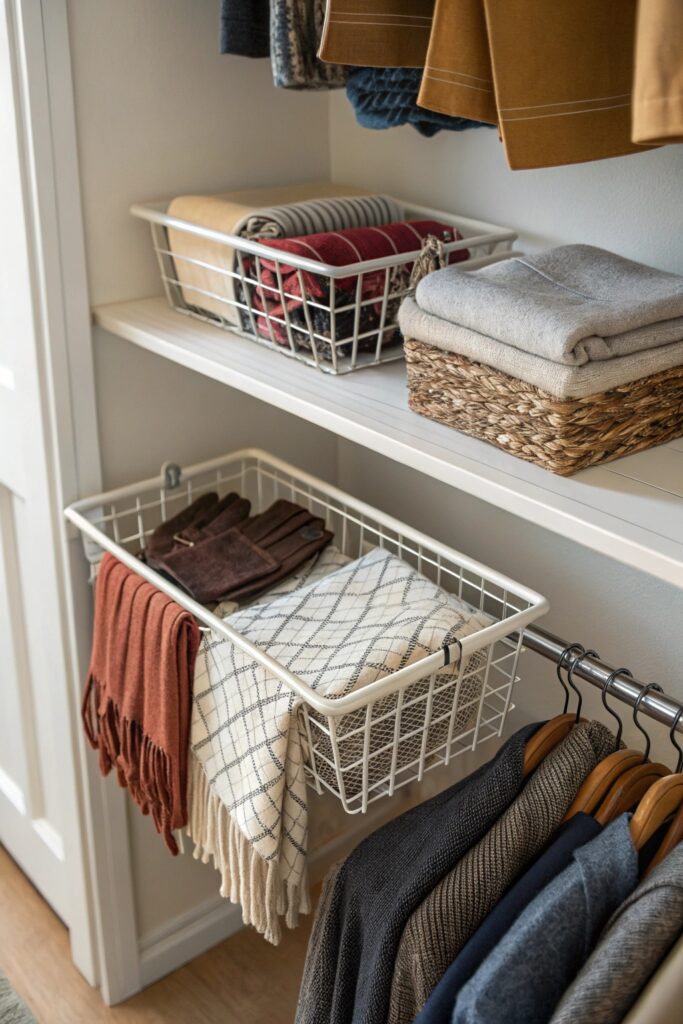
Wire baskets that hang from an existing shelf add a genuine second storage layer without requiring any new shelving installation, using the vertical gap above items already on the shelf.
Choose baskets with sturdy handles specifically, since anything hanging from a shelf edge needs a genuinely reliable attachment to avoid tipping.
11. Try a Closet Island or Small Dresser
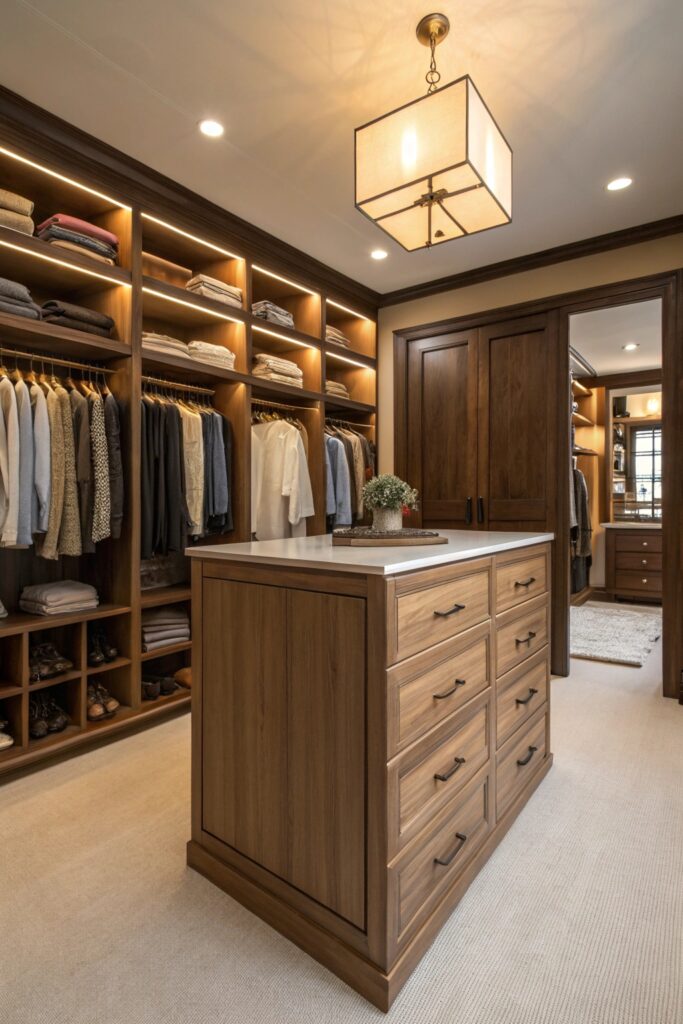
A small dresser or storage unit placed within a walk-in closet adds genuine drawer capacity specifically within the closet itself, keeping folded items separate from the bedroom’s main dresser.
This addition works particularly well in a genuinely spacious walk-in closet, where the extra piece doesn’t compromise the room needed to move around and access hanging items.
12. Add Adjustable Shelving Systems
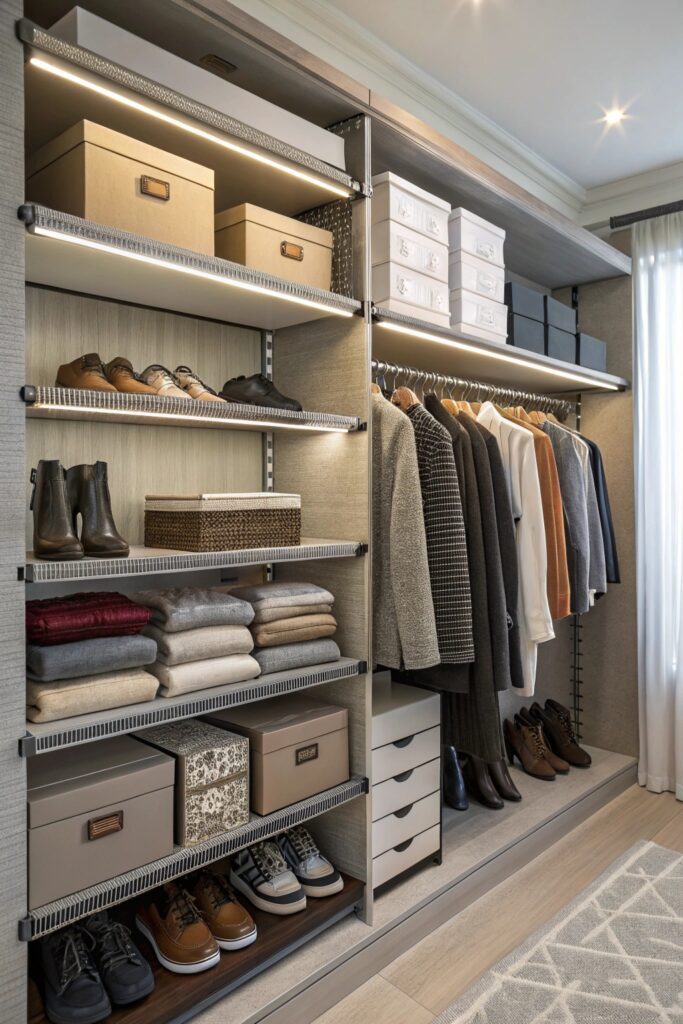
Shelving that can be repositioned adapts to changing storage needs over time, unlike fixed shelves that lock a closet into one configuration regardless of what you’re actually storing.
Look for shelving with holes at frequent intervals, which allows finer height adjustments than systems with only a few fixed positions.
13. Use Vacuum-Sealed Bags for Bulky Items
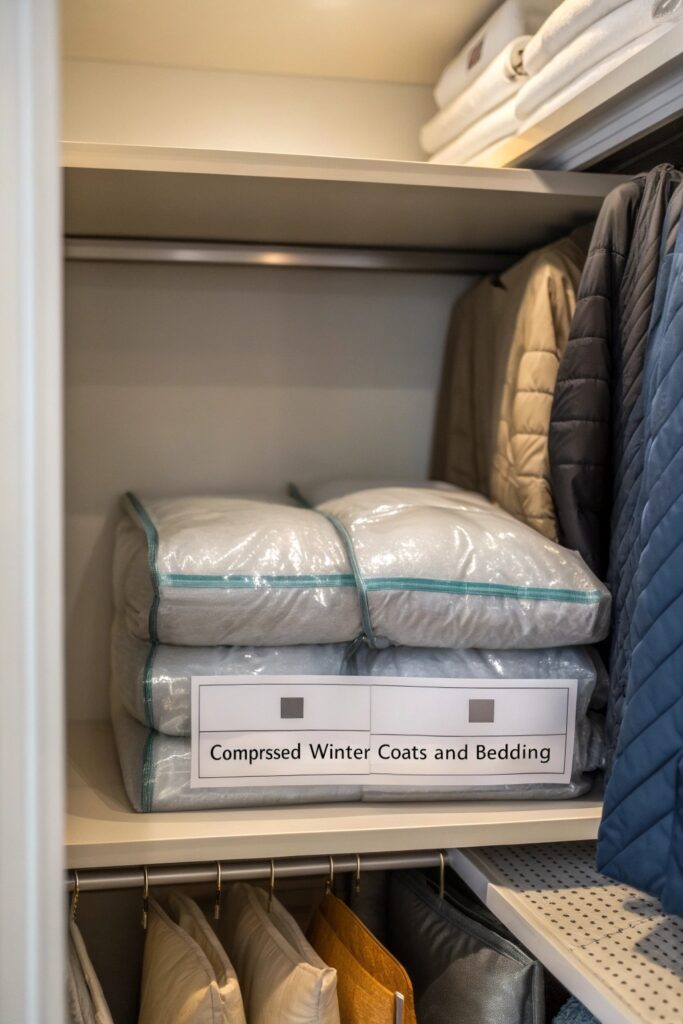
Vacuum-sealed bags compress bulky items like out-of-season coats or blankets to a fraction of their normal storage volume, genuinely freeing up meaningful closet space.
This works particularly well combined with under-bed storage specifically, since compressed items fit into limited storage space more efficiently than bulky, uncompressed ones.
14. Add Hooks for Bags and Accessories
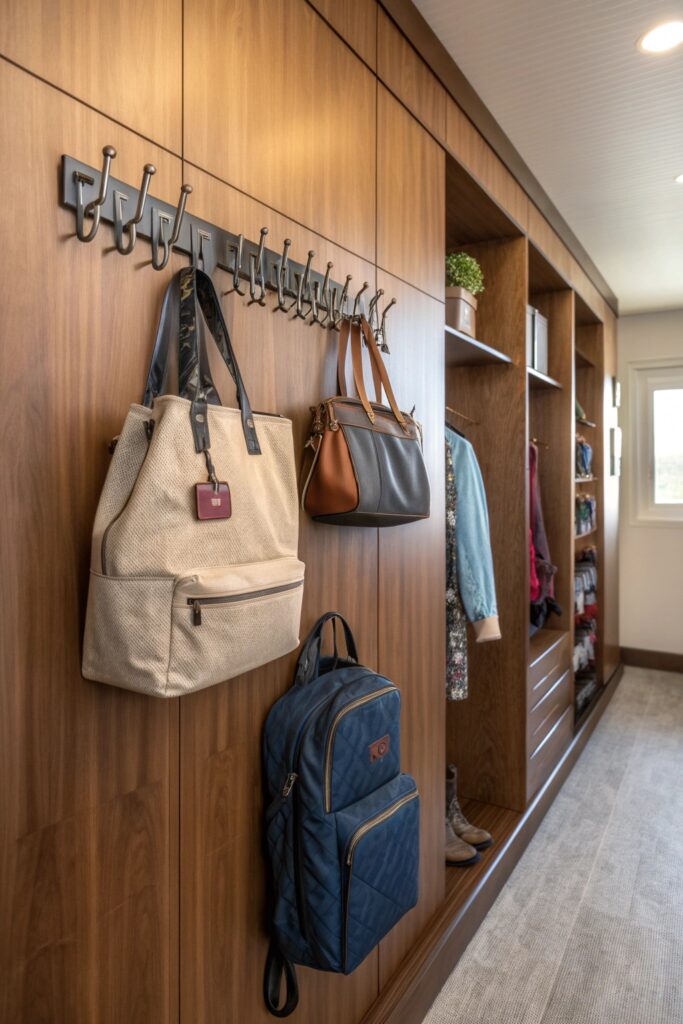
Small hooks mounted on interior closet walls hold bags, scarves, or other accessories using space that’s otherwise completely unused.
Choose hooks with a weight rating appropriate for what you’re hanging, since an overloaded hook is a common and easily avoidable failure point.
15. Label Everything
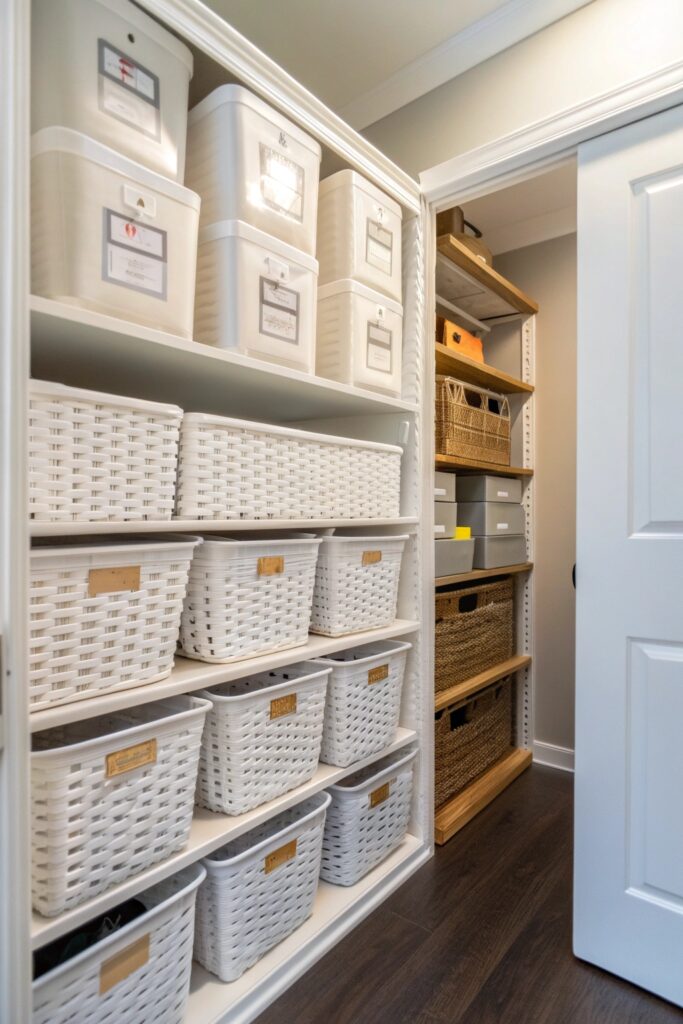
Clear labels on bins and shelves help every household member maintain the system correctly, which matters especially in a closet since contents aren’t always immediately visible.
A label maker produces more durable, legible labels than handwritten ones, which matters for labels expected to last through months of regular handling.
Wrapping This Up
A double hanging rod and slim hangers matter most if you’re prioritizing only a couple of these changes, since both recover meaningful capacity without requiring any new shelving or structural change. Vertical dividers and vacuum-sealed bags are worth adding next, since both make fuller use of the closet’s actual height rather than treating it as a single flat storage layer.