
A cloffice works by treating a closet’s genuine space constraints as a design starting point rather than a limitation to work around, prioritizing wall-mounted and vertical solutions that a standard home office setup wouldn’t need to consider.
Below are 11 ways to build a genuinely functional cloffice, with real costs and practical notes for each.
1. Start With a Floating Desk
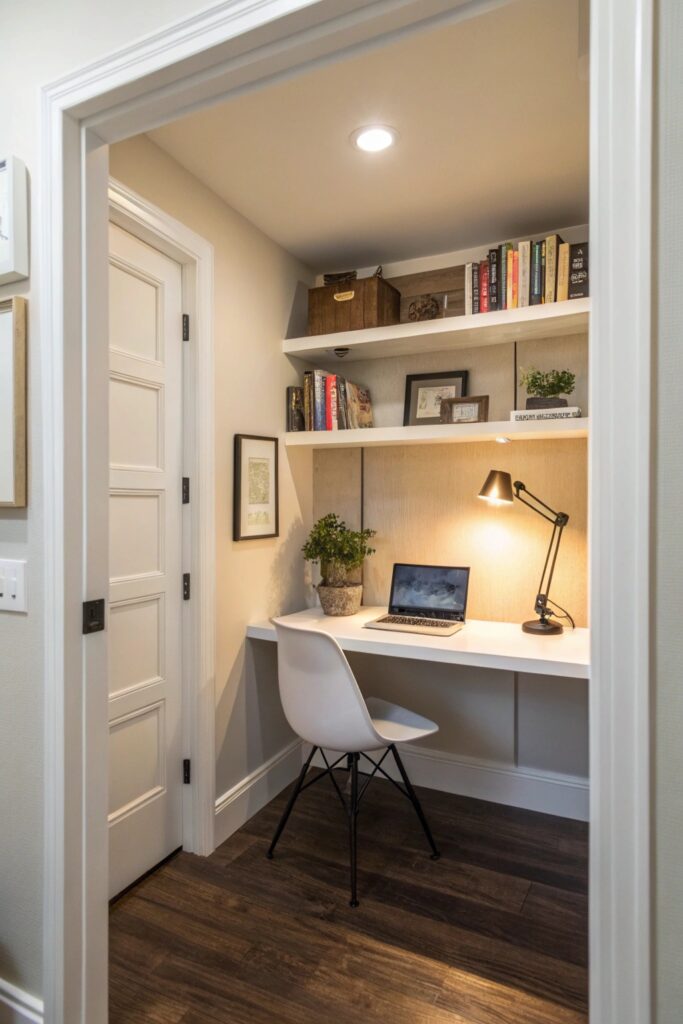
A wall-mounted floating desk ($60-150) uses a closet’s typically narrow floor footprint efficiently, since it doesn’t require legs taking up floor space the way a standard desk would.
Choose a desk depth appropriate for your closet’s actual interior width, since even a few extra inches can make the difference between a comfortable working posture and a genuinely cramped setup.
2. Steal the Doors (Literally Remove Them)
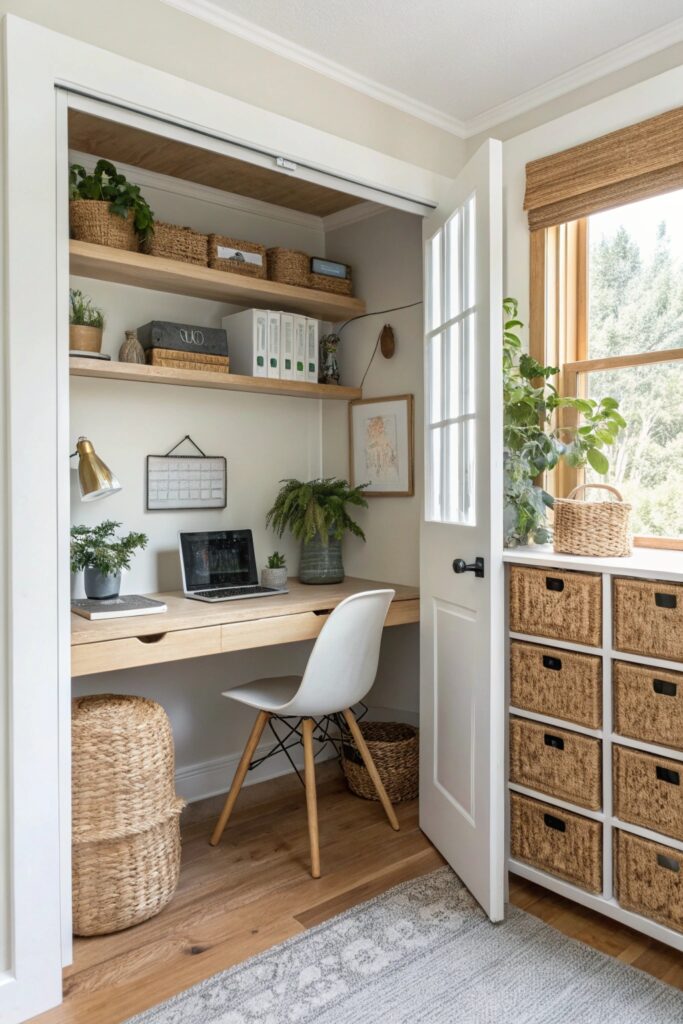
Removing the doors entirely opens up the workspace and eliminates the awkward swing clearance a closet door requires, which matters in a genuinely tight conversion.
Store the removed doors in case you want to reverse the conversion later or if you’re renting and need to restore the closet to its original state before moving out.
3. Add a Sliding Barn Door Instead
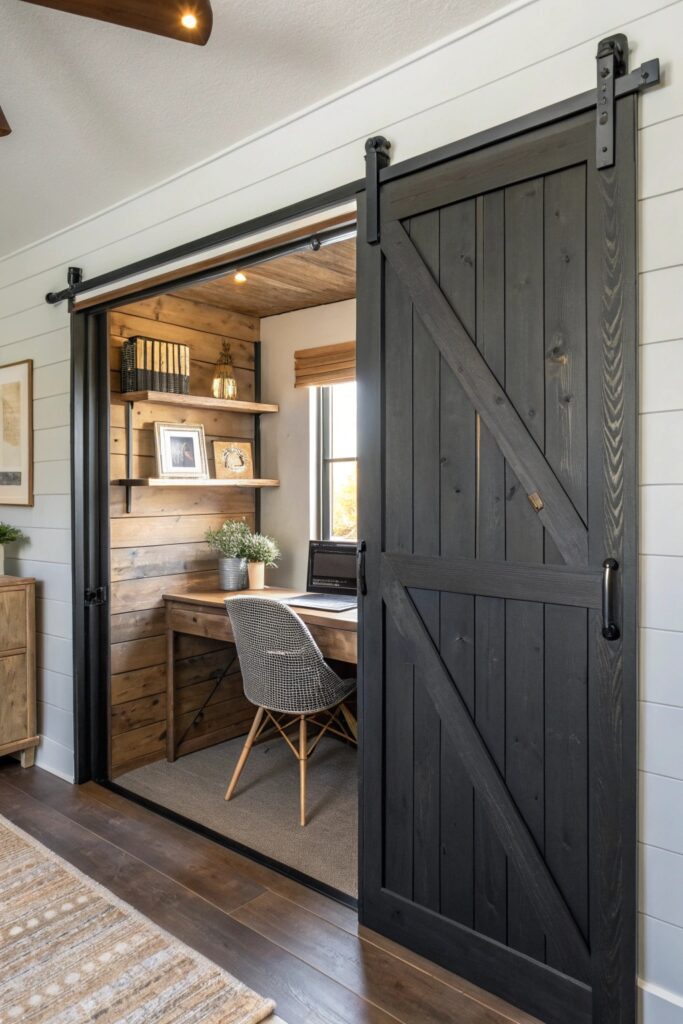
A sliding door ($150-400 installed) offers a middle ground between fully open and a swinging door, letting you close off the workspace visually without the floor clearance a traditional door needs.
Confirm your specific closet opening’s width and any track clearance needed before purchasing a barn door system, since these require more side wall space than a standard hinged door.
4. Prioritize Task Lighting Over Ceiling Lights
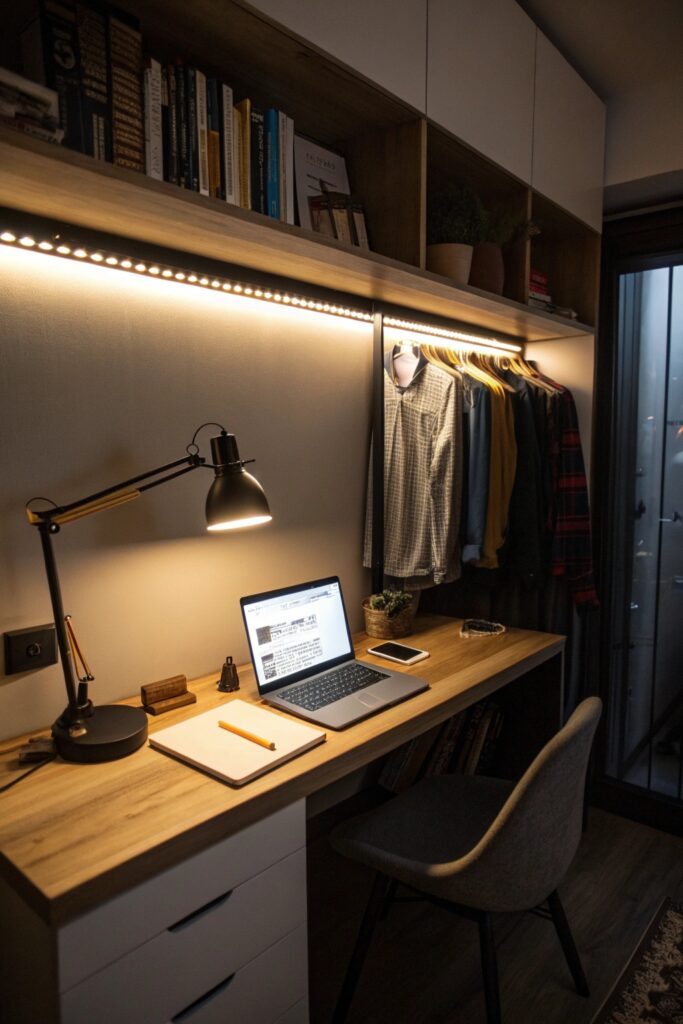
A closet’s existing overhead light is rarely adequate for focused work, making a dedicated desk lamp or under-shelf LED strip genuinely necessary for a functional cloffice.
Battery-powered or plug-in LED strips work well specifically because they don’t require any electrical rewiring, which matters for a genuinely quick, low-commitment conversion.
5. Go Vertical With Shelving
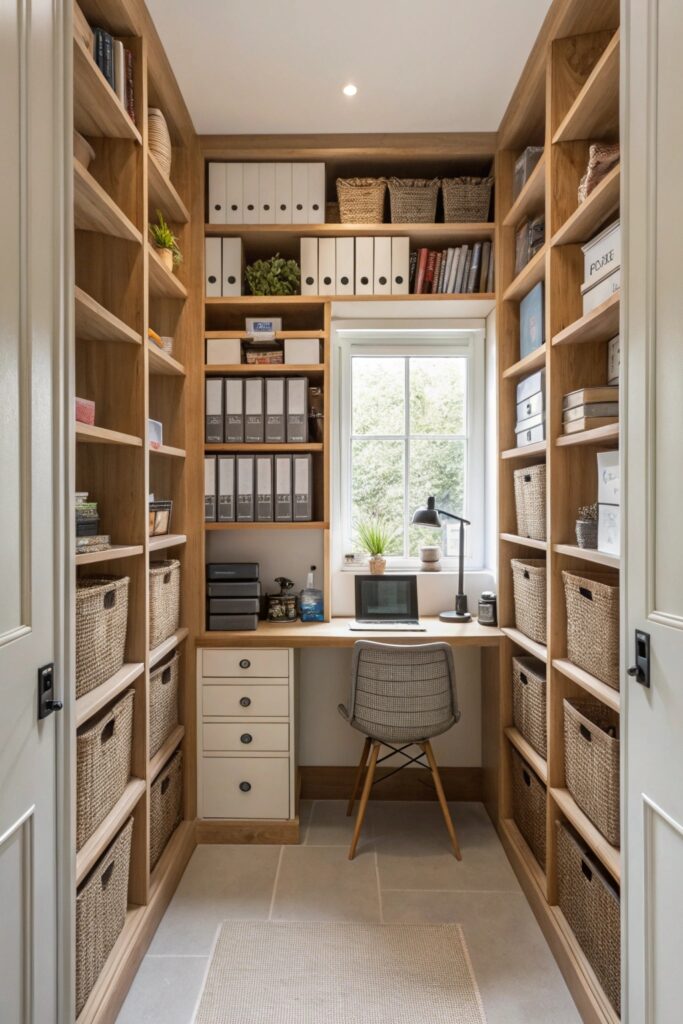
Floor-to-ceiling shelving makes full use of a closet’s height, which matters considerably in a workspace with essentially no floor space to spare for storage furniture.
Choose shelving with a depth that doesn’t compete with your actual working space, since overly deep shelves can make an already tight closet feel more cramped.
6. Paint It a Color That Actually Wakes You Up
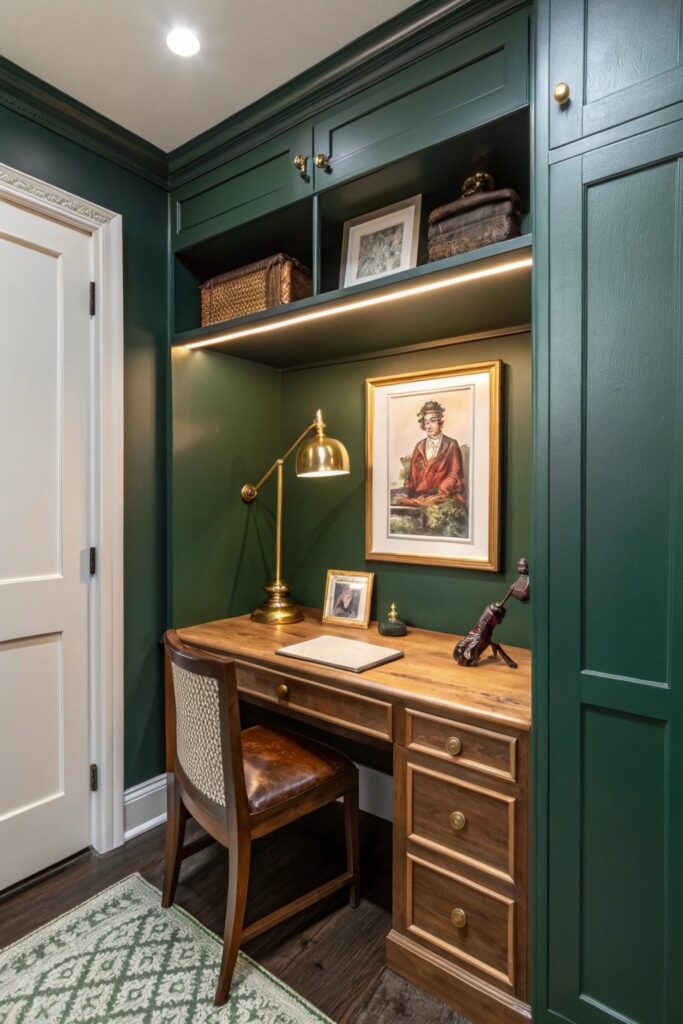
A closet’s small, enclosed footprint can genuinely tolerate a bolder paint color than an open room would, since the space is naturally contained rather than dominating a larger area.
A closet’s contained nature also makes it easier to test a bold color without repainting an entire room if you later decide against it.
7. Get a Chair That Doesn’t Suck
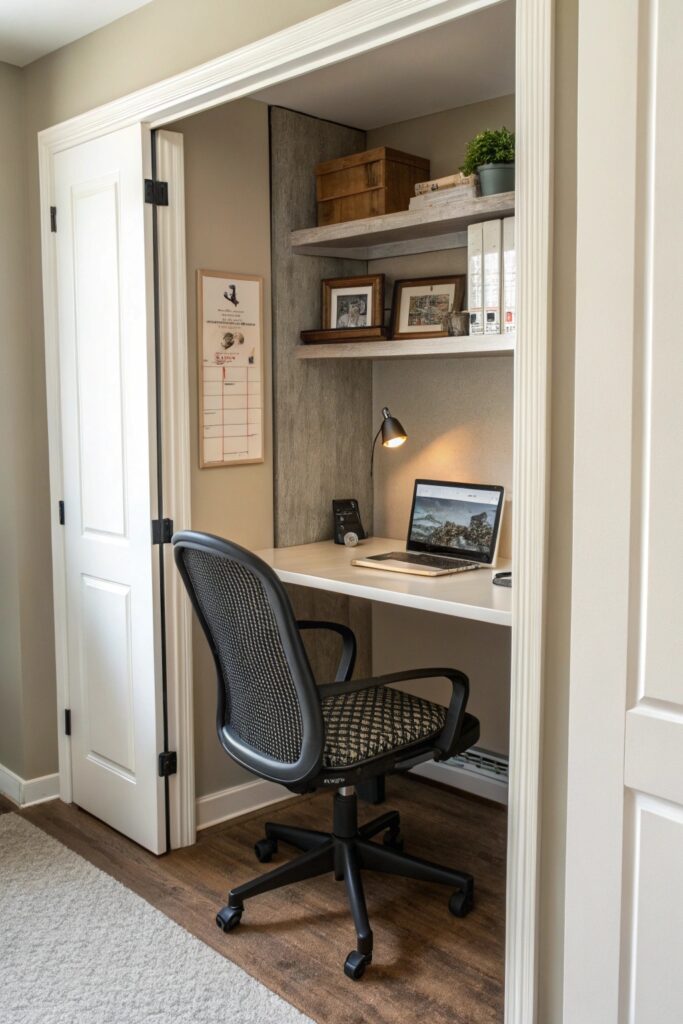
A genuinely supportive chair matters more in a cloffice than almost any other furniture choice, since you’re likely sitting in a confined space for extended work sessions.
Test the chair in person when possible, since a chair that fits comfortably in an open room can feel considerably more cramped within a closet’s confined dimensions.
8. Use the Back Wall for a Pegboard
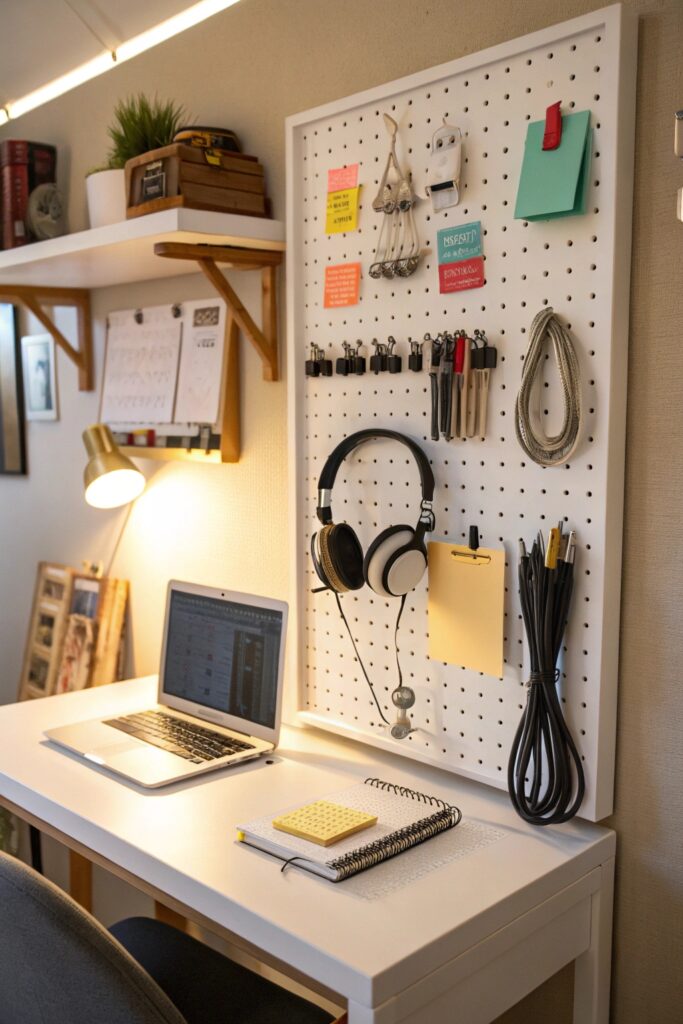
A pegboard mounted on the closet’s back wall adds genuinely flexible, reconfigurable storage for office supplies without consuming any of the room’s already limited floor footprint.
This works particularly well for storing cords, chargers, and small supplies that would otherwise clutter the limited desk surface itself.
9. Add a Mini Fridge or Coffee Station (If You Have the Room)
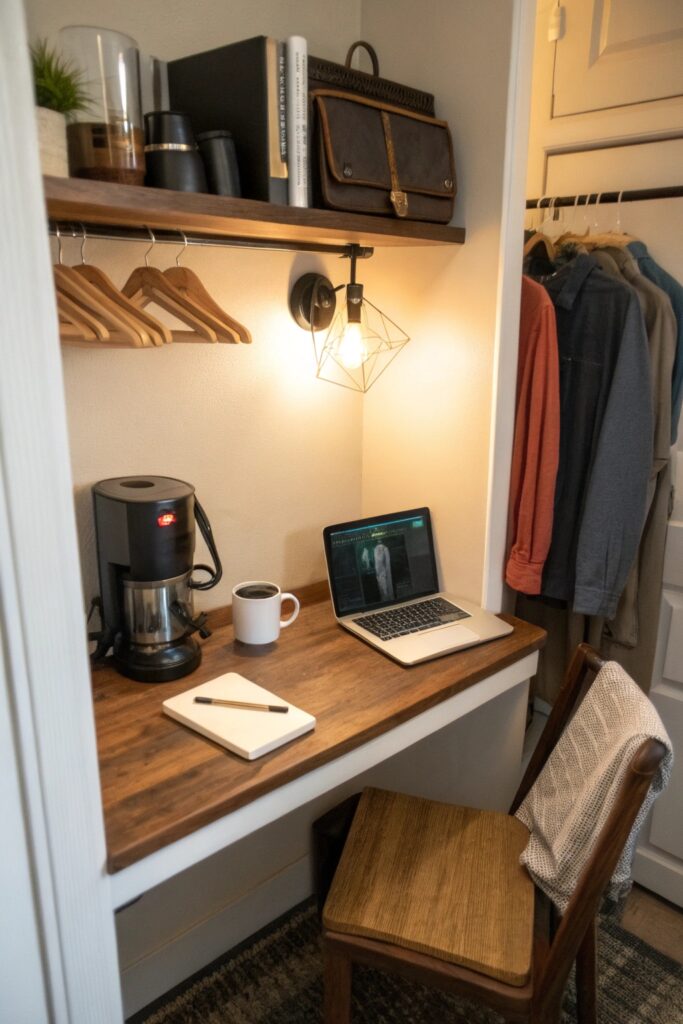
If the closet’s dimensions allow, a small fridge or coffee setup keeps you from needing to leave the workspace during focused work sessions, though this genuinely depends on having enough spare space.
A closet cloffice with this addition functions almost like a genuinely self-contained office pod, which some people find helps mentally separate work time from the rest of the home.
10. Install a Fold-Down Desk for Ultra-Tiny Spaces
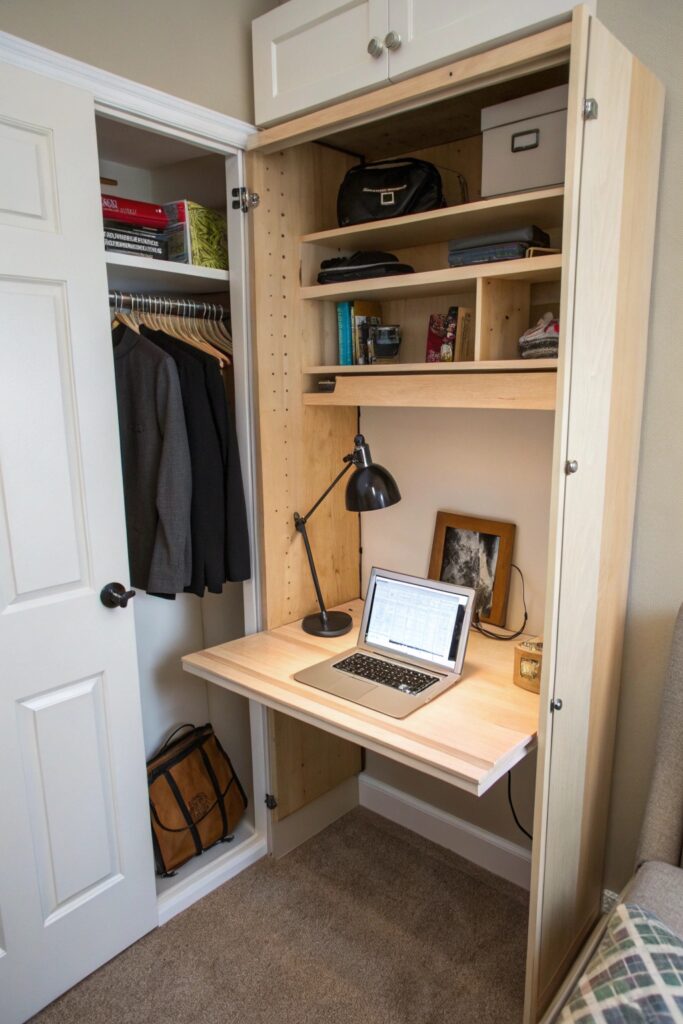
For a genuinely minimal closet, a fold-down desk that tucks flat against the wall when not in use lets the space revert to a closet when you’re not actively working.
Confirm adequate wall stud support before mounting a fold-down desk specifically, since it needs secure anchoring to hold weight safely with regular daily folding and unfolding.
11. Personalize It So It Doesn’t Feel Like a Closet Anymore
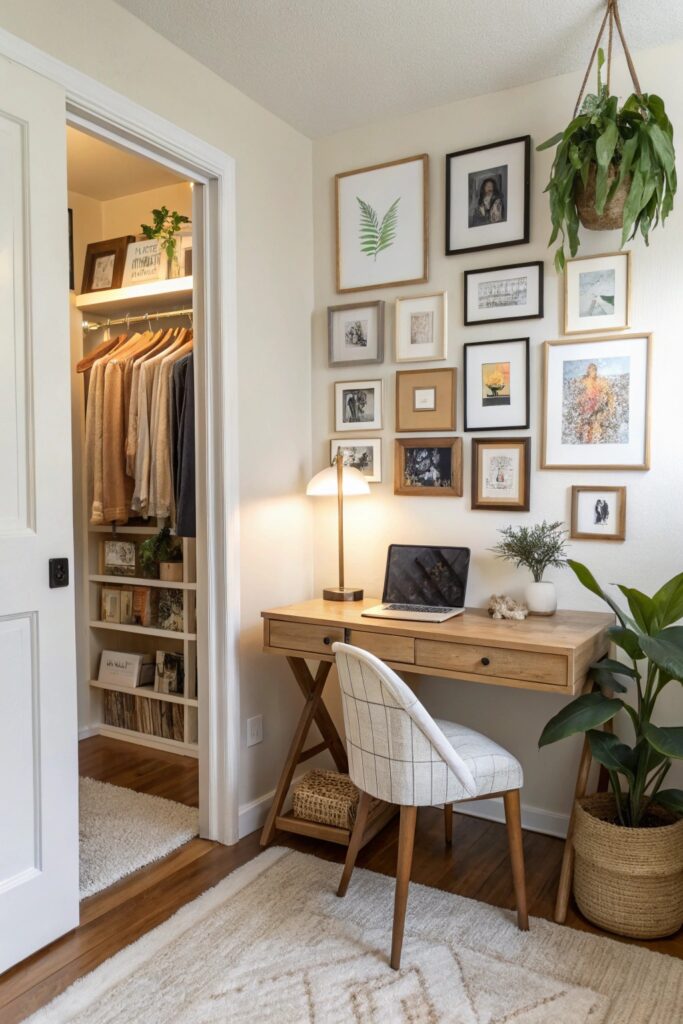
A few personal touches — art, a plant, a coordinated color scheme — help the space read as a genuine workspace rather than a repurposed storage closet.
Choosing the Right Closet for This Conversion
Not every closet makes a genuinely good cloffice candidate — a reach-in closet in a hallway or bedroom typically works better than a walk-in specifically meant for clothing storage, since converting your only significant clothing storage sacrifices something you likely need more than a dedicated workspace.
Look for a closet with reasonable proximity to an outlet, since running an extension cord across a room defeats some of the tidiness benefit a cloffice is meant to provide, and confirm the space gets at least some natural or borrowed light from an adjacent window if working exclusively under artificial light for extended periods isn’t ideal for you.
Wrapping This Up
A floating desk and dedicated task lighting matter most if you’re prioritizing only a couple of these changes, since both directly address the two biggest challenges a closet conversion presents — floor space and inadequate lighting. Removing or replacing the doors is worth considering next, since standard closet doors rarely work well for a space that now needs to function as an actual workspace rather than storage.