
A school office is often the first and most frequent point of contact for students, parents, and visitors, so small changes here shape a first impression that carries weight beyond the room itself.
Below are 10 ways to make this space feel more welcoming, with practical notes for each.
1. Create a Warm Welcome Wall
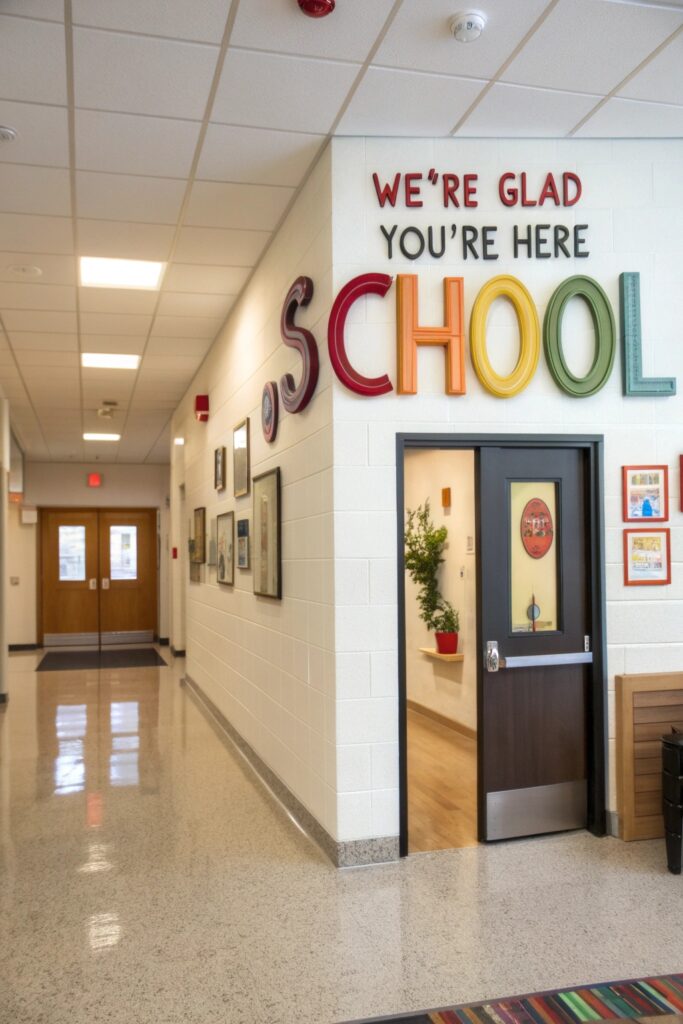
A wall with the school’s colors and a friendly greeting sets the tone before a visitor even reaches the desk.
Choose materials durable enough to hold up to daily wear, since this wall sees far more traffic than a typical office reception area.
2. Swap Harsh Lighting for Warm Alternatives
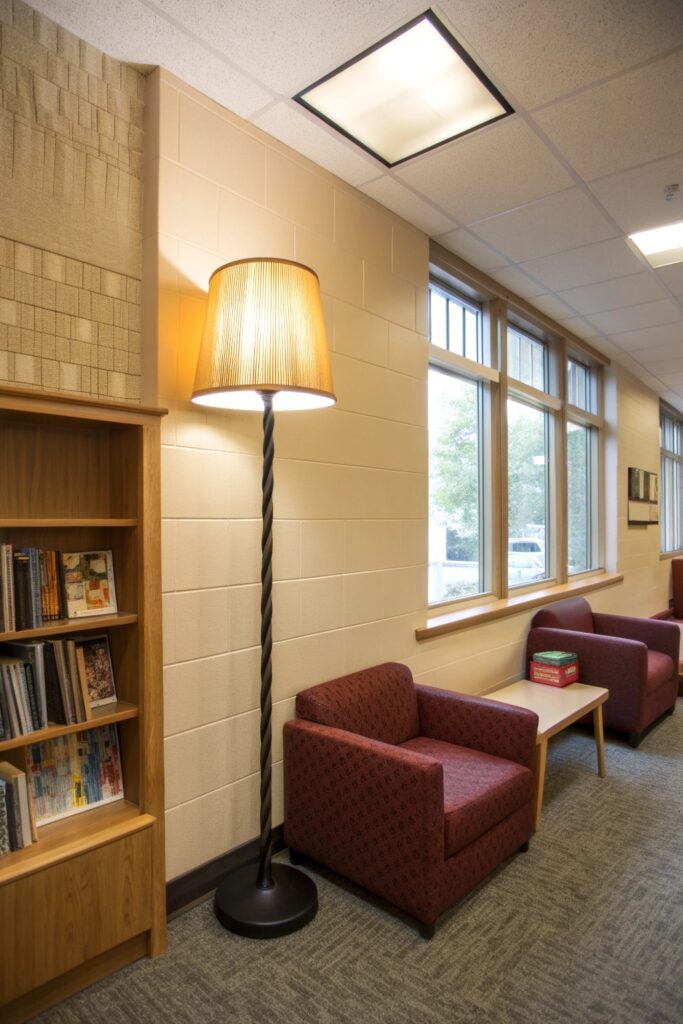
Standard fluorescent overheads feel institutional, so layering in a floor or table lamp with a warmer bulb softens the space considerably.
Choose warm-toned bulbs specifically over cooler ones, which reads as considerably more inviting without needing to change the actual fixtures.
3. Design a Comfortable Student Waiting Area
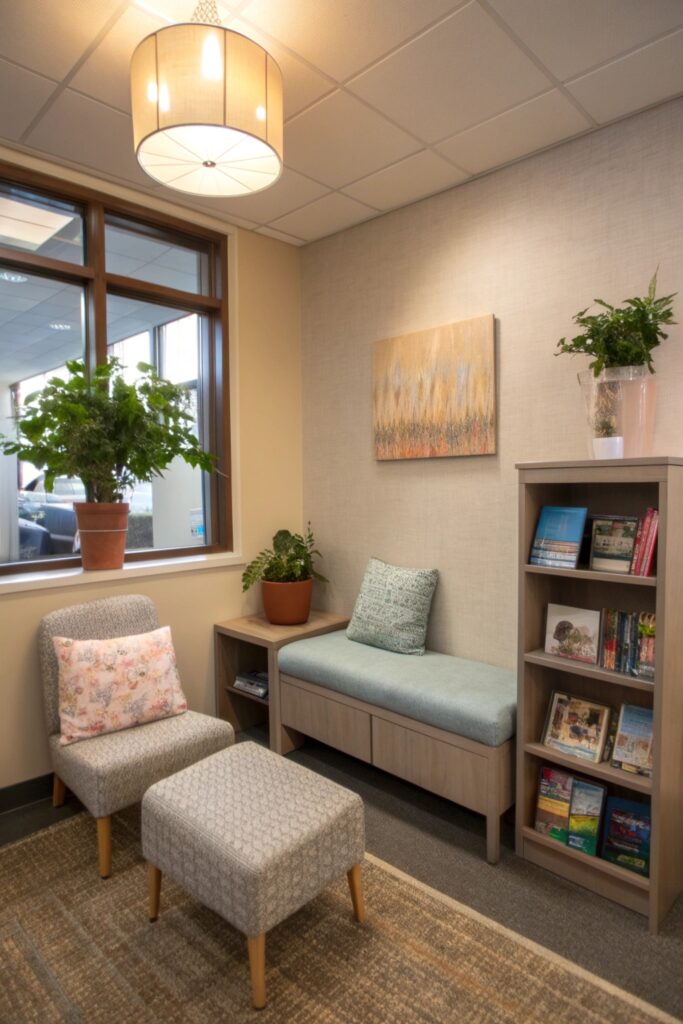
Truly comfortable seating matters here, since students and parents often wait in this spot during a stressful moment, not just a routine visit.
Choose seating that’s easy to clean and holds up to frequent use, since this area sees more daily wear than most other office furniture.
4. Add a Student Recognition Display
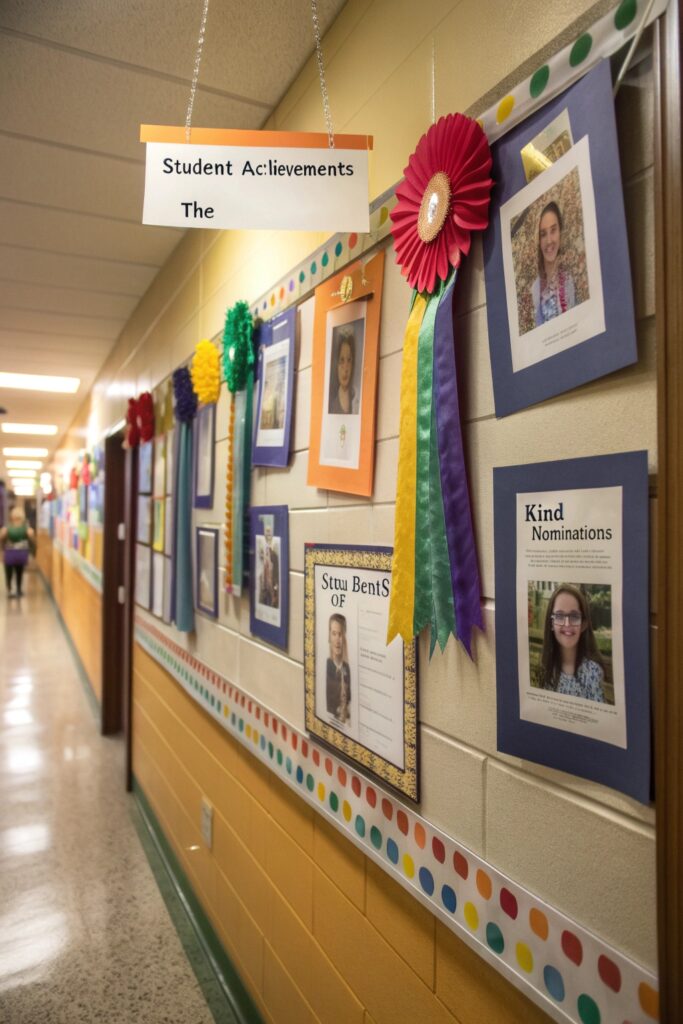
A rotating display keeps the space feeling current and gives students a reason to actually look forward to visiting the office.
Rotate the display regularly rather than leaving it static for months, which keeps students checking back rather than tuning it out over time.
5. Bring in Plants and Greenery
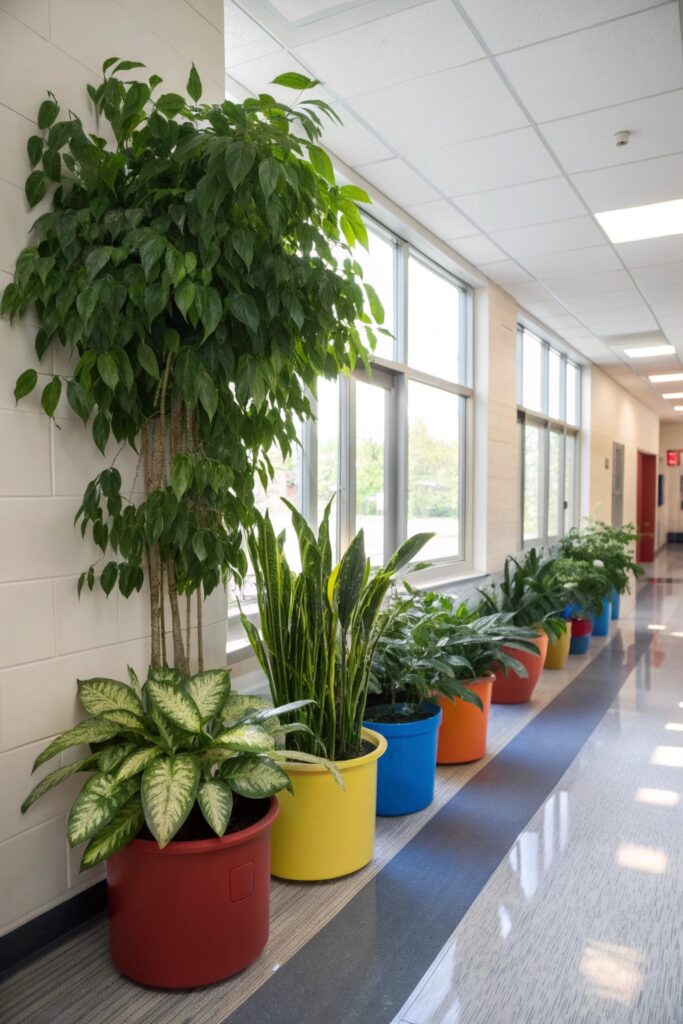
low-maintenance varieties matter most here, since school offices don’t always have someone dedicated to regular plant care.
Choose plants that tolerate inconsistent watering and lower light, like pothos or snake plants, which fit a busy office environment better than higher-maintenance varieties.
6. Use a Calming, Intentional Color Palette
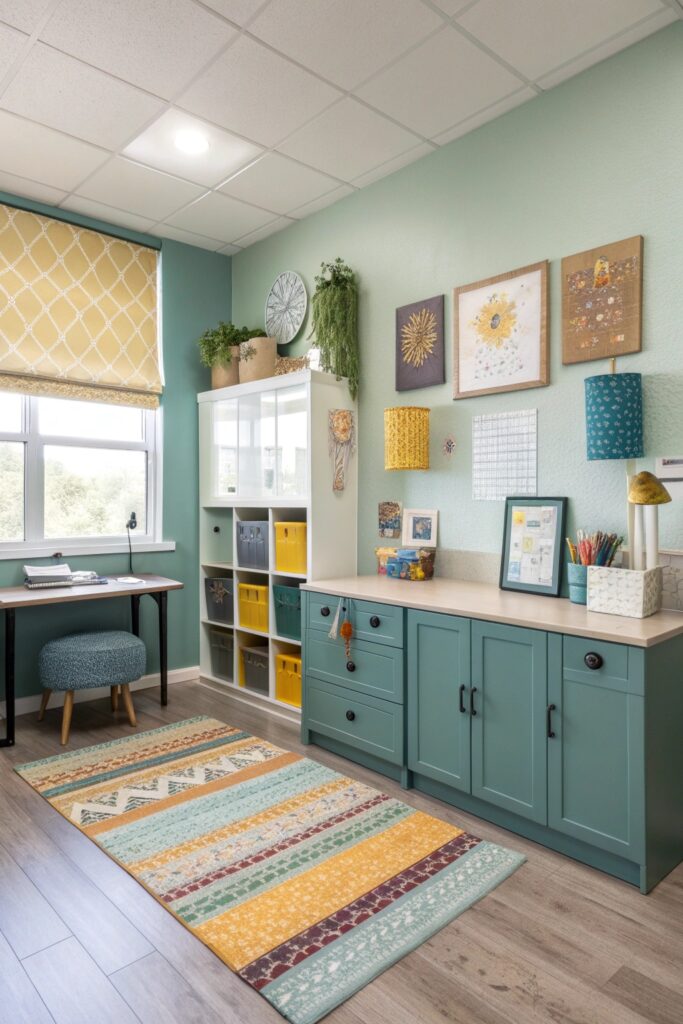
Softer, muted tones read as more welcoming than a stark institutional white or the school’s boldest color used at full saturation.
Test paint samples in the room’s actual lighting before committing, since color can read differently under fluorescent office lighting than in a showroom.
7. Install a Cheerful Reception Desk Setup
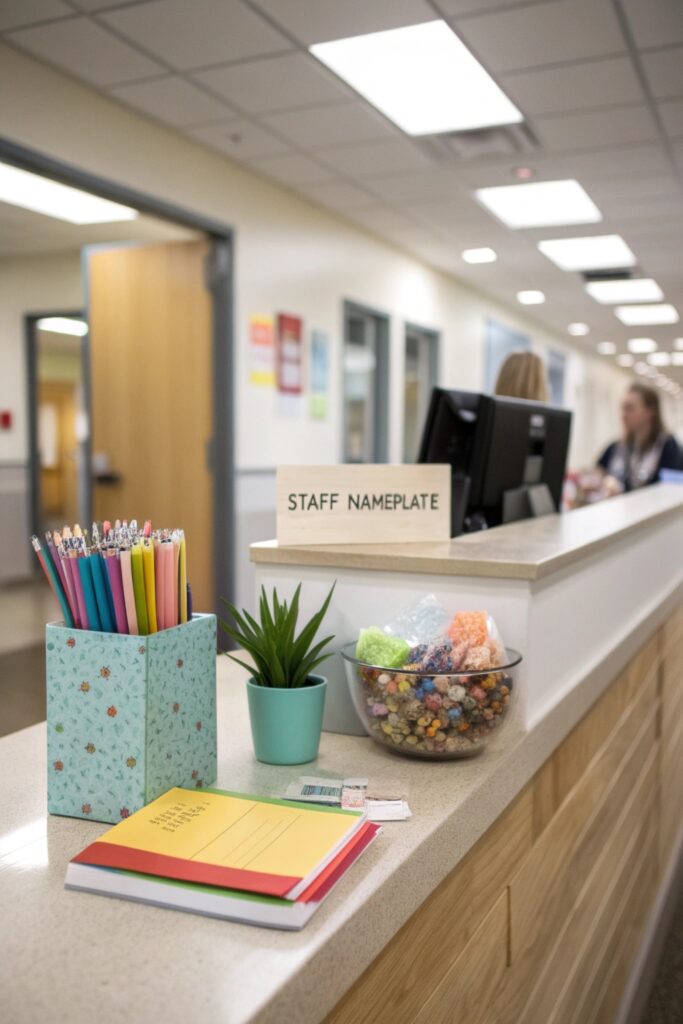
The desk is the first interaction point for most visitors, so small personal touches here have an outsized impact on the overall impression.
Keep personal touches tasteful and professional, since this is still a working reception area rather than a personal desk elsewhere in a building.
8. Hang Inspiring and Inclusive Artwork
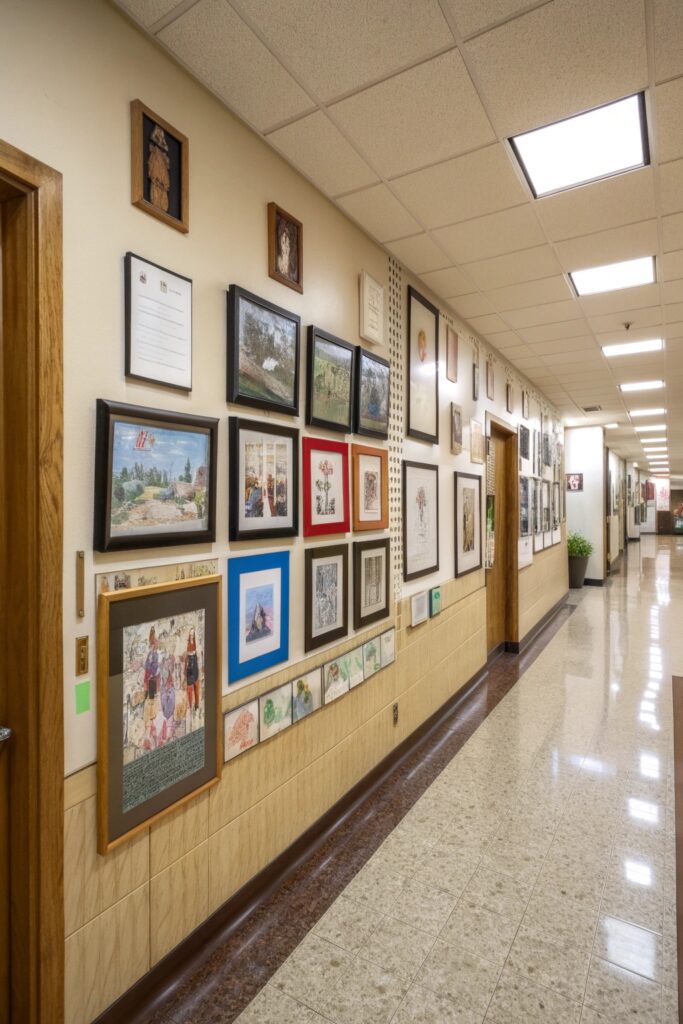
Art that reflects the school’s actual student population helps the space feel like it belongs to everyone who walks through it.
Choose artwork appropriate for a wide age range if the school serves multiple grade levels, since content that suits younger students may not resonate the same way with older ones.
9. Set Up an Organized, Accessible Information Station
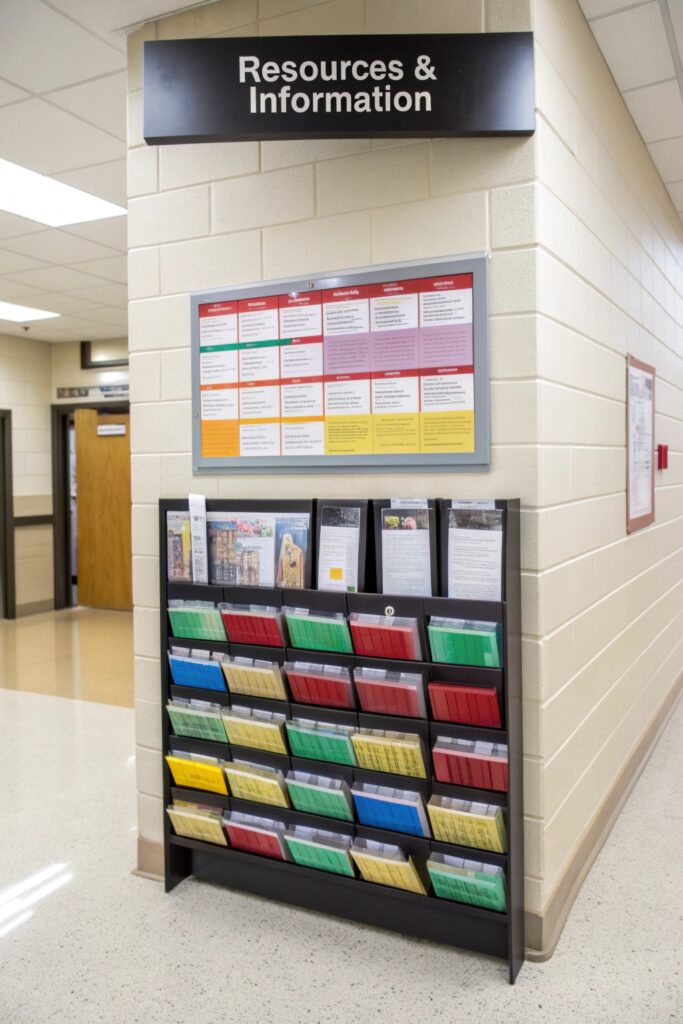
Clearly labeled forms and resources reduce the back-and-forth of staff having to locate items for every visitor request.
Label everything clearly and at accessible height, since visitors of different ages and abilities need to be able to locate resources without assistance.
10. Add a Growth Mindset or Motivational Quote Corner
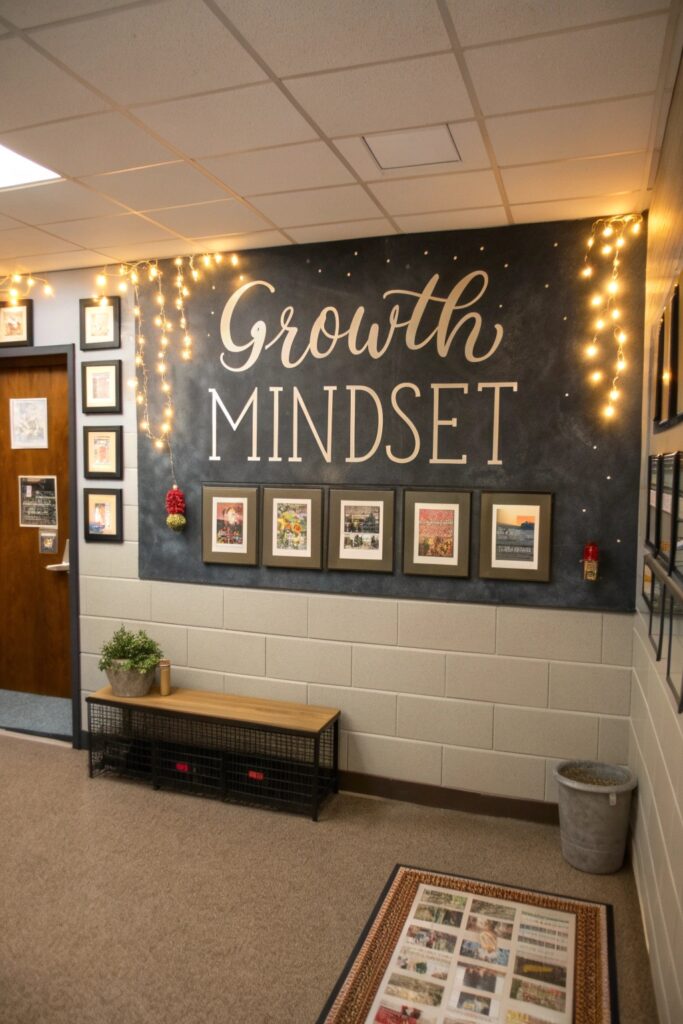
A rotating quote or theme keeps this detail from becoming background noise that visitors stop noticing over time.
Working Within a School Budget
Many of these changes don’t require district approval or a large budget, since paint, lighting, and small decor items are often within a typical office supply allowance.
Larger changes like new furniture or built-in shelving usually need genuine budget planning and approval, so it’s worth separating quick wins from longer-term projects when deciding where to start.
What This Refresh Costs
Smaller updates — lighting, plants, a few decor pieces — typically cost $100 to $400 total.
New seating or a reception desk refresh runs considerably higher, often $500 to $2,000 depending on the specific furniture chosen and whether it’s purchased new or secondhand.
Considering the Full Range of Visitors
A school office actually serves a wide range of people throughout the day — young students, teenagers, parents, staff, and outside visitors — so it’s worth designing with all of these groups in mind rather than just one.
A space that feels welcoming to a nervous first-grader on their first day should also feel professional and functional to a parent handling paperwork or a visiting administrator, which is a genuine balance worth keeping in mind throughout the process.
Involve office staff early in the planning process, since they use this space daily and often have practical insight into what actually works and what tends to become clutter or an obstacle over time.
Consider tackling this project during a school break or a quieter stretch of the calendar, since making changes while the office is actively in daily use adds complexity that’s easier to avoid with some advance planning.
Take before and after photos of the space, since it’s helpful to have a clear record when requesting future budget for additional updates or sharing the results with school leadership.
Secondhand and school surplus sales are worth checking specifically for furniture and shelving, since these sources often have solid pieces at a fraction of retail cost, which matters if the budget is limited.
Whatever combination of these ideas you choose, revisit the space periodically as the school year progresses, since a display or decor choice that felt fresh in the fall can start to feel stale by spring without some ongoing attention.
A welcoming office truly reflects well on the whole school, since it’s often the space that shapes a visitor’s first and most lasting impression of the building as a whole.
Choosing Durable Materials for High-Traffic Use
A school office sees far more daily foot traffic than a typical workplace reception area, so furniture and flooring need to hold up to constant use rather than looking good on day one and wearing out within a semester.
Commercial-grade upholstery fabrics, laminate rather than veneer surfaces, and low-pile or vinyl flooring all tend to outlast their residential-grade equivalents significantly in this kind of setting.
Conclusion
Refreshing classrooms next? See our guide to boho classroom decor ideas for a similarly welcoming approach in student spaces.
Comfort and functionality matter as much as visual appeal in a school office, since this space needs to handle a high volume of daily traffic without feeling cluttered or chaotic. Small, low-cost changes like lighting and a few personal touches at the desk often make a bigger difference than a full redesign, which is worth keeping in mind if budget is limited.