
Working from an RV comes with genuine space constraints most home office guides don’t account for, but the core principles — a stable surface, good lighting, reliable connectivity — still apply, just with more creative solutions for a fraction of the square footage.
Below are 10 ways to build a workable RV office setup, with real costs and practical notes for each.
1. Convert Your Dinette Into a Dedicated Desk
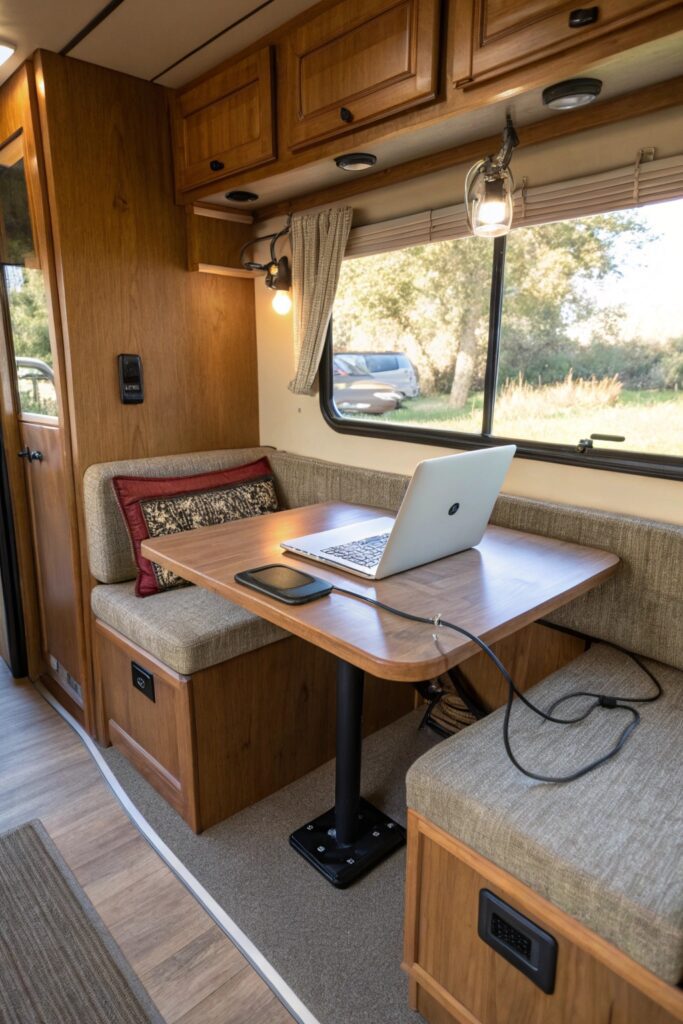
Most RV dinettes already have the right height and a stable surface for a laptop, making this the lowest-effort setup on this list — no building or hardware required, just a consistent daily habit of clearing the table for work. Add a slim under-table cable organizer ($10-15) to keep charging cords from tangling with mealtime use.
The tradeoff is losing the dinette for actual meals during work hours, which matters more in smaller rigs where it’s the only seating and eating area.
2. Build a Slide-Out Desk in Unused Cabinet Space
What You’ll Need
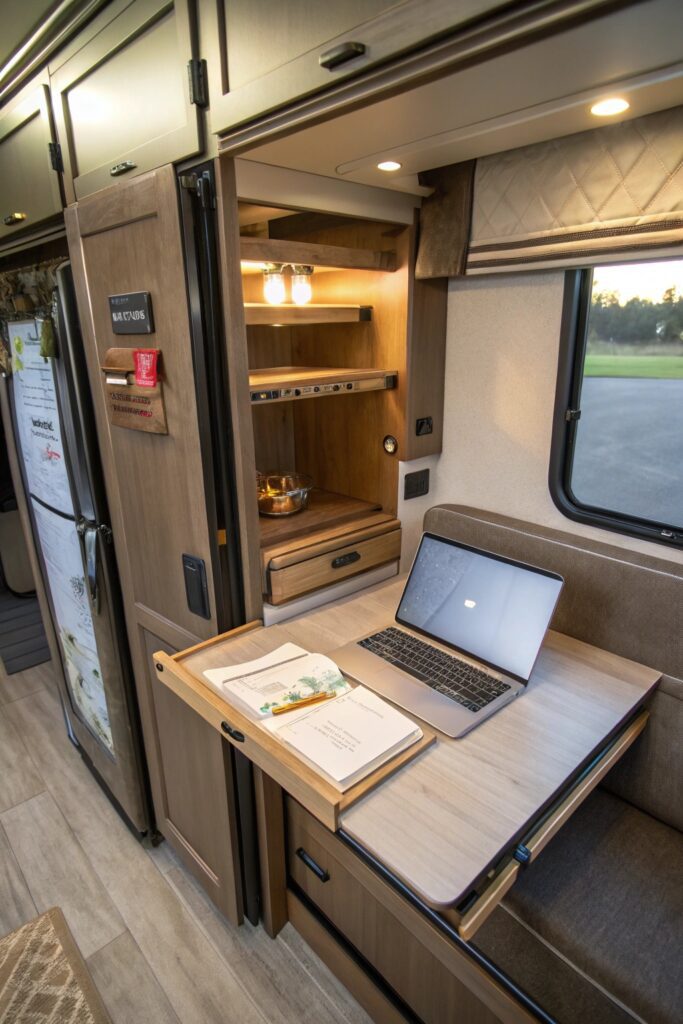
A drawer slide kit rated for at least 50 lbs ($20-30), a piece of plywood or MDF cut to fit your cabinet opening, and basic tools (drill, screws) — this is a weekend project for most RV owners comfortable with light carpentry.
Where It Works Best
Cabinets beneath a countertop or bed platform with at least 20 inches of depth work best, since anything shallower won’t support a laptop and mouse comfortably. This setup fully hides your workspace when not in use, which matters in smaller rigs where every surface needs to serve multiple purposes.
3. Mount a Fold-Down Wall Desk
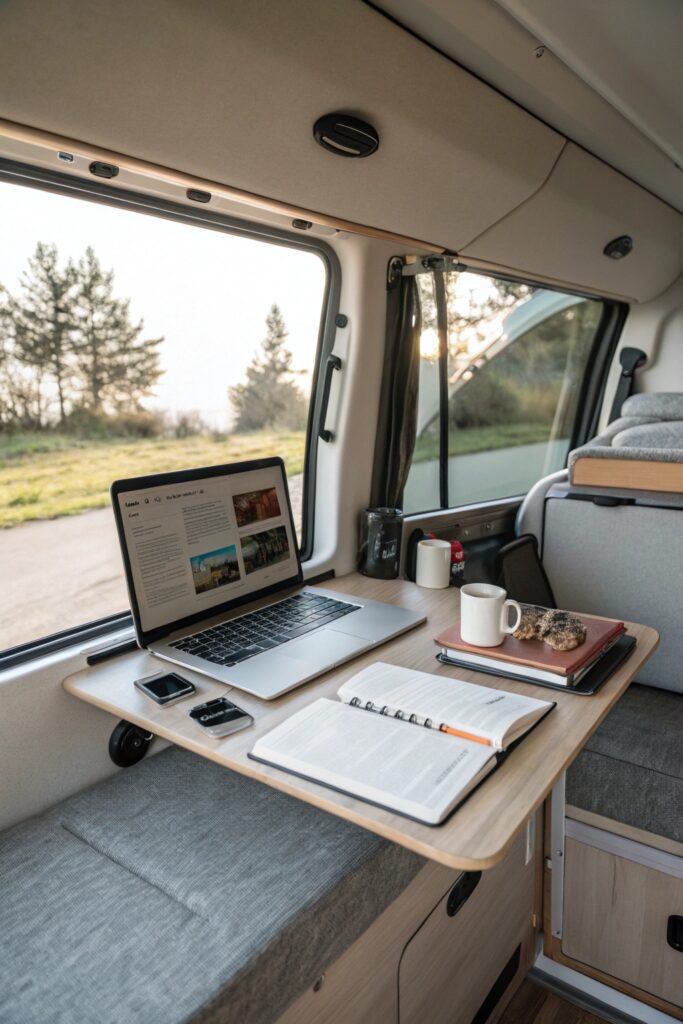
A hinged, wall-mounted desk that folds flat against the wall when not in use ($40-80 for a quality bracket-and-surface kit) works well in RVs where floor space is at an absolute premium. Choose a model with a locking mechanism in the open position — cheaper folding brackets can wobble under a laptop’s weight.
Mount into wall studs or the RV’s structural framing rather than thin interior paneling alone, which won’t support sustained weight.
4. Repurpose the Passenger Seat as a Swivel Workstation
A Few Add-Ons Worth Considering
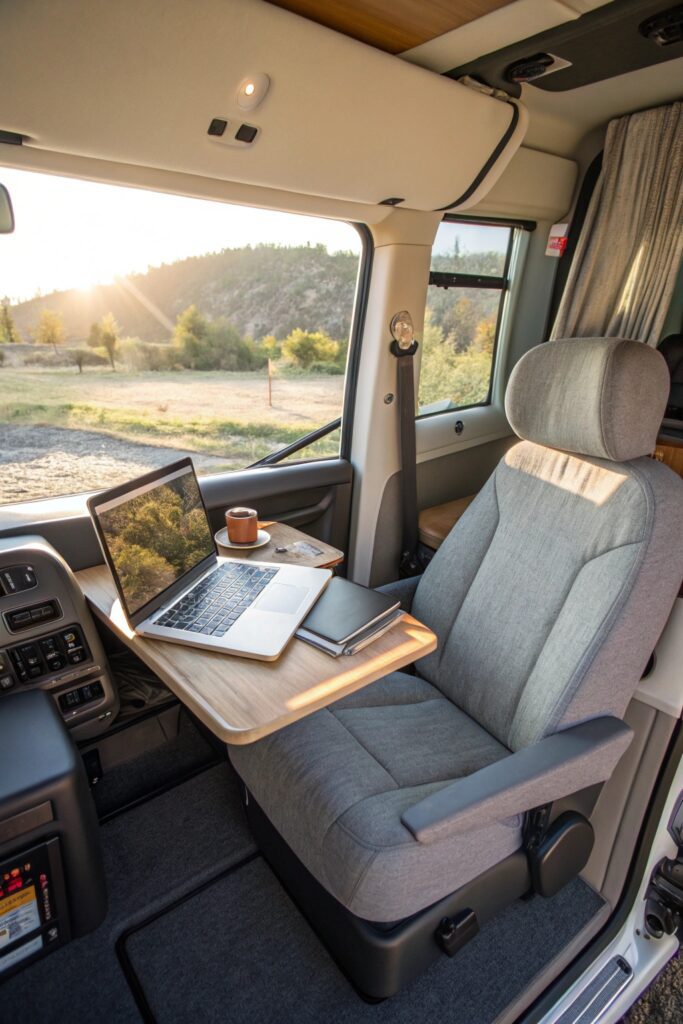
A swiveling passenger seat (many RVs already have this built in) paired with a portable lap desk ($20-30) turns unused driving-time seating into a workspace during stationary periods. A 12V laptop charger avoids draining your house battery bank as quickly as a standard inverter-powered charger would.
5. Install a Standing Desk Converter
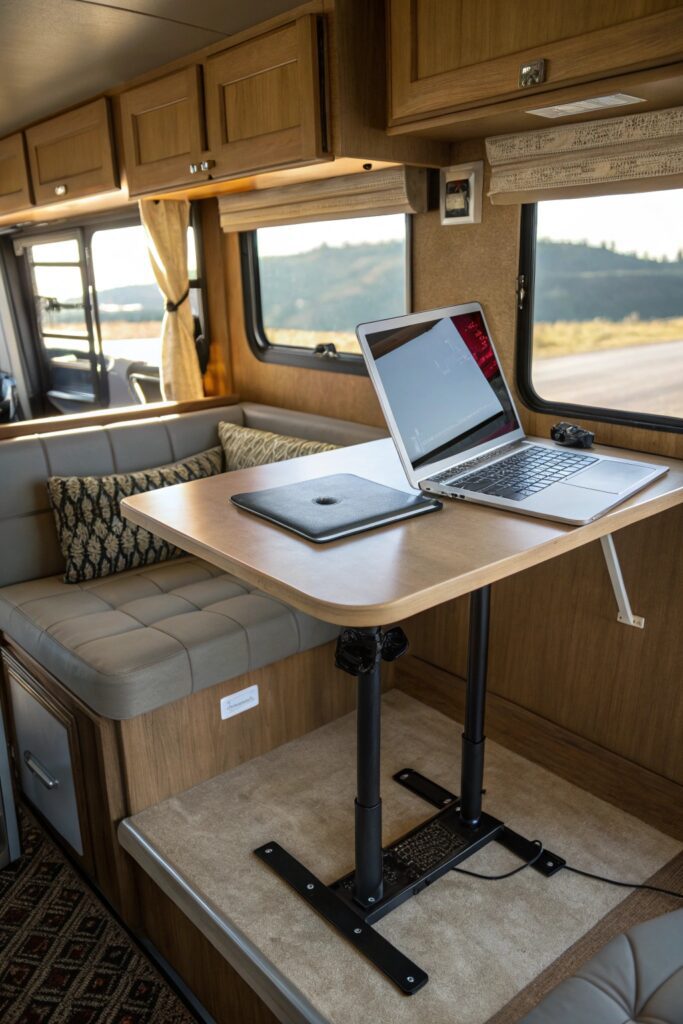
Why This Works So Well in RVs
A compact standing desk converter ($60-120) sits on top of an existing counter or table surface, adding height-adjustable capability without requiring dedicated floor space for a full standing desk. This matters specifically in RVs, where sitting for extended hours in already-limited seating options compounds discomfort faster than in a standard home office.
6. Create a Window-Facing Workspace for Natural Light
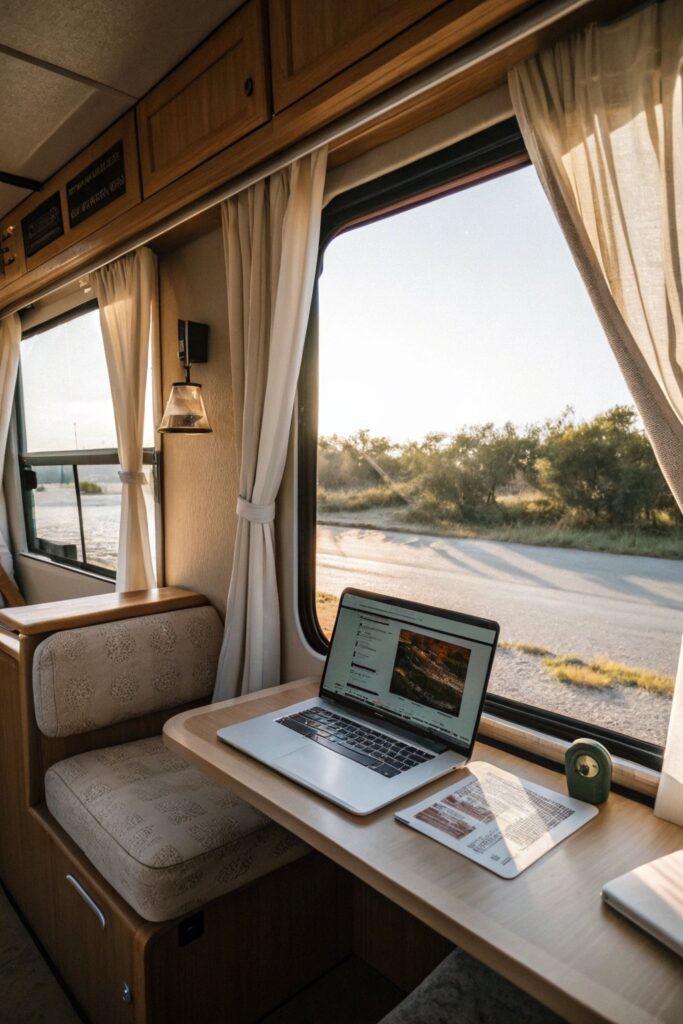
Positioning any of the setups above to face a window (rather than a wall) takes advantage of natural light most RVs already have in abundance, reducing eye strain during long work sessions and cutting down on artificial lighting needs during the day.
Add a removable privacy or light-diffusing film if working in bright, direct sun causes screen glare — full blackout isn’t necessary, just enough diffusion to cut harsh reflections.
7. Add a Compact Second Monitor Setup
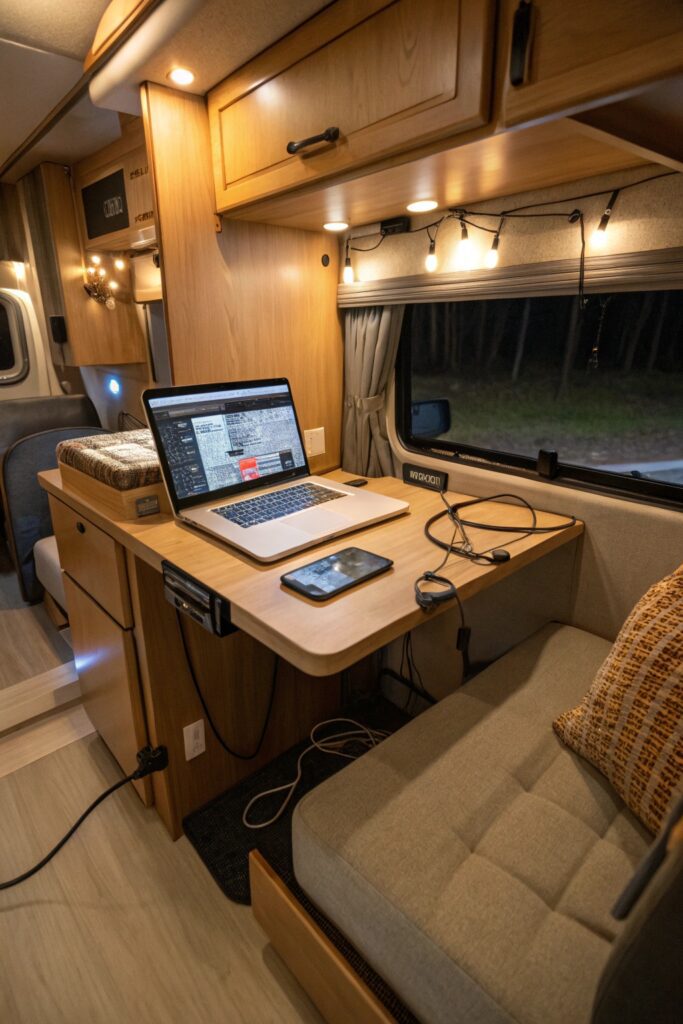
Setup Tips
A portable USB-C monitor (13-15 inches, $120-200) adds screen real estate without the bulk of a standard desktop monitor, and most fold flat or roll for storage between uses. Look specifically for battery-powered or low-draw models if you’re running primarily on solar or a limited battery bank, since standard monitors can meaningfully add to daily power consumption.
8. Build a Vertical Storage Wall Above Your Desk
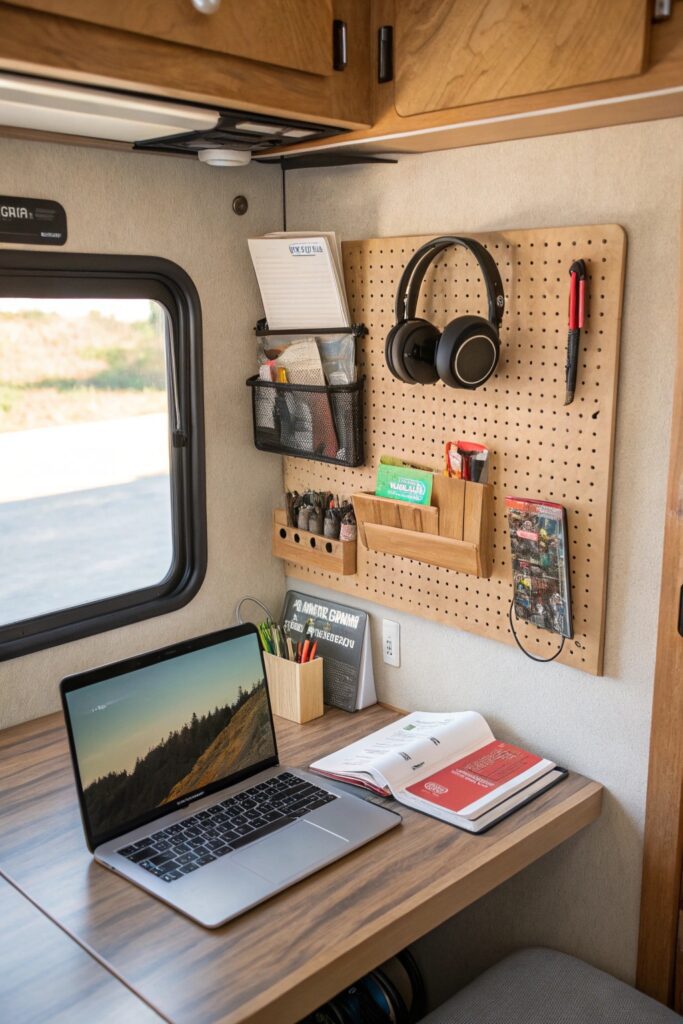
Wall-mounted organizers, a small pegboard, or magnetic strips above your workspace use vertical space that floor-based storage can’t, which matters significantly in an RV where floor space is the most contested resource. Secure any mounted storage carefully — items that would just fall over in a house can become genuine hazards while driving if not properly secured.
9. Use a Rooftop or Exterior Antenna for Reliable Connectivity
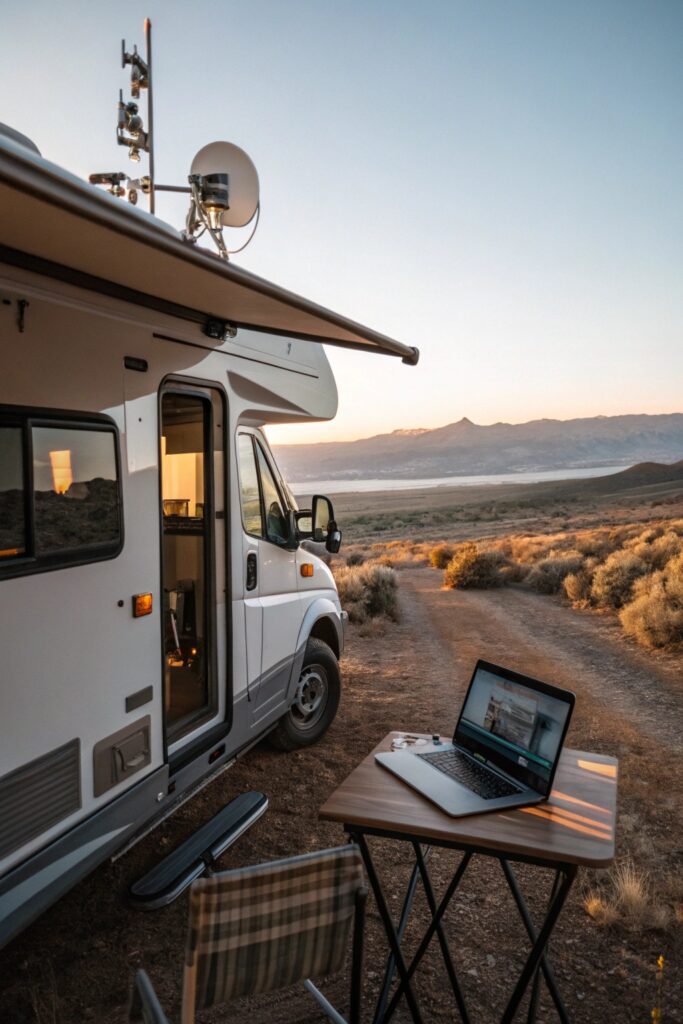
A dedicated cellular or WiFi-boosting antenna ($150-400 depending on capability) solves the single biggest practical obstacle to RV remote work — inconsistent connectivity — far more reliably than relying on campground WiFi or phone hotspot alone. This is worth prioritizing as an investment before any of the desk setups above, since a beautifully organized workspace is useless without a stable connection.
10. Personalize Your Space With Small Decor Touches
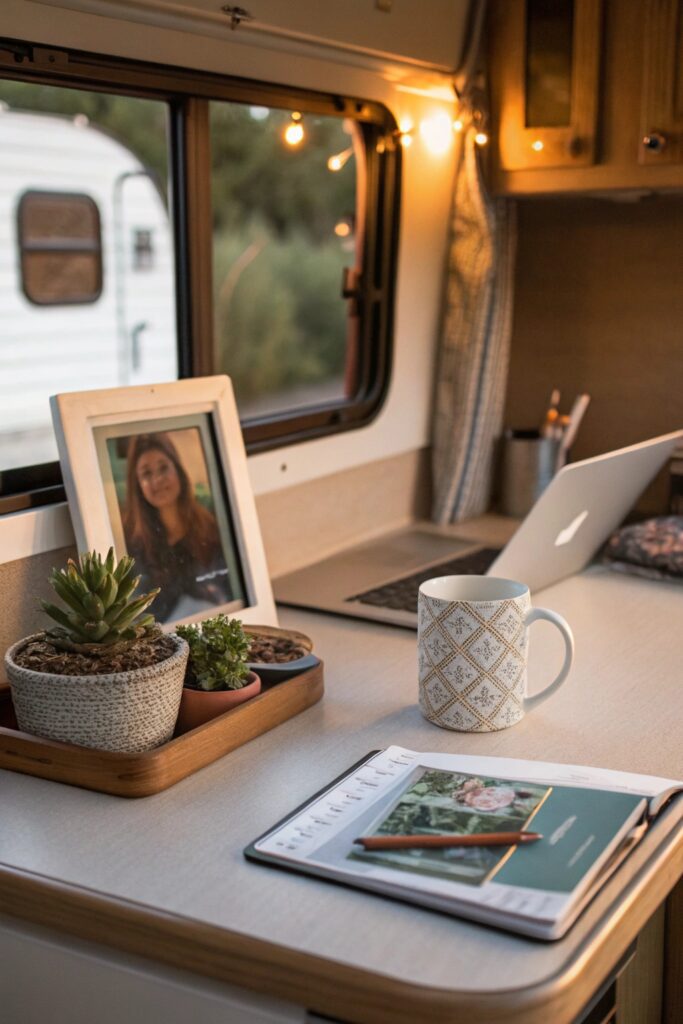
A small plant, a photo, or a piece of art sized appropriately for the space adds the same personal, morale-boosting effect in an RV office that it does in any home workspace, without taking up meaningful room. Choose secured or weighted decor items specifically — anything that could become a projectile while driving isn’t worth the risk.
Weight and Power Considerations
Any added furniture or equipment genuinely affects your RV’s total weight, so it’s worth checking your vehicle’s cargo capacity before adding a permanent desk build or extra monitor setup.
Confirm your power setup — battery bank, solar, or shore power — can genuinely handle a computer and monitor running for a full workday, since this draws more consistent power than typical RV appliances.
What These Setups Cost
A simple dinette conversion or fold-down desk can be assembled for $50 to $200 using materials you may already have.
A more involved slide-out desk build or a full vertical storage wall runs higher, typically $300 to $800 depending on materials and whether you’re hiring the carpentry work out.
Wrapping It Up
Connectivity and a stable surface matter more than any aesthetic choice on this list — get those two right first before investing in organization or decor. If you’re setting up a workspace in any small footprint, not just an RV, our guide to tiny furniture for small spaces covers additional space-saving principles that apply here too.