
A functional home office in a small space comes down to recovering floor space through wall-mounted or foldable furniture, since a small room genuinely can’t accommodate a full-size traditional desk setup without sacrificing other function.
Below are 12 ways to build a workspace that actually functions well in limited square footage, with real costs and practical notes for each.
1. Claim a Closet with a Closet Office (“Cloffice”)
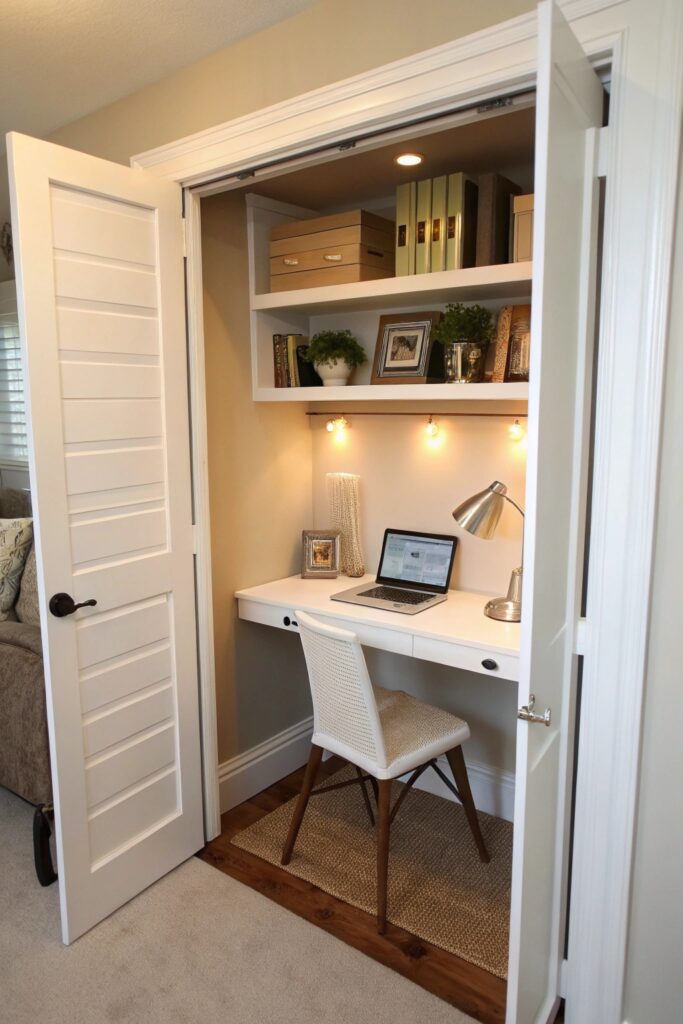
Converting an underused closet into a compact office ($150-500 depending on shelving and desk additions) uses space that’s often entirely wasted, and closing the doors at the end of the workday fully hides the workspace from the rest of the room.
Remove the existing closet rod and add a slim desk surface plus shelving sized to the closet’s actual dimensions, which typically accommodates a laptop setup comfortably even in a standard reach-in closet.
2. Use a Fold-Down Wall Desk
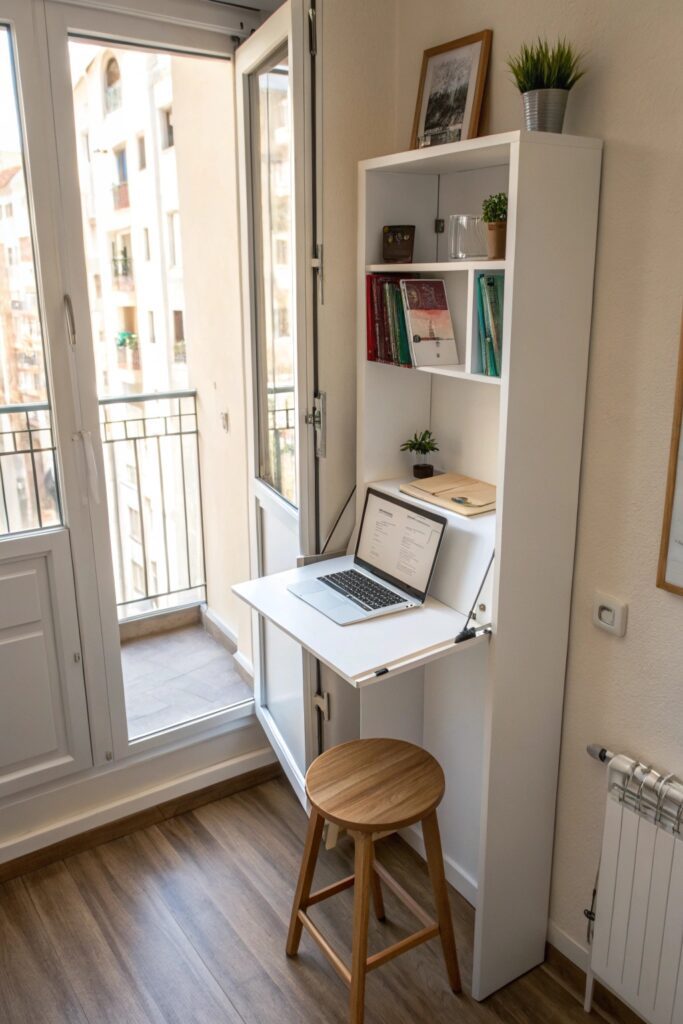
A wall-mounted fold-down desk ($100-300) provides genuine work surface when needed and folds flat against the wall when not in use, recovering floor space that a fixed desk permanently occupies.
This works especially well in a room serving multiple functions, where a permanent desk footprint would otherwise compete with the room’s other daily uses.
3. Set Up a Corner Desk
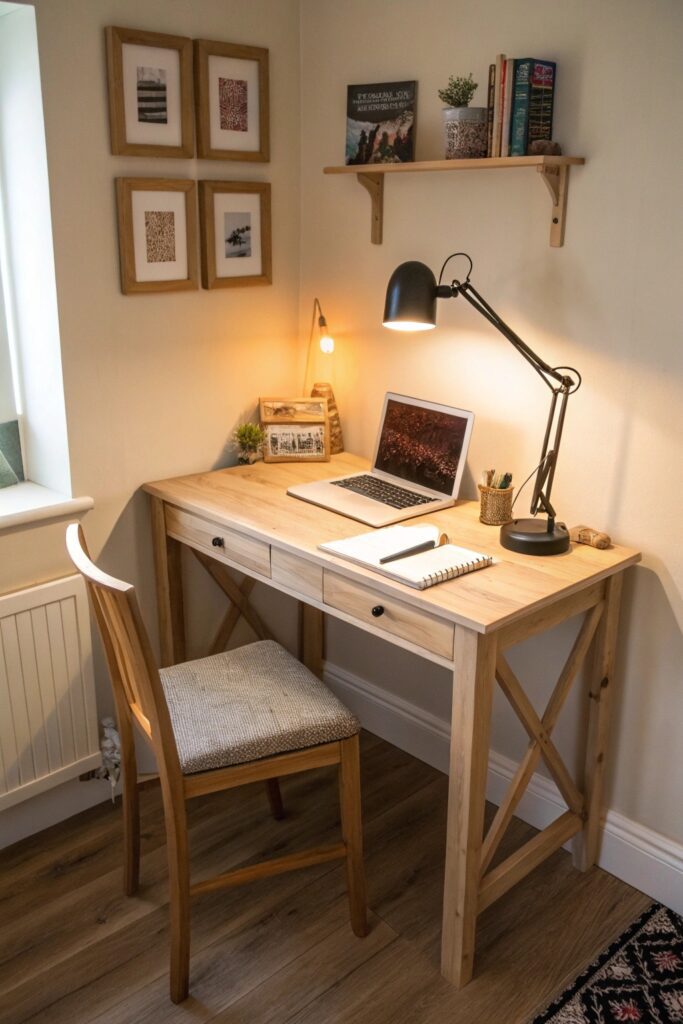
A desk designed specifically for corner placement ($100-300) uses floor space that’s often left entirely empty in a room’s layout, rather than competing for the same wall space as other furniture.
Corner desks are generally L-shaped or triangular specifically to use this geometry efficiently — a standard rectangular desk pushed into a corner doesn’t achieve the same space efficiency.
4. Add a Rolling Desk Cart
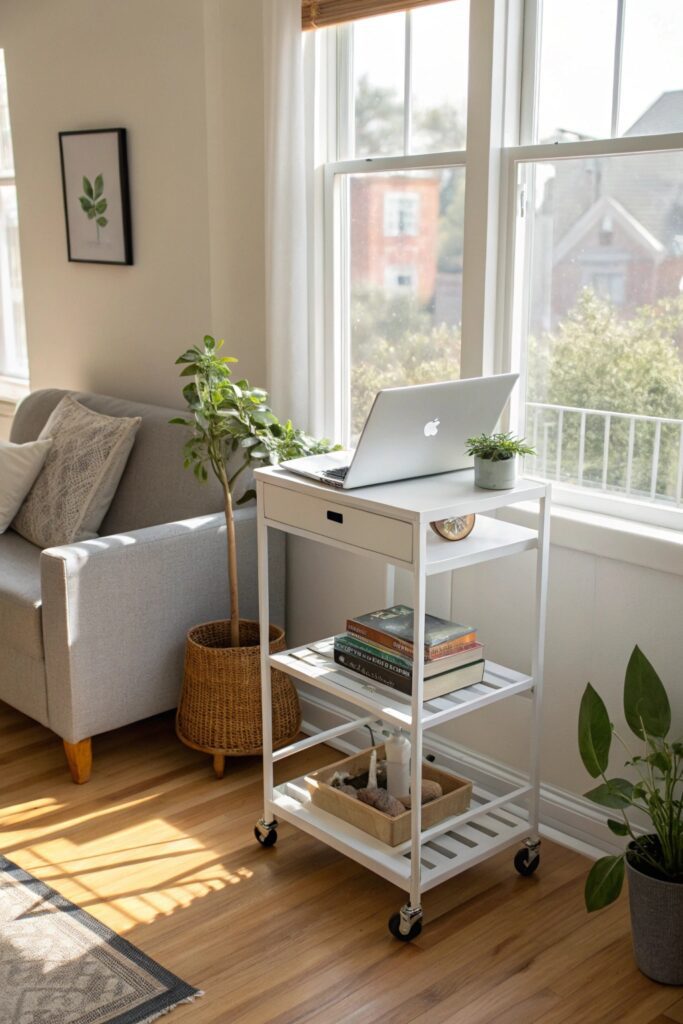
A cart with a desk-height surface ($80-200) can be wheeled out for work sessions and tucked into a closet or corner afterward, offering genuine flexibility that a fixed desk doesn’t provide.
This works particularly well for occasional or part-time home office use, where dedicating permanent floor space to a desk isn’t justified by how often it’s actually needed.
5. Use a Wall-Mounted Fold-Up Desk with Shelving
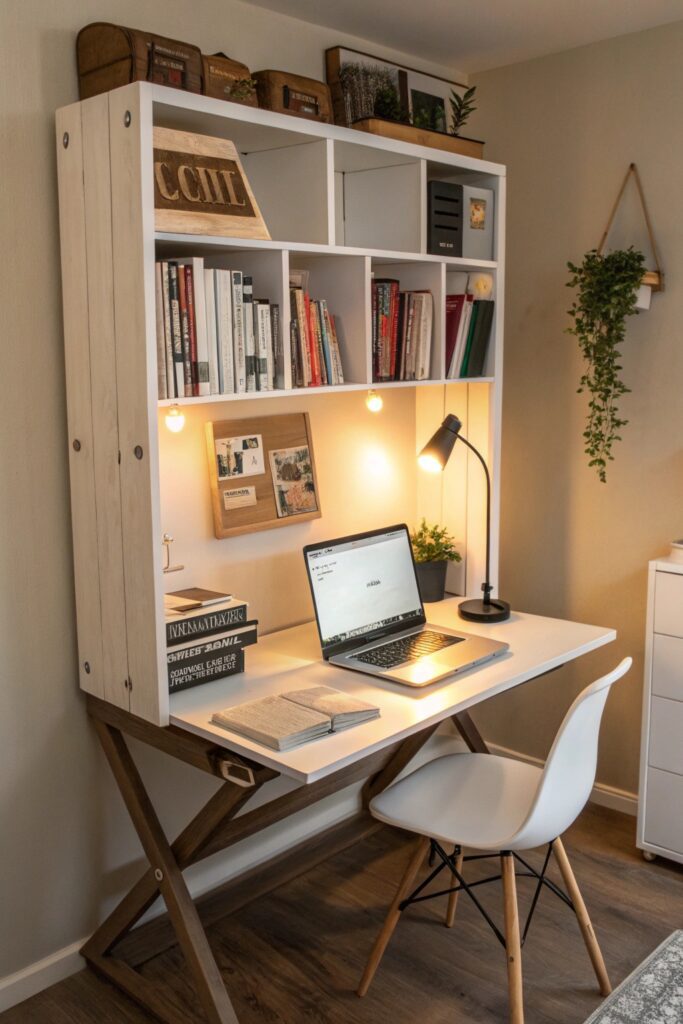
A combined fold-down desk and integrated shelving unit ($150-350) provides both work surface and storage in a single wall-mounted footprint, which is more space-efficient than separate desk and shelving pieces.
This is worth prioritizing over a simple fold-down desk alone if the workspace needs to accommodate books, supplies, or equipment beyond just a laptop.
6. Create a Window Nook Workspace
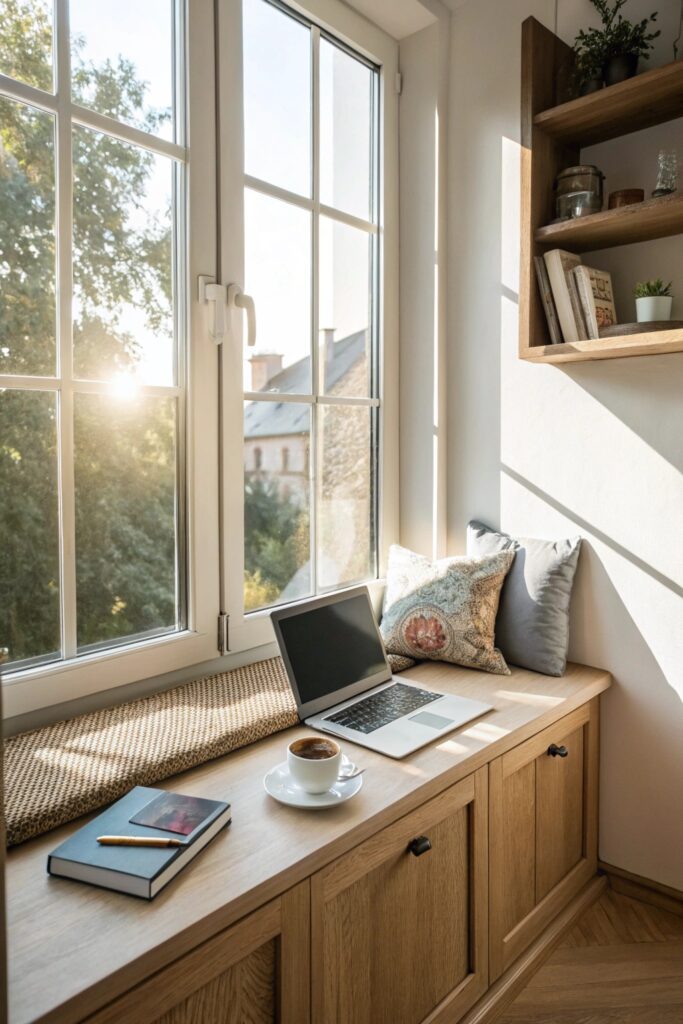
Positioning a slim desk beneath a window uses a spot that’s often left as unused floor space, while also providing natural light that improves both the workspace’s function and its overall feel.
Check the specific window’s height and any radiator or heating element clearance before committing to this placement, since not every window setup accommodates a desk comfortably underneath.
7. Use a Murphy Desk
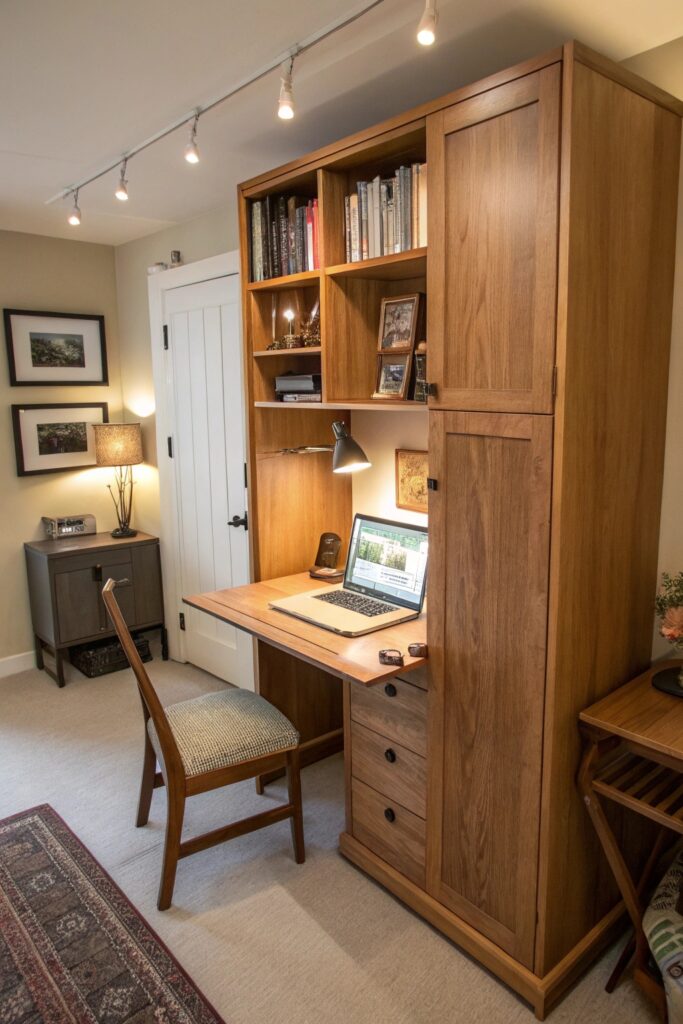
A wall-mounted Murphy-style desk ($300-700) folds up flush against the wall similar to a Murphy bed, offering a more substantial and sturdy work surface than a simple fold-down desk while still fully recovering floor space when not in use.
This is a bigger investment than a basic fold-down desk, but it’s worth considering for anyone who needs a genuinely stable surface for regular, intensive desk work rather than occasional laptop use.
8. Add Vertical Storage Above the Desk
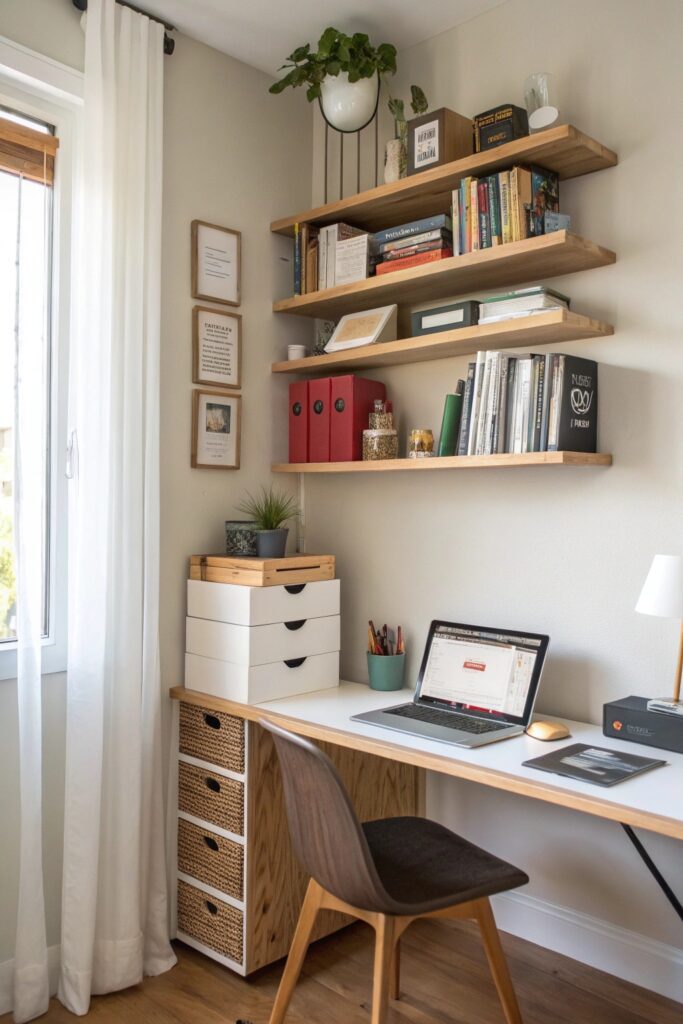
Wall-mounted shelving or a pegboard above a desk recovers storage capacity that a small desk’s limited surface and drawer space can’t provide, without adding any additional floor footprint.
This is worth prioritizing specifically in a small office setup, where floor-based storage furniture would otherwise compete directly with the desk itself for the room’s limited square footage.
9. Use a Slim Console Table as a Desk
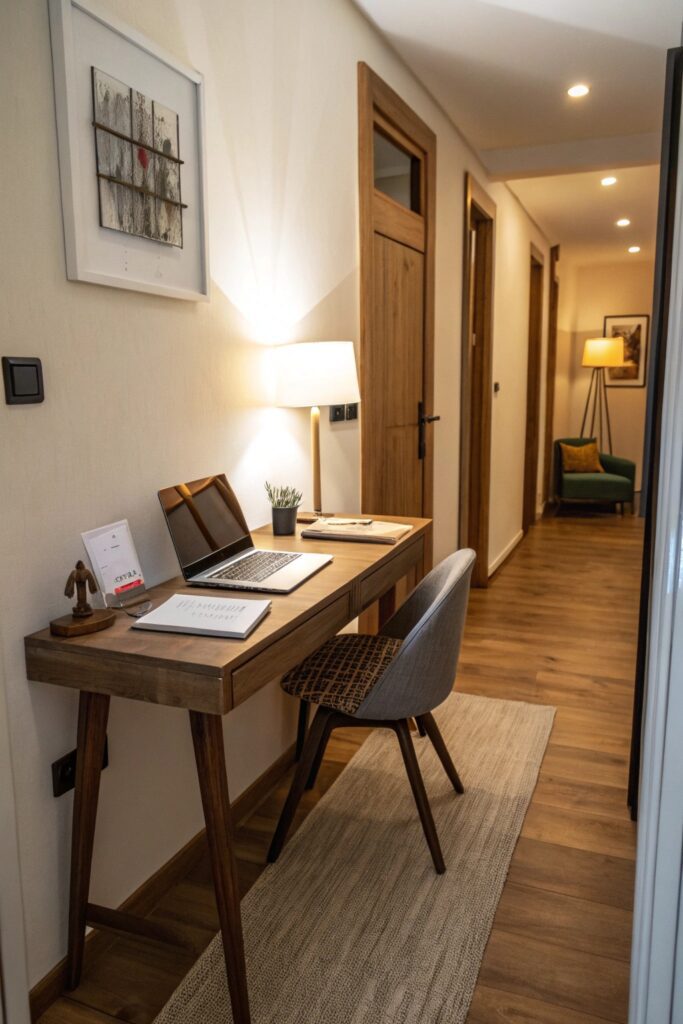
A narrow console table (12-16 inches deep) repurposed as a desk takes up meaningfully less floor space than a standard desk, working well for laptop-only setups that don’t need a full-depth work surface.
This is a genuinely flexible option, since a console table can transition back to its original decorative function if the home office need is temporary or occasional.
10. Create a Room Divider Office Nook
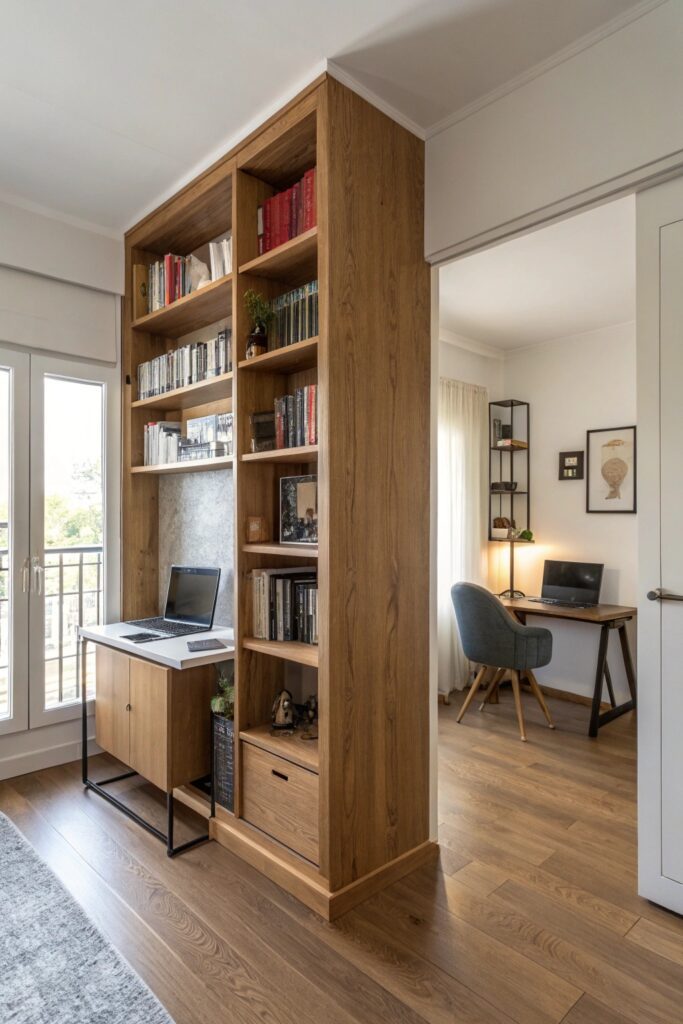
A folding screen or slatted divider ($80-200) can section off a small desk area within a larger room, providing visual separation from the rest of the space without requiring an actual wall.
This works particularly well in a studio or open-concept living space, where a dedicated office room isn’t available but some visual distinction between work and living areas is still valuable.
11. Use a Daybed with a Built-In Desk Attachment
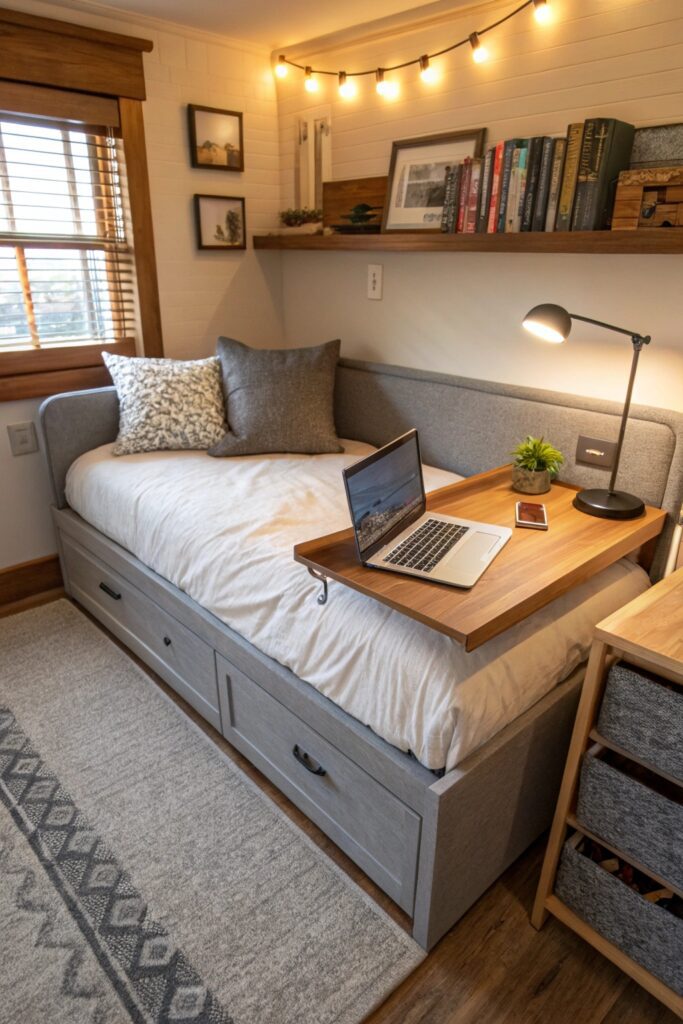
A daybed with an integrated desk surface or shelf combines seating, occasional sleeping space, and workspace into one furniture footprint, which is a genuinely efficient solution for a room serving multiple functions.
This works especially well in a guest room that occasionally needs to double as a home office, letting one piece of furniture handle both functions rather than dedicating separate space to each.
12. Add a Pegboard Organization Wall
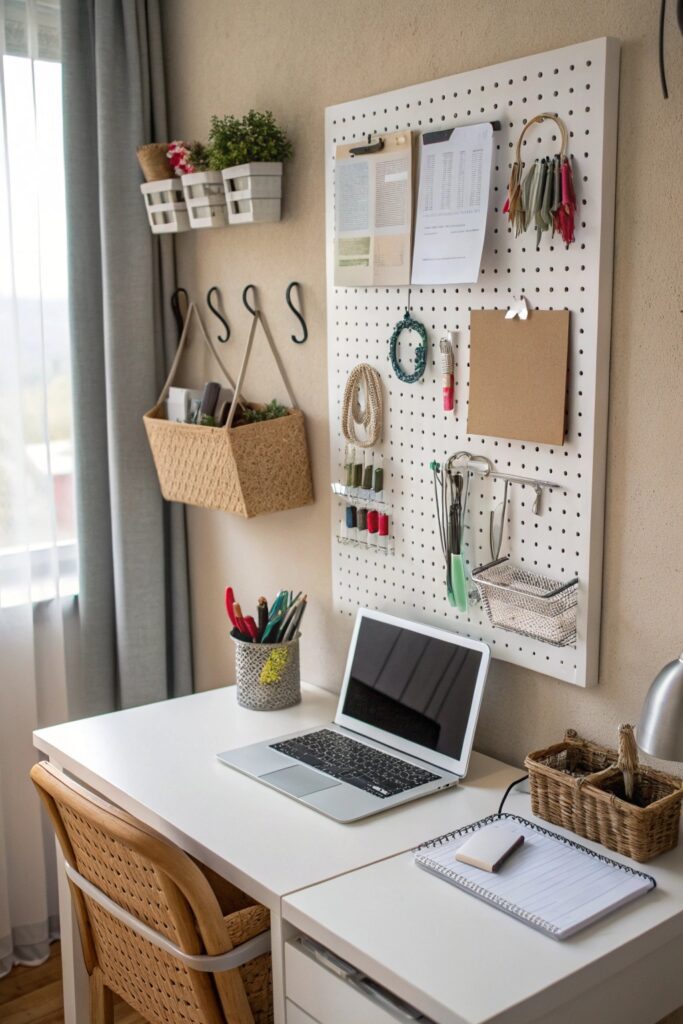
A pegboard mounted above or beside a desk ($20-50) provides fully customizable, reconfigurable storage for office supplies and small equipment, adapting easily as organizational needs change over time.
This is one of the lowest-cost storage solutions on this list and requires no floor footprint at all, making it a practical addition to almost any small office setup regardless of which desk solution you choose.
Final Thoughts
A fold-down or wall-mounted desk solution matters most if floor space is genuinely at a premium, since these options are the only ones that fully recover the desk’s footprint when not in use. Vertical storage is worth prioritizing alongside whichever desk solution you choose, since it adds organizational capacity without competing for the same limited floor space.