12 Tiny Entryway Table Ideas for Small Space Living

Introduction

Having a tiny entryway table doesn’t mean you have to choose between style and function — it just means you have to be smarter about both. A space the size of a large closet can still make a genuinely impressive first impression if you approach it with the right table and the right ideas behind it.

I’ve lived in apartments where the “entryway” was essentially a sliver of floor between the front door and the living room. Trust me, I’ve tested every tiny entryway table solution imaginable — some brilliant, some disasters involving doors that wouldn’t fully open :/

Here are 12 tiny entryway table ideas that prove small space living doesn’t mean settling for a space that feels cramped, cluttered, or completely overlooked.

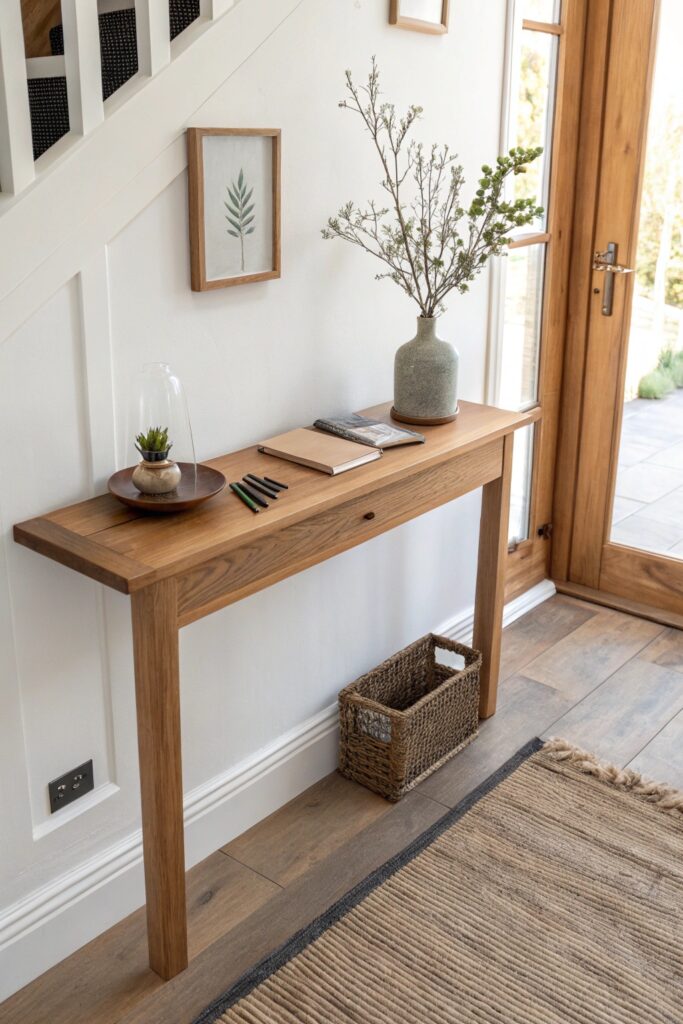
1. The Ultra-Slim Wall-Mounted Floating Table
12 Tiny Entryway Table Ideas for Small Space Living

When floor space is genuinely scarce, a wall-mounted floating table is the smartest tiny entryway table solution available — full stop. It mounts directly to your wall studs, hovers above your floor completely, and provides a functional surface for keys, mail, and styling without consuming a single square inch of floor space. You keep all the functions of a traditional entryway table while the floor beneath stays completely open.

The floating table works especially well in apartments and condos where entryways measure in feet rather than rooms, because the clear floor makes the entire space feel more open and navigable.

What makes a great wall-mounted floating entryway table:

  • Depth: 8 to 10 inches is ideal — deep enough to hold daily essentials, shallow enough to leave comfortable walking clearance
  • Width: Match to your available wall space — even 24 inches wide provides meaningful surface area
  • Material: Solid wood, MDF with quality finish, or floating glass shelves all work beautifully
  • Mounting hardware: Must anchor into wall studs for stability — a wobbly floating table is worse than no table
  • Finish: Light wood tones and white finishes make narrow hallways feel larger and brighter

The visual impact of a clear floor beneath a floating table is genuinely hard to overstate in a tiny entryway. When your eye can see the floor running continuously from the front door through the space, the entire entryway reads as larger than it physically is. That one visual trick does more for a small entryway’s perceived spaciousness than almost any other design decision you could make.

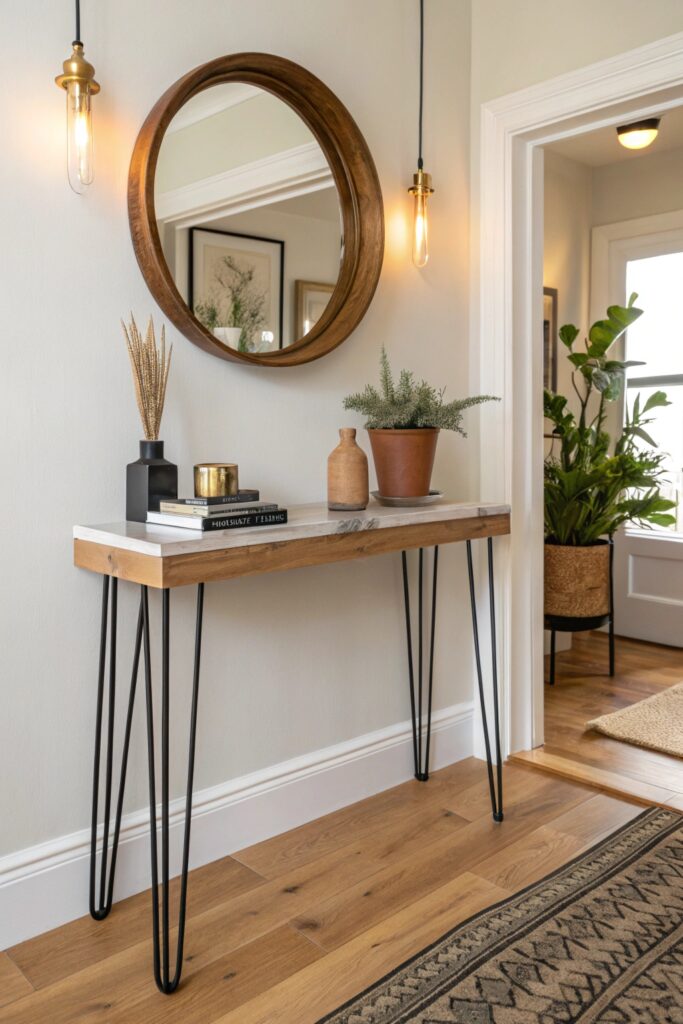
2. Hairpin Leg Console Table

12 Tiny Entryway Table Ideas for Small Space Living

A hairpin leg console table delivers maximum visual lightness in a tiny entryway — and visual lightness is exactly what a small space desperately needs. The thin, minimalist metal legs essentially disappear into the background, letting the floor show through beneath the table and creating the open, airy feeling that makes a small entryway feel comfortable rather than cramped.

Hairpin leg tables have had a significant design revival in recent years for very good reason — they combine genuine industrial elegance with a spatial generosity that heavier furniture simply cannot provide.

Why hairpin leg tables work so well in tiny entryways:

  • Visible floor: The thin legs consume almost no visual space, keeping the floor open and the room feeling larger
  • Versatile aesthetic: Hairpin legs work in modern, industrial, Scandinavian, and eclectic interiors equally well
  • Lightweight: Easy to move for cleaning or reconfiguring without any heavy lifting
  • Available in very narrow depths: Many hairpin leg consoles come in 10 to 12 inch depths, perfect for tiny entryways
  • Mix of materials: Typically, combine metal legs with wood, marble, or glass tops — this material mixing reads as designed and intentional

A white or light marble top with black hairpin legs is currently one of the most universally flattering tiny entryway table combinations available — the contrast is graphic and intentional, the materials feel elevated, and the overall piece manages to look both substantial and visually light simultaneously. IMO, this combination works in almost any apartment or home aesthetic without feeling generic.

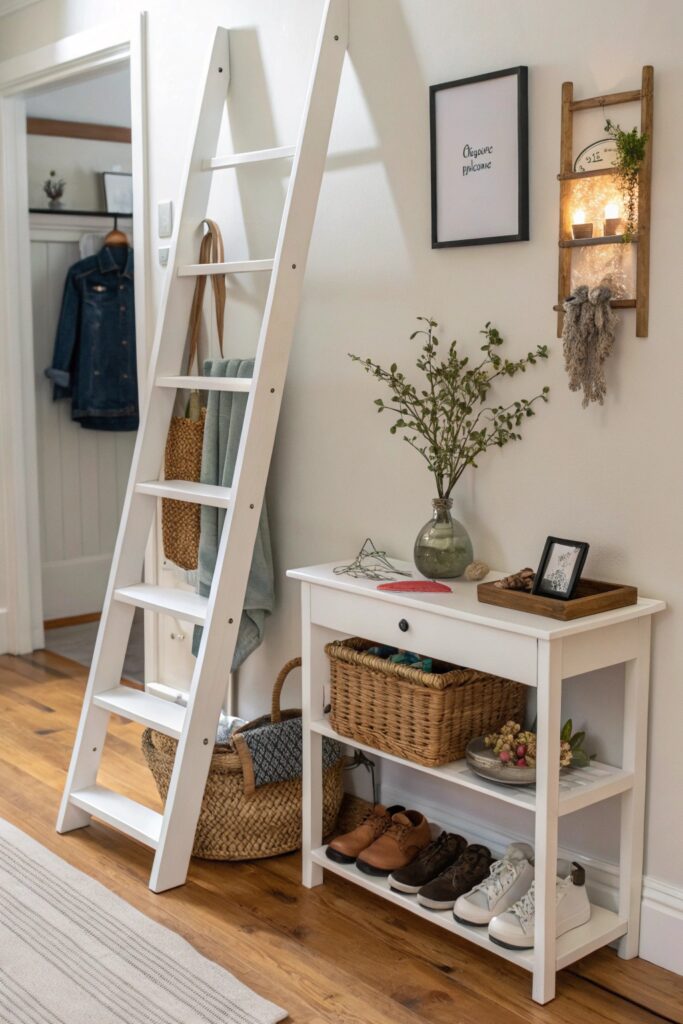
3. Repurposed Ladder Shelf as Entry Table
12 Tiny Entryway Table Ideas for Small Space Living

Here’s a tiny entryway table idea that most people completely overlook — a leaning ladder shelf repurposed as an entryway station. A ladder shelf leans against the wall at an angle, consuming minimal floor space at the base while providing multiple levels of horizontal surface as it rises. You get the function of a table plus the storage of a shelf unit in roughly the same footprint as an umbrella stand.

The ladder shelf approach works brilliantly for tiny entryways because it uses vertical space aggressively — exactly the direction small spaces need to expand into.

Using a ladder shelf effectively in a tiny entryway:

  • Bottom rung: Shoes, a small basket for bags, or an umbrella stand
  • Middle rungs: Keys, dish, small plant, mail organizer, and daily essentials
  • Top rung: Decorative items — a small framed print, a candle, dried stems in a tiny vase
  • Lean stability: Ensure the ladder rests securely against the wall — use non-slip pads at the base for safety
  • Width consideration: Narrower ladder shelves (under 20 inches wide) work best in genuinely tight entryways

The multi-level nature of a ladder shelf means you can separate your functional items from your decorative ones — a natural organizational system built into the piece’s structure. Daily essentials live at accessible middle levels, a shoe store below, and beautiful objects live above, where they contribute to the styling without getting in the way of daily routine.

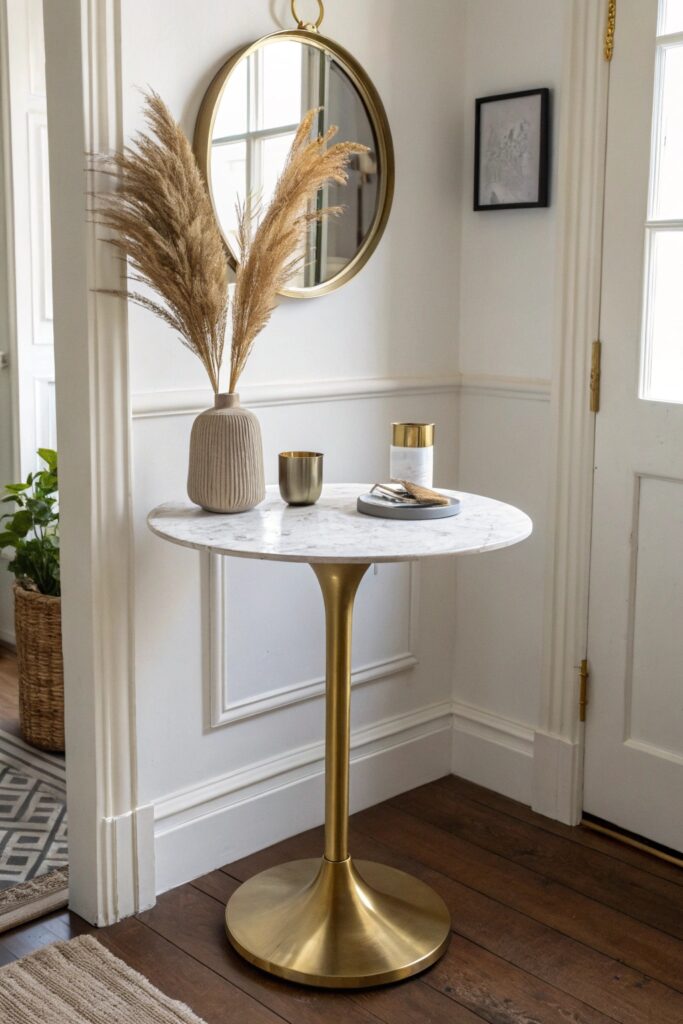
4. Small Round Pedestal Table

12 Tiny Entryway Table Ideas for Small Space Living

When your tiny entryway sits in a corner or at the end of a short hallway, a small round pedestal table works beautifully — and it sidesteps one of the most common small entryway problems, which is sharp table corners catching on coats and bags as you pass. A round table with a pedestal base has no protruding corners and a single central base that takes up minimal floor space.

Round tables also feel less imposing in small spaces because their curves echo the natural movement of people moving through the space, rather than blocking it with straight angular edges.

Choosing the right round pedestal table for a tiny entryway:

  • Diameter: 18 to 24 inches works for most tiny entryways — wide enough to be functional, compact enough not to obstruct
  • Pedestal base versus legs: A single pedestal base takes up less floor space than four legs spread to the table’s corners
  • Height: Standard console height of 28 to 32 inches provides the most versatile surface for styling and daily use
  • Material: Marble tops on brass or black metal pedestals look exceptionally elegant in tiny entryways
  • Styling consideration: Round tables look beautiful with a single tall vase and one small tray — keep the styling simple

The marble top and metal pedestal combination deserves its own special mention because it achieves something genuinely difficult in a tiny entryway — it looks luxurious and substantial while remaining physically compact. A 20-inch marble-top round pedestal table occupies almost no space but reads as an intentional, high-quality design choice that elevates the entire entryway aesthetic immediately.

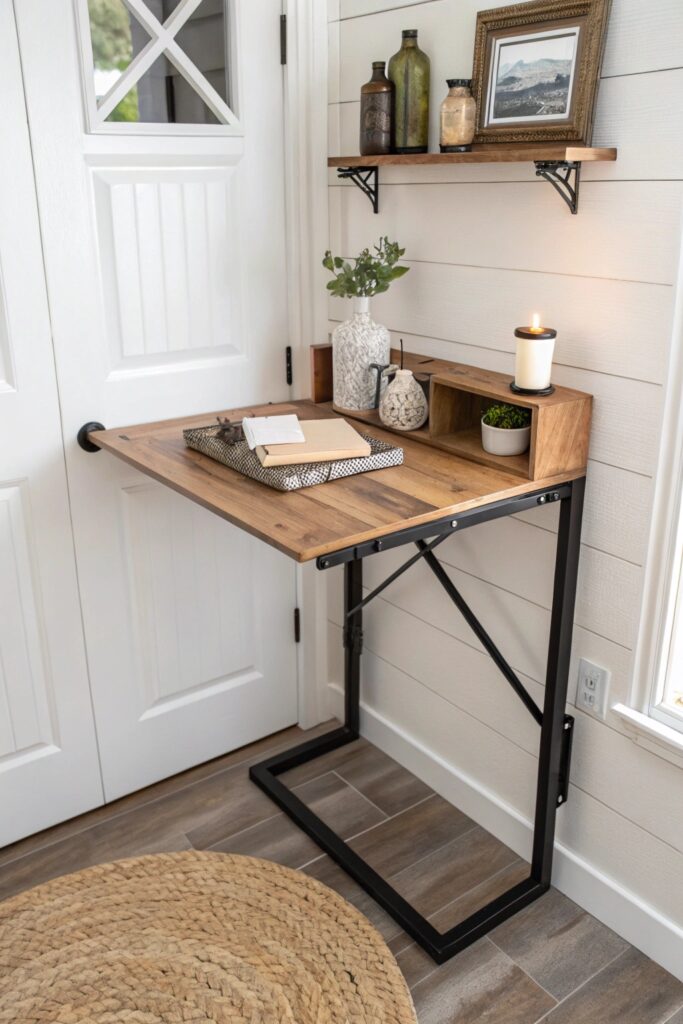
5. Fold-Down Wall Table for Maximum Flexibility
12 Tiny Entryway Table Ideas for Small Space Living

A fold-down wall table is the tiny entryway table solution for spaces so small that even a slim console feels like too much. It mounts flat against the wall and folds completely flush when not in use — taking up literally zero space — then folds down to provide a full working surface when you need it. For micro-entryways in studios and small apartments, this flexibility is genuinely transformative.

The fold-down table also works brilliantly for people who want their entryway to shift between different functions — a drop point for daily essentials when coming home, then folded away to maximize the open floor for other activities.

Making a fold-down entryway table work:

  • Mounting height: Install at standard console height (28 to 30 inches) for comfortable daily use when extended
  • Locking mechanism: Choose a table with a secure locking position when extended — a table that folds unexpectedly under the weight of your keys is not helpful
  • Integrated storage: Some fold-down models include a small shelf or compartments that remain accessible even when folded closed
  • Styling when open: A small tray, a bud vase, and a key dish are all you need — the table folds away anyway, so keep styling minimal and moveable
  • Finish coordination: Match the table finish to your wall color for the most seamless folded-away appearance

The best fold-down entryway tables are virtually invisible when closed — they read as a design element on the wall rather than a stored piece of furniture. This visual sleight of hand is what makes them perfect for tiny entryways where the goal is creating function without visual clutter.

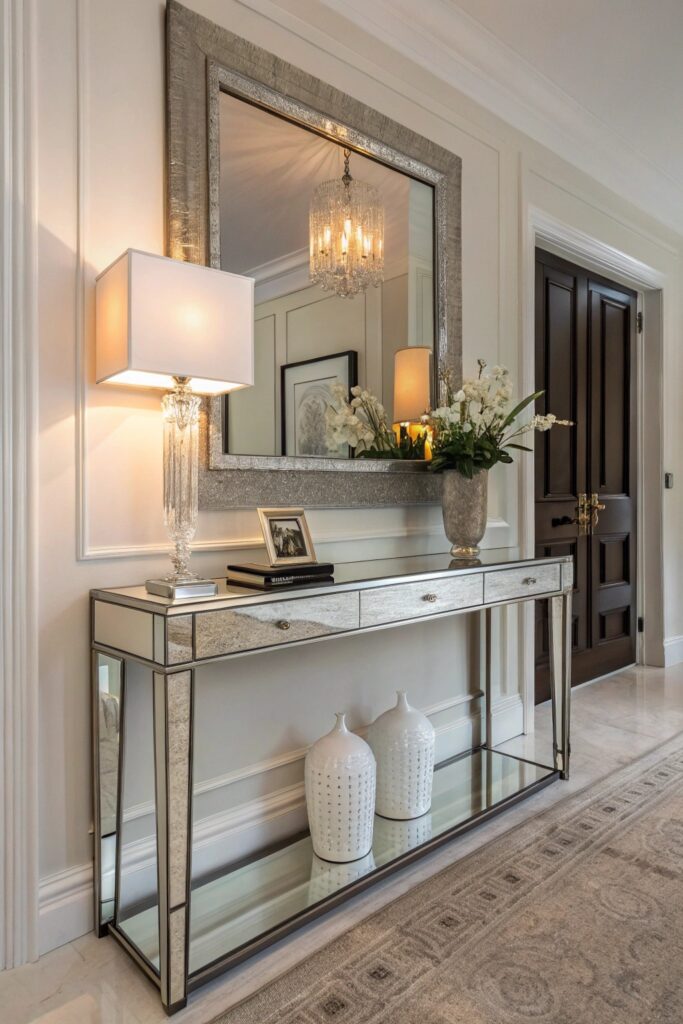
6. Mirrored Console Table

12 Tiny Entryway Table Ideas for Small Space Living

A mirrored console table in a tiny entryway performs double duty that no other table style achieves — it provides a functional surface while simultaneously acting as a space-expanding mirror that makes the entryway feel larger from every angle. The reflective surfaces of a mirrored table bounce light in every direction, create visual depth, and produce the illusion of additional space that tiny entryways desperately need.

Mirrored furniture can look dated when overdone, but a single mirrored console table in an entryway hits the right note — glamorous, practical, and genuinely clever in how it handles the small space challenge.

What makes mirrored console tables work in tiny entryways:

  • Reflect your best view: Position the table so it reflects something attractive — a window, a plant, a piece of art — rather than a blank wall
  • Keep styling minimal: The table itself is already visually busy with its reflective surfaces — two or three simple objects maximum
  • Combine with a wall mirror above: Mirror on mirror creates a fun infinity effect and maximizes the light-bouncing impact
  • Choose simple frame lines: Ornate mirrored furniture looks fussy in small spaces; clean lines and simple frames read more contemporary and spacious
  • Pair with warm lighting: A small lamp or wall sconce near a mirrored table creates beautiful light play across the reflective surfaces

Mirrored console tables work especially well in dark entryways without windows — spaces where borrowed light and visual tricks are the primary tools for making the space feel livable. The reflective surface actively improves the brightness of a dark space in a way that painted surfaces and standard furniture simply cannot.

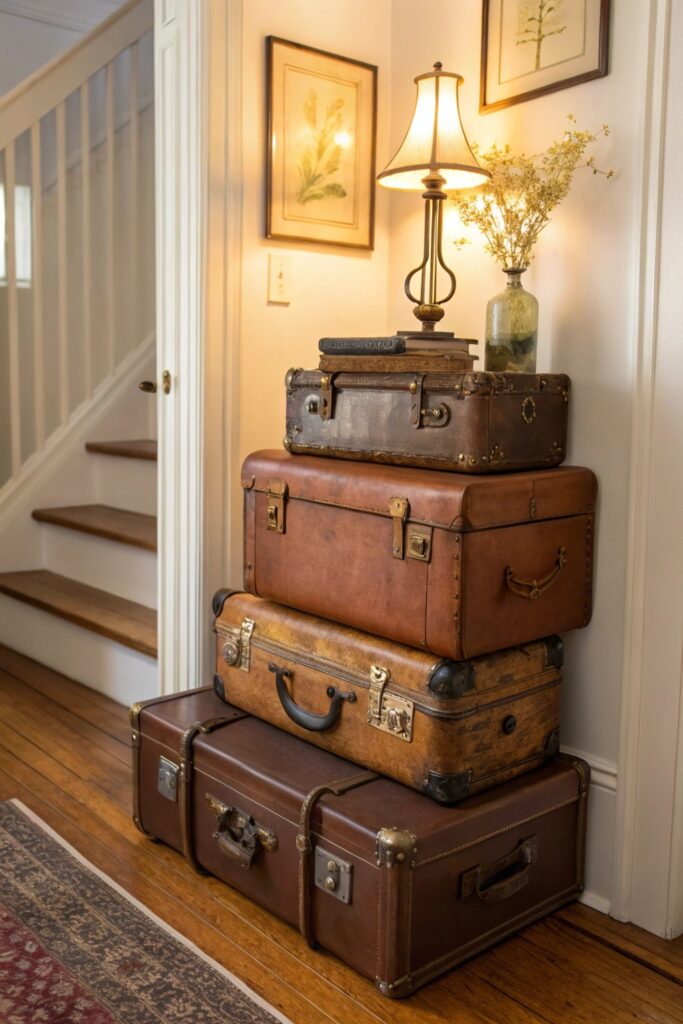
7. Vintage Suitcase Stack Table

12 Tiny Entryway Table Ideas for Small Space Living

Here’s a tiny entryway table idea with genuine personality — a stack of vintage suitcases used as an entryway table. Two or three vintage suitcases stacked by size create a surface at approximately the right height, provide hidden storage inside each case, and add a layer of visual storytelling to your entryway that no purchased furniture piece can replicate.

This approach works because it turns a tiny entryway limitation into an opportunity for genuine creative expression — and it costs a fraction of what traditional entryway furniture costs when you source suitcases from thrift stores and estate sales.

Making a vintage suitcase table work in your entryway:

  • Size selection: Choose suitcases that taper in size from bottom to top for visual stability — largest at base, smallest on top
  • Height consideration: Two or three cases stacked should reach approximately 28 to 32 inches for comfortable use as an entryway surface
  • Securing the stack: Use non-slip pads between cases and consider a discreet strap to keep the stack stable
  • Storage function: Use the cases for seasonal storage — scarves, gloves, and small accessories live conveniently near the door inside the cases
  • Styling the top: A small tray with keys, a tiny bud vase, and one meaningful object keeps the top surface styled without looking like you ran out of shelf space

Vintage suitcases in complementary colors or coordinating leather tones look intentionally curated rather than randomly assembled. Brown leather cases stacked from large to small create a warm, well-traveled aesthetic that suits eclectic, bohemian, and globally-inspired home styles beautifully — and the storage inside them is a genuinely practical bonus.

8. Corner Triangle Console Table

12 Tiny Entryway Table Ideas for Small Space Living

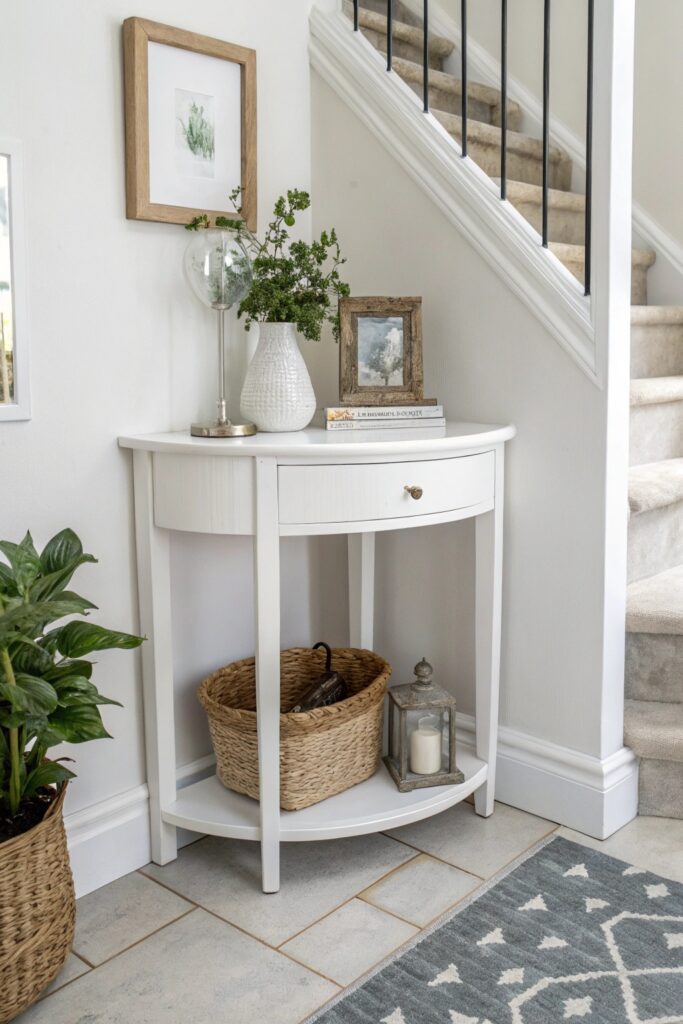
Most tiny entryways waste their corners completely, and a corner triangle console table exists specifically to fix that problem. Designed to fit flush into a 90-degree corner, a triangle table uses a space that no standard rectangular table can access, keeps floor traffic lanes completely clear, and provides a surprisingly generous surface in a genuinely zero-impact footprint.

Corner tables are the secret weapon of small entryway design — they occupy space that was previously doing nothing and convert it directly into functional surface area.

Corner console table features worth prioritizing:

  • True corner fit: The table should fit flush against both walls with no awkward gaps
  • Lower shelf: Many corner console designs include a lower triangular shelf — excellent for a small basket or shoes
  • Rounded front edge: A curved front edge on a corner table feels more comfortable in a tight space than a sharp corner protruding into the traffic flow
  • Material: White lacquer, light wood, and glass all make small corner spaces feel larger
  • Proportional styling: Keep objects toward the back corners of the table surface to maintain clear visual flow to the rest of the entryway

The corner triangle table solves a very specific problem — the entryway that has no straight wall long enough for a standard console table. If your front door opens into a corner with walls running in two directions, a corner table is almost certainly your best tiny entryway table option. It transforms an architectural limitation into a design asset.

9. Floating Cube Shelf Cluster

12 Tiny Entryway Table Ideas for Small Space Living

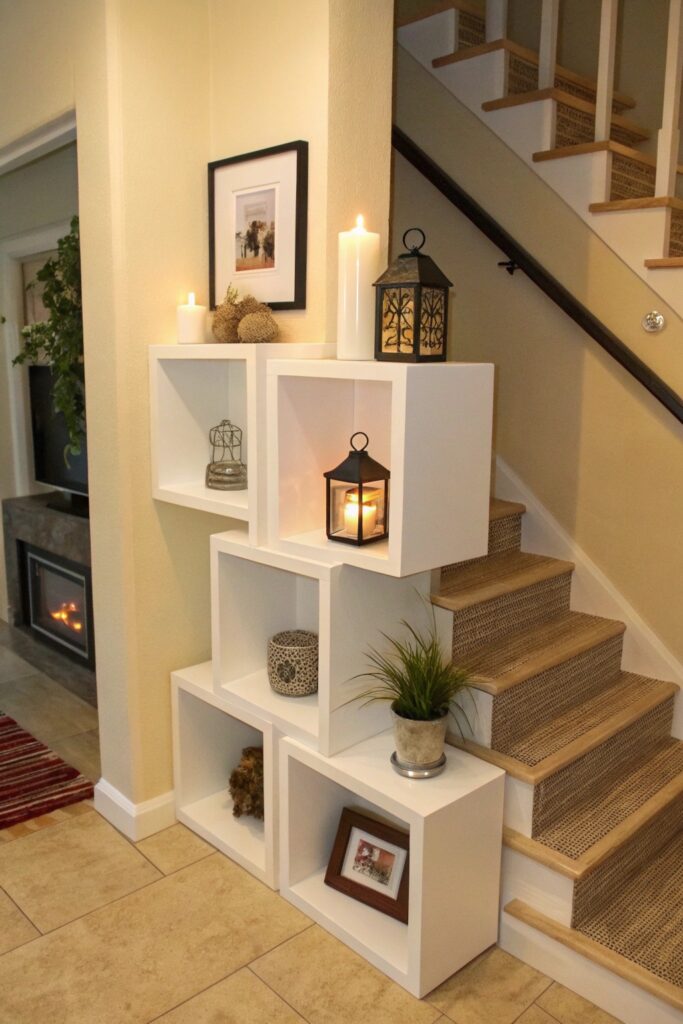
A cluster of floating cube shelves arranged on your entryway wall creates a modular table-and-storage system that adapts to your specific space dimensions in a way no standard furniture piece can match. Three or four cube shelves arranged in a staggered configuration provide multiple surface levels for styling and storage while keeping the floor entirely clear — making them ideal for the truly micro entryway.

The modular approach also means you can add or remove cubes as your needs change, which gives tiny entryway styling a flexibility that fixed furniture pieces simply don’t offer.

Arranging floating cube shelves for tiny entryways:

  • Stagger heights: Arrange cubes at different heights rather than in a straight line for visual interest and multiple functional levels
  • Main surface cube: Position one cube at standard console height (approximately 30 inches) as your primary surface for keys and daily items
  • Lower cube: A cube at 18 to 20 inches in height works for shoes, a small plant, or a basket
  • Decorative upper cube: A cube at 40 to 45 inches provides a spot for a small plant or decorative object at eye level
  • Consistent finish: All cubes in the same color or material create a cohesive built-in look rather than a random arrangement

White floating cubes on a white wall create the most seamless, built-in appearance — the cubes almost disappear into the wall while their contents float seemingly unsupported. This effect makes a tiny entryway feel significantly more spacious because the storage solution itself takes up almost no visual space while delivering real functional capacity.

10. Narrow Wooden Crate Console

12 Tiny Entryway Table Ideas for Small Space Living

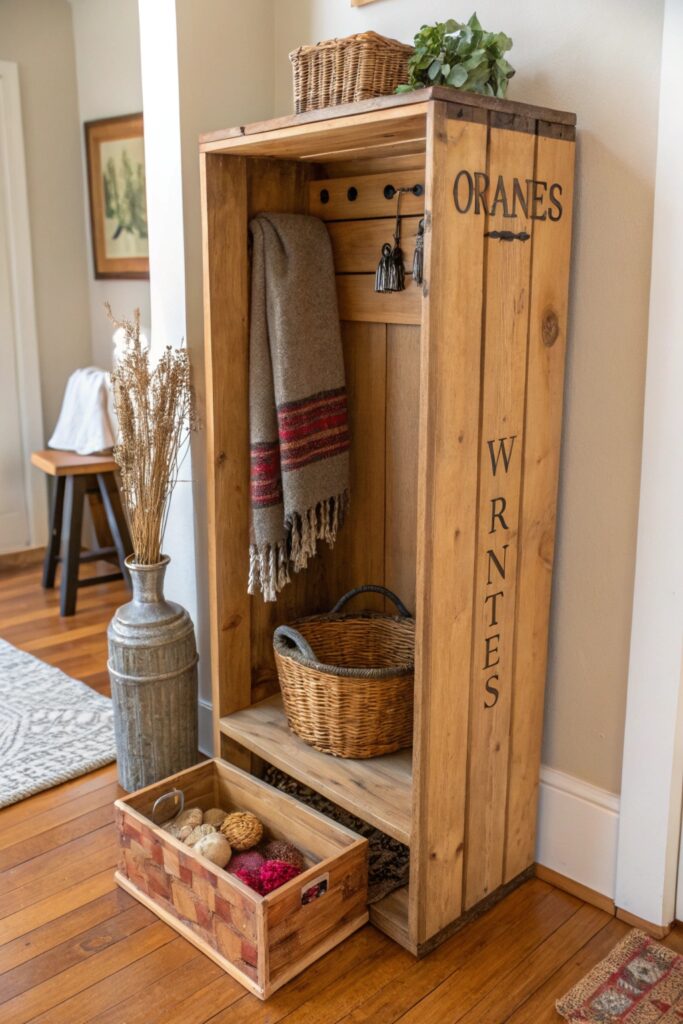
A narrow wooden crate or box repurposed as an entryway table combines rustic charm with genuinely practical storage in a single compact piece. A wooden crate standing upright on its end provides a small surface at the top and open storage inside the crate body — perfect for shoes, bags, and accessories that need to live near the door without living on the floor randomly.

This is one of those tiny entryway solutions that looks like it cost a lot more thought and money than it actually did — which is always a quality worth having in home decor.

Making a wooden crate table work:

  • Orientation: Stand the crate on its end for maximum height — the open side faces outward for accessible storage inside
  • Stability: Add rubber feet to the base to prevent sliding on hard floors
  • Interior organization: Add a small basket inside the crate opening for shoe storage or a small bin for bag organization
  • Surface styling: The narrow top surface holds a small tray with keys and one simple decorative object — keep it minimal
  • Finishing: Sand and seal raw wood crates for a more finished look, or paint in a color that coordinates with your entryway palette

Stacking two wooden crates of slightly different sizes — one on top of the other with the openings facing in opposite directions — creates a more substantial piece with double the storage capacity while maintaining the rustic, organic quality that makes this approach so appealing. FYI — wooden wine crates and produce crates from specialty grocery stores often have beautiful lettering and patina that adds genuine character to this DIY entryway table approach.

11. Glass Top Entry Table

12 Tiny Entryway Table Ideas for Small Space Living

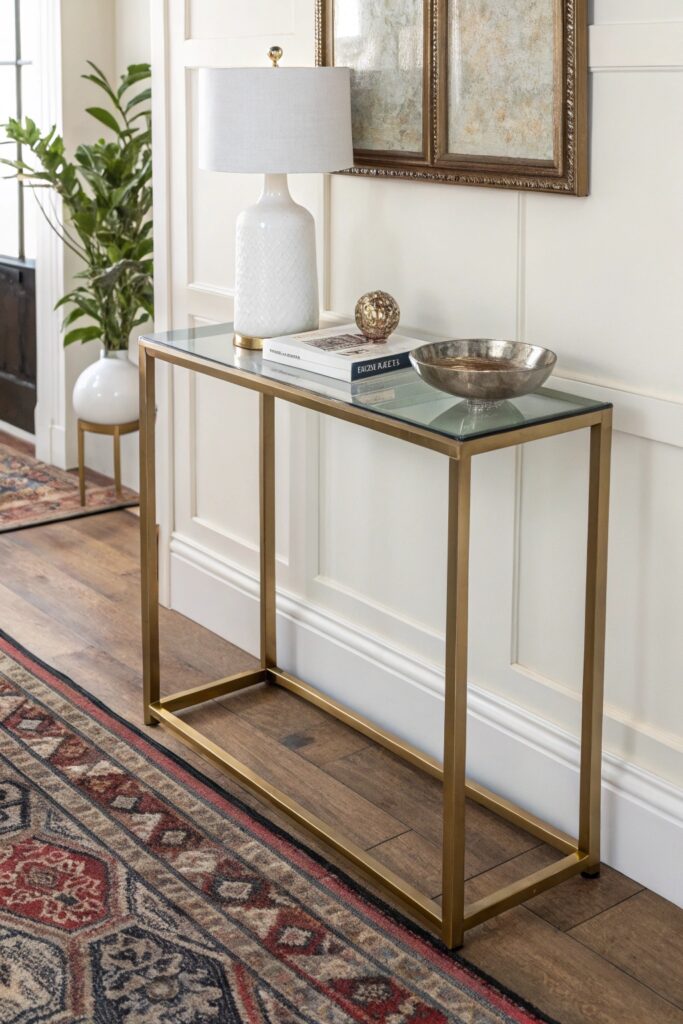
A glass top entry table is the visual magician of tiny entryway furniture — the transparent top literally disappears into the space rather than occupying it, making the table feel like it barely exists while still providing a fully functional surface. For genuinely tiny entryways where every visual element needs to justify its presence, a glass top table reduces the visual footprint of the furniture to almost zero.

The glass top works because it doesn’t interrupt the visual flow of the space the way a solid wood or painted surface does — your eye passes through it rather than stopping at it.

Getting the most from a glass top entryway table:

  • Base style matters most: With a glass top, the base does all the visual work — choose a beautiful base in brass, black metal, marble, or sculptural wood
  • Keep the surface clean: Fingerprints and dust show prominently on glass — microfiber cloth maintenance is non-negotiable
  • Avoid overloading the surface: Too many objects on a glass top look cluttered because nothing is hidden — keep styling to three items maximum
  • Pair with a rug beneath: A beautiful rug seen through a glass top creates a layered, intentional look unique to glass-top tables
  • Lighting consideration: Glass tops reflect overhead light beautifully — position under a light source for maximum effect

Tempered glass tops with a beveled edge look most refined and feel safest in a high-traffic entryway — the beveled edge catches light beautifully and signals quality in a way that flat-cut glass edges don’t. Pair a beveled glass top with a sculptural brass or matte black metal base, and the result looks genuinely expensive and intentional in even the most modestly sized entryway.

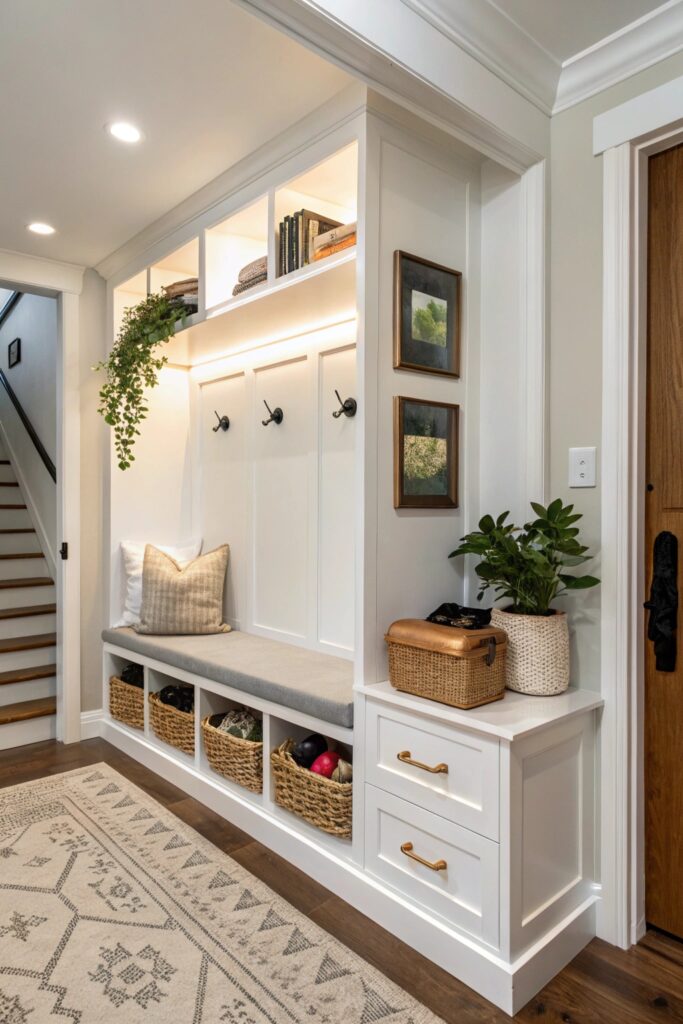
12. Built-In Nook Table with Integrated Storage
12 Tiny Entryway Table Ideas for Small Space Living

The ultimate tiny entryway table solution — if your space and budget allow for it — is a custom-built-in nook table with integrated storage. A built-in solution uses every available inch of your specific entryway architecture, fills awkward nooks and alcoves that no standard furniture fits, and creates a seamless, designed-from-scratch look that makes your tiny entryway feel intentional and premium rather than improvised.

Built-ins work especially well in entryways with architectural quirks — a recessed wall, an awkward alcove, or a space that standard furniture consistently fails to fit properly.

What a built-in entryway nook table can include:

  • Custom-fit console surface at exactly the right height and depth for your specific space
  • Integrated drawers beneath the surface for concealed storage of daily essentials
  • Built-in bench seating below the console surface for shoe-changing convenience
  • Cubby storage below the bench for shoes, bags, and accessories
  • Floating shelves above extend the storage vertically toward the ceiling
  • Integrated lighting under-shelf LED strips illuminating both the console surface and the cubbies below

The built-in nook approach transforms a tiny entryway from a spatial limitation into a genuine design feature — guests walk in and see a custom, considered space rather than a compromised one. The investment is higher than freestanding furniture, but the result is a tiny entryway table solution that fits your specific space perfectly, maximizes every available inch, and looks like it was always meant to be there 🙂

Conclusion

A tiny entryway doesn’t ask for much — just a little creativity, the right table for your specific space, and the confidence to treat even a small corner as a genuine design opportunity. From ultra-slim floating tables to fold-down solutions to glass tops that practically disappear, the options for tiny entryway tables are genuinely impressive.

Start with your measurements and your most pressing daily frustration — whether that’s nowhere to put your keys, no surface to style, or a table that blocks the door from opening fully. The right solution is always the one that solves your real problem first.

Your tiny entryway is the first thing you see when you come home every day. Make it something worth seeing.

Similar Posts