
Introduction
If your backyard turns into a swamp every time it rains, you already know the frustration. Soggy grass, puddles that stick around for days, water creeping toward your foundation — it’s a problem that doesn’t fix itself no matter how long you ignore it.
I dealt with exactly this situation a few years back. One corner of my yard stayed wet for almost a week after every storm. The fix? A properly installed French drain that cost less than I expected and worked better than I hoped.
French drains are one of the most reliable drainage solutions available to homeowners. And the good news is there are more ways to use them than most people realize. Here are 12 ideas to get your yard draining properly — fast.
1. The Classic Perimeter French Drain
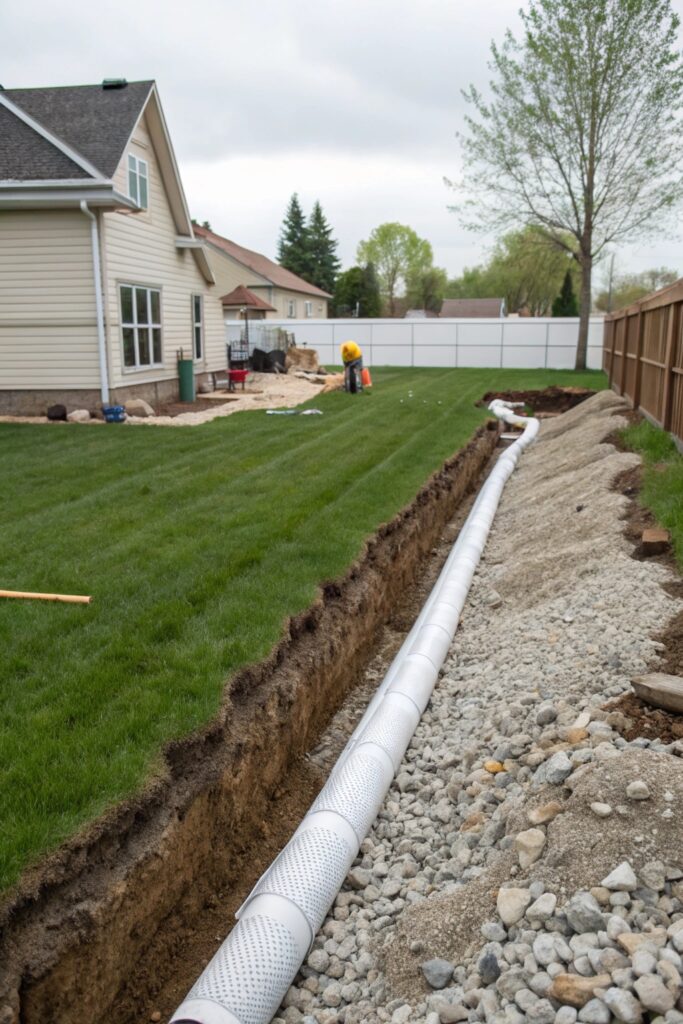
This is where most homeowners start, and for good reason. A perimeter French drain runs along the edges of your yard to intercept water before it pools in the middle. It’s the foundational French drain idea that solves the broadest range of drainage problems.
What makes it work:
- Trench dug around the yard’s perimeter, sloping toward an exit point
- Perforated pipe wrapped in landscape fabric to prevent soil clogging
- Gravel fill directing water into the pipe efficiently
- Water exits through a pop-up emitter or daylight outlet
This setup handles surface runoff and shallow groundwater simultaneously. IMO, if you only install one drainage solution in your yard, a perimeter French drain gives you the best return. It protects your lawn, your garden beds, and your foundation all at once.
2. Foundation French Drain
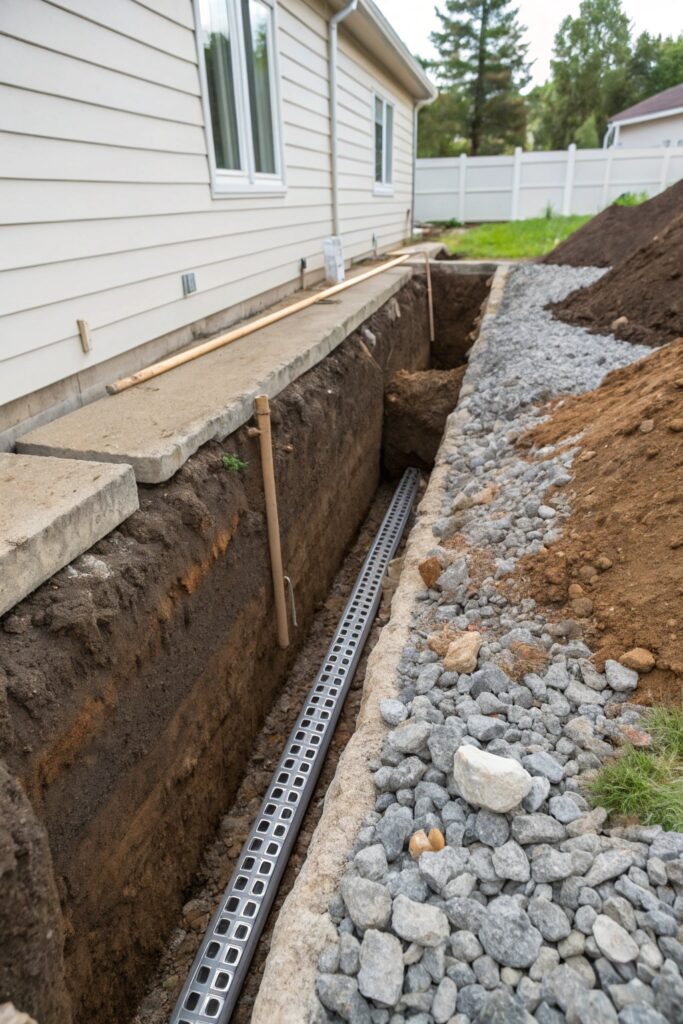
Water sitting against your foundation is truly bad news. It causes cracks, basement leaks, and long-term structural damage that costs thousands to repair. A foundation French drain intercepts that water before it ever reaches your home.
Key installation details:
- Trench dug alongside the foundation footing, below the basement floor level
- Perforated pipe laid at the base of the foundation wall
- Washed gravel surrounds the pipe for maximum water collection
- Drains to a sump pump or daylight outlet away from the house
This isn’t the easiest DIY project, but it’s one of the most important. Every dollar you spend on a foundation French drain saves you several dollars in future water damage repairs. Your basement walls will silently thank you every rainy season. :/
3. Curtain Drain Across a Slope
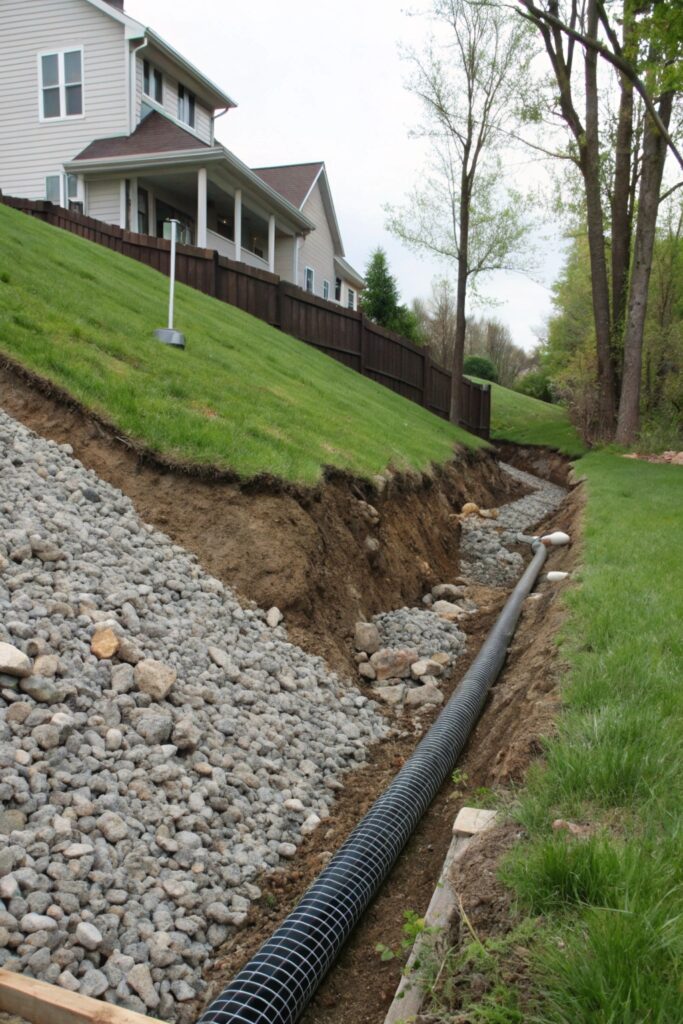
Got a sloped yard where water runs downhill straight toward your house or patio? A curtain drain — a horizontal French drain installed across the slope — intercepts that flow before it reaches problem areas.
How a curtain drain differs:
- Runs horizontally across a slope rather than along a perimeter
- Catches subsurface water moving downhill through the soil
- Redirects flow to the sides of the property rather than downward
- Works best on properties with clay-heavy soil that holds water
A curtain drain essentially draws a line in the dirt and tells water to go around instead of through. It’s a smart, targeted solution for sloped yards where gravity constantly works against you. Place it uphill from your home, patio, or garden and watch the difference immediately after rain.
4. French Drain With a Dry Creek Bed
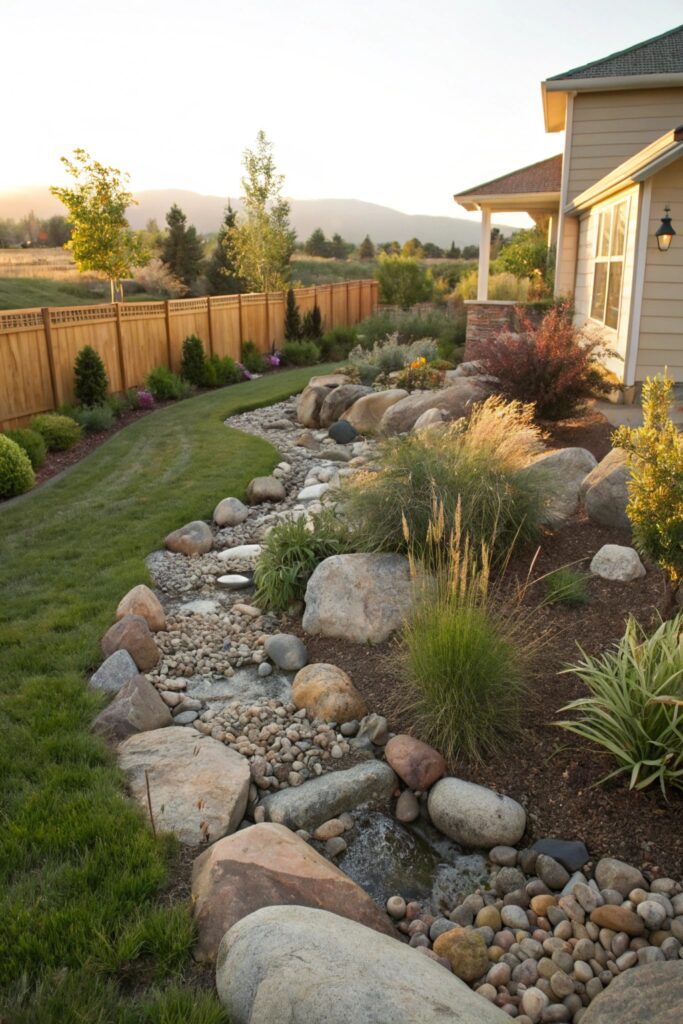
Why hide your drainage solution when you can make it beautiful? Combining a French drain with a decorative dry creek bed gives you full drainage functionality wrapped in genuine landscaping appeal. The creek bed sits on top of the gravel trench and looks completely intentional.
Design elements to include:
- River rocks and boulders of varying sizes for a natural stream appearance
- Native ornamental grasses planted along the edges
- Landscape fabric beneath the rock to suppress weeds
- Gentle curves in the path for a more natural look
This combination works especially well in cottage or naturalistic garden styles. Your neighbors will think you hired a landscape designer. You don’t need to mention the perforated pipe running underneath it all. The yard looks stunning and drains perfectly — that’s the goal.
5. French Drain Around a Patio or Deck
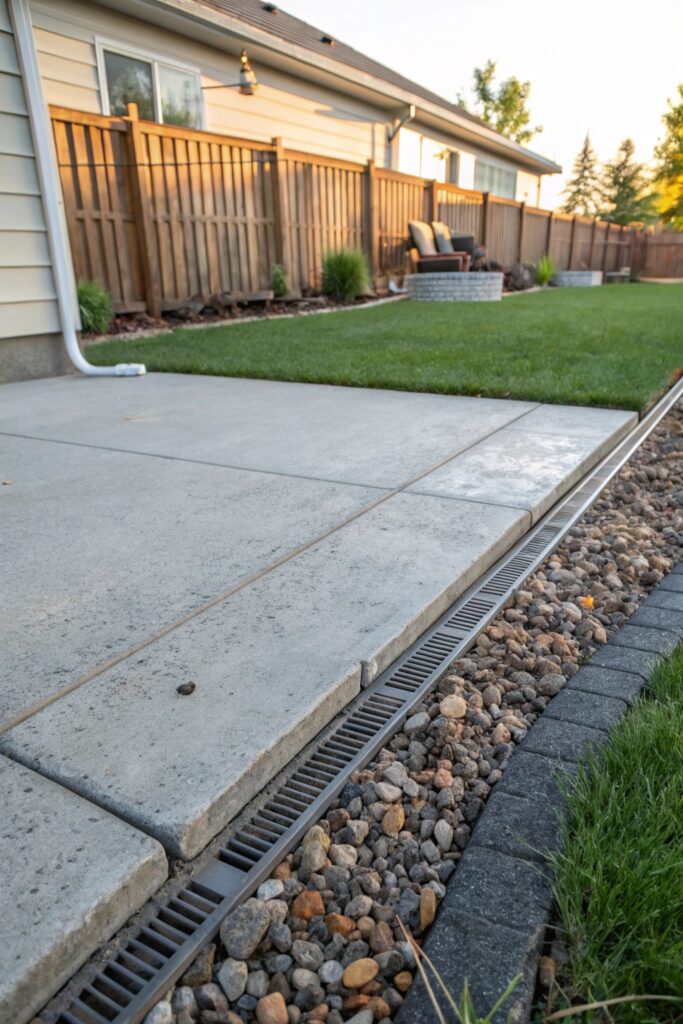
Water pooling around a patio is annoying, damaging, and honestly a safety hazard when it freezes in winter. Installing a French drain around the perimeter of your patio collects runoff before it has anywhere to cause trouble.
Installation tips for patio drainage:
- Trench should sit just below the patio edge on the low side
- Use a channel drain or slotted pipe along the patio border
- Connect to a French drain running away from the structure
- Ensure the outlet point sits well away from the patio area
Patios and decks often create impermeable surfaces that redirect enormous amounts of water. Without proper drainage, that water attacks your foundation, erodes your garden beds, and undermines the patio base itself. A French drain around the perimeter solves all three problems at once.
6. Downspout French Drain Connection
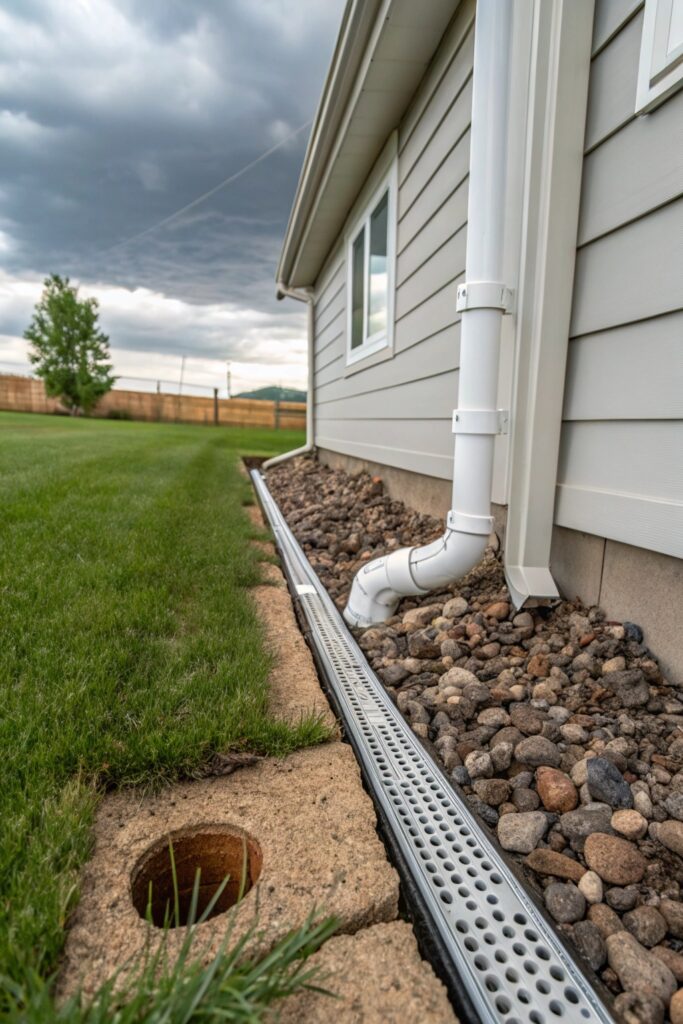
Your gutters collect enormous amounts of water from your roof and dump it right next to your foundation through downspouts. Connecting those downspouts directly to an underground French drain system moves that water far away before it causes damage.
What this system involves:
- Solid PVC pipe connects the downspout base underground
- Transitions into a perforated French drain further from the house
- Water disperses gradually through gravel over a wider area
- Ends at a pop-up emitter that opens under water pressure
This is one of the highest-impact drainage upgrades you can make. A standard roof sheds hundreds of gallons per hour during heavy rain. Getting that water away from your foundation fast makes a dramatic difference in both yard drainage and basement dryness.
7. French Drain for a Sunken Garden Area
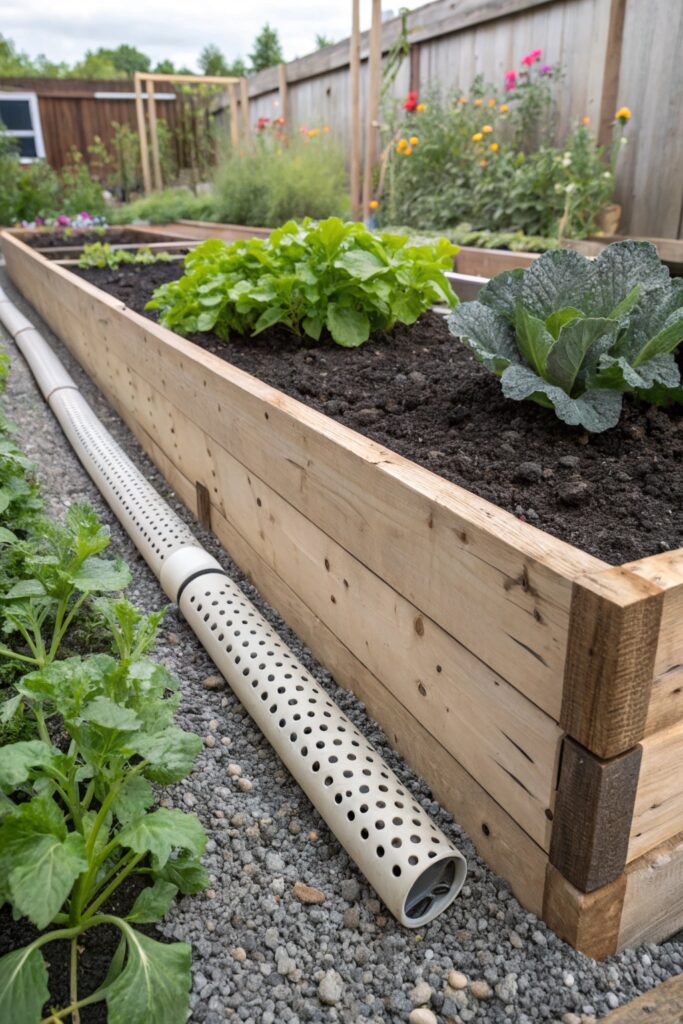
Low-lying garden areas collect water naturally — which sounds helpful until your plants start drowning. A French drain running beneath a sunken garden bed keeps soil moisture at healthy levels without letting roots sit in standing water.
How to protect garden beds:
- Install perforated pipe at the base of the garden bed
- Surround with coarse gravel before adding planting soil on top
- Connect drain to a nearby outlet or larger drainage system
- Use raised bed construction above the drain for even better results
This approach saves plants that would otherwise struggle in waterlogged soil. It also extends your planting options — suddenly you can grow plants that need decent drainage in areas that previously stayed too wet. FYI, this fix completely transformed one of my own garden beds that I’d almost given up on.
8. French Drain Along a Driveway
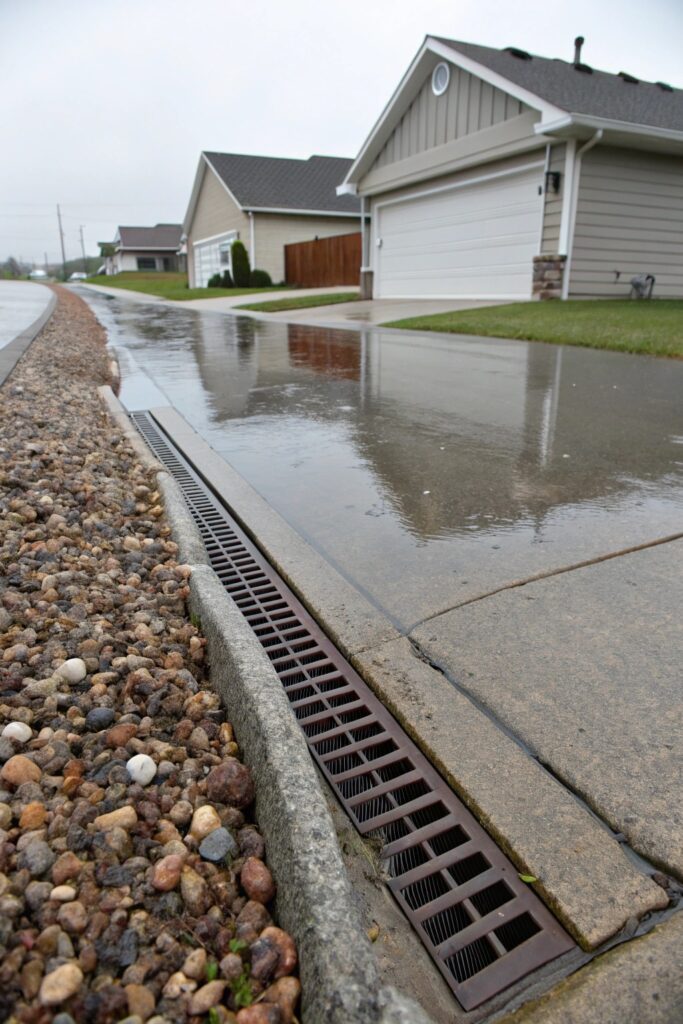
Driveways channel significant amounts of runoff, especially if they slope toward the house or garage. A French drain running parallel to the driveway edge catches that water and redirects it before it floods your garage floor or undermines the driveway base.
Driveway drainage essentials:
- Trench runs along the low side of the driveway
- Channel drain or perforated pipe collects surface and subsurface water
- Gravel base supports both drainage and driveway edge stability
- Outlet directs water to the street, a dry well, or the yard’s low point
Driveway drainage problems often accelerate pavement deterioration too. Water infiltrating the driveway base causes cracking and heaving over time. A French drain alongside your driveway protects both your drainage and your pavement investment simultaneously.
9. French Drain to a Dry Well
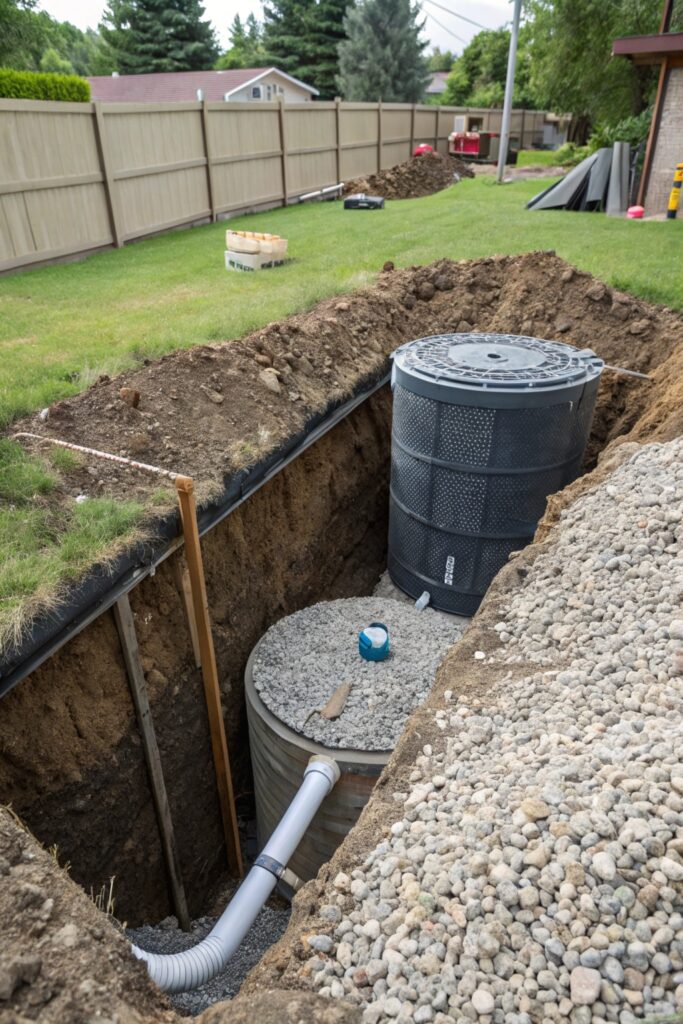
Sometimes there’s no convenient place to discharge collected water — no street, no slope, no natural outlet. A dry well solves this by providing an underground reservoir where water can slowly percolate back into the soil over time.
Dry well basics:
- Large perforated container or rock-filled pit buried in the yard
- French drain pipe connects directly to the dry well inlet
- Sized based on the drainage area it needs to handle
- Works best in soils with reasonable percolation rates
Dry wells work brilliantly in yards surrounded by property lines where you can’t discharge water onto neighboring land. They handle moderate water volumes well and require almost zero maintenance once installed. Just make sure you size the dry well correctly for your drainage area — bigger is always better here.
10. French Drain Under a Lawn
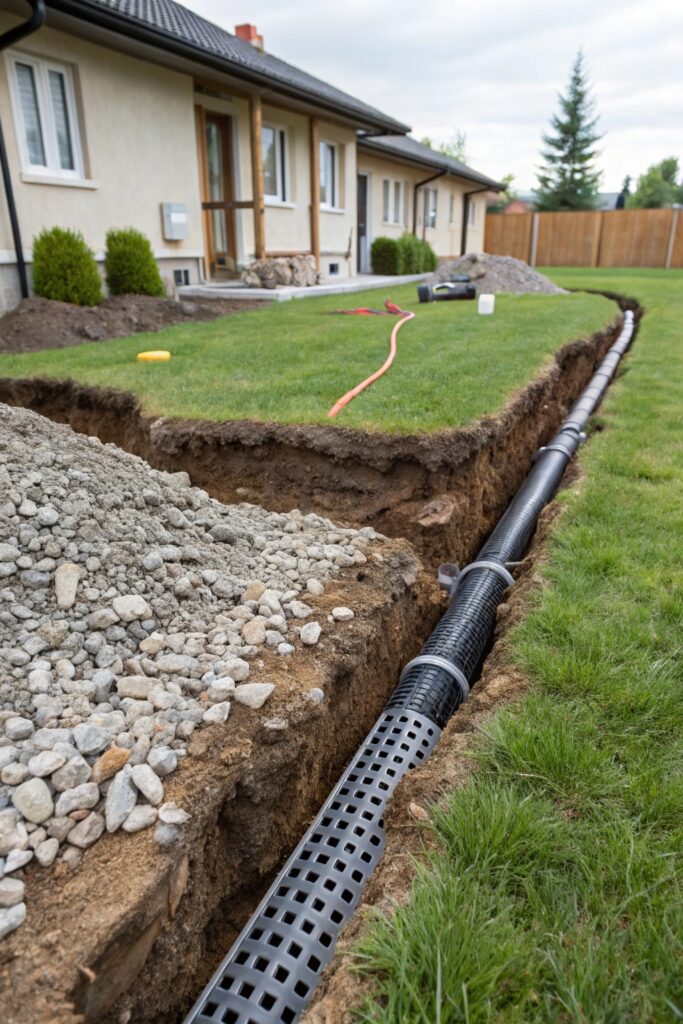
When your entire lawn stays soggy and spongy underfoot, surface solutions alone won’t cut it. An under-lawn French drain system — a network of perforated pipes buried beneath the grass — pulls excess water down and away before it ever surfaces.
Under-lawn system design:
- Multiple parallel perforated pipes spaced 8–10 feet apart
- Pipes connect to a main collection line running to an outlet
- Installed at 18–24 inch depth below the lawn surface
- Gravel surrounds each pipe to maximize water collection
Walking on a properly drained lawn versus a waterlogged one feels completely different. The grass grows healthier, the soil stays workable, and you stop leaving footprints every time you walk across the yard. This system requires more installation effort but delivers whole-yard results that surface fixes simply can’t match.
11. French Drain With a Rain Garden Outlet
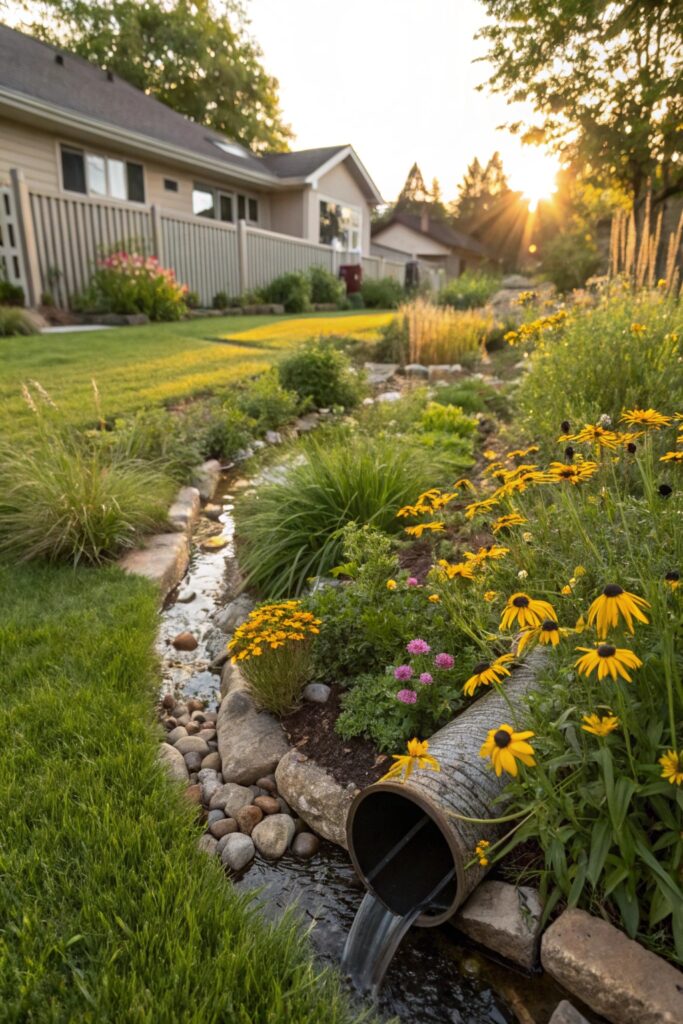
Instead of sending collected drain water into the street or a dry well, route it into a rain garden where it feeds native plants naturally. This combination creates a closed-loop system that handles drainage and supports a beautiful garden at the same time.
Building the combination system:
- French drain collects water from problem areas
- Solid pipe carries water to the rain garden location
- Rain garden sits at least 10 feet from the foundation
- Native plants absorb and filter the water naturally
Rain garden outlets work especially well for eco-conscious homeowners who want their drainage system to contribute positively to the yard rather than just disappear underground. The plants thrive on the extra water supply, and the drainage system gets a natural, attractive endpoint that requires no additional infrastructure.
12. French Drain With a Sump Pump Integration
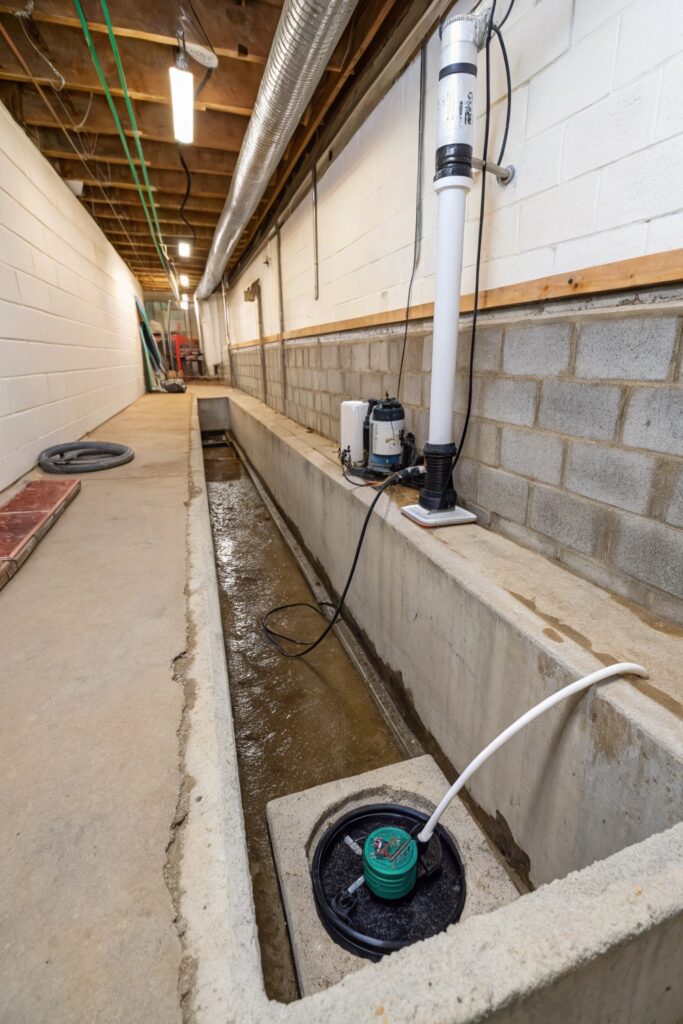
For serious drainage problems — particularly in low-lying properties or areas with high water tables — combining a French drain with a sump pump creates the most powerful residential drainage system available. The French drain collects water and feeds it to a sump basin where the pump actively removes it.
System components:
- Perimeter or interior French drain feeds into a sump basin
- Submersible sump pump activates automatically when water level rises
- Discharge pipe carries water well away from the foundation
- Battery backup keeps the system running during power outages
This setup handles water volumes that passive drainage systems simply can’t manage. If your basement floods during heavy storms despite other measures, a French drain and sump pump combination is the definitive solution. It’s the heavy artillery of residential drainage — and sometimes that’s exactly what a problem demands.
Conclusion
For broader drainage strategies beyond French drains, see our guide to gutter drainage ideas, or for a more decorative approach, check rain garden ideas.
Soggy yards, flooded patios, and damp basements all share one root cause — water going where it shouldn’t. Every idea on this list addresses that problem from a different angle, giving you flexible options whether your drainage issue is minor or seriously out of hand.
Start by identifying exactly where your water problem originates. Then match the right French drain solution to that specific situation. You don’t need to install everything — just the right thing in the right place.
Water always follows the path of least resistance. Your job is to make sure that path leads away from your home, your garden, and your lawn. Pick one idea from this list, take action this weekend, and watch how dramatically your yard transforms after the next rainstorm. 🙂