
This kitchen style draws on genuine Mexican craft traditions — hand-painted tile, terracotta, handmade textiles — favoring authentic materials and vibrant color over more muted, mass-produced alternatives.
Below are 14 elements that build this look, with practical notes for each.
Looking for this style applied throughout the whole home? See our companion guide to Mexican farmhouse decor ideas that feel warm and inviting.
1. Talavera Tile Backsplash
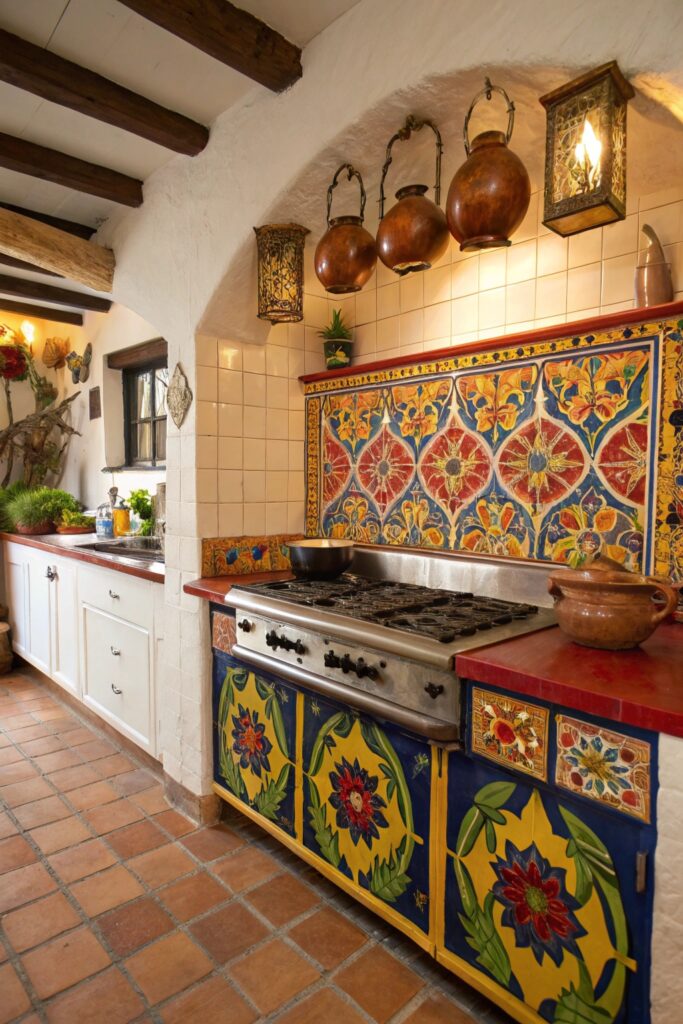
Genuine hand-painted Talavera tile has small variations between pieces that machine-printed versions can’t replicate, which is worth seeking out specifically if authenticity matters to you.
Budget for a smaller accent area of genuine Talavera tile rather than a full backsplash if cost is a concern, since hand-painted tile runs considerably more than a printed alternative.
2. Warm Terracotta Walls
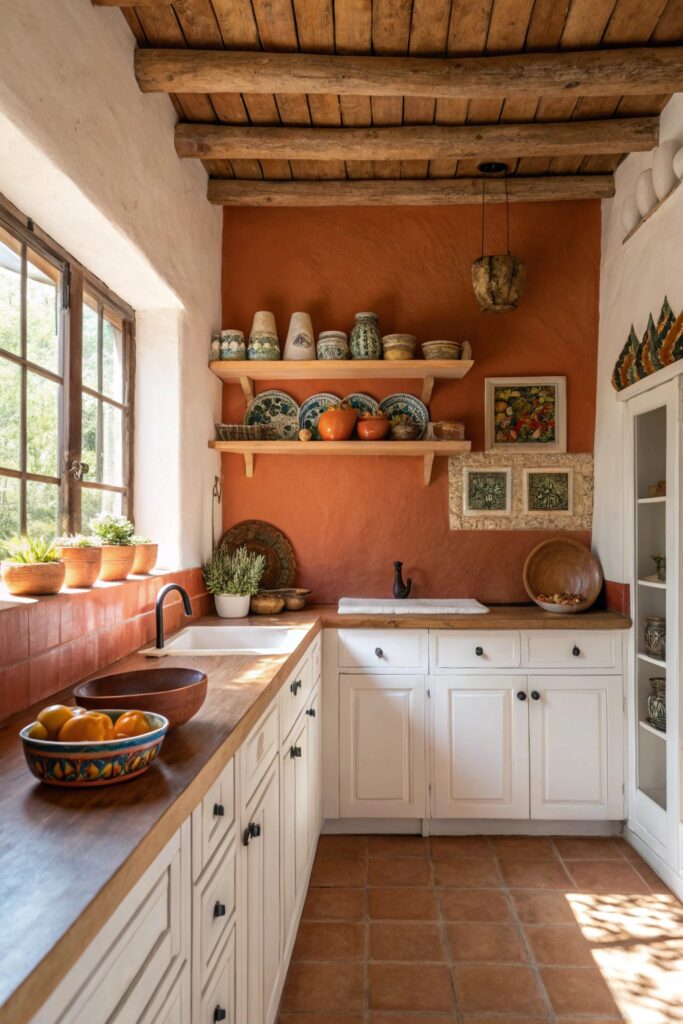
This color works best in a room with reasonable natural light, since a deeper terracotta can read as considerably darker in a dim space.
Test the color against your cabinet and countertop finishes with an actual sample first, since terracotta can shift under different lighting throughout the day.
3. Handmade Pottery & Clay Dishes
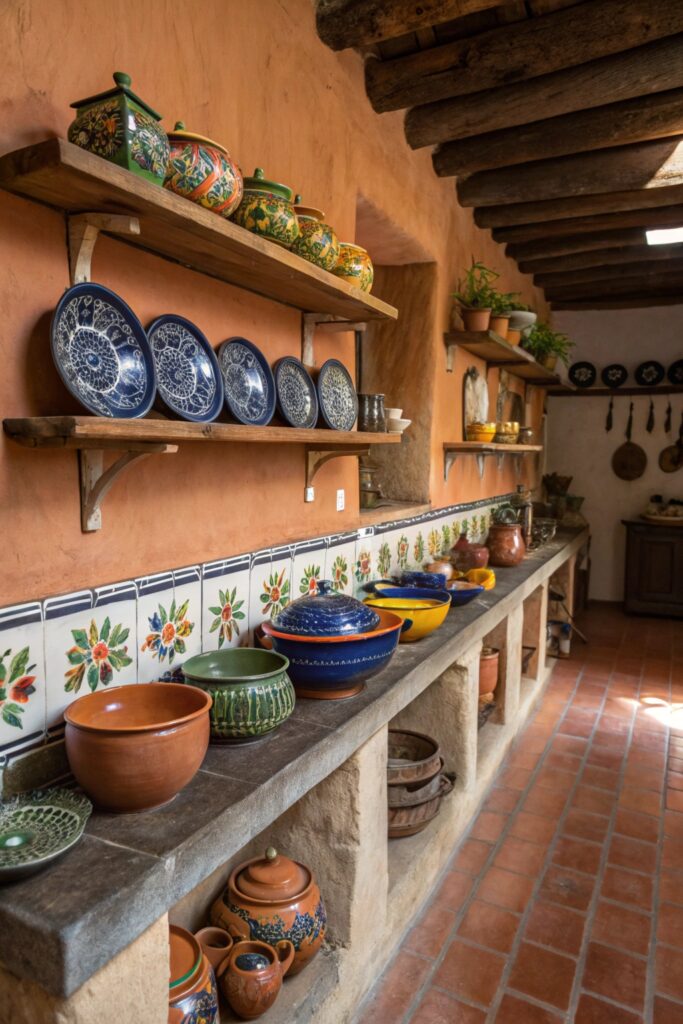
Authentically handmade pieces carry small imperfections and glaze variation that mass-produced dinnerware doesn’t have, adding real character to open storage or a table setting.
Display these pieces on open shelving specifically, which shows off the handmade quality better than tucking them away in closed cabinets.
4. Woven Basket Storage
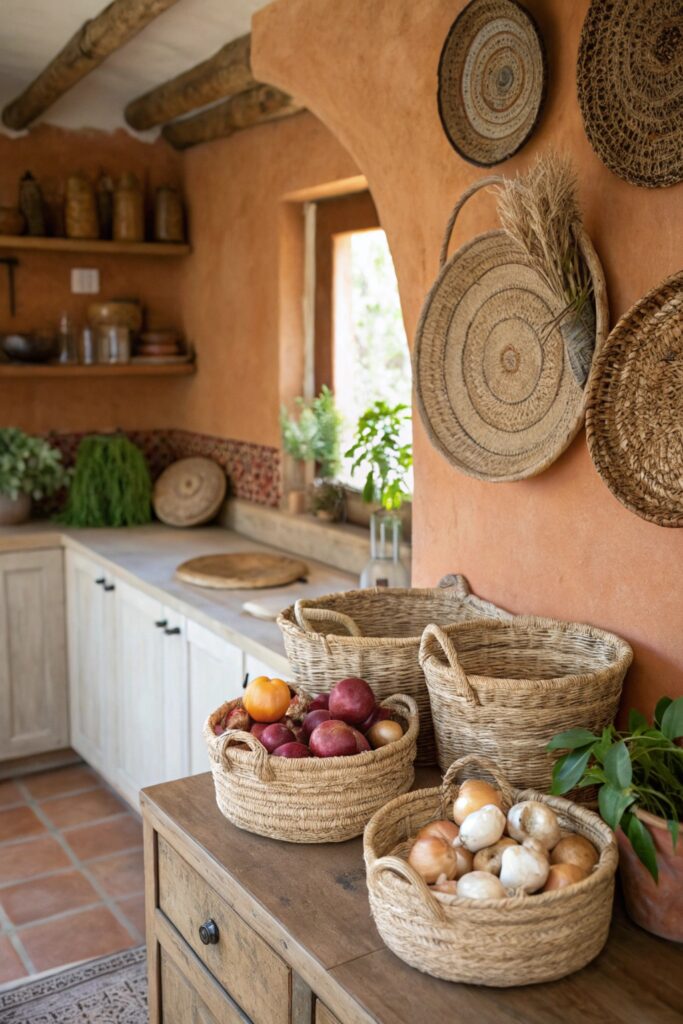
Baskets add texture while providing practical storage, working especially well for items like produce or linens that don’t need to be sealed away.
Choose baskets in a consistent material and weave style for a cohesive look, even if the specific sizes vary.
5. Colorful Hand-Painted Cabinetry
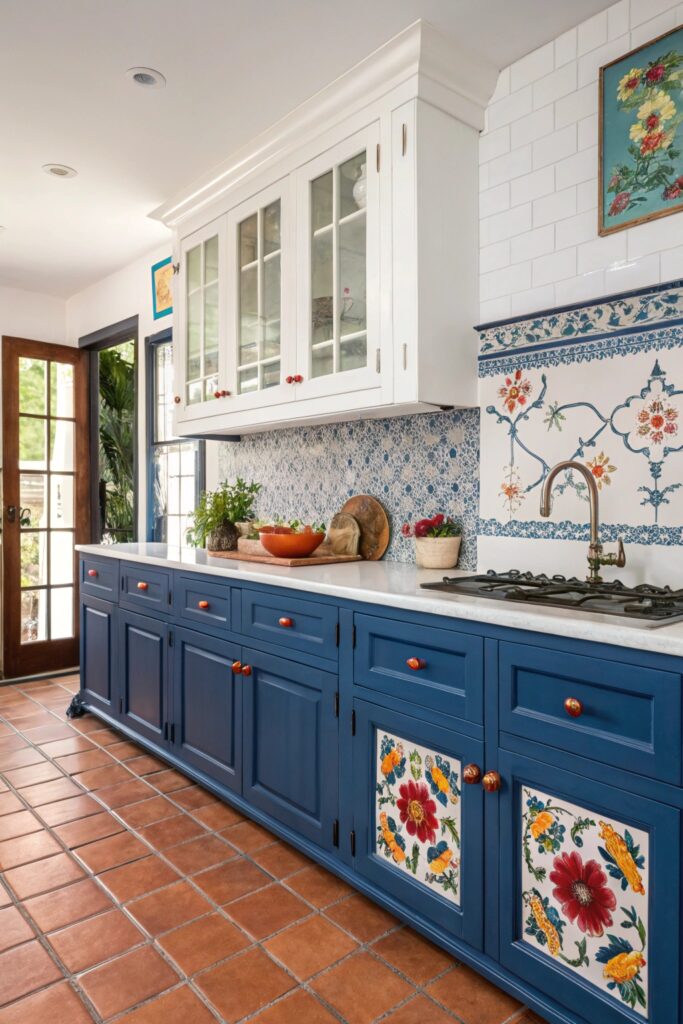
Committing to bold cabinet color is one of the bigger visual statements on this list, so consider testing the color on a single cabinet door before painting the full kitchen.
Choose a durable paint or finish for cabinetry that sees daily use, since high-traffic kitchen surfaces need more wear resistance than decorative-only pieces.
6. Copper & Wrought Iron Fixtures
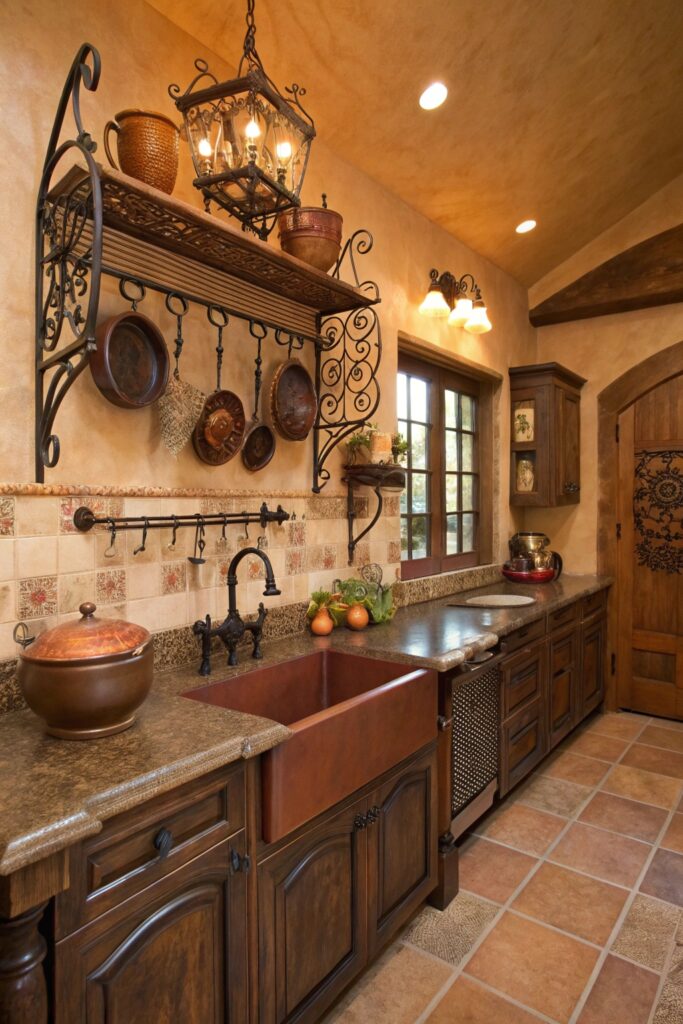
These metals develop a natural patina over time, which suits this style’s overall embrace of handcrafted, slightly weathered materials.
Choose an unlacquered finish specifically if you want the metal to develop patina naturally, rather than a sealed finish that stays uniform over time.
7. Saltillo Tile Flooring
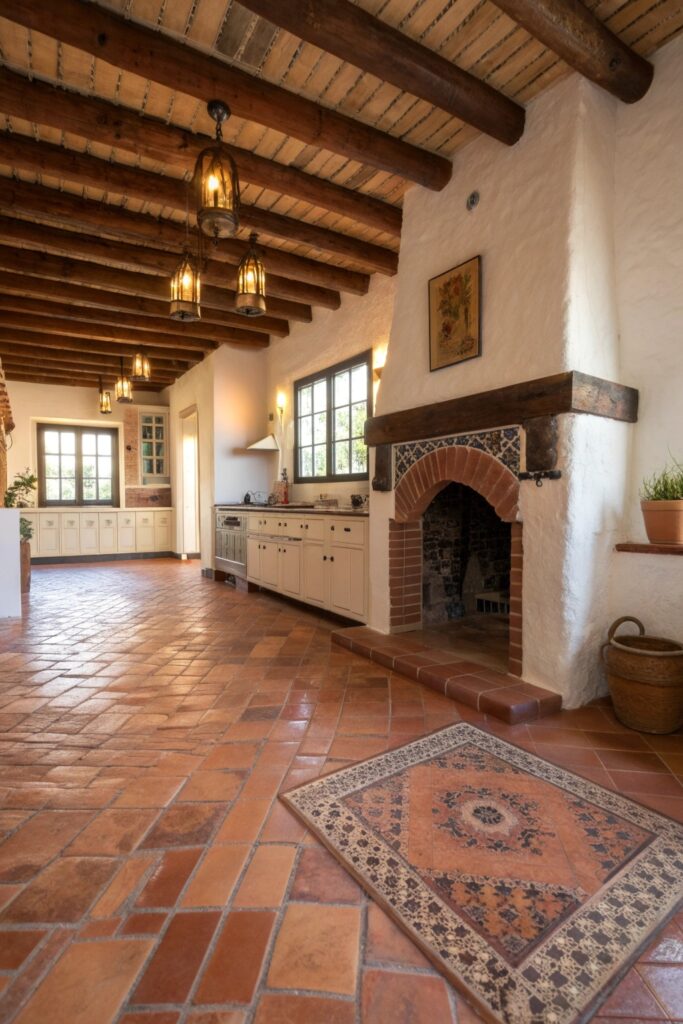
This tile needs periodic sealing to hold up to daily kitchen traffic, which is worth factoring into ongoing maintenance before committing to it for a high-use floor.
Reseal this flooring every year or two depending on use, since it’s more porous than many other flooring materials and needs regular maintenance to stay protected.
8. Vibrant Embroidered Textiles
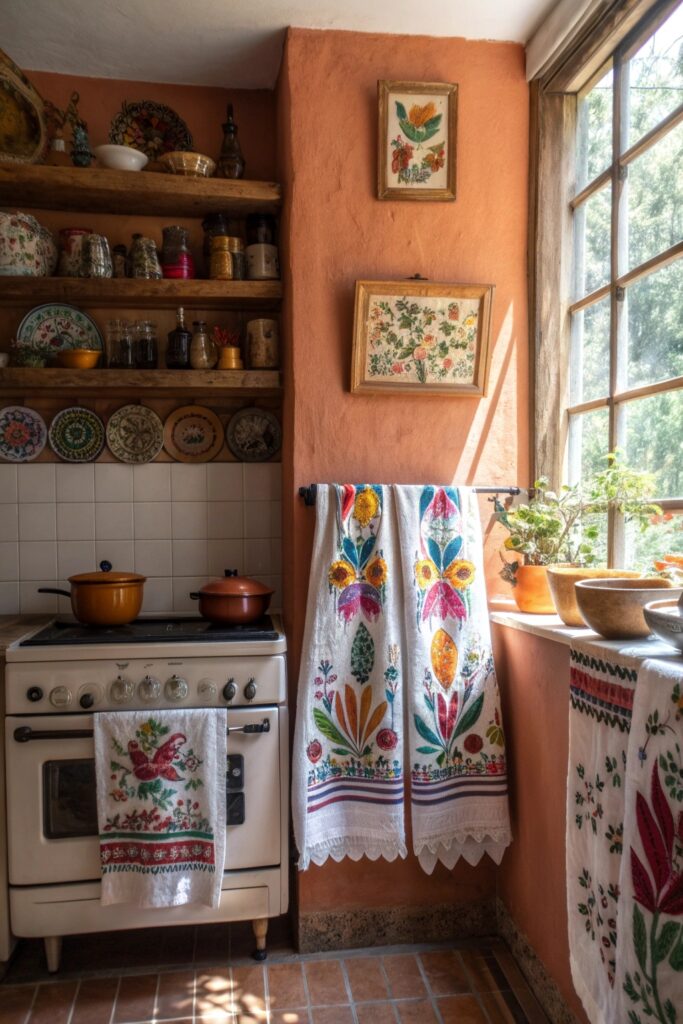
Authentically handmade embroidered pieces, like table runners or towels, bring authentic color and craft that printed fabric styled to match doesn’t quite achieve.
Wash these pieces gently by hand when possible, since handmade embroidery can be more delicate than machine-stitched textiles.
9. Open Wooden Shelving
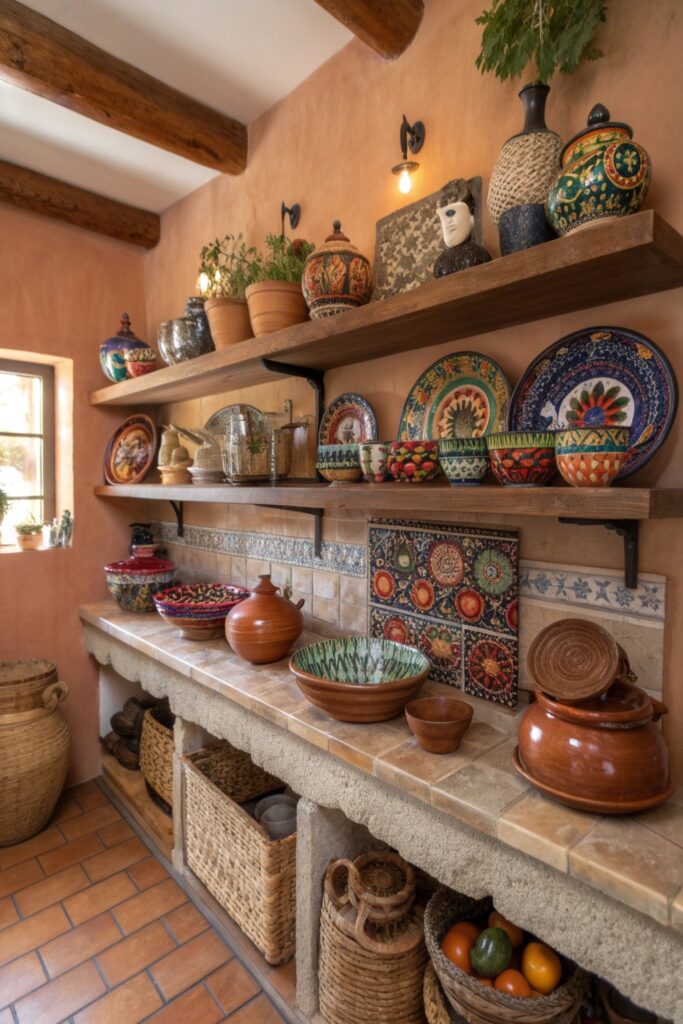
Open shelving displays pottery and dishware as part of the room’s decor, though it does require more regular dusting than closed cabinetry.
Edit the display regularly to avoid visual clutter, since open shelving shows a crowded arrangement more visibly than closed storage would.
10. Mexican Folk Art Wall Decor
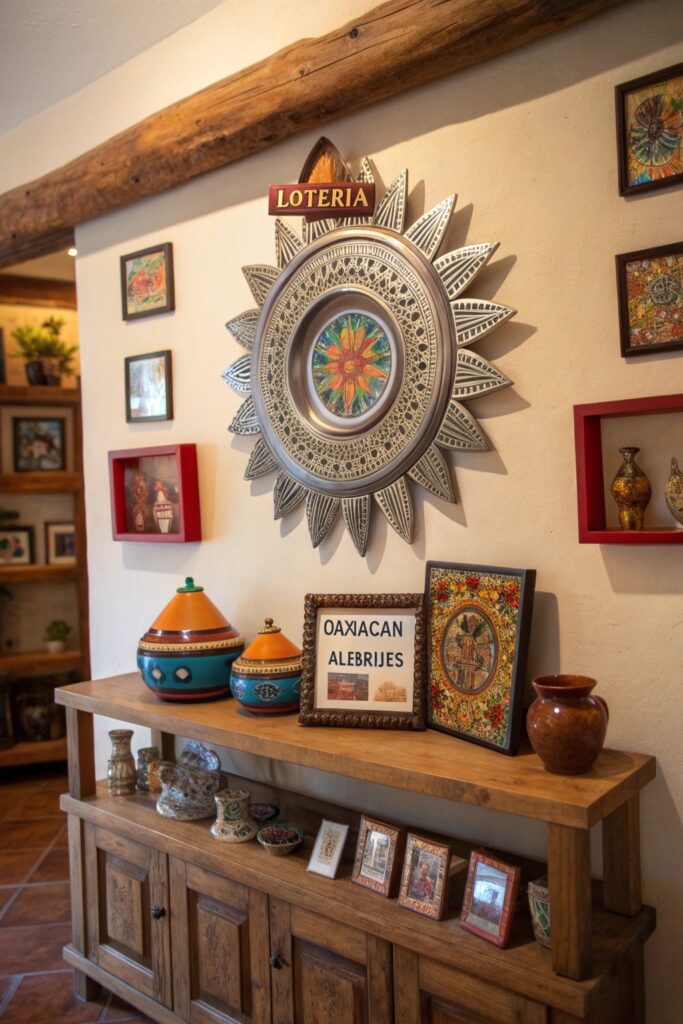
Sourcing authentic pieces, rather than mass-produced imitations, is worth the extra effort if you want the art to carry real cultural and craft significance.
Look for pieces with a genuine signature or maker’s mark, which is often a sign of authentic, individually crafted work rather than mass production.
11. String Lights & Candle Lanterns
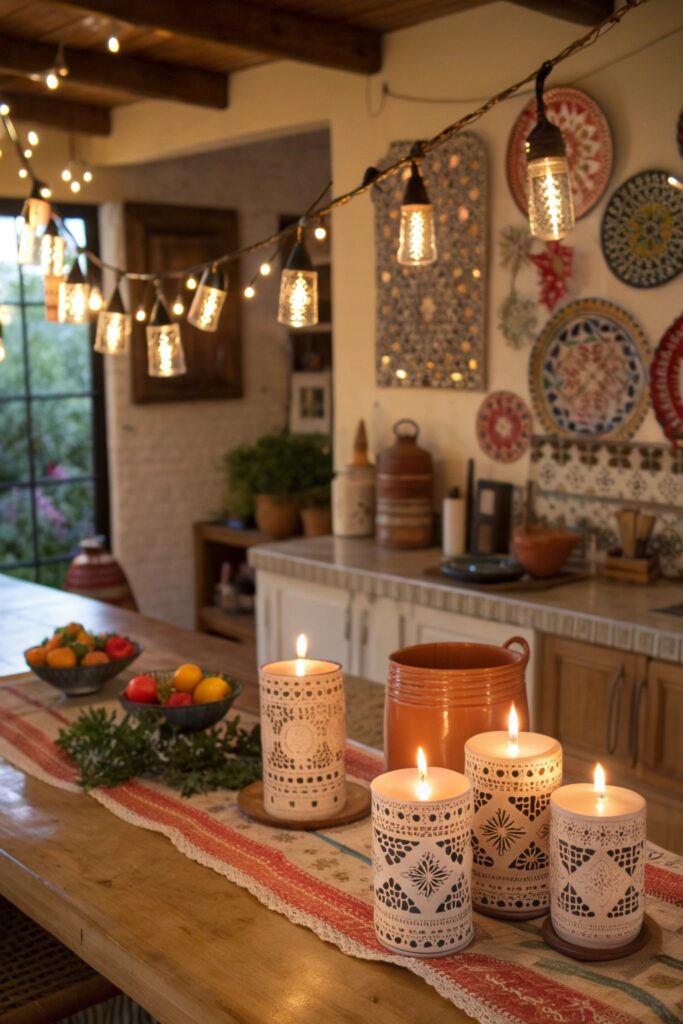
Warm-toned lighting truly suits this style’s overall emphasis on warmth, working well as an evening ambiance layer beyond the kitchen’s main task lighting.
Choose warm-toned bulbs specifically for any added lighting, which enhances this style’s overall warmth better than a cooler light source would.
12. Vibrant Printed Tiles on the Floor
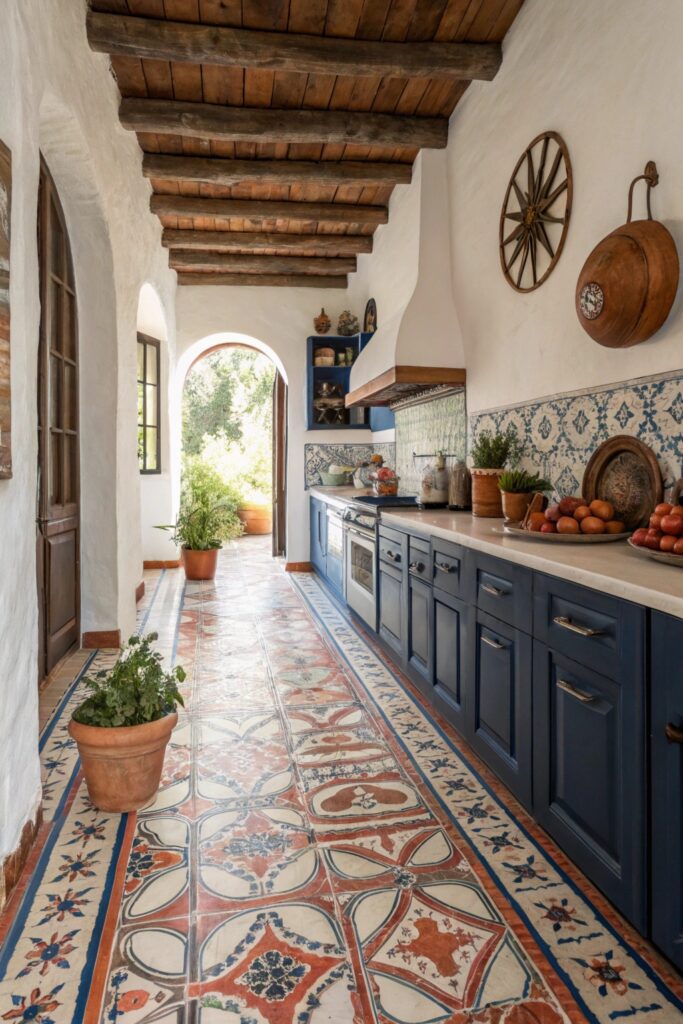
A patterned tile floor works best paired with simpler walls and cabinetry, letting the floor be the room’s clear focal point.
Confirm the tile is rated for genuine kitchen floor use specifically, since not every patterned tile is designed to handle daily foot traffic and spills.
13. Dried Chile and Herb Garlands
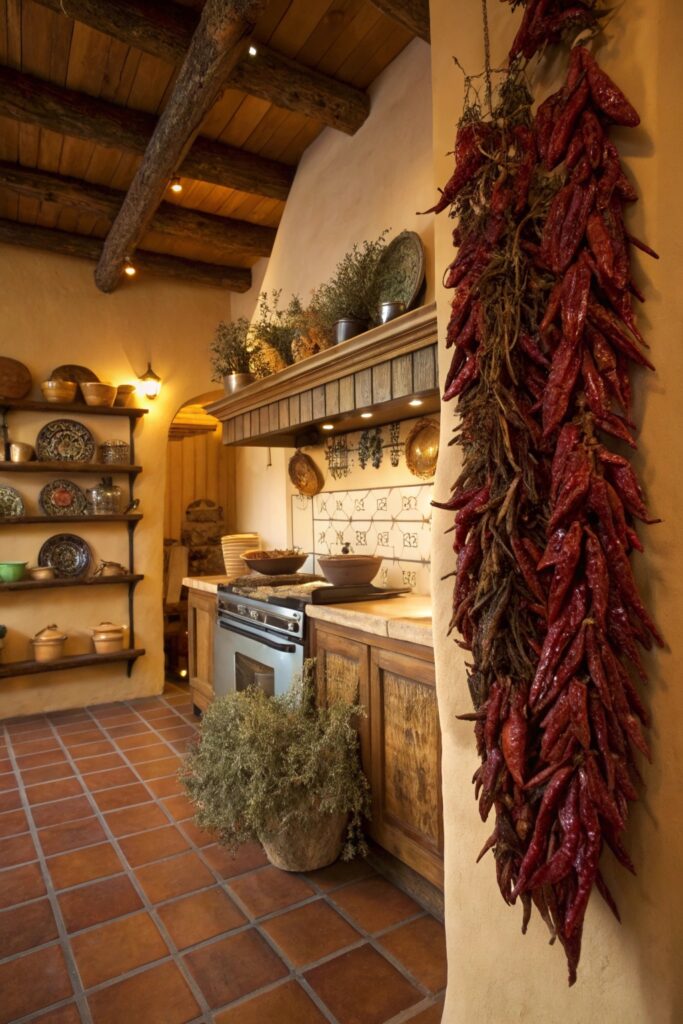
These serve a practical function beyond decoration, since dried chiles and herbs can be used in cooking as needed.
14. A Statement Cazuela or Cookware Display
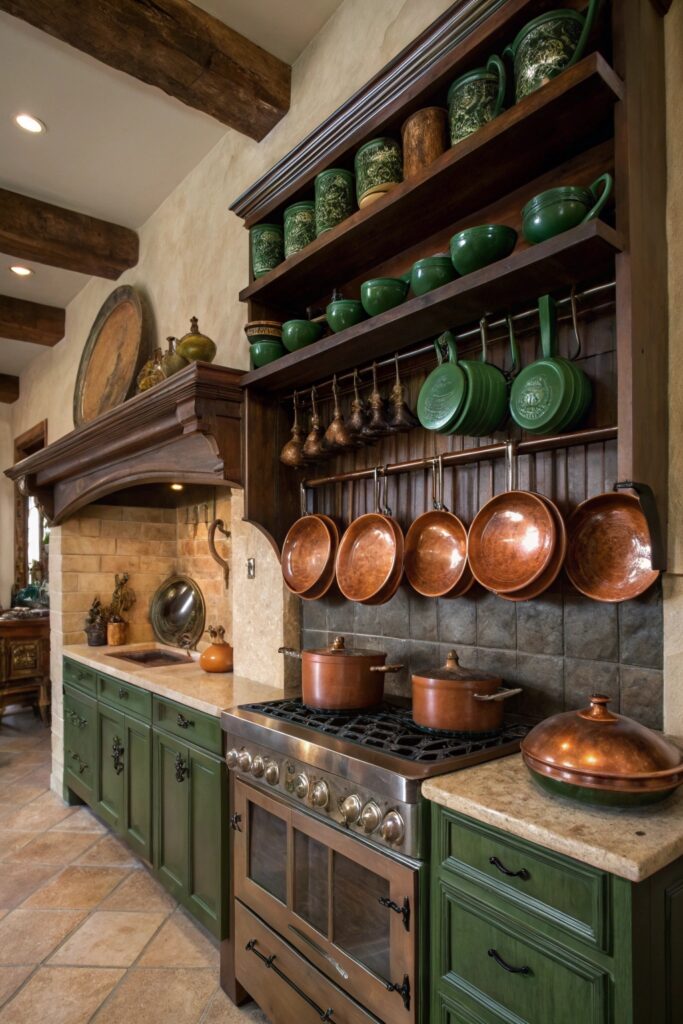
Displaying well-used, traditional cookware turns functional items into part of the kitchen’s decor, adding authenticity that purely decorative pieces don’t provide.
Balancing Bold Color With Everyday Function
This style leans into saturated color and pattern, so it’s worth balancing a few bold elements with simpler surfaces elsewhere, rather than layering vibrant choices across every wall, floor, and cabinet at once.
Letting one or two features — like the tile or the cabinetry — carry most of the color keeps the kitchen feeling intentional rather than visually overwhelming.
What This Kitchen Costs
A few accent changes — pottery, textiles, open shelving styling — can introduce this look for $150 to $400.
A fuller renovation with tile, flooring, and cabinetry typically runs well into the thousands, since much of this style depends on genuine construction work rather than surface-level decor alone.
Get quotes from at least two installers before committing to any tile or flooring project, since labor costs for authentically handmade materials can vary considerably based on the specific pattern and how much cutting the installation requires.
Live with a single sample or a small accent change for a while before committing to a full renovation, since it’s noticeably easier to judge whether this bolder, more colorful style suits your space once you’ve spent real time seeing it in your actual kitchen’s lighting.
Maintaining Tile and Terracotta in a Kitchen
Both Talavera tile and terracotta surfaces are porous and benefit from a food-safe sealant in a kitchen setting, since unsealed surfaces near cooking areas can absorb grease and stains over time that become difficult to remove.
Resealing every year or two, depending on how much daily use the surface gets, keeps the color vibrant and the surface easy to wipe down after cooking.
Wrap It Up and Make It Yours
Carrying this warmth outdoors too? See our companion guide to Mexican patio ideas for the same aesthetic applied to your outdoor space.
Authentically handmade materials cost more than mass-produced alternatives, so it’s worth prioritizing them in a few key spots — like the backsplash or a floor accent — rather than trying to source everything authentically at once. Sourcing directly from artisans or specialty importers, rather than a big-box store, truly makes a difference in getting materials with real craft and character.