
Rock landscaping offers lower long-term maintenance than traditional lawn or planted beds, though it still benefits from thoughtful planning around drainage, plant selection, and material variety.
Below are 15 ways to bring rock landscaping into a front yard, with practical notes for each.
1. Create a Dry River Bed Across the Front Yard
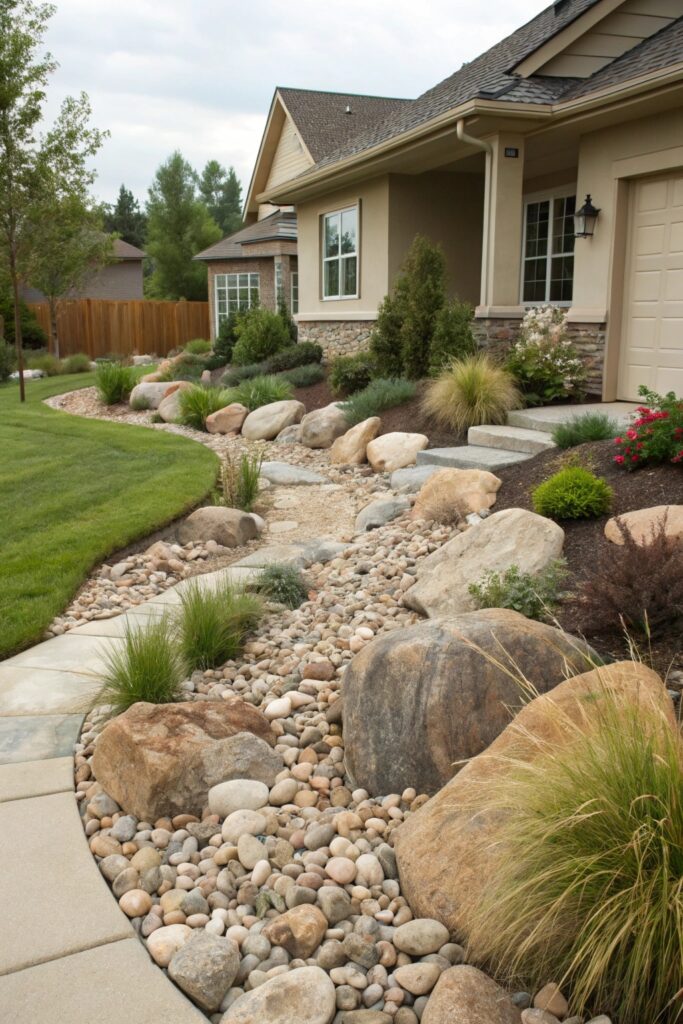
A curved, natural-looking path reads more convincingly than a straight line, and this feature can double as functional drainage during heavy rain.
Vary the stone sizes throughout the bed , mixing larger accent rocks with smaller river rock, which reads as more natural than uniform stone throughout.
2. Build a Rock Mulch Garden Bed Around the Mailbox
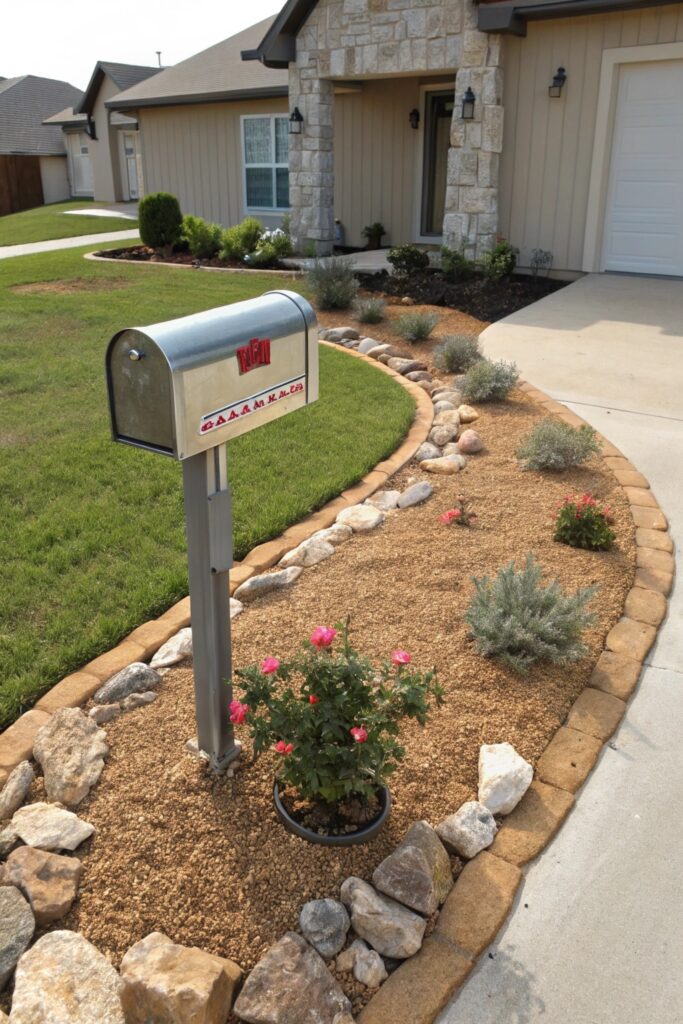
Rock mulch eliminates the need for regular re-mulching that organic mulch requires, making this a lower-maintenance choice for a smaller focal bed.
Choose rock in a consistent color family with your home’s exterior, which helps this smaller feature feel connected to the rest of the property.
3. Line Your Walkway with Decorative Border Rocks
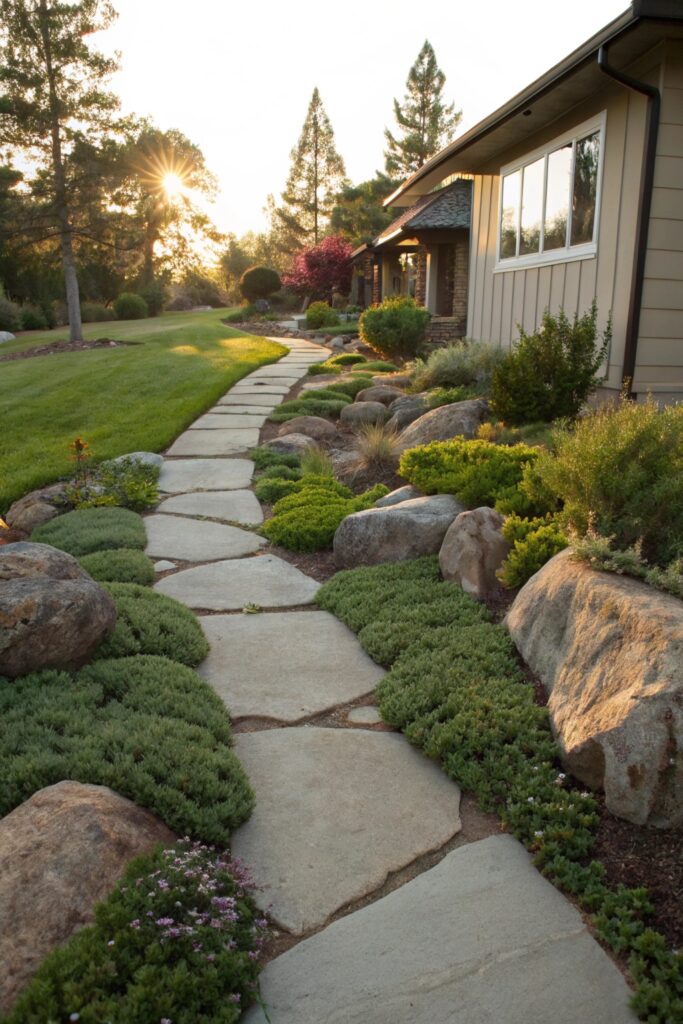
Consistent rock sizing along the border creates a cleaner look than mixing large and small stones randomly.
Choose border rocks in a weather-resistant material, since this edge sees direct exposure to sprinklers, rain, and foot traffic.
4. Install a Flagstone Pathway Through the Lawn
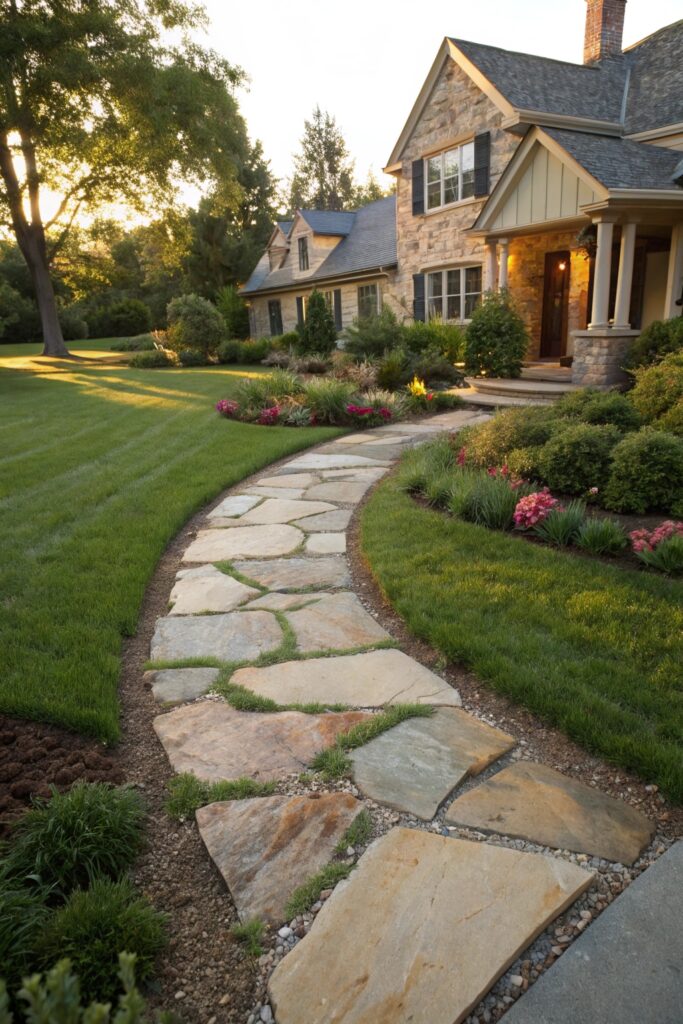
Genuine flagstone needs a properly prepared base to stay level over time, so it’s worth doing this step correctly rather than laying stones directly on unprepared soil.
Space flagstone pieces with genuine consistency, leaving small gaps for groundcover plants or gravel infill rather than butting pieces tightly together.
5. Use Boulders as Natural Focal Points
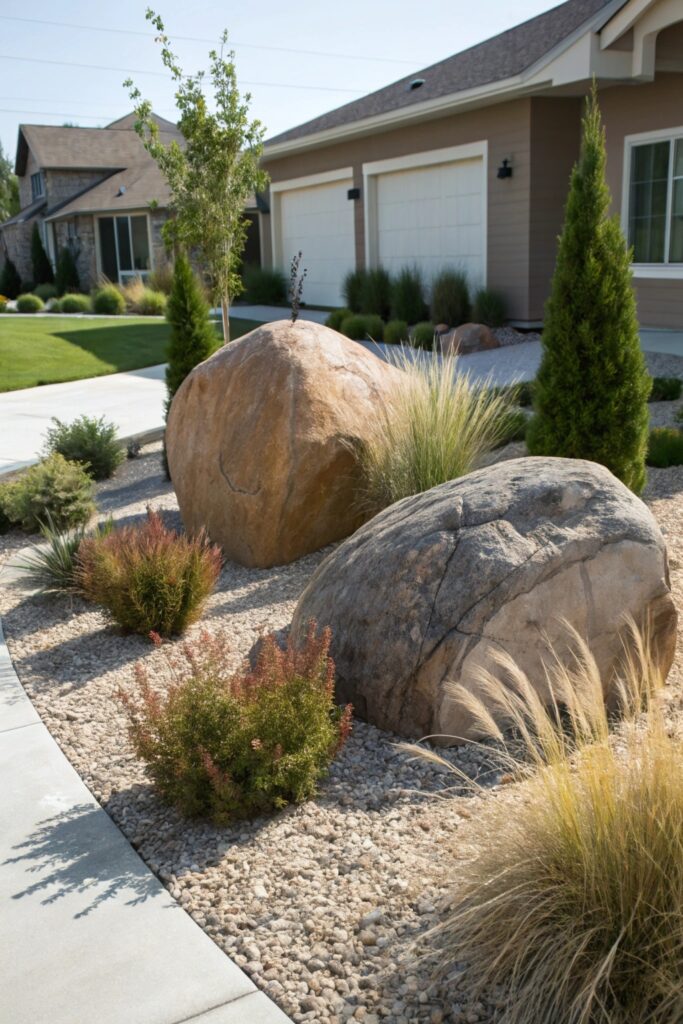
A large single boulder often has more visual impact than several smaller rocks scattered across the same area.
Position boulders partially buried rather than sitting on top of the soil, which genuinely looks more natural and prevents them from appearing to float.
6. Create a Rock Garden with Alpine Plants
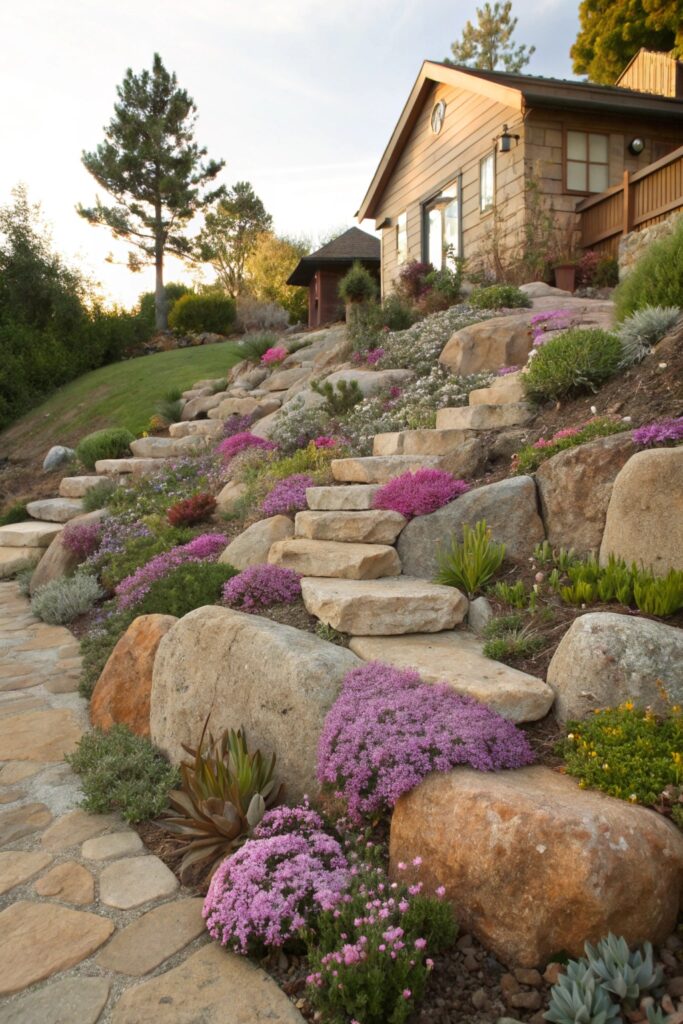
Well-draining soil matters most here, since alpine plants are specifically adapted to rocky terrain and struggle in soil that holds too much moisture.
Choose alpine varieties suited to your specific climate zone, since not every alpine plant tolerates the same temperature and moisture range.
7. Lay Decomposed Granite for a Sleek Ground Cover
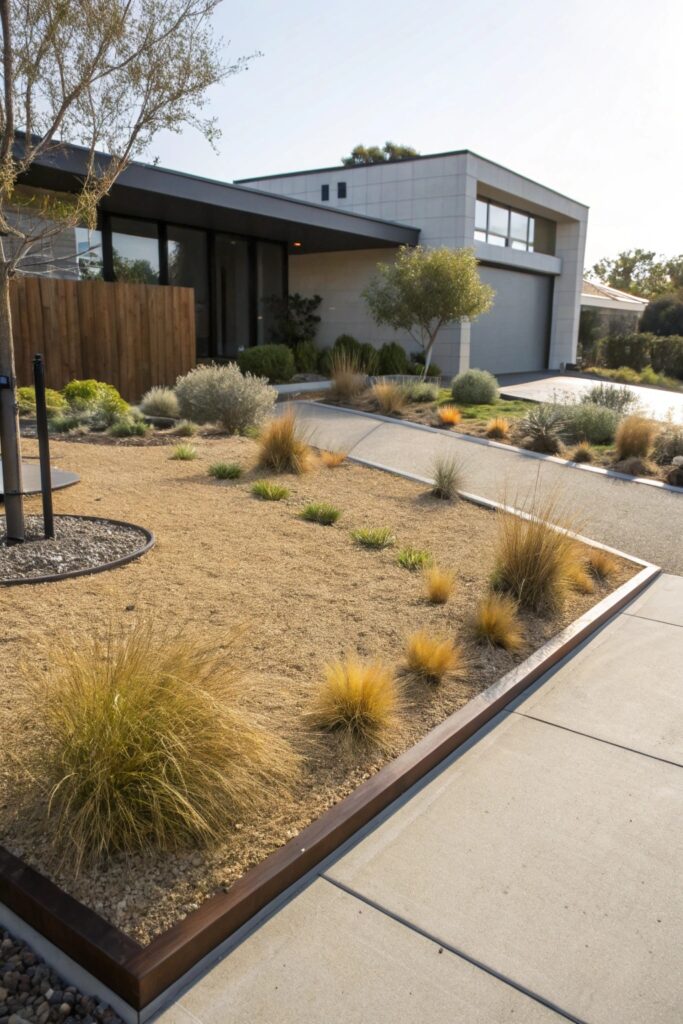
This material compacts well for pathways but needs periodic raking to stay looking neat, since it can shift with foot traffic and weather.
Install a genuine edging border before laying decomposed granite, which keeps the material contained and prevents it from migrating into the lawn.
8. Build a Tiered Rock Retaining Wall
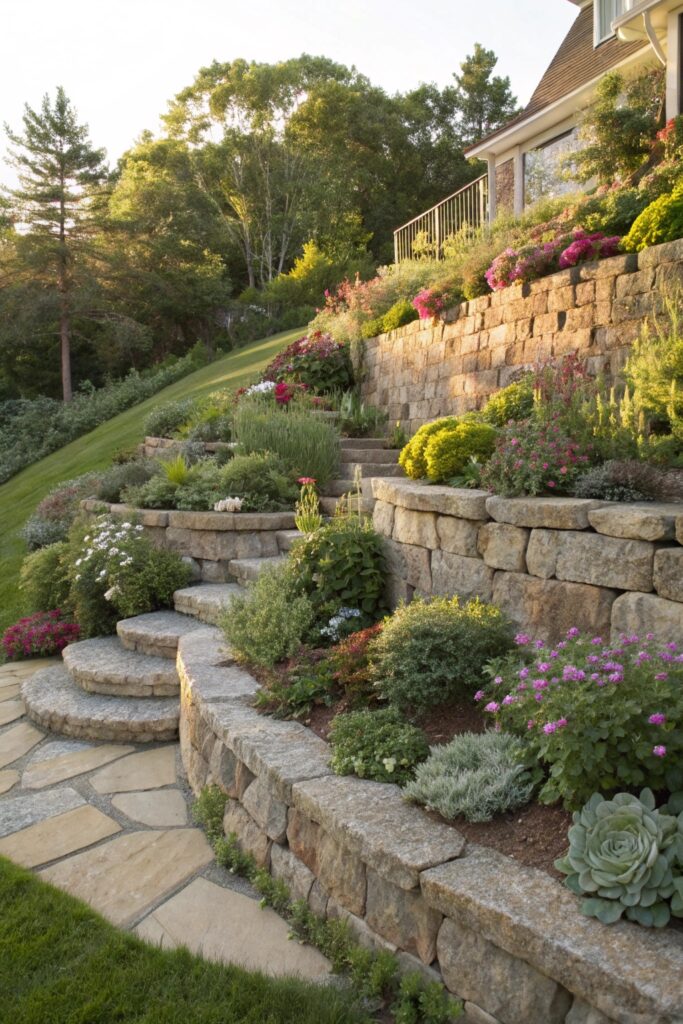
Confirm genuine drainage behind the wall specifically, since trapped water pressure is a common cause of retaining wall failure over time.
Get a structural assessment for any wall taller than a few feet, since retaining walls above a certain height often require permits and professional engineering.
9. Add a Pea Gravel Seating Area Near the Entrance
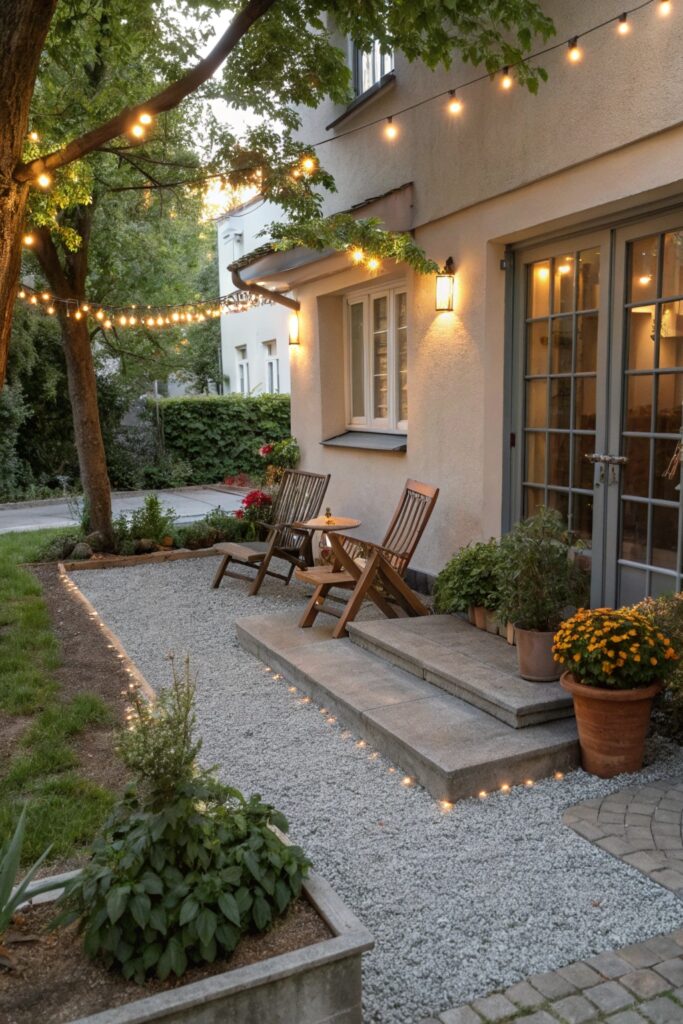
A contained border, like edging or a low wall, keeps pea gravel from spreading into the surrounding lawn or walkway over time.
Rake pea gravel periodically to redistribute it evenly, since foot traffic naturally creates low spots and uneven areas over time.
10. Edge Garden Beds with Natural Stone Borders
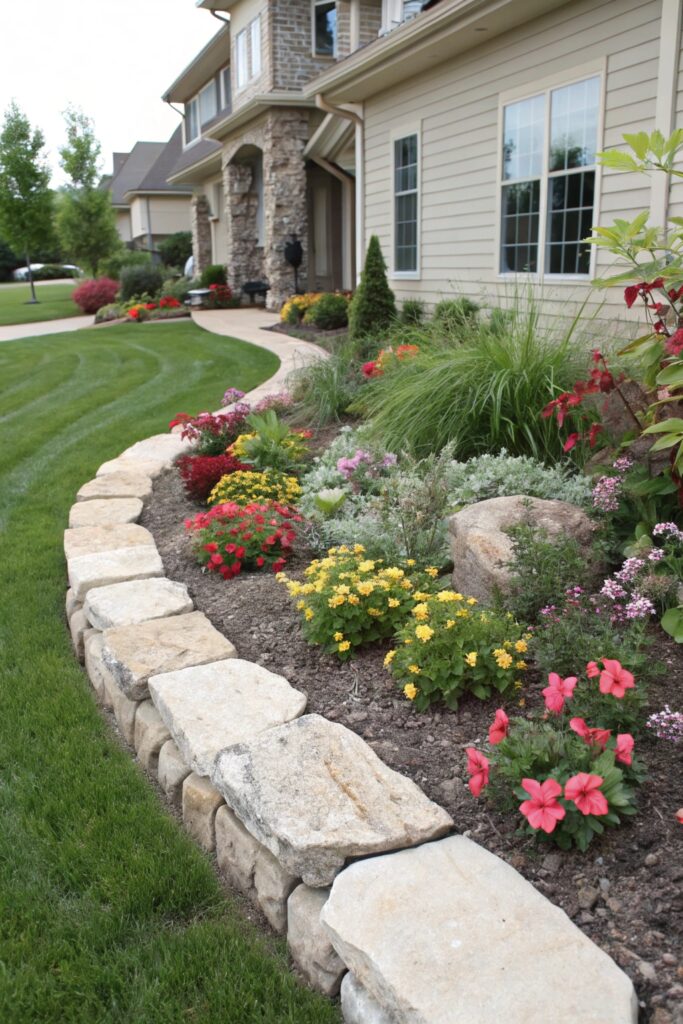
Irregular, natural-shaped stones suit a more organic garden style better than the uniform, manufactured edging blocks common at most retailers.
Choose stone in a substantial size for edging, since smaller stones can shift out of place more easily than larger ones.
11. Design a Zen-Inspired Gravel Garden
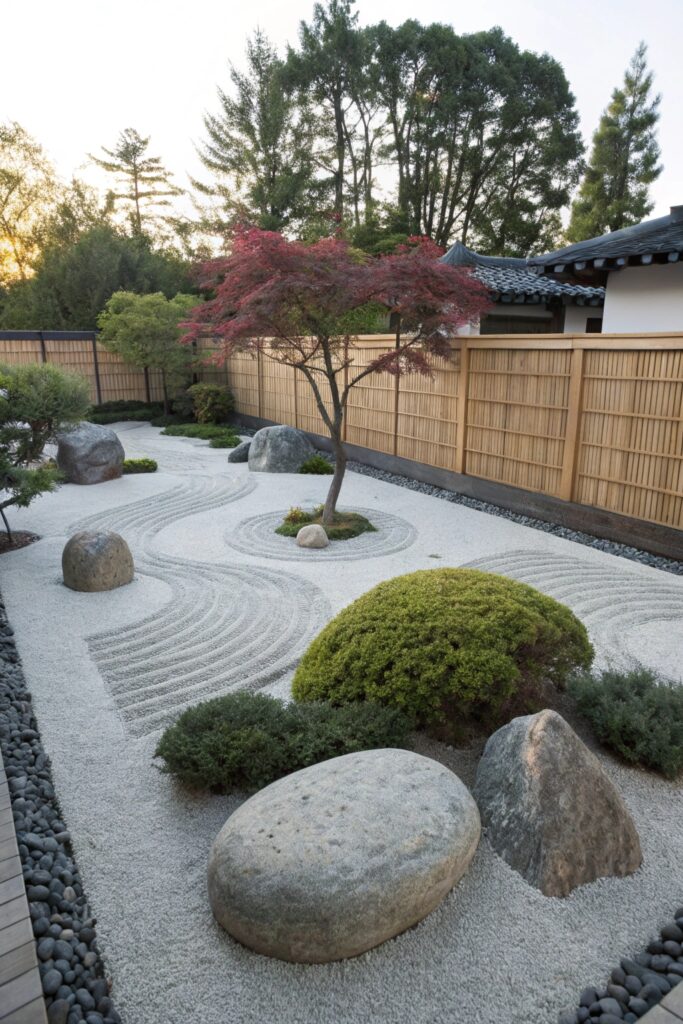
This style requires minimal ongoing maintenance once established, making it a practical choice for a front yard section you don’t want to fuss over regularly.
Rake the gravel in this style regularly to maintain the clean lines that define this aesthetic, since the raked pattern is a genuine part of the design.
12. Use River Rock to Surround Trees and Shrubs
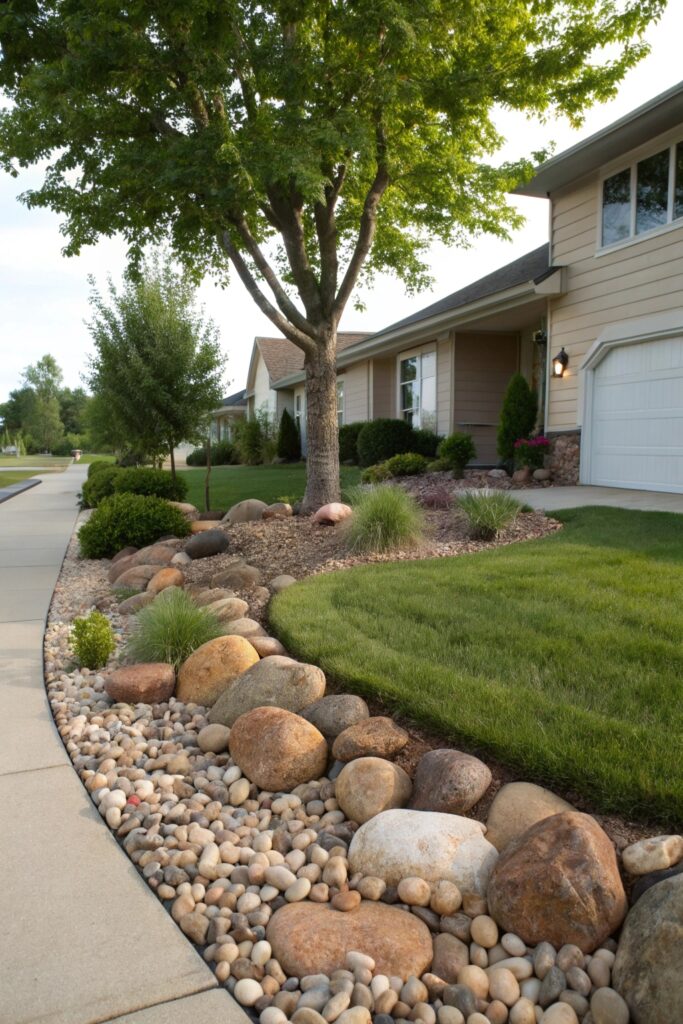
River rock helps retain soil moisture around root zones while suppressing weed growth, serving a real function beyond the visual appeal.
Leave adequate space between the rock and the trunk itself, since rock piled directly against bark can trap moisture and lead to rot.
13. Create a Rock Spiral Garden Feature
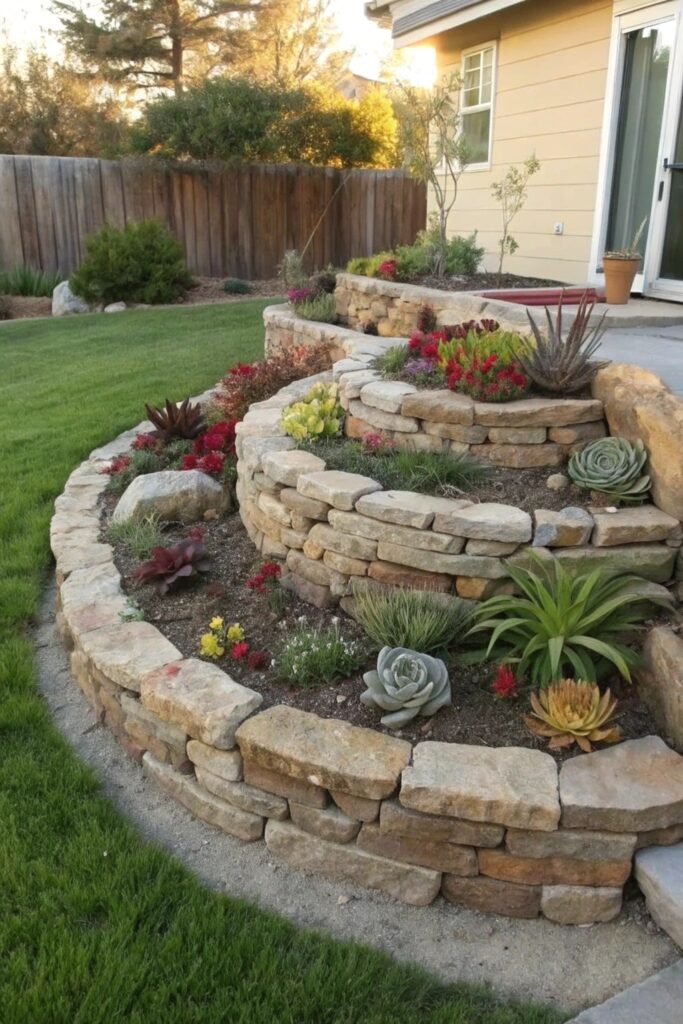
A well-defined spiral shape, rather than a loose approximation, is what makes this feature read as an intentional design element from a distance.
Mark out the spiral shape with a hose or rope first before placing any stone, which helps you genuinely visualize the proportions before committing.
14. Install a Crushed Stone Driveway Border
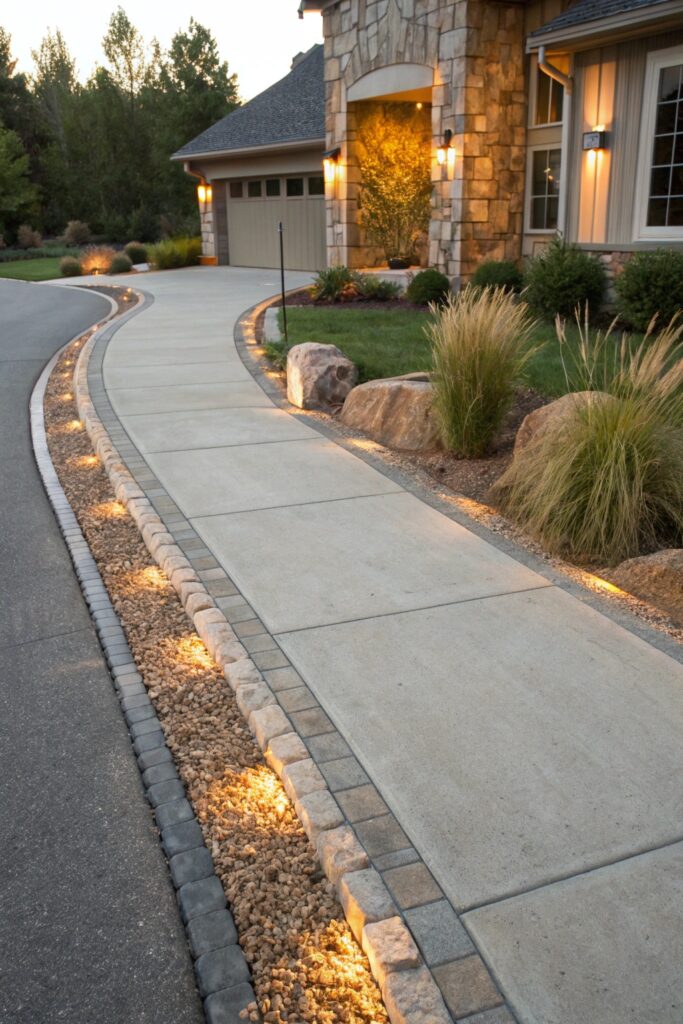
This creates a clean transition between the driveway and surrounding landscaping, working as a practical edge that also looks intentional.
Choose crushed stone in a consistent size for this application, which creates a cleaner edge than mixed sizes.
15. Mix Rock Types for a Layered, Textural Landscape
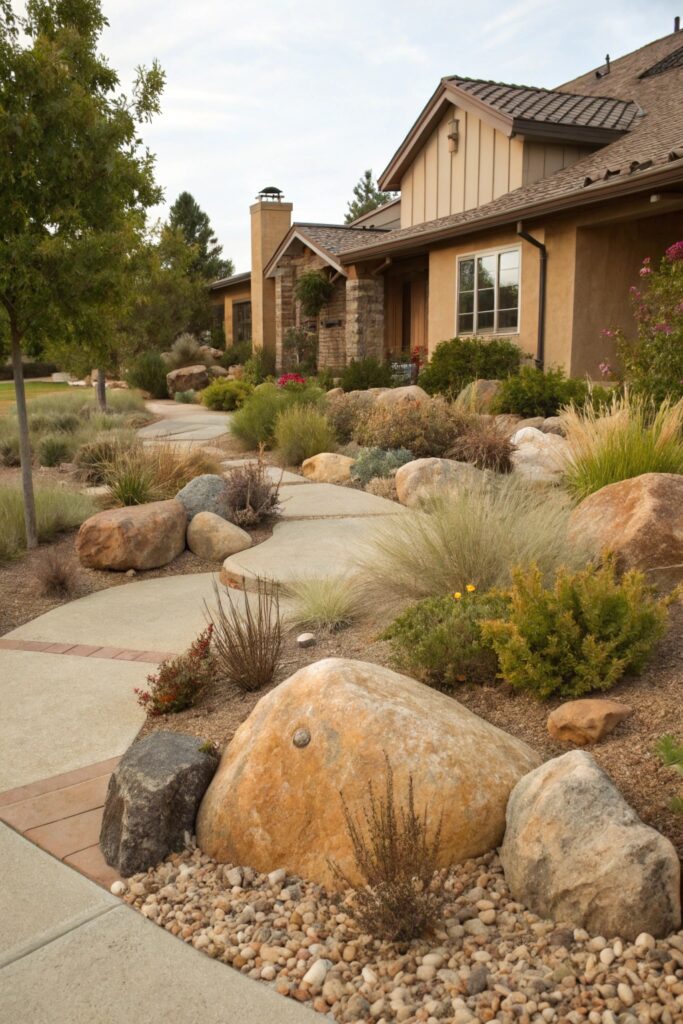
Combining varied rock sizes and colors — boulders, gravel, river rock — creates more visual depth than relying on a single material throughout the yard.
What This Landscaping Costs
Smaller accent features — a mailbox bed, tree surrounds, edging — typically cost $100 to $400 depending on the rock type and area covered.
Larger installations like a full dry river bed, retaining wall, or driveway border run considerably higher, often $1,000 to $5,000 or more depending on materials and whether the work is DIY or hired out.
Get quotes from at least two landscaping contractors before committing to a larger project, since labor and delivery costs for rock materials can vary considerably based on your specific location and the volume of stone required.
A well-planned rock landscape reduces long-term yard maintenance considerably, making it a worthwhile investment for anyone looking to spend less time on regular upkeep without sacrificing curb appeal.
Conclusion
Confirm your specific soil’s drainage before committing to any large-scale rock installation, since standing water under rock landscaping can cause problems that are more difficult to fix after installation than before. Mixing rock sizes and types creates a more visually interesting yard than uniform gravel alone, so it’s worth varying materials across different zones of the landscaping.