
Pots and pans present a genuinely specific organizational challenge — irregular shapes, significant weight, and lids that don’t stack neatly — that generic cabinet organizers designed for smaller, lighter items don’t always address well.
Below are 11 ways to organize cookware specifically, with real costs and practical notes for each.
1. Install a Pot Lid Organizer
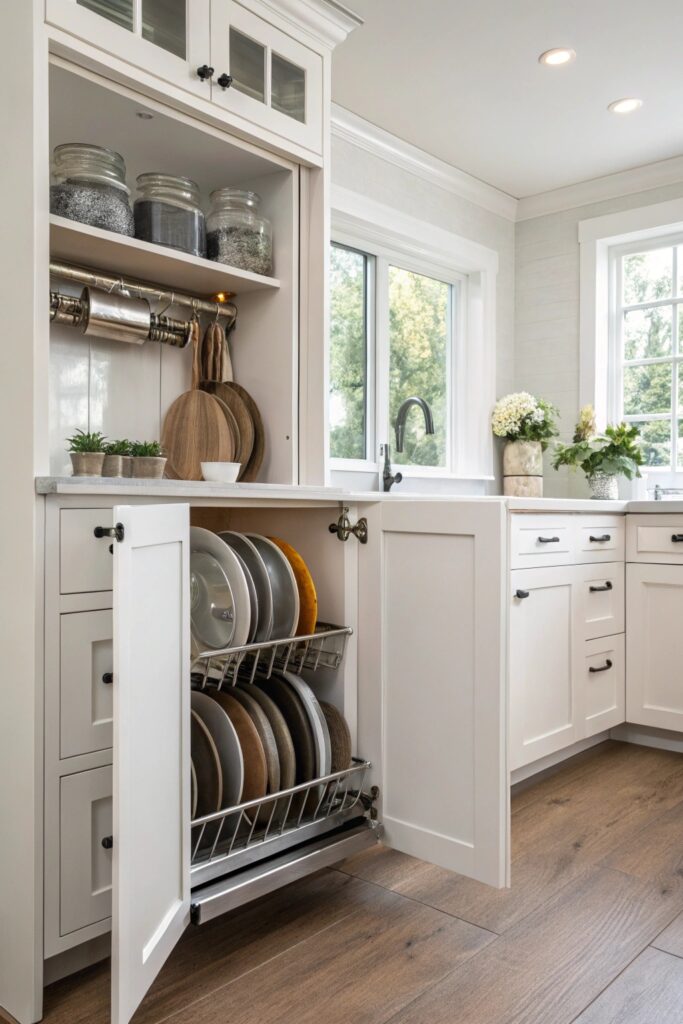
A dedicated rack or vertical slot system ($15-35) for pot and pan lids solves a genuinely common kitchen clutter problem, since lids rarely stack or store as neatly as the pots and pans themselves.
This can be installed inside a cabinet door or as a standalone rack, depending on which fits your specific kitchen’s available space.
2. Use Vertical Pot Dividers
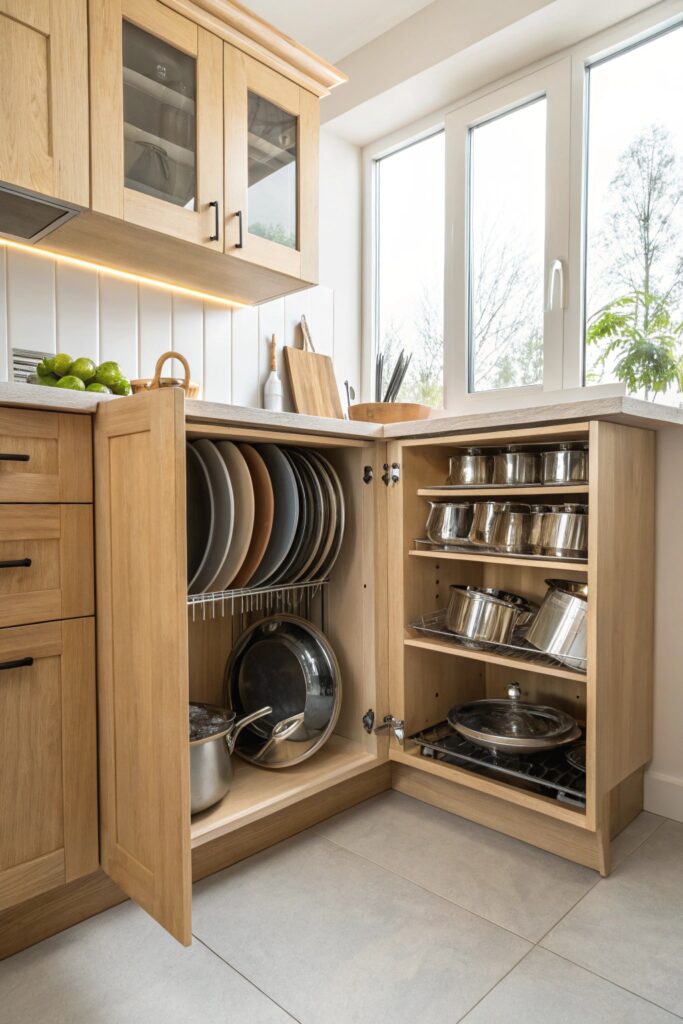
Dividers ($15-30) turn a stack of nested pots into upright, individually accessible slots, eliminating the common problem of digging through a stacked pile to find one specific size.
This works especially well in a cabinet that’s tall enough to accommodate pots standing upright, which isn’t every cabinet but is worth checking before assuming this won’t fit your kitchen.
3. Try a Pull-Out Cabinet Shelf
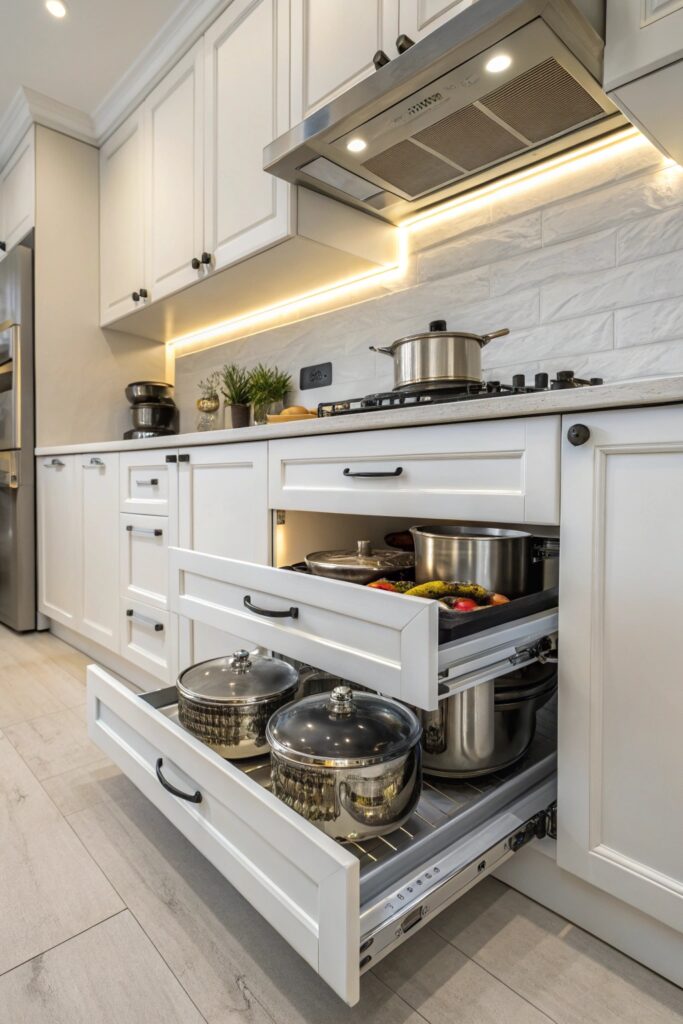
A sliding shelf insert ($30-80) brings the back of a deep cabinet into easy reach, solving the genuine accessibility problem that deep cabinets present for heavier cookware.
This is worth the investment specifically for lower cabinets, where bending down to reach items at the back is both inconvenient and can strain your back over repeated daily use.
4. Stack by Size, Not by Type
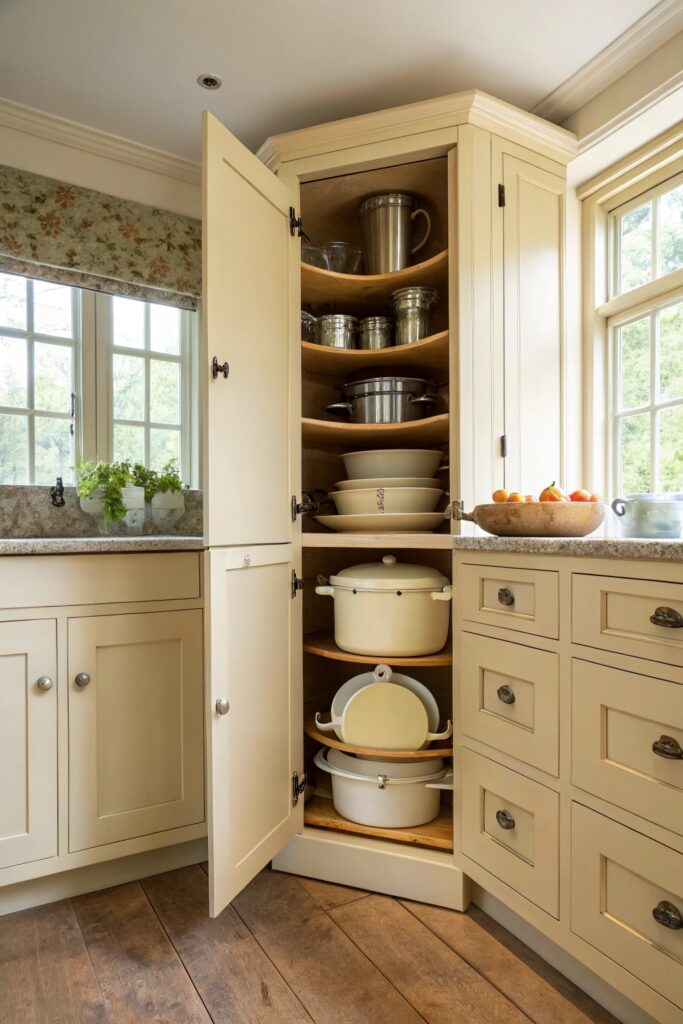
Nesting pots and pans by size (largest on bottom, smallest on top) regardless of type makes more efficient use of vertical cabinet space than grouping by matching sets alone.
This approach does mean occasionally moving a few items to reach one in the middle, which is a reasonable tradeoff for the genuine space savings nesting by size provides.
5. Hang Pots on a Ceiling Rack
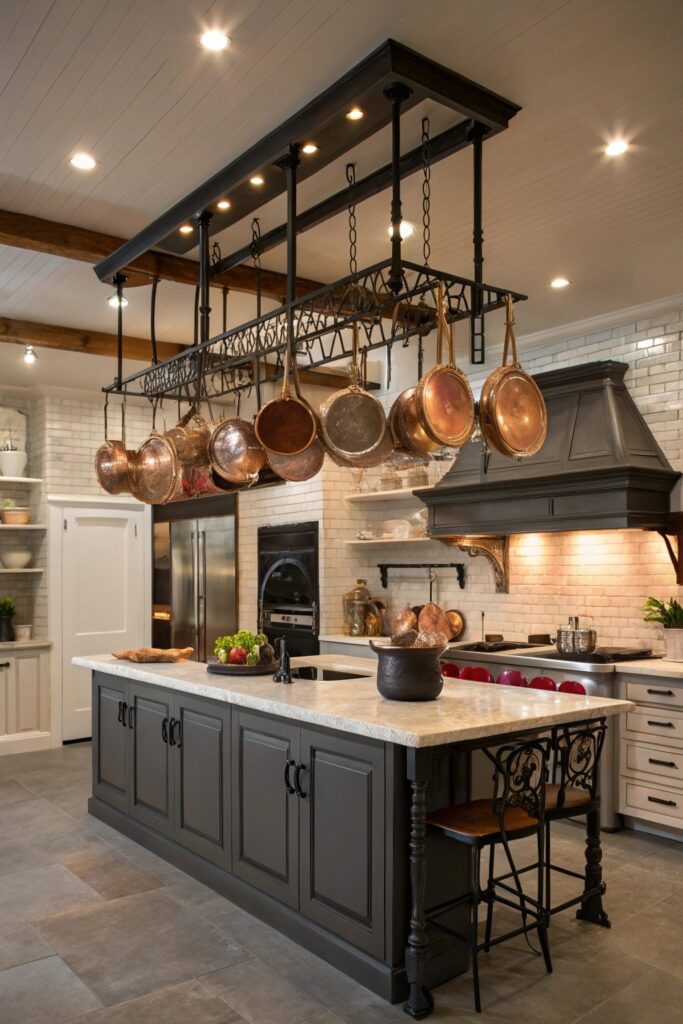
A ceiling-mounted rack ($60-150) frees up cabinet space entirely by moving pots and pans overhead, which is a genuinely significant capacity recovery for a kitchen with limited cabinet storage.
This requires confirming adequate ceiling clearance and structural support for the rack’s weight when loaded, which is worth professional installation rather than a DIY approach in most cases.
6. Use Cabinet Door Hooks
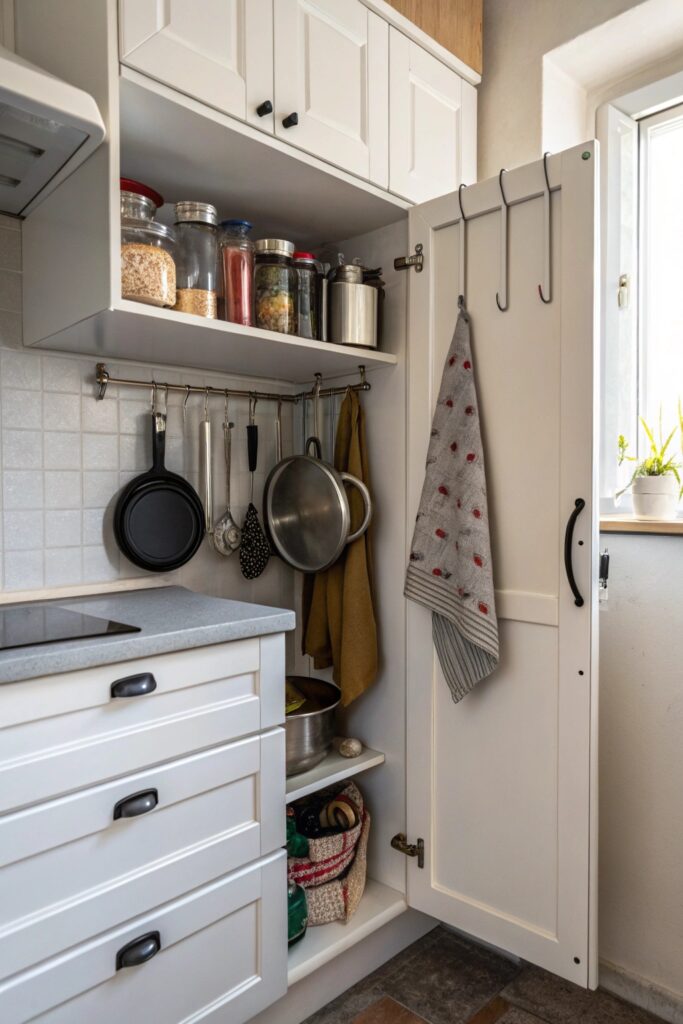
Small hooks mounted on the inside of a cabinet door ($10-20) hold lighter pans or lids using space that’s otherwise completely unused.
Confirm the hook’s weight rating matches what you’re hanging, since an overloaded door hook is a common and easily avoidable failure point in cabinet organization.
7. Separate Pans by Frequency of Use
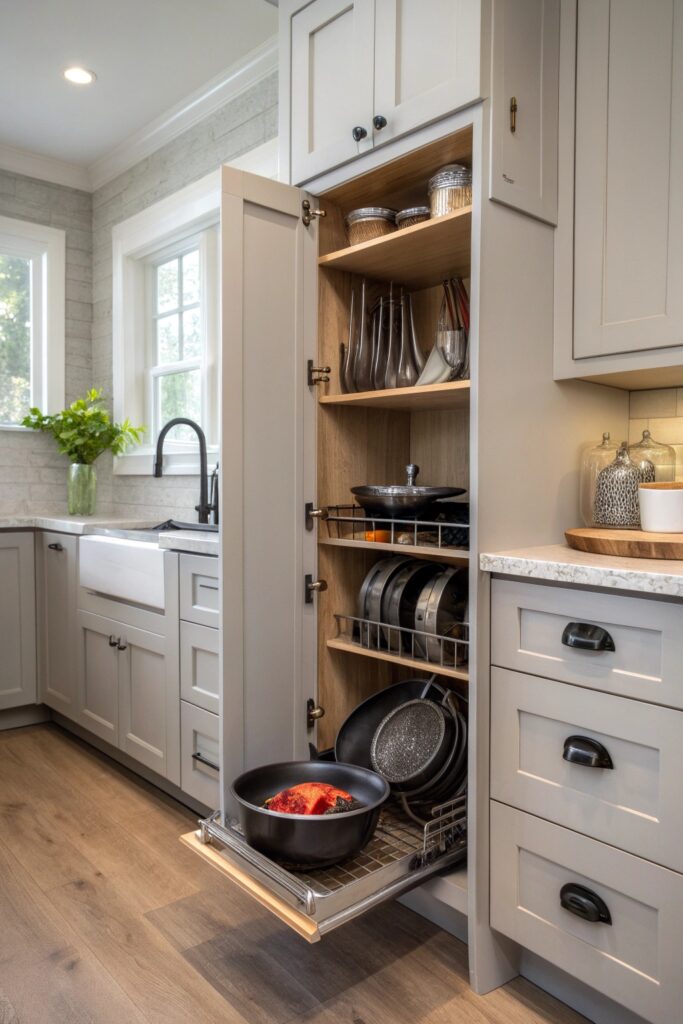
Placing daily-use pans (a go-to skillet, a saucepan) in the most accessible cabinet position and less frequent items further back matches storage convenience to actual usage patterns.
This is a simple but frequently overlooked organizing principle — many disorganized cabinets have rarely used pieces occupying prime, easily-reached storage that daily-use pans actually need.
8. Install a Drawer-Style Pot Organizer
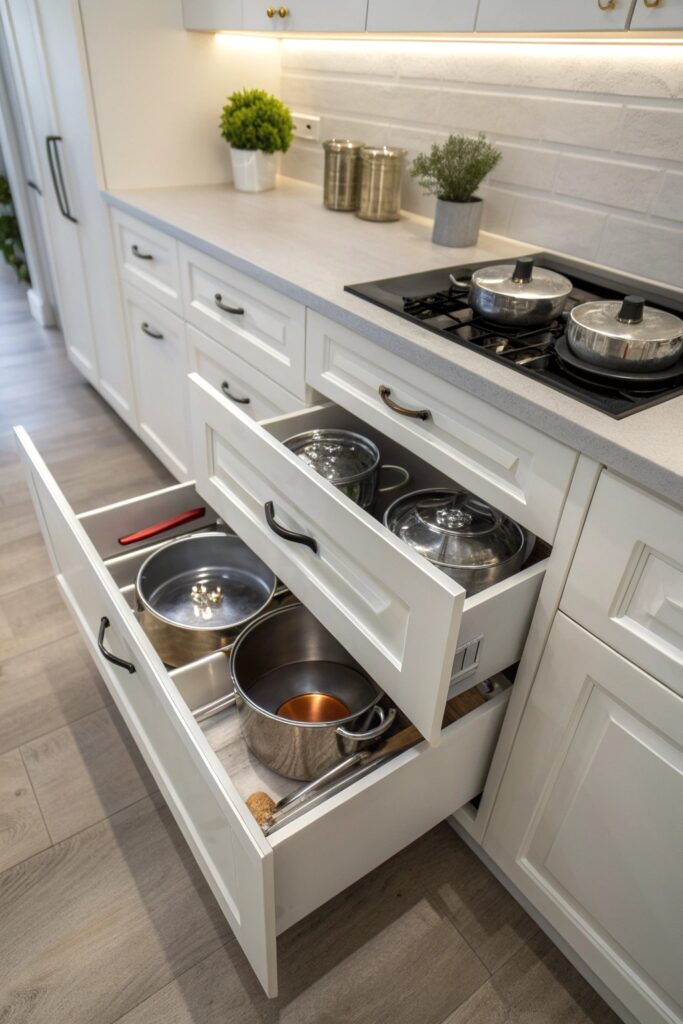
Deep, heavy-duty drawers designed specifically for cookware ($100-300 for a retrofit) provide genuinely superior accessibility compared to a standard cabinet with a door, since drawers pull items fully into view and reach.
This is a bigger investment than most solutions on this list, best considered during an actual kitchen renovation rather than as a standalone retrofit project.
9. Use Stackable Cookware Sets
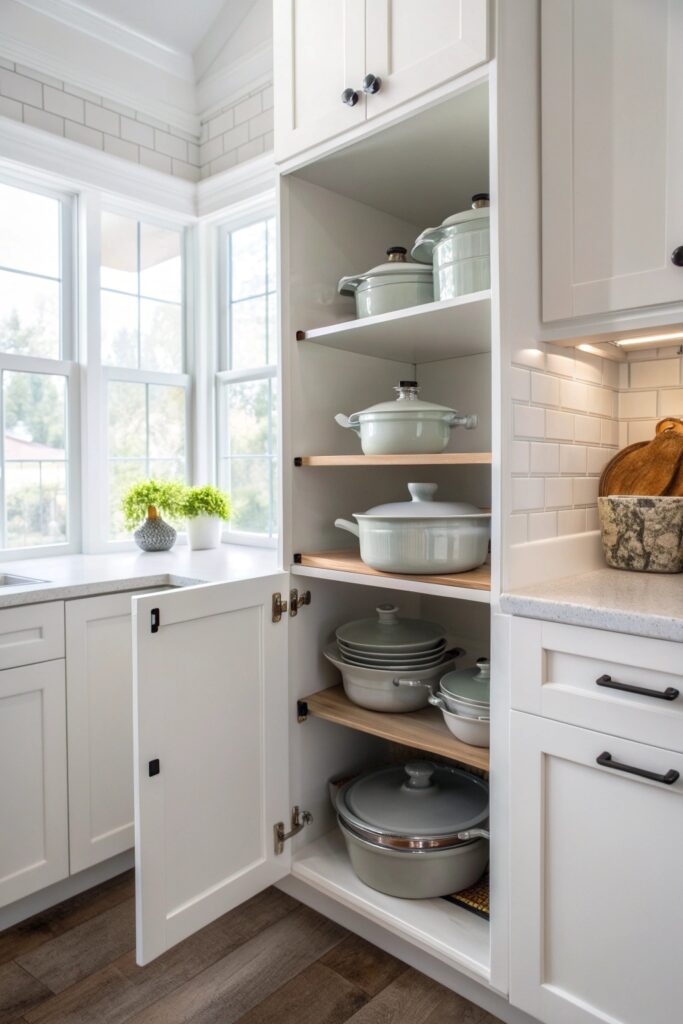
Cookware specifically designed to nest and stack efficiently (some sets include this as a selling feature) can genuinely reduce cabinet footprint compared to mismatched pieces from different sets.
This is worth considering when it’s time to replace cookware anyway, rather than necessarily replacing functional pieces early just for the stacking benefit.
10. Add a Lazy Susan for Corner Cabinets
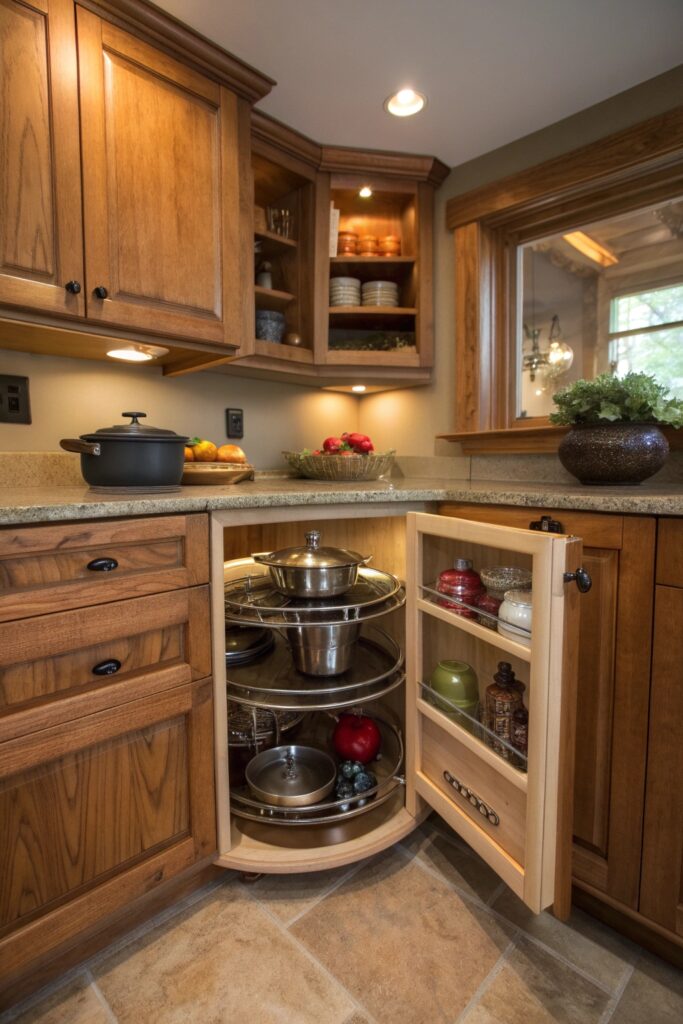
A rotating lazy susan ($15-40) solves the genuine accessibility problem corner cabinets create for pots and pans specifically, letting you spin items into reach rather than reaching blindly into the cabinet’s back corners.
This is worth prioritizing specifically for corner cabinets, which are consistently the hardest kitchen storage to use efficiently for larger cookware without some kind of rotating mechanism.
11. Label Shelves for Consistency
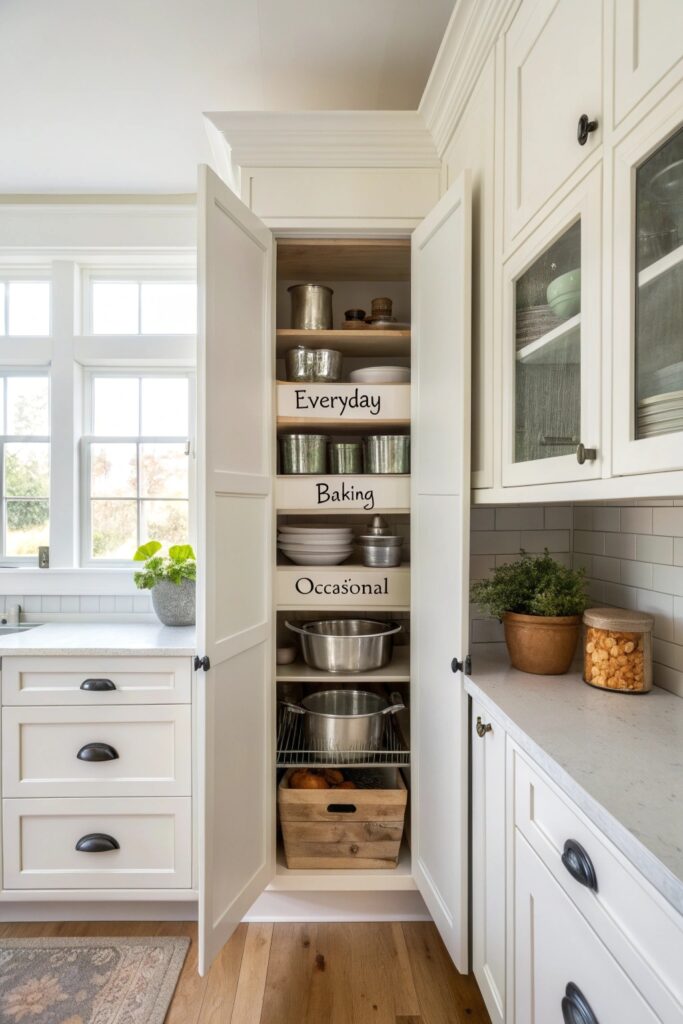
Clear labels on cabinet shelves help every household member return pots and pans to their assigned spot, which matters especially in a shared kitchen where multiple people cook regularly.
This is a small addition that pays off primarily in maintaining the organization system over time, rather than in the initial setup itself.
Matching the Solution to Your Cabinet Type
A shallow upper cabinet works best with vertical dividers or a lid organizer, while a deep lower cabinet genuinely benefits more from a pull-out shelf or drawer-style system, since the accessibility problem in a deep cabinet is fundamentally different from the space-efficiency problem a shallow one presents.
Corner cabinets specifically call for a lazy susan or a specialized corner pull-out system regardless of depth, since the geometry of a corner makes both vertical dividers and simple pull-out shelves considerably less effective than they’d be in a standard rectangular cabinet.
Measure your specific cabinet’s interior dimensions before purchasing any organizer, since pot and pan storage products vary more in size and configuration than most other kitchen organizational tools, and a poor fit wastes both money and the space you were trying to recover in the first place.
Final Thoughts
A lid organizer and vertical dividers matter most if you’re prioritizing only a couple of these changes, since both directly address the two most common cookware storage complaints — lids that won’t stack and pots that bury each other when nested loosely. A lazy susan is worth the investment next specifically if your kitchen has corner cabinets, which are consistently the hardest spot to organize efficiently without one.