
If you’ve ever squeezed a dining table into a small kitchen and spent every meal apologizing to the person stuck against the wall, banquette seating is about to change your life.
A kitchen banquette — that built-in bench seating setup you see in cozy restaurants and well-designed homes — solves the small dining space problem better than any freestanding furniture arrangement can. It hugs corners, maximizes seating capacity, and honestly just looks really good.
I became obsessed with banquette seating after redesigning a tiny eat-in kitchen where a standard table simply didn’t work. The difference was dramatic. These 10 kitchen banquette seating ideas cover every style, budget, and space configuration — so you can finally stop fighting your dining area and start enjoying it.
1. Build a Corner Banquette to Maximize Unused Space
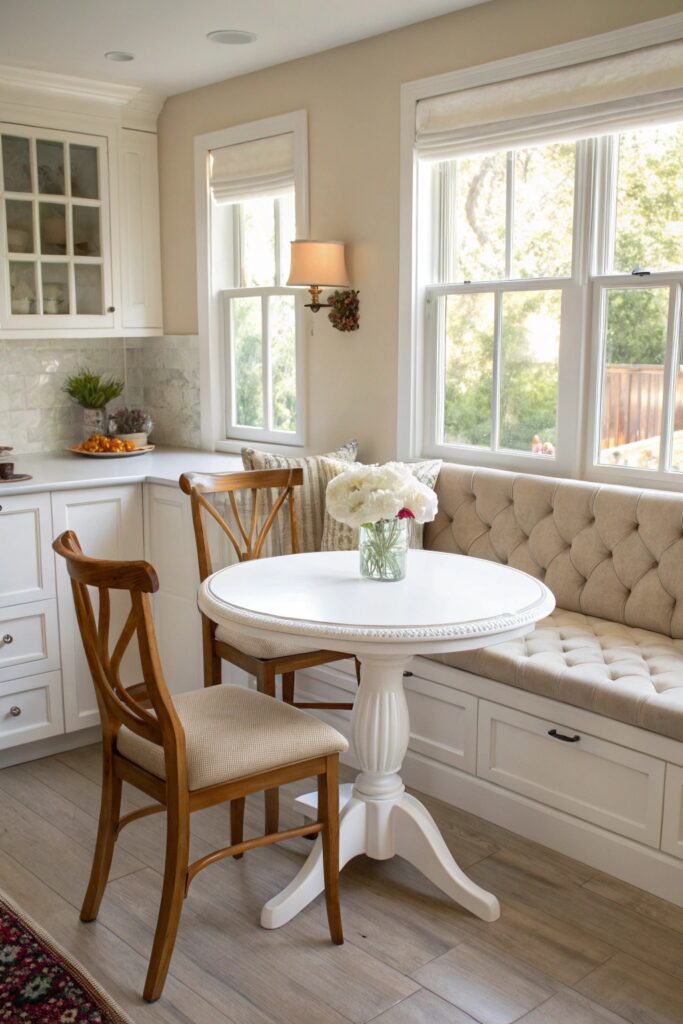
A corner banquette turns the most underutilized spot in your kitchen into its most functional seating area. Two walls doing nothing suddenly become the backbone of a dining nook that seats four to six people comfortably.
Key design details for a corner banquette:
- L-shaped bench configuration fitting snugly into a 90-degree corner
- Seat height of 18 inches to align comfortably with standard dining table height
- Upholstered seat cushions in a durable, wipeable fabric
- A round or square pedestal table that allows easy entry and exit from all sides
Corner banquettes work especially well in kitchens where a rectangular table would block traffic flow. The corner placement keeps the center of the room open. IMO, adding a round table rather than a square one to a corner banquette makes the whole setup feel more inviting and easier to navigate during a full family dinner.
2. Add Under-Seat Storage to Your Banquette Bench
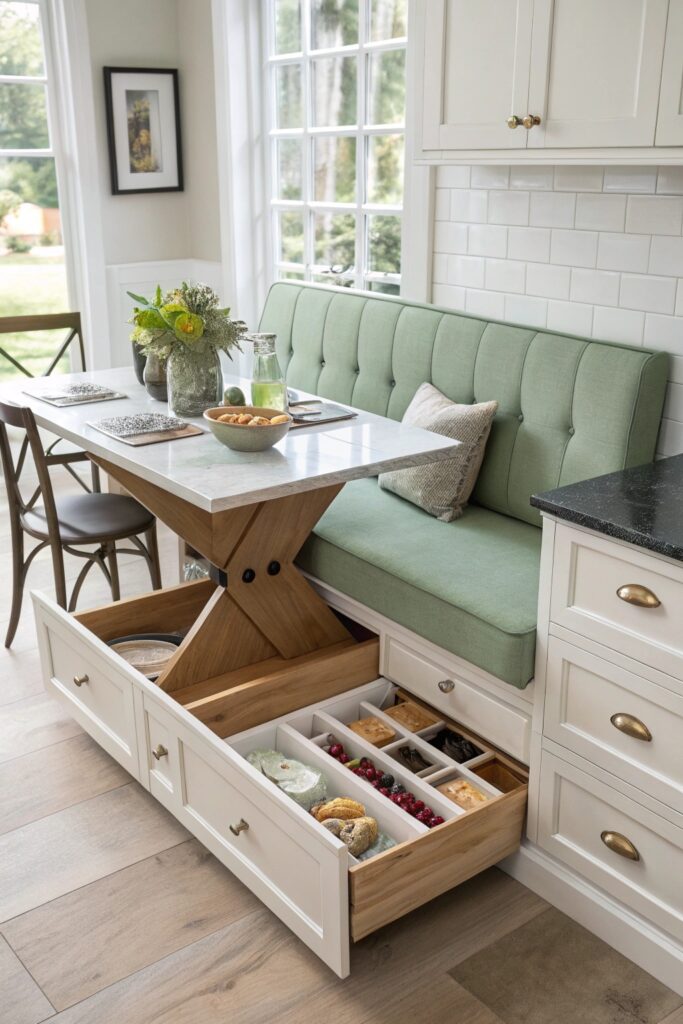
The smartest banquette designs treat the bench itself as a storage unit — and in a small kitchen, that hidden storage is truly game-changing.
Storage options built into banquette seating:
- Hinged lift-top bench seats for easy access to items stored below
- Pull-out drawers on the front face of the bench for smaller items
- Cubbies with baskets built into the bench ends for open storage
- Deep compartments for seasonal items, tablecloths, and overflow pantry stock
A standard banquette bench seat sits 18 inches high with a depth of 18 to 20 inches — that’s a significant storage cavity underneath. Use it for bulky kitchen items that steal cabinet space: stand mixers, large pots, extra appliances. FYI, drawer pulls and hardware on your bench storage should match your kitchen cabinetry for a cohesive, built-in look.
3. Use a Straight Banquette Along One Wall
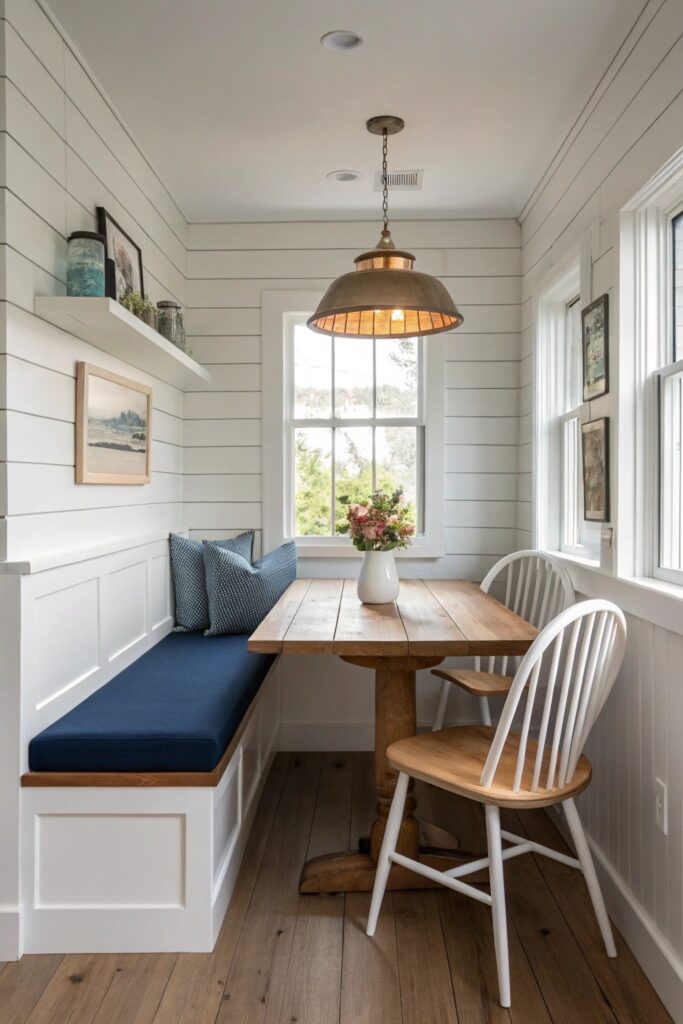
Not every kitchen has a corner to work with — and a straight single-wall banquette works just as beautifully. It lines up along one wall, pairs with a rectangular table, and keeps the opposite side open for chairs.
Design considerations for a straight banquette:
- Bench length matching the table length with 6 inches of overhang on each end
- A rectangular table positioned directly in front of the bench
- Two or three chairs on the opposite side for flexible seating
- Wall-mounted cushion or a loose bench cushion tied in place
A straight banquette works especially well in galley kitchens or narrow eat-in spaces where a corner configuration simply won’t fit. The combination of fixed bench on one side and moveable chairs on the other gives you the best of both worlds — anchored seating with flexibility. This setup also photographs incredibly well, which matters absolutely not at all until you’re hosting and someone pulls out their phone. 🙂
4. Design a U-Shaped Banquette for Large Families
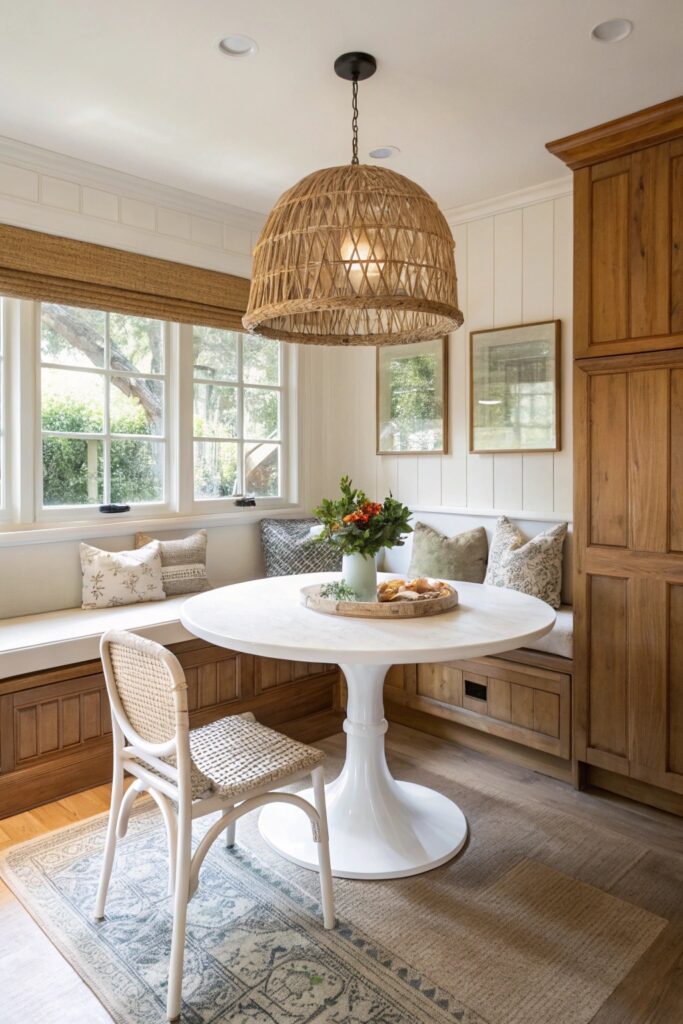
A U-shaped banquette is the ultimate family seating solution — it wraps three sides of a table and seats more people per square foot than almost any other dining configuration.
U-shaped banquette planning essentials:
- Minimum room footprint of 8×8 feet for a comfortable U-shaped setup
- Pedestal table base rather than four legs — allows easier entry from all sides
- Individual seat cushions with ties rather than one long cushion for easier cleaning
- Consistent upholstery across all three bench sections for a unified look
The U-shape works beautifully in a dedicated breakfast nook or a kitchen bay window alcove. It creates an enclosed, cozy feeling that encourages longer meals and conversations — which is either wonderful or terrifying depending on your family dynamics. Keep the table size proportional to the U; too large and entry becomes a gymnastics routine.
5. Choose Upholstered Banquette Seating for Comfort
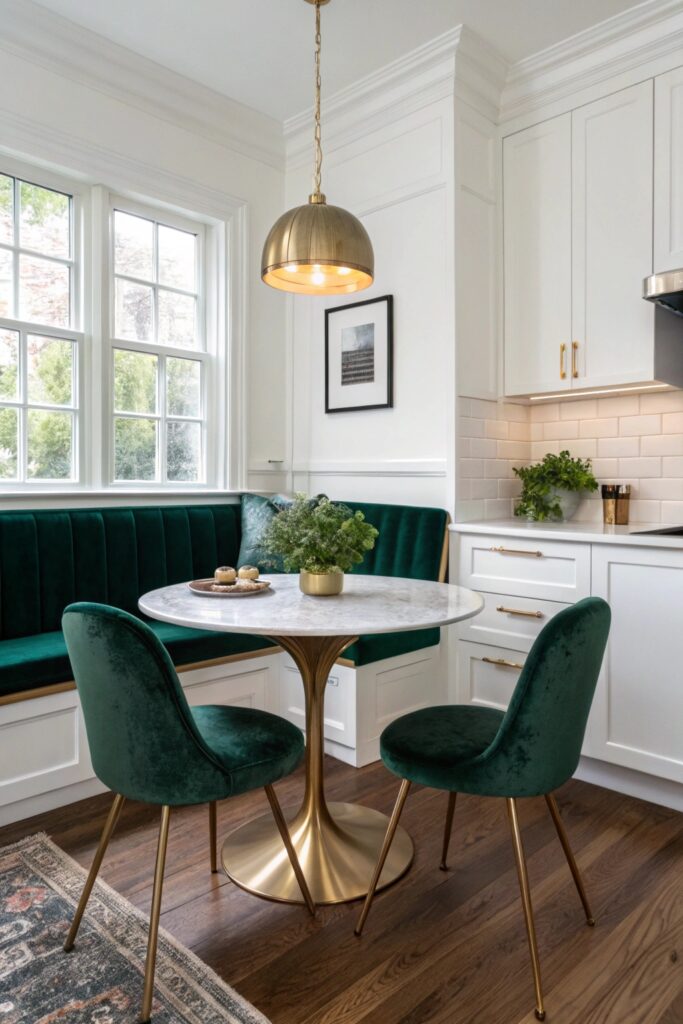
Comfort determines how much your family actually uses the banquette — and upholstered seating keeps people sitting longer, eating slower, and lingering over coffee instead of fleeing the table the moment dinner ends.
Best fabric choices for kitchen banquette upholstery:
- Vinyl or faux leather — wipes clean instantly, extremely durable, great for families with young children
- Performance velvet — luxurious feel, surprisingly stain-resistant, adds color beautifully
- Outdoor-rated fabric — designed for spills and UV exposure, holds up exceptionally well indoors
- Tight-woven linen or cotton blend — beautiful texture, works best with a stain-repellent treatment applied
Avoid loose-weave fabrics in a kitchen environment — they trap crumbs and absorb spills at a rate that will honestly test your patience. A foam cushion density of 1.8 to 2.5 pounds per cubic foot gives you the right balance of softness and support for extended sitting. Add a 2-inch seat back cushion if your banquette backs up against a wall for proper lumbar support.
6. Install a Banquette with a Built-In Backrest
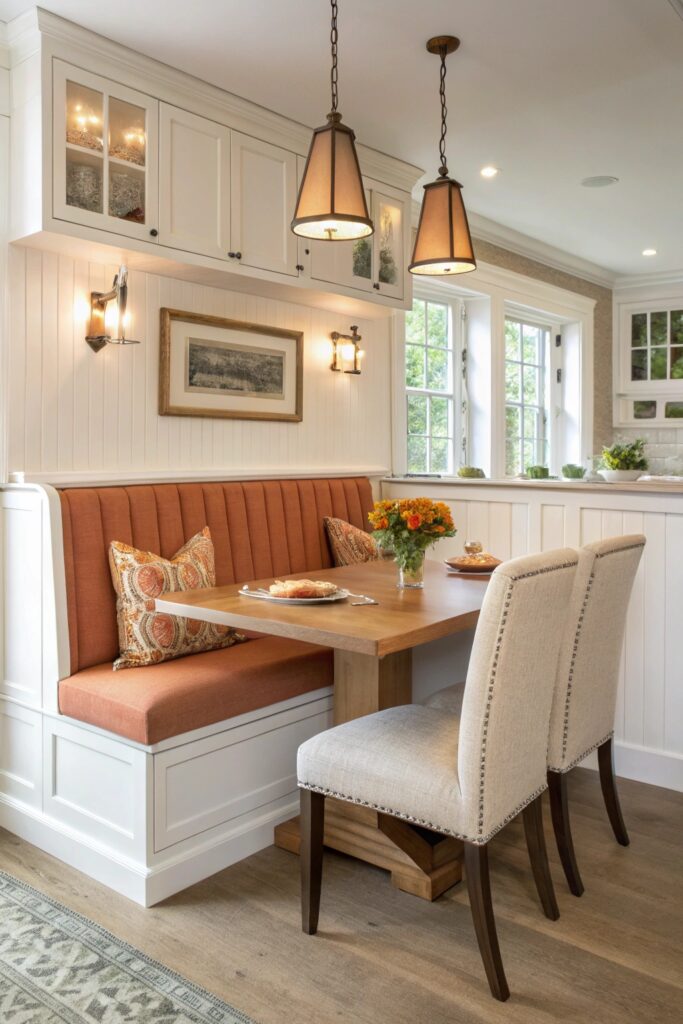
A banquette with a proper built-in backrest feels like furniture, not an afterthought. It provides genuine comfort for longer meals and gives the entire nook a finished, intentional look.
Built-in backrest options:
- Straight vertical backrest — clean, modern, easy to build
- Slightly angled backrest — more ergonomic, follows natural seating posture
- Shiplap or beadboard paneling on the backrest face for texture and character
- Upholstered backrest panel matching the seat cushion for a cohesive, restaurant-booth feel
The standard backrest height runs 36 to 42 inches from the floor — tall enough to support the back properly without overwhelming the space visually. Paint the backrest the same color as your kitchen walls to make it read as part of the architecture. Alternatively, treat it as an accent wall opportunity with a bold color or wallpaper panel behind the bench.
7. Create a Banquette Nook with a Bay Window
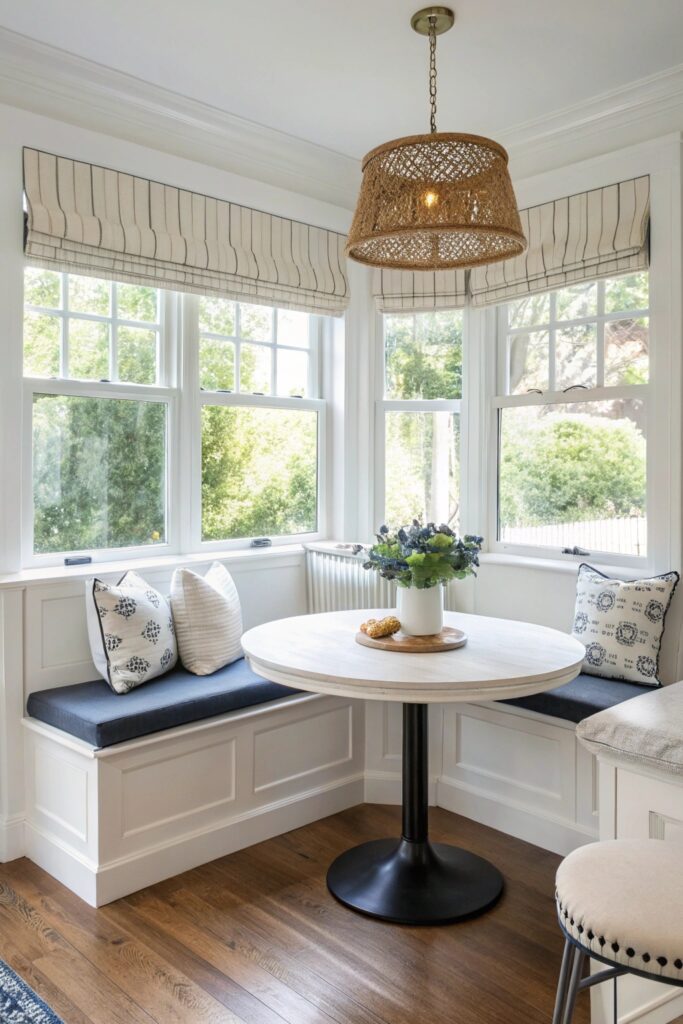
A kitchen bay window and a banquette bench are one of the great design partnerships in residential interiors. The window provides the natural light; the banquette makes that sunny spot a destination.
How to design a bay window banquette nook:
- Follow the window’s angle with angled bench sections connecting in the center
- Use the window sill as a narrow display or plant ledge above the bench back
- Add Roman shades or café curtains on each window panel for privacy without blocking light
- Install a round table in the center of the bay for the best proportional fit
Seat cushions in a bay window banquette take a beating from direct sunlight — choose fade-resistant fabrics or use UV-protective window film to extend their life. :/ A bay window nook with a well-upholstered banquette and a small pendant light overhead is one of those spaces that truly makes a house feel like a home.
8. Go Bold with Banquette Upholstery Color
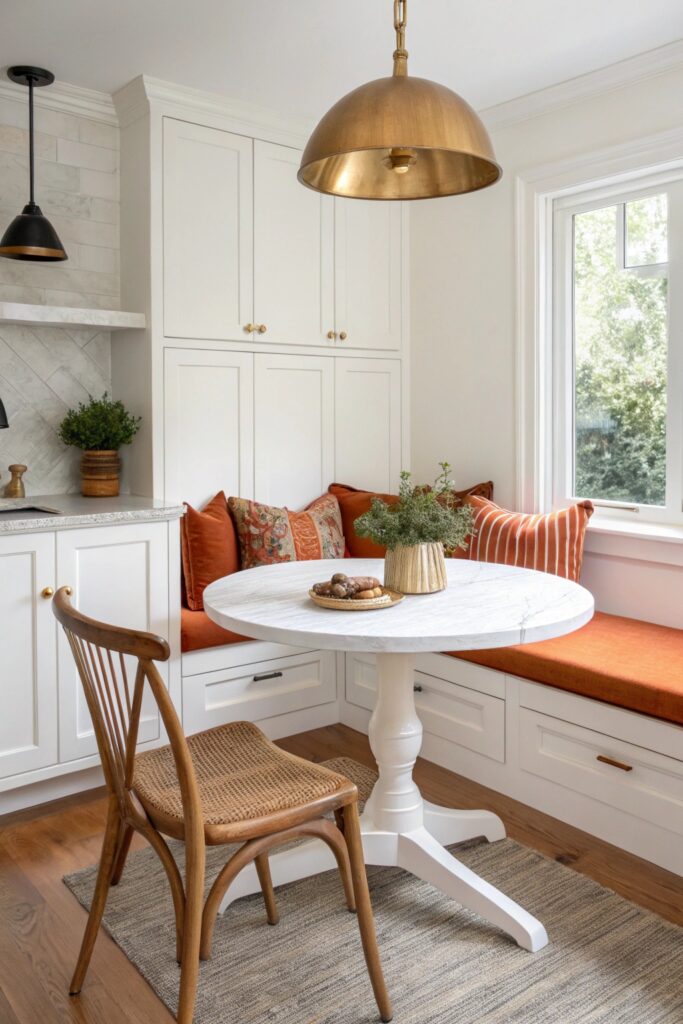
Your banquette cushions represent one of the best low-risk opportunities to introduce a bold color or pattern into your kitchen. Because cushions are replaceable, you can take a design risk here that you’d never take with cabinetry or tile.
Bold upholstery directions that work:
- Deep navy or forest green for a rich, sophisticated look against white or natural wood kitchens
- Terracotta or burnt orange for warmth in a neutral or gray kitchen
- Graphic black and white stripe for a classic, timeless bistro aesthetic
- Floral or botanical print in muted tones for a cottage or farmhouse kitchen
Keep the table and surrounding elements neutral when you go bold on the cushions. The banquette becomes the focal point of the eat-in area and pulls the whole kitchen design together. A single color from your cushion fabric should echo somewhere else in the room — a wall color, a rug, or cabinet hardware — to tie everything together intentionally.
9. Add a Pendant Light Above Your Banquette
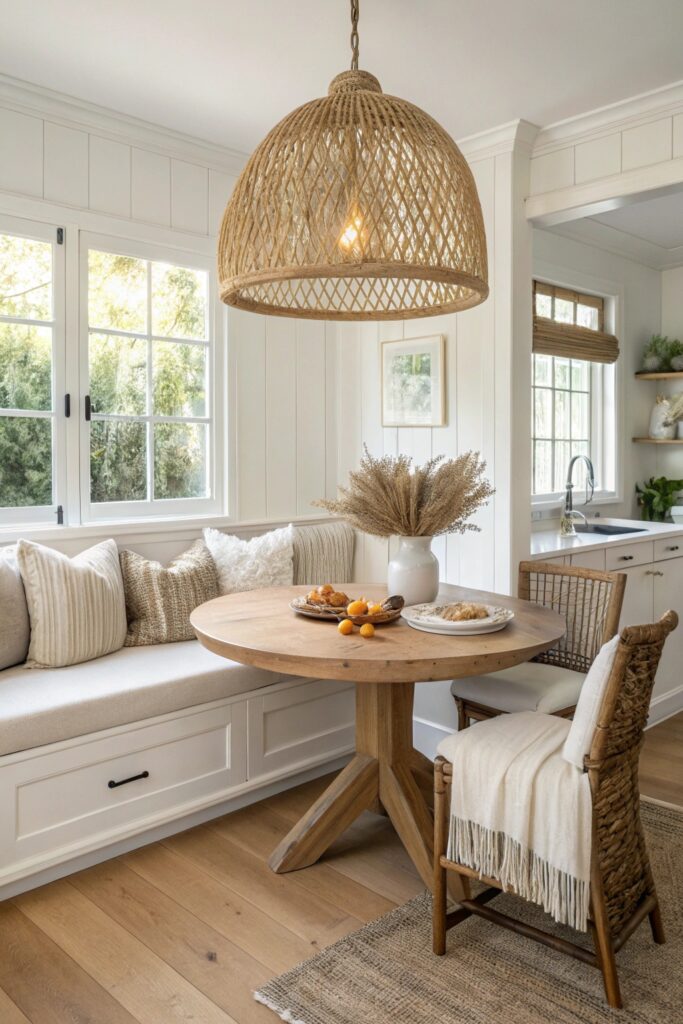
Lighting above a banquette does two things simultaneously: it illuminates the dining surface and it visually defines the nook as its own distinct zone within the kitchen. A pendant light over a banquette says “this is a real dining space” in a way that overhead recessed lighting simply can’t.
Pendant light styles that work over a banquette:
- Rattan or woven pendant for a warm, organic, casual aesthetic
- Industrial metal dome pendant for a modern, bistro-inspired look
- Cluster of globe pendants at varying heights for a more dramatic, layered effect
- A single statement pendant in a bold material like ceramic or colored glass
Hang the pendant 28 to 34 inches above the table surface for the right balance of illumination and visual proportion. Install it on a dimmer switch — bright for breakfast, low and warm for dinner. The pendant light is often the finishing detail that takes a banquette nook from “practical kitchen addition” to “the spot everyone wants to sit at every single meal.”
10. Mix Banquette Seating with Freestanding Chairs
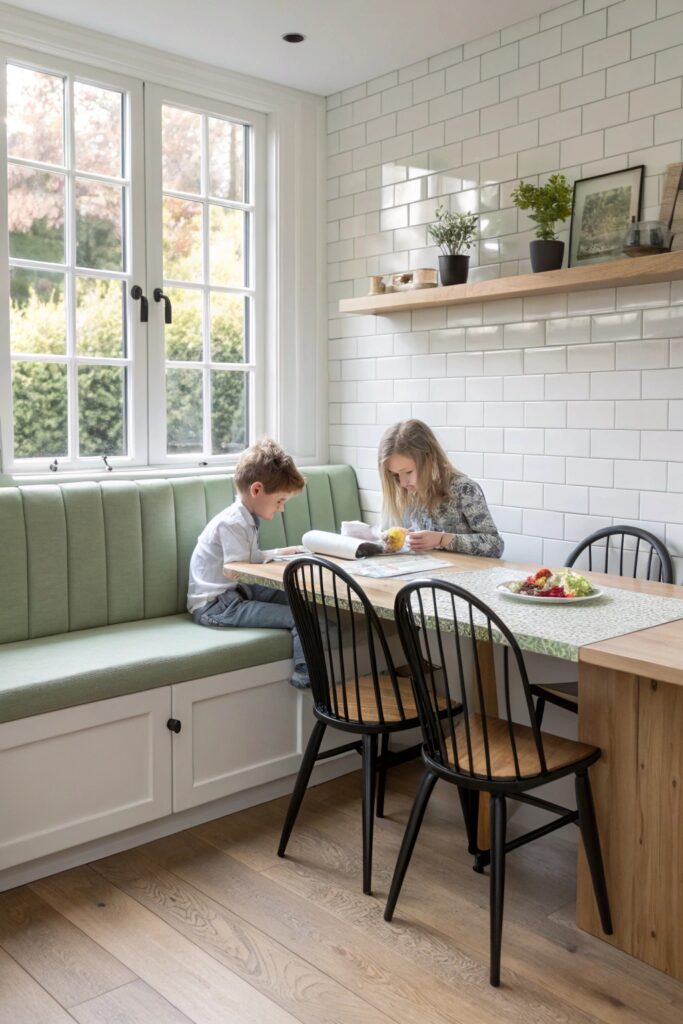
Combining a fixed banquette on one or two sides with freestanding chairs on the remaining sides gives you maximum flexibility — arguably the most practical banquette configuration for everyday family life.
Why the mixed approach works so well:
- Chairs slide out to accommodate more guests when needed
- Banquette side seats more people per linear foot than individual chairs
- Children sit on the bench where supervision is easier during meals
- Chair styles can be updated without touching the banquette construction
Choose chairs that complement rather than match the banquette exactly. A natural wood chair with a linen banquette, or a metal bistro chair with a leather banquette, creates a collected, layered look that feels far more interesting than a perfectly matched set. This combination also makes the banquette itself feel like a design choice rather than a space-saving compromise — because it actually is both.
Your Kitchen Deserves a Banquette — Here’s Your Next Step
Kitchen banquette seating solves real problems: tight spaces, limited seating, wasted corners, and dining areas that never quite feel finished. Pick the configuration that fits your kitchen footprint and your family’s needs, and build from there.
Start by measuring your available space carefully — then decide between a corner, straight, or U-shaped setup. Everything else — upholstery, storage, lighting — layers on top of that foundational decision.
A well-designed kitchen banquette becomes the most-used spot in your home. And honestly, a dining nook that people actually want to sit in? That’s worth every bit of effort it takes to build one.