
Outdoor spaces need materials truly rated for continuous weather exposure, since even products labeled “outdoor” vary widely in how much sun, rain, and humidity they can actually handle. The details below cover both the design direction and these practical specifics for each idea.
Below are 10 back patio ideas worth considering, with the specifics for each.
1. Create a Cozy Outdoor Lounge Area
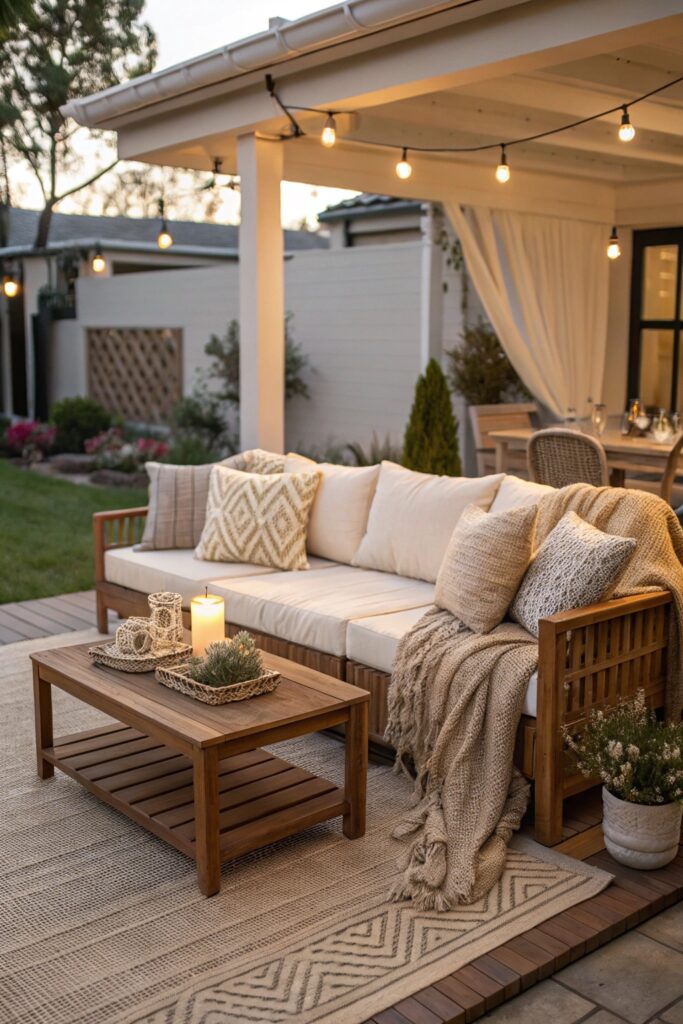
Choose solution-dyed acrylic or another truly weather-resistant fabric rather than indoor upholstery, since indoor fabric fades and mildews quickly outdoors even when partially covered.
2. Add String Lights for Instant Ambiance
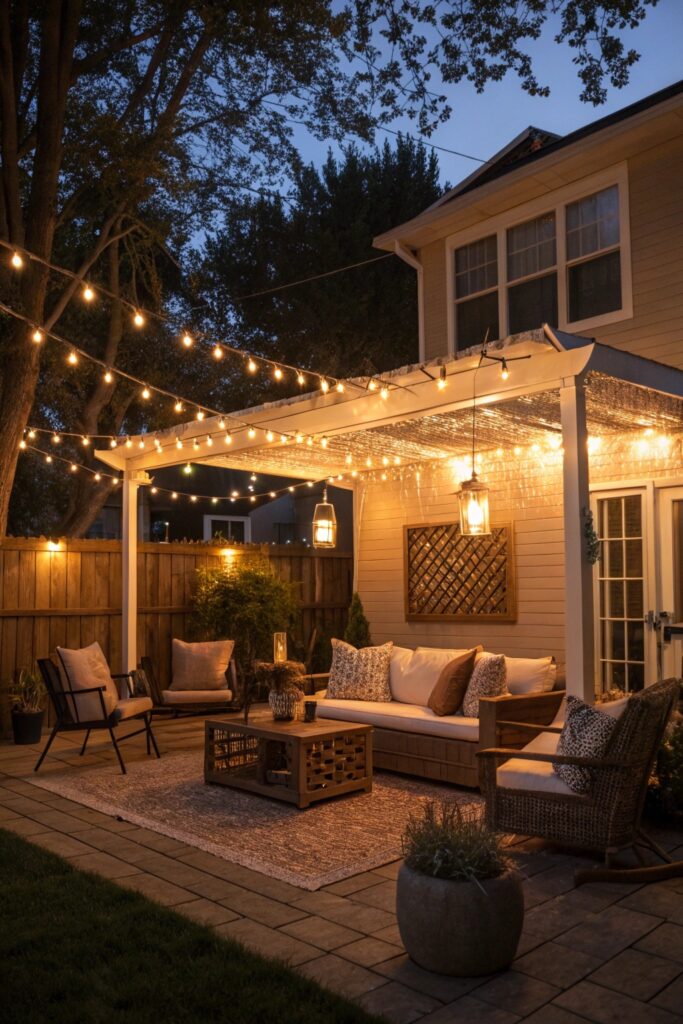
Choose lights specifically rated for wet outdoor locations, not standard decorative string lights, since unsealed indoor-rated lights left outside long-term pose a real electrical hazard once exposed to rain.
3. Set Up an Outdoor Dining Space
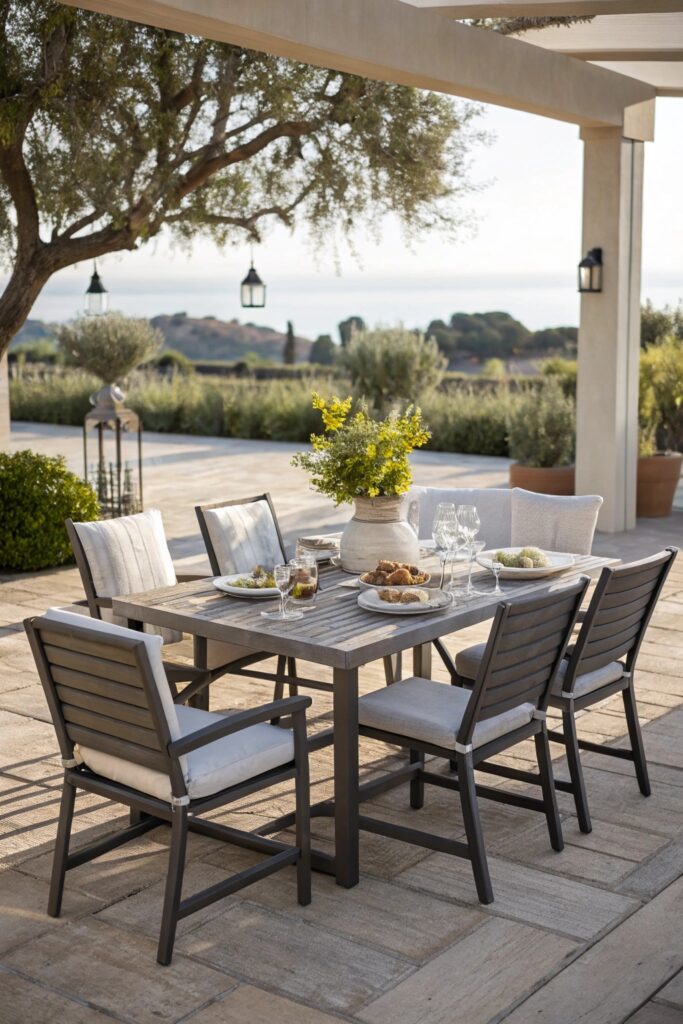
Choose furniture with stainless steel or powder-coated hardware specifically, since exposed metal fasteners corrode faster outdoors than the frame itself and are often the first point of failure.
4. Install a Fire Pit or Heater
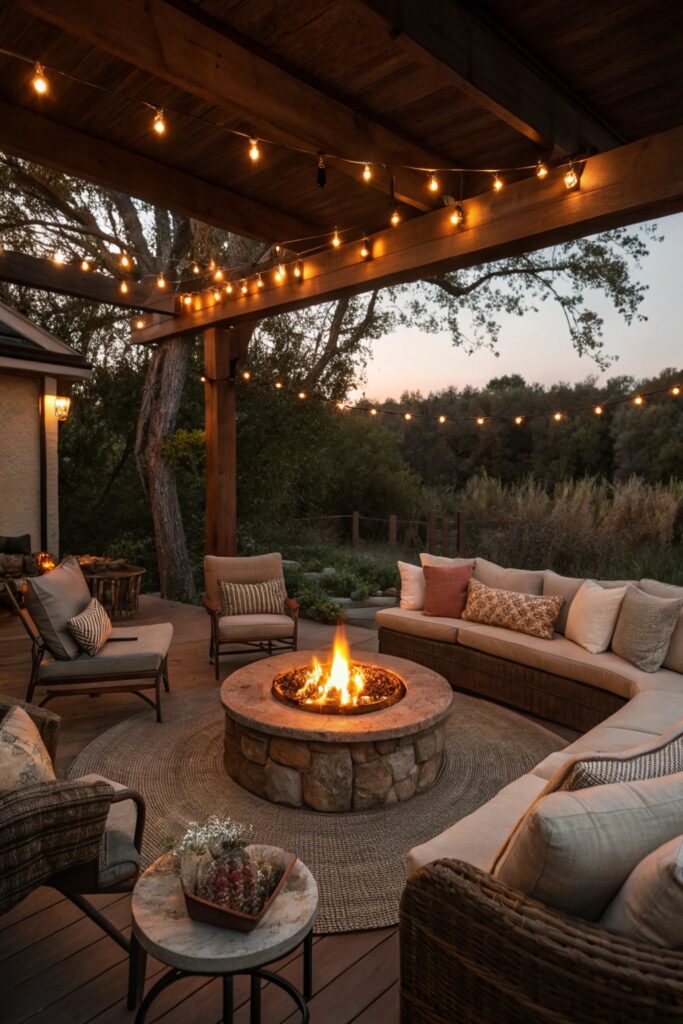
Check your local fire code for minimum clearance from the house, fences, and overhanging trees before installing a fire pit, and confirm any propane heater has proper ventilation, since these units aren’t rated for use under a fully enclosed structure.
5. Add Greenery for a Fresh Look
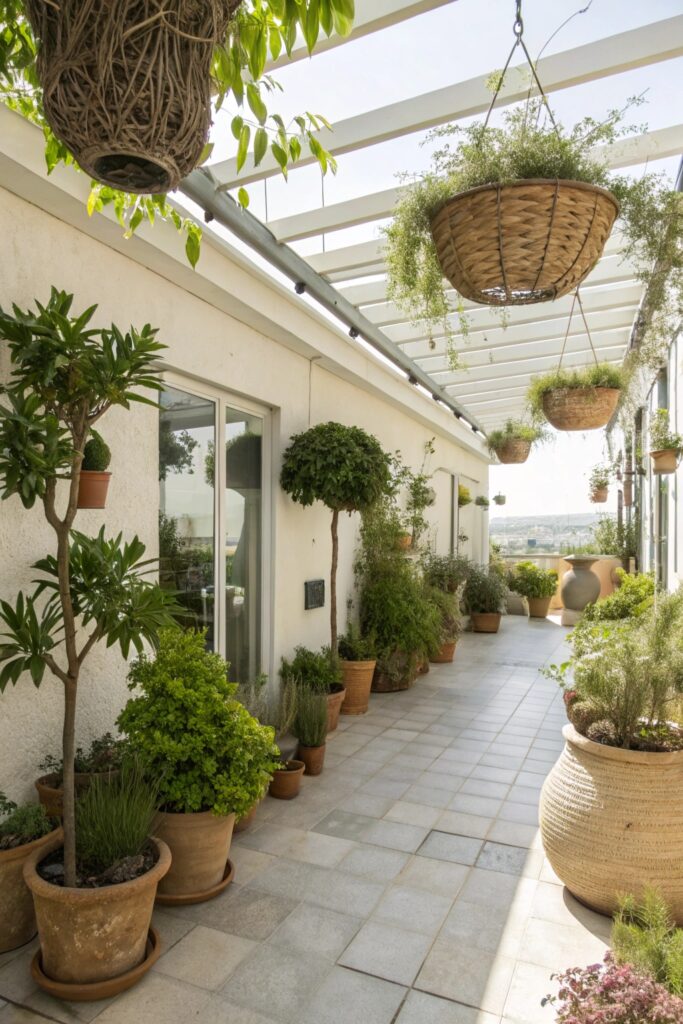
Container plants on a patio need more frequent watering than in-ground plants, since pots dry out faster in direct sun and wind exposure than soil with surrounding ground moisture.
6. Create Shade with Umbrellas or Pergolas
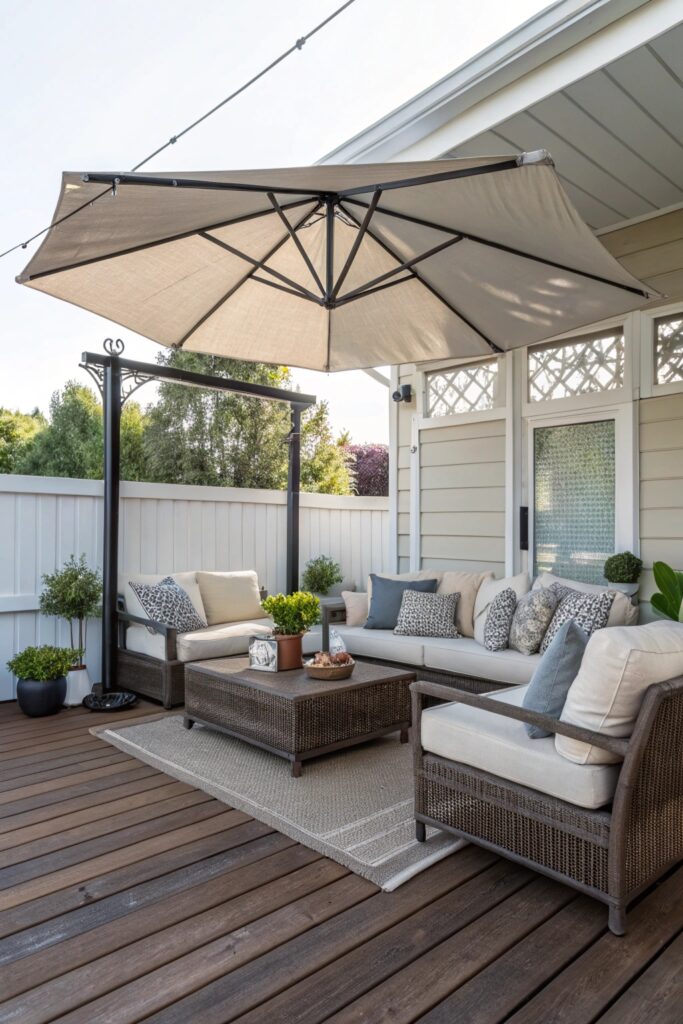
Weight the umbrella base specifically for its size and your local wind conditions, since an underweighted base is a common and avoidable cause of umbrellas tipping in a gust.
7. Design an Outdoor Entertainment Zone
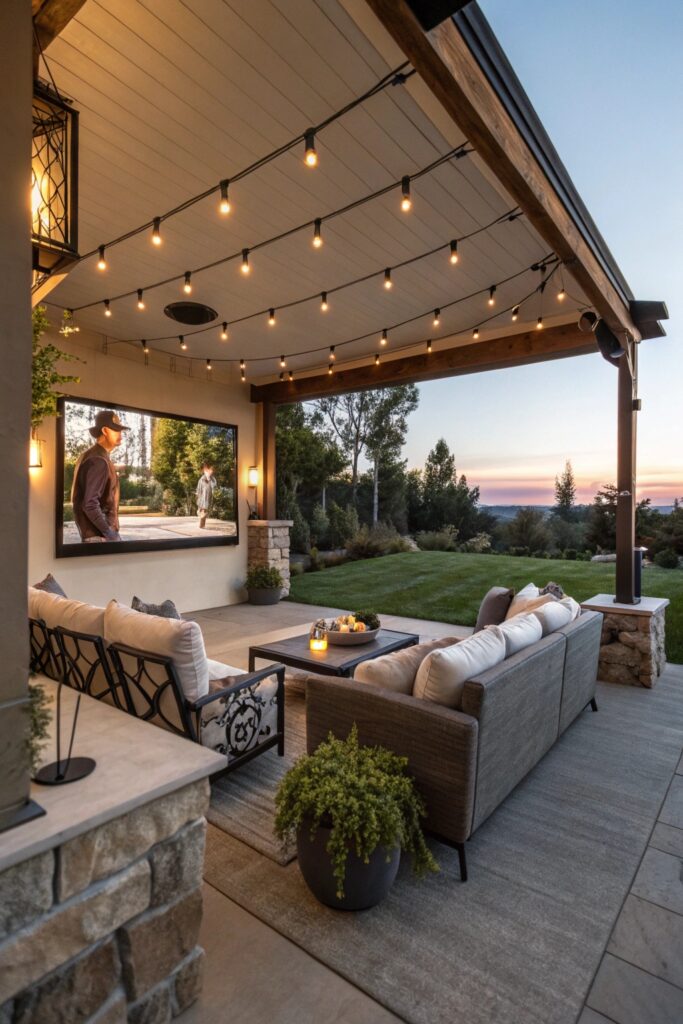
Choose electronics actually rated for outdoor use rather than adding weather-resistant covers to indoor equipment, since covers don’t protect against humidity reaching gaps already built into indoor-rated devices.
8. Use Outdoor Rugs to Define Space
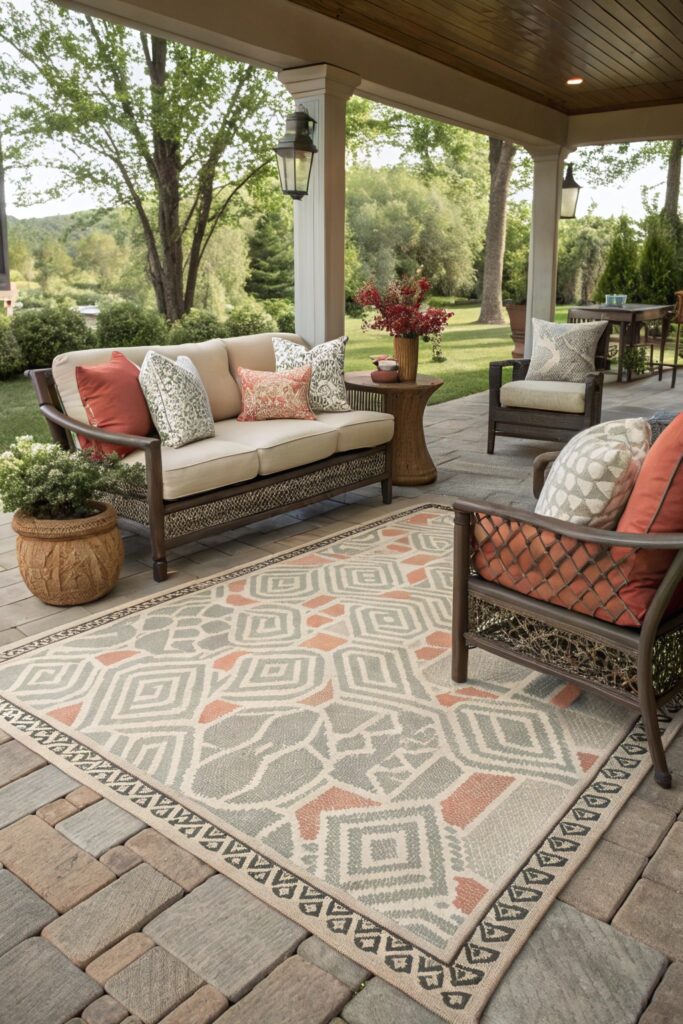
Choose a rug with a weave that lets water drain through rather than trapping moisture against the patio surface, since a moisture-trapping rug can promote mold or mildew underneath.
9. Add a Bar or Drink Station
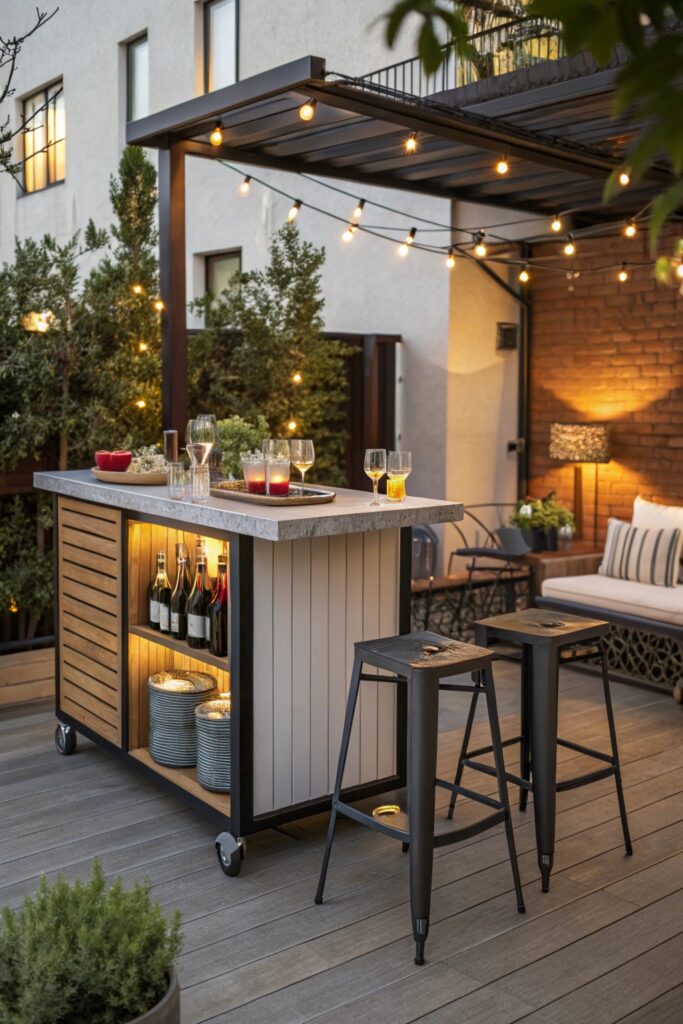
Plan for freeze protection if you’re in a cold climate and adding any plumbing, since exposed outdoor lines can crack from freezing temperatures without insulation or a proper winter shut-off.
10. Personalize Your Patio Style
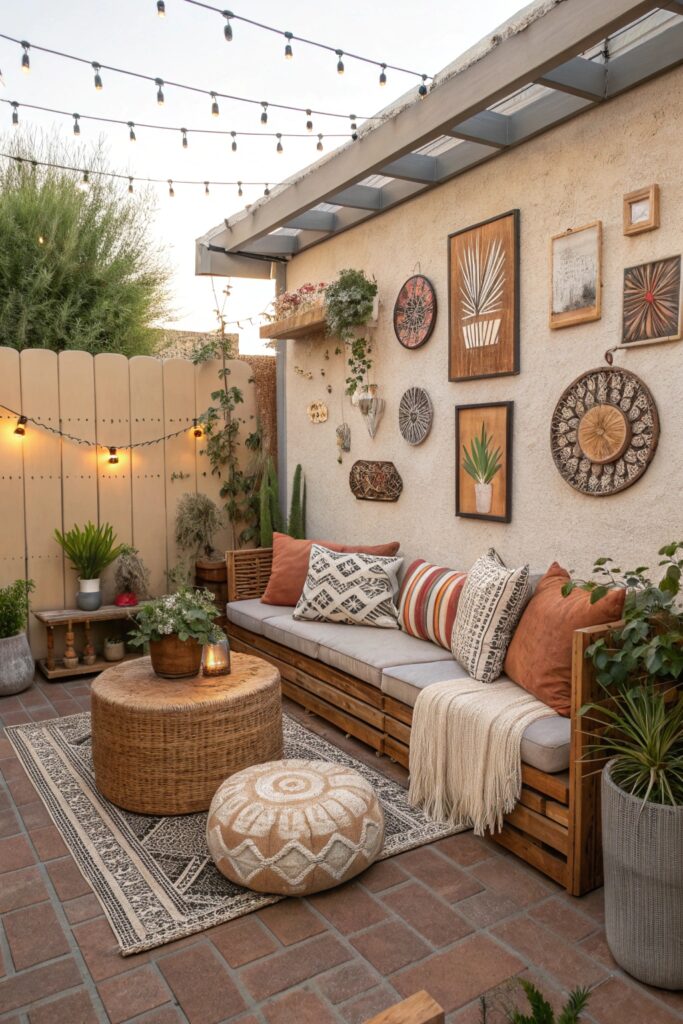
Choose personal touches and decor rated for your specific climate’s sun and moisture exposure, the same durability standard that applies to every other element on this list.
Considering Your Patio’s Surface First
The existing surface, whether concrete, pavers, or wood decking, affects which of these ideas work best and how they need to be installed, since anchoring an umbrella base or running electrical for lighting differs considerably between a solid slab and a raised deck.
Cracked or uneven concrete is worth repairing before adding furniture or a rug, since these issues tend to get more expensive to fix once other elements are built around them.
What a Back Patio Refresh Costs
A cosmetic update using furniture, lighting, and a rug typically costs $500 to $1,500 depending on quality.
A fuller transformation including a fire pit, pergola, and outdoor kitchen elements runs considerably higher, often $5,000 to $15,000 or more depending on the scope.
Planning for Sun Exposure Throughout the Day
A patio that gets intense afternoon sun needs more shade infrastructure than one that’s naturally shaded by the house or nearby trees, so spending a few days observing how sun moves across your specific space helps before committing to umbrella or pergola placement.
Furniture and cushion fabric also fade faster in direct, unshaded sun, so factoring this into your material choices for the sunniest section of the patio helps the space look good for longer.
Managing Noise for a More Relaxing Space
Hard surfaces like concrete and glass reflect sound more than softer materials, so a patio surrounded by fencing or hardscaping can feel louder than expected once furniture and people are added.
Outdoor rugs, cushioned furniture, and even densely planted greenery all help absorb some sound, worth keeping in mind if your patio backs up to a street or a neighbor’s active yard.
Getting quotes from at least two or three contractors before starting a larger project, like a fire pit installation or new electrical work, helps confirm both pricing and their specific experience with outdoor-rated installations.
Storing Furniture and Decor for the Off-Season
Cushions, string lights, and other softer elements last considerably longer when brought inside or stored in a weatherproof container during the off-season rather than left exposed to winter conditions year-round.
A storage bench or nearby shed with enough capacity for these items makes the seasonal changeover easier and protects the investment you’ve made in furnishing the space.
A back patio designed around how your household actually spends time outside, whether that’s quiet morning coffee or larger weekend gatherings, tends to get used far more consistently than one designed purely around how it photographs.
Adding Privacy Without Losing Openness
A back patio that feels exposed to neighbors or a nearby street can be hard to relax in, even with great furniture and lighting, so privacy screening, tall planters, or a well-placed pergola with lattice sides can make the space feel more enclosed without fully closing it off.
Checking with your neighbors before installing anything tall along a shared property line, even if it’s technically allowed, tends to prevent friction and keeps the relationship on good terms.
Whichever combination of these ideas fits your space and budget, a back patio built around real weather-appropriate materials and your household’s actual habits tends to earn its keep far more than one furnished purely for visual appeal.
Testing the space during an actual evening or weekend before finalizing every detail, rather than only viewing it during a quick daytime walkthrough, reveals whether the lighting, shade, and layout actually work for how you’ll use the patio most often.
A back patio remains one of the more affordable ways to add real usable living space to a home, extending your square footage without the cost of a full room addition.
Make it your own.
Enjoy the space.
Conclusion
For more decor-focused inspiration once the practical planning is done, see our companion piece on backyard patio decor ideas.
Checking your local code requirements for fire pits, electrical work, or any structural additions before installation saves real cost and risk compared to discovering an issue after the work is done.
Whichever combination of these ideas fits your space, choosing materials matched to your specific climate tends to matter more to how well the patio holds up over time than any single design choice on this list.