
A small bedroom doesn’t have to feel like a storage unit you also sleep in. With the right layout, furniture choices, and a few smart tricks, even the tiniest bedroom can feel calm, functional, and truly comfortable.
I’ve lived in small bedrooms more times than I’d like to admit — including one that was so narrow I could touch both walls simultaneously, which is either cozy or claustrophobic depending on your perspective. What I learned is that small bedrooms aren’t a design problem. They’re a design puzzle, and every puzzle has a solution.
These 10 small bedroom ideas focus on practical, high-impact changes that actually work in real rooms — not just perfectly staged spaces photographed with a wide-angle lens to look twice their actual size.
1. Choose a Bed Frame with Built-In Storage
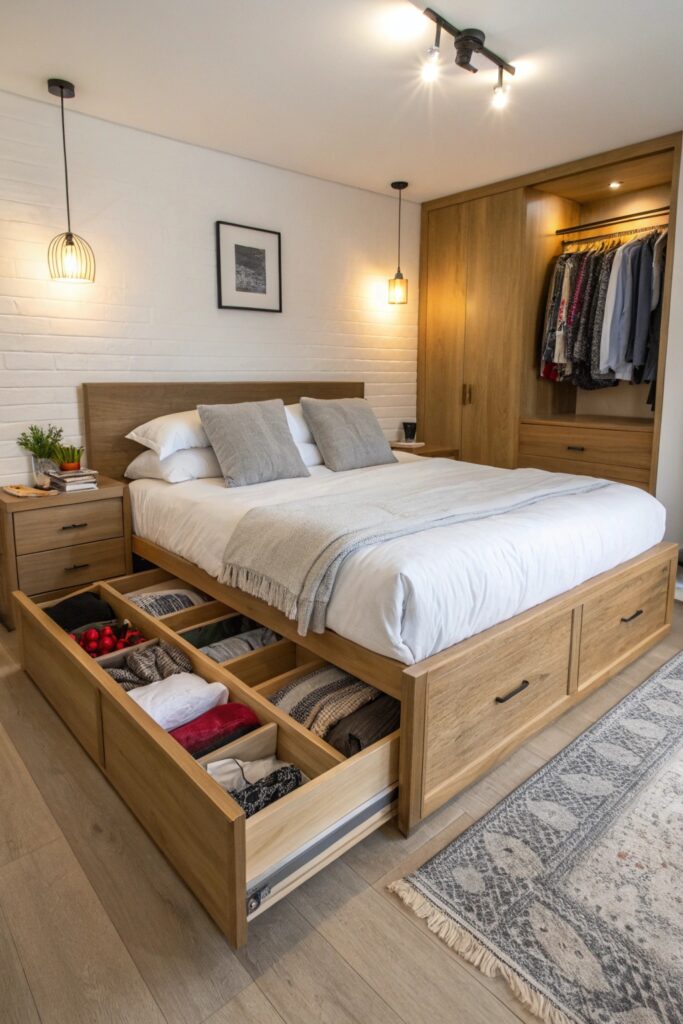
Your bed takes up more floor space than any other piece of furniture in a small bedroom — so it better do more than just hold a mattress. A bed frame with built-in storage turns your largest footprint item into your biggest storage asset.
Storage bed options worth considering:
- Platform bed with drawers on both sides for clothing, linens, and seasonal items
- Ottoman bed with hydraulic lift for one large accessible storage cavity beneath
- Bed with built-in headboard shelving for books, lamps, and small essentials
- Captain’s bed style with deep drawers and optional pullout trundle below
Measure your room carefully before choosing a storage bed — some hydraulic lift bases require clearance space around the bed to open fully. Drawer beds work better in tighter spaces. IMO, a platform storage bed with four to six drawers is the single most transformative furniture investment you can make in a small bedroom — it eliminates the need for a separate dresser entirely in many cases.
2. Mount Your Lighting on the Wall
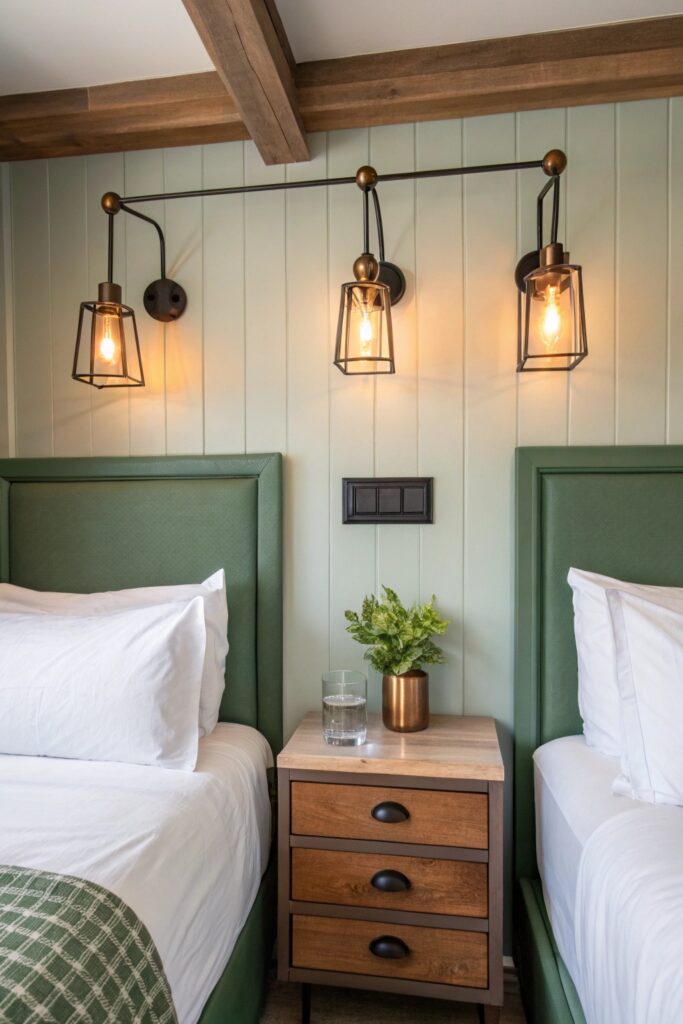
Every inch of surface space in a small bedroom is precious — and table lamps steal two of your best inches on each nightstand. Wall-mounted sconces free up that surface completely while delivering better, more directional reading light.
Wall sconce options for small bedrooms:
- Plug-in swing arm sconces that require zero electrical work and mount easily
- Hardwired reading sconces with adjustable arms for precise light direction
- Simple fixed sconces with warm Edison bulbs for ambient rather than task lighting
- USB-charging integrated sconces that add a charging port directly to the wall
Mount sconces at approximately 60 inches from the floor to the center of the fixture — this puts the light source at seated reading height when you’re propped up in bed. Plug-in versions with a fabric cord are the easiest installation option and look intentional rather than temporary when styled correctly. 🙂
3. Use Vertical Space with Floor-to-Ceiling Storage
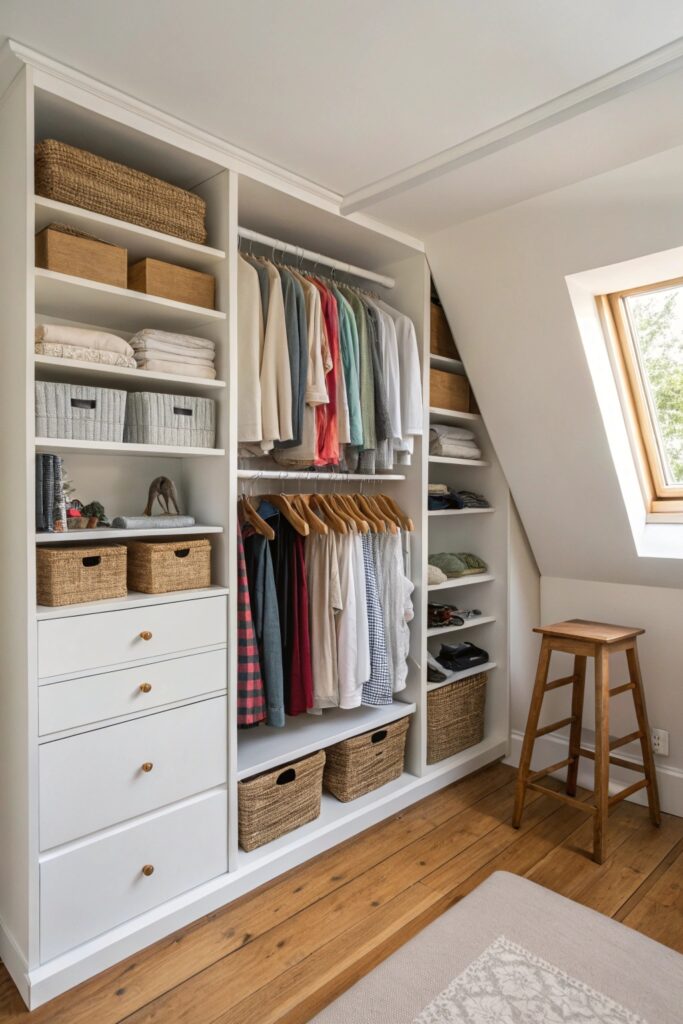
Small bedrooms almost always have more vertical space than they use. Most people stop adding storage at eye level — which means the top third of the room sits completely empty while floor space overflows.
Vertical storage strategies that work:
- Floor-to-ceiling built-in wardrobe using the full wall height efficiently
- Tall floating shelves stacked from near the floor to close to the ceiling
- Over-door organizers on every door surface — closet, bedroom, bathroom
- Tall narrow bookcases in corners that use height rather than footprint
Store items you use daily at eye level and below. Use the highest shelves for seasonal items, spare bedding, and things you access rarely — a small step stool keeps everything reachable. FYI, IKEA’s PAX wardrobe system in ceiling height configuration offers one of the best floor-to-ceiling storage solutions available at a price point that works for almost any budget.
4. Keep Your Color Palette Light and Consistent
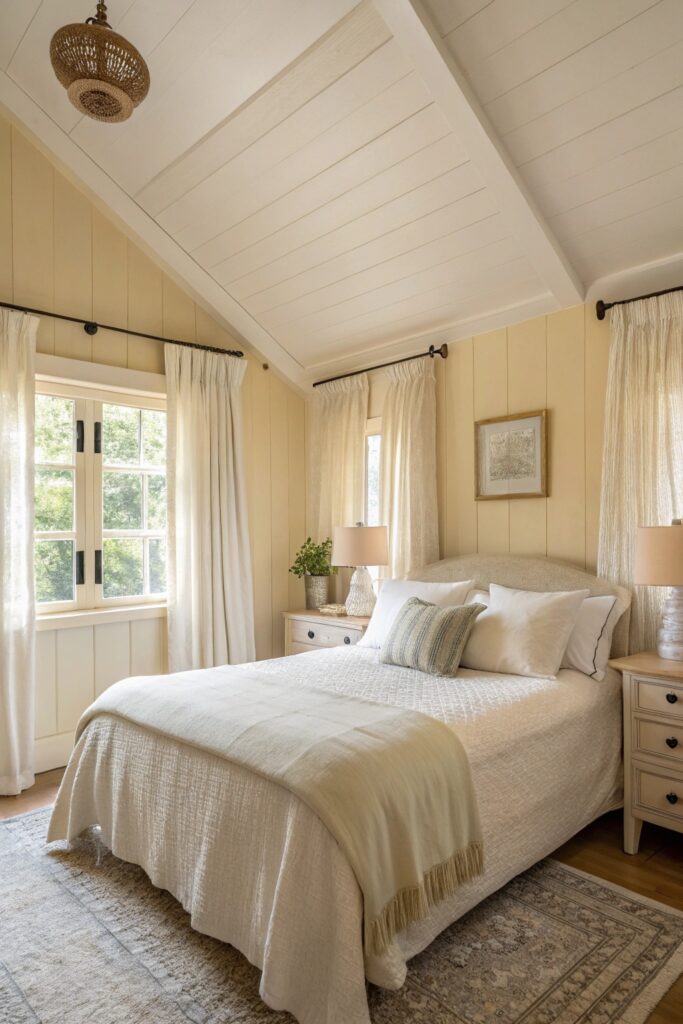
Color psychology is real — and in a small bedroom, the right palette measurably makes the room feel larger. Light, warm neutrals reflect more natural light and create a sense of airiness that dark colors absorb rather than enhance.
Color strategies that expand a small bedroom visually:
- Paint walls, ceiling, and trim the same color for a seamless, enveloping effect that eliminates visual breaks
- Warm white or soft cream reads more inviting than stark cool white
- Soft sage green or pale blush adds subtle color without visual weight
- Consistent color across bedding and curtains reduces the number of competing tones
Avoid strong color contrasts in a small bedroom — dark accent walls, multicolored furniture, and busy patterns all fragment the visual space and make it feel smaller. If you love pattern, introduce it through a single element — a patterned pillow or a textured throw — rather than throughout the entire room simultaneously. One consistent palette makes every square foot feel intentional.
5. Choose a Floating Nightstand Instead of a Freestanding One
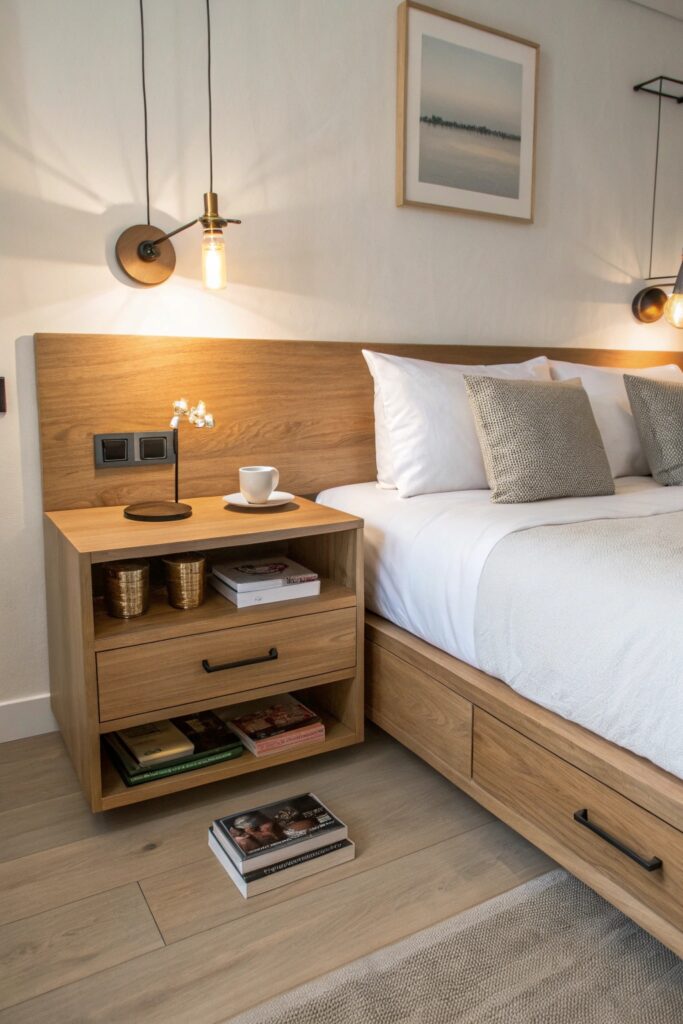
A floating nightstand mounted directly to the wall delivers every function of a standard nightstand while using zero floor space. In a small bedroom, that freed floor space makes the room feel immediately more open and less cluttered.
What to look for in a floating nightstand:
- A surface large enough for a lamp, phone, and a glass of water — at least 10×16 inches
- One small drawer or shelf below the surface for book and essentials storage
- Solid wall anchoring — use wall studs or proper drywall anchors for safety
- A finish that complements your bed frame for a cohesive, built-in look
Mount floating nightstands at mattress height plus 2 to 4 inches — typically 24 to 28 inches from the floor for a standard bed. This keeps everything within comfortable reach without requiring you to stretch or bend. Two matching floating nightstands flanking the bed add symmetry and a custom, designer-adjacent look that elevates the entire room.
6. Add Mirrors to Expand the Space Visually
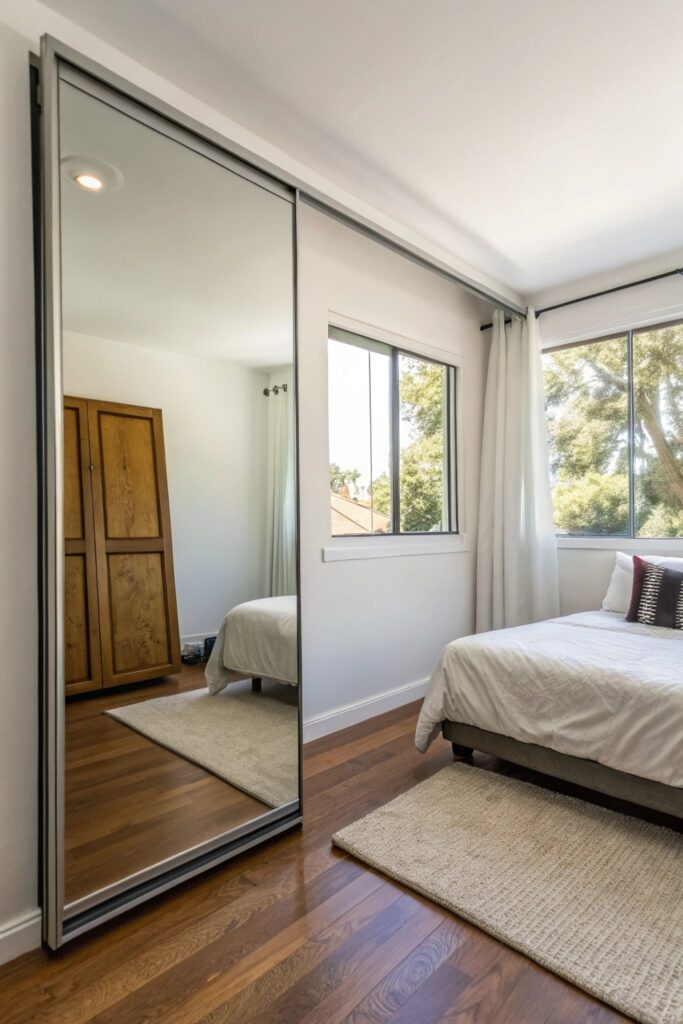
Mirrors are the oldest trick in the small space design playbook — and they work every single time. A well-placed mirror bounces light around the room and creates the optical illusion of depth that adds perceived square footage without touching the actual walls.
Mirror placement strategies for small bedrooms:
- A large floor mirror leaned against the wall opposite the window reflects maximum natural light
- Mirrored closet doors that replace solid doors and visually double the room’s apparent depth
- A gallery of smaller mirrors grouped on one wall as a decorative and functional installation
- A mirror above the dresser that reflects the opposite wall and extends the sightline
The most impactful mirror placement positions the reflective surface to capture either natural light from a window or an attractive view within the room — never position a mirror to reflect a blank wall or the back of a door. A 48-inch or larger mirror delivers noticeably more spatial effect than a small decorative piece. :/
7. Use Multi-Functional Furniture Throughout
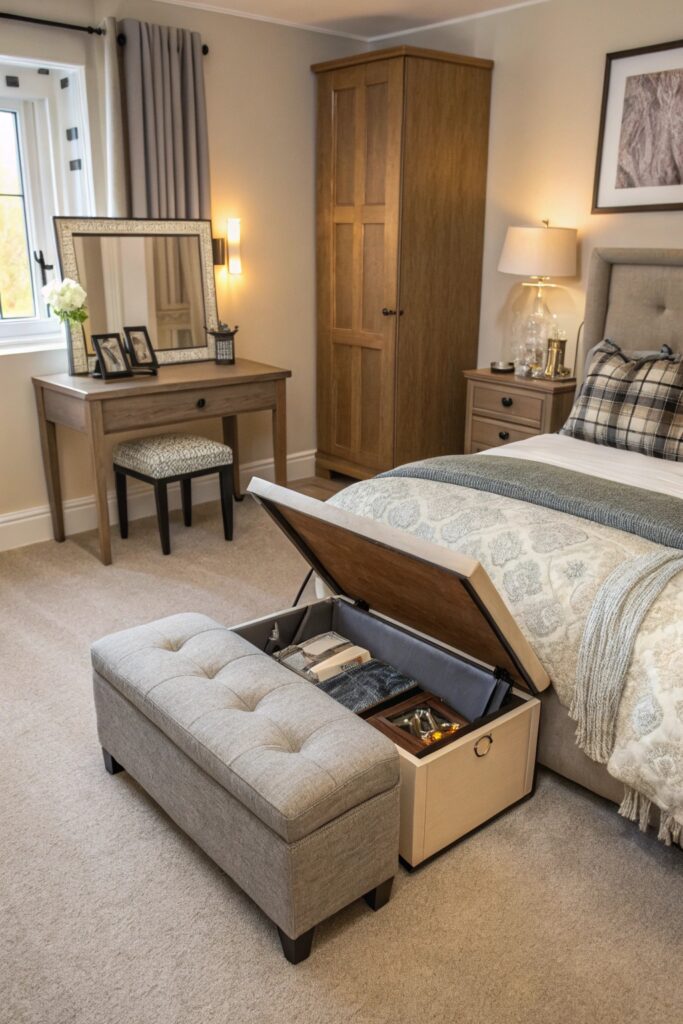
In a small bedroom, every piece of furniture needs to earn its place — and ideally, it should earn two or three places simultaneously. Multi-functional furniture makes this possible without making the room feel like a catalog showroom.
Multi-functional furniture ideas for small bedrooms:
- An ottoman at the foot of the bed that opens for blanket and pillow storage
- A small desk that doubles as a vanity with a mirror and proper lighting
- A bench with storage underneath providing seating, storage, and a surface all at once
- A nightstand with a built-in charging station eliminating the need for bedside power strips
Choose furniture with legs rather than pieces that sit flush with the floor — the visual gap beneath creates a sense of lightness and makes the room feel less heavy and packed. Furniture that sits directly on the floor in a small bedroom makes the space feel lower and more cramped even when the actual dimensions haven’t changed at all.
8. Maximize Your Closet with Smart Interior Organization
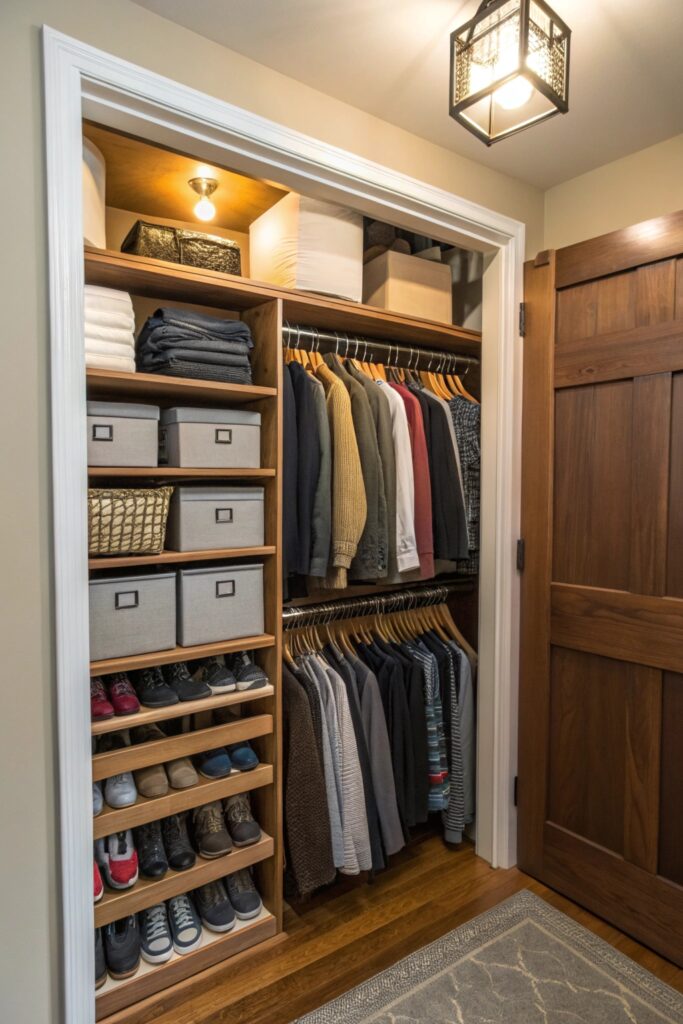
Your closet represents a significant percentage of your bedroom’s total storage capacity — and most closets operate at maybe 40 percent of their actual potential. Reorganizing the interior changes everything.
Closet organization upgrades that make a real difference:
- Double hanging rods for jackets, shirts, and shorter items — instantly doubles hanging capacity
- Shelf dividers to stack sweaters without them toppling over
- Clear shoe boxes or a tiered shoe rack to stop the footwear pile on the floor
- Hooks on the inside closet door for bags, belts, scarves, and accessories
- Labeled bins on upper shelves for seasonal and infrequently used items
Measure your closet before buying any organizer system — even a few inches of miscalculation wastes your investment entirely. The Container Store’s Elfa system and IKEA’s PAX both offer modular closet interiors that fit custom widths. A well-organized closet directly reduces bedroom clutter because everything has a designated place to live.
9. Hang Curtains High and Wide for Taller-Looking Walls
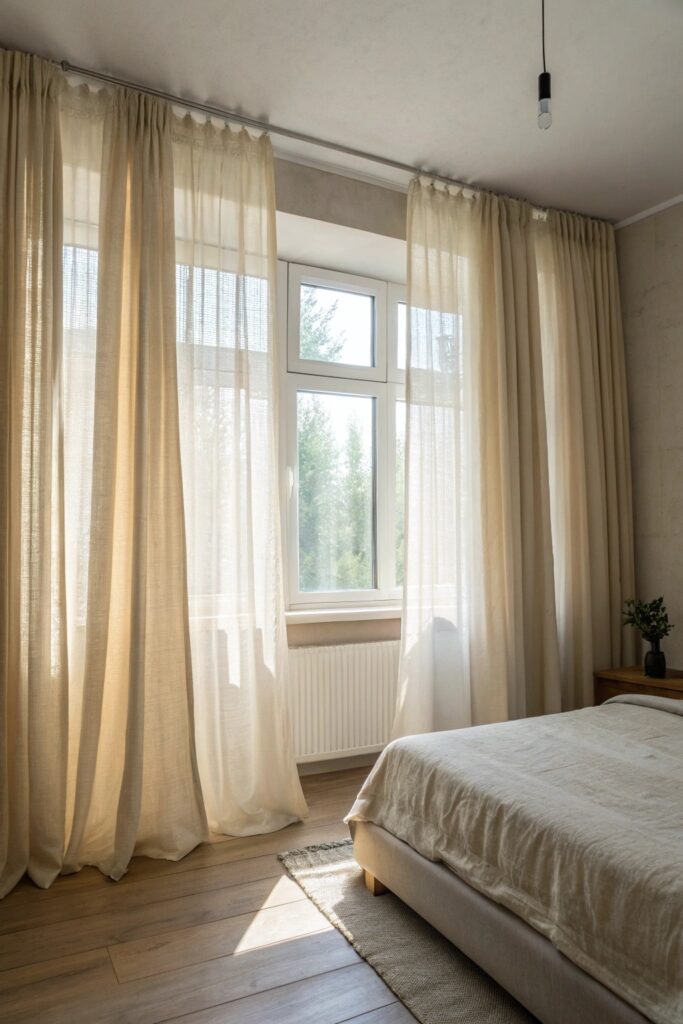
The way you hang your curtains affects how tall your bedroom feels far more than most people realize. Standard curtain placement — mounted at the window frame — makes ceilings look lower and windows look smaller. Correct placement fixes both problems simultaneously.
The right curtain hanging formula:
- Mount the rod 4 to 6 inches below the ceiling rather than at the window frame
- Extend the rod 6 to 8 inches beyond the window frame on each side
- Choose floor-length panels that just graze or slightly puddle on the floor
- Pick light, sheer fabrics that filter rather than block natural light in a small space
This approach makes windows appear dramatically larger, draws the eye upward to make ceilings feel higher, and maximizes the natural light entering the room. In a small bedroom, every additional inch of perceived height and every extra photon of natural light works in your favor. Curtains hung correctly cost exactly the same as curtains hung wrong — the only investment is the right hardware placement.
10. Declutter Ruthlessly and Keep Surfaces Clear
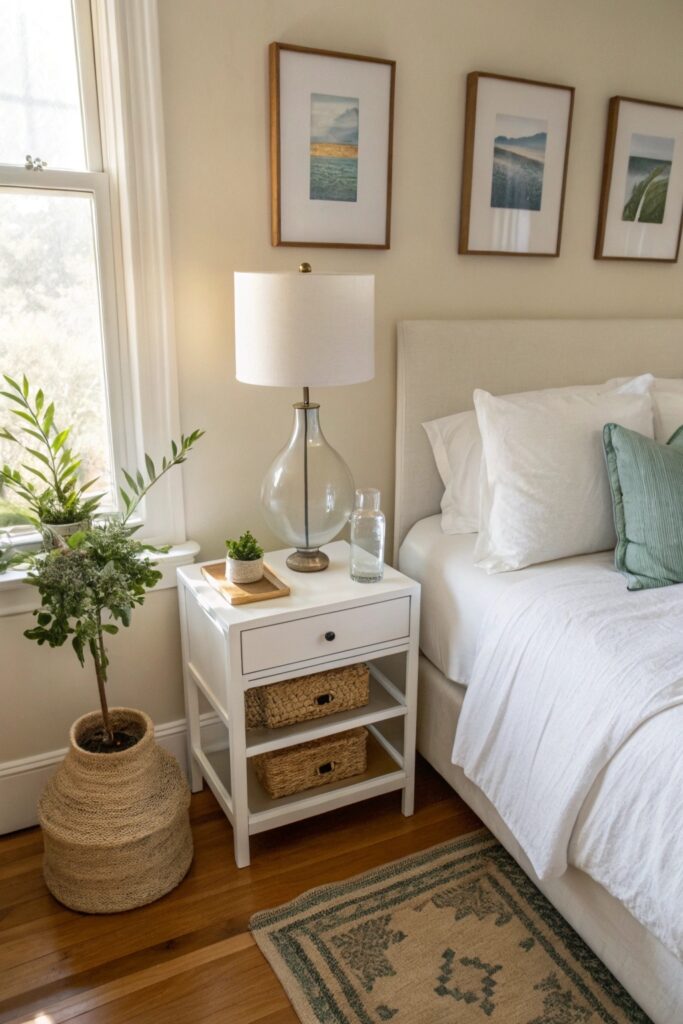
The fastest and most affordable small bedroom improvement costs absolutely nothing — editing what you keep in the space. A small bedroom with clear surfaces and only necessary items looks twice the size of an identical room filled with stuff.
A practical decluttering approach for small bedrooms:
- Remove everything that doesn’t belong in a bedroom — exercise equipment, work papers, hobby supplies
- Keep only one or two items on each nightstand — lamp, book, water glass, done
- Store out-of-season clothing elsewhere — under bed storage, hall closet, storage bins
- Limit decorative objects to three to five intentional pieces rather than every surface filled
Think of your small bedroom as a hotel room — the best hotel rooms feel spacious and calm because every surface is deliberately empty except for what you need. That discipline is achievable in your own space with consistent editing. A small bedroom that breathes always feels more luxurious than a larger one packed with too much furniture and too many possessions fighting for visual attention.
Small Bedroom, Big Results — Start This Weekend
A small bedroom can absolutely feel like a retreat rather than a compromise. Smart storage, light colors, vertical thinking, and ruthless editing deliver the biggest transformations — and most of these ideas cost far less than buying a bigger home.
Start with your biggest pain point. Nowhere to put clothes? Get a storage bed or reorganize the closet. Room feels dark and cramped? Add mirrors and rehang your curtains. Small wins compound fast.
Your small bedroom deserves to work as hard as you do — and with the right approach, it actually will. Now go measure that wall for floating nightstands. You’ll thank yourself every single morning.