
A well put-together dorm room comes down to smart storage and a consistent color scheme more than any single statement piece, especially given how little square footage most dorm rooms actually offer.
Below are 11 ways to build out the space, with practical notes for each.
1. Choose a Neutral, Masculine Color Palette
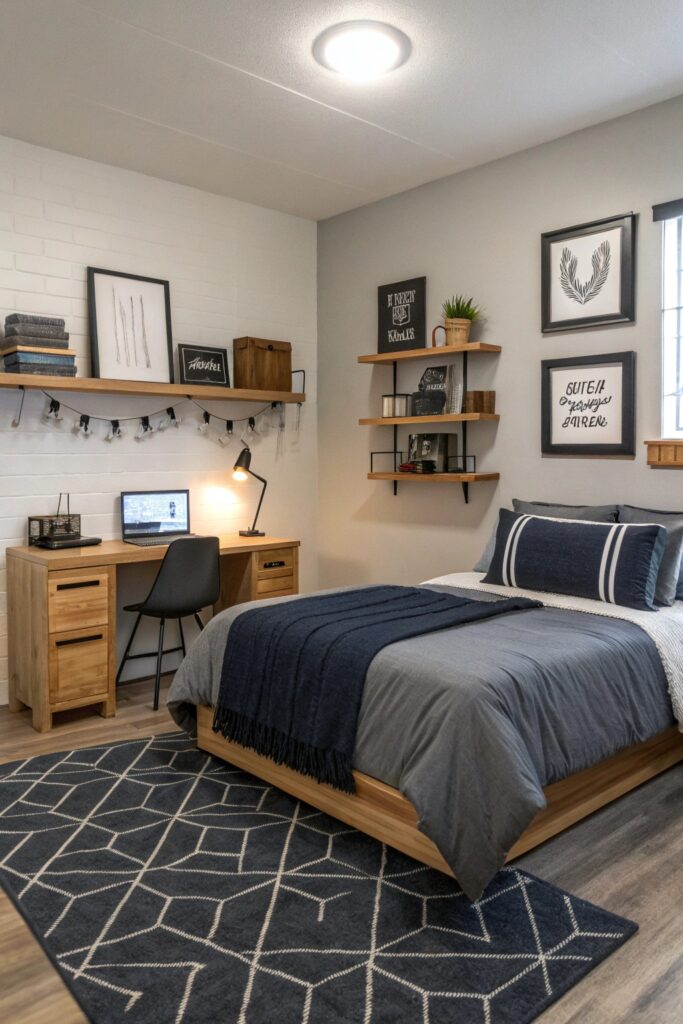
Sticking to two or three colors — charcoal, navy, warm wood tones — keeps a small room from feeling visually busy, which matters more in a shared space than a full house.
Choose accent colors through smaller items like pillows or a rug rather than furniture, which keeps the palette flexible if your taste shifts over the year.
2. Invest in Quality Bedding
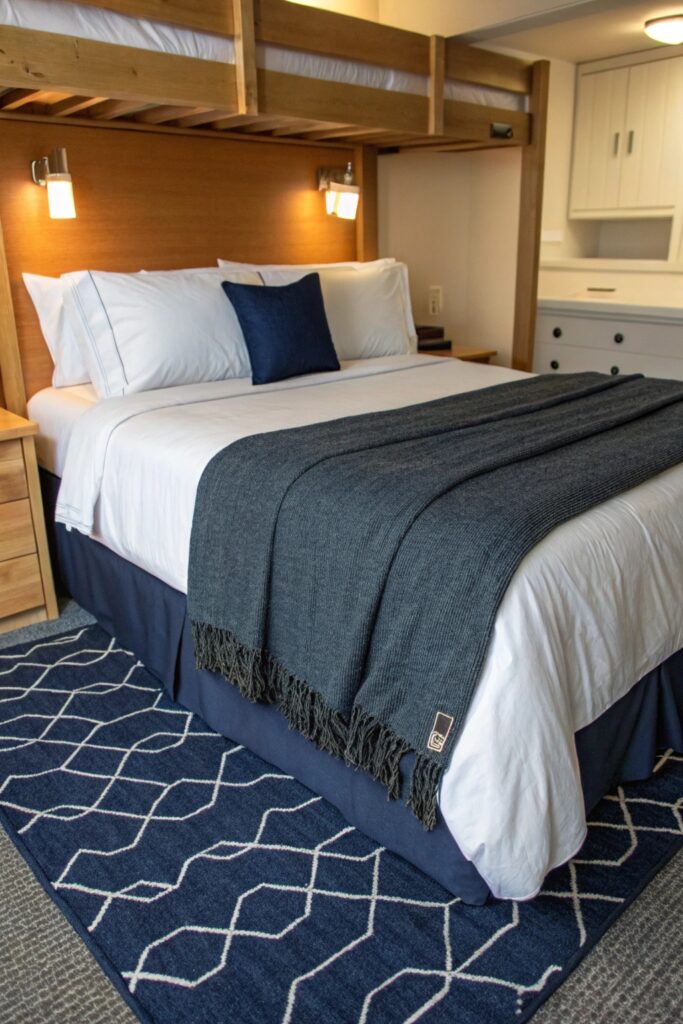
Bedding covers the largest surface area in most dorm rooms, so it’s worth prioritizing over smaller decor items if budget is limited.
Choose a higher thread count or quality fabric even on a budget, since better bedding holds up to regular washing considerably longer than cheaper alternatives.
3. Add LED Strip Lighting for Ambiance
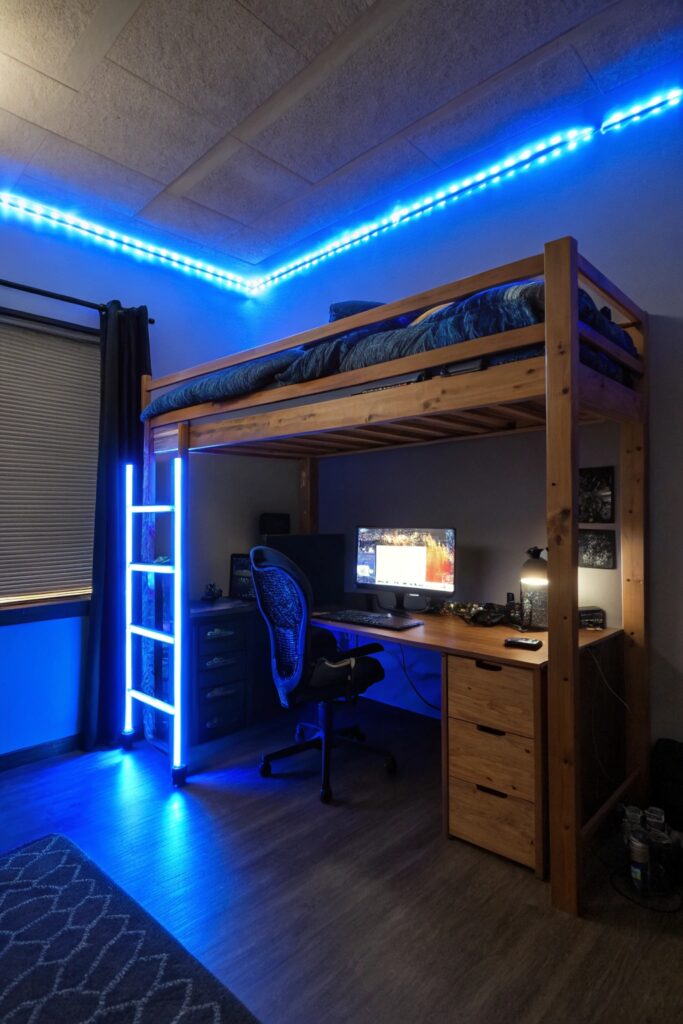
Check your specific dorm’s policy on adhesive strips and lighting before installing, since some schools restrict certain types of wall-mounted lighting.
Choose battery-powered or low-voltage strips specifically if your dorm restricts wall outlets or extension cord use, which is a common policy in many housing handbooks.
4. Organize with a Vertical Shelving System
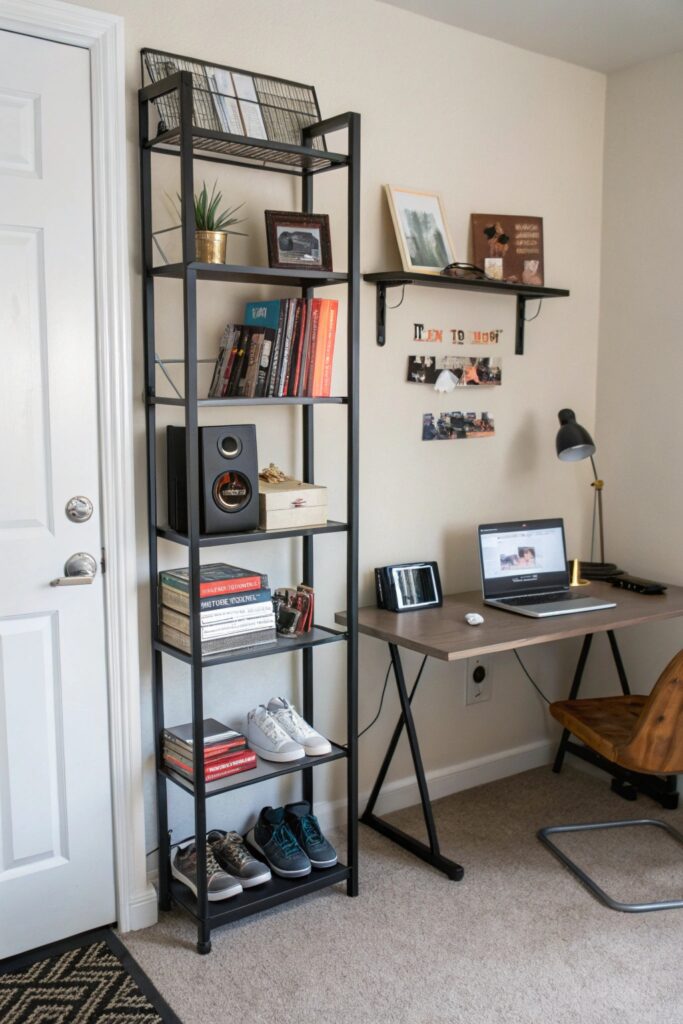
Building storage upward matters more in a dorm than almost any other living space, given how limited the floor footprint typically is.
Choose shelving with sturdy brackets or a freestanding frame rated for books and equipment, since flimsy shelving can sag or fail under real daily use.
5. Hang Statement Wall Art
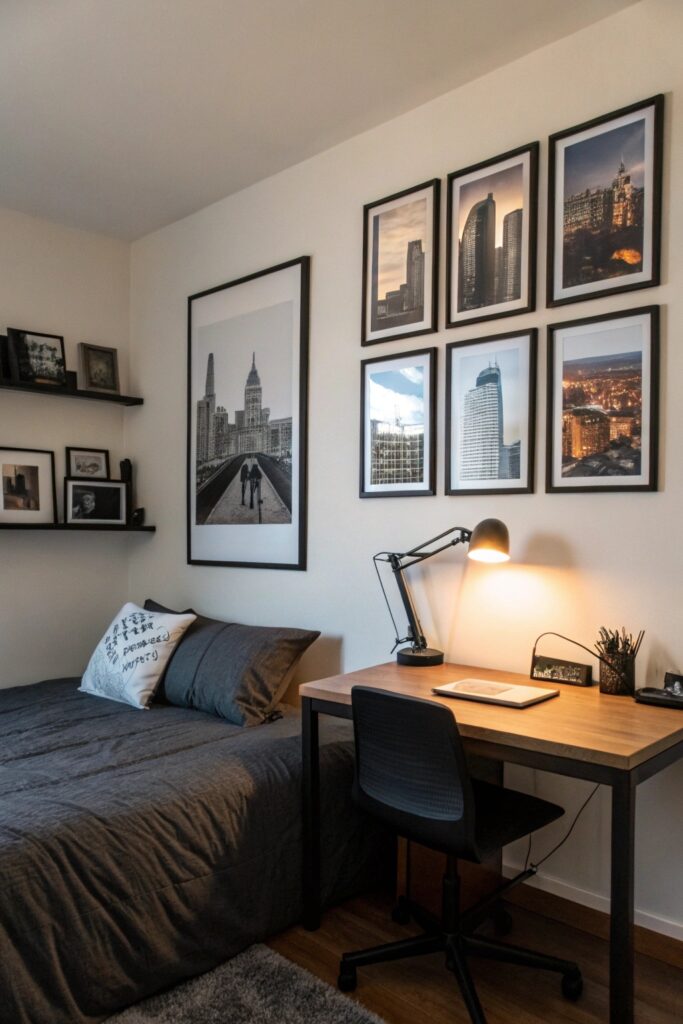
A single larger piece tends to look more intentional than several small prints scattered without a clear arrangement.
Choose a secure mounting method approved by your dorm’s policy, since many schools restrict nails or heavy adhesive on painted walls.
6. Set Up a Clean, Functional Desk Area
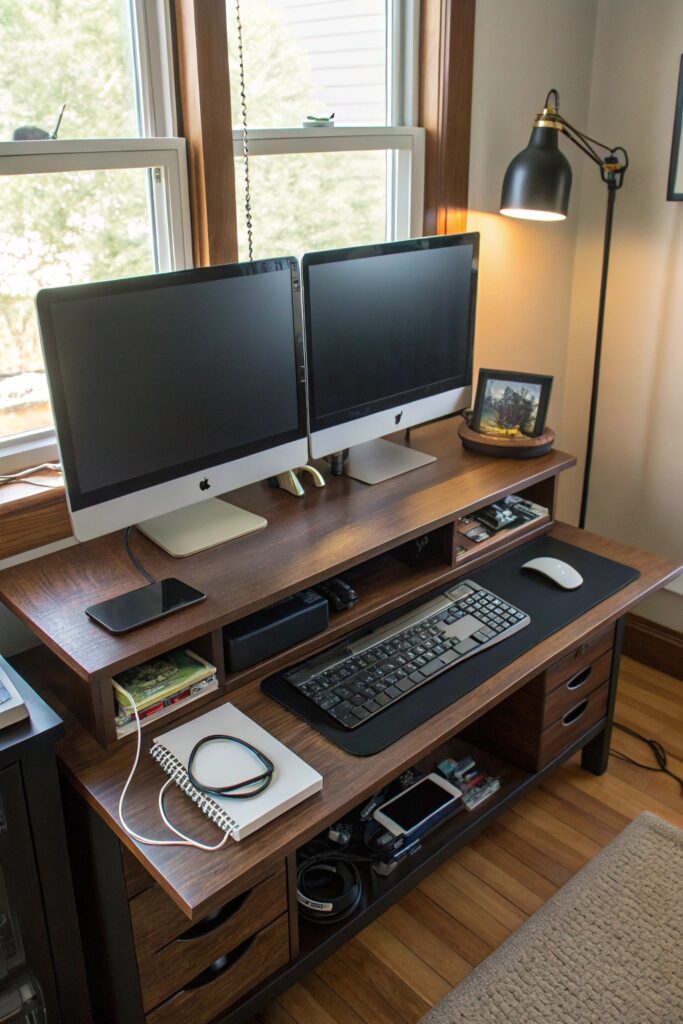
Genuine cable management — a small tray or clips — keeps a desk with a laptop and charger cords from looking cluttered day to day.
Choose a desk lamp with adjustable brightness, which accommodates both focused studying and a dimmer setting for winding down in the evening.
7. Use Under-Bed Storage Strategically
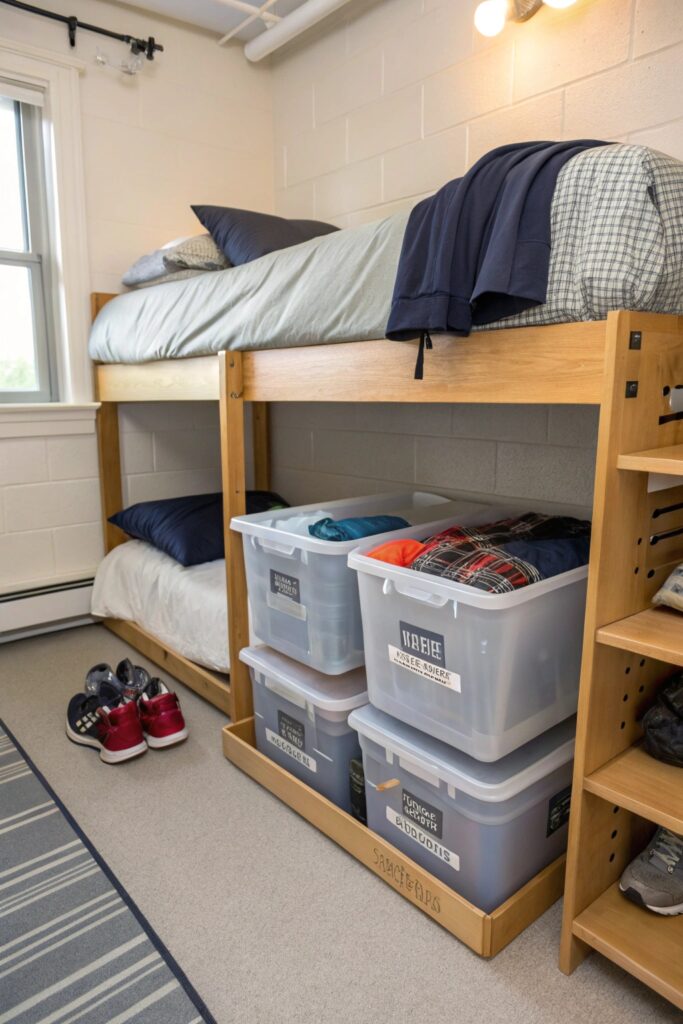
This space goes unused in most dorm setups, making it one of the more efficient storage opportunities in a room with very limited square footage.
Choose stackable, uniform bins for this space, which makes it easier to slide them in and out without everything shifting.
8. Add a Quality Area Rug
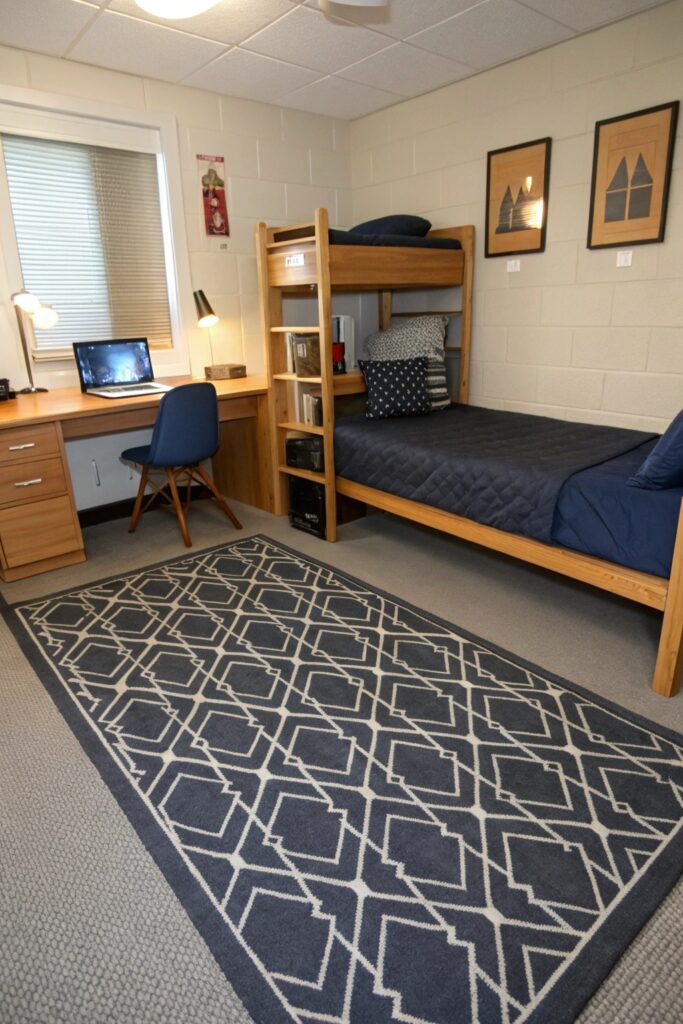
A rug covers unattractive dorm flooring while adding warmth, and it’s one of the more affordable ways to change how the whole room feels underfoot.
Choose a rug size proportional to your room’s actual floor space, since an undersized rug can look more like an afterthought than a real design choice.
9. Create a Tech-Forward Gaming or Entertainment Setup
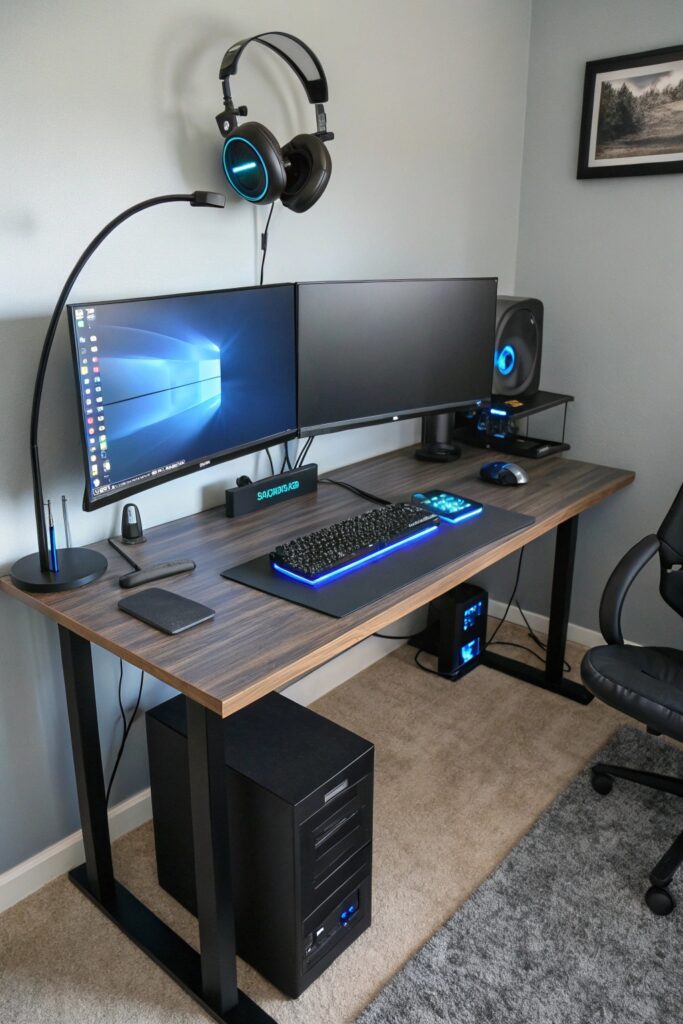
Confirm your dorm’s policy on gaming consoles and monitor setups, along with any restrictions on furniture modifications for mounting equipment.
Choose surge-protected power strips for any electronics setup, which is both a safety consideration and often a specific requirement in dorm housing policies.
10. Incorporate Personal Items as Decor
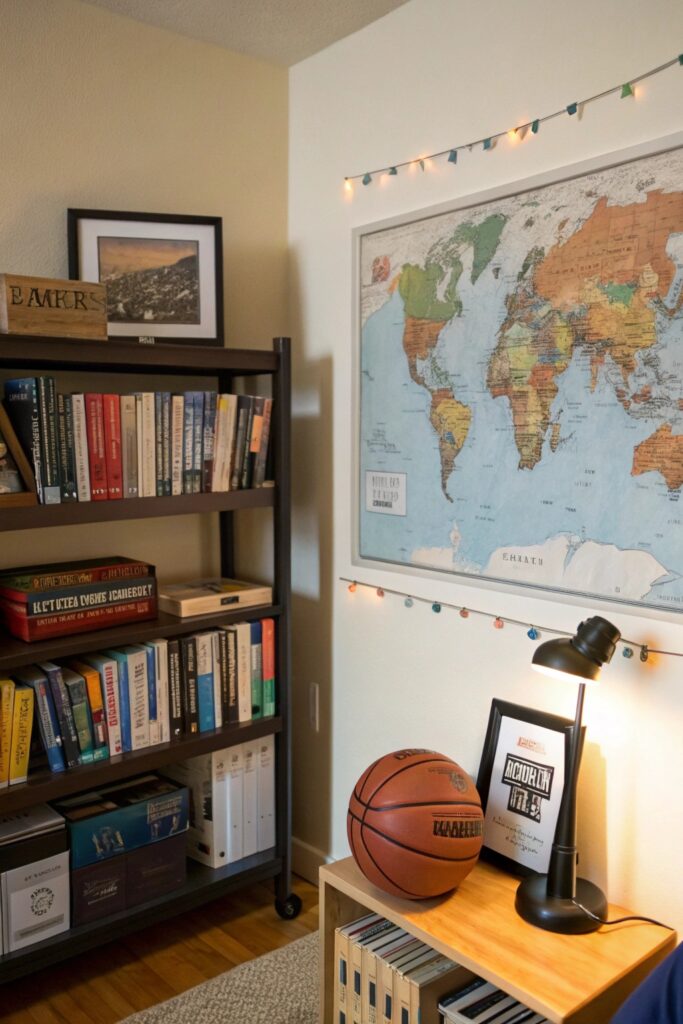
Displaying meaningful items — photos, memorabilia, a favorite jacket — makes a small, shared space feel more like an actual personal room.
Rotate the displayed items occasionally to keep the space feeling current, since a completely static personal display can start to blend into the background over the year.
11. Maximize Lighting with Multiple Sources
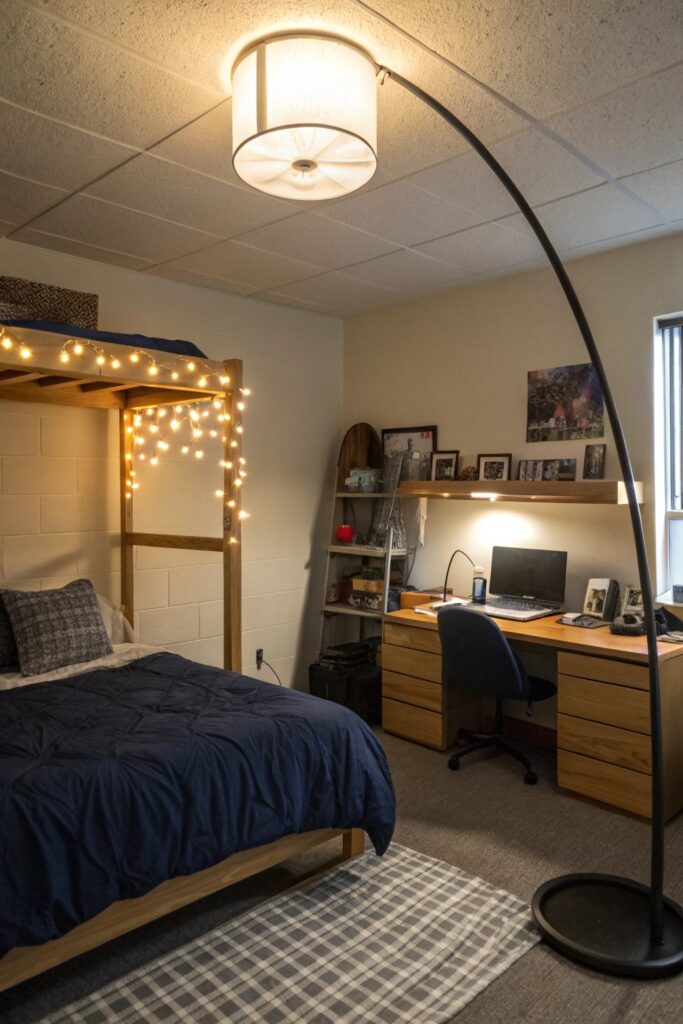
A single overhead fixture genuinely isn’t enough for most dorm rooms, so layering in a desk lamp and a floor or clip light considerably improves the space’s overall usability.
Working With a Roommate’s Style
Splitting the room into distinct zones, even in a small space, helps two different personal styles coexist without clashing, especially if you and a roommate have different taste.
Agreeing on a shared neutral base — like the wall color or a common rug — while keeping personal items and accents separate is a practical way to balance both people’s preferences.
What This Setup Costs
A few key upgrades — quality bedding, a rug, some shelving — typically cost $150 to $400 total.
A fuller room setup including a gaming or entertainment area and additional storage runs higher, often $400 to $900 depending on the specific electronics and furniture chosen.
Secondhand furniture and dorm move-out sales are worth checking specifically for shelving and storage pieces, since these items are often available for a fraction of retail cost from students moving out at the end of a semester.
Measure your specific room and furniture dimensions before ordering anything, since dorm rooms vary considerably in layout even within the same building, and an item that fits a friend’s room may not work in yours.
Start with the essentials — bedding, storage, and lighting — before adding purely decorative pieces, since a functional room you’ll actually use comfortably matters more than a room that just looks good in photos.
Take a photo of the finished room before the semester’s clutter genuinely accumulates, since it’s useful to have a reference for how everything looked when it was first set up and organized.
A well-organized room also makes daily routines easier throughout the semester, since clear storage and defined zones reduce the time spent searching for items scattered across a small shared space.
Whatever combination of these ideas you choose, keep the space functional first, since a room that works well for studying, sleeping, and daily routines will get more actual use than one focused purely on appearance.
Build a Dorm Room Worth Coming Back To
Check your specific school’s housing policies before making any wall, ceiling, or furniture modifications, since rules on adhesives, lighting, and furniture rearrangement vary between schools and even between dorm buildings. Prioritizing reusable pieces — bedding, a rug, shelving — makes sense given these items can move with you to future housing beyond just this one room.