
A sunroom works best when the design leans into its natural light rather than working against it, favoring materials and colors that let daylight remain the room’s main feature.
Below are 13 ways to style this space, with practical notes for each.
1. Create a Cozy Lounge-Style Sunroom
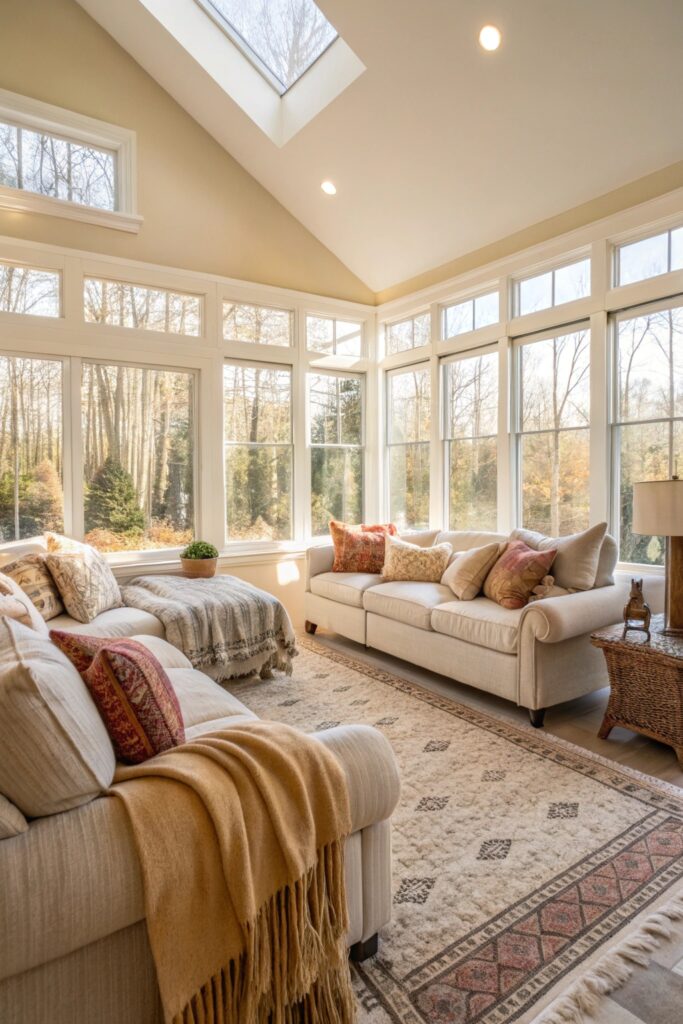
Deep, comfortable seating suits a sunroom used for relaxing more than a formal living room setup would.
Choose durable, fade-resistant fabric for seating specifically, since a sunroom’s daily sun exposure wears down cheaper upholstery faster than expected.
2. Go Minimal with Scandinavian Style
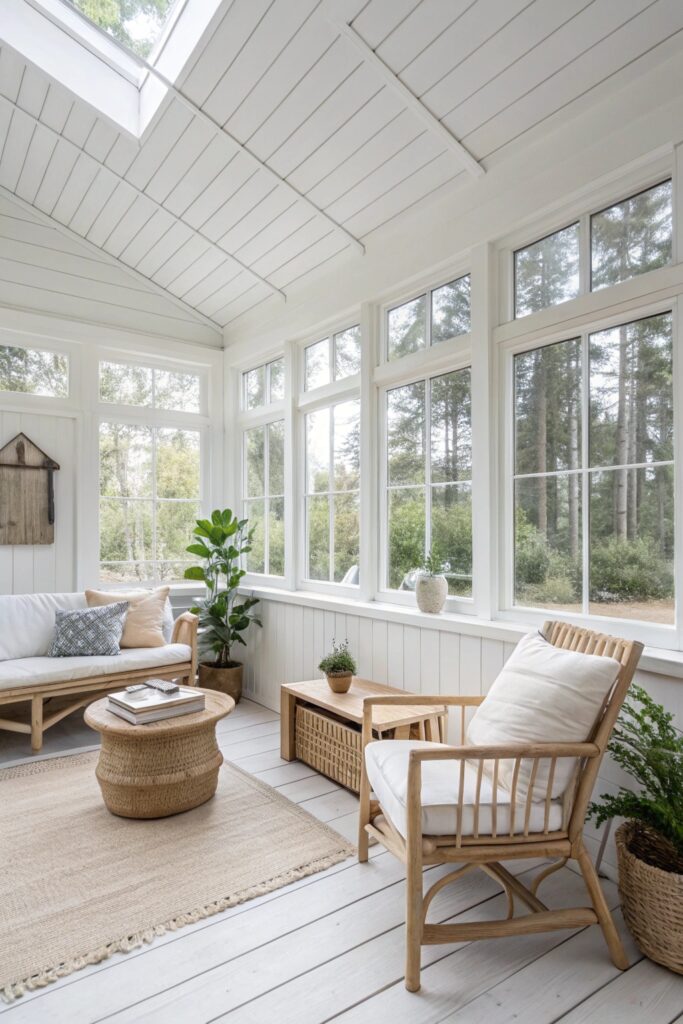
Light wood tones and a restrained color palette let the room’s natural light do most of the visual work.
Choose furniture in light, natural finishes rather than dark stains, which suits this style’s overall airy, uncluttered feel.
3. Add Indoor Plants for a Garden Feel
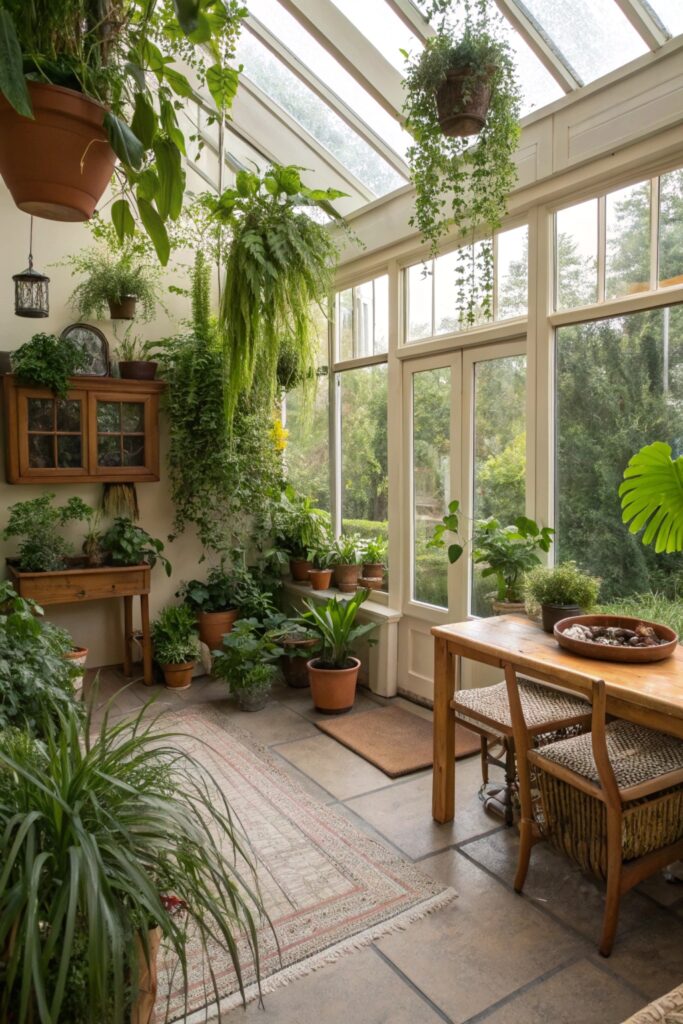
A sunroom’s abundant natural light suits plants that would struggle in a typical interior room with less consistent sun exposure.
Choose plants suited to bright, indirect light specifically, since a sunroom’s direct sun exposure can be too intense for some shade-loving varieties.
4. Design a Sunroom Dining Area
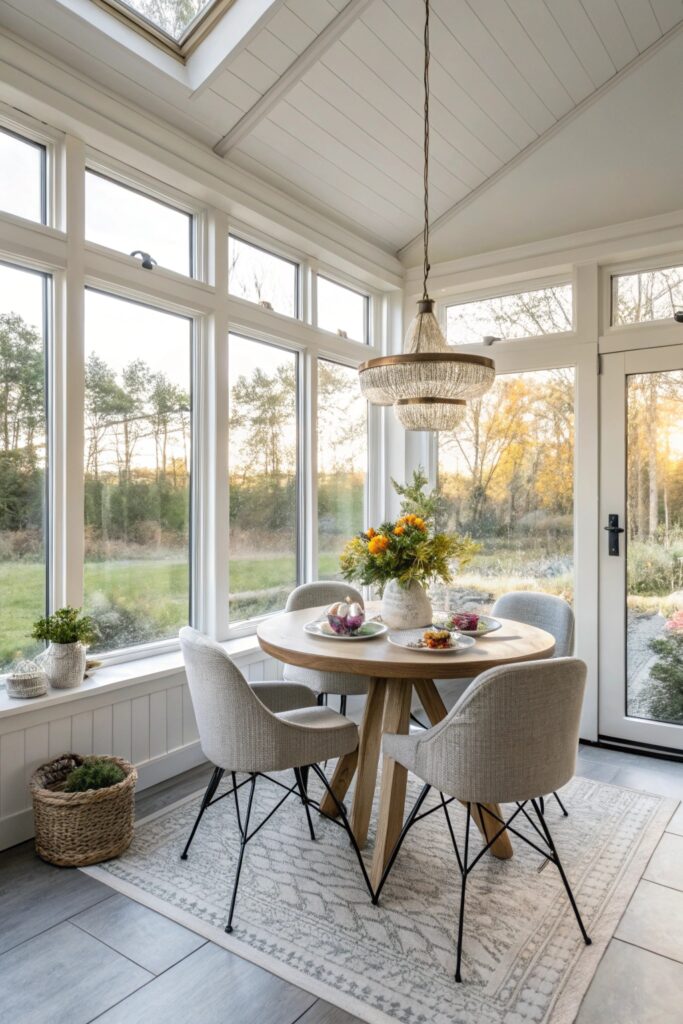
Durable furniture matters here, since a sunroom often sees more temperature and light exposure than an interior dining room.
Choose a weather-resistant finish for dining furniture, especially if the room isn’t fully climate-controlled year-round.
5. Use Floor-to-Ceiling Windows
Confirm energy-efficient glazing before installation, since large window expanses can affect heating and cooling costs more than smaller windows would.
Confirm your local building code requirements before any structural window changes, since larger window installations sometimes require permits.
6. Add a Daybed or Swing Seat
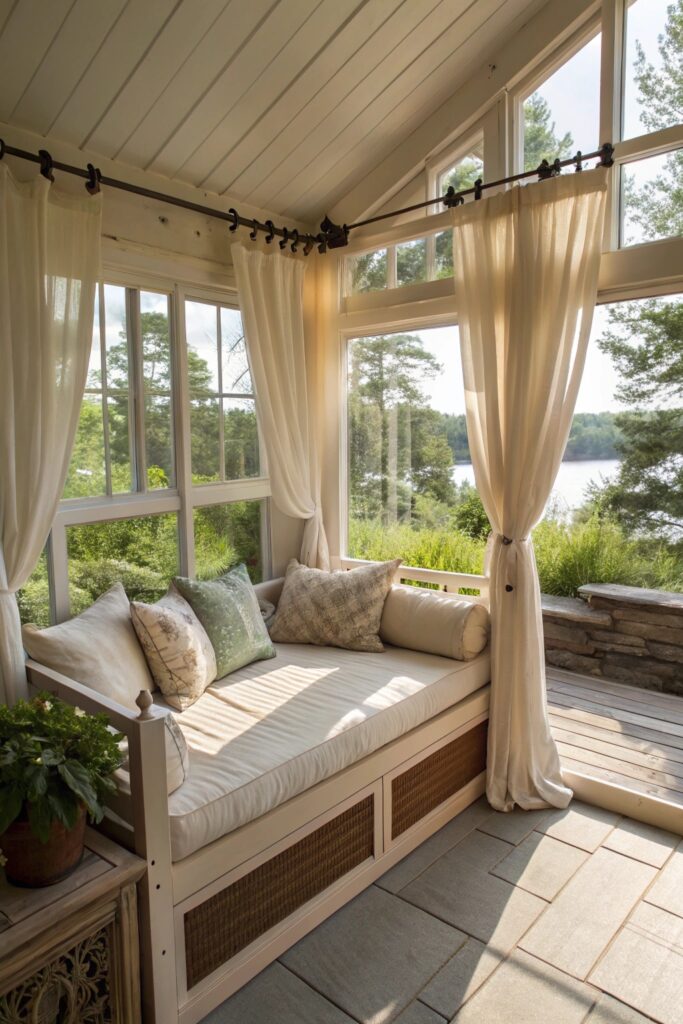
Confirm structural support before installing a hanging swing, since this is a bigger commitment than most other furniture choices in the room.
Choose materials in coordinating but not matching tones, which adds visual interest without looking mismatched.
7. Mix Natural Materials
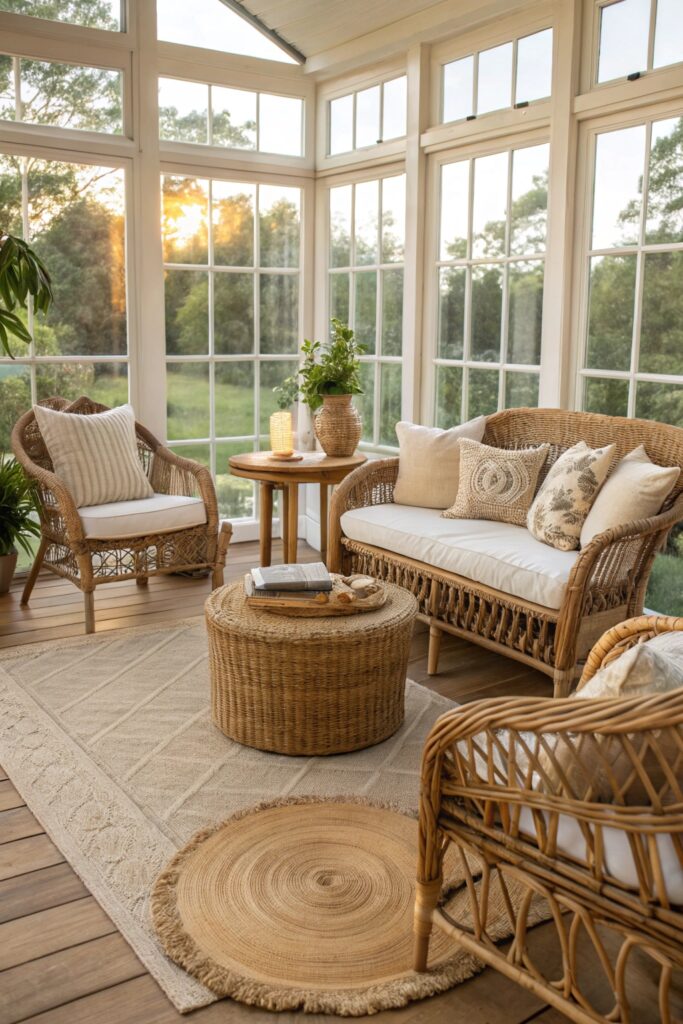
Combining wood, rattan, and stone brings texture that complements a sunroom’s connection to the outdoors.
Choose a supportive chair for extended reading sessions, since comfort matters more here than in a purely decorative seating arrangement.
8. Create a Reading Nook
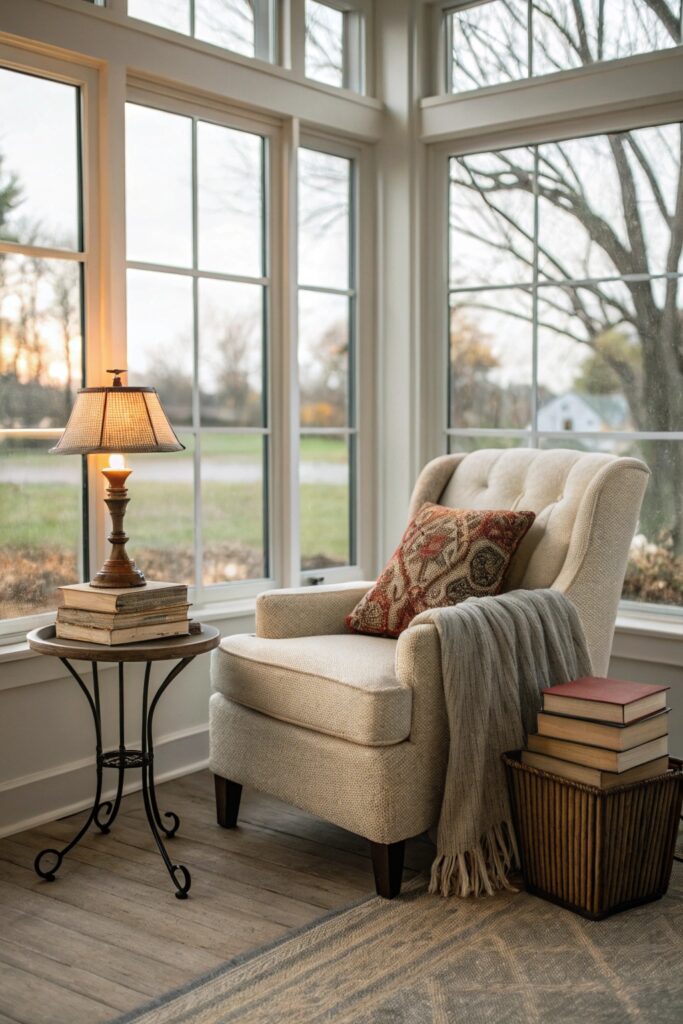
A comfortable chair positioned to catch natural light makes this one of the most functional small additions to a sunroom.
Choose fabric in a lightweight weave specifically, which filters light more effectively than a denser sheer material.
9. Use Sheer Curtains for Soft Light
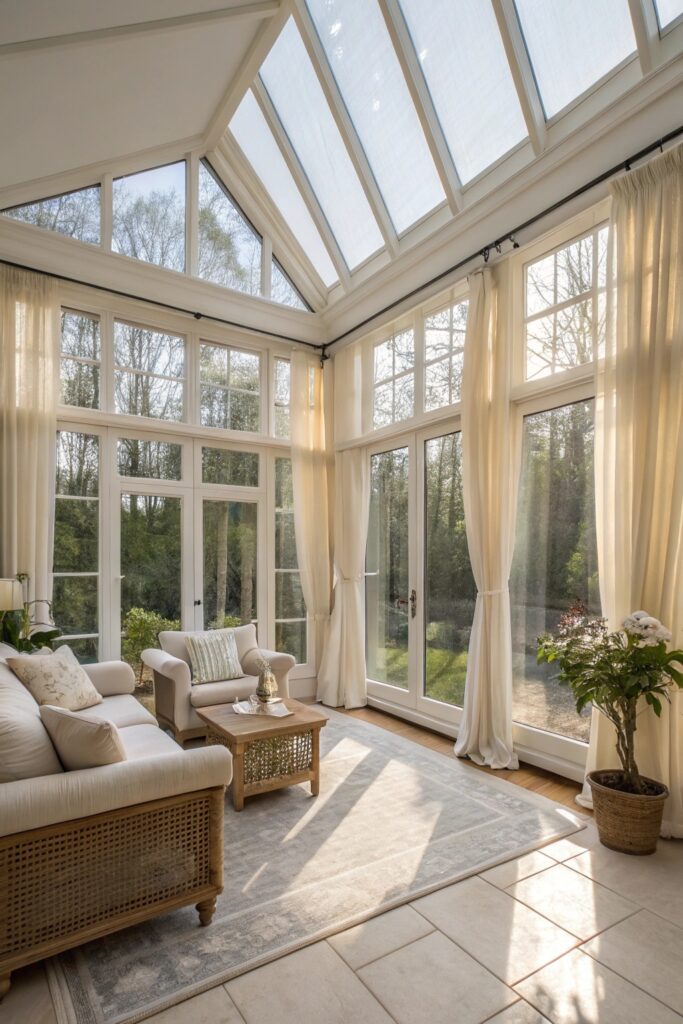
Lightweight, sheer fabric filters harsh direct sun without blocking the room’s natural brightness the way heavier curtains would.
Choose glare-reducing window treatments for the specific hours you’ll be working, since sun position shifts throughout the day.
10. Turn It Into a Home Office
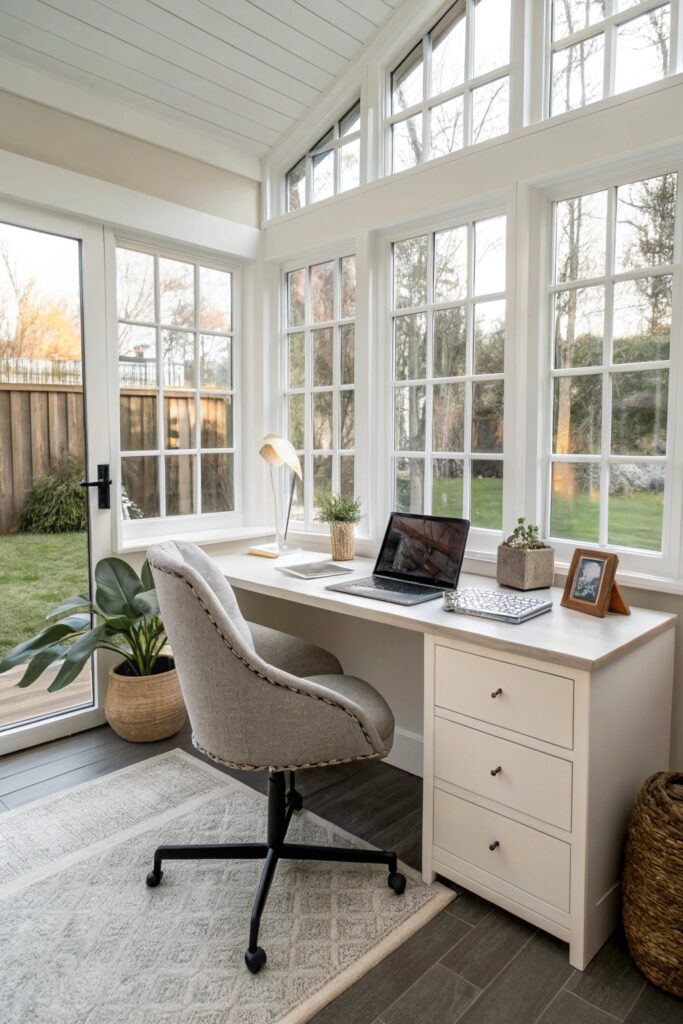
Position the desk to avoid direct screen glare from windows, which is a common oversight when converting a bright room into a workspace.
Choose fixtures with warm-toned bulbs, which suits a sunroom’s relaxed atmosphere better than cooler, brighter lighting.
11. Add Statement Lighting for Evenings
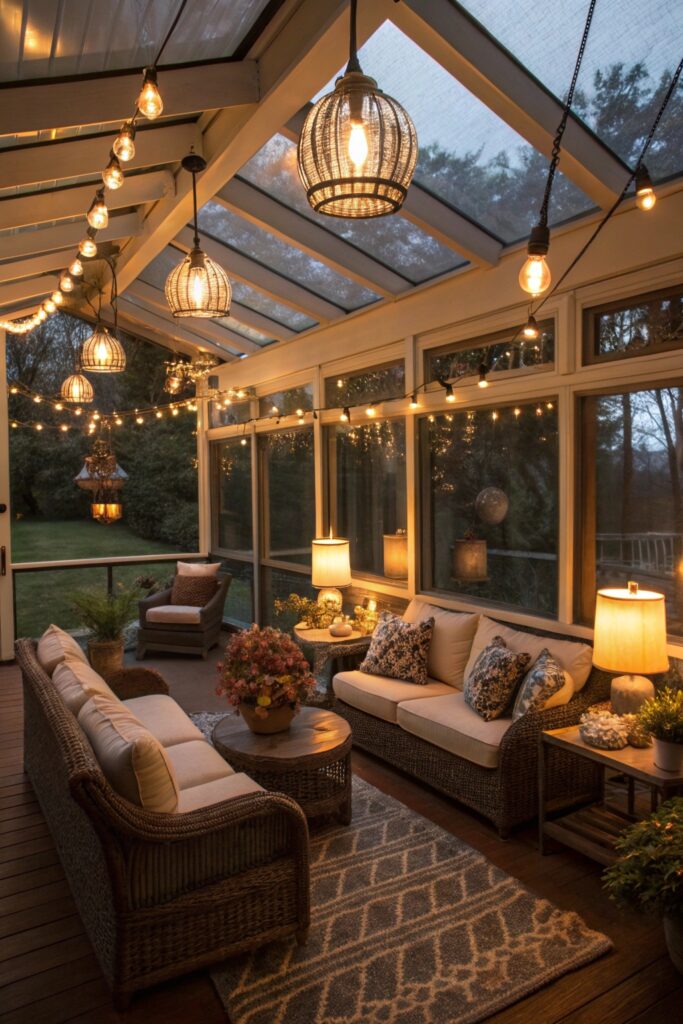
A sunroom relies entirely on natural light during the day, so evening lighting matters more here than in rooms with more consistent overhead fixtures.
Test paint or fabric samples in the room’s natural light at different times of day, since sunroom lighting shifts more dramatically than in interior rooms.
12. Use a Neutral Color Palette
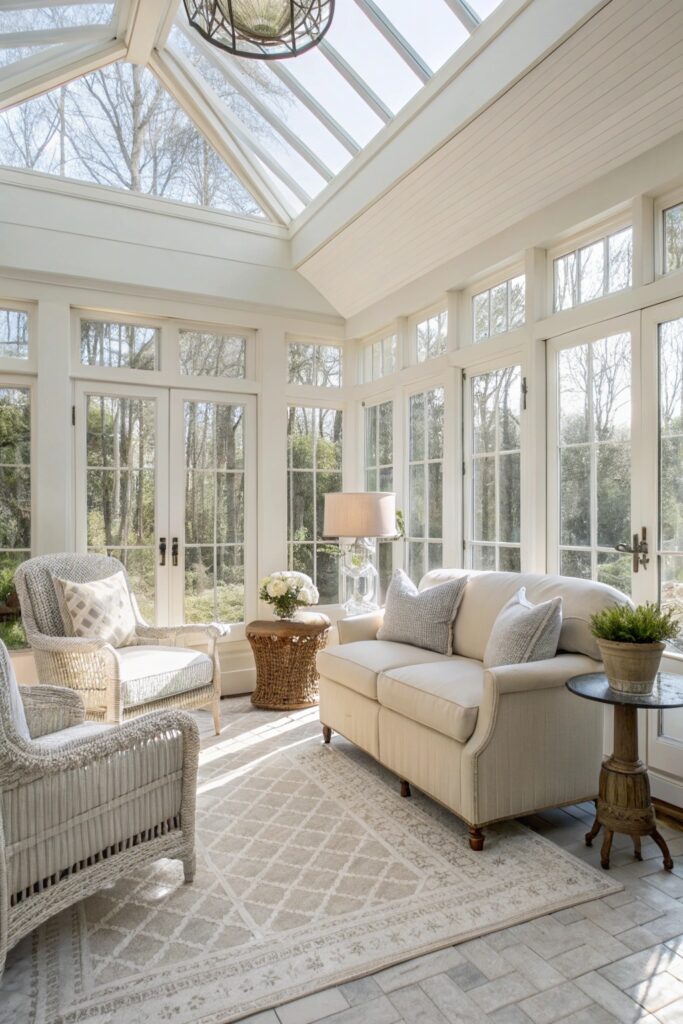
Soft, neutral tones let the changing natural light throughout the day become the room’s main source of visual interest.
Choose weatherproof rugs or floor coverings for this transitional area, which handle moisture and temperature shifts better than standard indoor materials.
13. Blend Indoor and Outdoor Decor
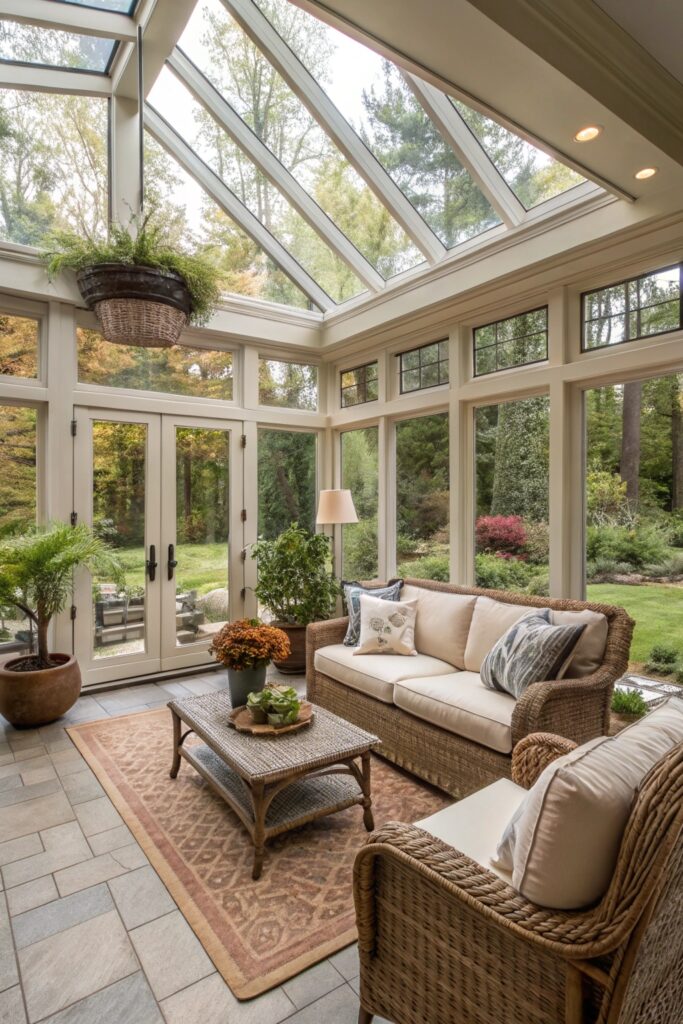
Choosing durable materials suited to both indoor comfort and some exposure helps this transitional space feel cohesive with the yard beyond it.
Managing Temperature Throughout the Year
A sunroom faces more temperature swings than a typical interior room, given its extensive window area, so it’s worth considering insulation and ventilation options if you plan to use the space year-round.
Adjustable window treatments — blinds alongside sheer curtains, for example — give you more control over both light and heat throughout different seasons.
What This Room Costs
Smaller updates — furniture, textiles, lighting — typically cost $300 to $1,000 depending on the specific pieces chosen.
A fuller renovation involving new windows or structural changes runs considerably higher, often $5,000 to $20,000 or more depending on the scope of construction.
Get quotes from at least two contractors before committing to any structural window or insulation project, since labor and material costs for this kind of work vary considerably based on your home’s existing construction.
Consider the room’s actual orientation and typical sun exposure before finalizing furniture placement, since a south-facing sunroom sees considerably more direct light throughout the day than one facing north or east.
Secondhand and vintage sources are worth checking specifically for rattan, wicker, and wood pieces, since these materials often carry genuine character that new furniture takes more effort to replicate.
Start with a smaller change like new textiles or lighting before committing to larger structural updates, since it’s easier to gauge how the room actually gets used once a few smaller pieces are in place.
Take a photo of the finished room at different times of day, since a sunroom’s actual appearance can shift considerably between morning and evening light, and it’s worth having a full picture of how the space looks throughout the day.
A well-designed sunroom becomes one of the most-used spaces in a home, since the natural light and connection to the outdoors offer something distinct from any other interior room.
Whatever direction you choose, prioritize comfort alongside style, since a sunroom that’s too hot in summer or too cold in winter won’t get used regardless of how well it’s decorated.
Conclusion
Durable, easy-to-clean materials matter more in a sunroom than in most interior rooms, given the added light and potential temperature exposure this space typically sees. Layering in a few functional elements — seating, a reading spot, plants — keeps the room feeling used rather than purely decorative.