
This guide focuses specifically on dark blue as an exterior color, covering the material and undertone considerations unique to this shade. For a broader range of exterior color options, see our companion guide to exterior color palette ideas.
Below are 12 dark blue exterior styles worth considering, with the practical details for each.
1. Classic Dark Blue with White Trim
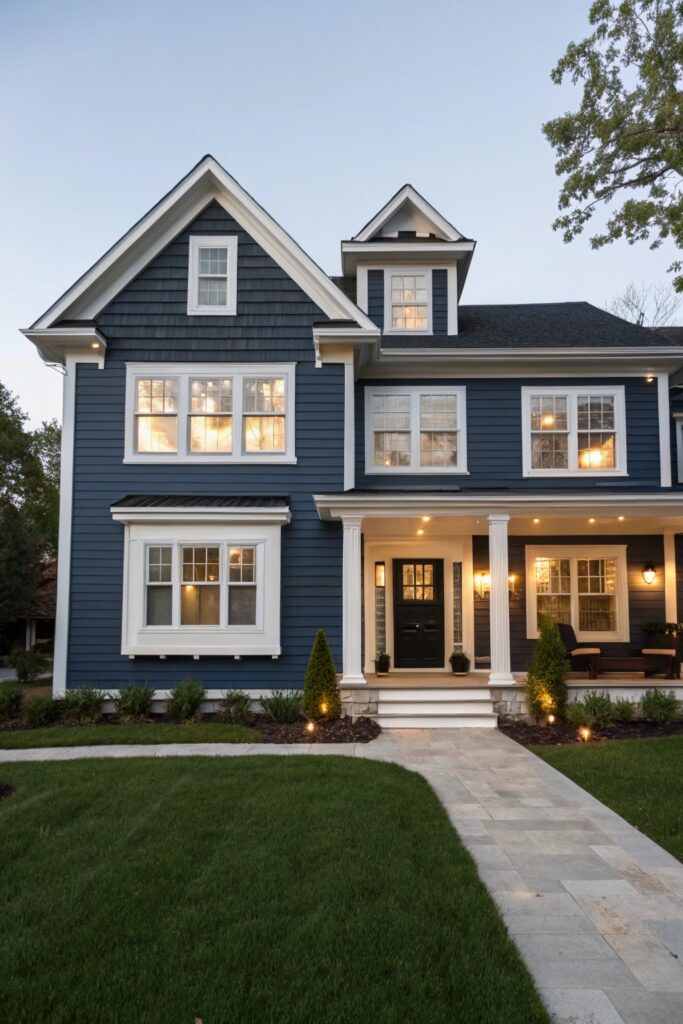
A navy with a slight black undertone reads more formal against white trim than one with a subtle green or gray undertone, which softens the contrast. A satin or low-luster sheen is standard for exterior siding in this color, balancing durability with a finish that doesn’t show every surface imperfection the way a higher gloss would.
2. Modern Matte Navy Minimalist
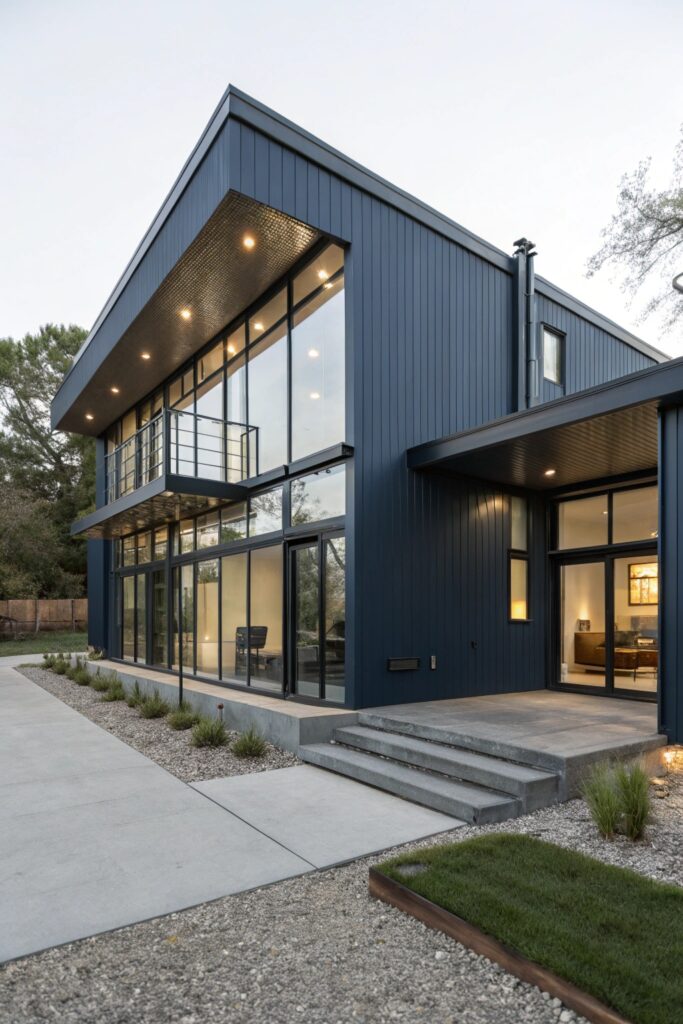
A true matte finish shows less glare and reflection than satin, giving this look its flat, minimalist quality, though matte exterior paint can be somewhat harder to keep clean than a slight sheen, since it has less of a protective surface to wipe debris from. Black or dark bronze hardware finishes suit this pared-back style better than a brighter metal.
3. Dark Blue with Natural Wood Accents
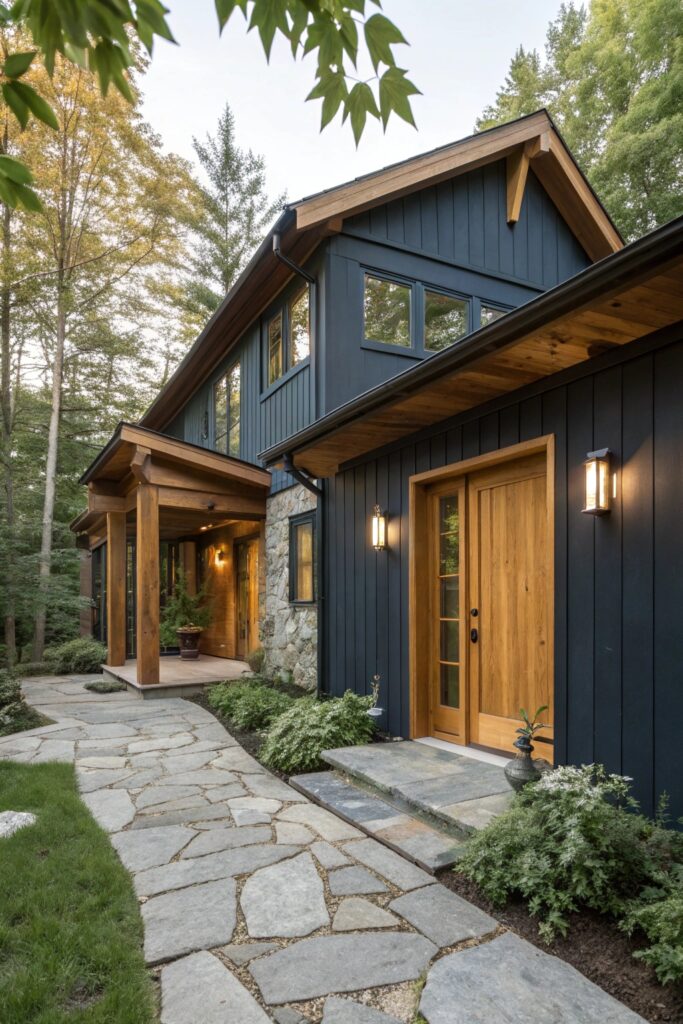
Cedar and teak both hold their natural warm tone well against a navy body, and both need periodic resealing to maintain that color rather than graying with sun exposure over time.
4. Coastal Dark Blue Cottage
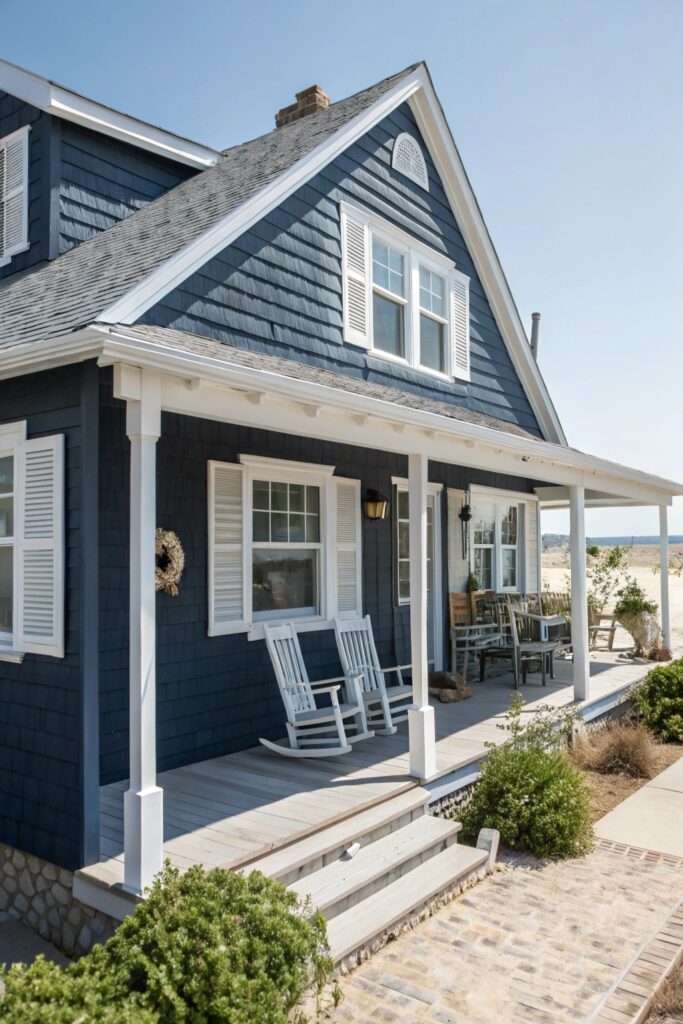
Salt air accelerates paint wear more than an inland climate would, so a mildew-resistant exterior formulation specifically suited to coastal conditions holds up considerably better here than a standard paint line.
5. Dark Blue Brick Exterior
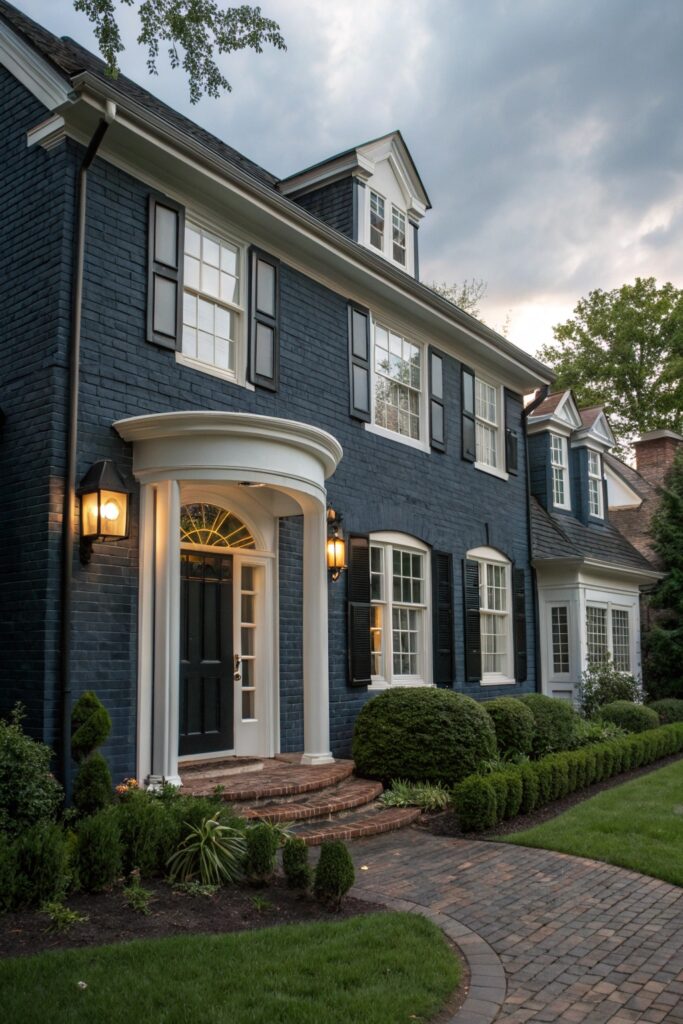
Painting brick is largely a one-way decision — removing paint from brick afterward is difficult and often damages the brick’s surface in the process, so it’s worth being confident in the choice before committing. A breathable masonry paint formulated specifically for brick allows the material to release trapped moisture the way unpainted brick naturally does, which matters more with a fully saturated dark color than a lighter one.
6. Navy Blue with Black Accents
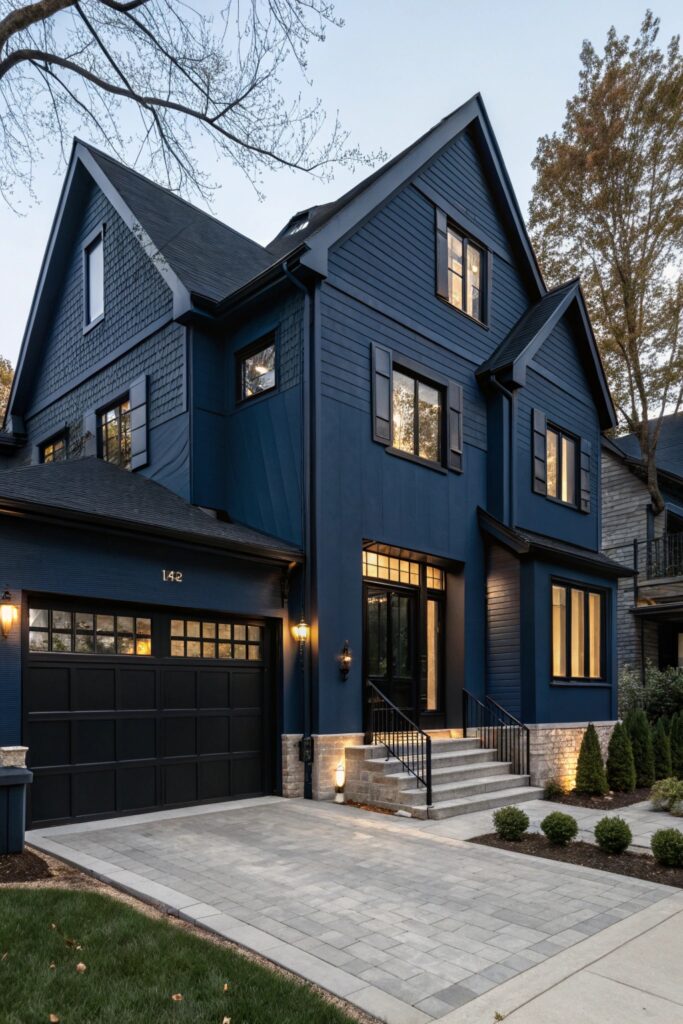
Black-framed windows have become a popular pairing with dark blue siding, and most are vinyl-clad or aluminum-clad rather than painted wood, which holds its finish considerably longer than paint would under regular sun exposure.
7. Dark Blue with Stone Elements
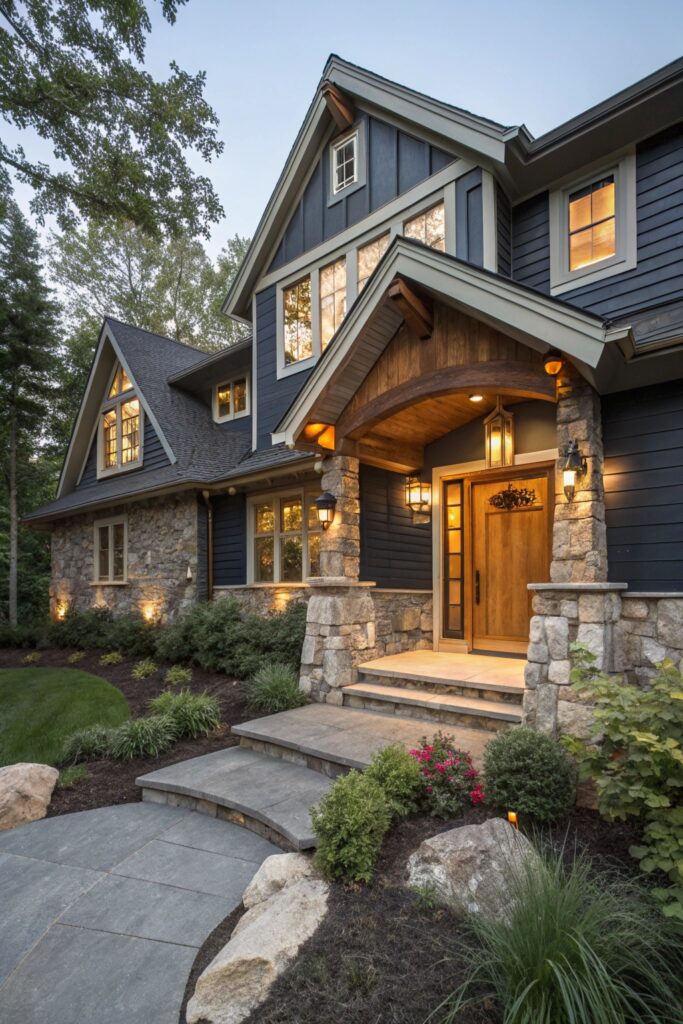
Real stone adds genuine weight that needs proper structural footing, while manufactured stone veneer achieves a similar look at a lighter weight and lower installation cost, though it can look less convincing at close range.
8. Scandinavian Dark Blue Exterior
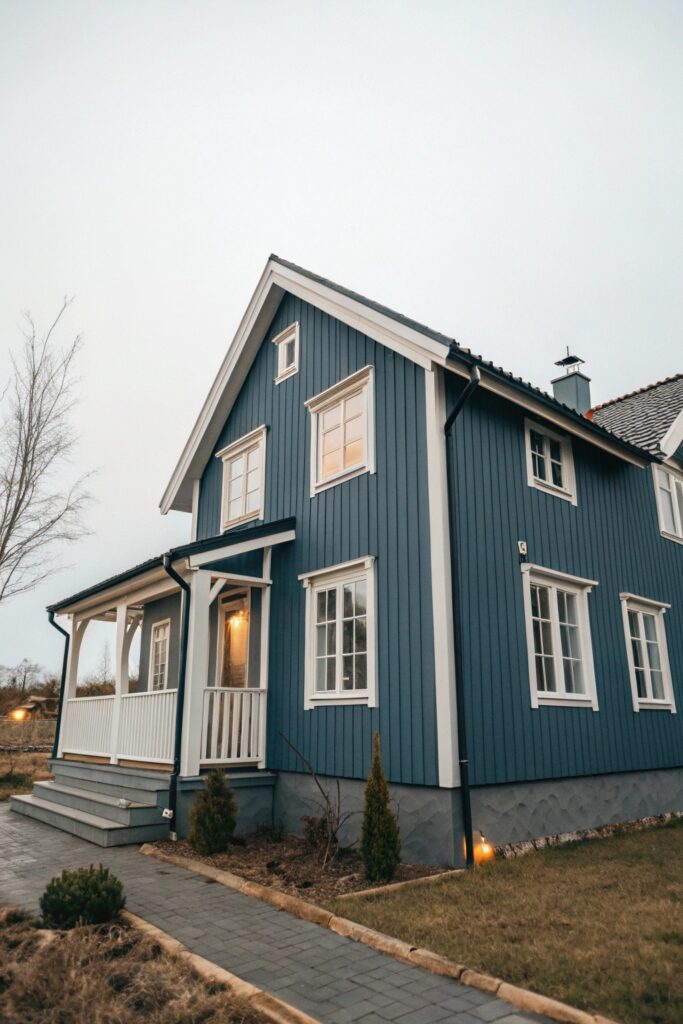
Light, unfinished-looking wood trim is the classic pairing that keeps this style from feeling too heavy, since the contrast between the dark facade and pale wood is central to the overall look.
9. Dark Blue with Gold Fixtures
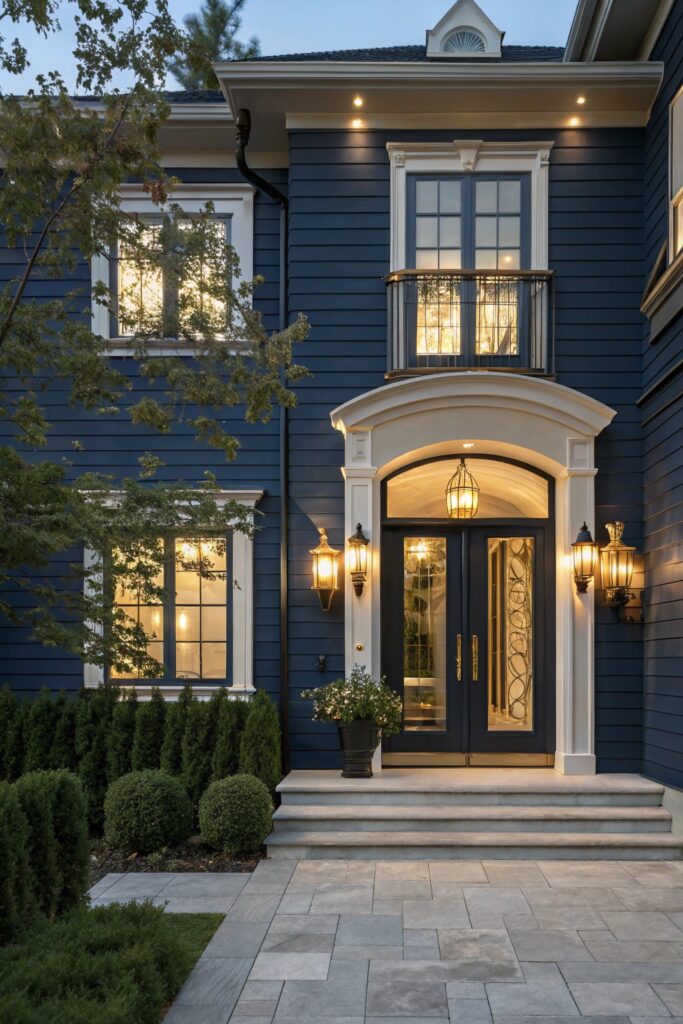
Gold exterior fixtures need more frequent cleaning than the same finish would indoors, since ongoing weather exposure dulls a polished finish faster than typical interior handling would.
10. Farmhouse Navy with Wraparound Porch
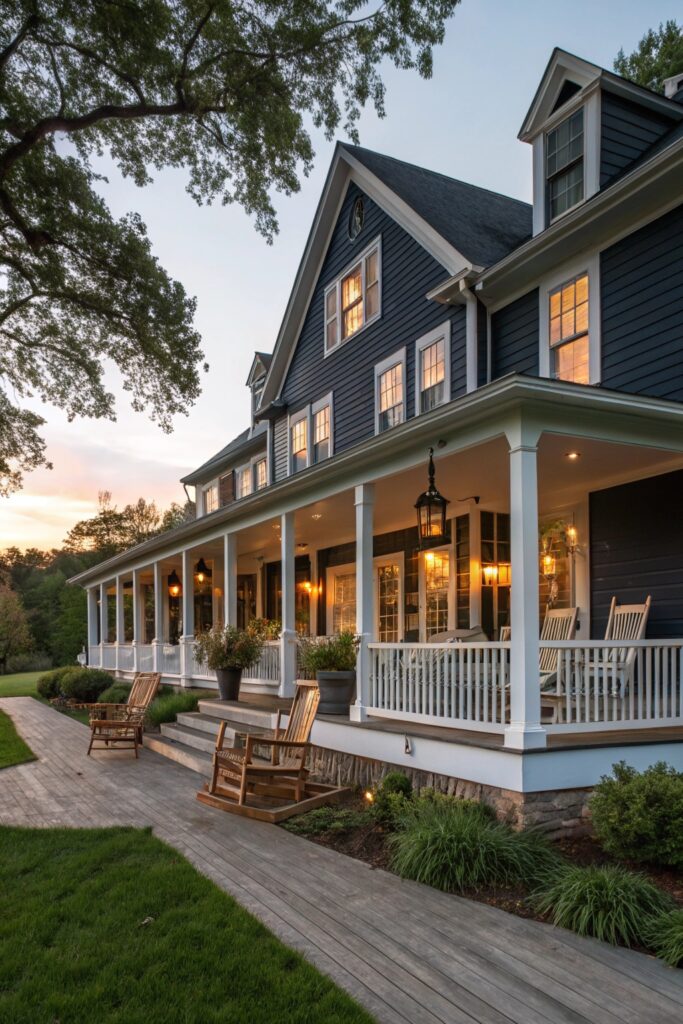
Painting the porch ceiling a pale blue, sometimes called haint blue, is a genuine regional tradition in parts of the American South, historically believed to ward off insects and evil spirits — whatever the origin, it remains a distinctive way to add a second blue tone that reads differently from the deeper navy body.
11. Dark Blue and Grey Contrast Design
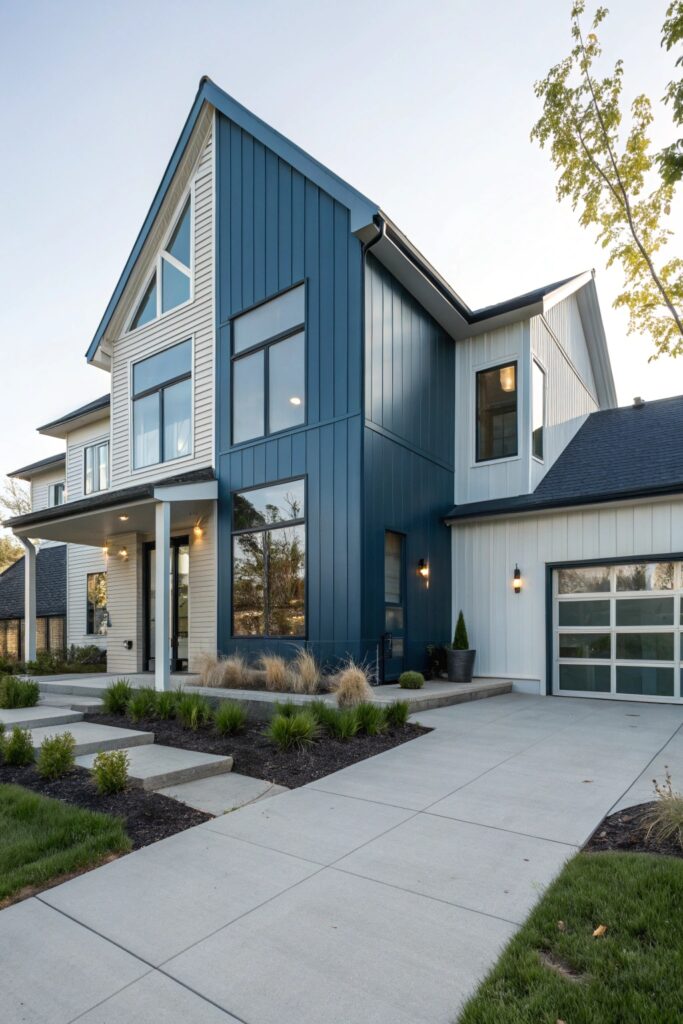
Pairing a low-LRV navy with a mid-tone gray, rather than a gray close to the same darkness, creates a clearer visual contrast between the two colors than pairing two similarly dark tones would.
12. Moody Dark Blue Night Exterior
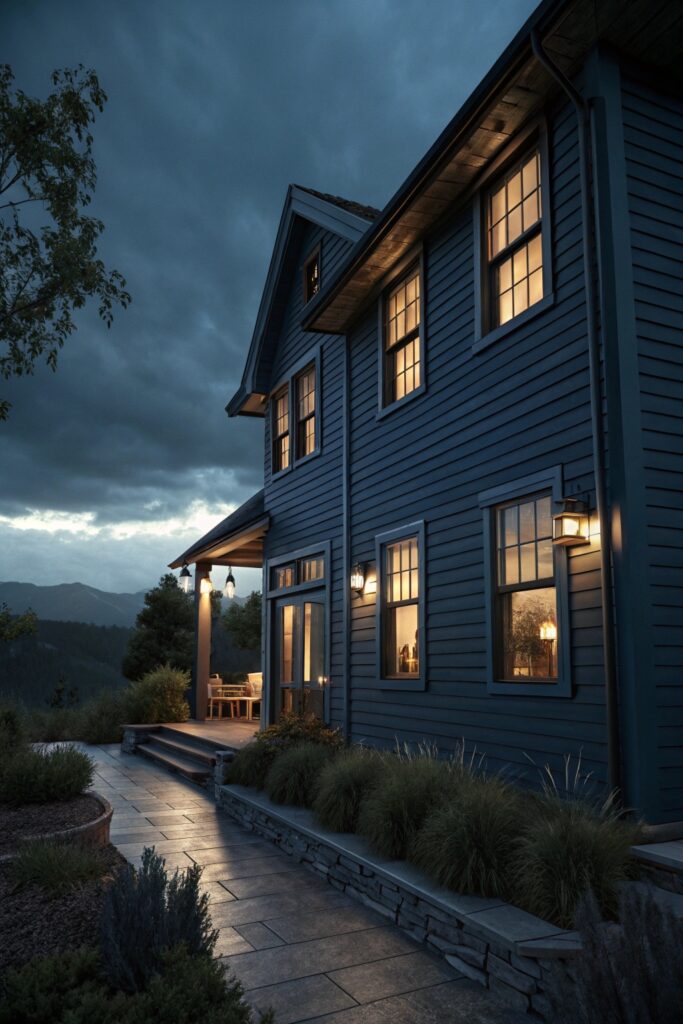
Dark facades actually show off architectural uplighting more dramatically than light-colored siding does, since the greater contrast between the illuminated area and the surrounding dark surface makes the lighting design read more intentional after dark.
Choosing the Right Dark Blue for Your Climate
Very dark, near-black navy absorbs more heat than a lighter mid-tone blue, which is worth factoring in for homes in consistently hot, sunny climates — the siding itself can run noticeably warmer, and in some cases this affects how certain siding materials, like vinyl, hold up over time since manufacturers often have specific warranty limitations for very dark colors on vinyl siding.
In cooler, cloudier climates, this heat absorption is less of a concern and a deeper navy tends to read well against the more frequently overcast sky, whereas the same shade can look almost black under intense, direct sun.
What a Dark Blue Repaint Costs
A DIY repaint typically costs $1,000 to $3,000 in materials for an average-sized home, similar to most other exterior color changes.
Professional painting runs considerably higher, often $4,000 to $10,000, and dark colors sometimes require an additional coat or a tinted primer to achieve full, even coverage over a lighter existing color, which can add to both material cost and labor time.
Siding Material Affects the Final Color
The same paint color reads differently depending on the siding material underneath — a smooth fiber cement surface shows a flatter, more uniform color than a wood clapboard with visible grain texture, which can create subtle shading variation across the same painted color.
If you’re choosing pre-finished vinyl or fiber cement siding rather than painting an existing surface, ask to see a large physical sample rather than relying on a printed or digital color swatch, since manufactured siding colors can shift subtly from how they appear in marketing materials.
Check whether an HOA or local historic district has any color restrictions before committing to a dark blue exterior specifically, since some communities do restrict darker color palettes even when lighter neutral tones are broadly approved, which is worth confirming before finalizing paint or siding selection.
A dark blue exterior remains one of the more versatile bold color choices, working across a wide range of architectural styles from traditional to modern, which is part of why it holds up well as a longer-term choice rather than a passing color trend.
Dark Colors Need More Attentive Maintenance
A dark exterior color shows fading, chalking, and wear more visibly over time than a lighter color does, simply because the contrast between fresh and faded paint is more noticeable on a saturated dark tone. Planning for a slightly shorter repaint cycle, or at minimum a more regular visual inspection, helps catch this wear before it becomes obvious from the street.
Testing your specific navy against the home’s actual fixed elements — roof color, brick, stone — in real daylight before committing to a full repaint remains worth the extra step, since dark blue in particular can shift noticeably between how it reads on a small sample and how it reads across an entire facade.