
There’s something about a 1920s kitchen that just hits differently. The craftsmanship, the character, the way every detail feels deliberate — it’s a stark contrast to the sea of identical white slab kitchens flooding every home renovation show right now.
I’ve been obsessed with vintage kitchen design for years, and the 1920s era sits at a particularly sweet spot. It blends practicality with personality in a way that feels truly timeless rather than just trendy.
Whether you’re restoring an actual period home or simply want to borrow some of that vintage magic for a modern kitchen, these 10 ideas will get you there.
1. Install Classic Black and White Checkerboard Floors
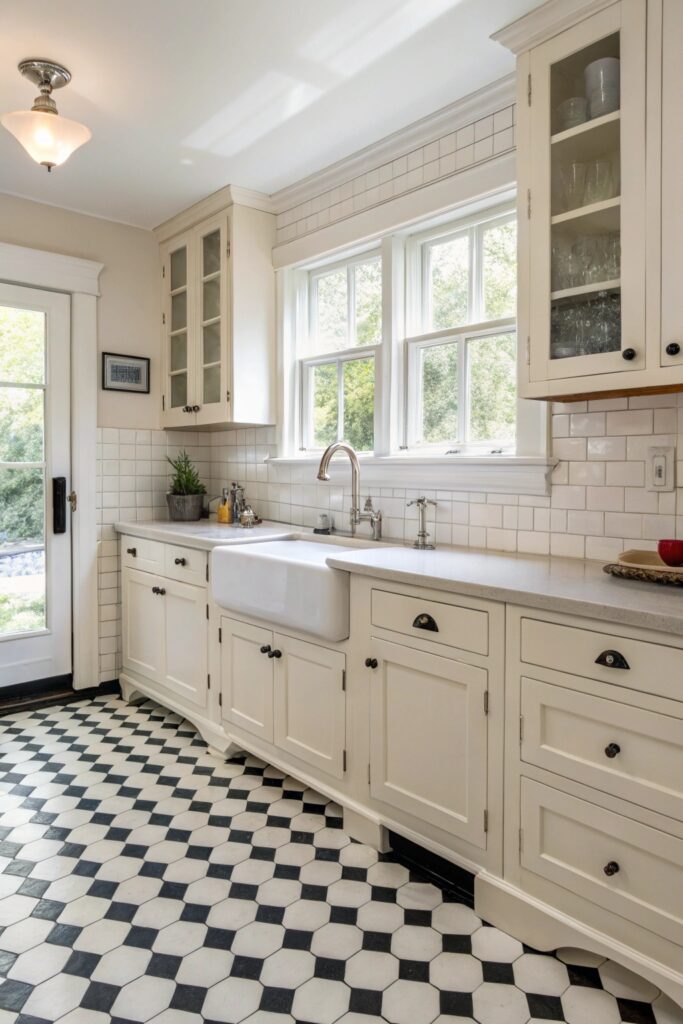
Nothing says 1920s kitchen quite like a checkerboard floor underfoot.
Black and white checkerboard tile is the single most iconic flooring choice of the era — and it still looks absolutely stunning today. Original 1920s kitchens used small mosaic hex tiles or larger square ceramic tiles in this pattern, and both options remain widely available for renovation projects.
The beauty of this floor is its versatility. It grounds the entire kitchen visually and works with almost any cabinet color — cream, sage green, navy, or classic white all look incredible against that bold geometric base. Go for matte finish tiles over glossy ones if you want an authentic period feel. Glossy reads more contemporary and loses some of that vintage warmth you’re chasing.
IMO, this single flooring choice does more for a 1920s kitchen aesthetic than almost anything else.
2. Choose Shaker or Beadboard Cabinet Fronts
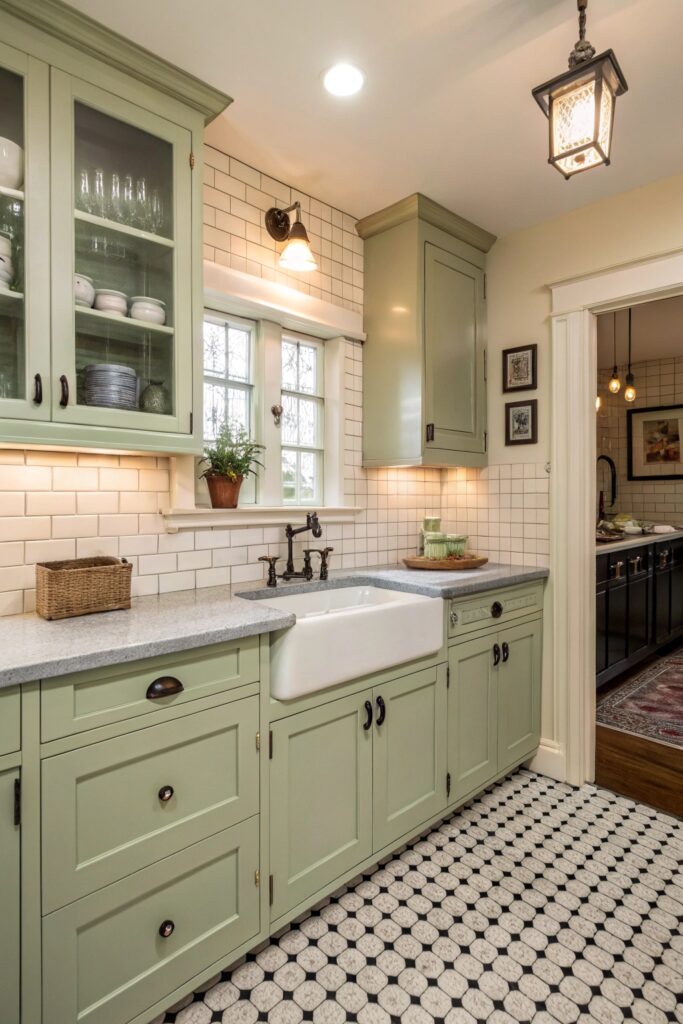
Flat-front modern cabinets have no business in a 1920s kitchen. None.
Shaker-style cabinet doors and beadboard panel fronts both reflect the practical, craftsman-influenced design sensibility that defined 1920s kitchen cabinetry. Shaker doors feature a simple recessed panel with clean lines, while beadboard fronts add vertical groove detailing that feels distinctly period-appropriate.
Paint them in historically accurate colors for maximum authenticity:
- Cream or off-white — the most common 1920s choice
- Sage green — popular in Arts and Crafts influenced homes
- Pale yellow — warm and cheerful, very true to the era
- Navy blue — less common but period-appropriate for accents
Pair the cabinet color with simple bin-pull or cup-pull hardware in nickel or porcelain for a finish that feels truly authentic.
3. Add Open Shelving with Brackets
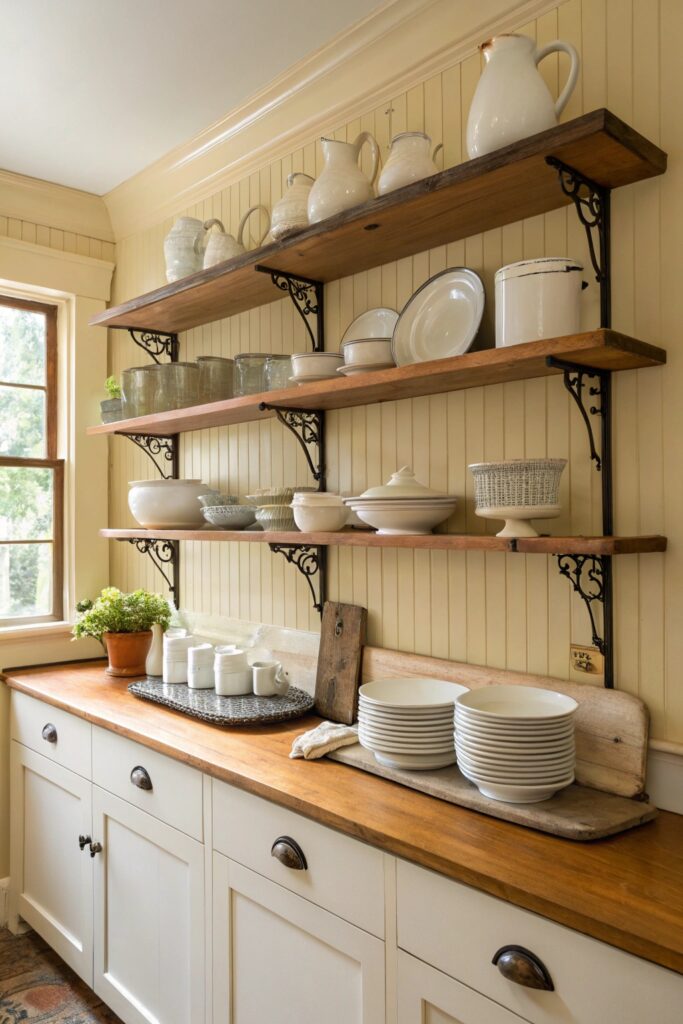
Walk into any well-preserved 1920s kitchen and you’ll almost always find open shelving.
Bracket-supported open shelves were a staple of 1920s kitchen design — practical, accessible, and visually charming in a way that closed upper cabinets simply aren’t. They displayed everyday dishware and kept frequently used items within easy reach, which made total sense before modern storage solutions existed.
Recreate this look with sturdy wood shelves supported by vintage-style cast iron or painted steel brackets. Style them with period-appropriate ceramics — white ironstone, transferware patterns, or simple stoneware all work beautifully. The shelves also give you a natural place to display vintage kitchen collectibles without the space feeling cluttered. Keep the styling intentional rather than using it as overflow storage for random items.
4. Use Subway Tile Backsplash
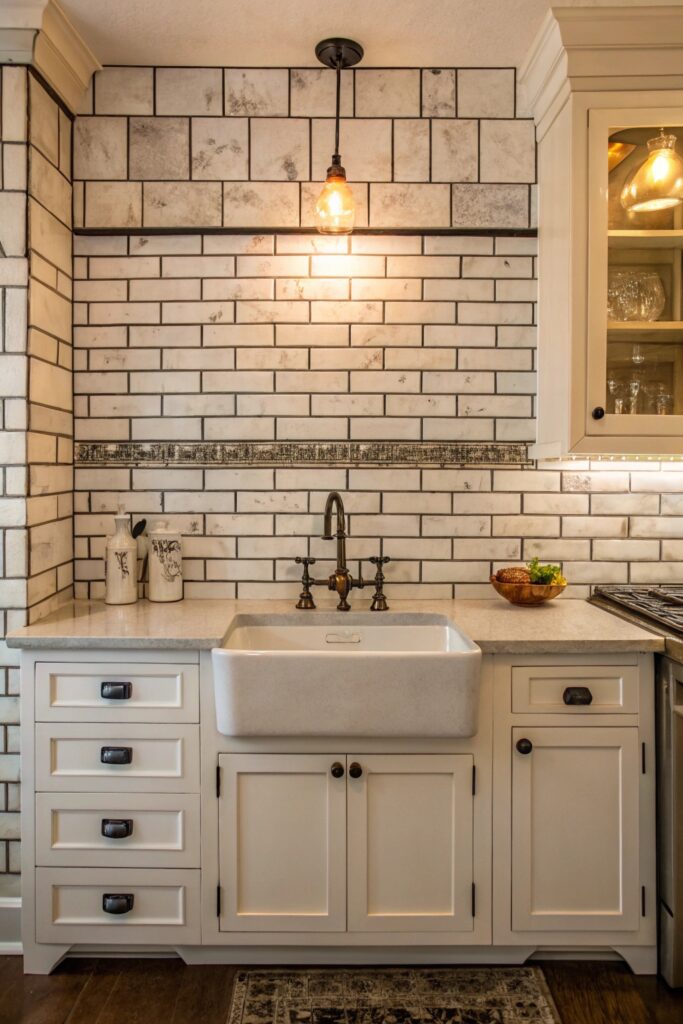
Subway tile didn’t become a trend — it started in the 1920s and never actually left.
White rectangular subway tile backsplashes were standard in 1920s kitchens, valued for their clean appearance and easy maintenance. The classic format is 3×6 inches in a brick-lay horizontal pattern, though vertical stacking and herringbone arrangements also suit the period well.
For the most authentic look, choose tiles with a slightly irregular surface and hand-glazed finish rather than perfectly flat machine-made tiles. The subtle variation in surface catches light differently and adds that handmade quality that mass-produced tiles lack. Dark grout — charcoal or warm gray — adds contrast and reads more vintage than crisp white grout, which tends to look more contemporary.
This is one of those details that’s subtle but makes a real difference up close.
5. Source a Vintage-Style Farmhouse Sink
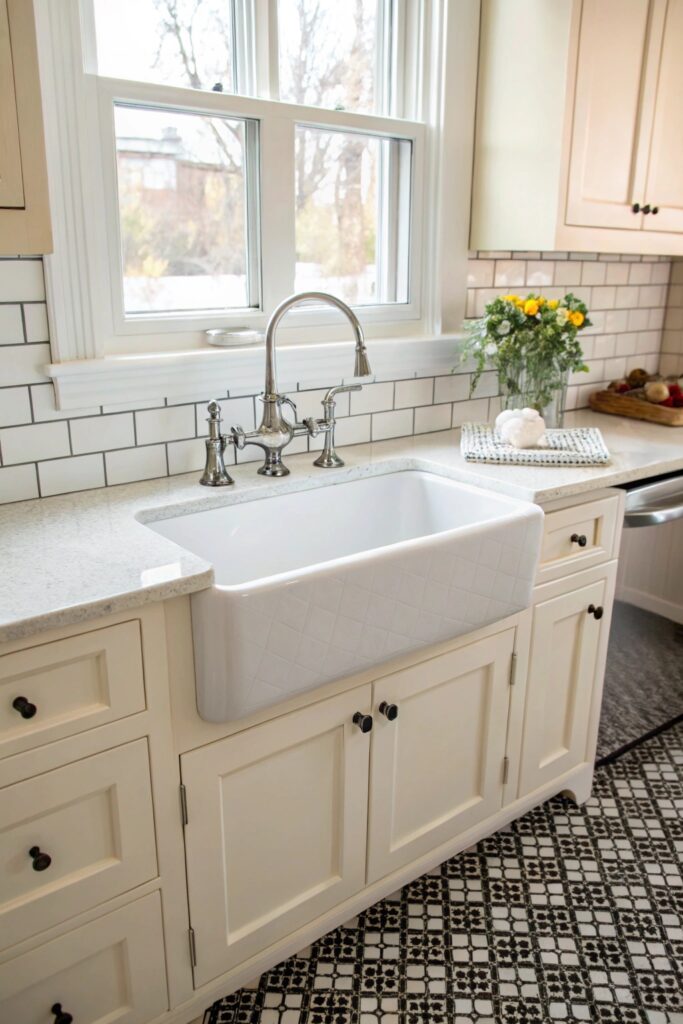
The farmhouse apron-front sink was a working kitchen essential in the 1920s, and it remains one of the most beautiful functional elements you can install today.
A deep single-basin farmhouse sink in white fireclay or cast iron instantly anchors a 1920s kitchen with authentic period character. Original sinks from this era were purely utilitarian — deep, durable, and designed for serious work. Modern reproductions capture that same aesthetic while meeting contemporary plumbing standards.
Pair the sink with a bridge faucet in nickel or chrome finish. Bridge faucets — where both hot and cold handles connect to a central bridge before feeding the spout — were the standard faucet configuration of the 1920s and add an unmistakable period-correct detail. Skip the pull-down spray head; it immediately reads modern and breaks the illusion 🙂
6. Incorporate a Freestanding Kitchen Island or Butcher Block
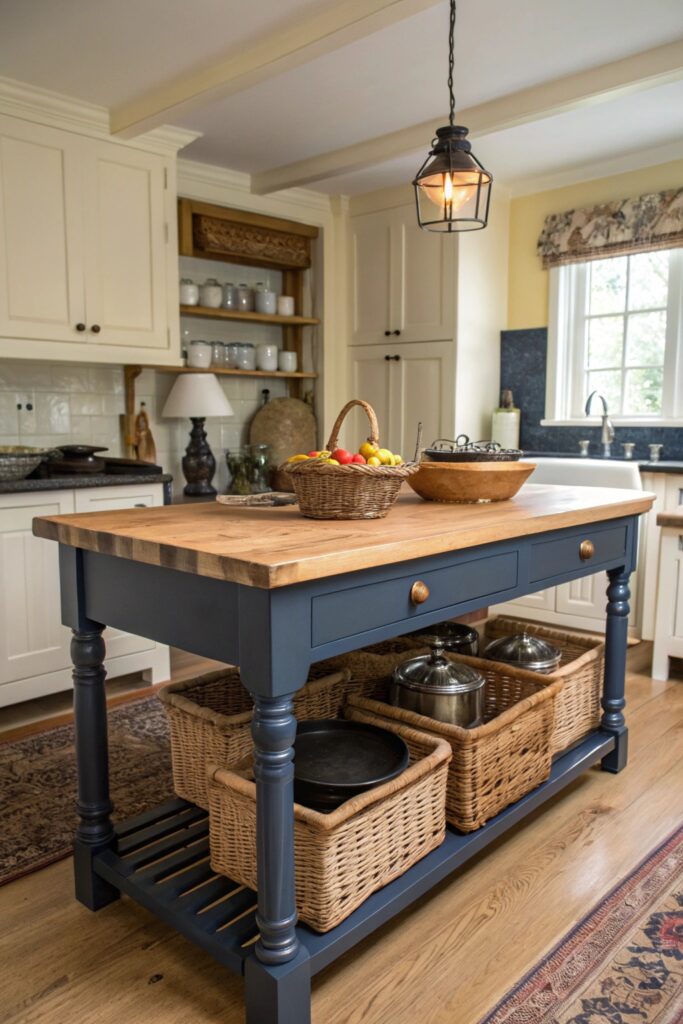
Built-in kitchen islands are a fairly modern concept. In the 1920s, the equivalent was a freestanding work table or butcher block — and that distinction matters for the aesthetic.
A freestanding butcher block island or vintage-style prep table brings authentic 1920s kitchen functionality into a modern space without looking forced. The freestanding nature of the piece is itself a period detail — it signals a kitchen designed around flexible, practical work rather than fixed contemporary layouts.
Look for options with:
- Solid maple or oak butcher block top — traditional and durable
- Painted base in a contrasting color — adds visual interest
- Open lower shelf — for storing pots, baskets, or cookbooks
- Turned legs — a classic period detail that elevates the whole piece
7. Hang a Vintage-Inspired Pendant Light
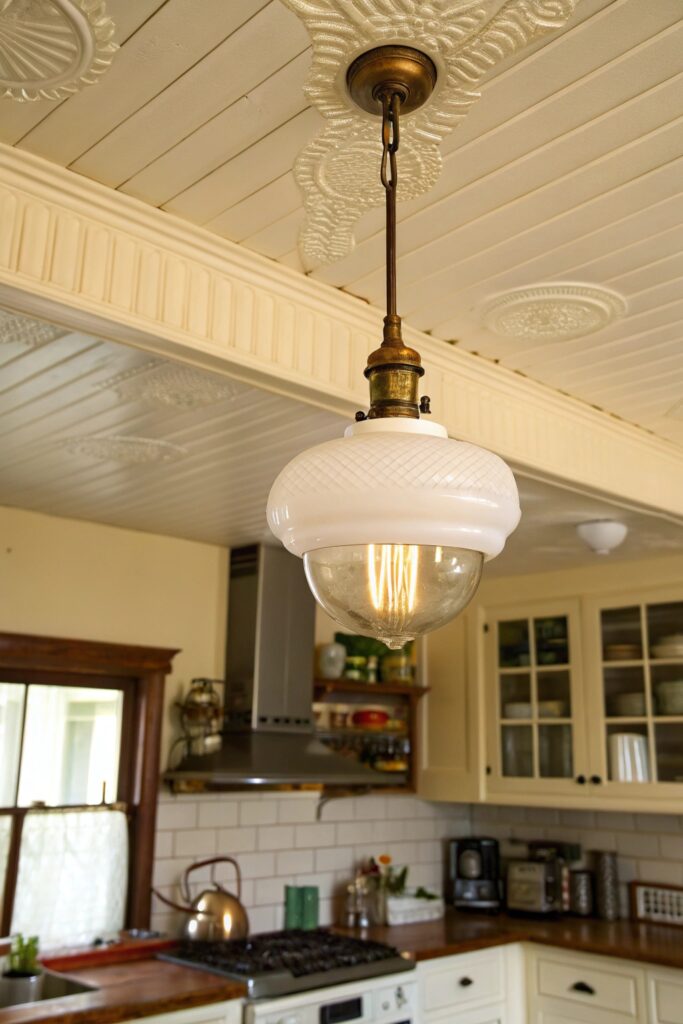
Lighting in a 1920s kitchen was straightforward — one pendant hung from the center of the ceiling, usually with a simple glass globe or enamel shade.
Reproducing this with a vintage-style pendant light in white enamel, clear glass, or milk glass immediately adds period character to the ceiling plane, which most kitchen renovations completely ignore. The schoolhouse pendant light — a round glass globe on a simple stem — is probably the most recognizable 1920s kitchen light fixture and remains widely available today.
For kitchens with longer runs above an island or peninsula, hang a series of matching pendants in a row rather than one large modern fixture. The repetition of simple forms reads very true to the era and avoids the temptation of using an oversized statement pendant that would look more contemporary than vintage.
8. Display Period-Appropriate Kitchen Collectibles
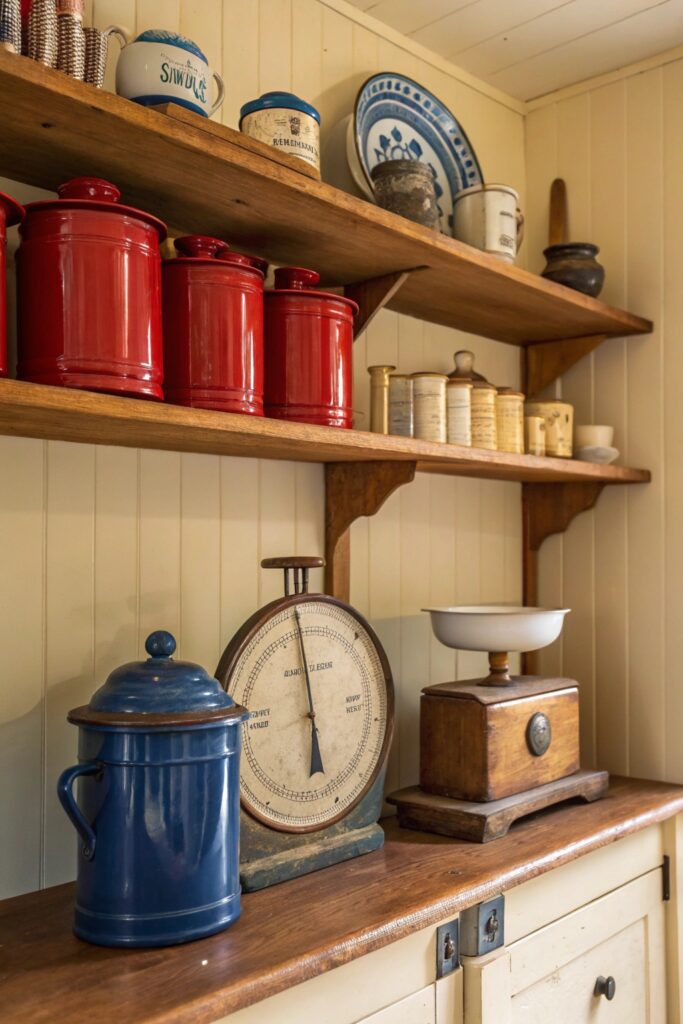
A 1920s kitchen without some vintage character on display is just a kitchen with old-style cabinets.
Authentic period collectibles — vintage canisters, enamelware, antique scales, old recipe tins — add genuine visual storytelling that no reproduction accessory can replicate. These items were the everyday objects of 1920s kitchens, and displaying them grounds the space in real history rather than manufactured nostalgia.
Great places to source them:
- Estate sales and antique markets — best prices and most authentic finds
- Online vintage marketplaces — wider selection but inspect photos carefully
- Thrift stores — hit or miss, but occasionally brilliant finds
Focus on items in red, cream, green, or cobalt blue enamel — these were the most common color palette of 1920s kitchen accessories and instantly read as period-correct to anyone familiar with the era.
9. Paint the Walls in Period-Correct Colors
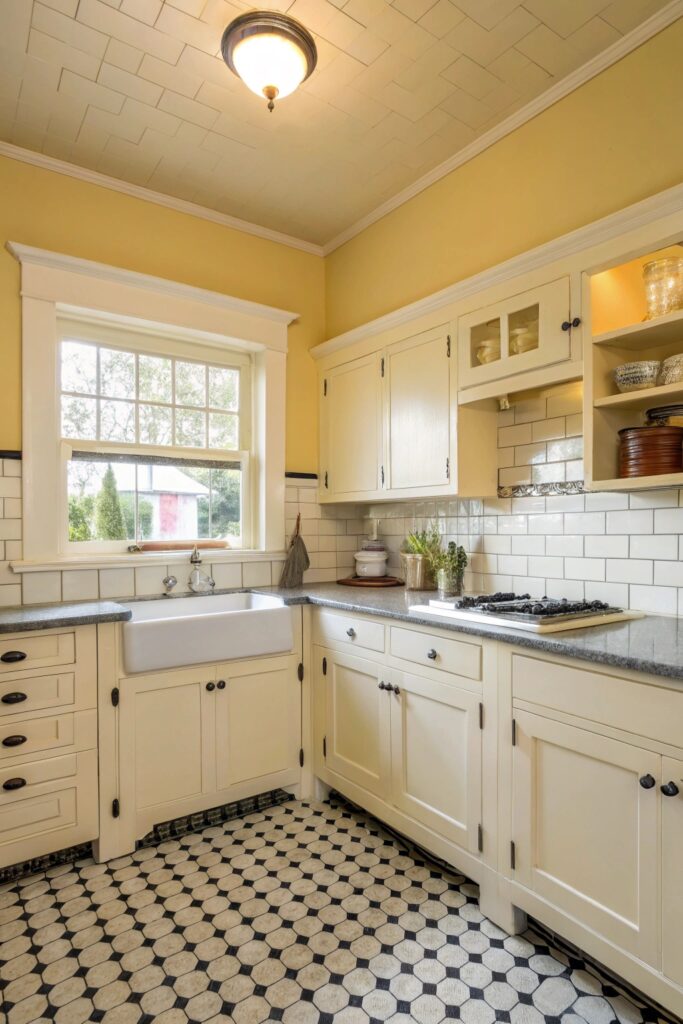
Color choices can make or break a 1920s kitchen renovation, and most people either go too stark or too safe.
1920s kitchens favored warm, practical wall colors — creamy whites, pale yellows, soft greens, and light blues that felt clean and bright without the clinical coldness of pure white. The era predated the all-white kitchen trend by several decades, and that warmth is a big part of what makes vintage kitchens feel so inviting.
Some historically accurate wall color choices:
- Buttercream yellow — warm, cheerful, extremely period-appropriate
- Mint or sage green — fresh and practical feeling
- Powder blue — soft and light, common in period kitchens
- Warm ivory — versatile and authentic
FYI — avoid cool-toned grays entirely. They read unmistakably contemporary and clash with the warmth that defines 1920s design.
10. Add a Vintage-Style Range or Retro Appliances
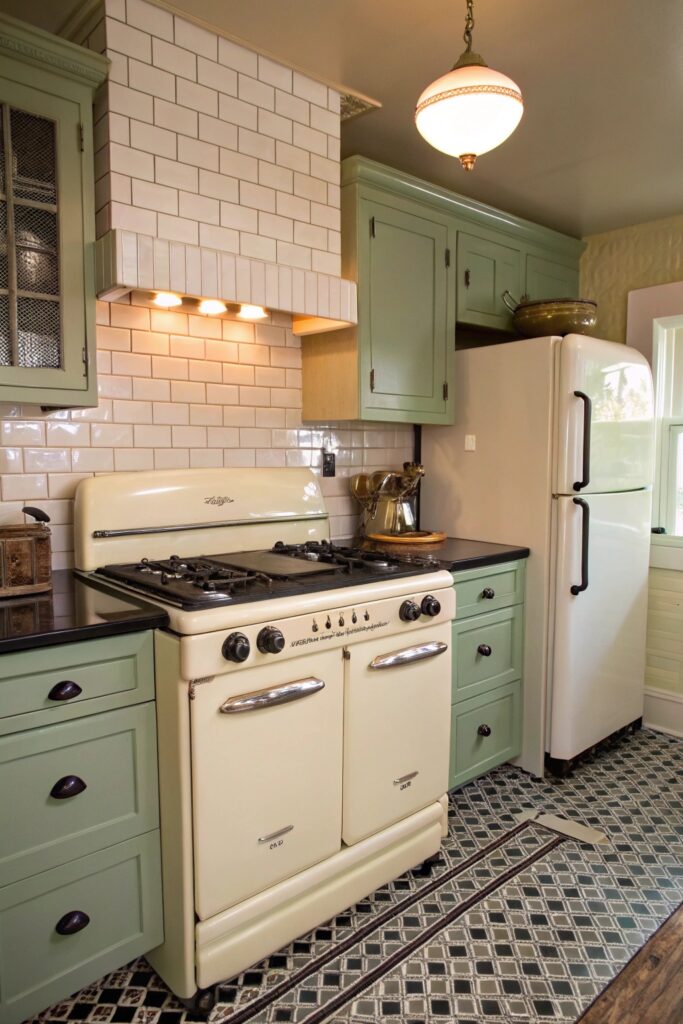
You can nail every other detail and then completely undermine it with a sleek stainless steel range that belongs in a commercial kitchen.
Retro-style appliances in cream, black, or pastel colors complete a 1920s kitchen aesthetic by ensuring the most visible functional elements match the design intent of the space. Brands like Big Chill, Smeg, and Elmira Stove Works produce ranges and refrigerators that replicate 1920s and 1930s appliance aesthetics with full modern functionality underneath.
Yes, they cost more than standard appliances. But consider this — your vintage-inspired kitchen loses about 40% of its impact the moment a brushed stainless refrigerator appears in the corner. The appliances are too large and too visible to ignore. Getting them right ties the entire room together in a way that no amount of checkerboard floor or subway tile can compensate for on its own.
Final Thoughts
A 1920s kitchen renovation isn’t about recreating a museum exhibit — it’s about borrowing the warmth, craft, and personality of an era that truly knew how to make functional spaces feel beautiful.
You don’t need to implement all ten ideas at once. Start with the flooring and cabinet hardware, layer in the lighting and backsplash, and build from there. Each element reinforces the others.
The best vintage kitchens feel lived-in and loved, not costumes. Get the foundational details right and the character takes care of itself. Now go find yourself some enamelware at an estate sale — that’s your homework 🙂