
This guide leans fully into a dramatic, fully committed dark bedroom rather than balancing black as an accent. If you’re looking for a lighter-touch approach that keeps things warm and cozy while still incorporating black, see our companion guide to black themed bedroom ideas.
Below are 13 elements worth focusing on for a fully committed dark bedroom, with the specifics for each.
1. Matte Black Walls for a Soft, Moody Base
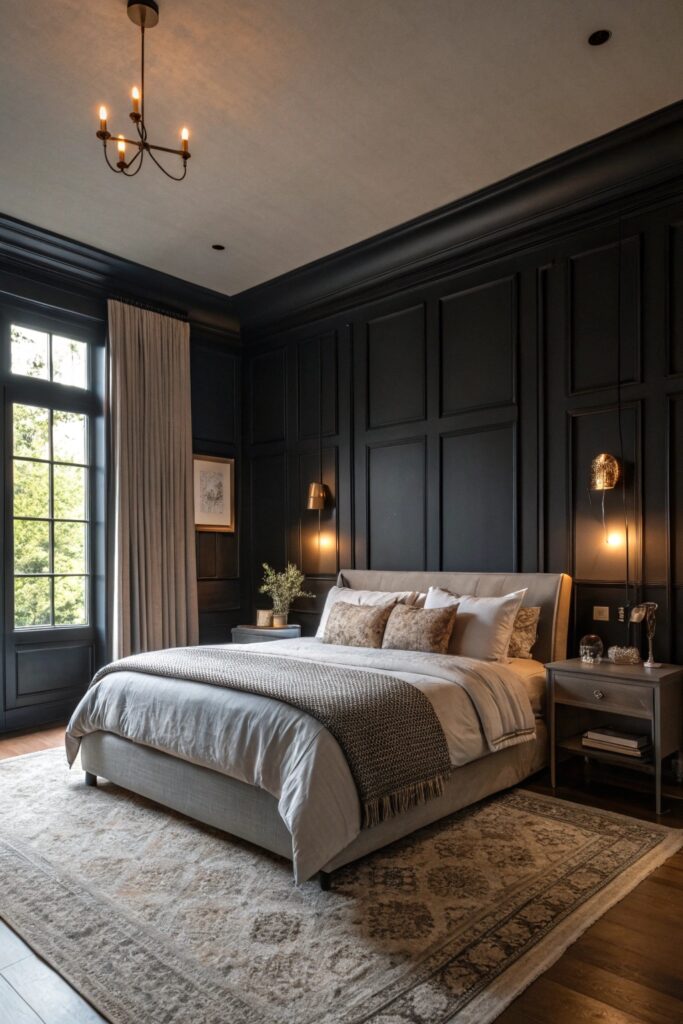
True matte black absorbs more light than any other sheen, and achieving full, even opacity often takes two to three coats rather than the one or two a lighter color might need — paint lines specifically formulated for deep colors help reduce that coat count and hold coverage more consistently.
2. Black-on-Black Layering
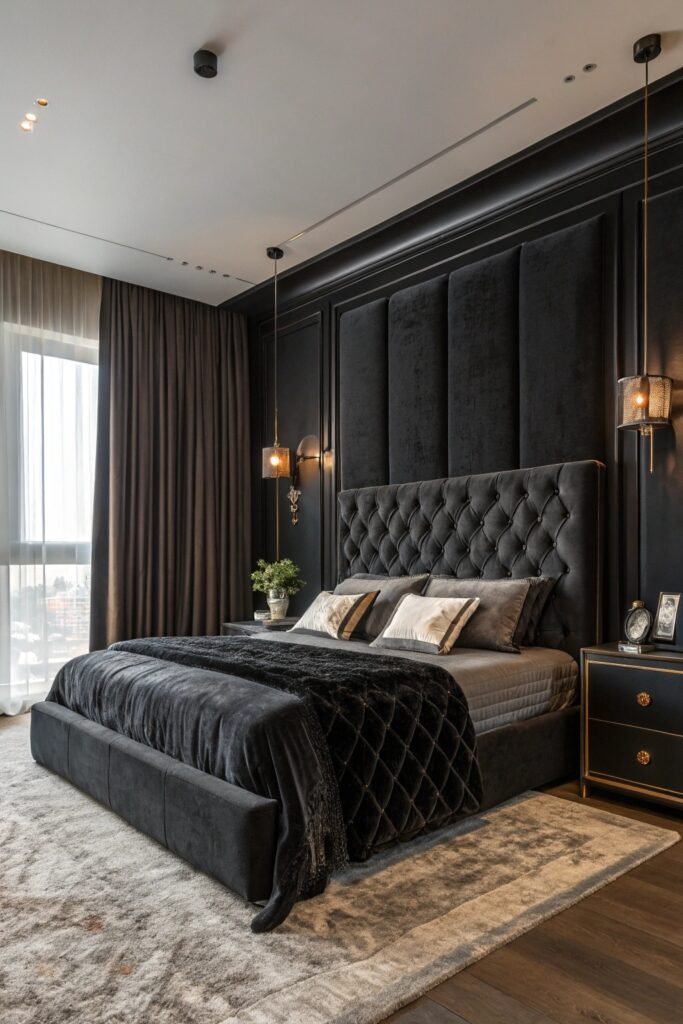
With color contrast removed entirely, texture becomes the only way the eye differentiates one surface from another — pairing a matte wall against a glossy lacquered dresser or a nubby wool throw keeps a fully black room from reading as visually flat.
3. Warm Lighting to Balance the Darkness
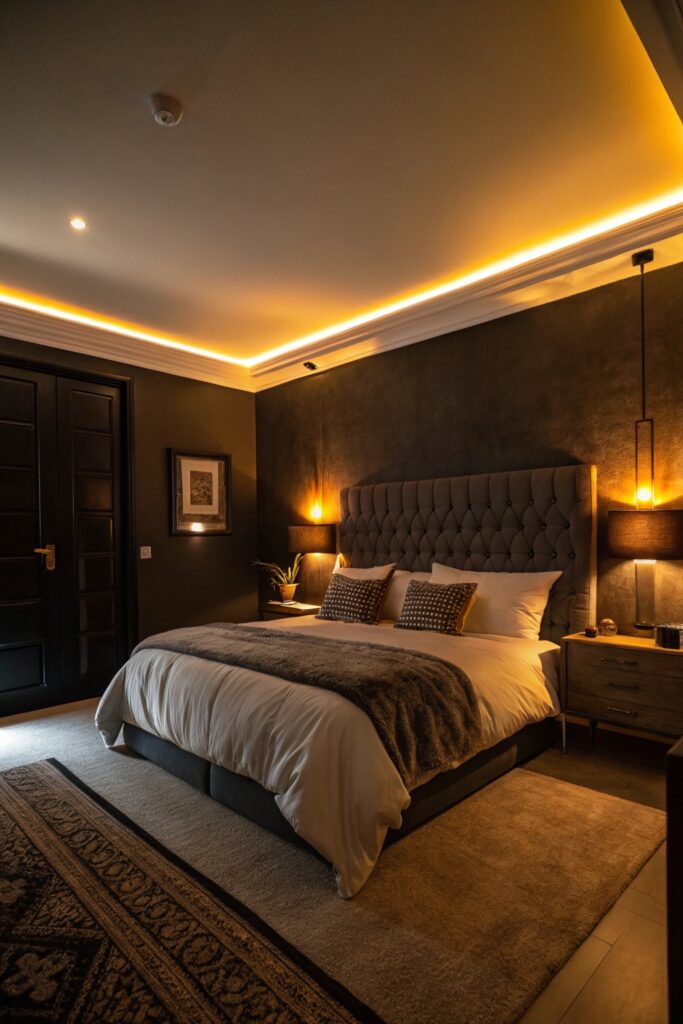
A room this dark absorbs considerably more light than a typical bedroom, so plan for meaningfully higher total lumens across your fixtures than you’d use in a lighter-walled room to reach the same perceived brightness.
4. Gold Accents for Instant Luxury
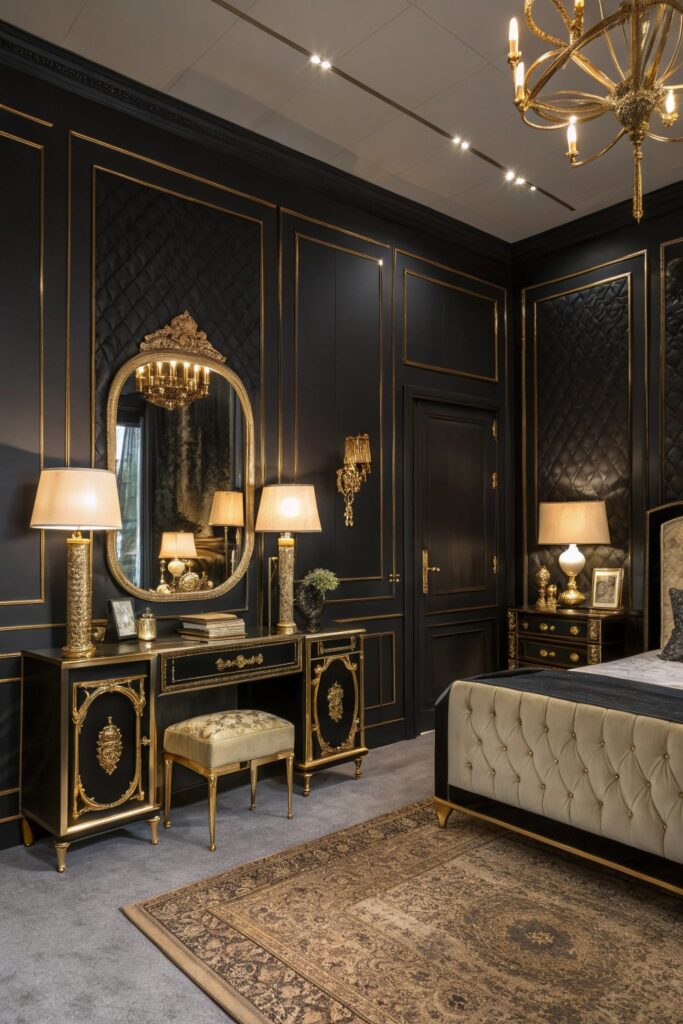
Warm metallic tones read as more luxurious against black than cooler silver or chrome finishes, which can look sterile by comparison in a room this saturated.
5. Statement Black Headboard
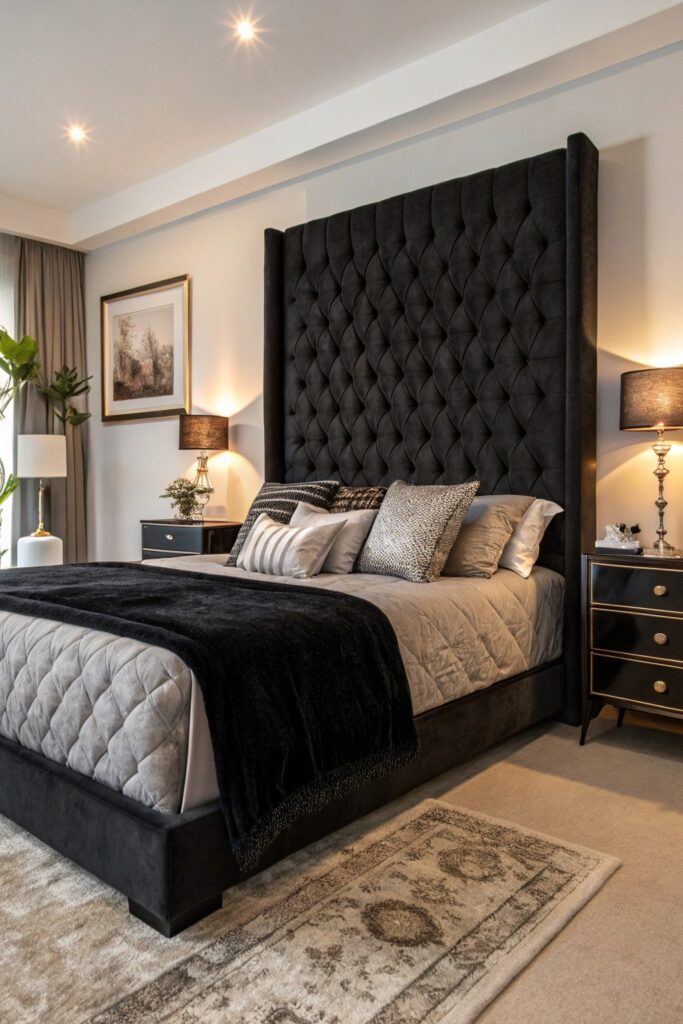
A lacquered black finish shows dust, fingerprints, and smudges more visibly than a matte upholstered option, which is worth factoring into how much maintenance you’re willing to keep up with on a piece this central to the room.
6. Dark Wood Elements for Warmth
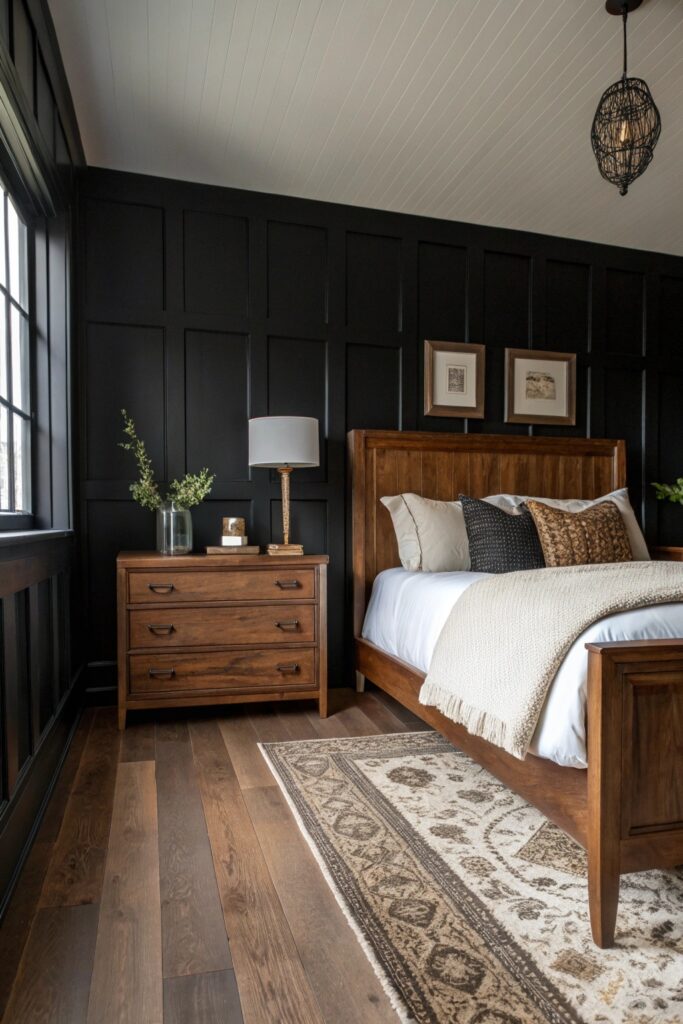
Near-black wood tones like ebonized oak or wenge need enough visible grain texture to avoid disappearing entirely into black walls — angling a light source to catch that grain helps the wood read as a distinct material rather than blending into the surrounding dark surfaces.
7. Moody Artwork That Pops
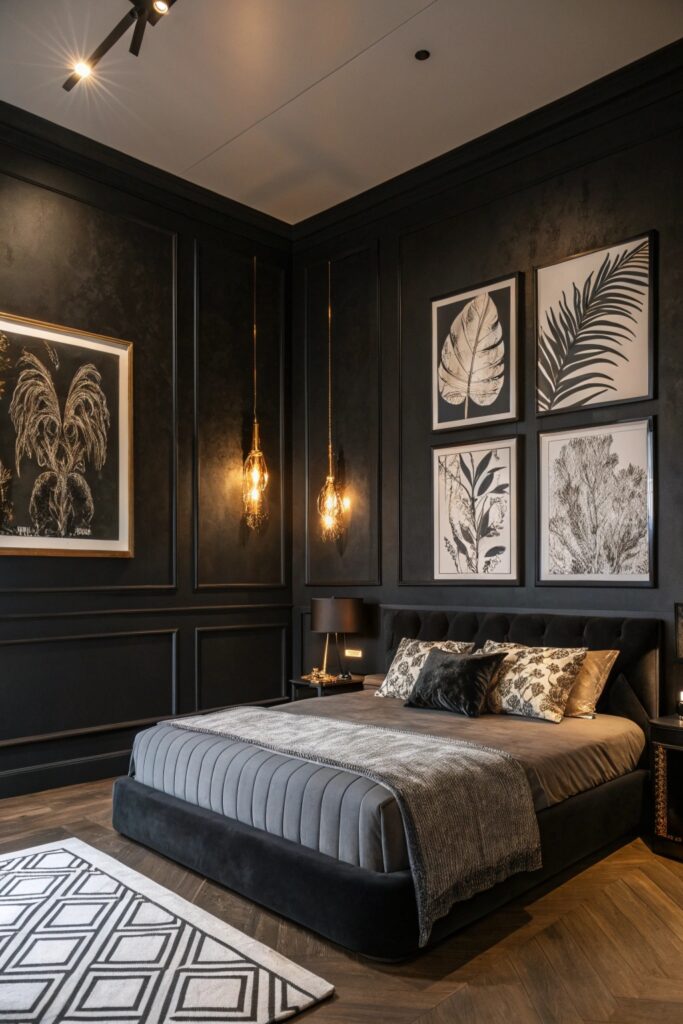
Artwork with its own internal contrast — a piece with both deep shadow and a bright highlight — holds up better as a focal point in this setting than a uniformly dark piece that risks disappearing into the wall behind it.
8. Textured Bedding for Depth

Texture does more visual work in an all-black room than it would anywhere else in the house, since there’s no color variation to rely on — mixing a bouclé throw, a linen duvet, and a velvet accent pillow creates depth that color alone can’t provide here.
9. Floor-to-Ceiling Curtains
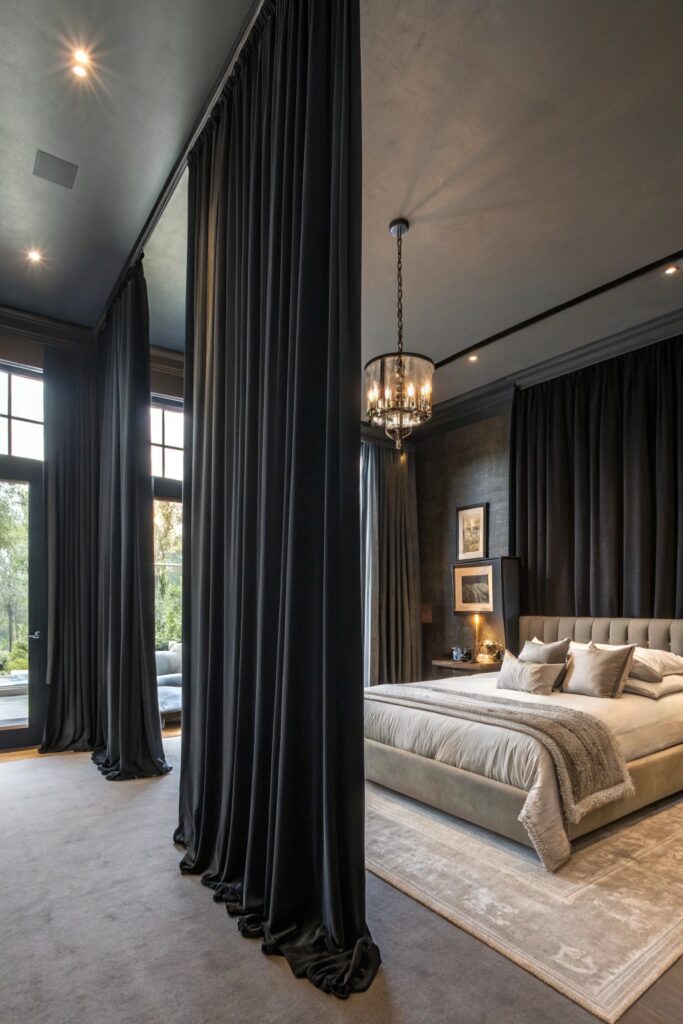
Blackout lining is somewhat redundant in an already dark room, so curtain fabric and texture become one of the few remaining visual break points — choosing a fabric with visible weave or texture keeps the curtains from disappearing flatly into black walls the way a smooth, flat black panel would.
10. Minimal Decor for Maximum Impact
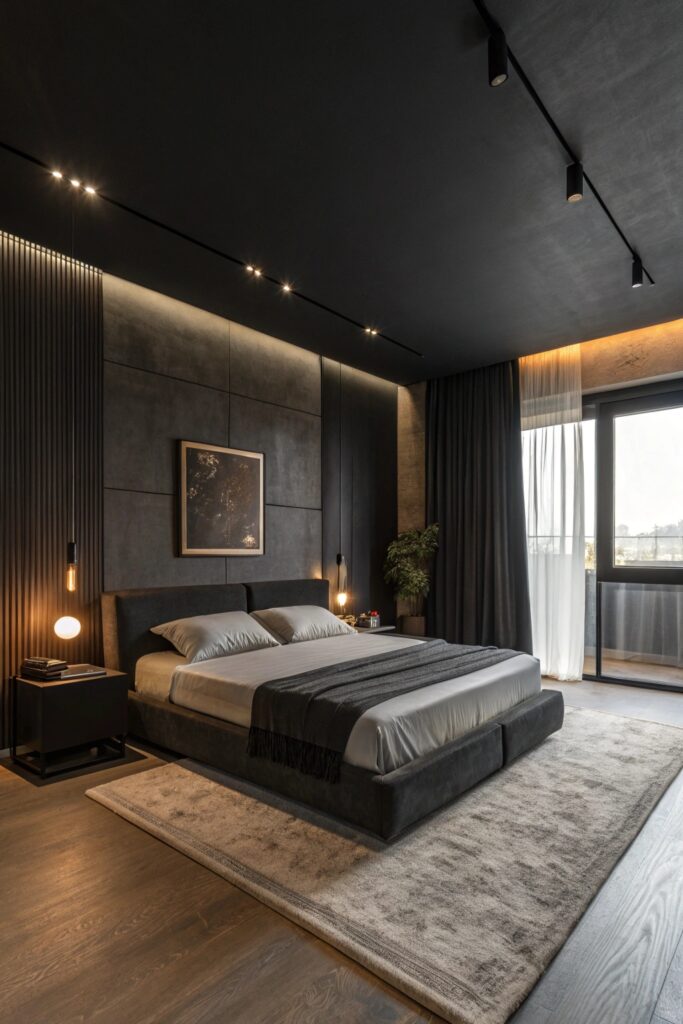
A few high-impact pieces read as more intentional in a fully committed dark room than scattered smaller items, which tend to get visually lost against the saturated backdrop rather than standing out the way they might on a lighter wall.
11. Mirrors to Reflect Light
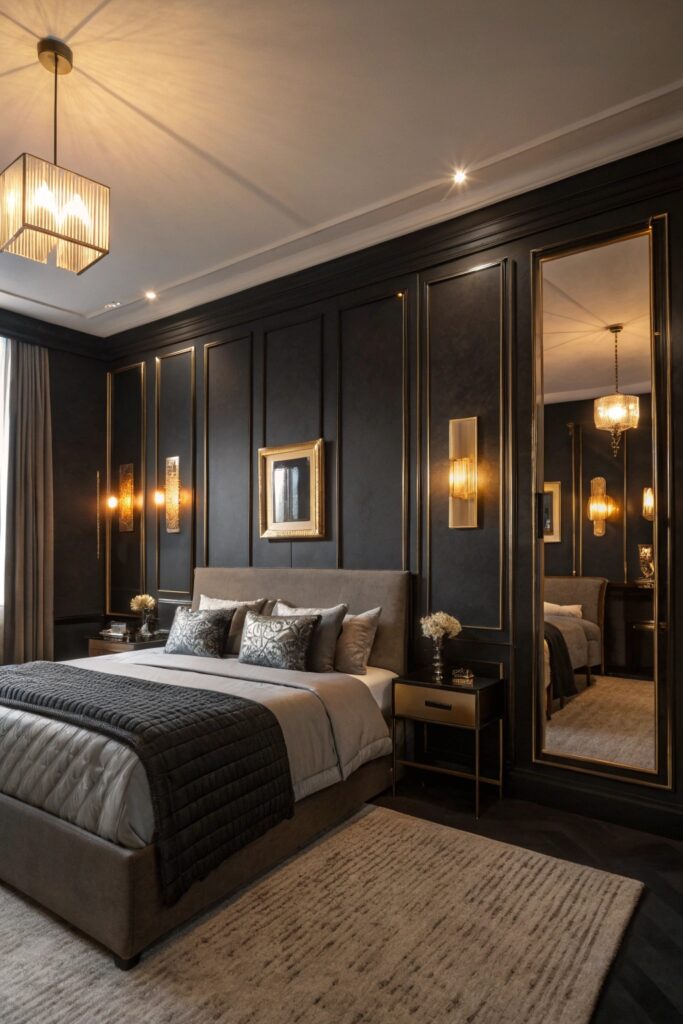
Positioning a mirror to catch whatever natural or lamp light the room does have matters more here than in a lighter room, since a dark room has less ambient light bouncing around for the mirror to amplify in the first place.
12. Accent Wall with Texture
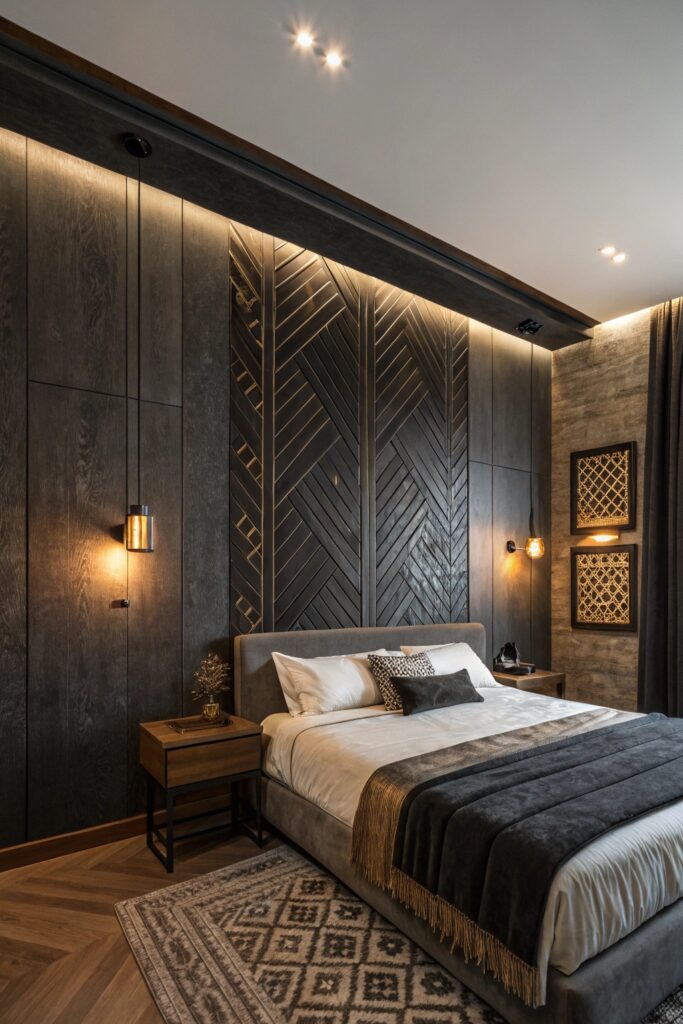
A textured wall treatment — grasscloth, paneling, plaster — catches and holds shadow differently than a flat painted wall, adding a dimension of visual interest that color variation would normally provide in a less monochromatic room.
13. Add Greenery for Contrast
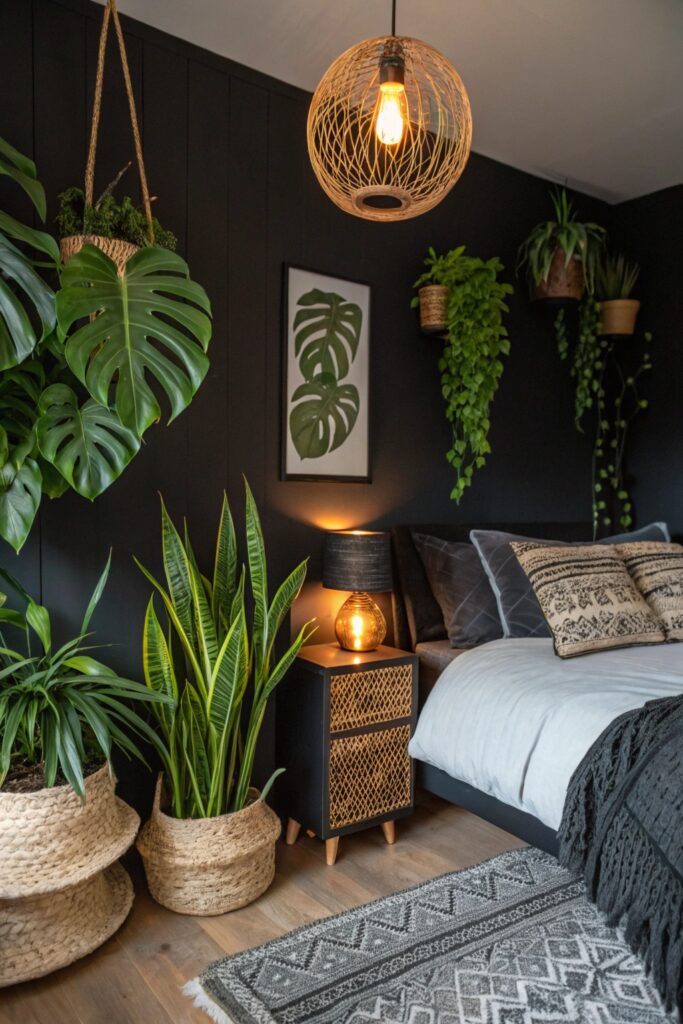
Greenery is one of the only saturated colors that reads as a genuine contrast against black without competing with a warm gold-and-wood palette, though plant selection should lean toward lower-light-tolerant varieties, since a predominantly black room absorbs more of whatever natural light reaches it.
Ventilation Matters More in a Fully Dark Room
A room with darker walls and heavier curtains often gets less natural airflow consideration than a lighter room, simply because the visual heaviness can make people less inclined to open curtains during the day. Making a habit of airing the room out regularly, regardless of how the curtains affect the aesthetic, helps prevent the stale, closed-in feeling a dark room can develop faster than a brighter one.
If the room doesn’t get much natural ventilation, a small air purifier or fan running periodically helps keep air circulating in a way that supports the moody aesthetic without the room feeling stuffy.
What This Bedroom Transformation Costs
A basic version — paint, new bedding, and a few accent pieces — typically costs $500 to $1,200 depending on paint quality and how much of the room gets repainted.
A fuller transformation including new furniture, a statement headboard, and layered lighting runs considerably higher, often $2,500 to $6,000 depending on the specific pieces chosen.
If you’re renting rather than repainting a permanent wall color, removable wallpaper in a deep black or near-black shade achieves a similar effect without the same commitment, and it’s considerably easier to remove and restore the original wall color when moving out than a full repaint would be.
Sample the actual paint color on a large section of wall, at least a few feet wide, and view it across a full day and evening before committing to painting the entire room, since black shifts more noticeably between daylight and artificial light than lighter colors typically do.
This level of commitment to a single dark palette isn’t right for every household, and that’s a reasonable thing to weigh before painting an entire bedroom — a fully dark room noticeably changes how the space feels day to day, in a way a small accent choice never quite does.
Full Commitment Requires More Deliberate Lighting
A bedroom this saturated in black depends more heavily on deliberate, layered lighting than almost any other design choice on this list — without it, the room reads as flat or cave-like rather than moody and intentional. Multiple light sources at different heights, rather than a single overhead fixture, do the most work in making a fully dark room feel considered rather than simply dim.
Testing your specific paint, fabric, and wood choices together under the room’s actual lighting before finalizing everything matters more here than in a typical color scheme, since black shows more variation between different light sources than lighter colors do.