
This guide focuses specifically on pairing a wall tile with a complementary floor or accent tile. For ideas centered on individual tile patterns and formats — herringbone, zellige texture, and large-format layouts — see our companion guide to shower tile ideas for a high-end look.
Below are 12 wall-and-floor pairings worth considering, with practical notes for each.
1. White Marble Look with Black Hexagon Floor
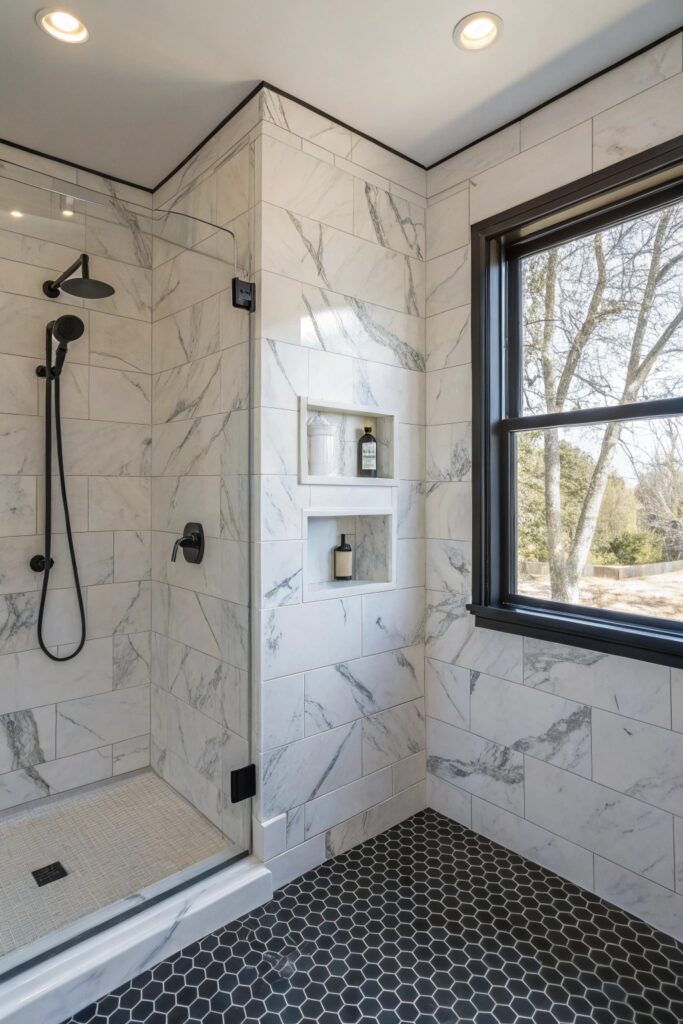
This pairing works because the floor’s smaller pattern grounds the walls’ larger, simpler surface, keeping the shower from feeling visually top-heavy.
Choose porcelain over genuine marble for the walls specifically if budget or maintenance is a concern, since porcelain resists staining and etching considerably better in a wet environment.
2. Warm Beige Travertine with Cream Mosaic Accent
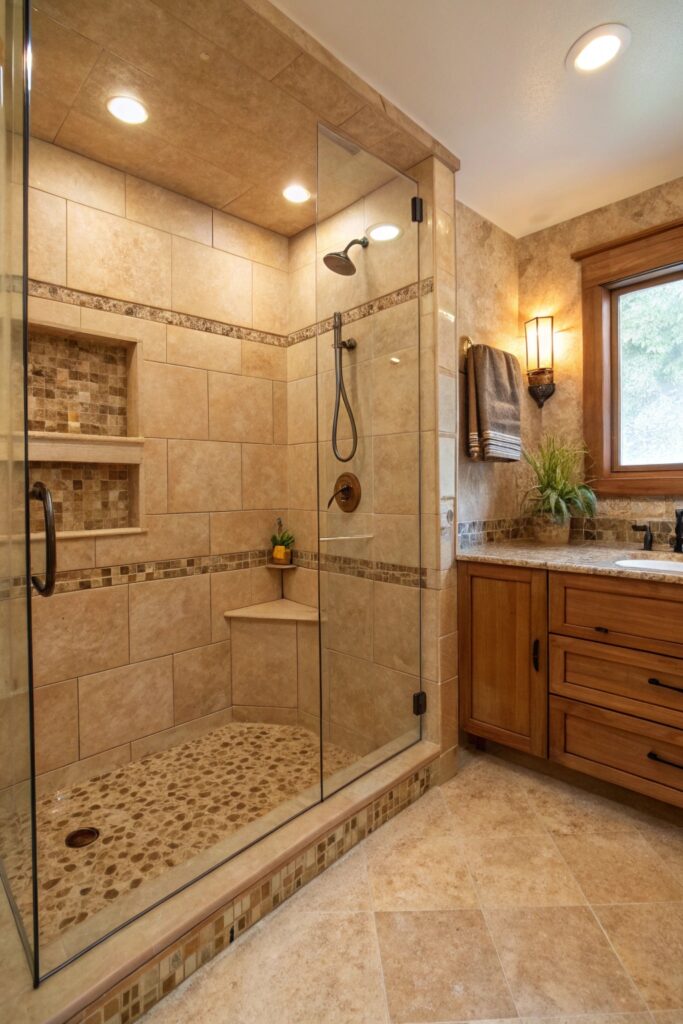
Keeping both materials in the same warm color family, just different tones, creates cohesion without the wall and floor needing to match exactly.
This pairing works especially well in a shower with limited natural light, since the lighter travertine wall reflects what light is available.
3. Charcoal Slate with White Penny Tile Floor
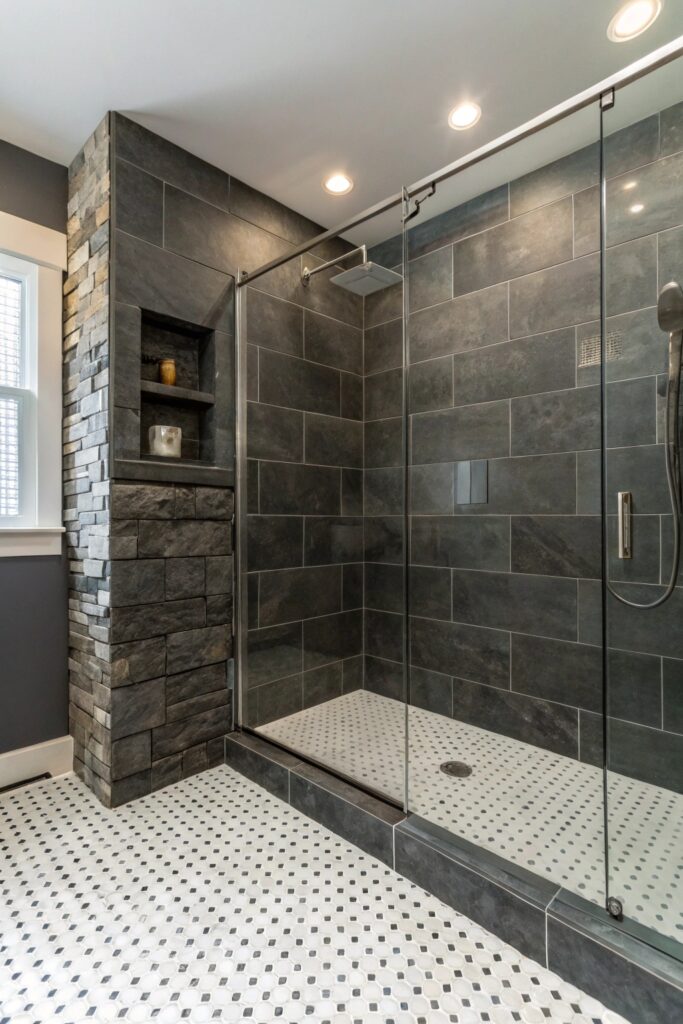
The floor’s genuinely high grout-line density adds slip resistance, which is a practical benefit alongside the visual contrast against darker walls.
Confirm the penny tile has a genuinely textured, slip-resistant finish rather than a smooth glossy one, which matters directly for safety on a wet shower floor.
4. Soft Grey Large Format with Thin Vertical Mosaic Strip
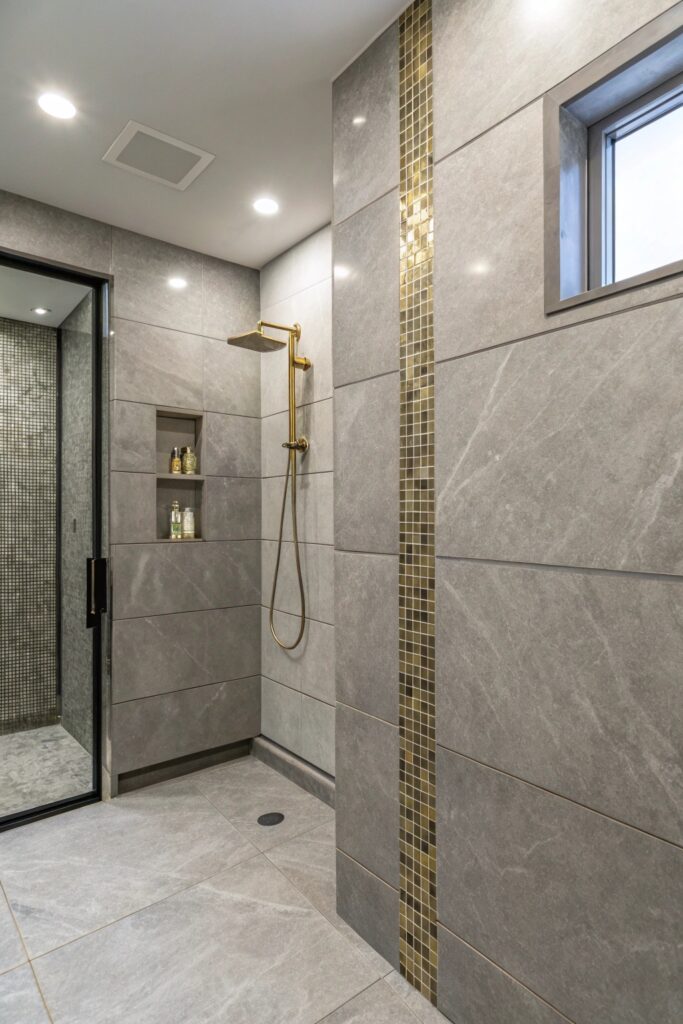
A narrow accent strip breaks up a large expanse of plain tile without the cost of covering the whole wall in a more expensive material.
Keep the mosaic strip’s width proportional to the shower’s actual size, since an oversized accent can compete with the large-format tile rather than complementing it.
5. Navy Blue Zellige with White Grout
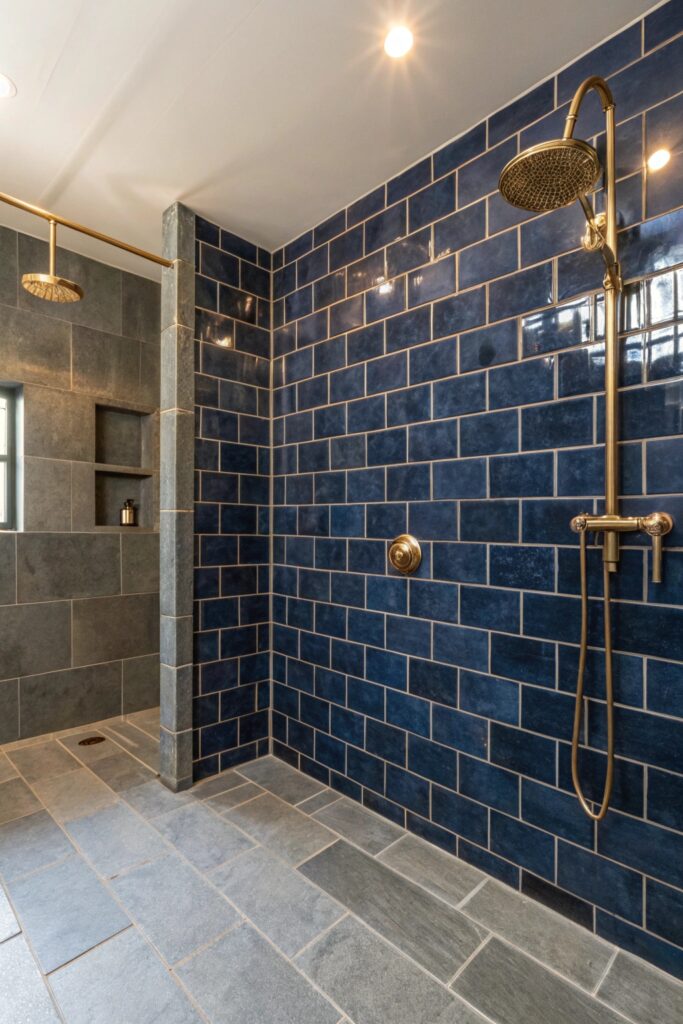
White grout against navy genuinely highlights zellige’s natural variation between tiles, which a matching grout color would minimize.
Genuine handmade zellige costs considerably more than a machine-printed imitation, so budget accordingly if authenticity matters to you.
6. Soft White Subway with Contrasting Dark Grout
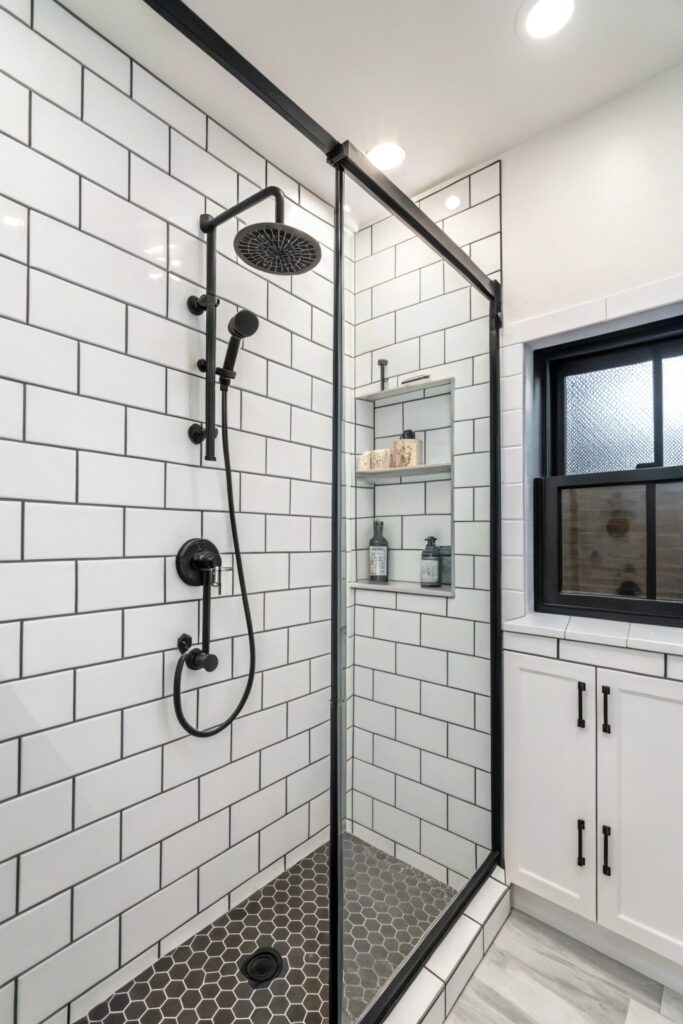
Dark grout makes the tile’s actual layout pattern the visual focus, working well if you want subway tile to read as more than just a plain backdrop.
A wider grout line specifically shows more of the contrast effect than a narrow one, which is worth considering when planning the installation.
7. Warm Terracotta with Cream Field Tile
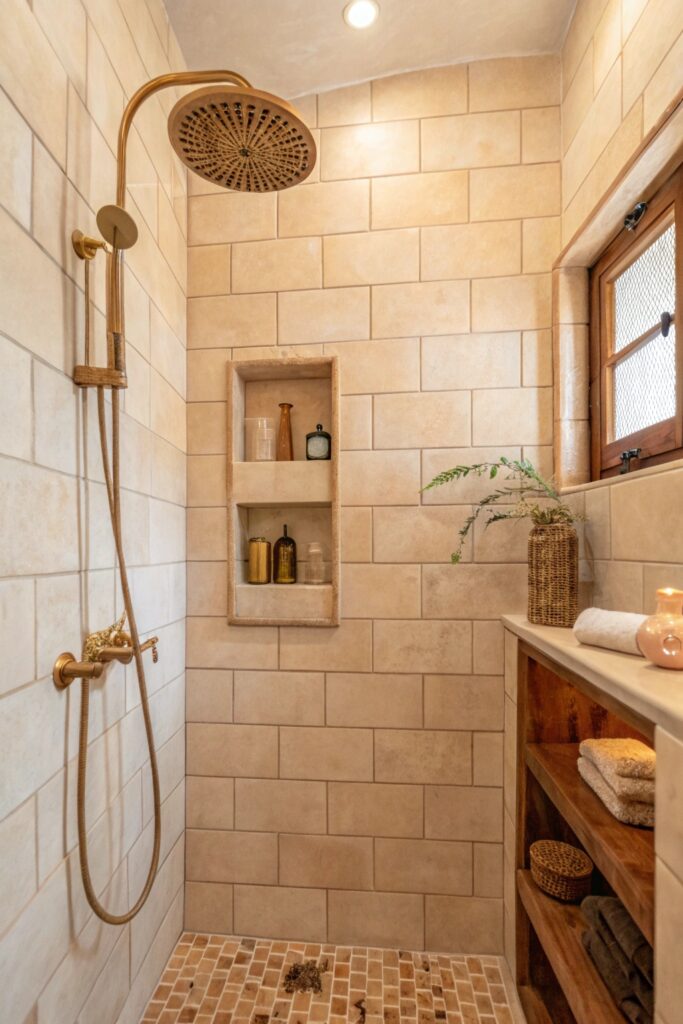
This combination brings genuine warmth to a room that’s otherwise often dominated by cooler tile choices like white or grey.
This warmer palette pairs particularly well with brass or matte gold fixtures, which pick up on terracotta’s inherent warmth.
8. Black Marble with Brushed Gold Accents
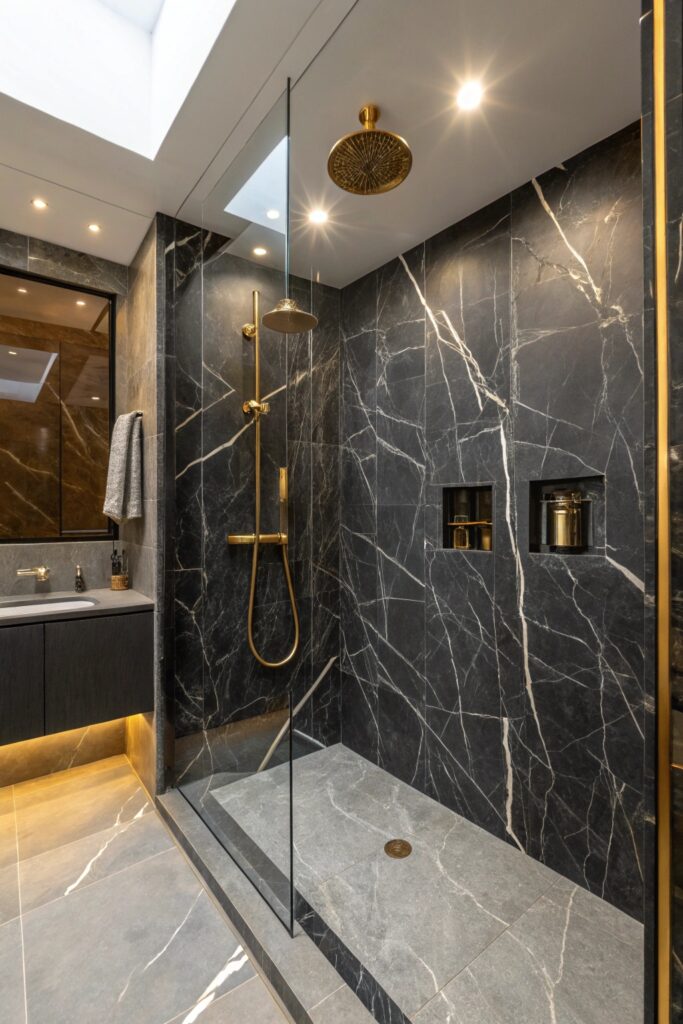
Metal trim pieces genuinely elevate a black marble shower beyond what the tile alone would achieve, adding a distinctly finished, higher-end look.
Confirm the specific gold finish is rated for a wet environment, since not every decorative metal trim is designed to hold up to constant moisture.
9. Soft Sage Green Gloss with White Marble Floor
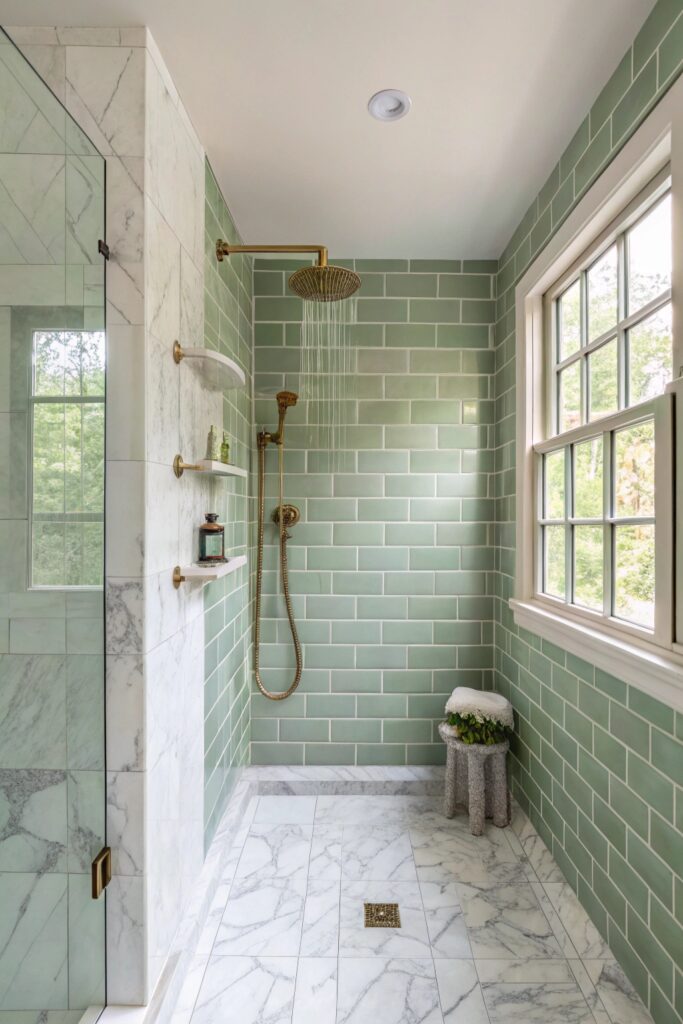
A glossy finish on the wall tile reflects light in a way that keeps a colored shower from feeling dark or enclosed.
Choose a genuinely glossy finish rather than matte for this combination specifically, since the reflectivity is part of what keeps a colored shower from feeling closed in.
10. Concrete Look Large Format with Teak Wood Accents
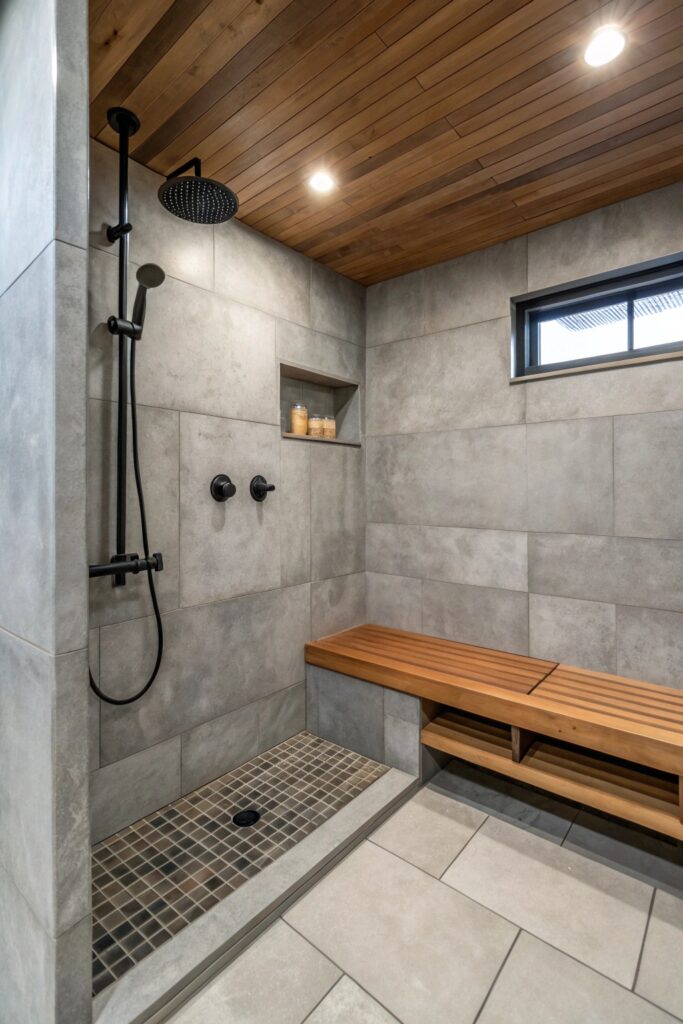
Teak specifically is treated to hold up in wet environments, making it a genuinely practical wood choice for this application rather than purely decorative.
Seal any wood accents thoroughly and reseal periodically, since even water-resistant teak needs some ongoing maintenance in a genuinely wet shower environment.
11. White Fluted Tile with Warm Natural Stone Floor
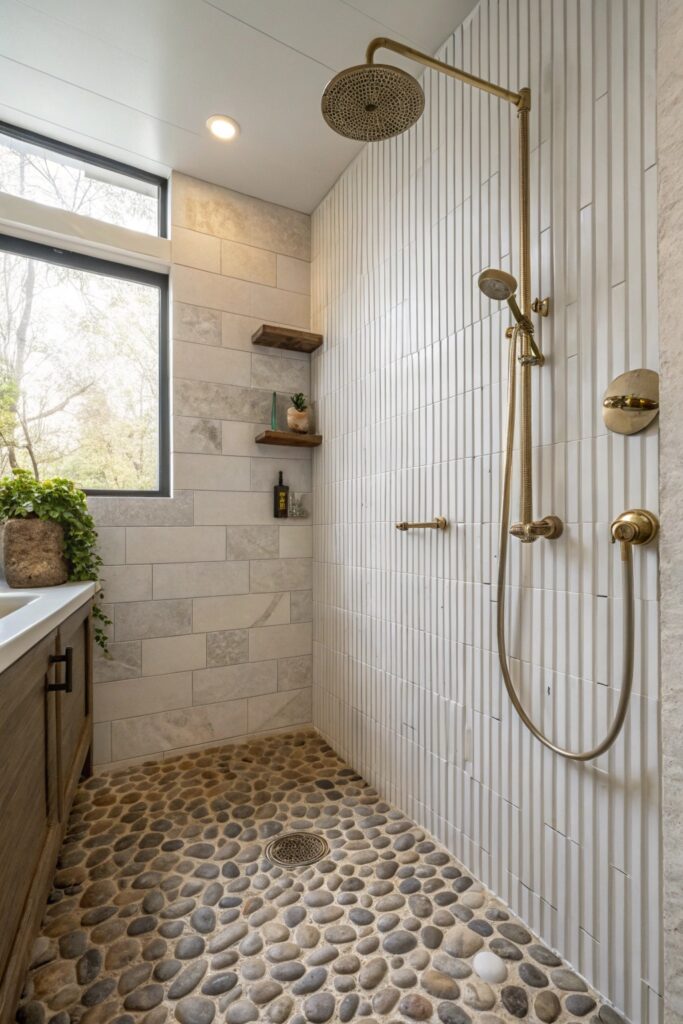
The fluted tile’s dimensional texture catches light differently throughout the day, adding genuine visual interest beyond a flat tile surface.
This texture shows water spots more visibly than a flat tile, so plan on wiping it down more regularly to keep it looking its best.
12. Two-Tone Tile Split — Matte White Upper, Moody Dark Lower
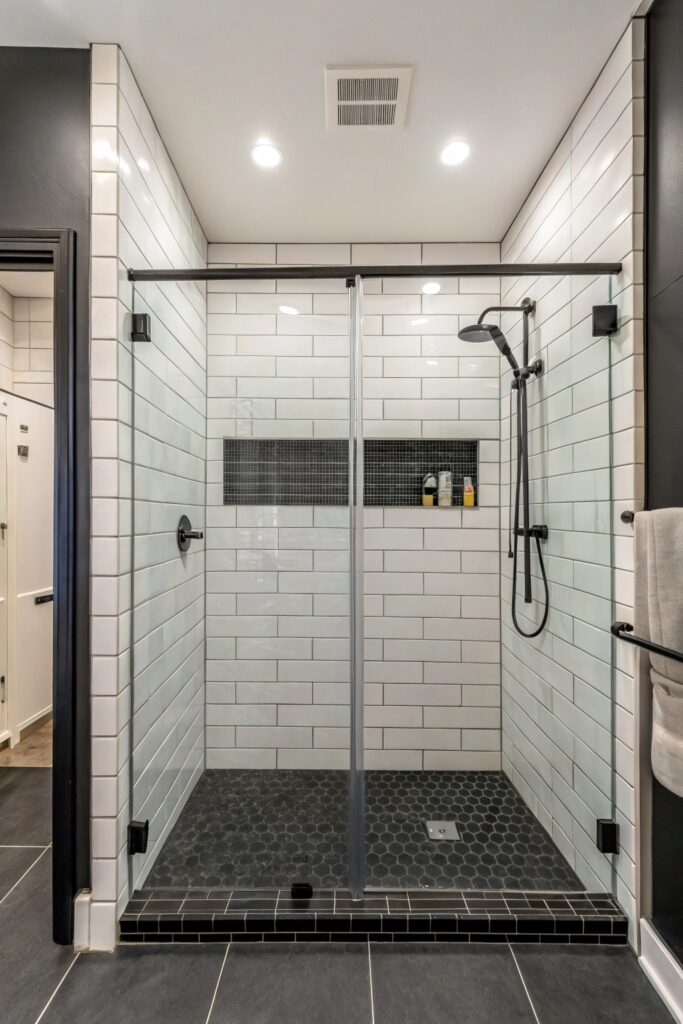
Splitting the wall at roughly waist height with two different tones creates a genuinely dramatic effect while keeping the actual materials relatively simple.
Installation Costs to Expect
Material and labor for a full shower retile typically runs $2,000 to $6,000 depending on tile choice and shower size, with natural stone and handmade tile like zellige landing at the higher end.
Porcelain large-format tile is usually the most budget-friendly option that still achieves a genuinely high-end look, since it mimics marble and stone at a fraction of the material cost.
Getting the Grout Right
Grout color affects the final look almost as much as the tile itself, and it’s worth testing a sample rather than assuming a standard white or grey will work.
Epoxy grout resists staining and mildew better than standard cement-based grout, which is worth the extra cost in a shower’s constantly wet environment.
Get quotes from at least two installers before committing to a specific tile choice, since labor costs vary considerably based on pattern complexity, tile size, and how much cutting a particular layout requires.
Order physical samples of both the wall and floor tile before committing to a full order, and view them together in your actual bathroom’s lighting, since colors can read noticeably differently under a showroom’s lighting than they will at home.
Whatever combination you land on, matching it to the rest of the bathroom’s fixtures and vanity finish matters as much as the pairing itself, since a genuinely well-chosen tile can still look disjointed if it clashes with everything else in the room.
Take your time with this decision, since a tile choice is one of the more permanent and expensive parts of a bathroom renovation, and it’s worth getting genuinely right rather than rushing to finish the project.
Conclusion
Keeping the wall and floor tile within the same general color family, even with different tones or textures, is usually what makes a pairing feel intentional rather than randomly assembled. Grout color deserves as much consideration as the tile itself, since it can either blend a pairing together or add genuine contrast depending on the choice.