
A backsplash affects a kitchen’s overall look more than almost any other single surface, since it sits directly in the sightline between the countertop and upper cabinets where attention naturally lands.
Below are 15 backsplash options worth considering, with real costs and practical notes for each.
1. Classic White Subway Tile
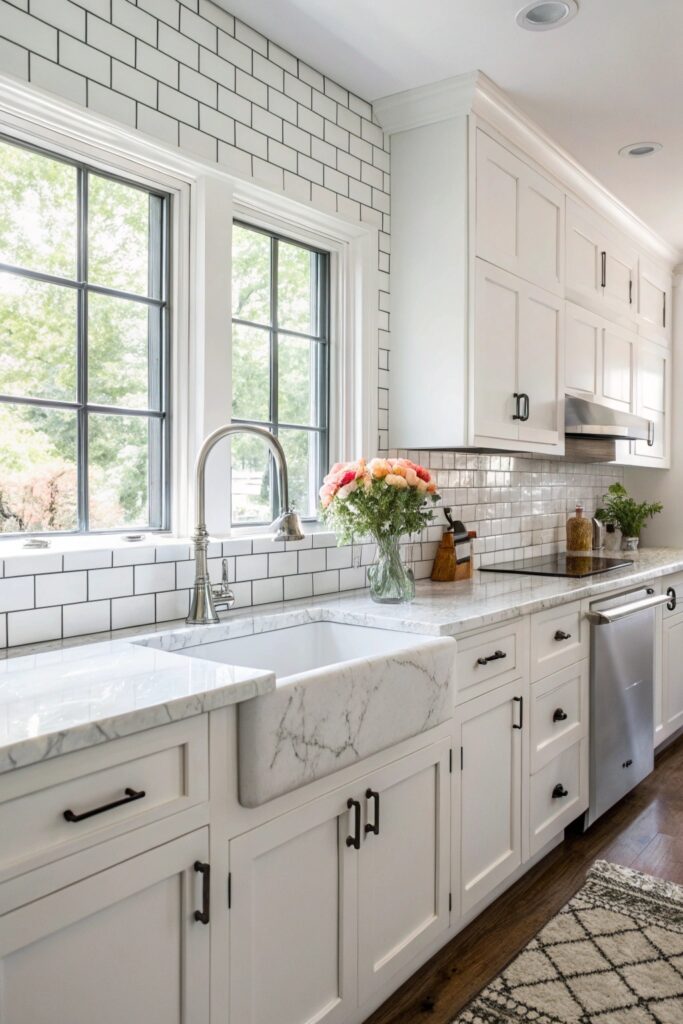
Subway tile ($3-8 per square foot) is inexpensive, widely available, and pairs with nearly any cabinet or countertop choice, which is why it remains a safe default years after first becoming popular.
A slightly off-white or cream subway tile reads as warmer than a stark white version, which is worth sampling against your specific cabinet color first.
2. Zellige Moroccan Tile
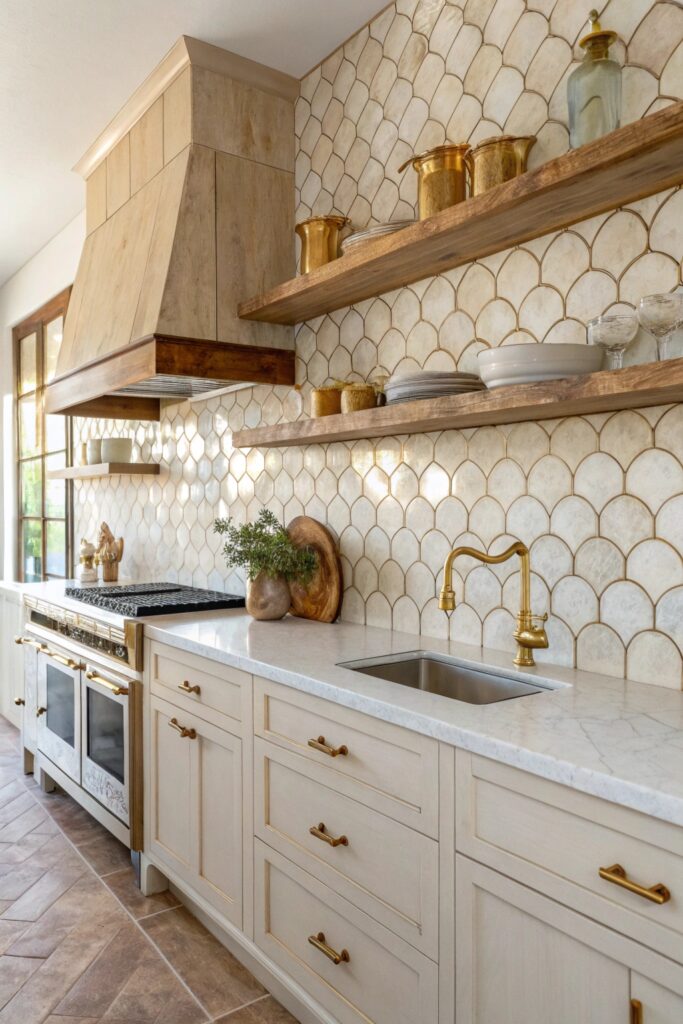
Genuine zellige has natural color and surface variation between tiles, giving a backsplash real handmade texture that uniform ceramic tile can’t replicate.
Confirm you’re getting genuinely handmade zellige rather than a machine-printed imitation if authenticity matters to you, since the price difference between the two is significant.
3. Bold Patterned Encaustic Tile
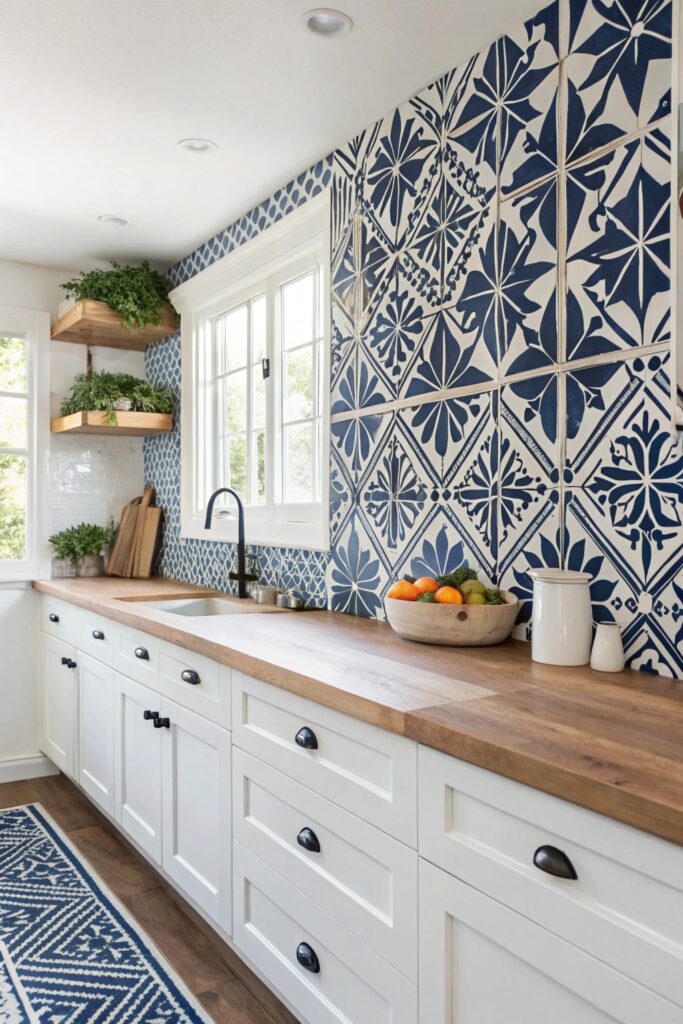
A patterned tile section works best used sparingly, as an accent behind a range or sink, rather than covering the entire backsplash area.
Choose a tile with a matte finish for a pattern this bold, since a glossy version can make an already busy design feel even more visually loud.
4. Stacked Vertical Subway Tile
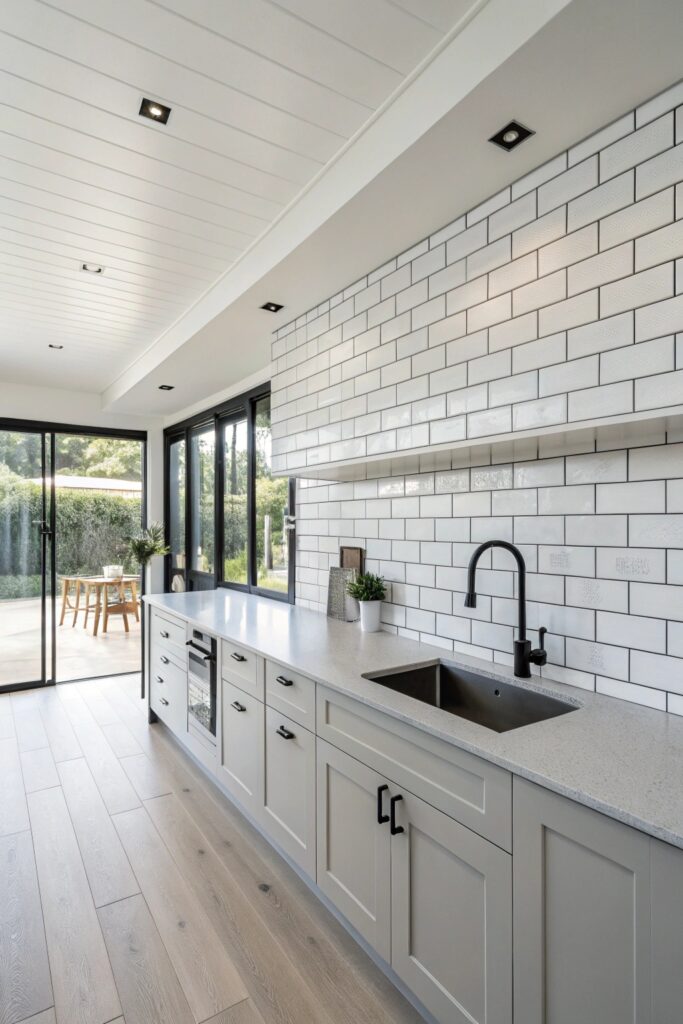
Laying standard subway tile in a vertical stack instead of the usual brick pattern updates a familiar material without the cost of switching to something entirely different.
This layout works especially well in a narrow space between counter and cabinets, since the vertical lines draw the eye upward rather than across.
5. Natural Stone Slab Backsplash
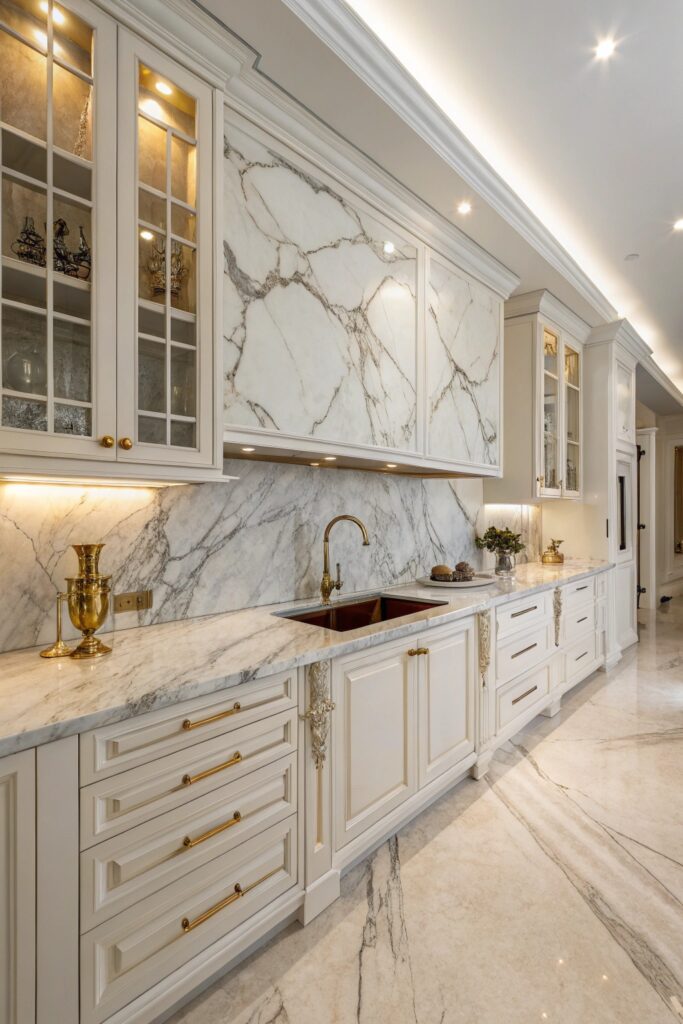
A single slab matched to the countertop creates a genuinely seamless look with no grout lines, though it comes at a considerably higher cost than tile.
Have the slab professionally templated and cut, since even small measurement errors are considerably more costly to fix with stone than with tile.
6. Glossy Ceramic Tile in a Bold Color
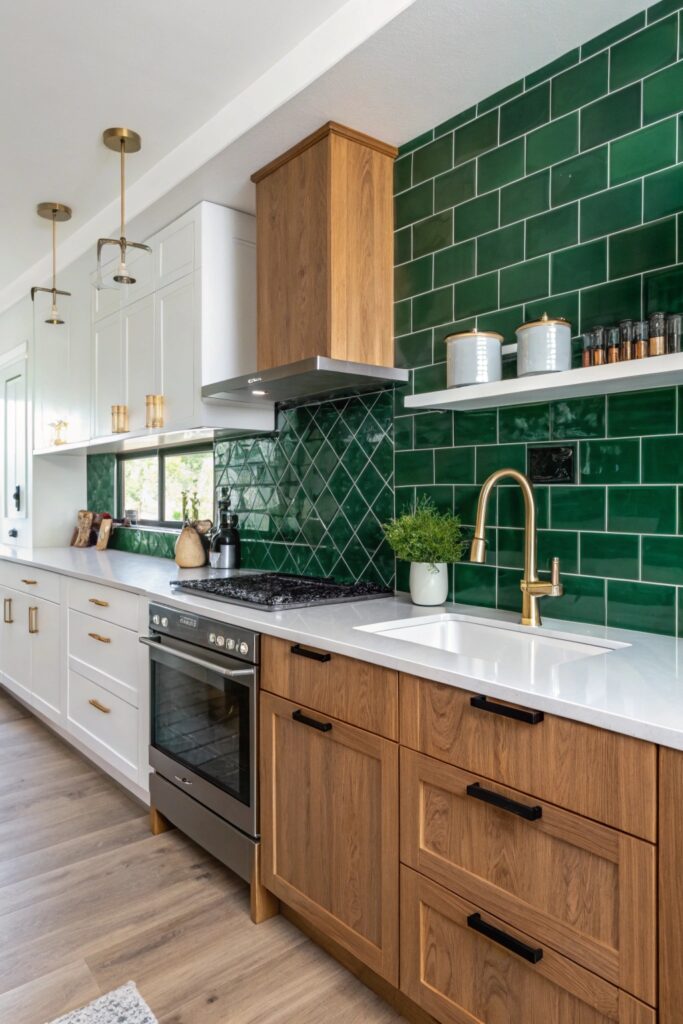
A saturated color tile reflects light differently than a matte finish, adding genuine brightness to a kitchen that might otherwise read as neutral throughout.
Test the color against your cabinet and countertop finishes with an actual sample tile before ordering, since color can shift under different lighting.
7. Herringbone Pattern Tile
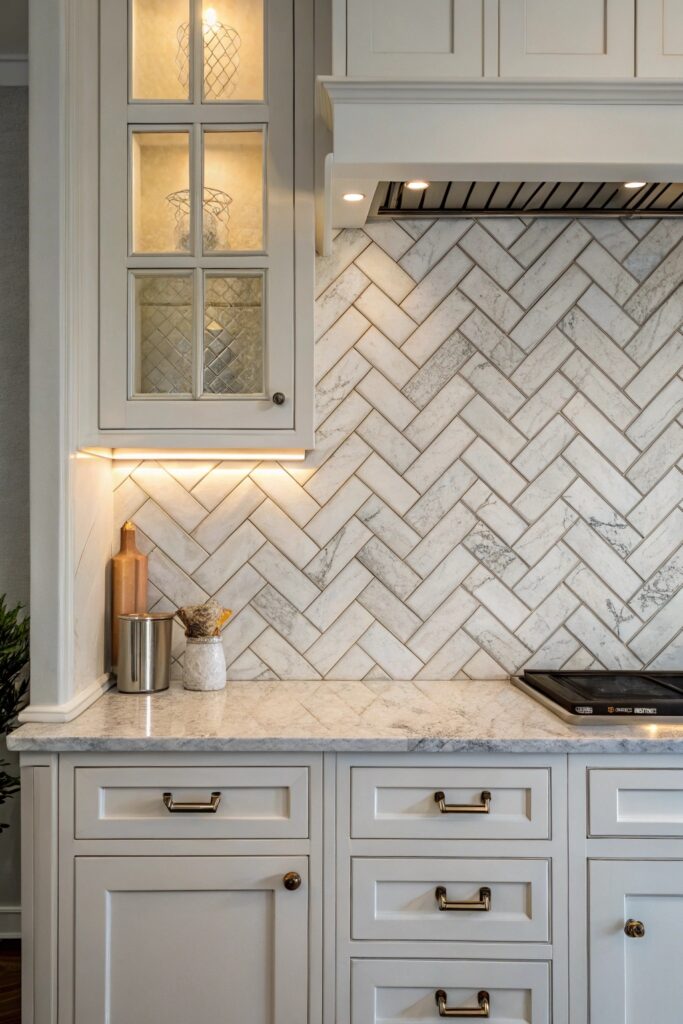
The herringbone layout takes more tile and more installation time than a straight pattern, which is worth budgeting for if you choose this option.
Budget for extra tile beyond the basic square footage calculation, since herringbone generates more cut waste than a straight pattern.
8. Peel-and-Stick Backsplash Tile
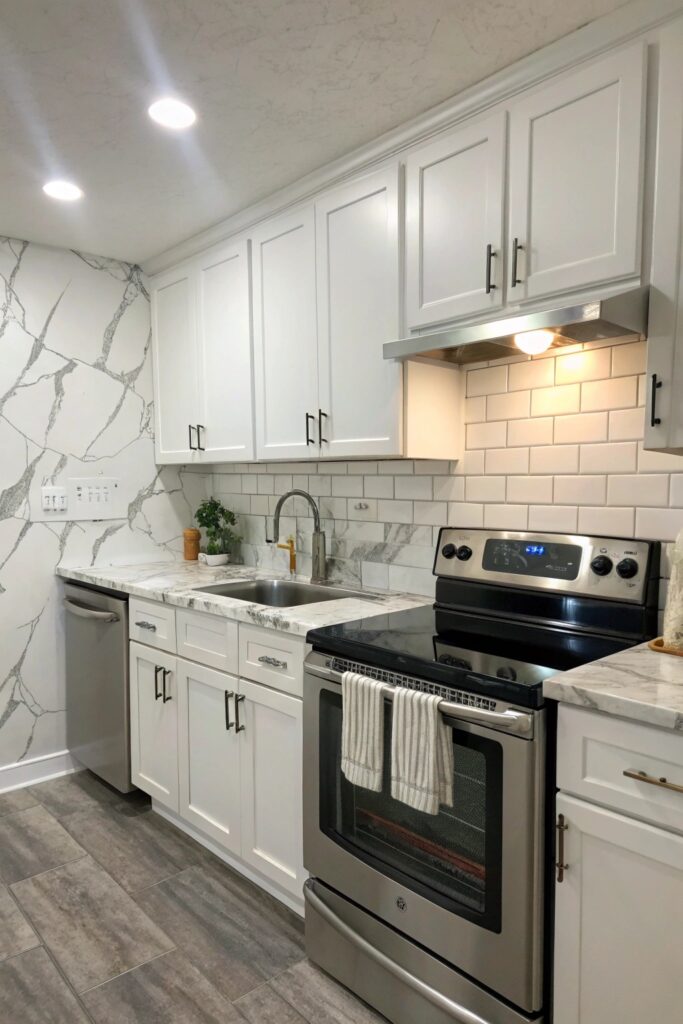
This is the most accessible option for renters specifically, since it installs and removes without any permanent changes to the wall behind it.
Clean the wall thoroughly and let any paint fully cure before applying peel-and-stick tile, since it won’t adhere well to a surface with residue or fresh paint.
9. Glass Mosaic Tile
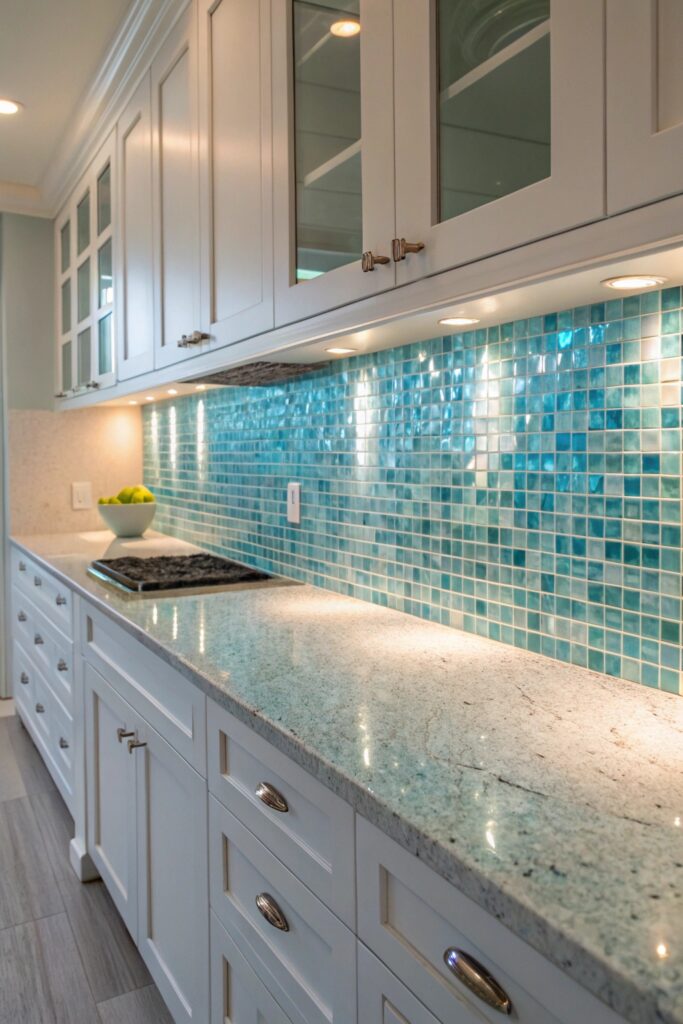
Glass tile reflects light in a way ceramic doesn’t, adding genuine shimmer that’s particularly noticeable under kitchen task lighting.
Choose a mosaic sheet with a consistent backing mesh, which makes installation considerably easier than individually placing loose tiles.
10. Brick Backsplash
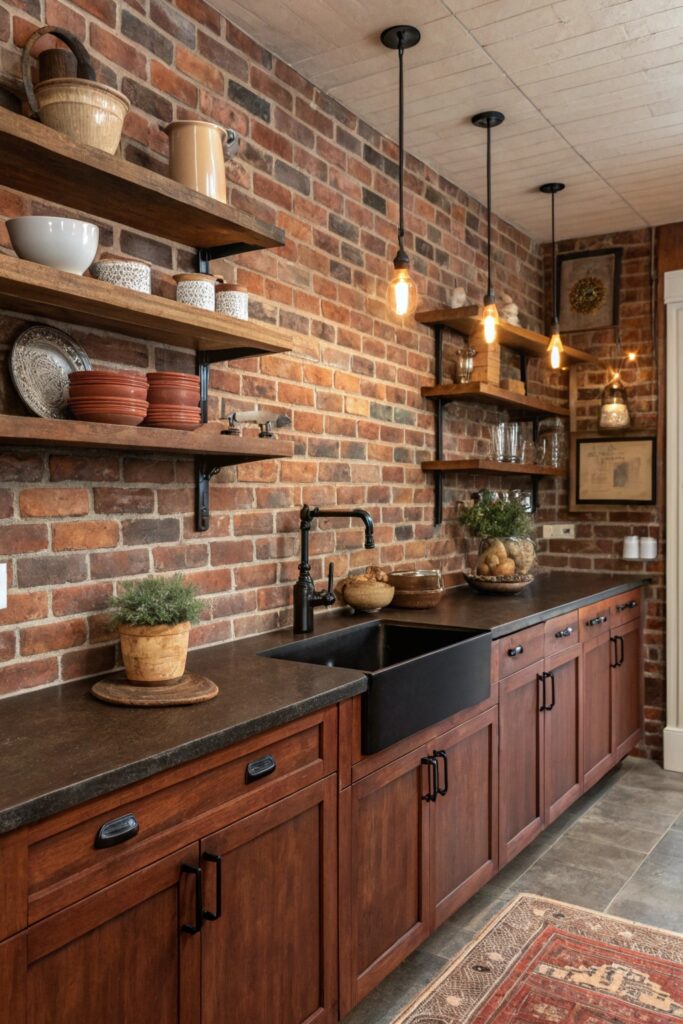
Thin brick veneer achieves this look without the weight or installation complexity of full brick, making it a more practical choice for most kitchen renovations.
Confirm the veneer’s thickness works with your existing outlet covers and cabinet trim, since even thin brick adds more depth than standard tile.
11. Mirrored Backsplash Tile
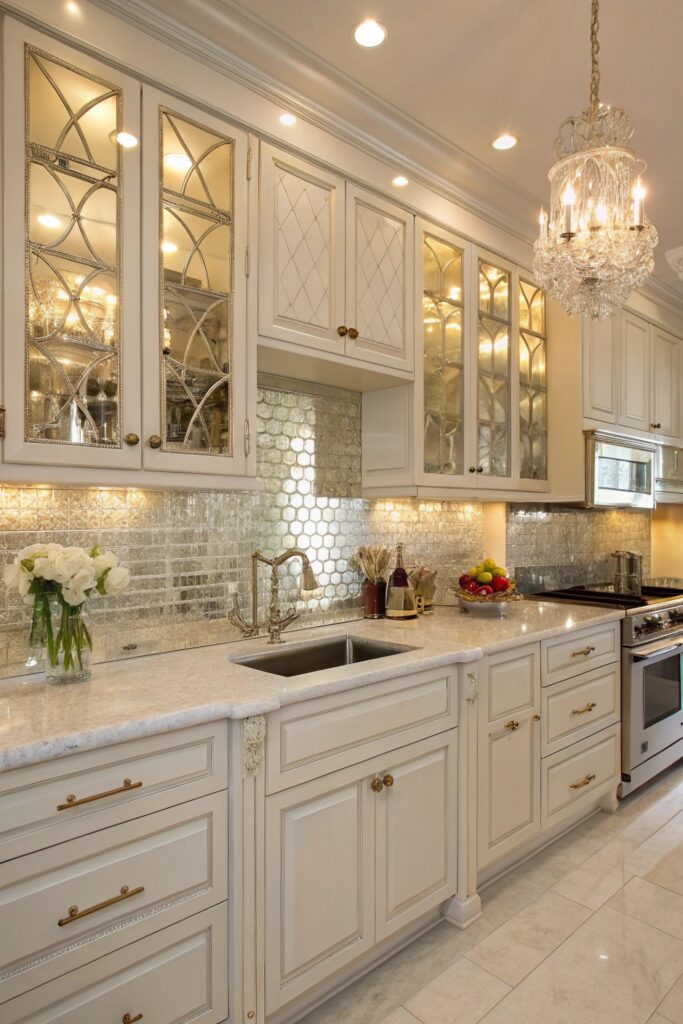
Mirror genuinely bounces light around a kitchen, though it also shows water spots and fingerprints more visibly than other materials, which is worth considering for a high-use cooking area.
Clean this surface with a genuinely streak-free glass cleaner regularly, since fingerprints and water spots show up more visibly here than on other backsplash materials.
12. Wood or Wood-Look Tile Backsplash
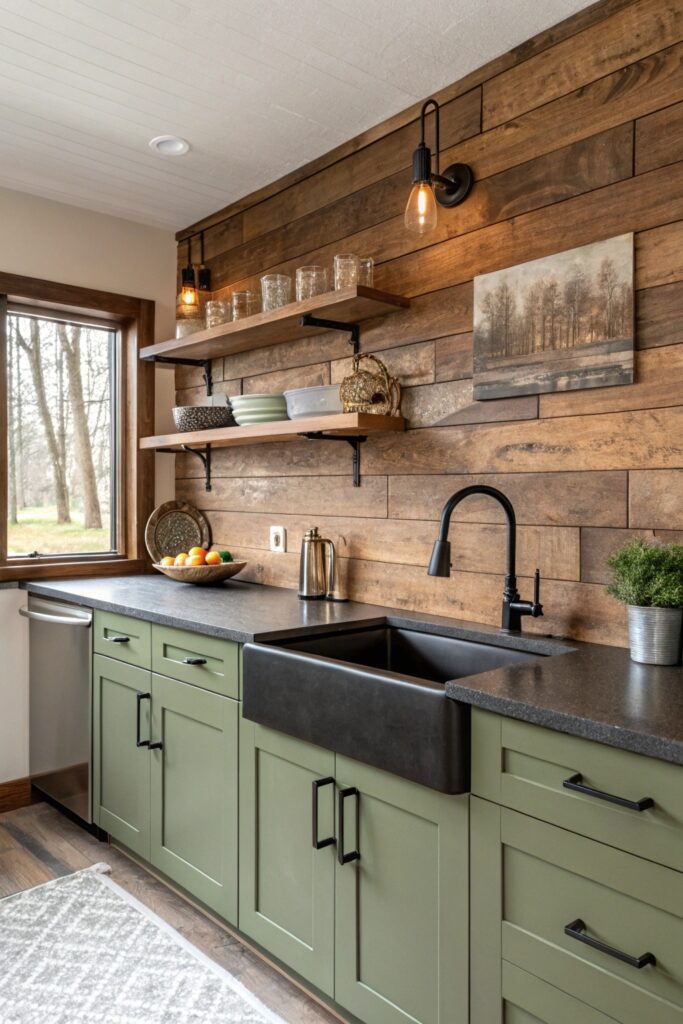
A wood-look porcelain tile gets the warmth of real wood without the moisture concerns actual wood would have this close to a stove and sink.
Confirm the specific tile is rated for a kitchen’s higher moisture and heat exposure, since not every wood-look product is suited to this location.
13. Penny Round Tile
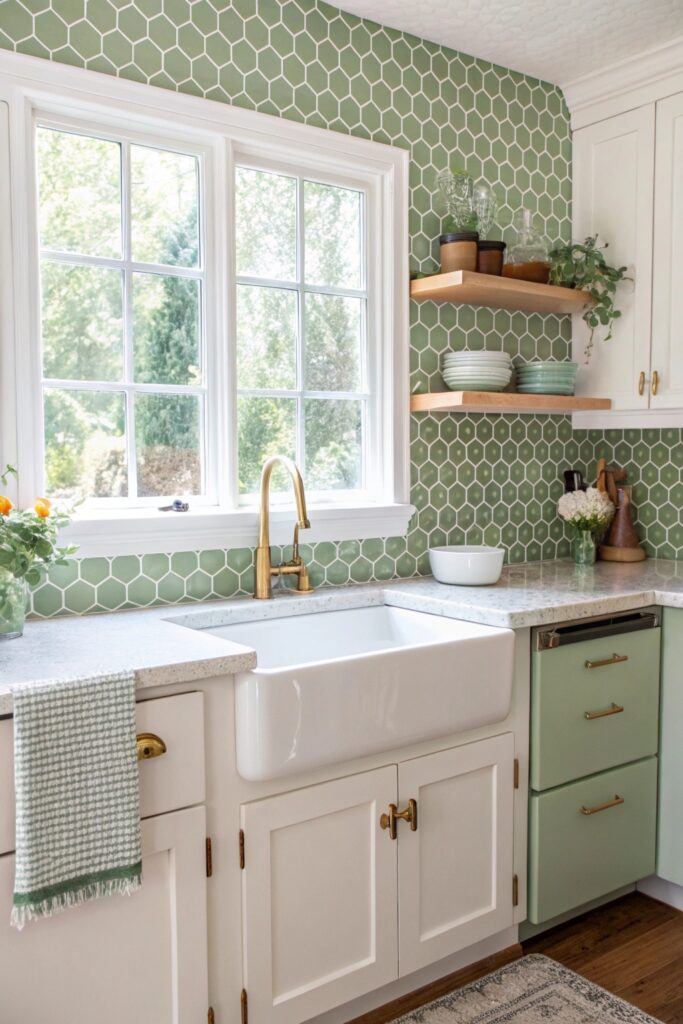
The circular shape creates genuinely more grout lines than a standard rectangular tile, which means more maintenance but also a distinctly different texture.
Choose a grout color close to the tile itself if you want the rounded shape to read as a subtle texture rather than a strong pattern.
14. Full-Height Tile Behind Open Shelving
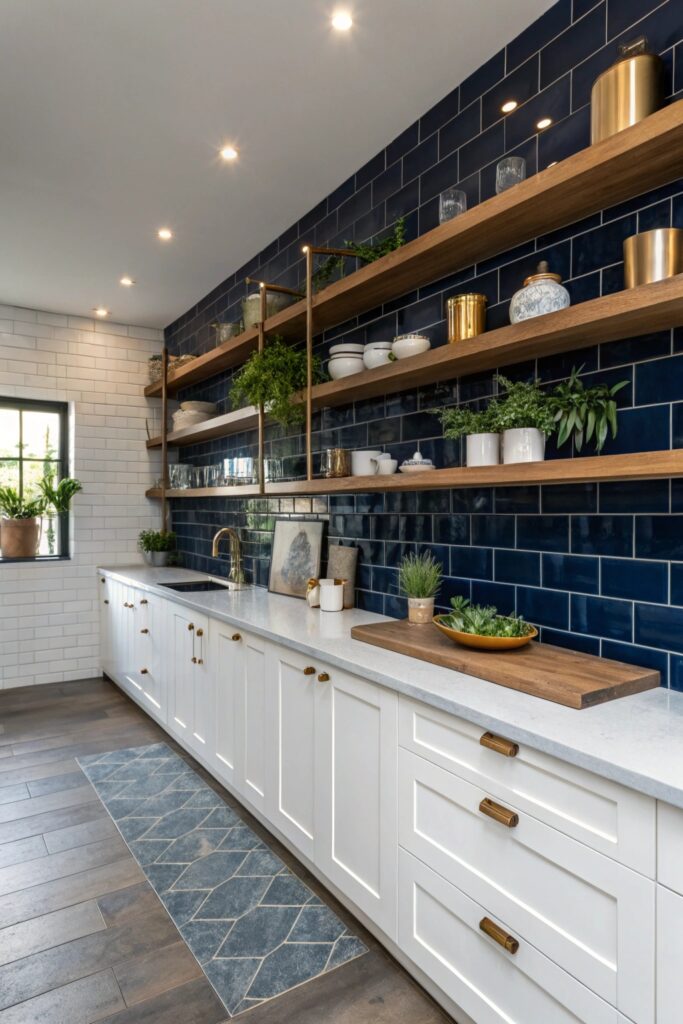
Extending tile to the ceiling behind open shelving creates a cohesive backdrop for displayed items rather than stopping short and leaving bare wall above.
15. Mixed Material Mosaic Backsplash
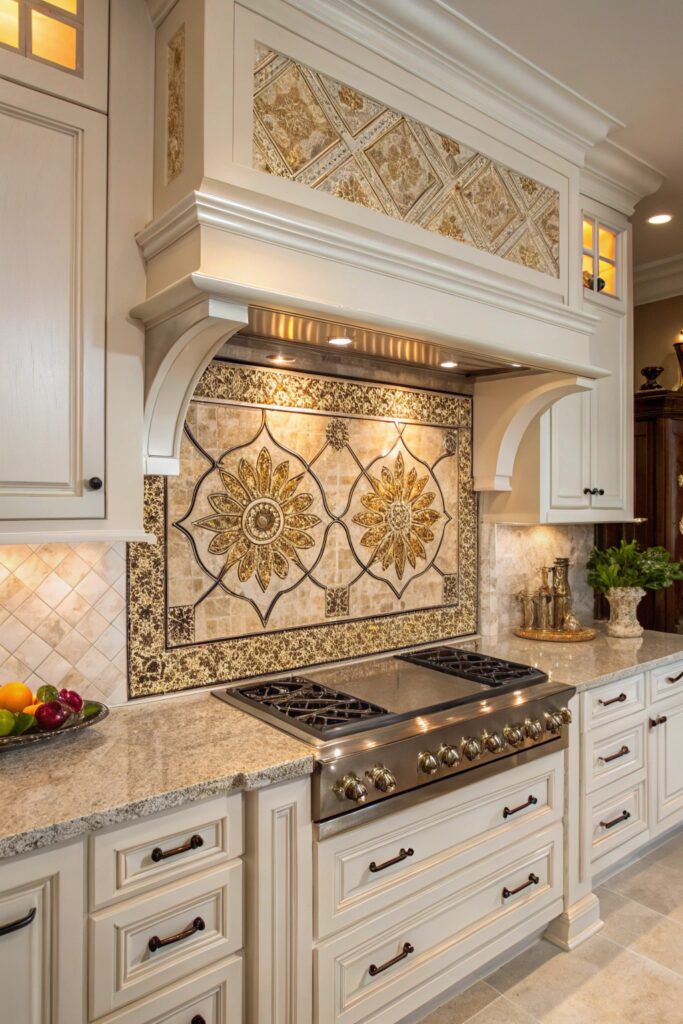
Combining stone, glass, and ceramic in one mosaic sheet adds genuine textural variety, though it’s worth choosing carefully since busier patterns are harder to pair with an already patterned countertop.
Matching the Backsplash to the Rest of the Kitchen
A backsplash rarely works in isolation, so it’s worth choosing it alongside the countertop and cabinet finishes rather than after they’re already installed.
If the countertop already has a busy pattern, a simpler backsplash usually reads better than adding a second competing pattern. The reverse is also true: a plain countertop leaves more room for a bolder backsplash choice.
Get quotes from at least two installers if you’re hiring out the work, since labor costs for backsplash installation can vary considerably based on pattern complexity and the specific material chosen.
Order a physical sample before committing to a full order whenever possible, since tile color and finish can look noticeably different on screen or under a showroom’s lighting than they will in your actual kitchen.
Conclusion
Material and installation cost vary considerably across these options, so it’s worth getting a specific quote for your kitchen’s actual square footage before committing to anything beyond basic subway tile. Grout color and width matter almost as much as the tile itself, since they can shift how busy or clean a pattern reads once installed.