12 Spanish Mediterranean Kitchen Ideas Full of Timeless Charm
Introduction
There’s a reason people fall completely in love with Spanish Mediterranean kitchens — they feel like a warm hug from a sun-drenched villa somewhere on the coast of Andalusia. The rich colors, handcrafted details, and effortlessly layered textures create a space that feels both deeply lived-in and absolutely beautiful at the same time.
I got obsessed with this style after spending time flipping through renovation photos from old Spanish farmhouses, and honestly, I never looked back. There’s nothing cold or sterile about a Spanish Mediterranean kitchen — everything in it tells a story.
Whether you’re doing a full kitchen renovation or just looking to add some Mediterranean soul to what you already have, these 12 ideas will give you real, actionable inspiration. Let’s get into it.
1. Terracotta Tile Floors

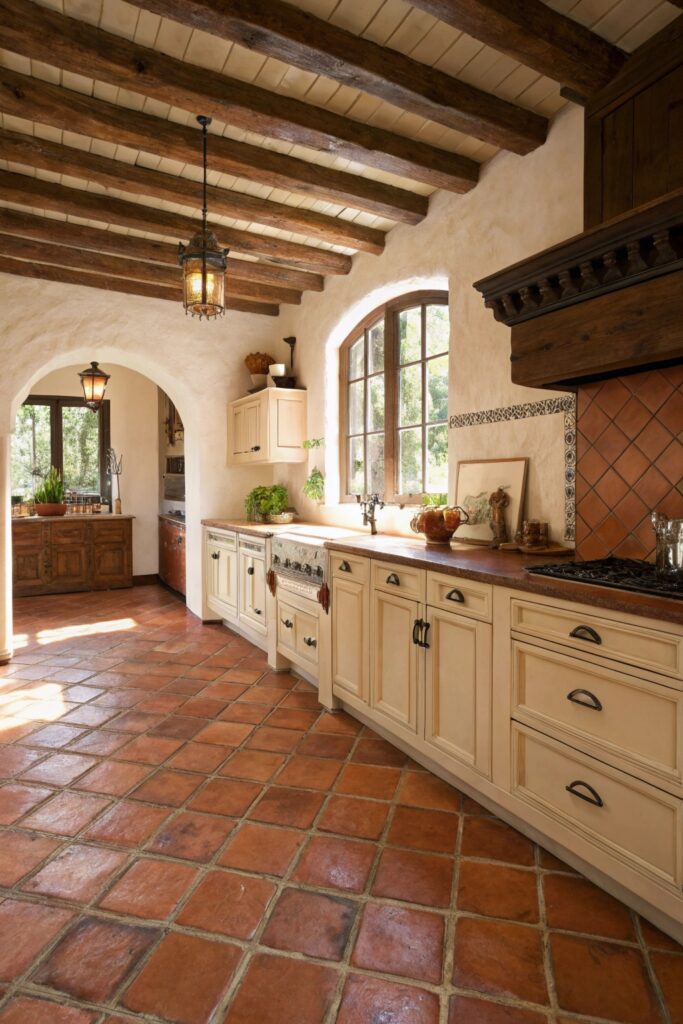
If there’s one single element that defines a Spanish Mediterranean kitchen more than anything else, it’s terracotta tile floors. Those warm, earthy, reddish-orange tiles carry centuries of history under your feet, and they instantly anchor the entire kitchen in that sun-baked, Old World aesthetic.
The beauty of terracotta is that it actually improves with age. The tiles develop a natural patina over time that makes them look even more authentic and characterful. Sealed properly, they’re also surprisingly practical for a kitchen environment.
Why terracotta floors work so well:
- Warm, earthy tones connect the space to natural, organic materials
- Ages beautifully — the patina adds character over decades
- Works with both rustic and refined Mediterranean kitchen styles
- Pairs perfectly with whitewashed walls and wooden beams
IMO, no other flooring option comes close to delivering the same authentic Spanish Mediterranean atmosphere as terracotta. It’s the foundation everything else builds on.
2. Hand-Painted Talavera Tile Backsplash
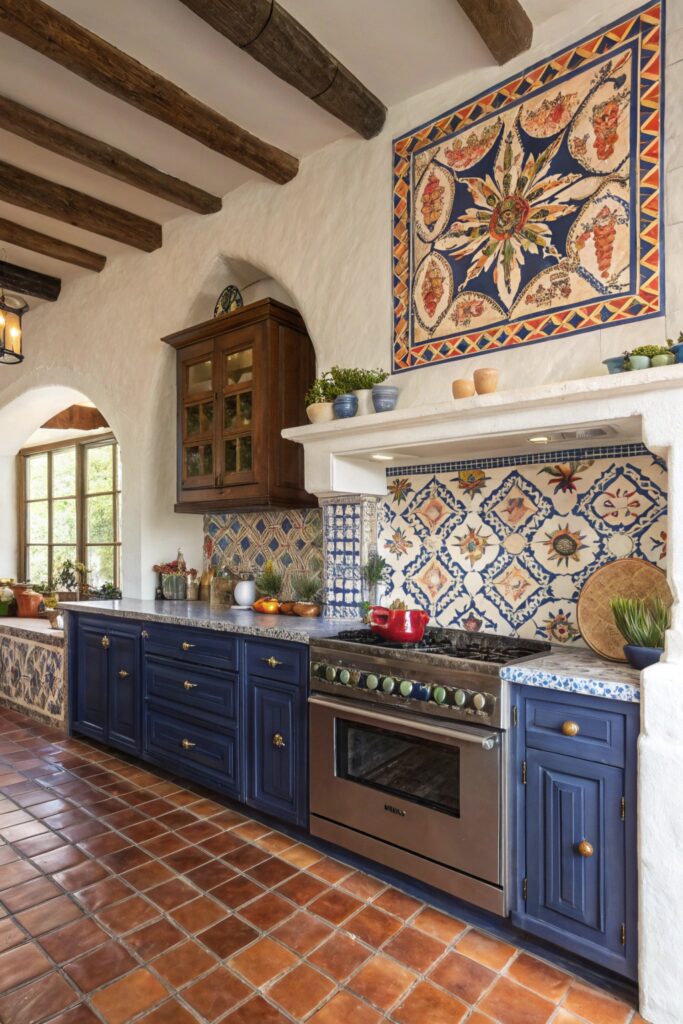
Walk into any traditional Spanish or Mexican kitchen, and you’ll almost certainly find Talavera tiles somewhere — and for good reason. These hand-painted ceramic tiles, decorated with bold geometric and floral patterns in cobalt blue, terracotta, yellow, and cream, are basically the visual heartbeat of Mediterranean kitchen design.
You don’t need to cover every surface with them to make an impact. Use them as a full backsplash, line them along a window surround, or create a decorative band across one wall. Even a modest amount of Talavera tile transforms the entire room.
Best ways to use Talavera tile:
- Full backsplash behind the range for maximum drama
- Window and door surrounds for a subtle, architectural touch
- Single decorative row along the countertop edge
- Kitchen island cladding for an unexpected focal point
These tiles are handmade, so slight variations in pattern and color are completely normal — and honestly, that’s what makes them so special. 🙂
3. Exposed Wooden Ceiling Beams

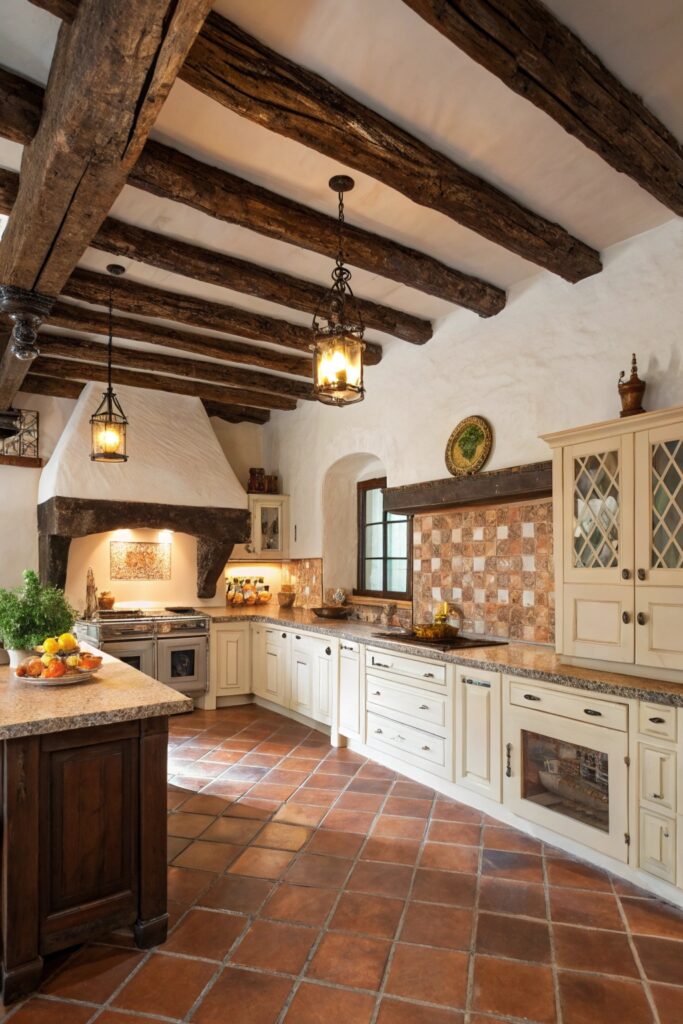
Nothing gives a Spanish Mediterranean kitchen that rustic, centuries-old character quite like exposed wooden ceiling beams. They add warmth, architectural interest, and visual weight to a space that might otherwise feel flat and uninspiring.
Dark-stained or naturally weathered beams work best, as they create that beautiful contrast against whitewashed or plaster ceilings. If your kitchen doesn’t have original beams, faux wood beam wraps are surprisingly convincing and a fraction of the cost.
What to know about exposed beams:
- Dark walnut or espresso stain creates the most dramatic contrast
- Rough-hewn texture looks more authentic than smooth, finished wood
- Faux beam wraps are a practical alternative for modern homes
- Space beams evenly across the ceiling for a balanced, intentional look
Once you add exposed beams, every other Spanish Mediterranean detail you layer in will look ten times more cohesive and intentional.
4. Arched Doorways and Window Openings
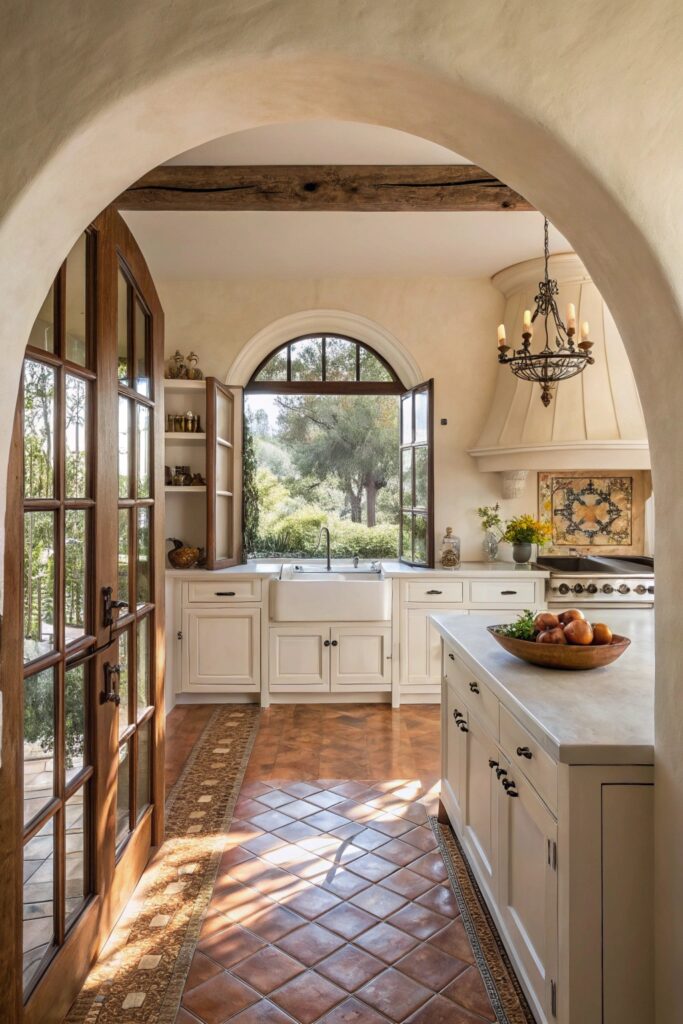
The arch is one of the most defining architectural features of Spanish and Mediterranean design. Replacing standard rectangular doorways and window openings with rounded arches instantly gives your kitchen that unmistakable Old World character.
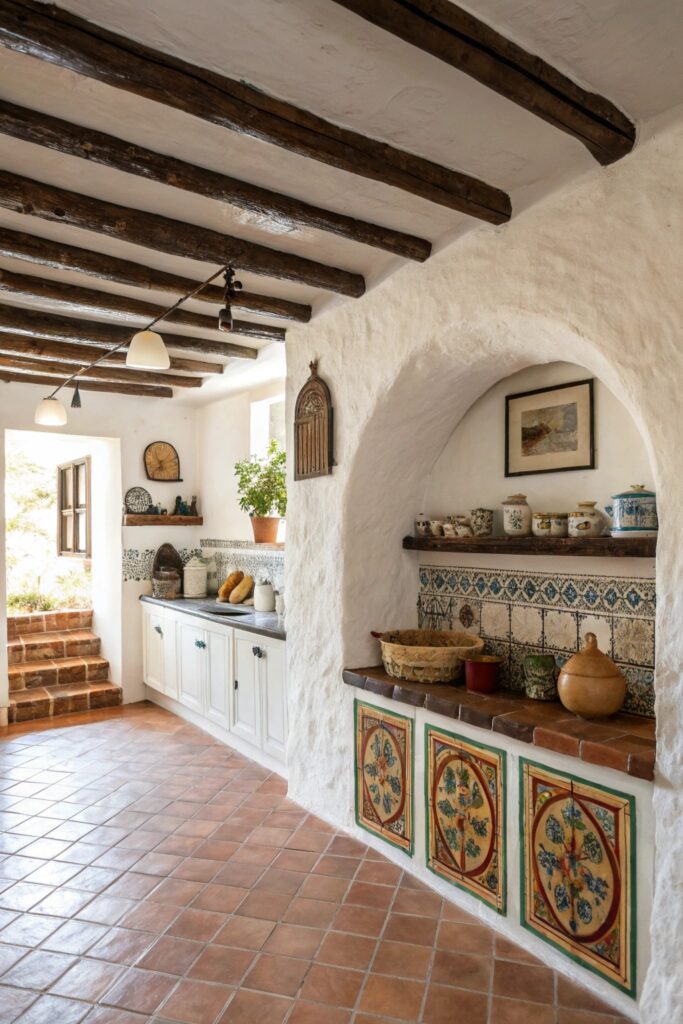
Even a single arched opening — say, between the kitchen and a dining area — makes a dramatic difference. Arches soften the geometry of the space, create natural visual flow, and reference centuries of Moorish and Spanish architectural tradition.
Ways to incorporate arches:
- Arched pass-through between kitchen and dining room
- An arched window above the sink for a stunning focal point
- Arched niche in the wall for displaying ceramics or olive oils
- Arched cabinetry details on upper cabinets for subtle nods to the style
Can you imagine a more effortlessly elegant architectural detail? I genuinely can’t. Arches never go out of style.
5. Whitewashed or Plaster Walls

Whitewashed walls are the quiet backbone of any Spanish Mediterranean kitchen. They reflect light beautifully, keep the space from feeling too heavy despite all the warm wood and terracotta tones, and provide a neutral canvas that lets every other design element shine.
Authentic lime wash or plaster walls have a slightly uneven, textured surface that catches light differently throughout the day. That subtle texture is what separates a genuinely beautiful Mediterranean kitchen from one that just looks like a theme.
Wall finish options to consider:
- Limewash paint — achieves an authentic aged plaster look with minimal effort
- Traditional stucco or plaster — the most authentic option for renovations
- Venetian plaster — smooth, polished, and slightly more refined
- White textured paint — a budget-friendly alternative with similar visual results
Keep the walls light and let your tiles, beams, and ceramics carry the color and personality.
6. Wrought Iron Hardware and Light Fixtures
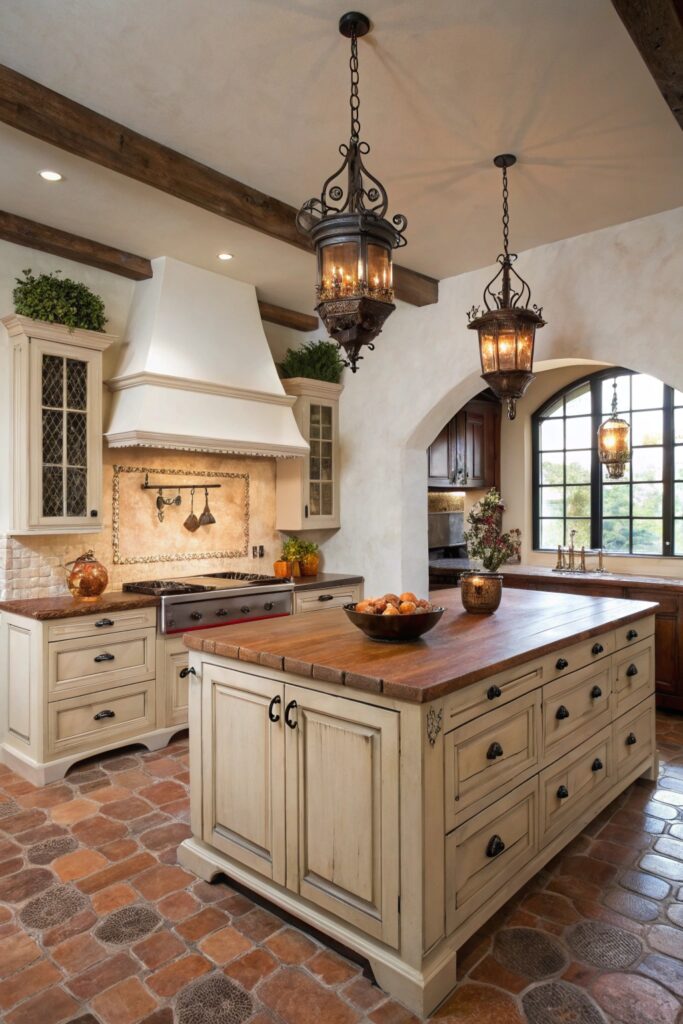
Wrought iron is to Spanish Mediterranean kitchens what brushed brass is to modern farmhouse style — it’s the hardware choice that ties everything together. Cabinet pulls, hinges, pot racks, light fixtures, and even bar stools in wrought iron add a dark, forged quality that feels genuinely artisanal.
The slightly rough, handcrafted look of wrought iron contrasts beautifully against smooth white plaster walls and warm terracotta floors. It adds visual weight and a sense of history without feeling heavy or overdone.
Where to use wrought iron:
- Cabinet pulls and hinges — the easiest and most affordable starting point
- Pendant light fixtures — create dramatic overhead interest
- Pot rack over the island — functional and deeply atmospheric
- Window grilles — adds authentic Spanish architectural detail
This is one of those details where even small changes make a huge impact. Swap out your cabinet hardware first — you’ll be amazed at the difference.
7. Deep Farmhouse Sink in Fireclay or Ceramic
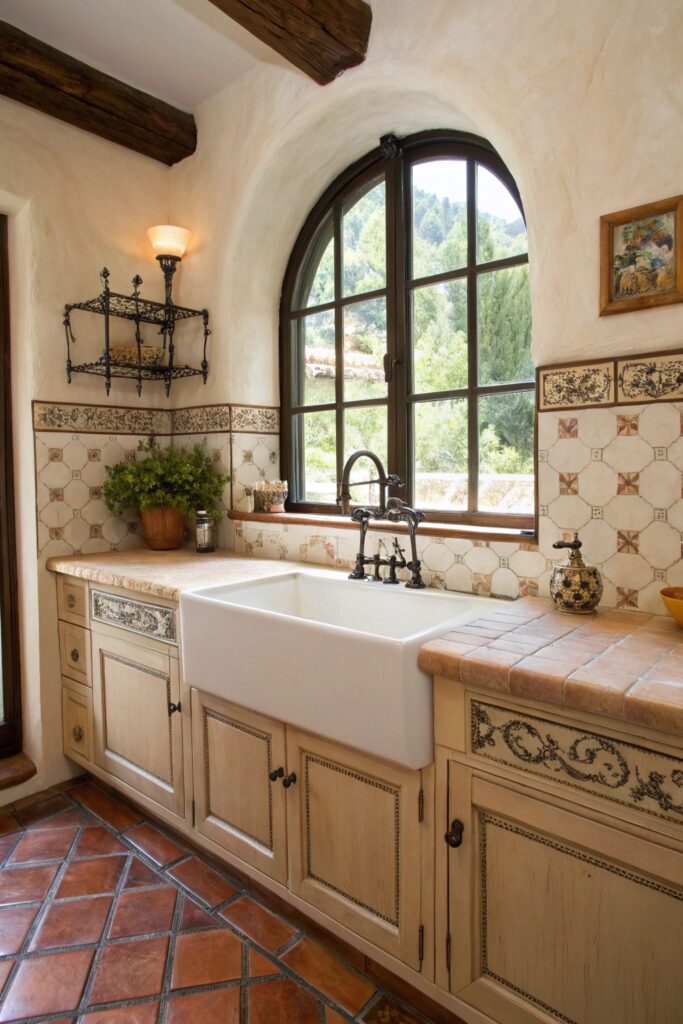
A deep farmhouse sink in fireclay or hand-painted ceramic fits the Spanish Mediterranean kitchen like it was made for it — because honestly, it kind of was. These generous, apron-front sinks have roots in European country kitchens, and they bring exactly the right combination of practicality and old-world beauty.
Choose a cream or off-white fireclay finish for a classic look, or go with a hand-painted ceramic version with blue and white patterns for a more distinctly Spanish feel. Either way, the sink becomes an instant focal point.
What makes a great Mediterranean farmhouse sink:
- Fireclay material — durable, chip-resistant, and beautifully matte
- Deep single basin — practical for large pots and pans
- Apron front design — the defining visual feature
- Pair with a hand-forged iron or brass faucet for full effect
FYI, this is one upgrade that genuinely adds value to your home beyond just the aesthetics. Buyers love a farmhouse sink.
8. Open Shelving with Hand-Thrown Ceramics
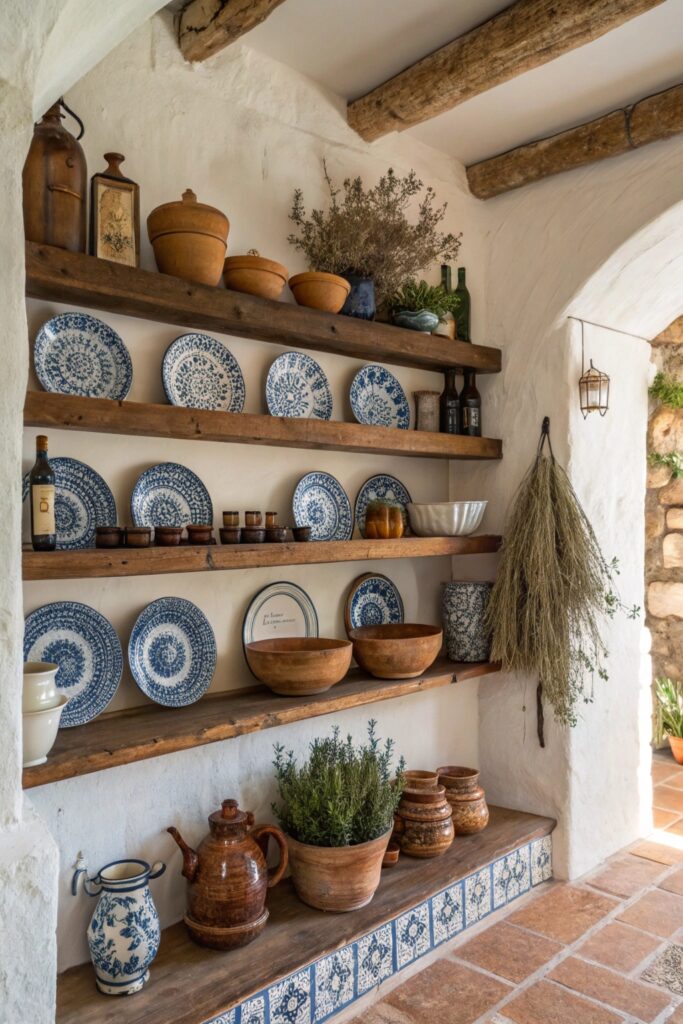
Open wooden shelves displaying collections of hand-thrown pottery, ceramic plates, terracotta bowls, and colorful glazed serving pieces are a staple of Spanish Mediterranean kitchen design. They replace upper cabinets with something far more personal and visually interesting.
The key is in the styling. Group items by color family, mix heights and shapes, and don’t be afraid of a little organized chaos. Mediterranean kitchens feel collected and layered — not perfectly curated like a design showroom.
What to display on open shelves:
- Hand-thrown terracotta and ceramic vessels
- Blue and white Spanish pottery for authentic color pops
- Olive oil bottles, dried herbs, and wooden utensils
- Vintage copper pots for warmth and texture
The shelves should look like you actually use your kitchen and love beautiful things — because that’s exactly the spirit of this style.
9. A Statement Range Hood in Plaster or Tile
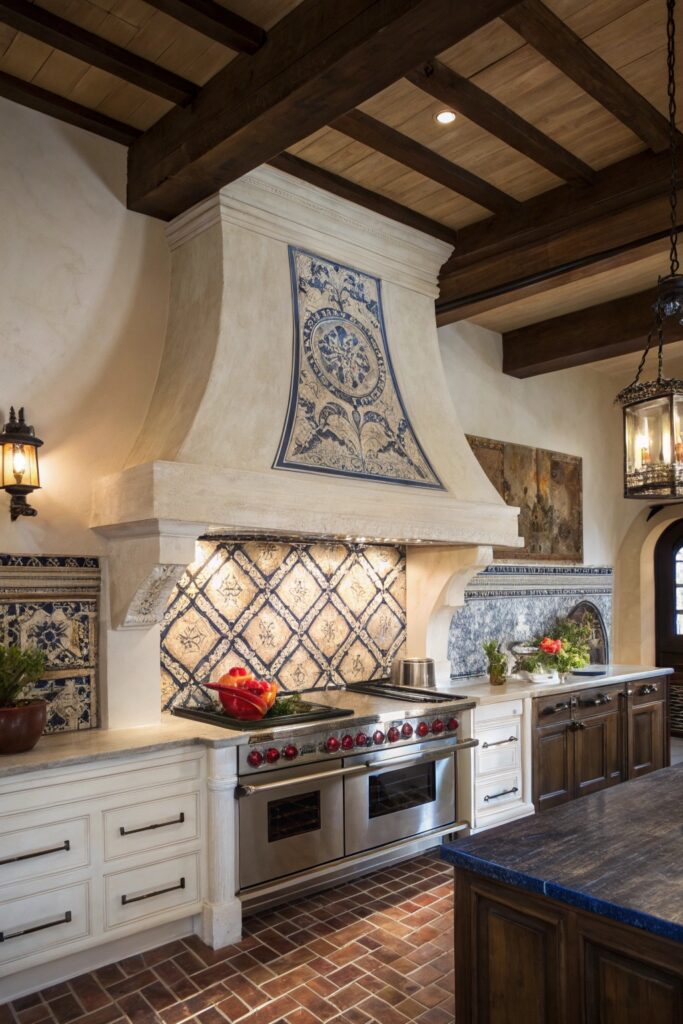
In a Spanish Mediterranean kitchen, the range hood is never an afterthought. It becomes a genuine architectural feature — often built from plaster, clad in Talavera tiles, or finished in textured stucco with decorative molding details that draw the eye immediately.
A custom plaster hood with a curved or cathedral shape makes the entire kitchen feel intentionally designed from floor to ceiling. It transforms what’s usually a purely functional element into a true centerpiece.
Range hood styles that work:
- Arched plaster hood — the most quintessentially Spanish option
- Talavera tile-clad hood — bold, colorful, and unique
- Whitewashed stucco with carved details — elegant and textural
- Painted wood mantel style — warmer and slightly more rustic
This single element can elevate an otherwise ordinary kitchen into something that looks genuinely custom and remarkable.
10. Saltillo or Cement Tile Countertops and Surfaces
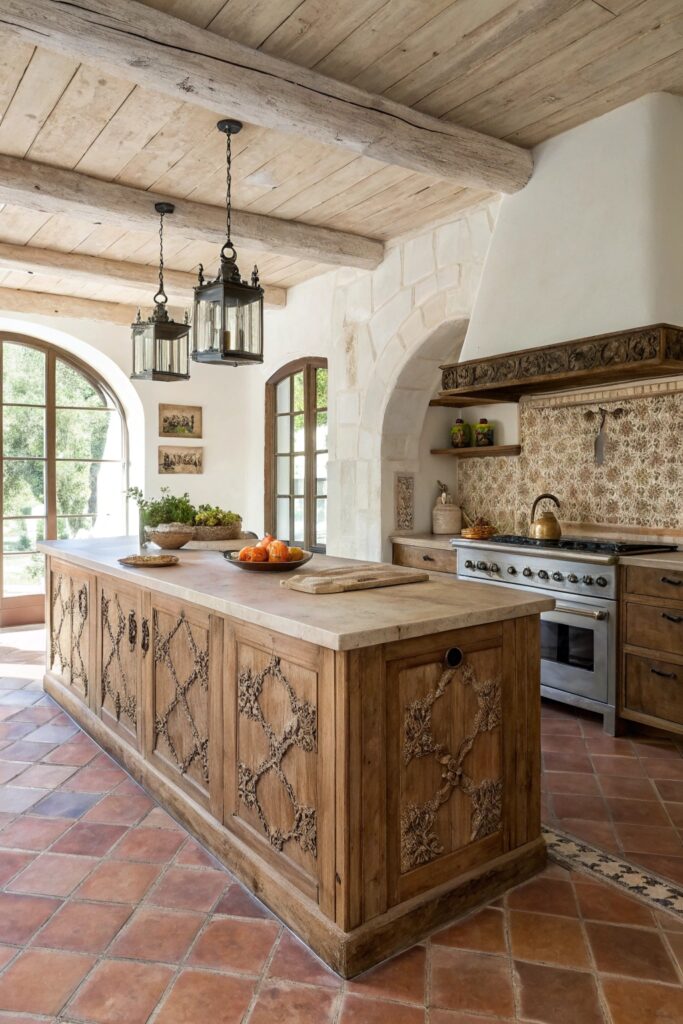
While stone countertops dominate most modern kitchen styles, the Spanish Mediterranean aesthetic lends itself beautifully to cement tile or Saltillo-inspired surfaces used on islands, countertops, or bar areas. The matte, slightly irregular finish feels completely at home in this style.
Alternatively, thick honed travertine or limestone countertops hit the same earthy, ancient-world note while offering more practical durability. Either way, the goal is surfaces that feel natural, warm, and tactile rather than polished and pristine.
Best countertop choices for this style:
- Honed travertine — warm, earthy, and authentically Mediterranean
- Limestone — softer look with beautiful natural variation
- Cement tile surfaces on islands or bar areas
- Thick butcher block for a warmer, more rustic option
Avoid high-gloss or ultra-white quartz — it fights against everything this style is trying to achieve. :/
11. Colorful Zellige or Hand-Cut Tile Accents
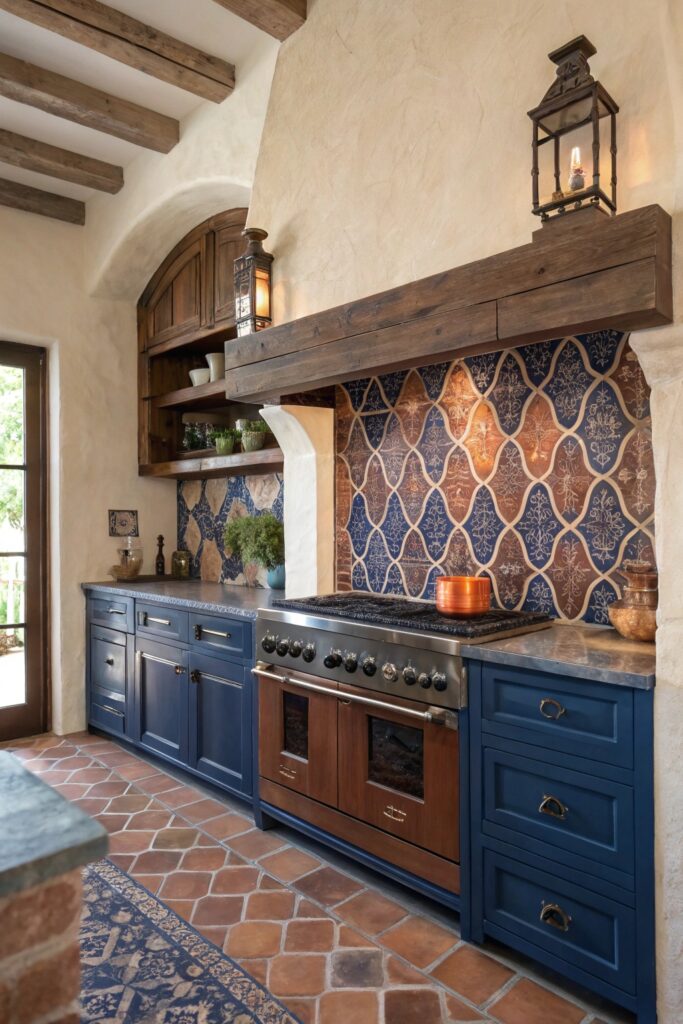
Zellige tiles — those handmade Moroccan clay tiles with their naturally uneven, jewel-like surfaces — fit seamlessly into Spanish Mediterranean kitchen design thanks to centuries of shared Moorish architectural influence between Spain and North Africa.
Use them in rich terracotta orange, deep cobalt blue, forest green, or warm amber to add color accents throughout the kitchen. A zellige tile niche, a decorative border, or a full backsplash in these tones brings an authentic depth that no manufactured tile can replicate.
Where Zellige tiles make the biggest impact:
- Behind the range is a dramatic cooking alcove
- Kitchen niche interiors for decorative shelf displays
- Island cladding for a bold, unexpected color statement
- Window sill surrounds for small but beautiful detail moments
The natural color variation in handmade zellige tiles gives them a living, breathing quality that machine-made tiles simply don’t have.
12. Indoor Herb Garden and Potted Plants
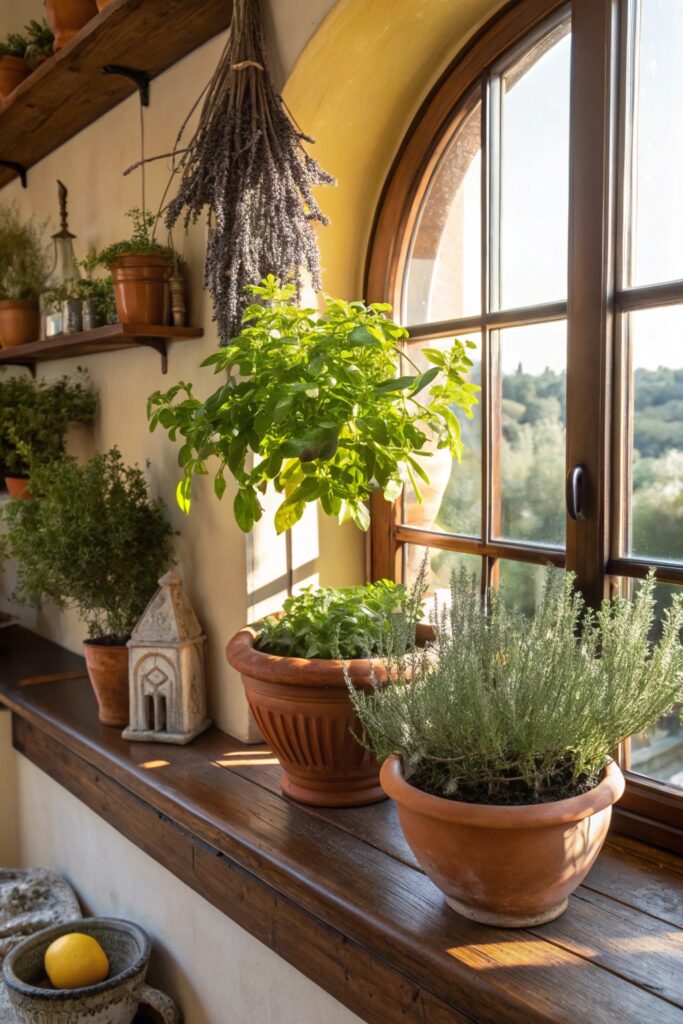
A Spanish Mediterranean kitchen isn’t complete without living greenery. Whether it’s a windowsill lined with terracotta pots of fresh rosemary, thyme, and basil, or a larger collection of trailing plants and citrus trees on an open shelf, plants are a non-negotiable part of this aesthetic.
They add life, fragrance, and color to the kitchen in the most natural way possible. They also reinforce the connection to the outdoors and to Mediterranean food culture, where fresh herbs aren’t a garnish — they’re essential.
Plants that thrive in a Mediterranean kitchen:
- Fresh herbs — rosemary, thyme, basil, oregano in terracotta pots
- Olive or lemon trees in large ceramic planters
- Trailing ivy or pothos on open shelves for movement and softness
- Dried lavender bundles hanging from beams for fragrance and texture
Group plants together in odd numbers and mix pot sizes for a look that feels genuinely collected rather than staged.
Conclusion
There you have it — 12 Spanish Mediterranean kitchen ideas that cover everything from the floors under your feet to the beams above your head. This style is warm, layered, deeply human, and full of details that reward a closer look. It’s the kind of kitchen that feels lived-in from day one.
The best part about this aesthetic is that you don’t need to do everything at once. Start with terracotta floors or a Talavera tile backsplash, swap out your cabinet hardware for wrought iron, and add some hand-thrown ceramics to open shelves. Each small change moves you closer to that sun-drenched Spanish kitchen of your dreams.
So pick the ideas that resonate most with you and start there. Your kitchen is about to get a whole lot more soulful — and honestly, your cooking might even taste better in a space this beautiful. 🙂