
A small bathroom’s organizational challenges come down almost entirely to floor space scarcity, which is why the most effective solutions specifically use vertical and wall space rather than adding more floor-based storage furniture.
Below are 13 ways to organize a genuinely small bathroom, with real costs and practical notes for each.
1. Install Floating Shelves Above the Toilet
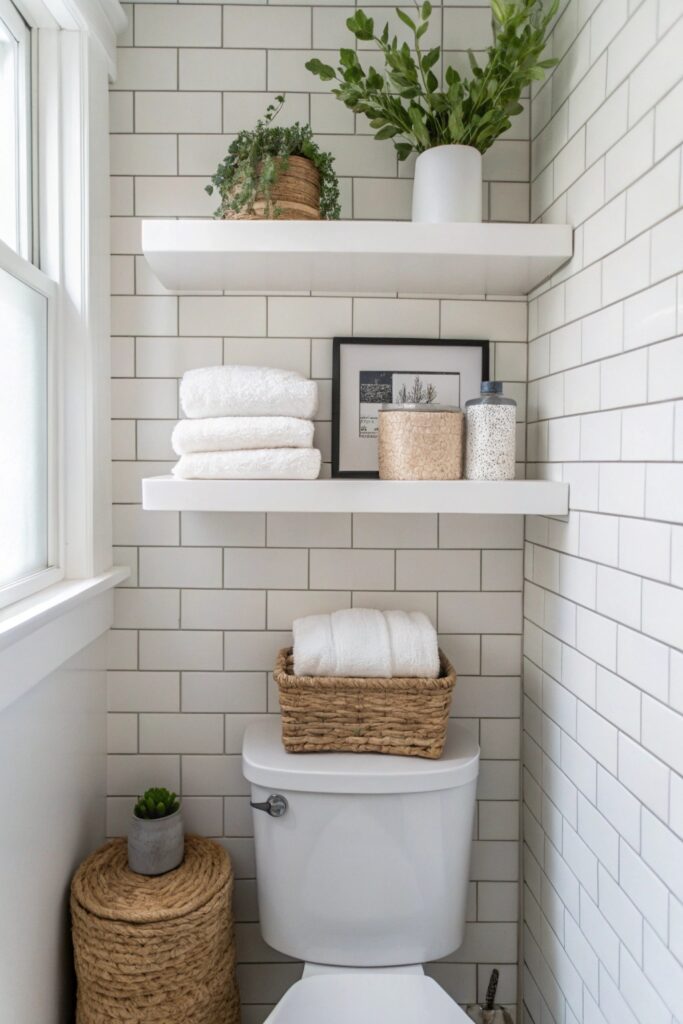
The wall space above a toilet is genuinely wasted in most small bathrooms, making it one of the highest-value spots to add shelving ($20-40) without touching any floor footprint at all.
Confirm adequate clearance for the toilet lid and any tank access before mounting, since shelf placement that interferes with normal toilet function defeats the purpose despite the added storage.
This location specifically matters more in a small bathroom than a larger one, since floor space is the scarcest resource and this wall area typically sits completely empty otherwise.
Measure the drawer’s interior dimensions before buying dividers, since ill-fitting ones shift or fail to contain items properly in the smaller drawer sizes many compact vanities have.
2. Use Drawer Dividers to Stop the Chaos
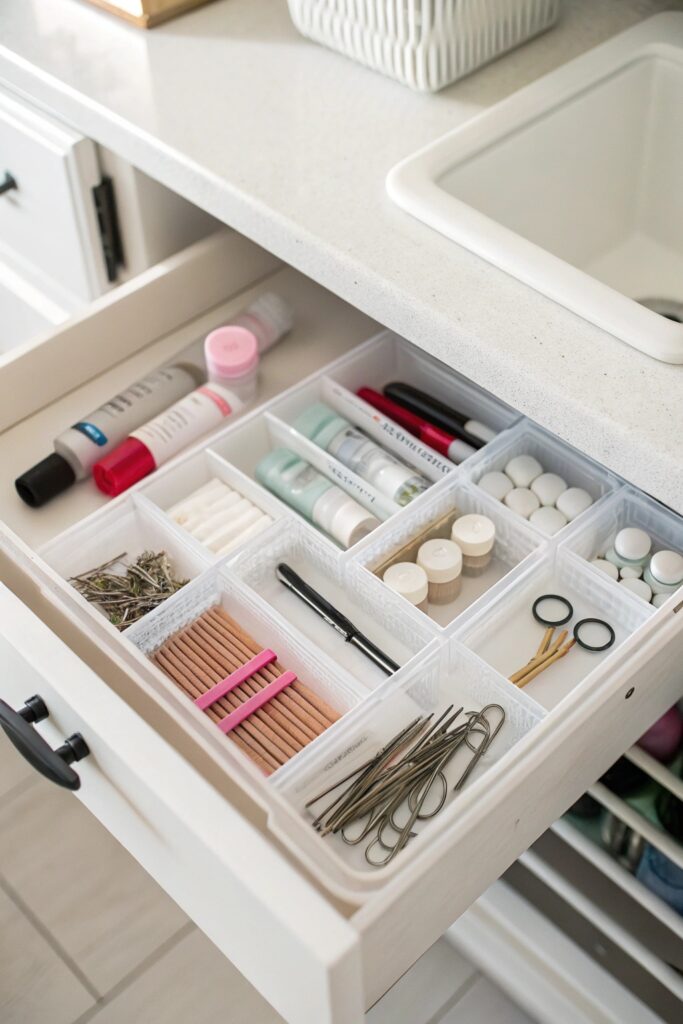
Dividers ($10-25) make the most of whatever drawer space a small bathroom vanity actually has, since a small bathroom typically can’t compensate for disorganized drawers with additional storage elsewhere.
This is worth trying before investing in a more elaborate under-sink system, since it costs almost nothing and directly addresses the vertical space most under-sink cabinets waste.
3. Add a Tension Rod Under the Sink
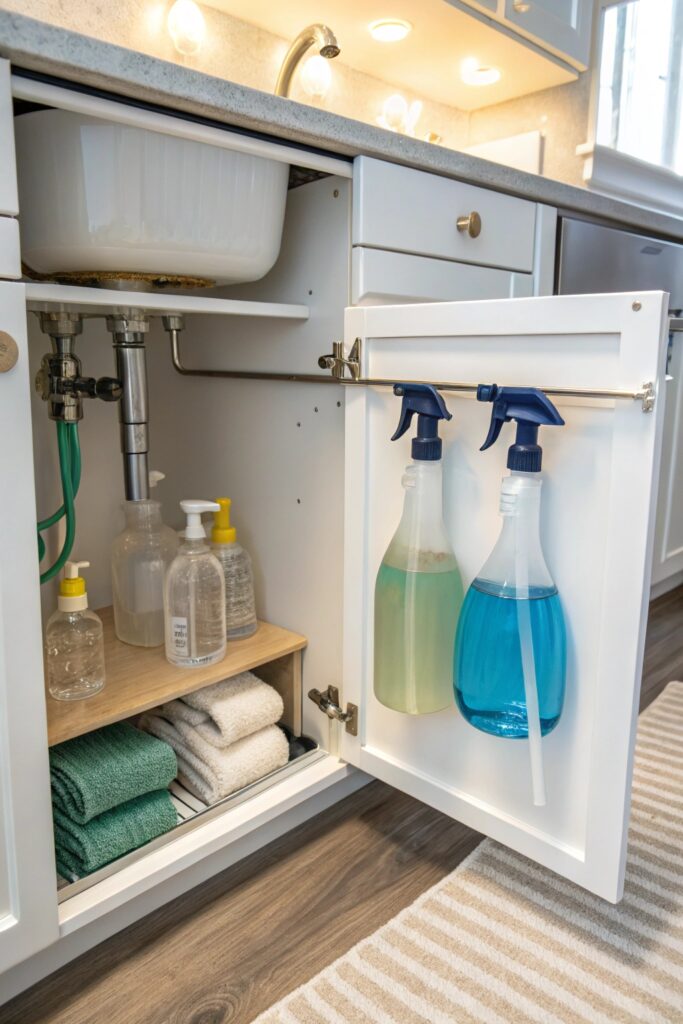
A tension rod ($5-10) for hanging spray bottles makes efficient use of the vertical space under a sink, which matters more in a small bathroom where this cabinet is often the only substantial storage the room has.
Position the strip at a height that’s genuinely convenient for daily use, testing the actual reach before committing to permanent mounting hardware.
4. Mount a Magnetic Strip for Metal Tools
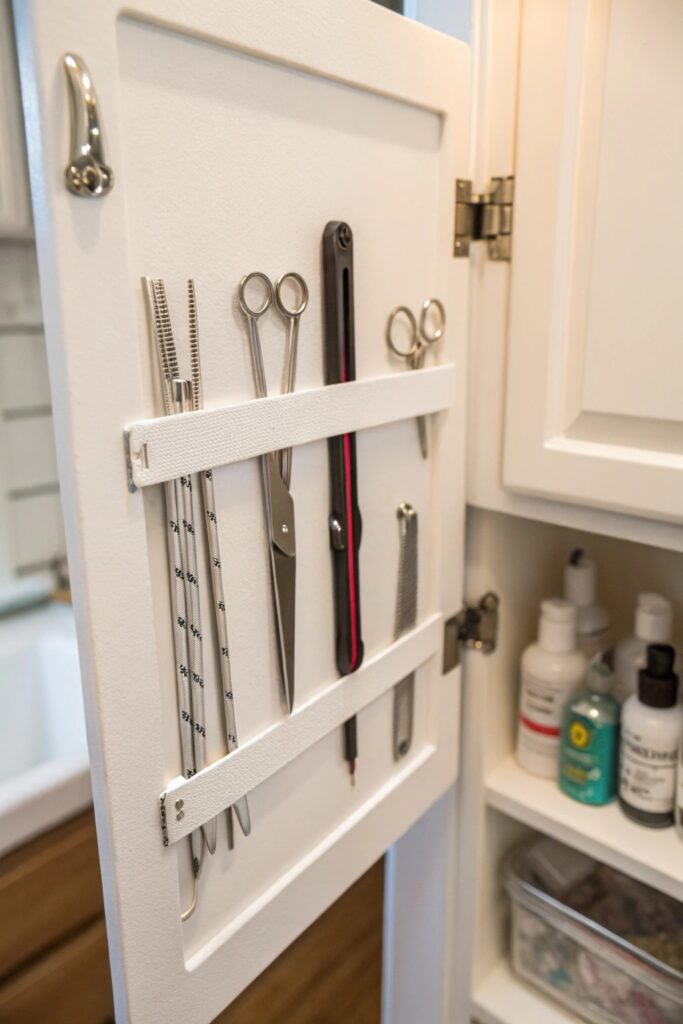
A magnetic strip holds tweezers, nail clippers, and other small metal items on the wall rather than in a drawer, recovering drawer space that’s genuinely more limited in a small bathroom’s typically compact vanity.
Choose bins with a low enough profile to clear the plumbing at the back of the cabinet, since under-sink space is rarely a full uninterrupted rectangle.
5. Use Stackable Clear Bins for Under-Sink Storage
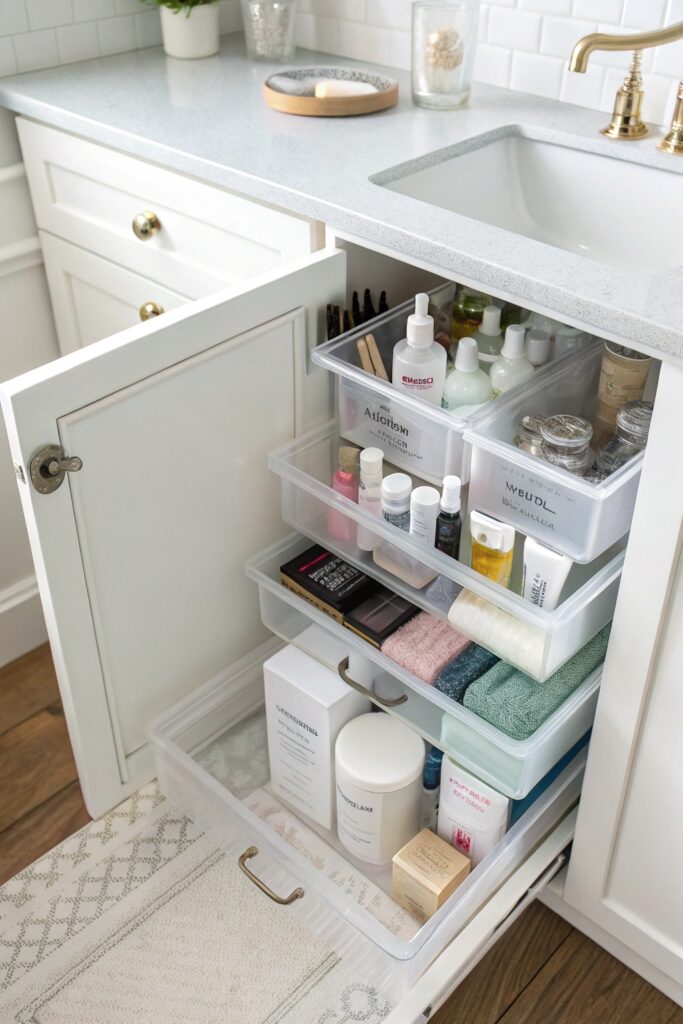
Stacking bins vertically makes full use of a small bathroom’s under-sink cabinet height, which matters more here than in a larger bathroom with additional storage options to fall back on.
6. Hang a Shower Caddy That Doesn’t Rely on Suction Cups
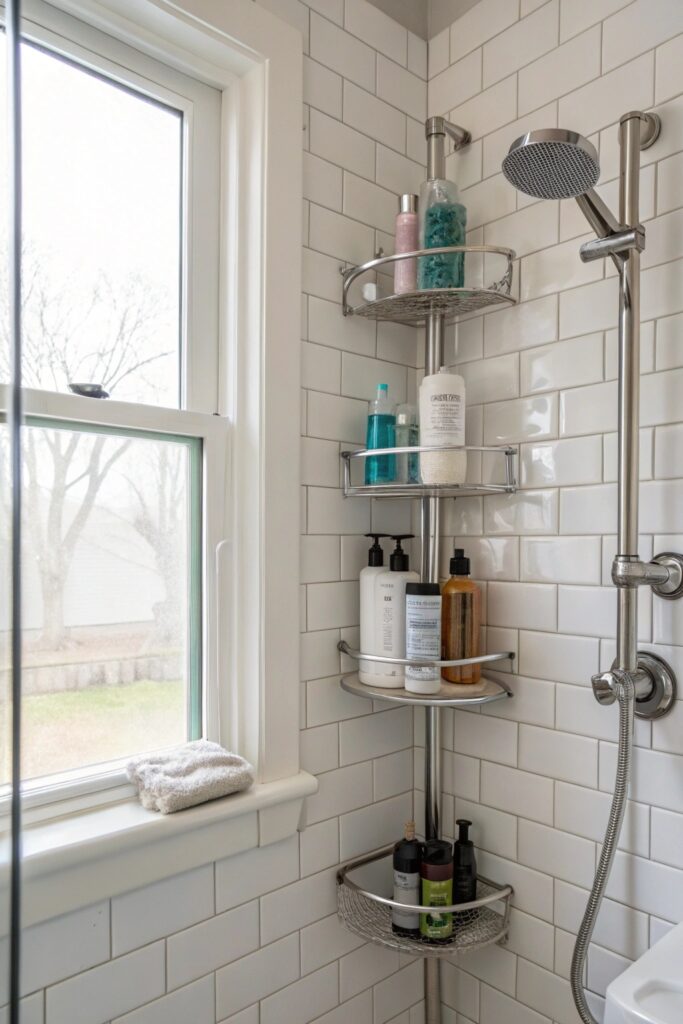
A tension-mounted or hanging caddy keeps shower products organized without the frequent failures suction-cup options have, which matters especially in a small bathroom where a fallen caddy has nowhere to go but underfoot.
7. Add a Rolling Cart for Extra Flexible Storage
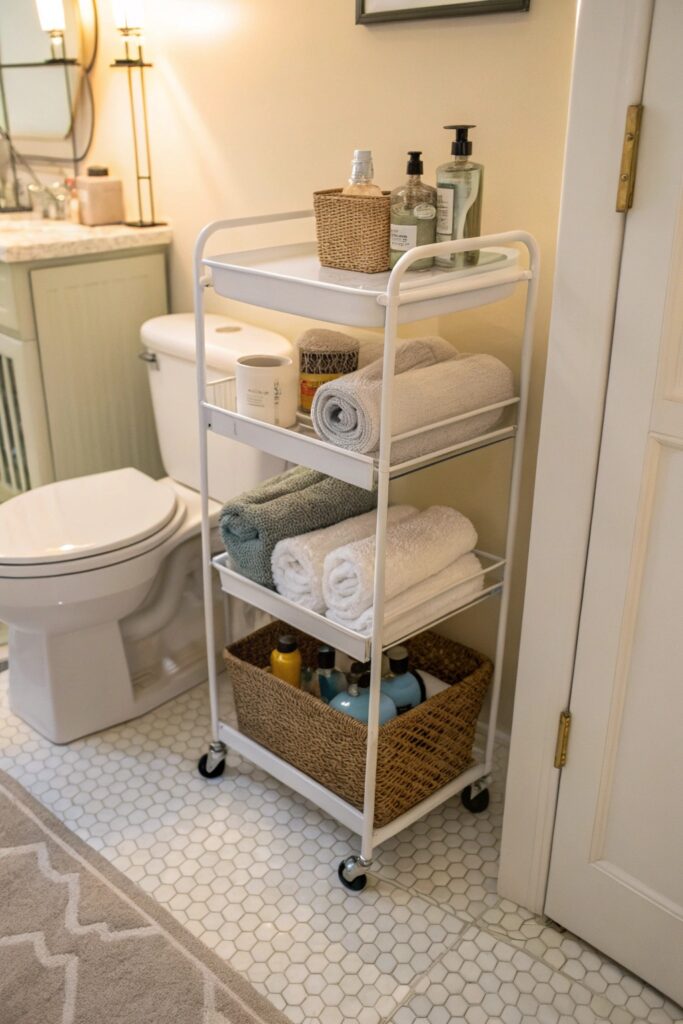
A narrow rolling cart ($30-70) can be tucked into a corner and pulled out as needed, offering flexible storage that a small bathroom’s limited fixed cabinet space can’t provide on its own.
8. Use Over-the-Door Organizers for Overflow Items
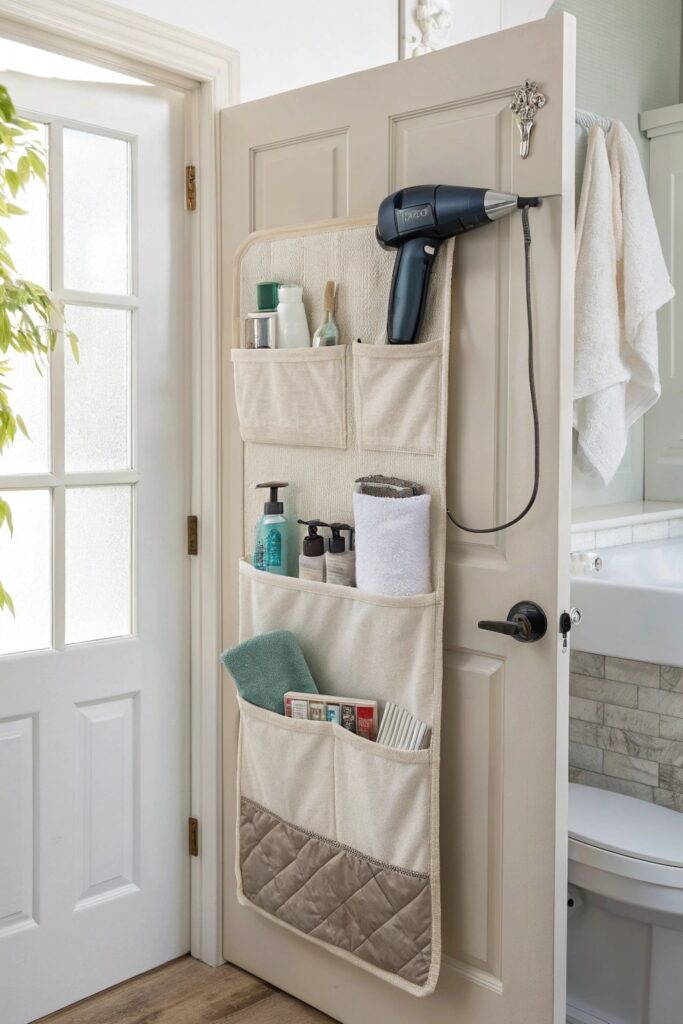
An over-the-door rack ($15-35) uses space that’s completely unused in most bathrooms, which is worth prioritizing specifically in a small bathroom where every other storage option is already stretched thin.
9. Label Everything (Yes, Really)
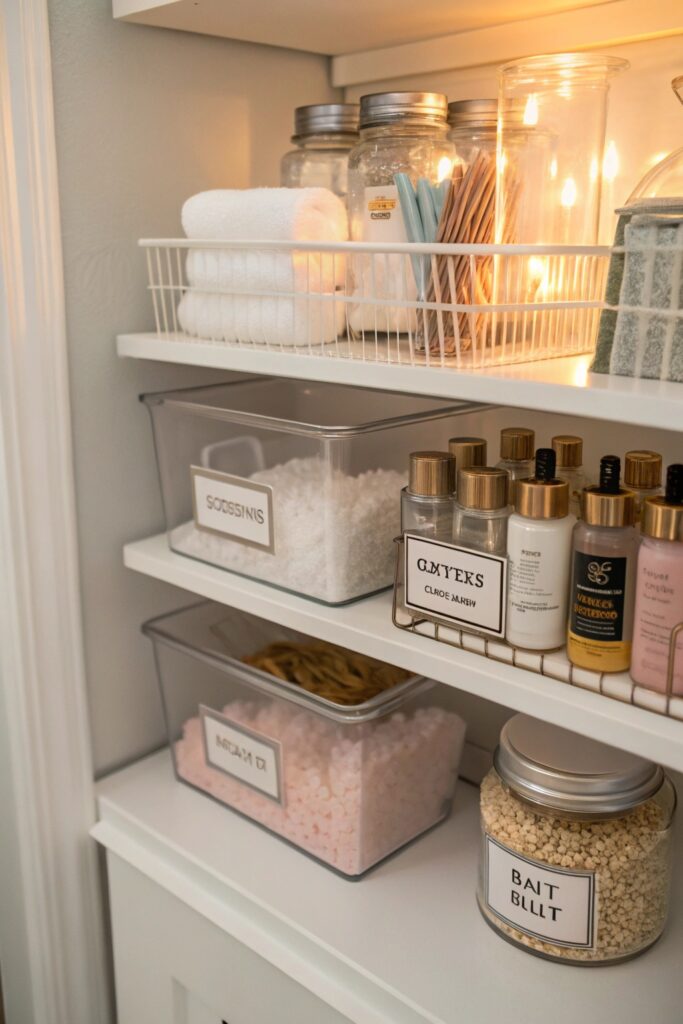
Clear labels matter more in a small bathroom specifically, since compact storage often means multiple household members reaching into the same tight spaces without a clear system for what belongs where.
10. Install a Corner Shelf in the Shower
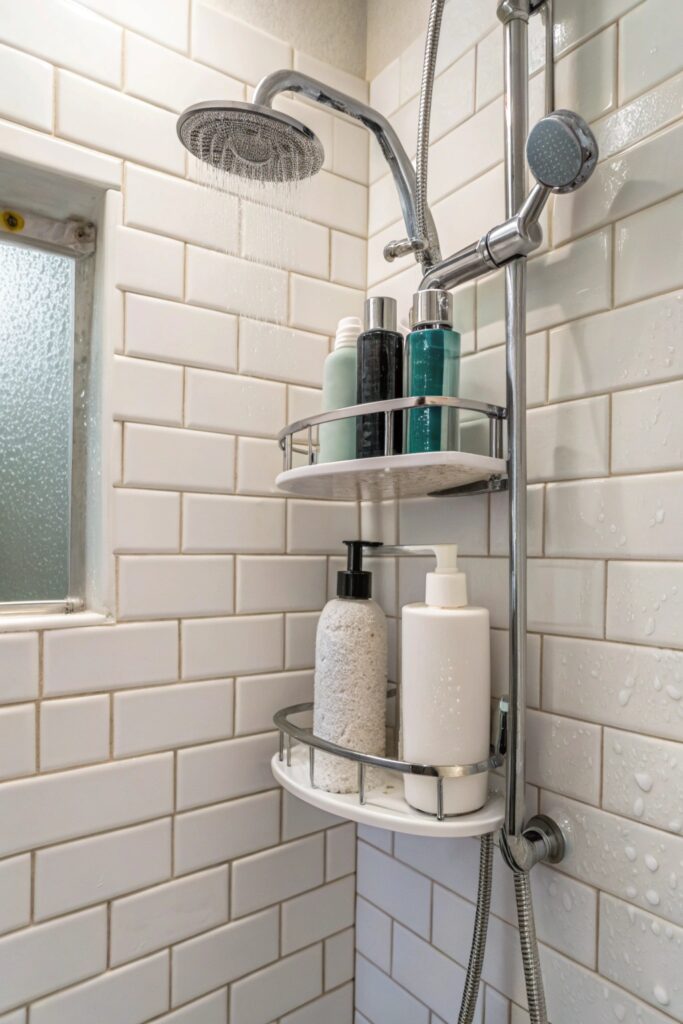
A corner-mounted shelf uses a shower’s typically unused corner space, which is a genuinely important trick in a small bathroom where a standalone shower caddy takes up more relative floor or wall space.
11. Use a Tiered Organizer for the Countertop
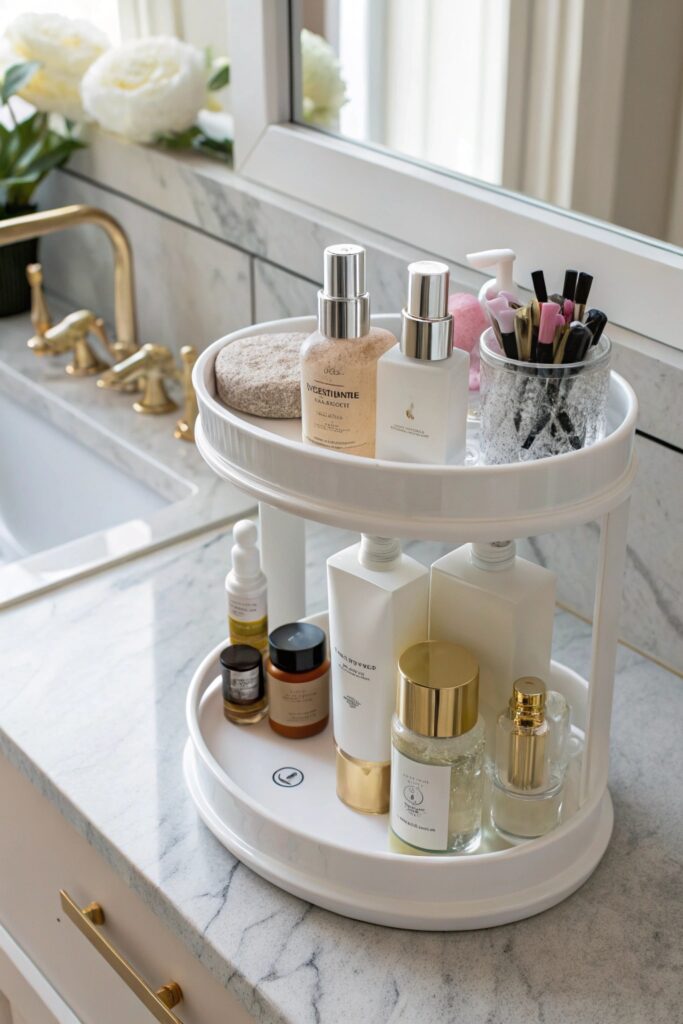
A tiered stand makes vertical use of a small bathroom’s typically limited counter footprint, fitting more items into the same surface area than spreading them flat would allow.
12. Add a Slim Cabinet for Vertical Storage
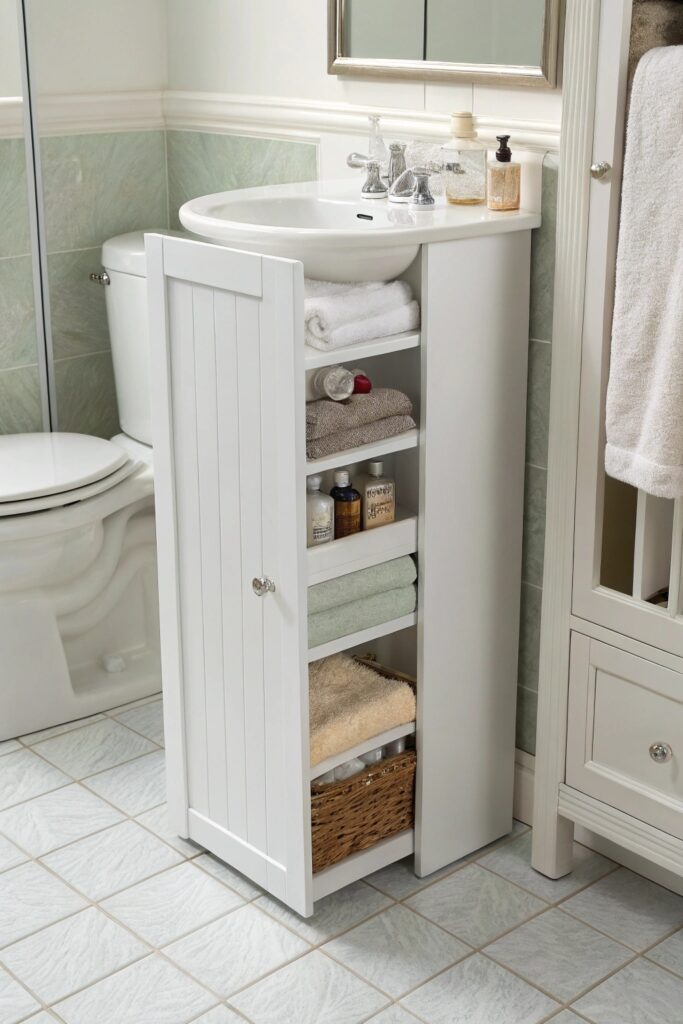
A narrow, tall cabinet (8-12 inches deep) delivers genuine storage capacity without eating into a small bathroom’s already tight floor clearance, which a wider standard cabinet would compromise.
13. Keep a Small Lidded Trash Can
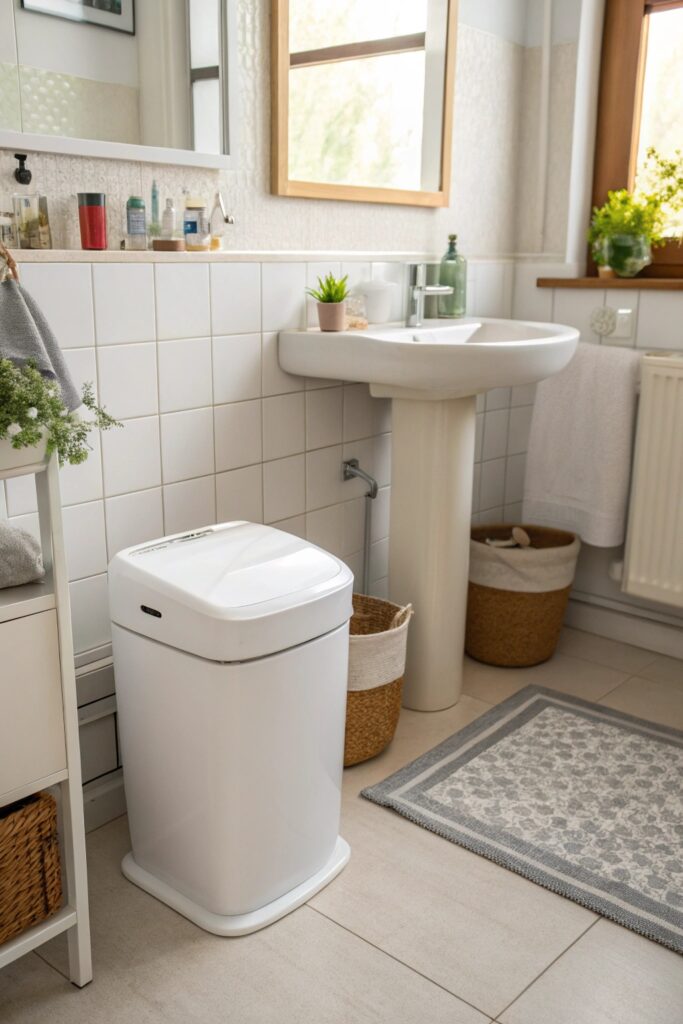
A compact trash can sized specifically to fit a small bathroom’s available floor space (rather than the largest can that technically fits) keeps this necessary item from becoming an obstacle in an already tight room.
Prioritizing When Every Surface Is Limited
In a genuinely small bathroom, it’s worth tackling wall-mounted and vertical solutions first — floating shelves, over-the-door racks, corner shower shelving — before addressing anything that adds to the floor footprint, since floor space is consistently the room’s most constrained resource.
Once the vertical options are exhausted, a slim cabinet or rolling cart can fill in remaining gaps, but these floor-based additions are worth measuring very carefully against your bathroom’s actual clearance before purchasing, since even a few extra inches can make the difference between genuinely helpful storage and an obstacle in daily use.
A Quick Note on Rental Restrictions
Several of these solutions (floating shelves, magnetic strips, over-the-door racks) can be adapted for rentals using command strips or tension mounting rather than drilling, which matters specifically in a small bathroom where you can’t simply add more square footage to compensate for lease restrictions on wall modifications.
Wrapping It Up
Floating shelves and vertical cabinets matter most in a small bathroom specifically, since both add real storage capacity without consuming any of the room’s scarce floor space. Prioritize wall-mounted and vertical solutions throughout before considering anything that adds to the floor footprint, which is the single guiding principle that separates small-bathroom organization from organizing a larger space.