
Open kitchen shelving reads as either a genuine design feature or visible clutter depending almost entirely on styling discipline, since every item placed on an open shelf is constantly on display in a way closed cabinetry never has to account for.
Below are 12 ways to style open kitchen shelving well, with practical notes for each.
1. Stick to a Tight Color Palette
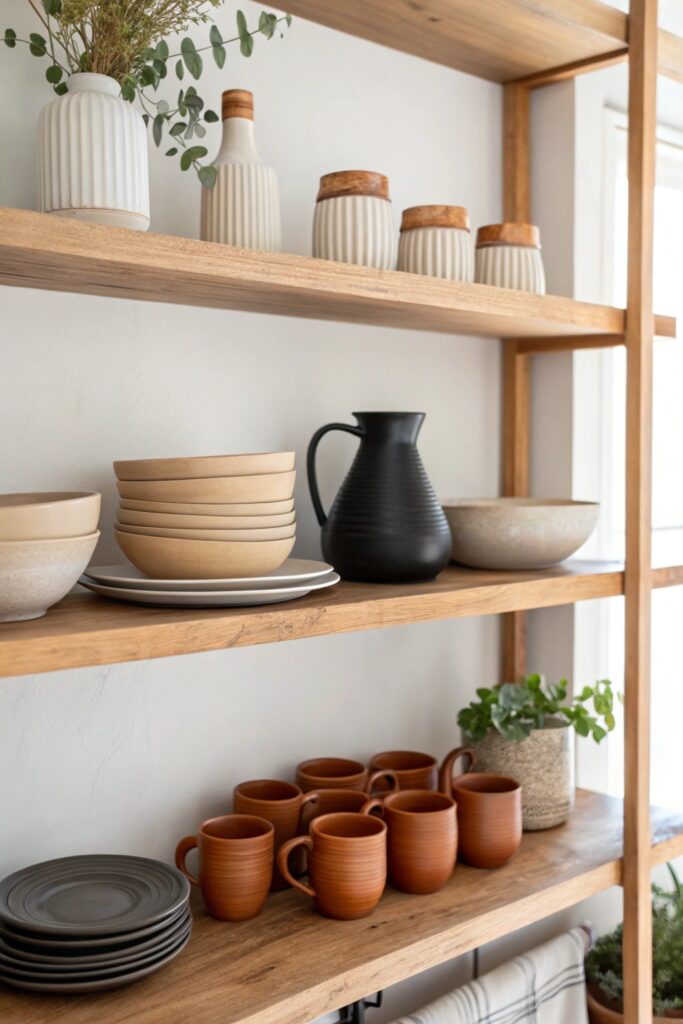
Limiting displayed items to 2-3 coordinated colors keeps open shelving from reading as visually busy, which matters more here than on a closed cabinet since everything on an open shelf is constantly visible.
This doesn’t mean avoiding color entirely — a limited palette still allows for one or two accent tones, as long as the majority of displayed items stay within the coordinated range.
2. Group Items in Odd Numbers
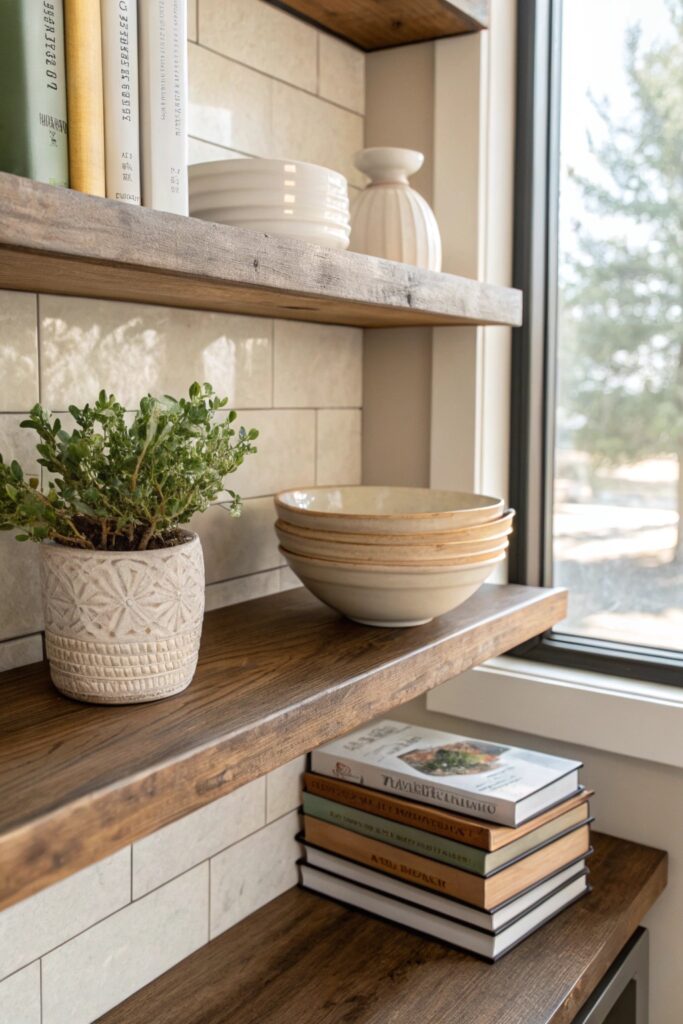
Clusters of three or five objects read as more intentionally arranged than paired, even-numbered groupings, a principle that applies to shelf styling as consistently as any other display surface.
This works whether the objects are the same type (three matching bowls) or genuinely different items grouped by color or material instead.
3. Mix Heights for Visual Interest
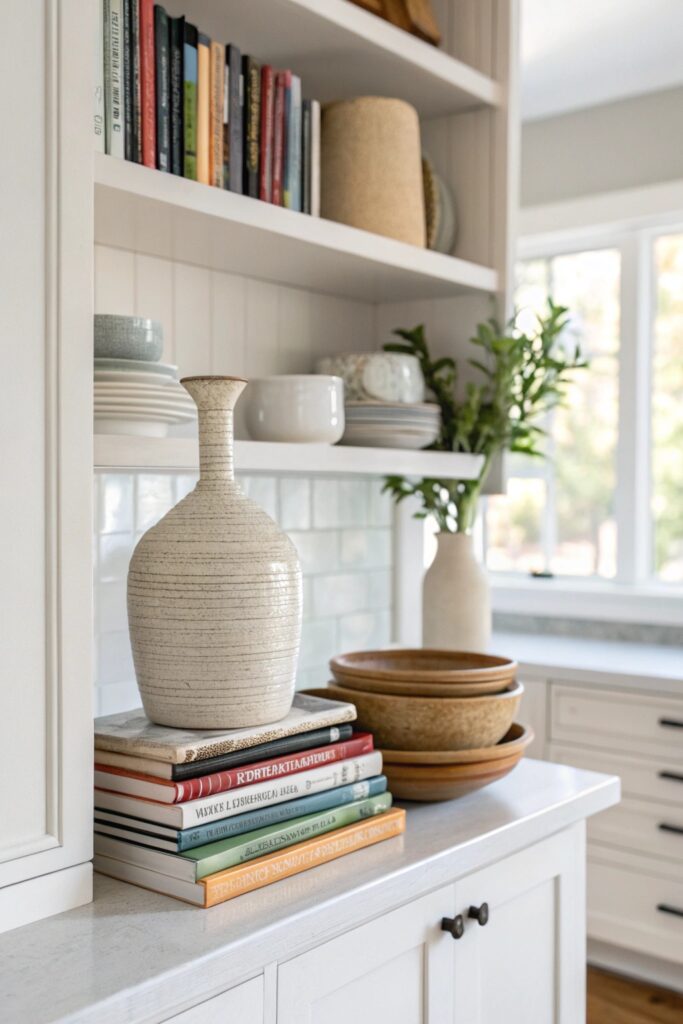
Varying the height of displayed items — a tall vase next to shorter stacked bowls — creates a more dynamic visual rhythm than a shelf full of same-height objects.
A general styling guideline is triangulating three different heights within any single grouping, which creates more visual movement than a flat, even arrangement.
4. Use Negative Space on Purpose
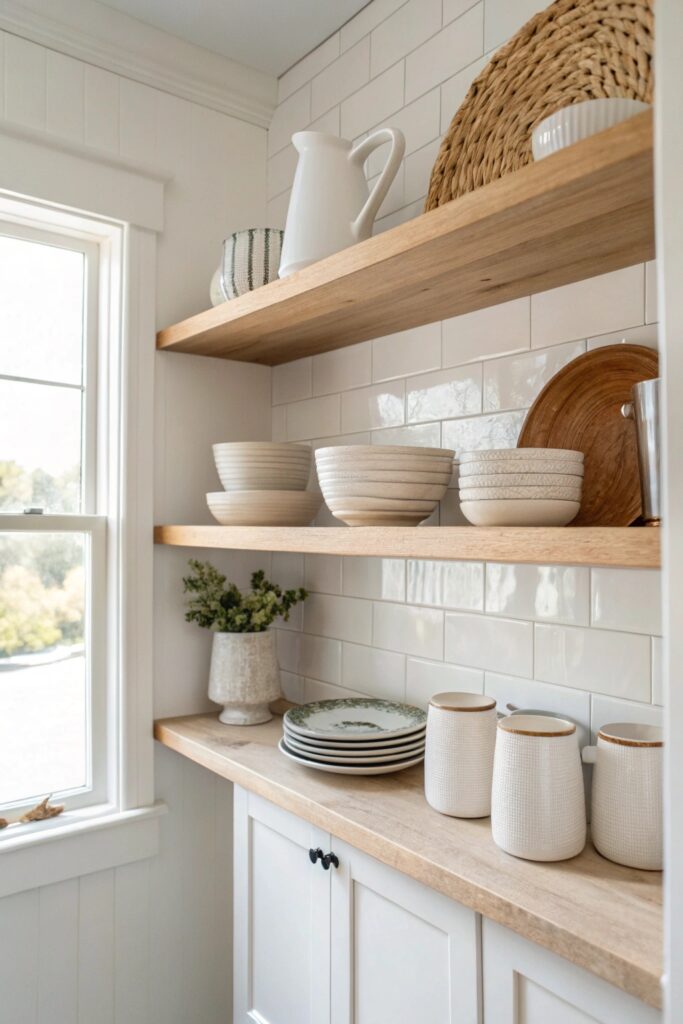
Leaving genuine empty space between grouped items, rather than filling every available inch, is what separates a styled shelf from a simply full one.
A shelf that’s roughly 60-70% full, with the remainder left genuinely empty, tends to read as considered rather than either sparse or overcrowded.
5. Rotate Seasonal Accents
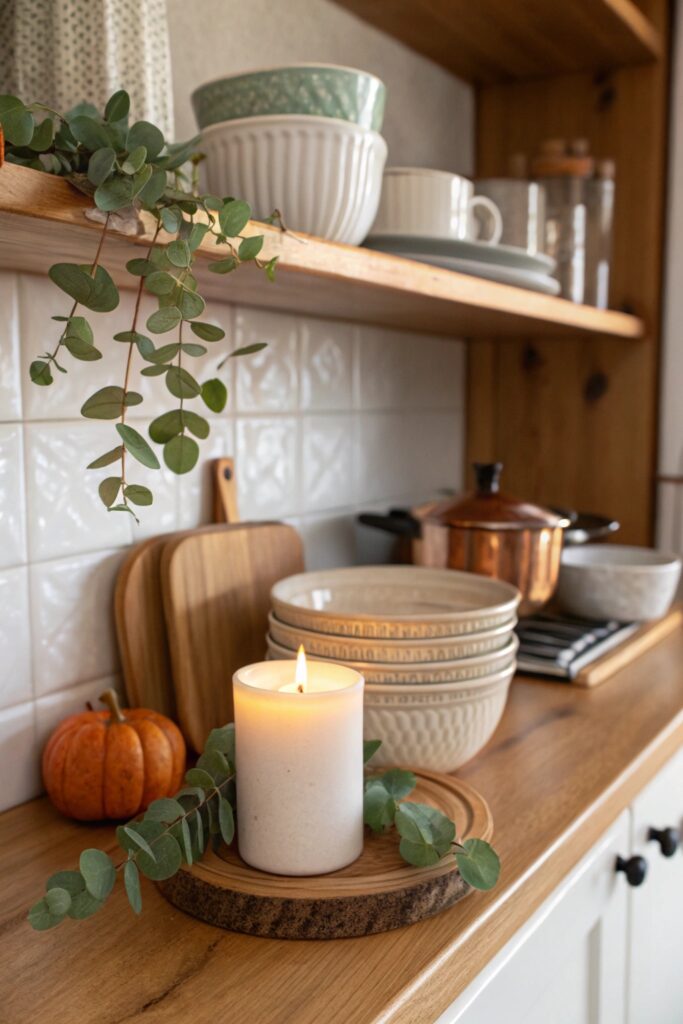
Swapping a few smaller decorative pieces seasonally keeps open shelving feeling current without requiring a full restyle, and it’s a low-cost way to periodically refresh the display.
Keep a small rotation of seasonal pieces stored elsewhere specifically for this purpose, rather than buying new items each time you want to refresh the display.
6. Display Cookbooks as Decor, Not Storage
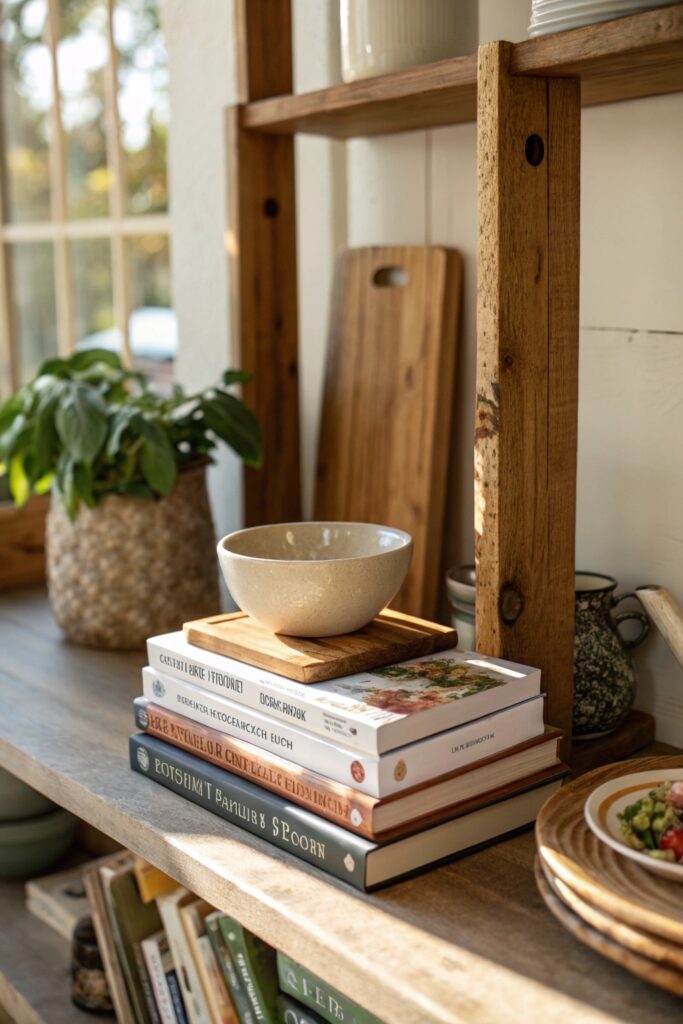
A few cookbooks with visually appealing spines or covers, stacked or displayed face-out, function as genuine styling rather than simply occupying shelf space functionally.
Limit this display to books you’d genuinely want visible, since a full working cookbook collection usually includes titles better suited to closed storage.
7. Add One Statement Ceramic Piece
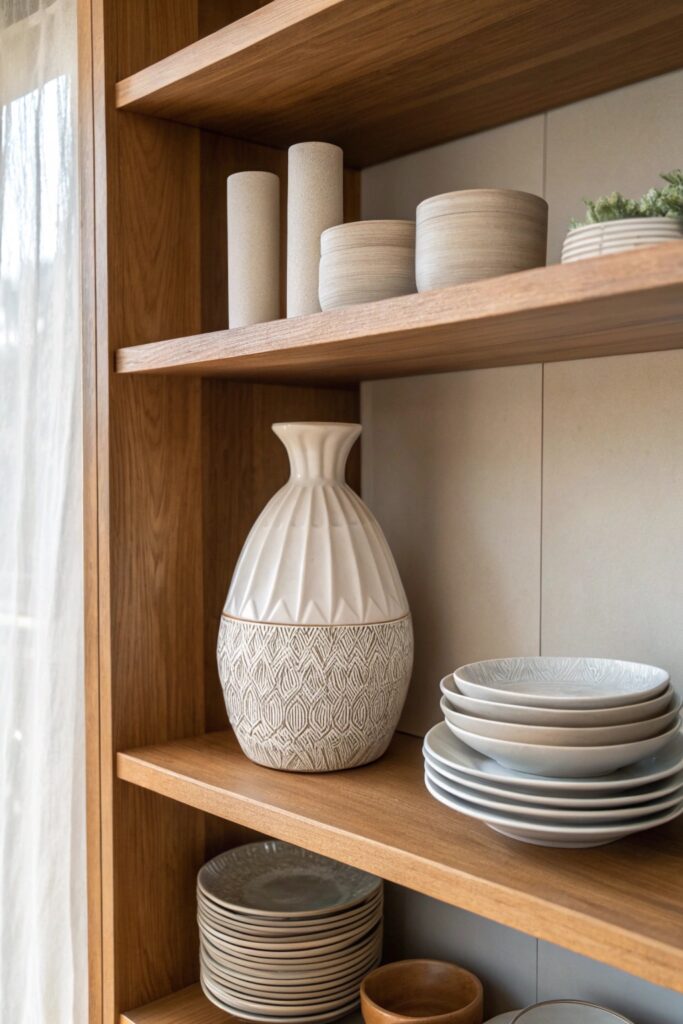
A single larger or more distinctive ceramic object gives the shelf a genuine focal point, letting everything else on the shelf read as supporting rather than competing elements.
Choose a piece with a shape or glaze that stands out from the room’s other ceramics, which helps it read as the intended focal point rather than blending in.
8. Incorporate Greenery, But Keep It Low-Maintenance
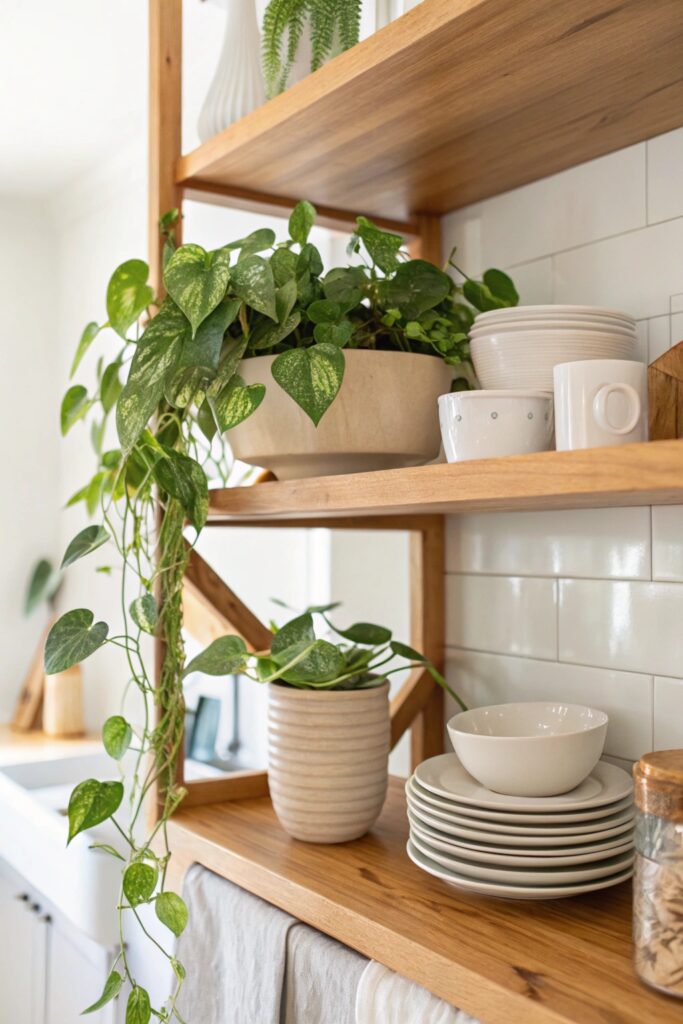
A small, hardy plant or a quality faux version adds organic life to open shelving without demanding regular care that a kitchen shelf’s often inconsistent light exposure might not support well.
Check the specific plant’s light and humidity needs against your kitchen shelf’s actual conditions before committing, since kitchen environments vary considerably in both factors.
9. Use Matching Canisters for Everyday Staples
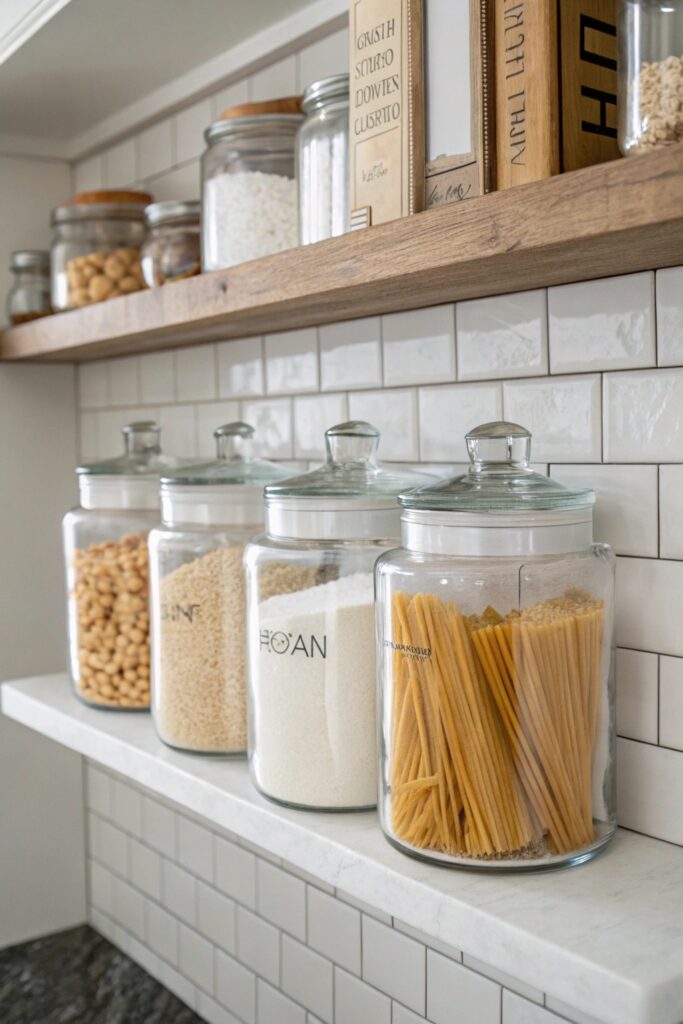
Uniform canisters for flour, sugar, or coffee turn genuinely functional storage into part of the shelf’s cohesive visual display, rather than a mismatched collection of original packaging.
Choose canisters with a consistent material and label style, which reads as more considered than a mismatched collection even if the containers themselves are similar in size.
10. Layer in Texture with Woven Baskets
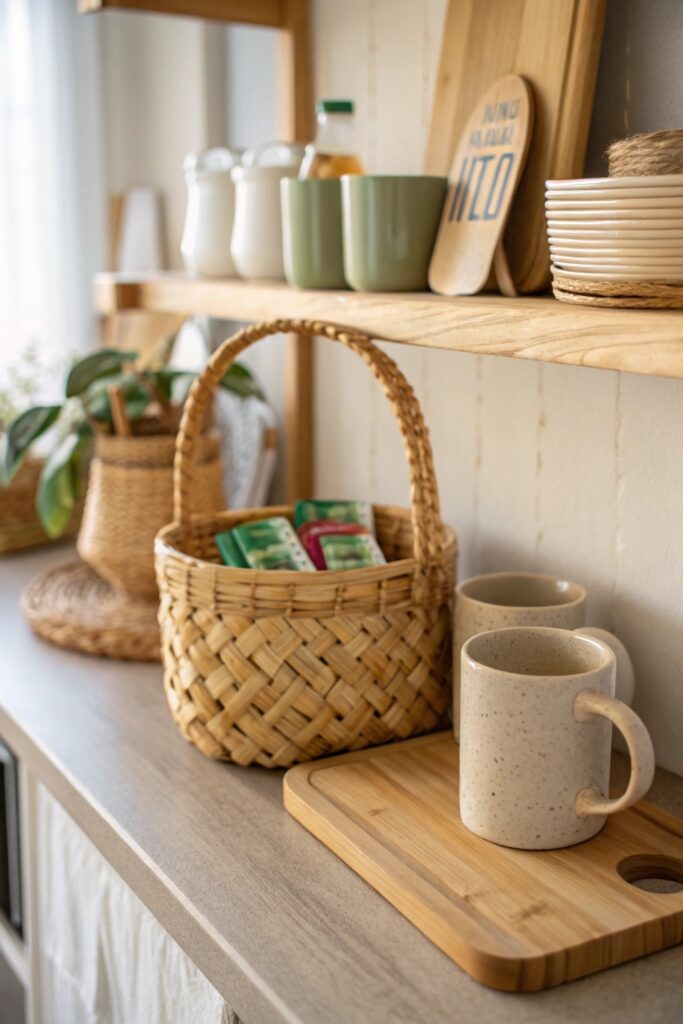
A woven basket holding smaller items adds tactile variety that purely smooth ceramic and glass surfaces don’t provide, while also concealing less visually appealing everyday items.
A basket with a tighter weave contains smaller items more securely than an open, loose weave, which matters if the basket will hold anything prone to shifting or falling through gaps.
11. Frame a Small Piece of Art or a Print
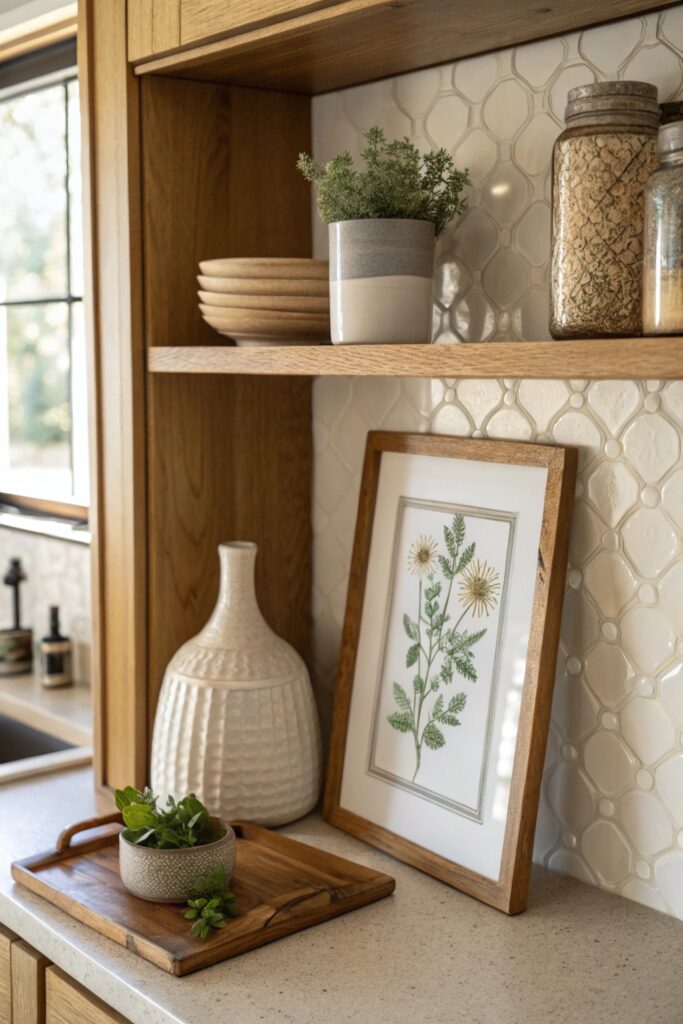
A small framed print leaned against the wall on the shelf (rather than hung) adds personality and can be easily swapped, offering more flexibility than a permanently mounted piece.
Choose a piece with some connection to the room’s overall palette or theme, which helps it feel integrated into the shelf display rather than randomly placed.
12. Edit Ruthlessly Every Few Months
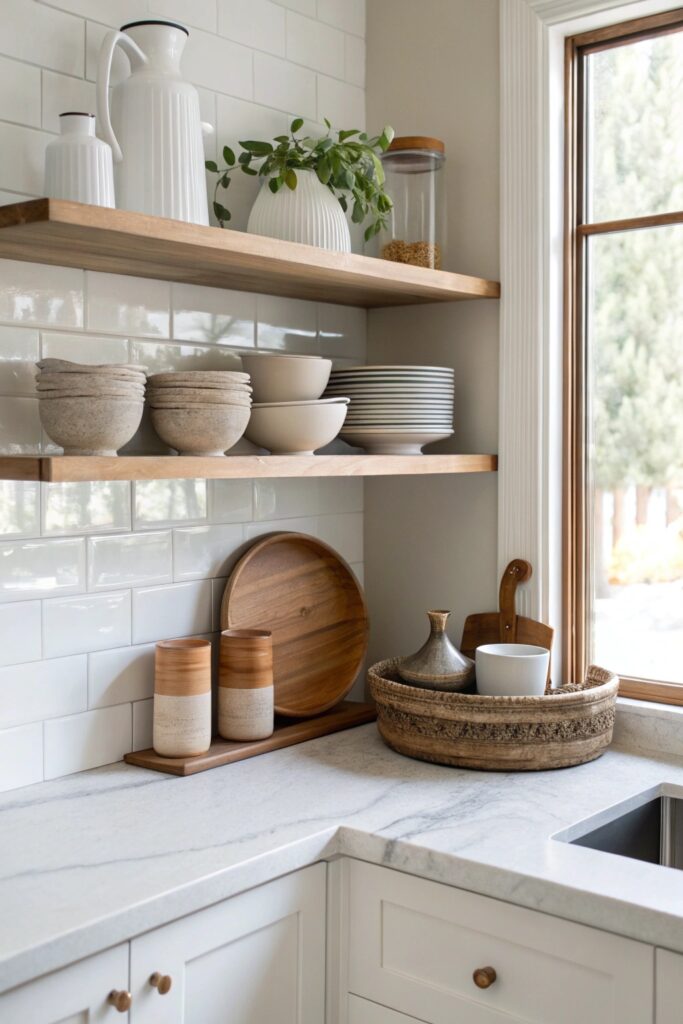
Open shelving accumulates clutter faster than closed cabinets specifically because everything placed there is immediately visible, making a regular editing habit more necessary here than for hidden storage.
Set a recurring reminder (monthly or seasonally) to reassess the shelf, which turns this into a routine habit rather than an occasional overwhelming task.
Balancing Style With Actual Daily Use
Open shelving in a kitchen specifically needs to serve daily function alongside its visual role, unlike shelving in a living room or bedroom that’s purely decorative — items you reach for regularly (everyday mugs, cooking oils) should stay genuinely accessible even if they’re not the most photogenic pieces on the shelf.
A reasonable approach is dedicating the most visible, eye-level shelf space to styled items and reserving lower or less prominent shelves for daily-use pieces, which lets the display read as intentional while keeping the shelving genuinely functional for actual cooking and daily kitchen use.
Final Thoughts
A tight color palette and genuine negative space matter more than any specific object choice, since both are what separate a curated shelf display from one that simply accumulated items over time. Regular editing is worth treating as an ongoing habit rather than a one-time styling project, since open shelving specifically tends to slowly refill with everyday clutter if it isn’t periodically reassessed.