
A cluttered kitchen counter slows down actual cooking as much as it looks messy, and the most effective organization solutions recover counter space by moving items to vertical or under-cabinet storage rather than simply rearranging what’s already sitting on the surface.
Below are 12 ways to organize a kitchen counter more effectively, with real costs and practical notes for each.
1. Corner Appliance Garages
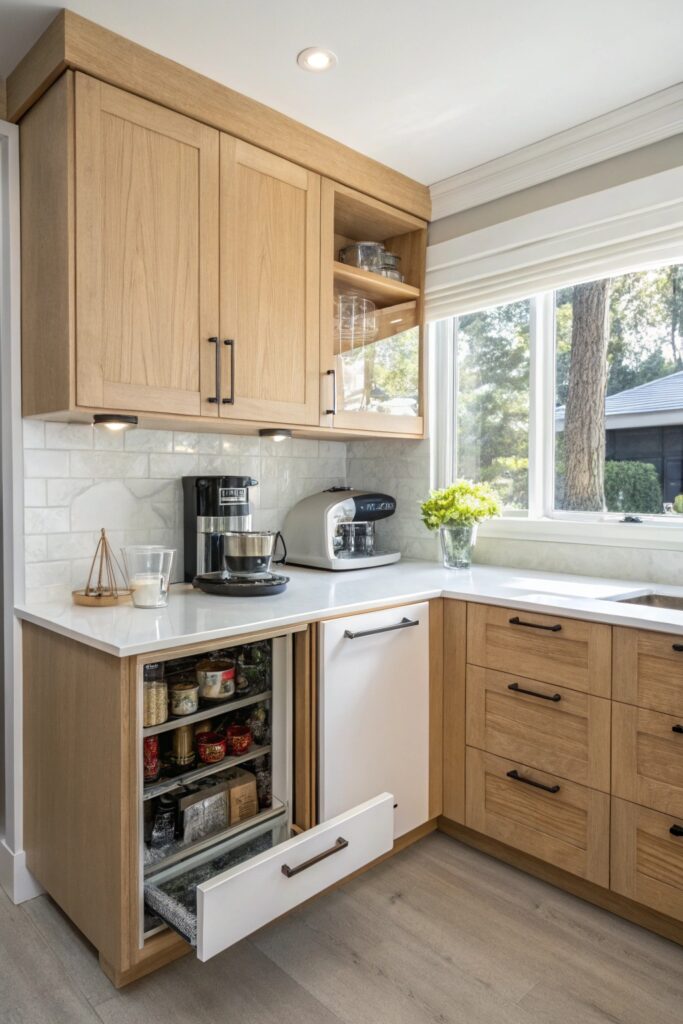
A dedicated cabinet or nook for the coffee maker, toaster, and other daily-use small appliances ($150-500 for a built-in version, or a simple roll-top garage for less) keeps them off the counter while remaining genuinely accessible.
This is worth prioritizing specifically for appliances used daily, where the convenience of quick access still matters even with the item technically stored away.
2. Vertical Utensil Crocks
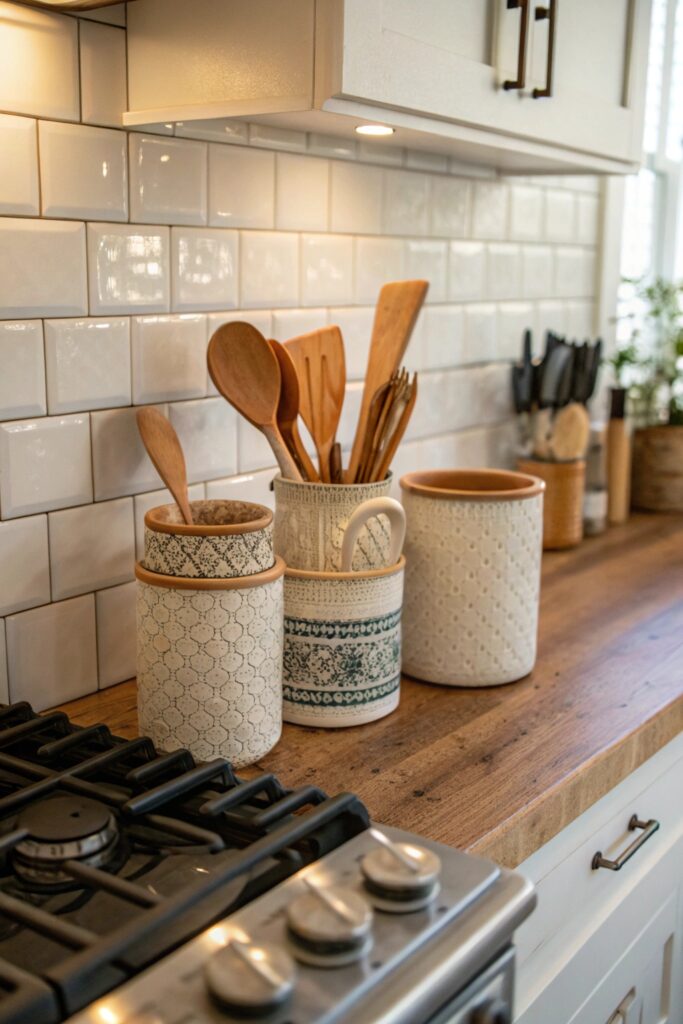
A single crock ($15-30) holding frequently used utensils takes up minimal counter footprint compared to spreading the same tools flat across the surface or leaving them scattered near the stove.
Limit the crock to genuinely daily-use tools rather than every utensil you own, which keeps it from becoming its own source of counter clutter.
3. Under-Cabinet Storage Racks
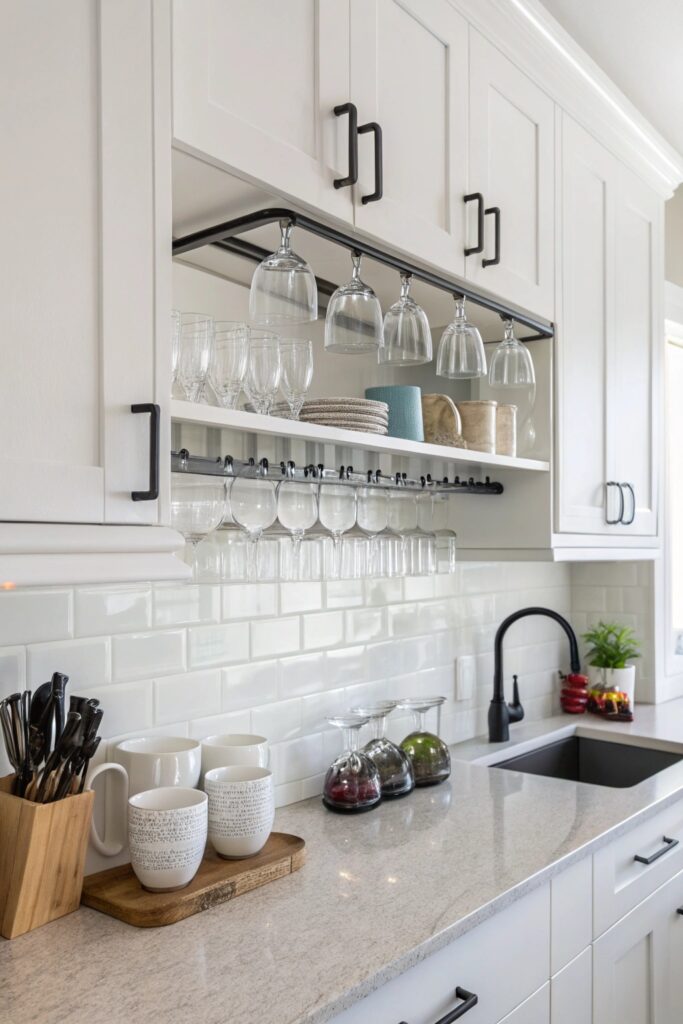
Racks mounted to the underside of upper cabinets ($15-40) hold mugs, small cookbooks, or paper towels using space that’s otherwise completely unused between the counter and cabinet bottom.
This recovers genuine counter space without any new floor or wall footprint, since it uses a gap that exists in nearly every kitchen already.
4. Lazy Susans for Corner Counters
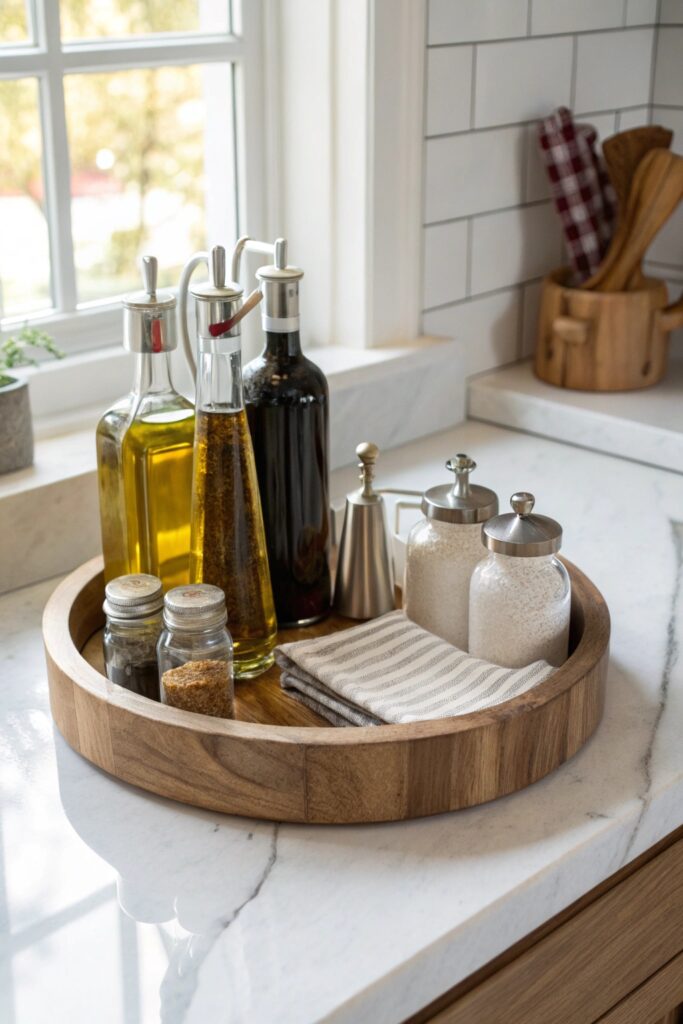
A rotating lazy susan ($15-35) on a corner counter section makes items in that harder-to-reach spot more genuinely accessible, rather than becoming a dead zone where things accumulate and get forgotten.
This works particularly well for oils, spices, or condiments used regularly during cooking, letting you spin the needed item into reach rather than reaching awkwardly into a corner.
5. Tiered Countertop Organizers
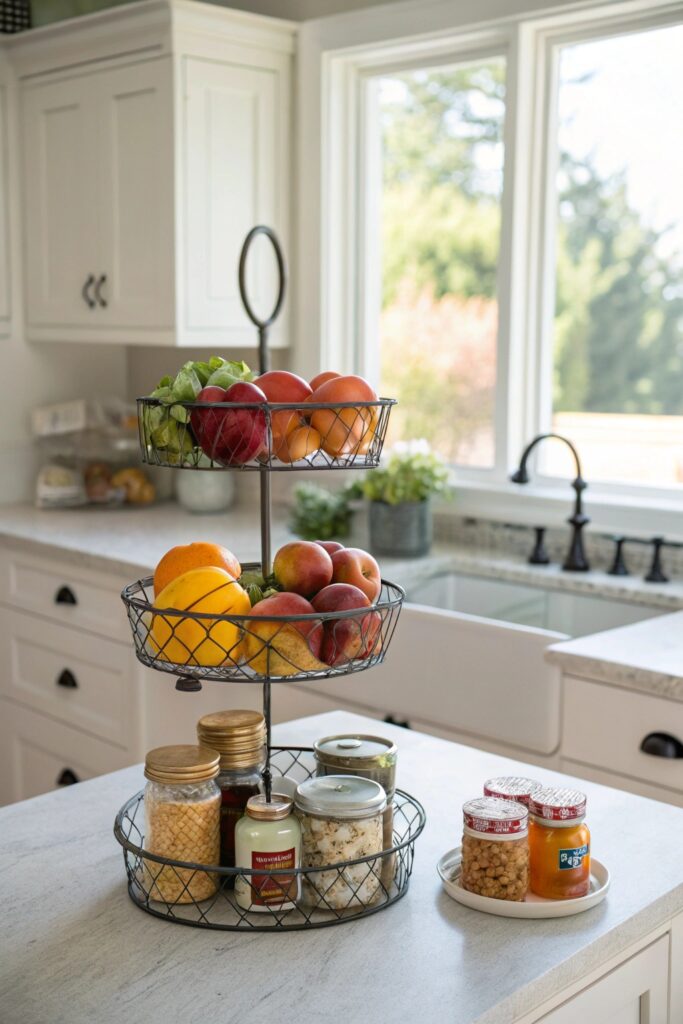
A tiered stand ($15-35) organizes smaller items vertically, making more efficient use of counter footprint than spreading the same items flat across the surface.
This works well for produce that shouldn’t be refrigerated (onions, garlic, some fruits), keeping them accessible and visible rather than lost in a pantry.
6. Charging Station Drawers
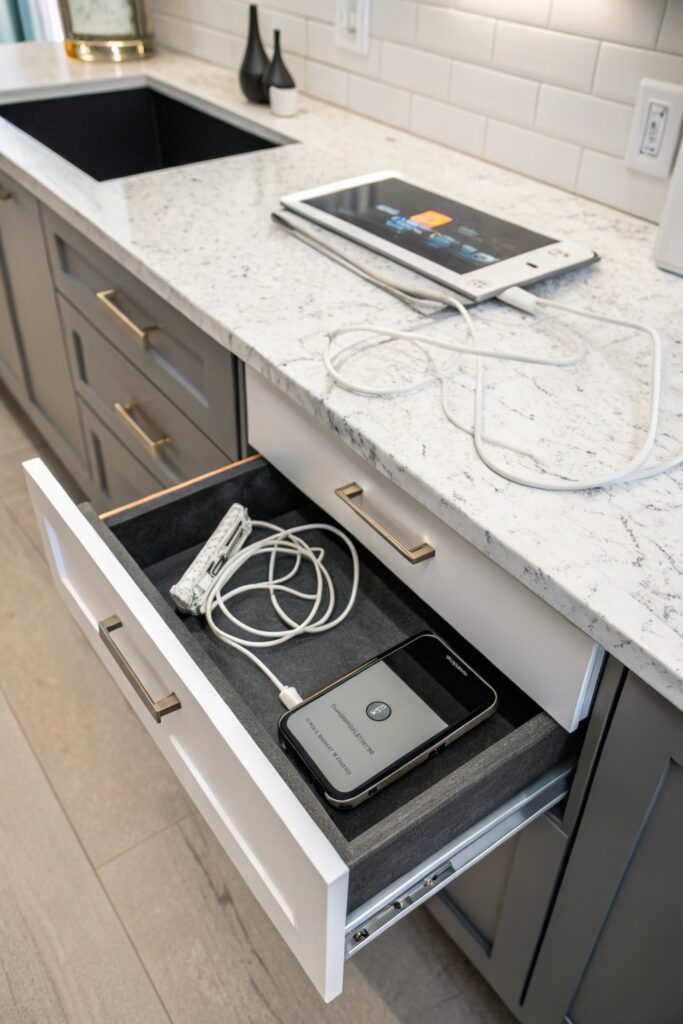
A drawer with a built-in outlet and cable management ($40-100 for a retrofit kit) keeps phones and tablets charging out of sight, removing the cords and devices that commonly clutter a kitchen counter.
This is a genuinely practical modern addition for a kitchen that doubles as a household’s central charging spot, which is increasingly common regardless of the room’s original design intent.
7. Knife Blocks vs. In-Drawer Knife Storage
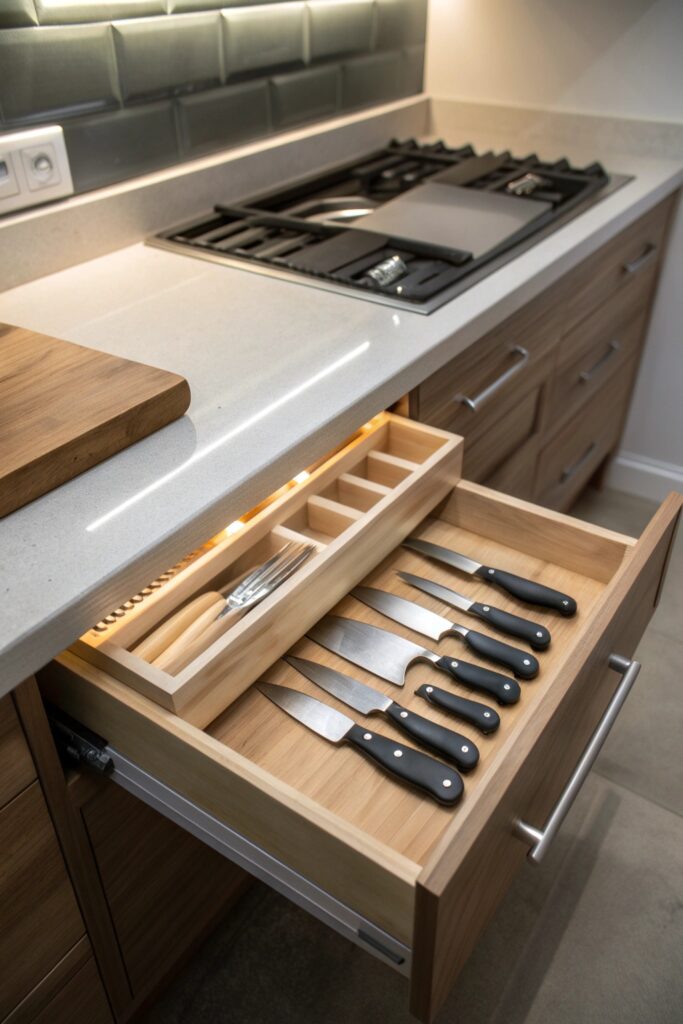
An in-drawer knife tray ($20-40) frees up genuine counter space that a standalone knife block occupies, though a block does keep knives more immediately visible and accessible during active cooking.
Choose based on your specific counter space constraints — a drawer insert makes sense in a smaller kitchen prioritizing counter space, while a block remains reasonable where space isn’t as tight.
8. Countertop Compost Bins
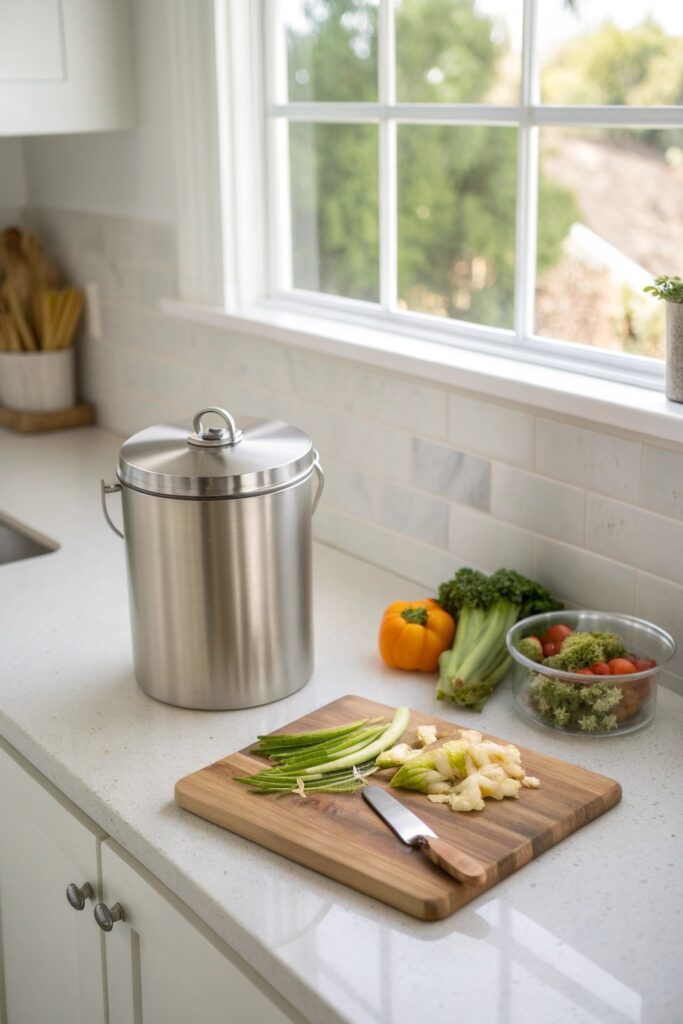
A small, sealed compost bin ($15-30) with a charcoal filter contains food scraps without the odor issues an open bin would create, while keeping composting genuinely convenient during actual meal prep.
Empty it regularly regardless of its filtered design, since even a well-sealed bin will develop odor issues if scraps sit for multiple days.
9. Cutting Board Storage Slots
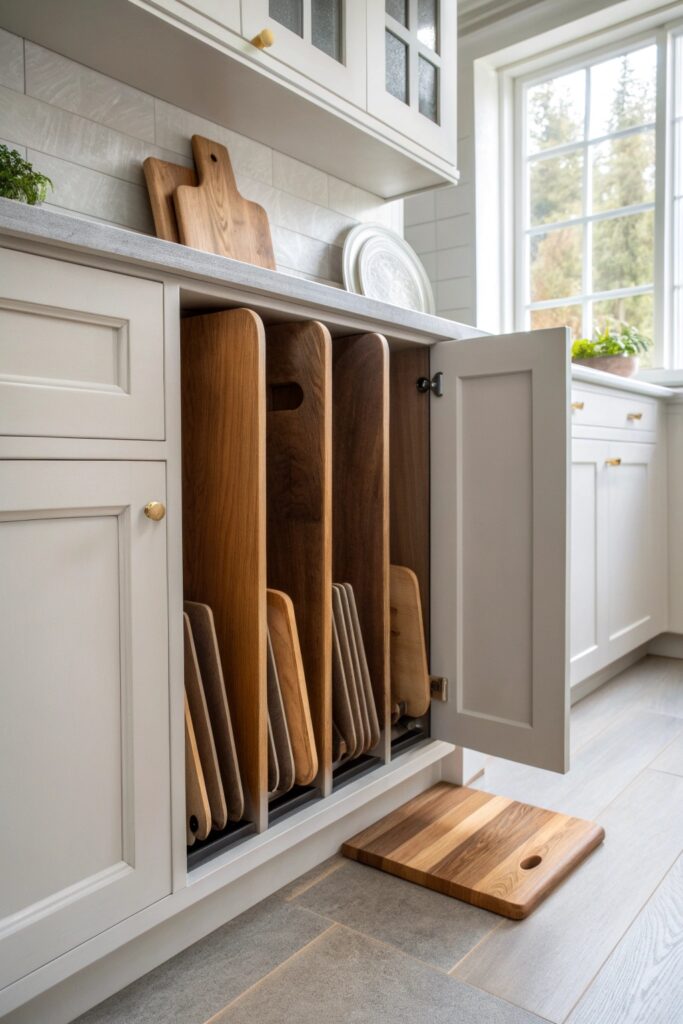
A vertical slot organizer ($15-30) for cutting boards keeps them upright and accessible rather than stacked flat, where the board you need is often on the bottom of the pile.
This can sit on the counter in a corner or be mounted inside a nearby cabinet, depending on which better serves your specific kitchen’s available space.
10. Dish Drying Racks with Drainage Trays
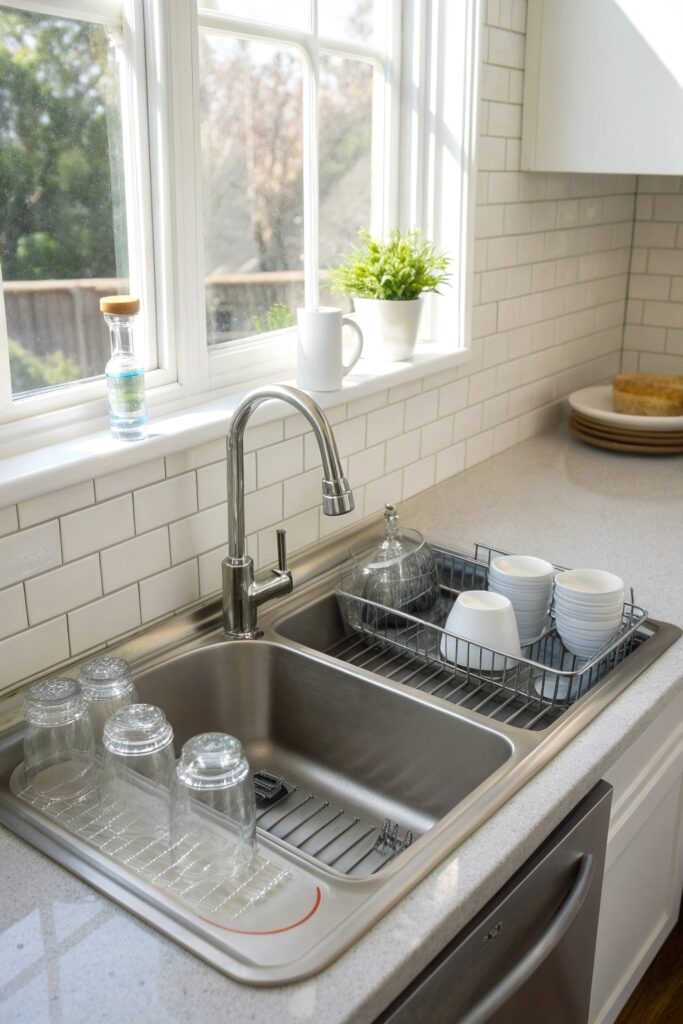
A rack with a genuine drainage tray ($20-50) prevents water from pooling directly on the counter surface, protecting both the counter material and anything stored nearby from consistent water exposure.
Choose a rack sized appropriately for your typical daily dish volume rather than the largest available option, since an oversized rack takes up more permanent counter space than necessary.
11. Recipe Card and Tablet Stands
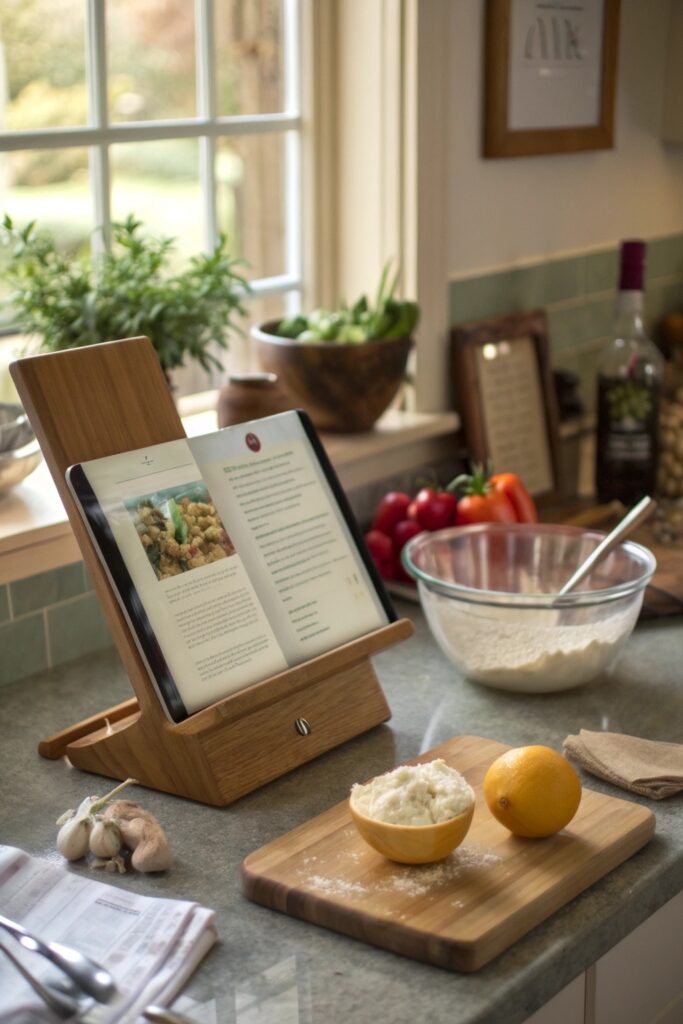
A small stand ($10-25) holding a recipe card or tablet at an angled, readable position keeps cooking references visible without the device or card lying flat and taking up more counter footprint.
This is a genuinely practical addition for anyone who regularly cooks from recipes, positioning the reference material exactly where it’s needed during actual prep.
12. Labeled Storage Containers for Dry Goods
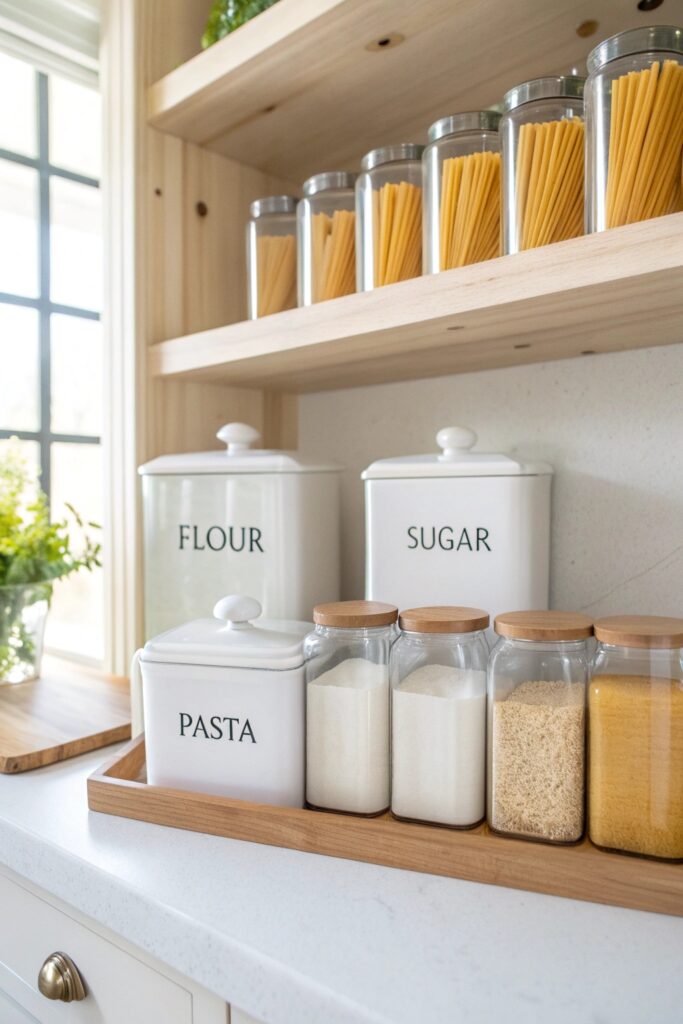
Uniform, labeled containers ($10-20 each) for flour, sugar, rice, and other dry goods stack and store more efficiently than the mismatched bags and boxes these items typically come in.
Clear containers with clear labels let you check supply levels at a glance, which is a genuine practical advantage over opaque original packaging beyond the visual organization benefit.
Starting With What You Actually Use Daily
Before buying any organizational products, spend a few days actually noting which items you reach for daily versus weekly versus rarely — this genuinely changes which of these solutions matter most for your specific kitchen, since a household that cooks from scratch daily has very different counter needs than one that mostly reheats and orders in.
Items used daily deserve the most accessible spots (a utensil crock, an appliance garage with easy access), while anything used weekly or less can move to a cabinet or drawer entirely — this simple sorting exercise often reveals that a counter looks cluttered mainly because infrequently used items are taking up prime, easily-reached real estate that daily-use items actually need more.
Wrapping It Up
An appliance garage and vertical storage solutions matter most if you’re prioritizing only a couple of these changes, since both directly address the two biggest sources of counter clutter — small appliances and loose utensils or tools. Labeled containers and drawer-based storage are worth adding next, since they recover additional counter space without requiring any new furniture or built-in installation.