
A well-styled winter tray does real work in a room that can otherwise feel a little bare during the colder months, and the most successful displays share a consistent approach — a cohesive material palette and varied heights within a single contained surface.
Below are 10 ways to style a winter tray, with real costs and practical notes for each.
1. Classic Pinecone and Candle Trays
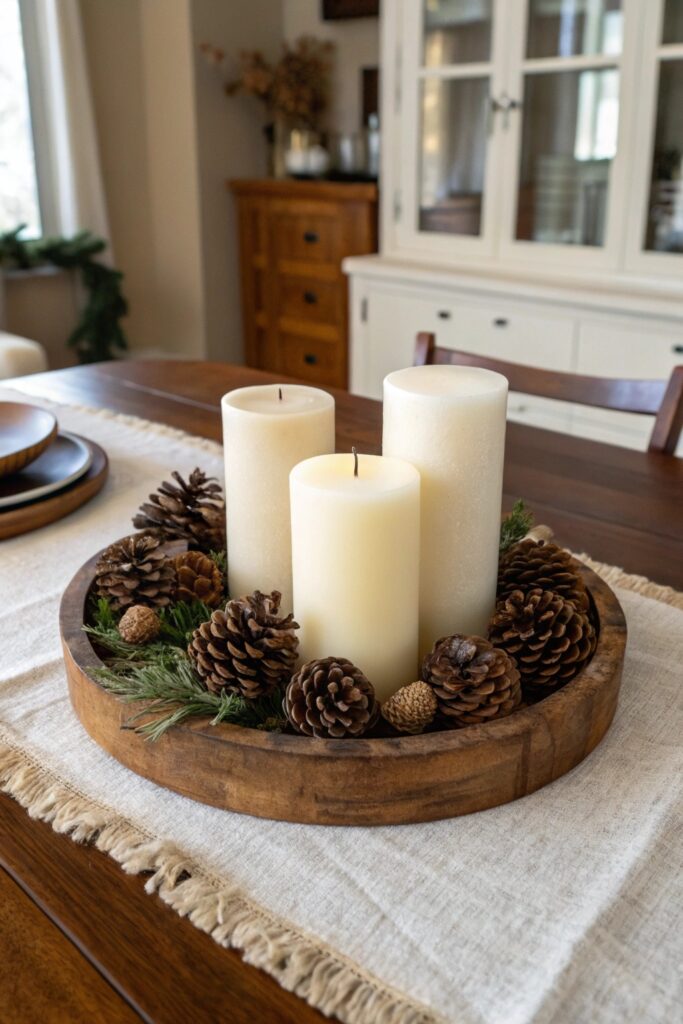
A cluster of pinecones (free if foraged, or $8-15 for a bag) grouped with a couple of pillar candles on a simple tray creates an easy, classic winter display that works well on nearly any surface.
Choose an odd number of pinecones (3, 5, or 7) rather than an even count, which is a simple styling principle that reads as more naturally arranged than a paired, symmetrical grouping.
Vary the pinecone sizes and add a few sprigs of real or faux greenery for more visual texture than pinecones alone would provide.
Faux fur specifically holds up better than real sheepskin to repeated handling and doesn’t require any special cleaning care throughout the season.
2. Faux Fur and Wood Bowl Combos
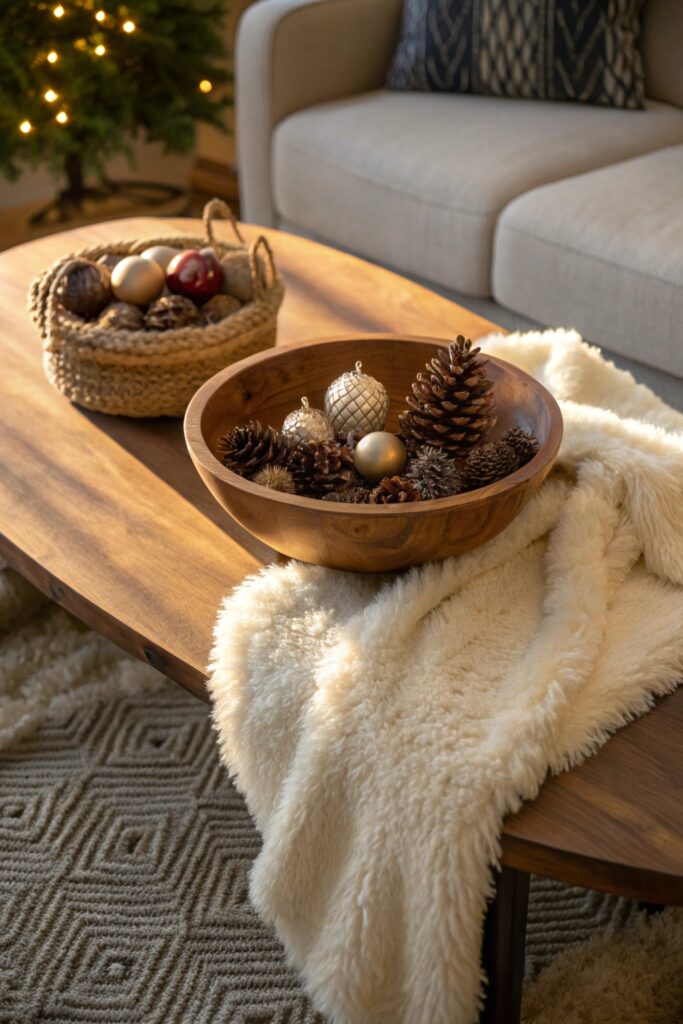
A small faux fur square or strip layered under a wood bowl adds genuine tactile warmth to a tray display, playing into winter’s cozy-texture appeal more than a purely visual arrangement would.
Trim stems to slightly varied lengths before arranging in the bud vases, which creates a more natural silhouette than uniform-height stems would.
Fill the wood bowl with pinecones, small ornaments, or dried orange slices to complete the display rather than leaving it empty, which reads as unfinished.
A ribbon bookmark or a small tag tucked into the top book adds a finishing detail that elevates the stack beyond simply piled books.
3. Mini Bud Vases with Winter Greenery
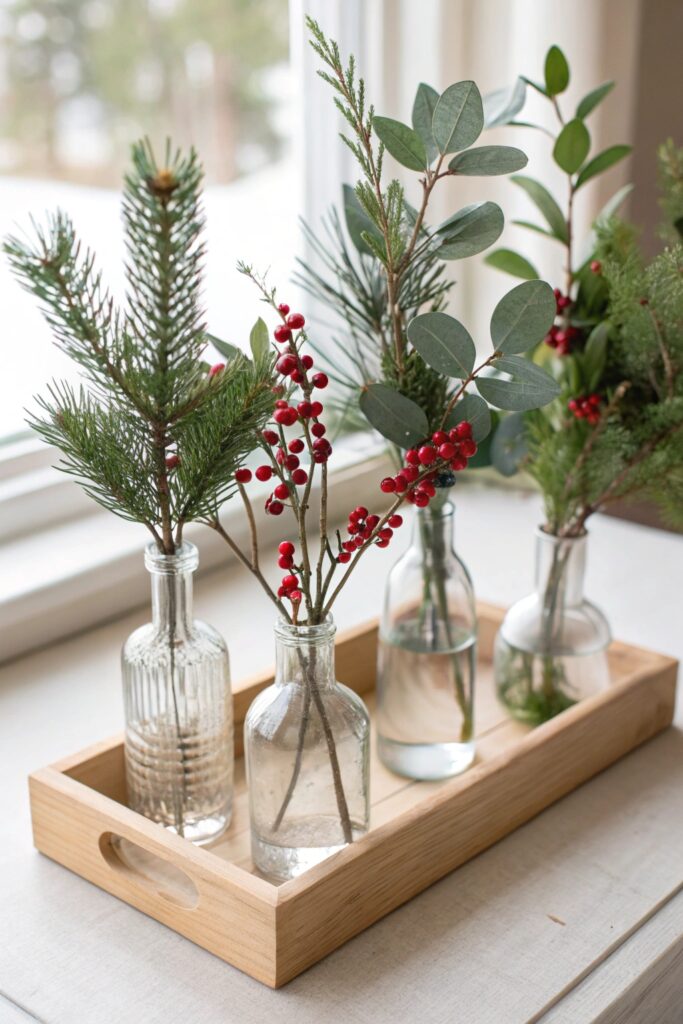
A cluster of small bud vases ($5-10 each), each holding a single sprig of eucalyptus, pine, or another winter greenery, creates a low, elongated display that doesn’t block sightlines on a coffee table.
Genuine mercury glass costs more than mercury-glass-look alternatives, but the alternatives have become convincing enough at normal viewing distance to be a reasonable budget-conscious substitute.
Vary the vase heights slightly for visual interest rather than lining them up in a perfectly uniform row.
Store extra dried orange slices and cinnamon bundles in an airtight container between uses, which keeps them from losing their scent and color before the display comes back out next winter.
4. Vintage Book Stacks with Ornaments
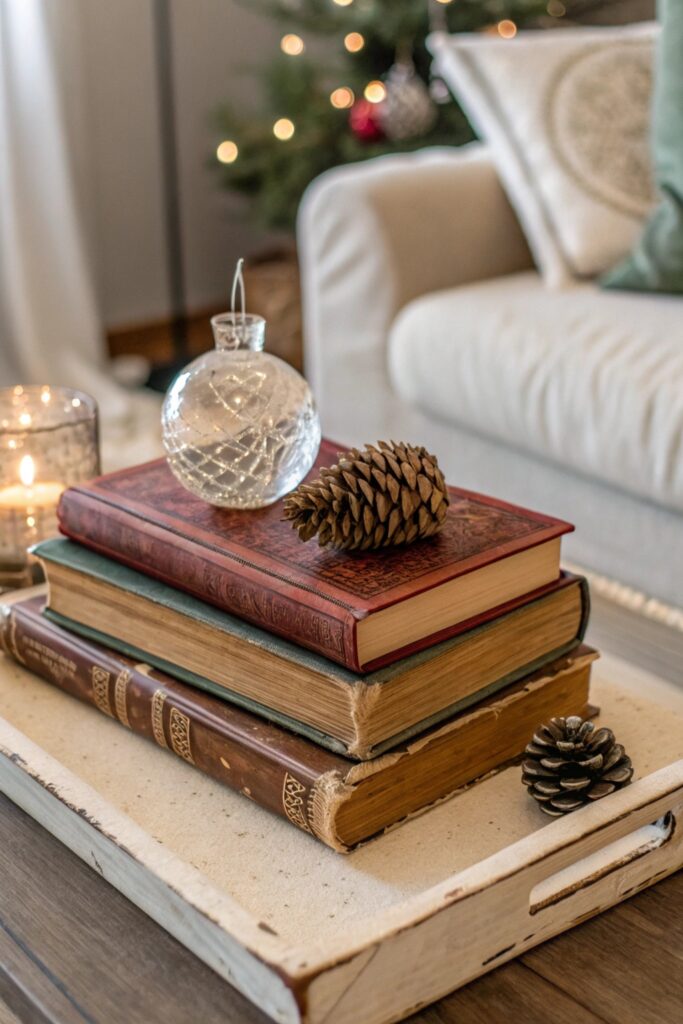
Stacking a few vintage or vintage-look books and topping them with a small ornament or a sprig of greenery creates a layered, collected look that a flat tray surface alone doesn’t achieve.
Choose a blanket in a genuinely soft, high-quality knit if the display is meant to suggest actual use, since a stiff or scratchy throw undercuts the cozy effect regardless of how it’s styled.
Choose books with muted, neutral covers specifically for this styling technique, since brightly colored spines can compete with the rest of the tray’s more subdued winter palette.
Look for ornaments with a mix of finishes (matte and glossy) within the same metallic family, which adds subtle depth that a uniformly glossy collection doesn’t achieve.
5. Frosted Glass and Silver Accents
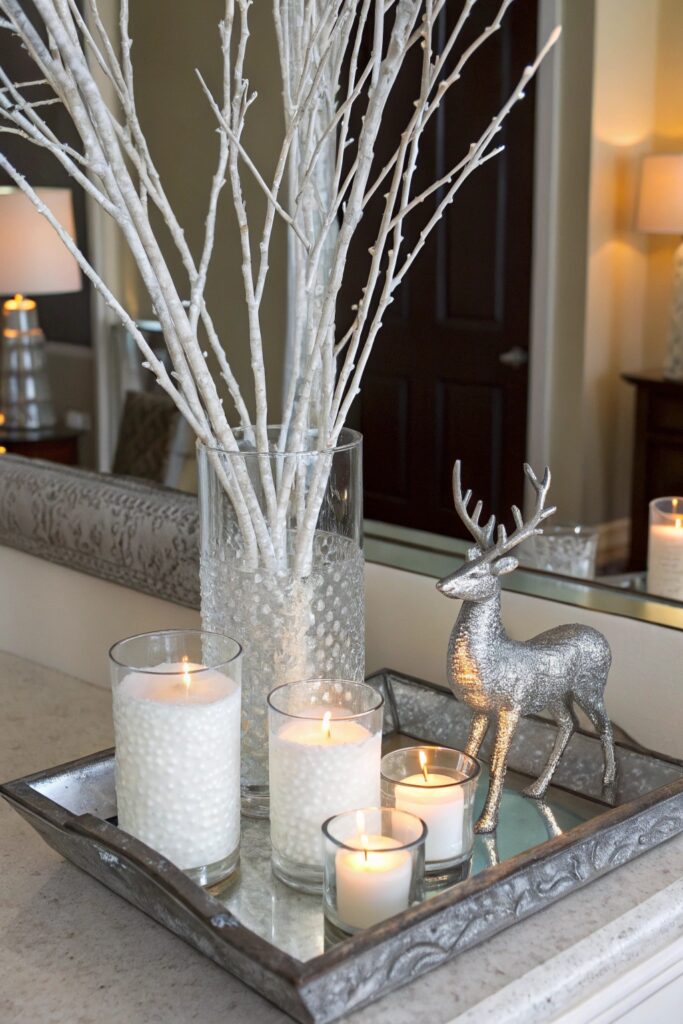
Frosted or etched glass votives paired with silver or mercury glass ornaments ($15-30 combined) bring a cooler, more elegant winter tone than the warmer wood-and-pinecone approach.
Secure branches with a small amount of floral wire if they don’t sit naturally flat on the tray surface, which keeps the arrangement from shifting every time the tray is moved.
This palette works particularly well in a more modern or minimalist room, where the cooler metallics feel more cohesive than a rustic, natural-material display would.
Start with a small collection of 2-3 pieces rather than trying to build a full scene immediately, since a sparse but well-placed starting arrangement looks more intentional than an overcrowded first attempt.
6. Cinnamon Stick and Orange Slice Bundles

Dried orange slices and bundled cinnamon sticks (homemade for a few dollars, or $10-15 purchased) add genuine seasonal scent alongside their visual appeal, which most purely decorative tray elements don’t provide.
Dried orange slices can be made at home by baking thin slices at a low oven temperature for a couple of hours, offering a lower-cost alternative to store-bought dried fruit.
7. Cozy Mug and Blanket Corner
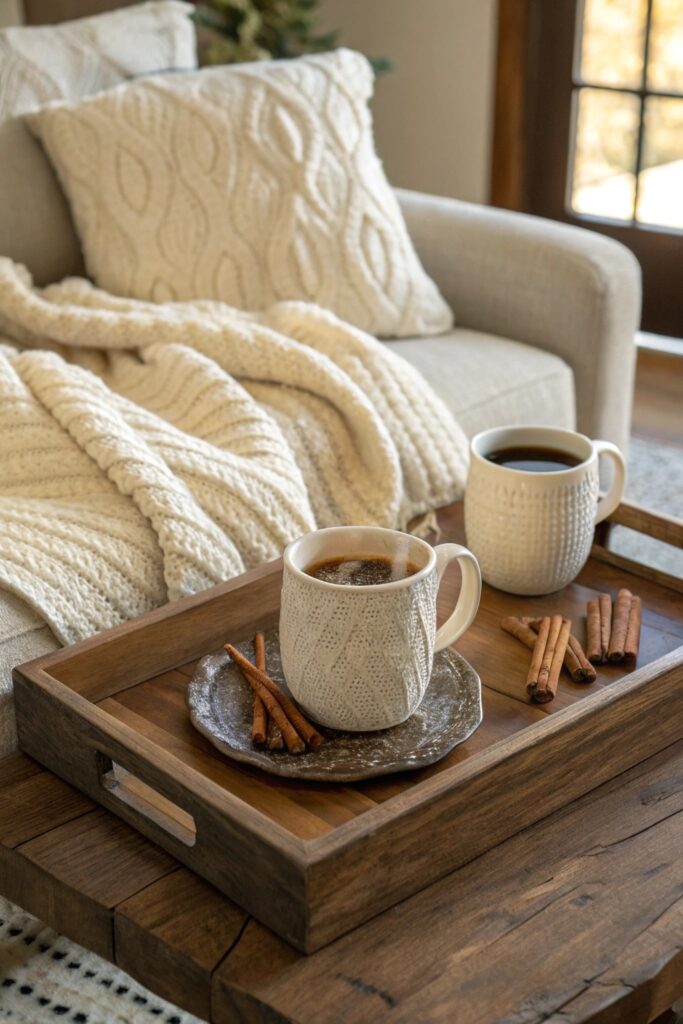
Pairing a favorite mug with a small folded blanket on a tray creates a display that’s genuinely inviting rather than purely decorative, suggesting actual use rather than only visual styling.
This works especially well on a side table near a favorite reading or lounging spot, where the display doubles as a hint toward how the space is meant to be used.
8. Metallic Ornament Bowls
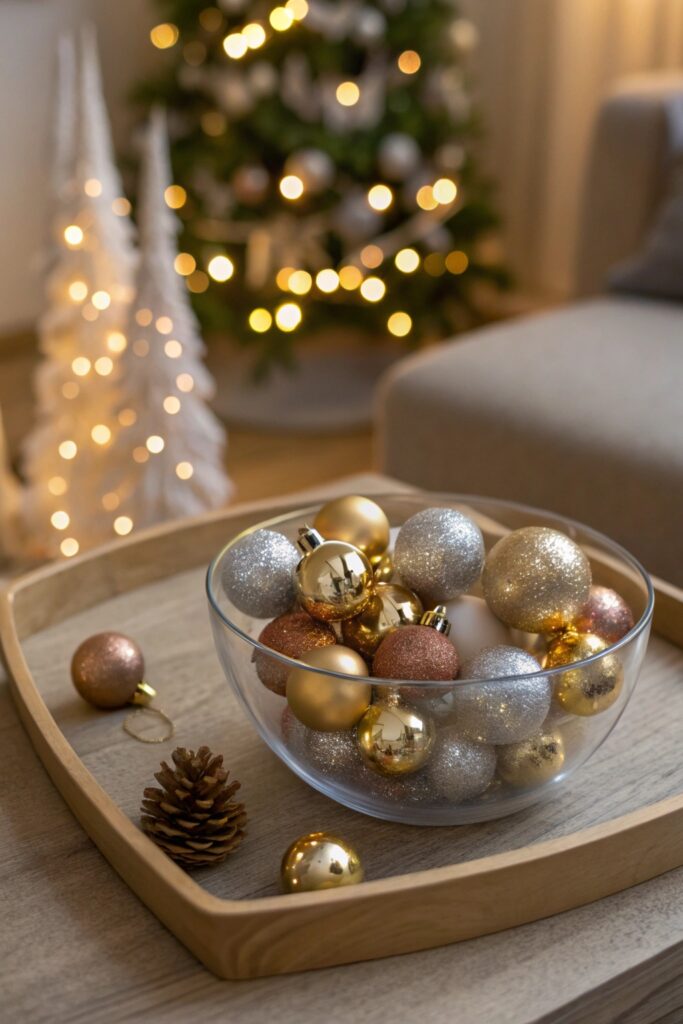
A bowl filled with metallic ornaments in coordinated gold, silver, or bronze tones ($10-20 for a set) adds shine and color without requiring a full tree’s worth of decorations.
This is a genuinely simple way to bring holiday sparkle to a tray display without the commitment of a larger seasonal decorating project.
9. Birch Branch and Candle Clusters
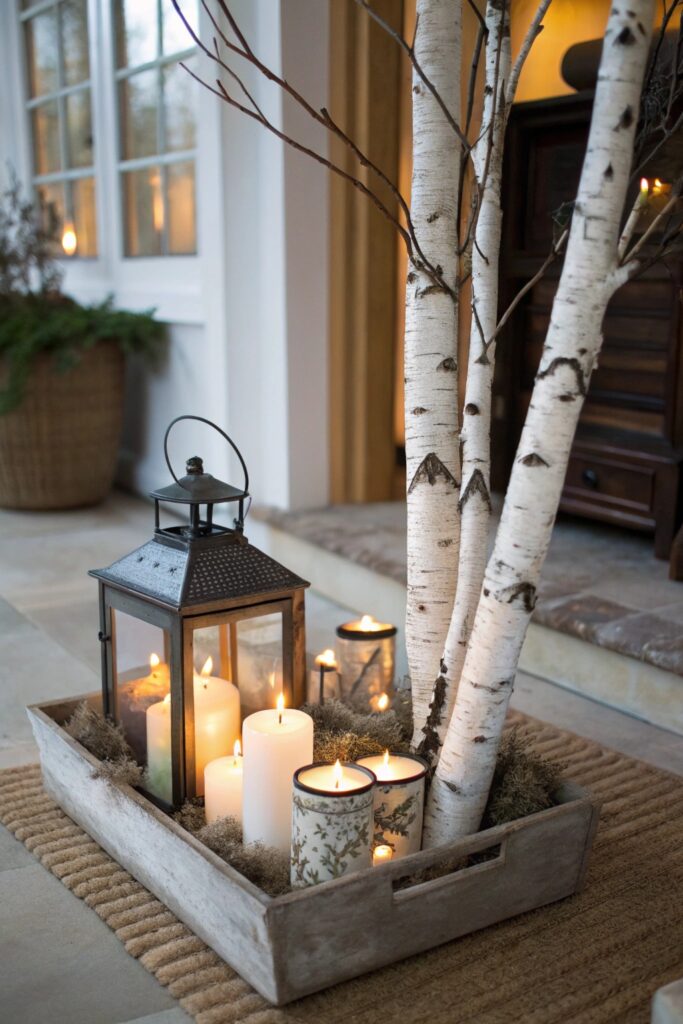
A few birch branches (free if foraged, or $10-20 purchased) laid across a tray alongside a cluster of candles brings genuine natural texture and a distinctly wintry, woodland feel.
Birch’s distinctive white bark specifically reads as more wintry than other wood types, making it a particularly fitting choice for this specific seasonal display.
10. Snowy Village or Miniature Scene Trays
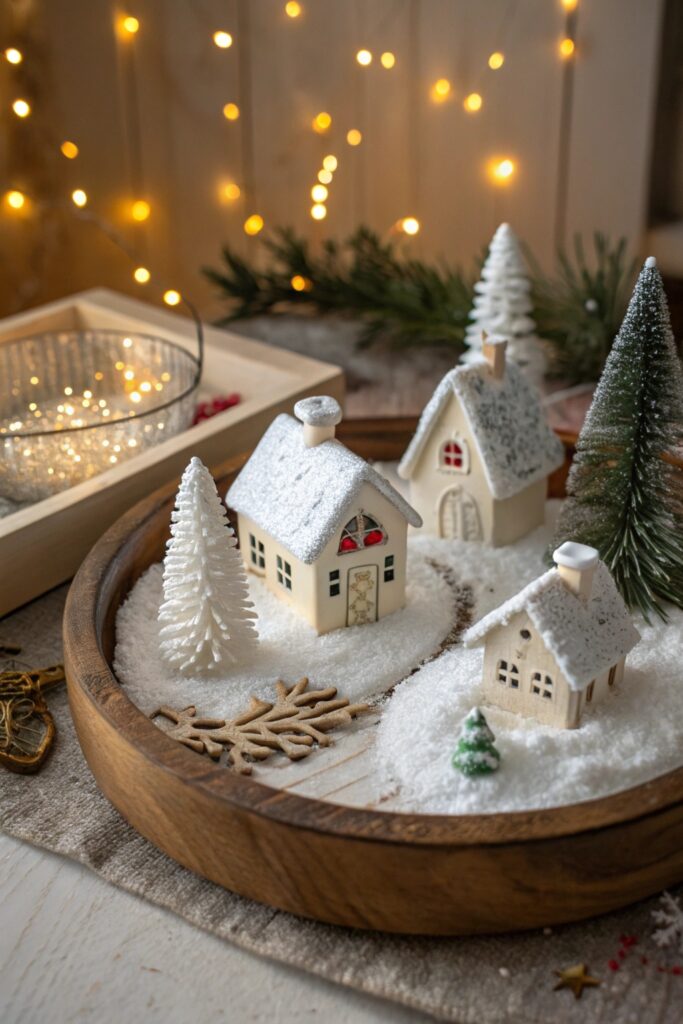
A small collection of miniature houses or figures arranged with fake snow or white flocking ($20-40 for a starter set) creates a genuinely whimsical, storybook-style winter scene.
This works especially well as a piece the whole family can build onto over several years, adding new pieces to the collection each winter season.
Wrapping It Up
Sticking to one cohesive material palette (all warm wood tones, or all cool metallics) matters more than any specific element choice, since mixing too many competing textures and colors within one small tray can read as cluttered rather than intentionally layered. Varying heights across whatever elements you choose is worth prioritizing next, since a flat, uniform-height display reads as considerably less dynamic than one with genuine visual variation.