
A home coffee bar works best when it’s genuinely organized around daily use — equipment within reach, supplies grouped logically — rather than simply styled to look good without actually streamlining the morning routine it’s meant to serve.
Below are 15 ways to build one, with real costs and practical notes for each.
Looking for more styled coffee bar themes with equipment-specific tips? See our companion guide to cute coffee bar ideas.
1. The Floating Shelf Setup
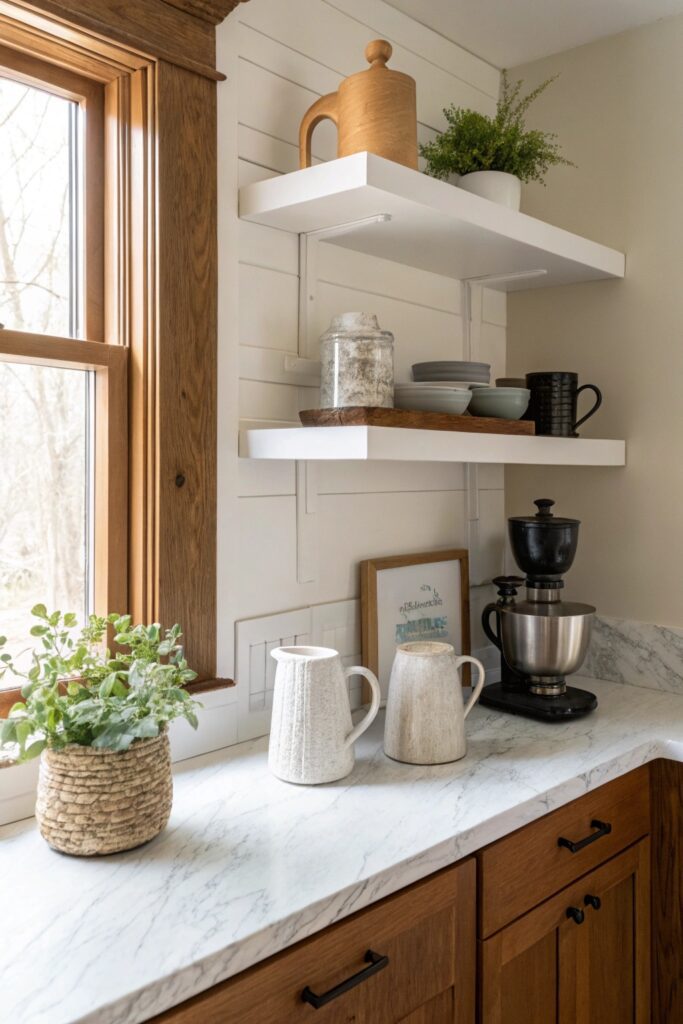
A couple of floating shelves ($15-40 each) above a counter section create a dedicated coffee zone without the footprint of a full cabinet or cart, working well in a kitchen with limited counter space to spare.
Choose shelf brackets rated for the actual weight of a coffee maker plus supplies, since underrated hardware is a common cause of sagging or failed floating shelves over time.
2. Repurpose an Old Bar Cart
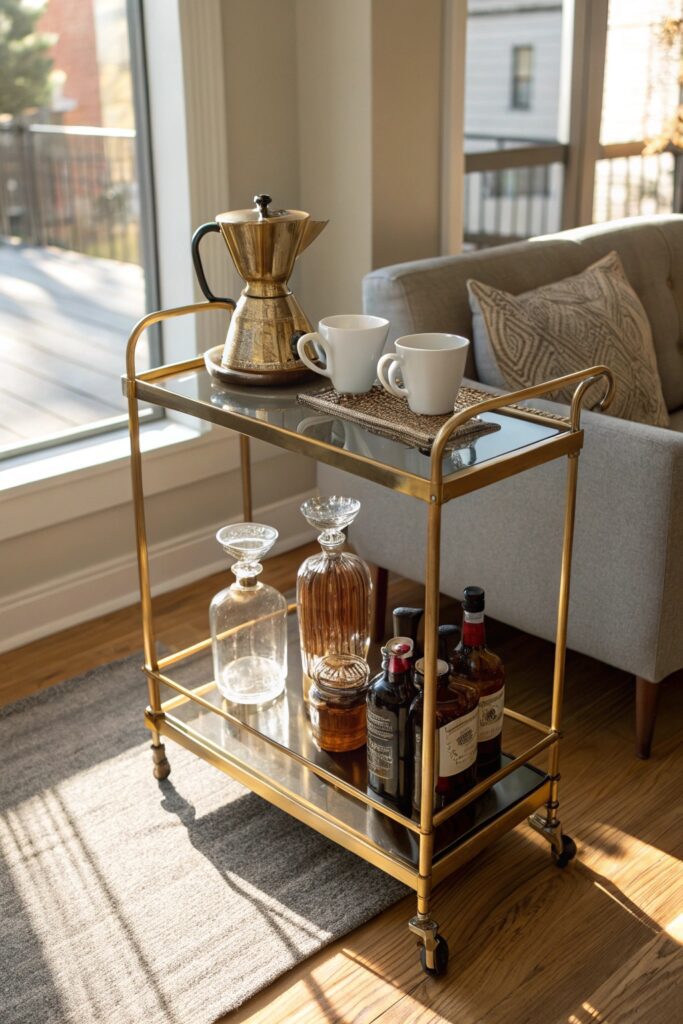
A secondhand or existing bar cart ($40-150 if buying new or used) makes a genuinely mobile coffee station, since the wheels let you reposition it for parties or move it out of the way entirely when not in use.
Check the cart’s wheel locks specifically if it will regularly sit in one spot, since unlocked casters can let a loaded cart drift slightly over time on a hard floor surface.
3. Build a Dedicated Nook in a Closet
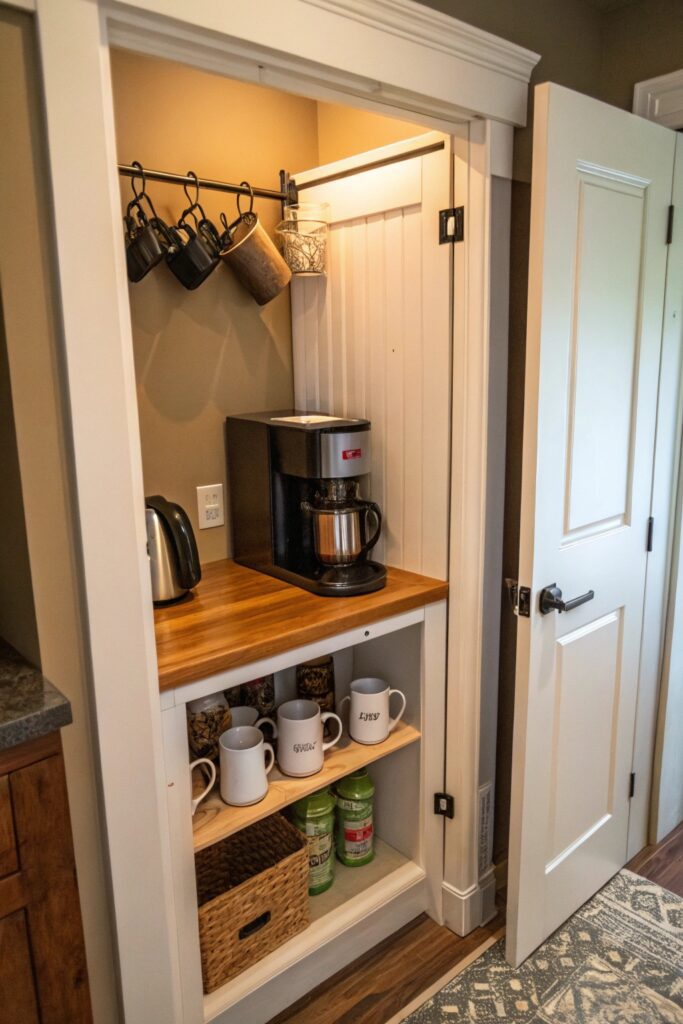
Converting an underused closet or cabinet ($50-150 in shelving and organization additions) into a coffee station keeps the equipment and supplies contained and closable, hiding the setup entirely when guests are over.
Add a small vent fan or crack the door slightly if the closet lacks natural airflow, since a fully sealed space can trap humidity from a coffee maker’s steam over repeated daily use.
4. Go Vertical With a Wall-Mounted Mug Rack
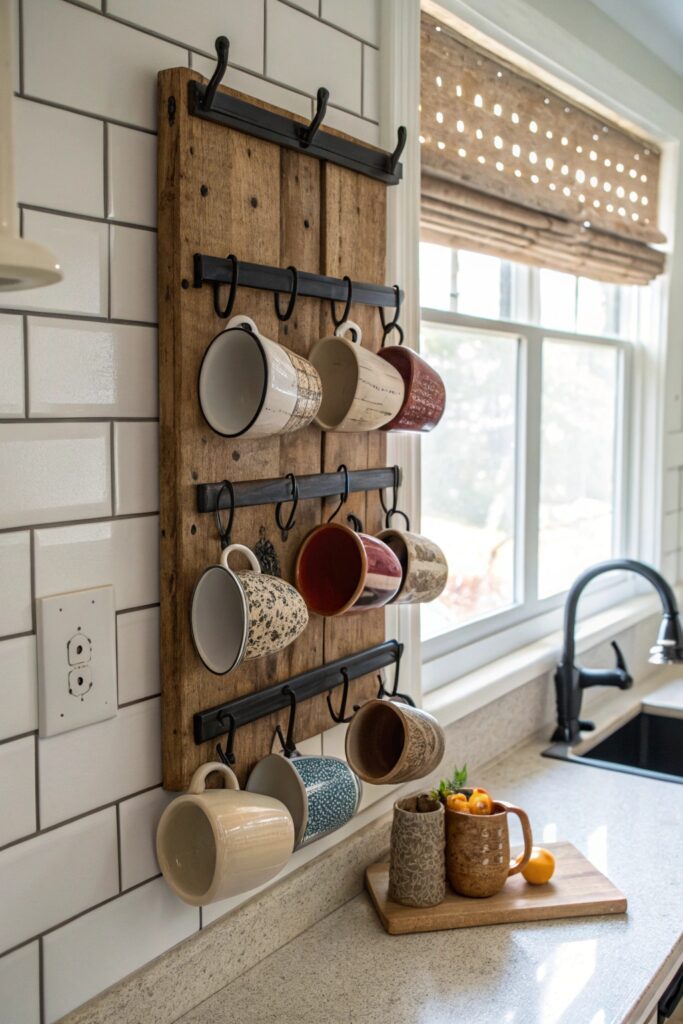
A wall-mounted mug rack ($15-35) frees up cabinet space that mugs would otherwise occupy while keeping them genuinely accessible and visually part of the coffee station’s display.
Choose a rack with hooks spaced for your actual mug handle sizes, since some decorative racks are designed more for display than genuinely practical daily mug storage.
5. Create a Syrup and Sweetener Station
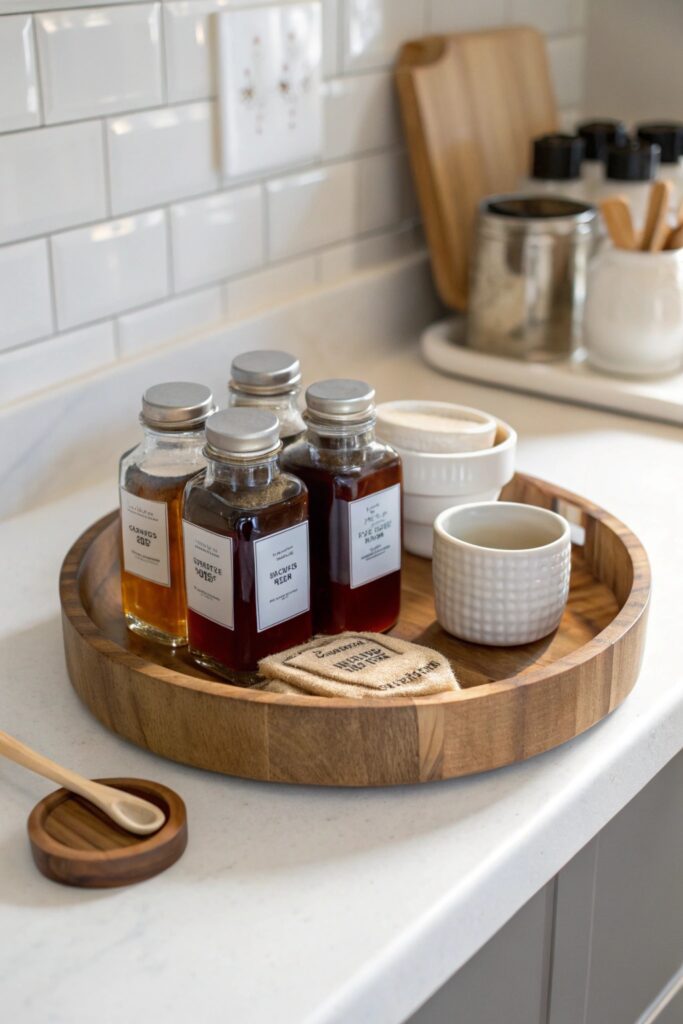
A small tray or caddy dedicated to syrups, sweeteners, and stirrers ($15-30) keeps these smaller items grouped and easy to find rather than scattered across the counter or buried in a cabinet.
Group items by how frequently they’re used rather than by type alone, keeping daily staples in the most accessible spot regardless of category.
6. Install Under-Cabinet Lighting
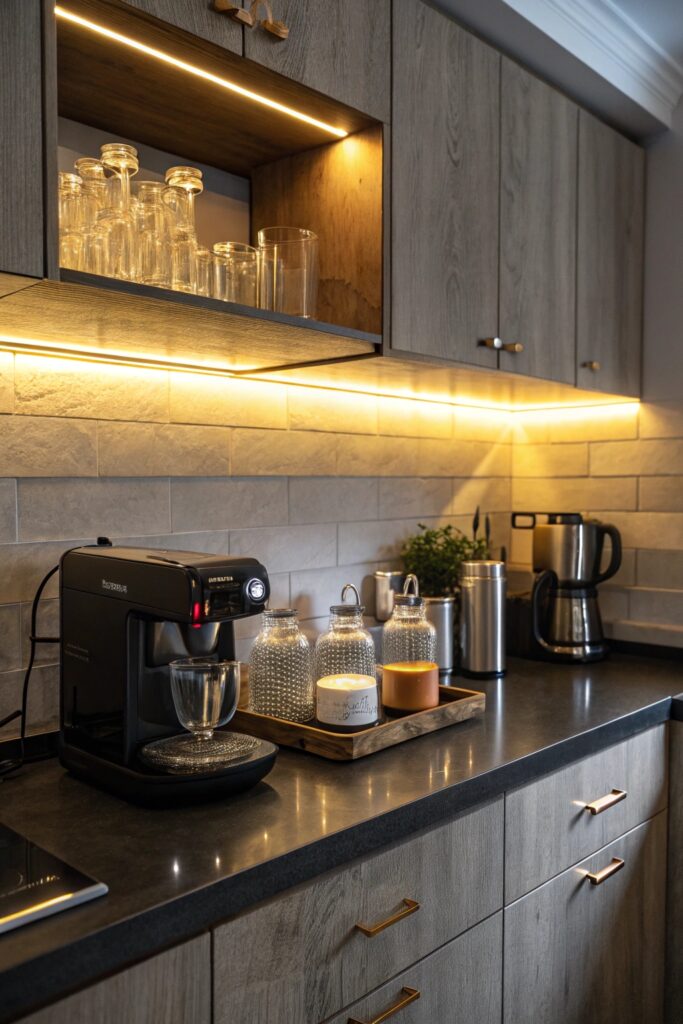
Battery-powered or plug-in under-cabinet LED strips ($20-50) add both function (better visibility for measuring and pouring) and genuine ambiance to the coffee station specifically.
Battery-powered options avoid the need for a nearby outlet, which matters if the coffee station isn’t positioned near existing electrical access.
7. Add a Chalkboard or Menu Board
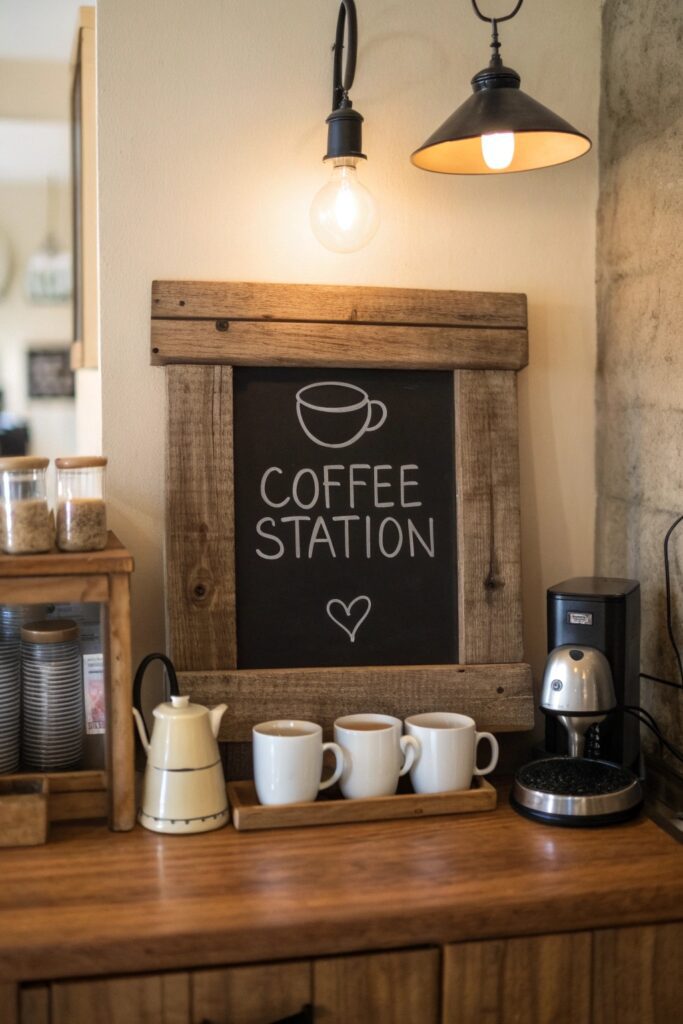
A small chalkboard ($15-30) adds personality and can double as a genuinely useful spot to jot down a favorite drink recipe or track when beans need replacing.
A chalk marker rather than traditional chalk creates cleaner, more legible lettering if handwriting quality matters to how the board looks displayed.
8. Use a Tiered Tray for Small Essentials
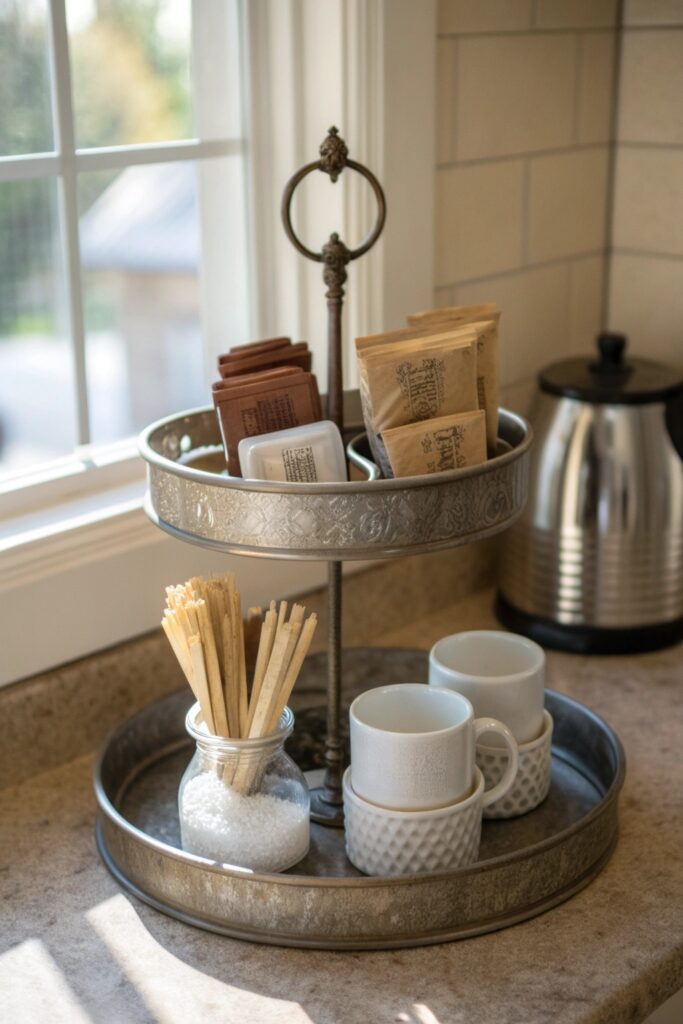
A tiered stand ($20-40) organizes smaller items — pods, packets, small jars — vertically, making efficient use of limited counter footprint compared to spreading the same items flat across the surface.
Choose a tray material (metal, wood) that coordinates with the rest of the station’s finishes, which keeps the tiered display feeling intentional rather than mismatched.
9. Repurpose a Vintage Cabinet
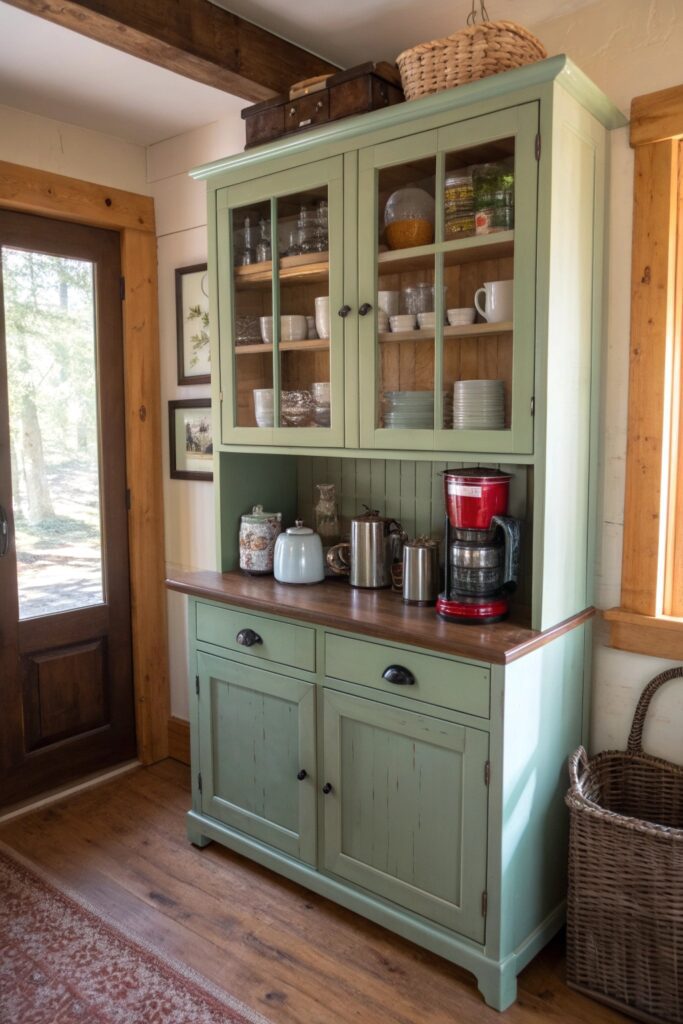
A secondhand cabinet or hutch ($60-200 from thrift stores or marketplaces) brings genuine character to a coffee station while providing concealed storage for less visually appealing equipment and supplies.
Check for any structural damage or loose joints before committing to a vintage piece, since refinishing a cosmetically worn but structurally sound cabinet is far easier than repairing genuine structural issues.
10. Set Up a Cold Brew Station
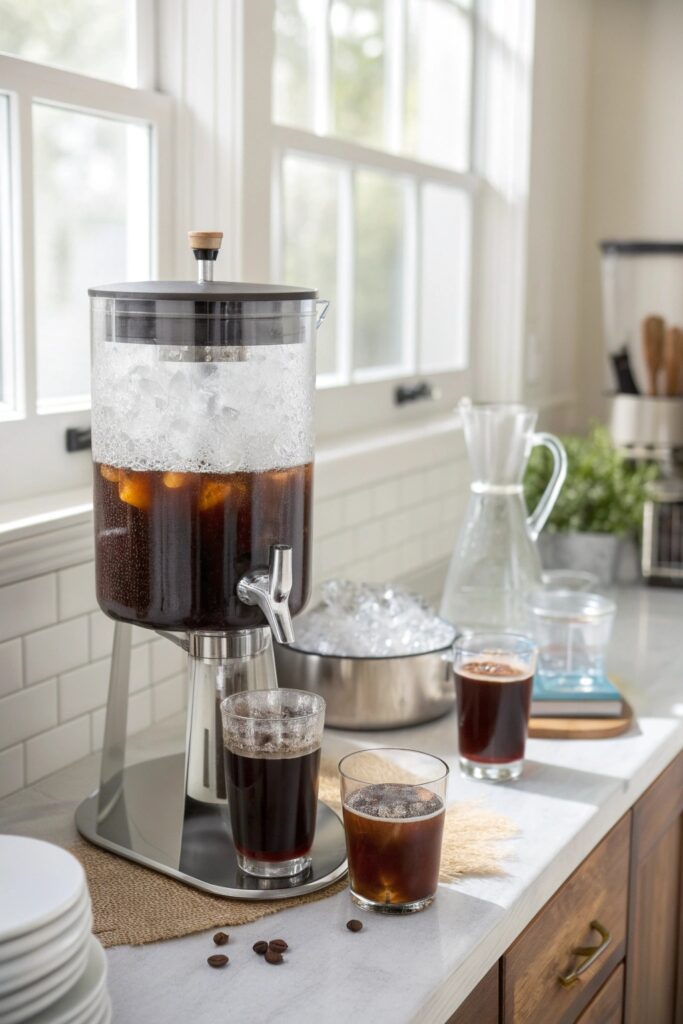
A dedicated pitcher or cold brew maker ($20-40) alongside the hot coffee setup accommodates both preferences without needing to choose one brewing method to feature exclusively.
Keep the cold brew pitcher in an easily visible spot in the fridge specifically, since cold brew’s longer steep time means it’s easy to forget about if it’s tucked out of sight.
11. Add Open Shelving With Baskets
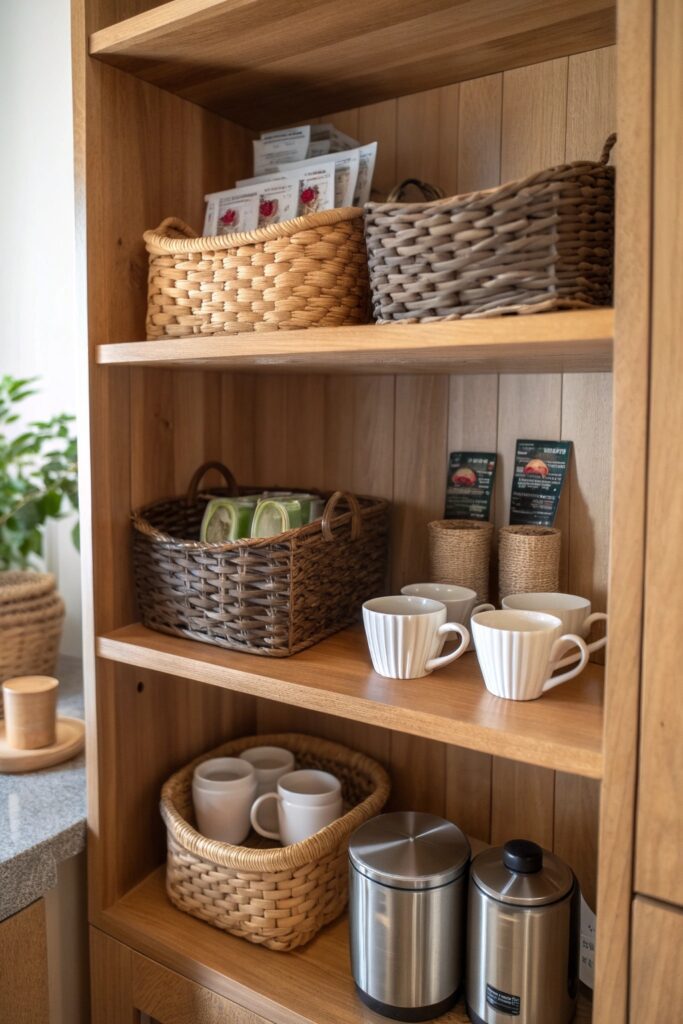
Woven baskets ($15-25 each) on open shelving group smaller supplies while adding genuine texture, keeping loose items contained without needing fully closed cabinet storage.
Rotate which items sit in the baskets seasonally, keeping the display feeling current without requiring any new purchases.
12. Install a Small Backsplash
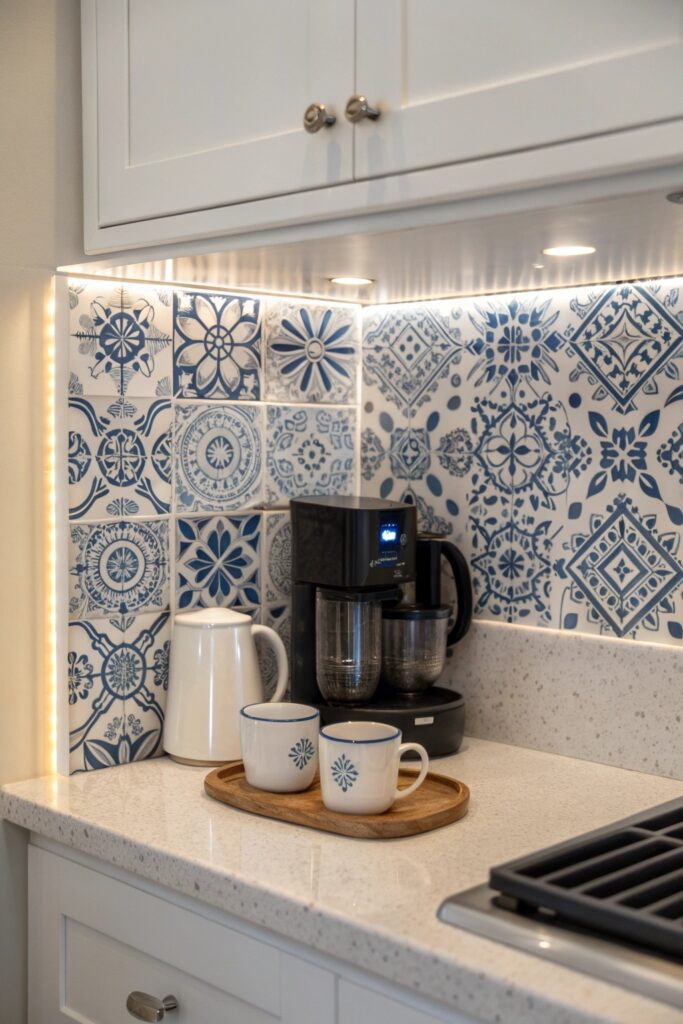
A dedicated backsplash section behind the coffee station ($30-80 in tile and materials) protects the wall from splashes while visually defining the station as an intentional part of the kitchen.
Use a penny tile or small-format tile specifically for this application, since a smaller scale suits a compact backsplash section better than large-format tile would.
13. Use a Rolling Cart for Small Kitchens
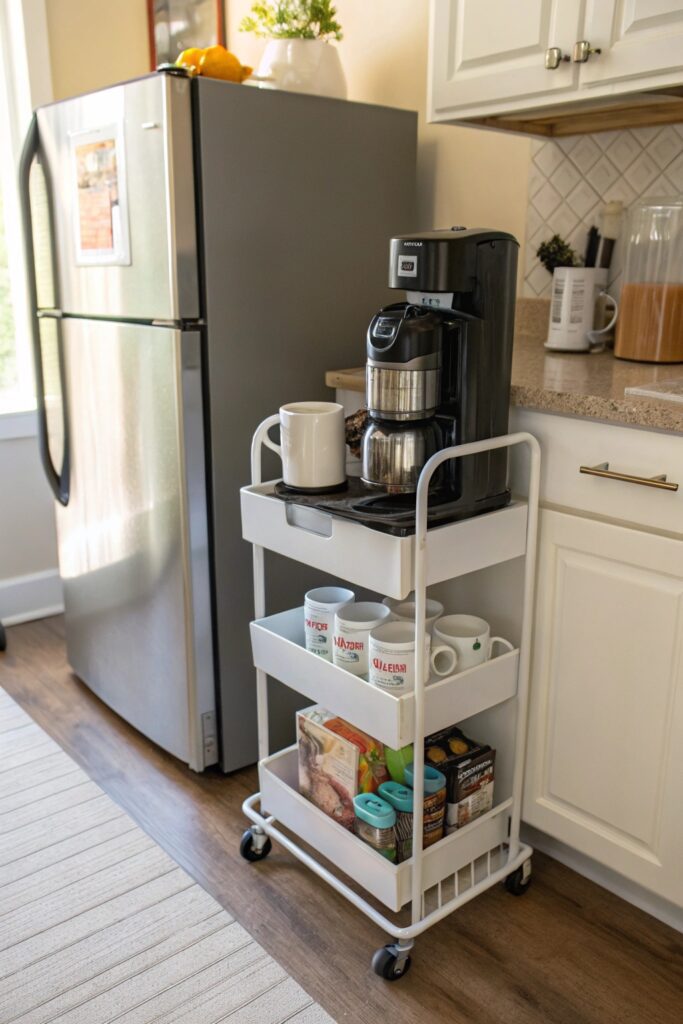
A slim rolling cart ($40-100) provides genuine coffee station function in a kitchen without dedicated counter space to spare, and it tucks into a corner or pantry when not actively in use.
A cart with a lower shelf specifically for the coffee maker’s water reservoir refill container keeps that less attractive item out of the main visual display.
14. Personalize With Art or Photos
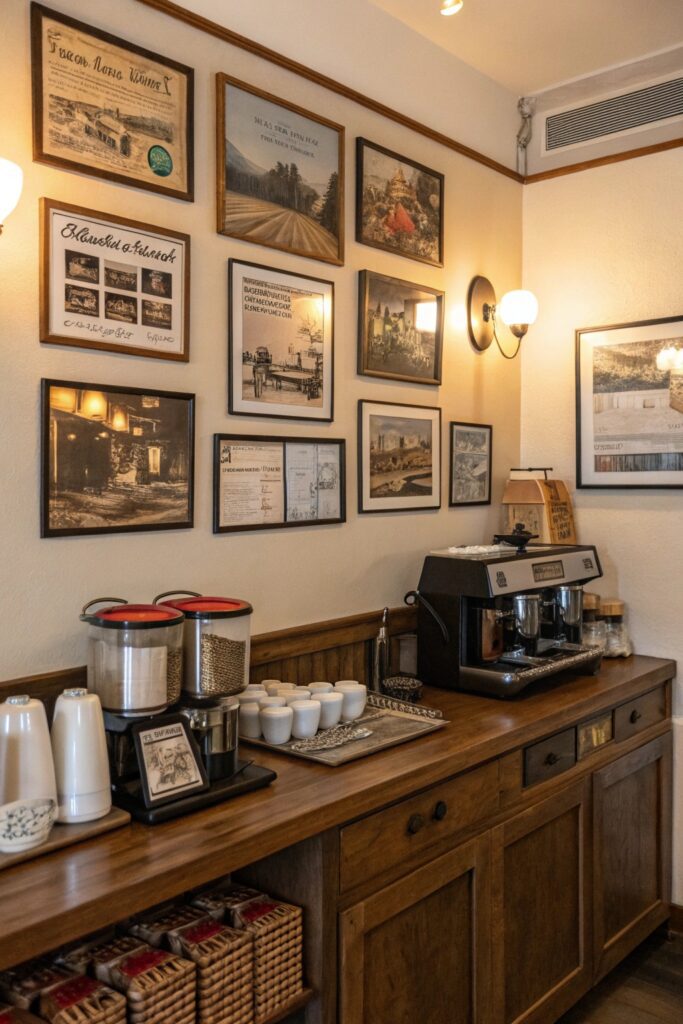
A small piece of art or a few photos above the station adds personality that a purely functional setup lacks, making the coffee bar feel like a genuine part of the home rather than a utilitarian counter section.
Rotate the displayed art or photos seasonally along with any other coffee station updates, keeping the personal touch feeling current rather than static.
15. Add a Statement Light Fixture
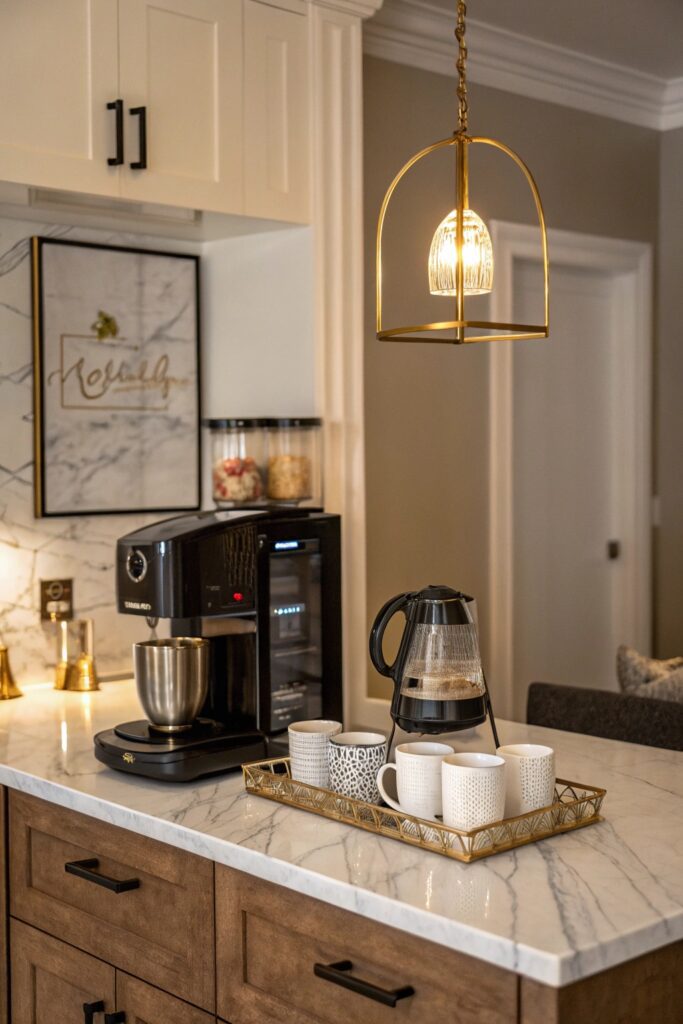
A pendant light or distinctive sconce ($40-100) positioned above the coffee station gives it a defined visual identity separate from the rest of the kitchen’s general lighting.
Position the fixture to avoid glare on any nearby reflective surfaces (a mirror, glossy tile), which can undercut the ambiance a good light fixture is meant to add.
Wrapping It Up
Floating shelves or a dedicated tray system are worth starting with if you’re working with limited space, since both add genuine organization without requiring a large furniture purchase. A cart or vintage cabinet is worth considering next if you want the station to be more visually distinct from the rest of the kitchen, or if the equipment needs to be moved or concealed entirely between uses.