
An empty living room corner is one of the most common underused spaces in a home, and the right solution depends mainly on whether you want the corner to serve a genuine function (seating, storage, workspace) or purely a visual one.
Below are 12 ways to fill that space intentionally, with real costs and practical notes for each.
1. Add a Reading Nook With a Cozy Chair
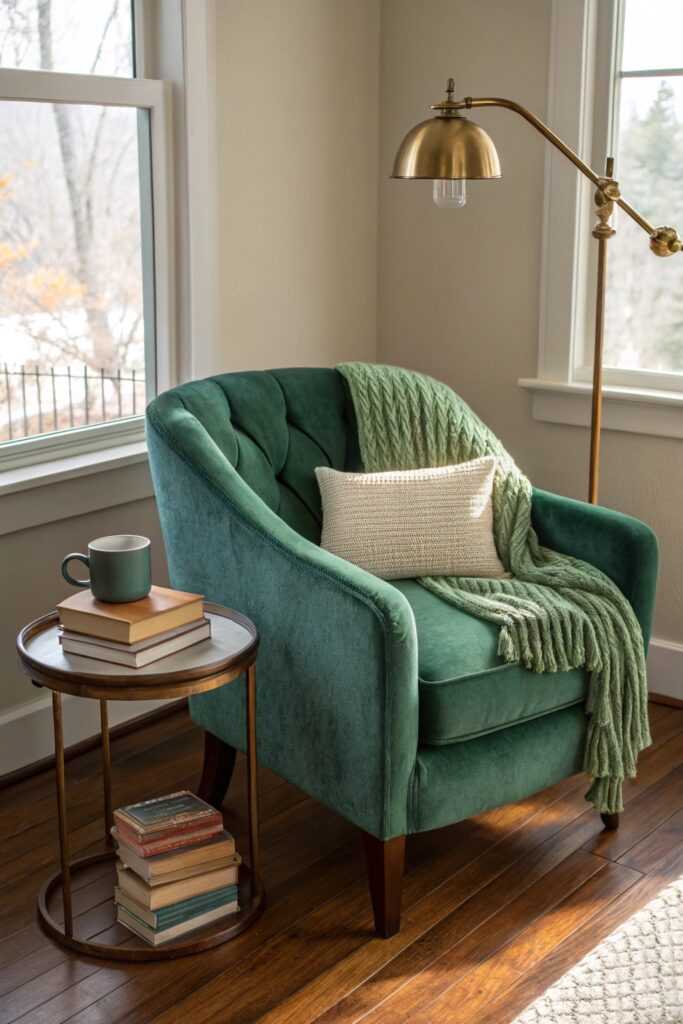
A single accent chair paired with a small side table and a floor lamp ($150-350 total depending on furniture quality) turns an unused corner into a genuine destination within the room, rather than empty, purely decorative floor space.
Choose a chair sized appropriately for the corner’s actual dimensions — an oversized chair can make a smaller corner feel cramped, while an undersized one can look lost in a larger corner space.
2. Install Floating Shelves for Display and Storage
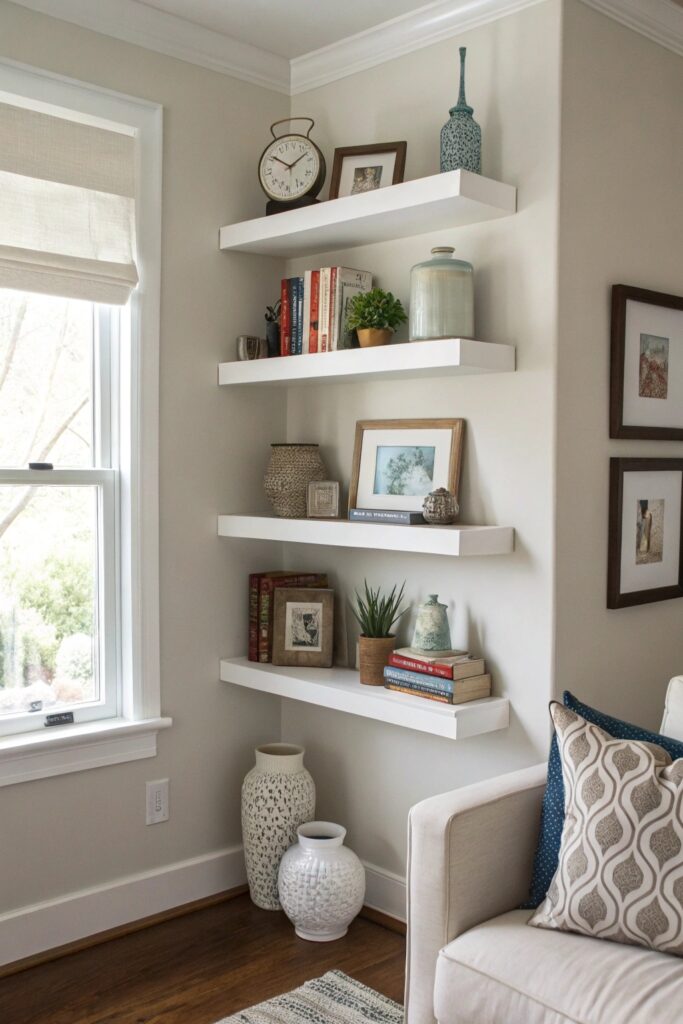
Floating shelves ($15-40 each) installed at varying heights in a corner make use of vertical wall space that furniture placement often leaves entirely empty, working well for both display objects and practical storage.
Stagger shelf depths and heights slightly rather than installing perfectly uniform spacing, which reads as more intentionally styled than a rigid, evenly-spaced grid.
3. Bring in a Statement Floor Plant
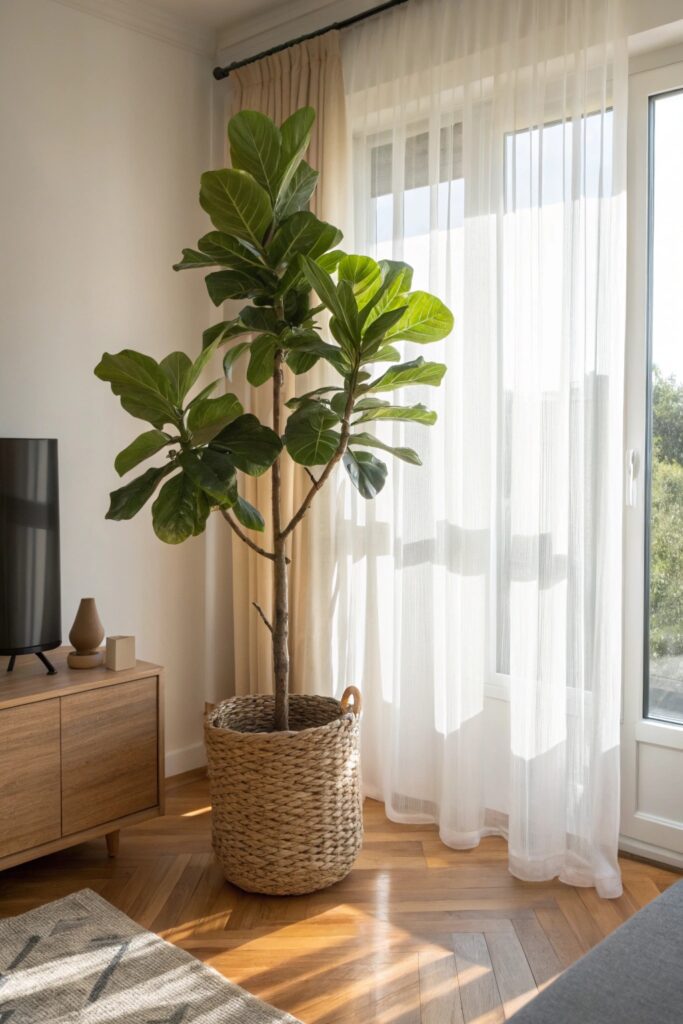
A large architectural plant — a fiddle leaf fig, a bird of paradise, or a quality faux version ($40-120) — fills vertical corner space with organic texture that furniture and flat wall decor can’t replicate.
Corners often receive less natural light than the center of a room, so choose a plant genuinely suited to lower-light conditions (or a faux version) rather than assuming any large plant will thrive in that specific spot.
4. Create a Mini Gallery Wall
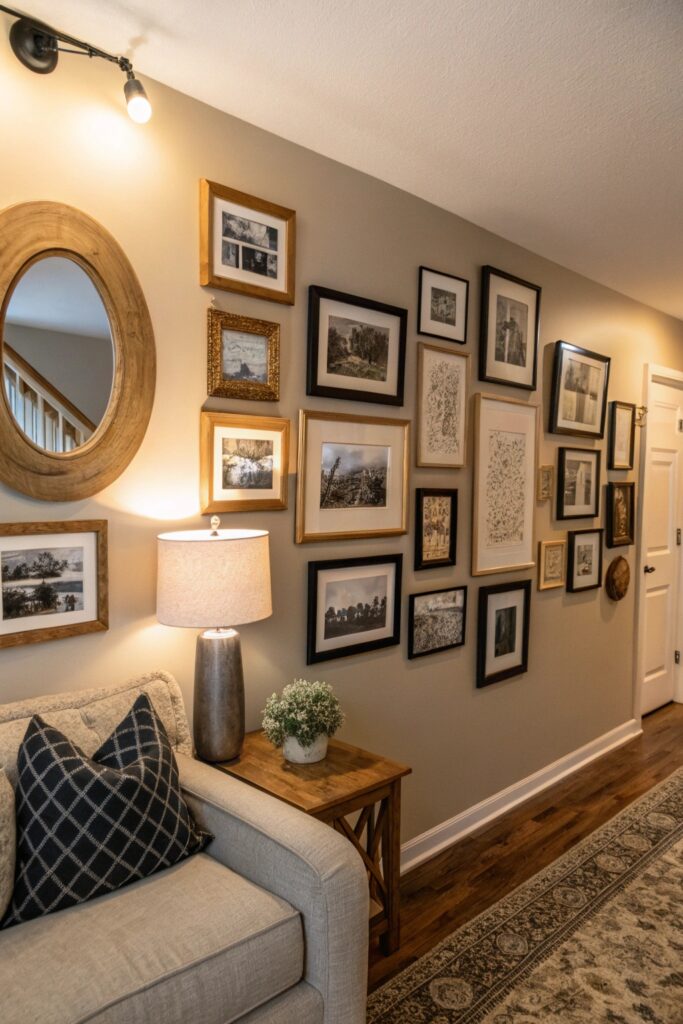
A small cluster of 3-5 framed pieces arranged across both walls of a corner (rather than confined to one flat wall) makes use of the corner’s unique two-wall geometry in a way flat-wall gallery walls elsewhere in a room can’t replicate.
Keep the arrangement’s overall footprint proportional to the corner’s size — a gallery wall that’s too large for a smaller corner can read as visually overwhelming in that confined space.
5. Add a Bar Cart or Beverage Station
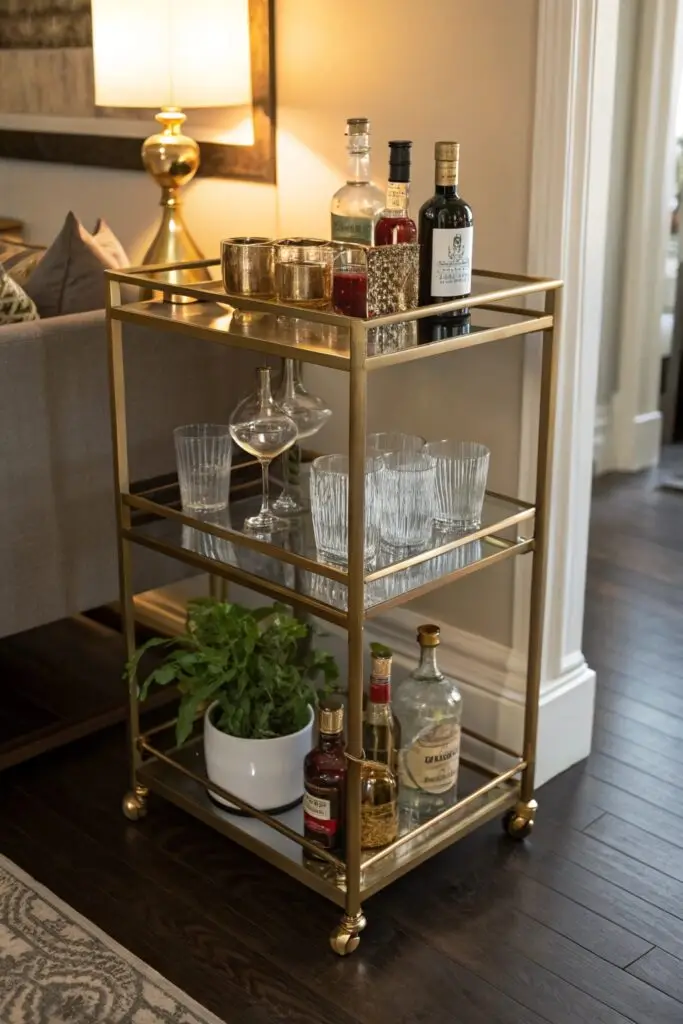
A compact bar cart ($100-250) fits naturally into a corner’s typically awkward proportions, turning underused space into a functional entertaining feature rather than requiring dedicated floor space elsewhere in the room.
Choose a cart sized to the corner’s actual clearance, checking that it doesn’t block natural traffic flow through the room once positioned.
6. Set Up a Corner Desk for a Compact Workspace
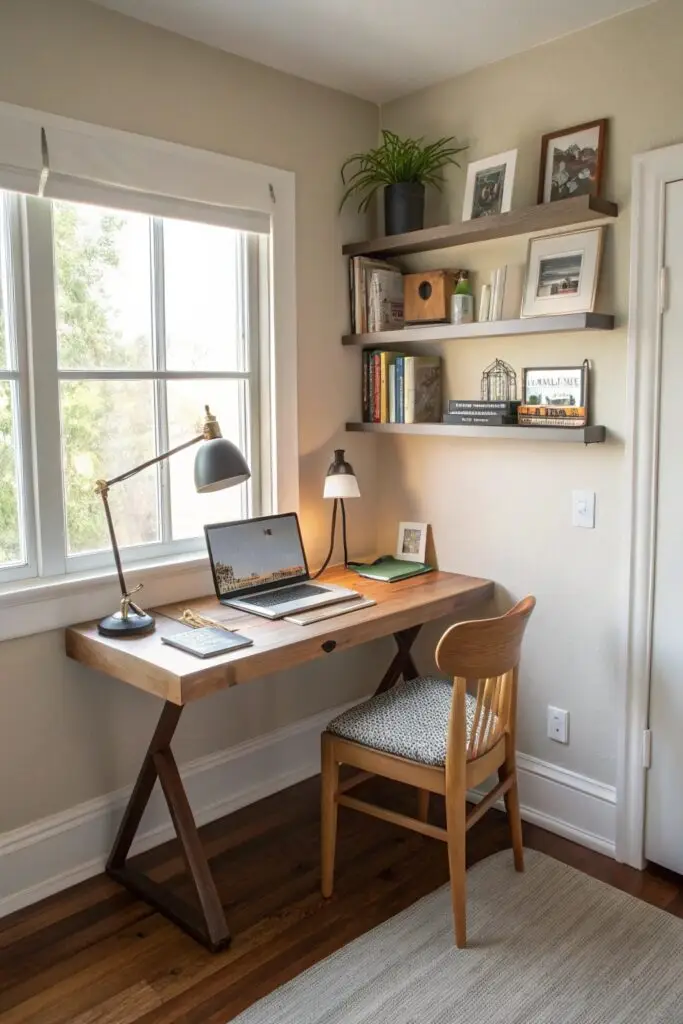
A corner-specific desk ($100-300) uses the room’s least-trafficked area for functional workspace, which is often the most practical way to fit a home office corner into a living room without sacrificing more central, usable floor space.
Corner desks are generally triangular or L-shaped specifically to fit this geometry — a standard rectangular desk usually doesn’t use corner space as efficiently and can leave awkward gaps.
7. Use a Tall Mirror to Open Up the Space
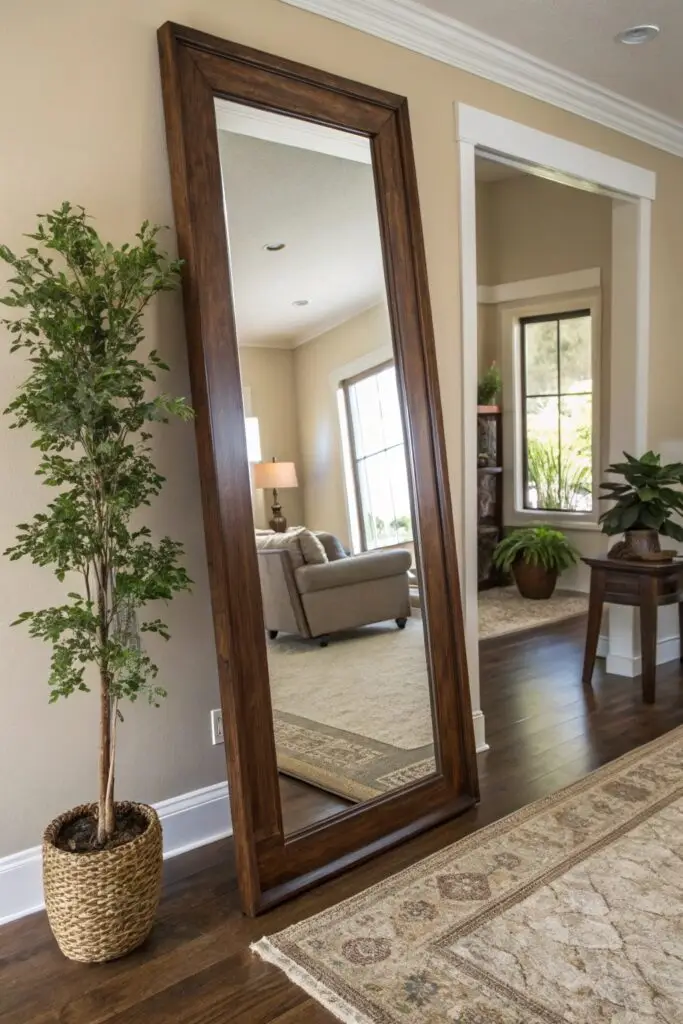
A floor or leaning mirror ($60-150) placed in a corner reflects light and adds visual depth, which is a genuinely useful trick for a room that feels visually heavy or dim in that specific area.
A leaning mirror (rather than wall-mounted) avoids installation entirely and can be easily repositioned if you later decide the corner would work better for a different purpose.
8. Build a Cozy Blanket and Pillow Storage Corner
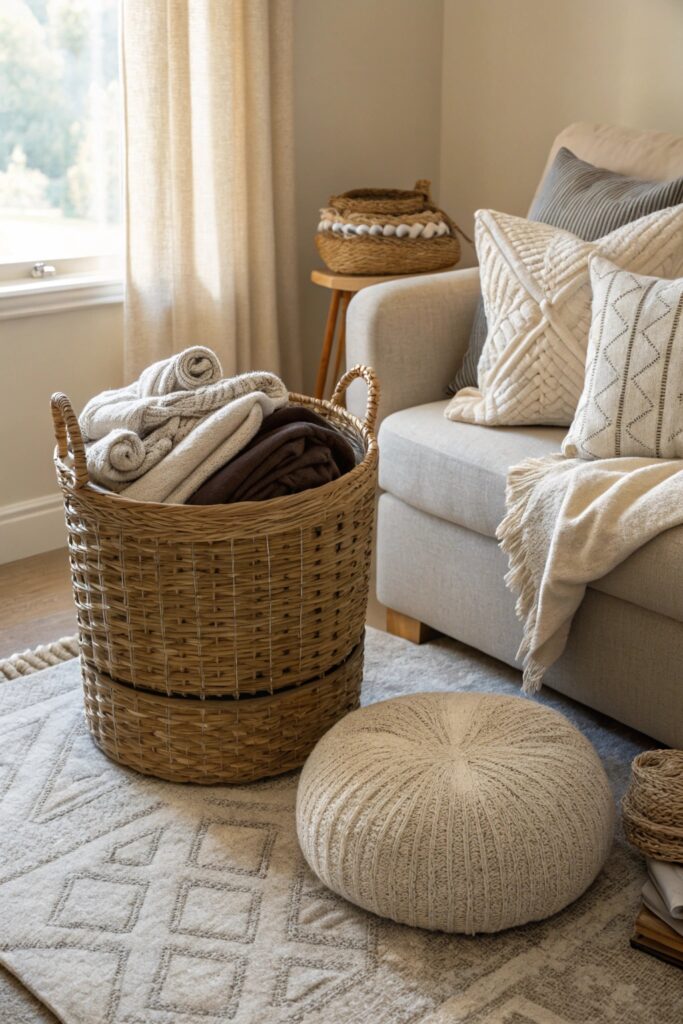
A woven basket or ladder-style blanket rack ($20-60) in a corner keeps throws and extra pillows organized and visually intentional rather than scattered across the main seating area, while adding genuine texture to an otherwise empty space.
This is one of the lowest-cost corner solutions on this list and works particularly well paired with a nearby reading chair or the main seating area, keeping cozy textiles within easy reach.
9. Add a Freestanding Room Divider or Screen
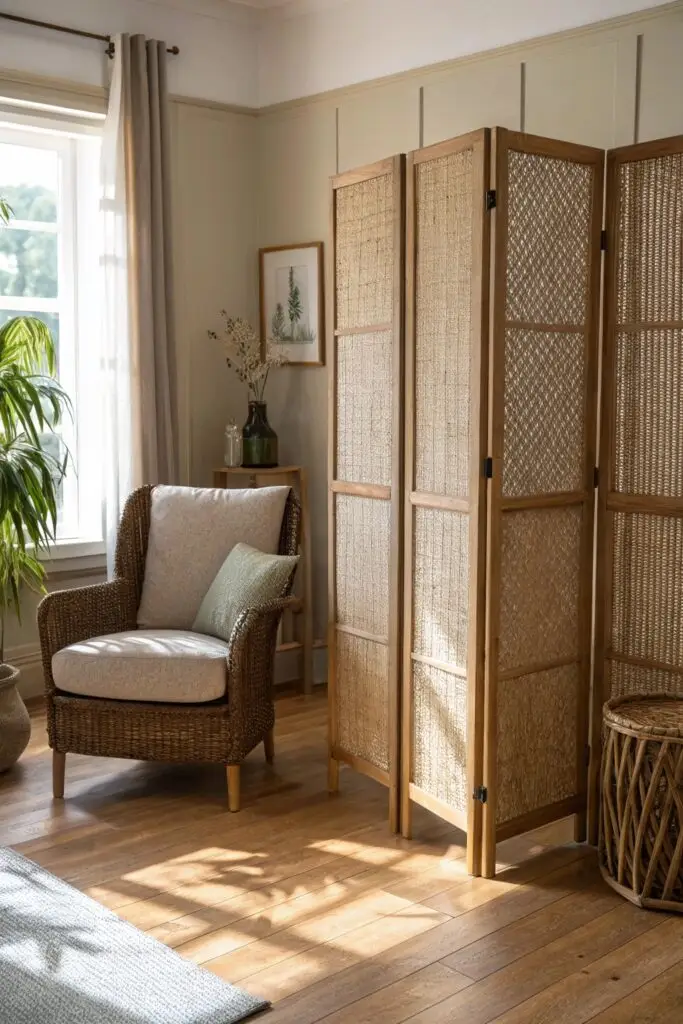
A folding screen or slatted room divider ($80-200) placed in a corner can visually define a sub-zone within an open-plan living space, or simply add textural and structural interest to an otherwise flat, unused area.
This works especially well in larger, open-concept rooms where a corner might otherwise feel disconnected from the room’s main activity zones.
10. Style a Corner Bookshelf or Ladder Shelf
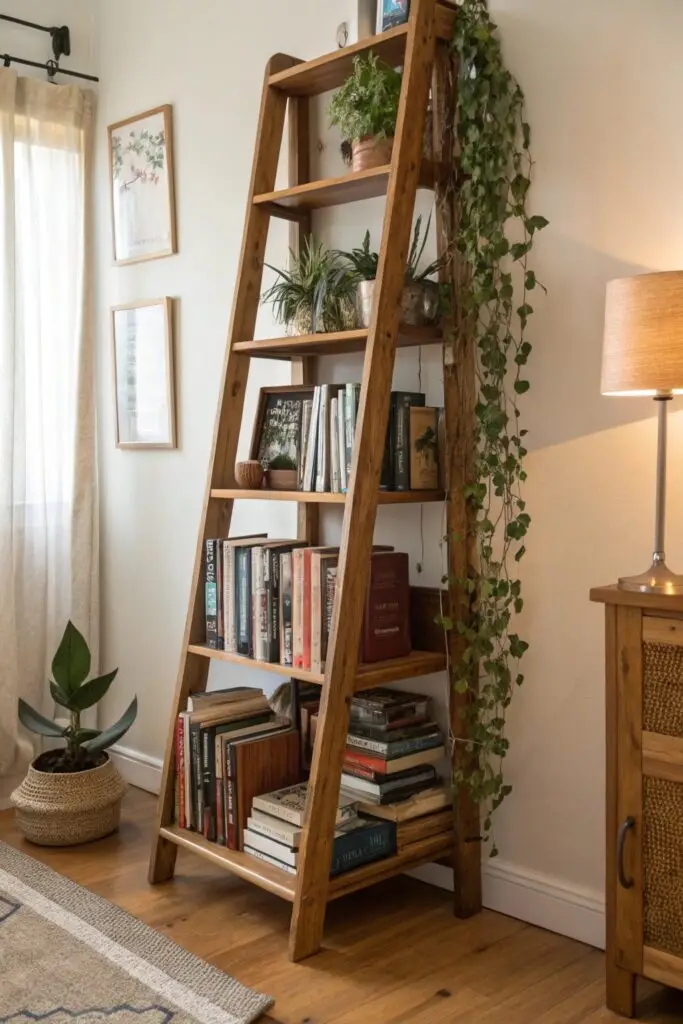
A corner-specific bookshelf or a leaning ladder shelf ($60-150) uses the corner’s full height for genuine storage and display capacity that a flat-wall shelf placed elsewhere in the room can’t offer in the same footprint.
Style with a mix of books, a few decorative objects, and some genuine negative space rather than filling every shelf to capacity, which reads as more curated than a fully packed display.
11. Add Ambient Lighting With a Floor Lamp
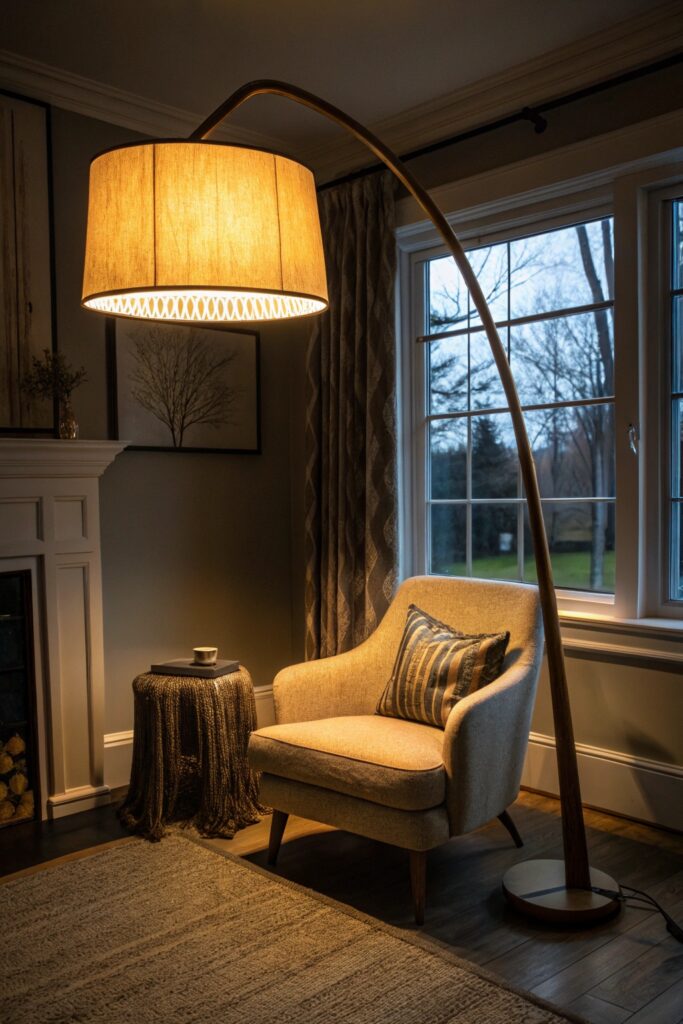
A floor lamp ($40-100) in a corner adds warm, layered lighting beyond a room’s main overhead fixture, and corners specifically tend to be the darkest part of a room, making this both a practical and decorative addition.
Choose a warm-toned bulb (2700K or lower) specifically for corner lamps, since this is typically ambient rather than task lighting and benefits from a cozier color temperature.
12. Display a Curated Collection or Curio Cabinet
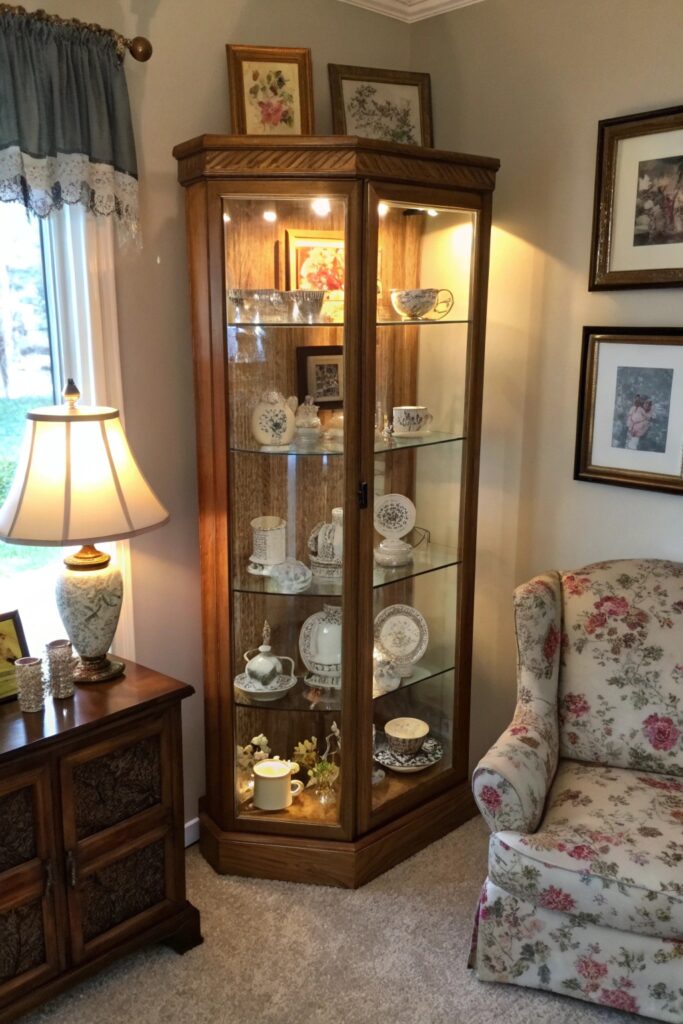
A small curio cabinet or an open shelving unit dedicated to a specific collection ($100-300) turns a corner into a genuine personal focal point, showcasing items that might otherwise be scattered or stored away.
This works best with a collection that has some visual cohesion (similar colors, materials, or a shared theme) rather than an entirely random assortment, which reads as more curated and intentional.
Wrapping It Up
A reading nook or floor plant are worth starting with if you want the highest visual impact for the lowest effort, since both work in nearly any corner without needing custom-fit furniture. Reserve corner-specific pieces (a corner desk, a triangular bookshelf) for corners where you’ve confirmed the space’s exact dimensions first, since these pieces are less forgiving of a mismatched fit than more flexible options.