
A genuinely functional bar cart comes down to a few real priorities — a base spirits collection, proper tools, and quality mixers — rather than simply accumulating bottles and decorative objects without a clear plan.
Below are 10 ways to build a cart that’s both good-looking and actually usable, with real costs and practical notes for each.
1. Start With a Cart That Fits Your Space
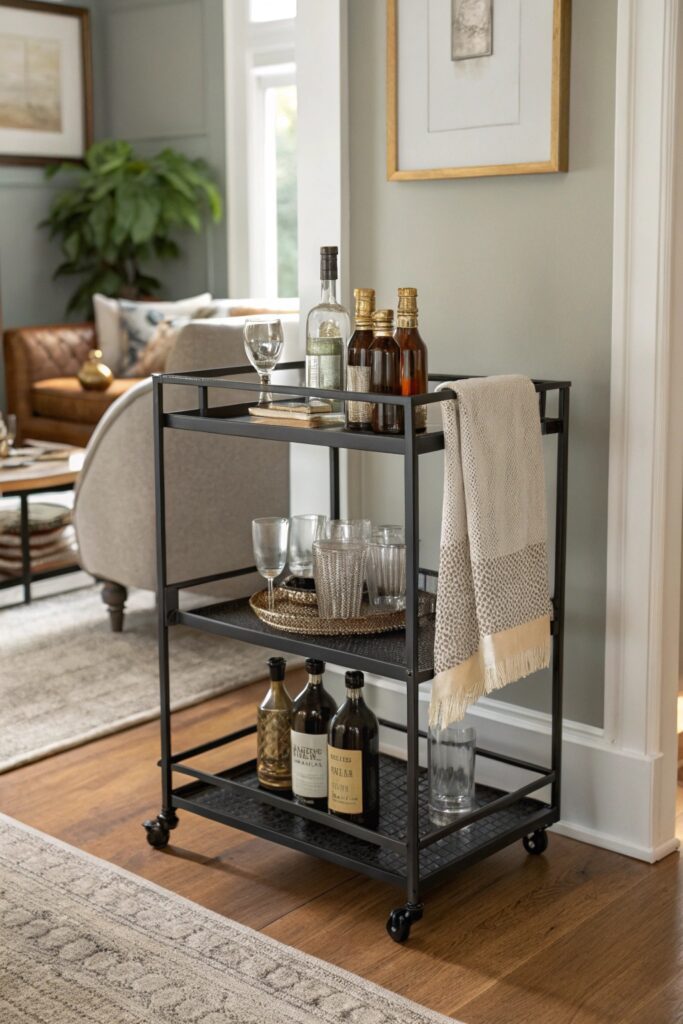
Measure your intended spot before buying — bar carts typically range from compact 2-tier models around 16 inches wide to larger 3-tier versions over 30 inches, and an oversized cart in a tight corner will feel like an obstacle rather than a feature.
Metal-frame carts ($80-180) tend to hold more weight than wood or acrylic versions, which matters once you factor in the actual weight of a full bottle collection plus glassware and ice.
2. Build a Base Spirits Collection (Not Everything At Once)
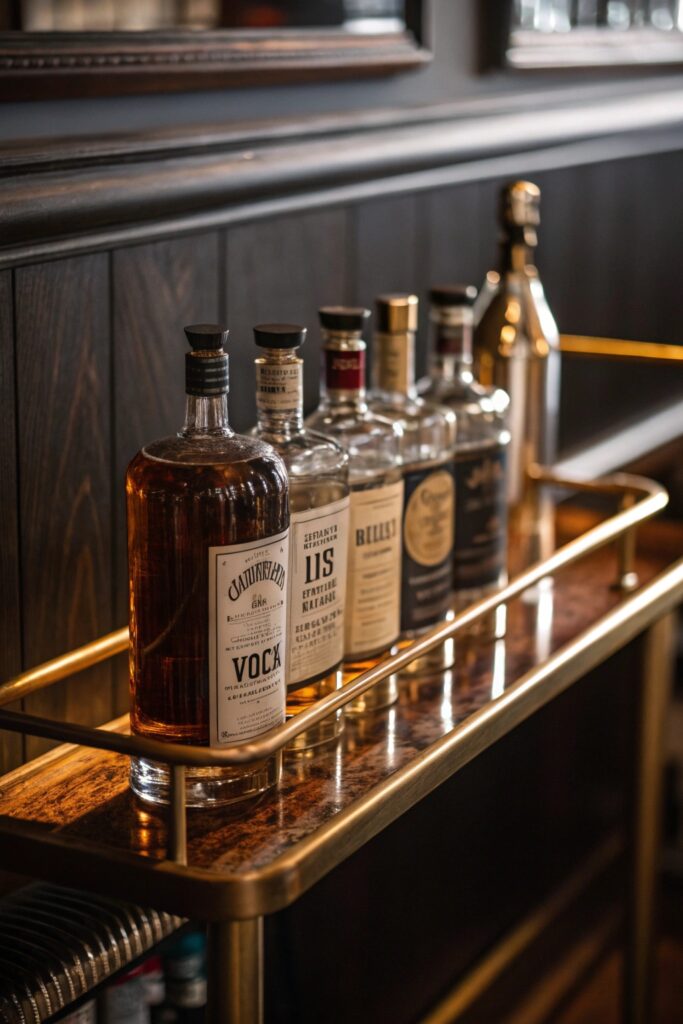
A genuinely functional starter collection covers 5-6 base spirits (vodka, gin, whiskey, rum, tequila) plus 2-3 versatile liqueurs, which together support most classic cocktails without requiring dozens of specialty bottles.
Buy mid-shelf bottles ($20-35 each) rather than either bargain or premium options when starting out — bargain spirits can make drinks taste noticeably rougher, while premium bottles are better saved for sipping neat rather than mixed into cocktails.
3. Don’t Skimp on Mixers and Garnishes
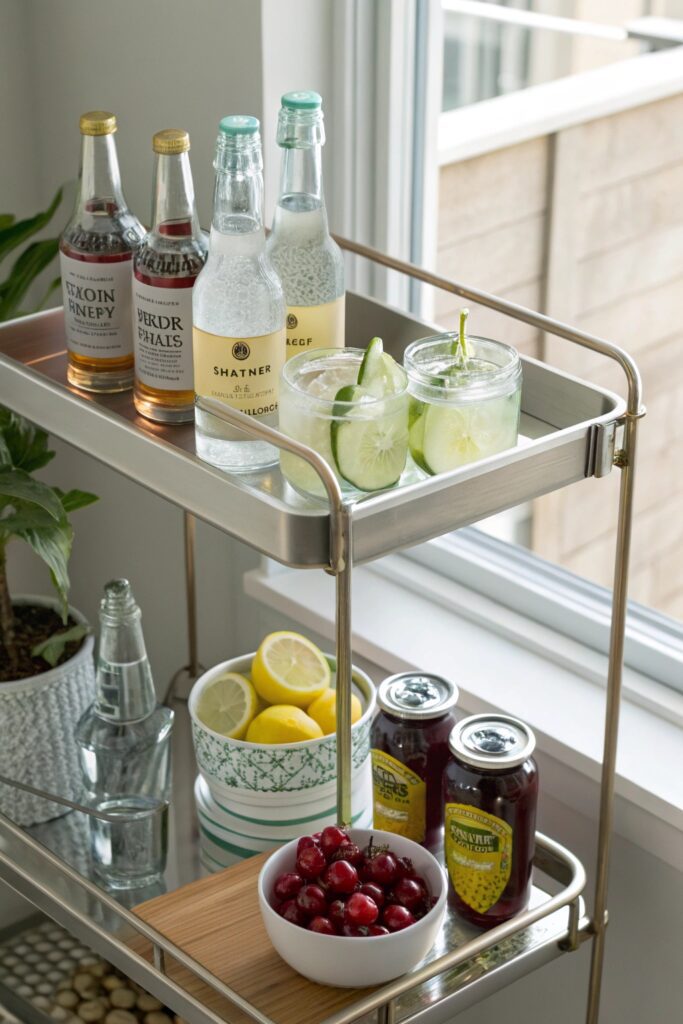
Quality mixers (a genuine tonic water, fresh citrus, real simple syrup) affect a drink’s final taste as much as the spirits themselves, and this is a commonly overlooked area where cutting corners undermines an otherwise well-stocked cart.
Fresh citrus specifically should be purchased close to when you’ll actually use it, since bottled lime or lemon juice reads as noticeably artificial in a cocktail compared to fresh-squeezed.
4. Invest in Glassware That Does Double Duty
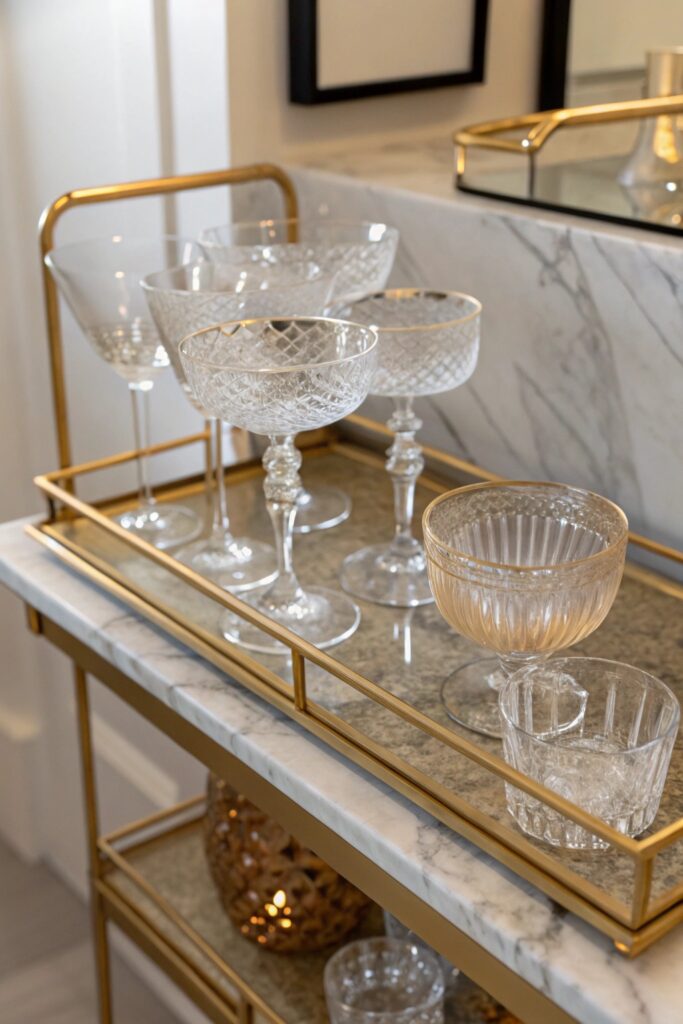
Rocks glasses and coupe or martini glasses cover the large majority of classic cocktails, making them a more practical starting investment than highly specialized glass shapes you might use rarely.
A set of 4-6 of each style ($30-60 for a set) is enough for most small gatherings without needing a fully matched large collection from the outset.
5. Get a Proper Bar Tool Kit
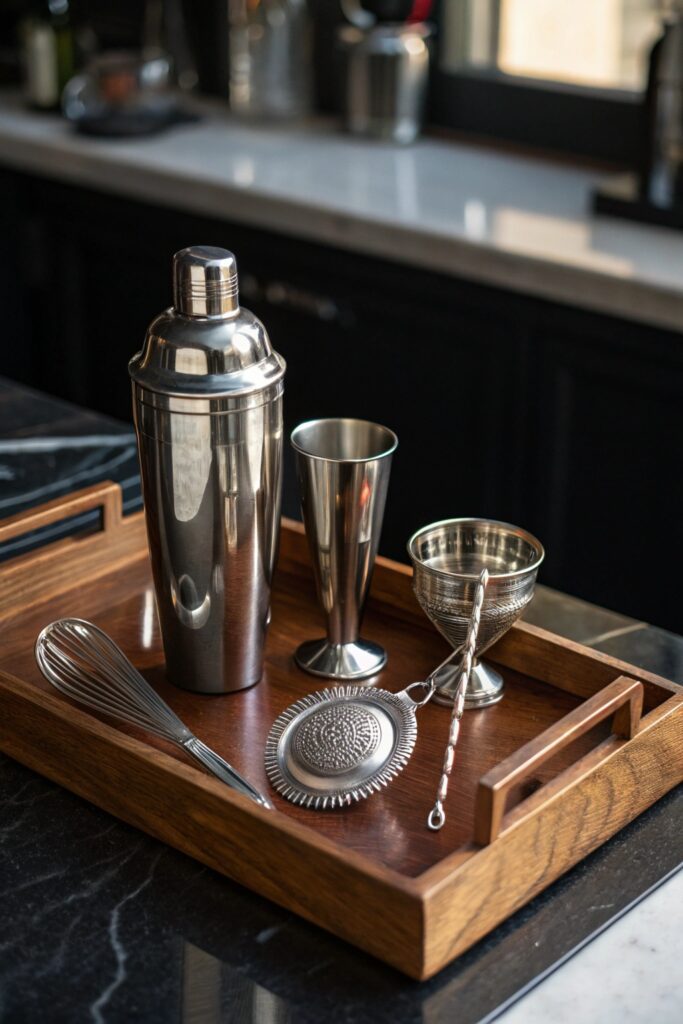
A genuine shaker, jigger, strainer, muddler, and bar spoon ($30-60 for a quality set) makes an actual functional difference in drink quality compared to improvising with kitchen tools, particularly for accurate measuring, which affects whether a cocktail tastes balanced.
A jigger specifically is worth prioritizing even if you skip other tools initially, since eyeballing pours is the single most common reason home-mixed cocktails taste off compared to what you’d get at a bar.
6. Add Ice in a Way That’s Actually Practical
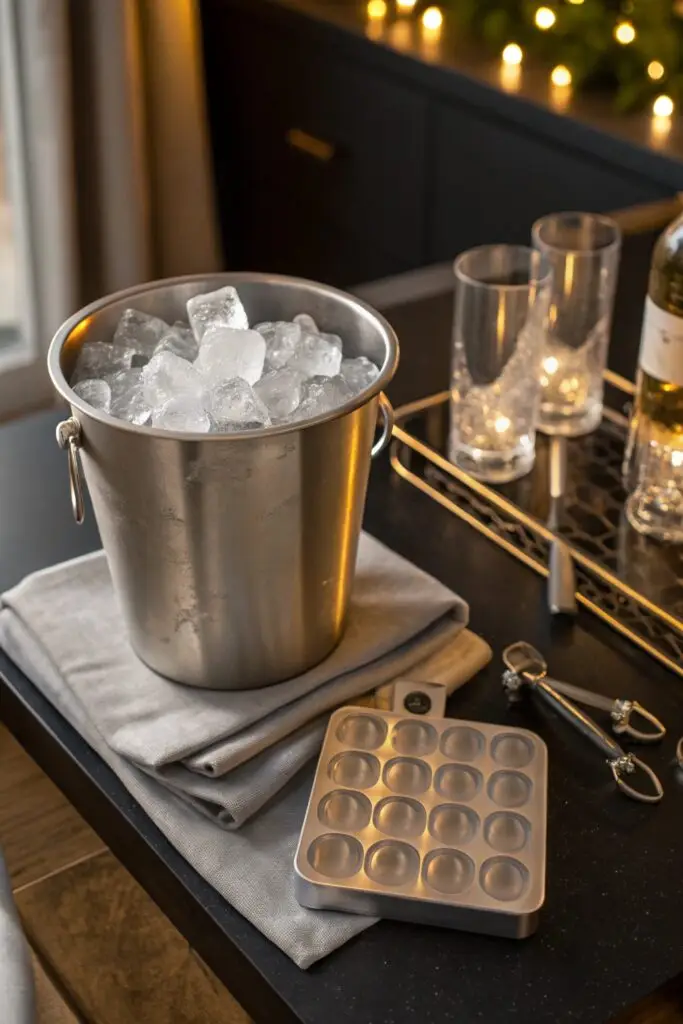
A dedicated ice bucket with tongs ($20-40) keeps ice accessible on the cart itself rather than requiring a trip to the freezer mid-drink-making, which matters more for actual entertaining flow than it might seem.
Large-format ice cube trays (for rocks glasses specifically) melt slower than standard small cubes, which keeps drinks colder longer without diluting them as quickly.
7. Layer in Some Greenery or Fresh Elements
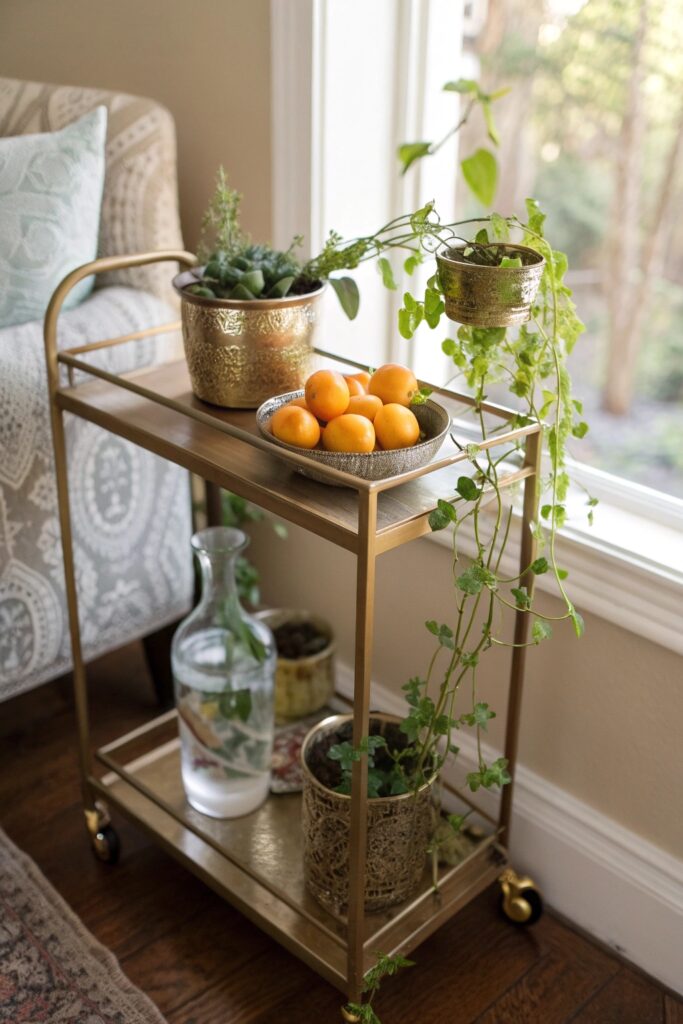
A small potted plant or a few fresh herb sprigs (mint, rosemary) on the cart add both visual life and genuinely usable garnish ingredients, serving double duty as decor and function.
Choose a plant that tolerates being near occasional spills and handling, since a bar cart location isn’t always the most protected spot for a more delicate specimen.
8. Use Trays to Organize Chaos
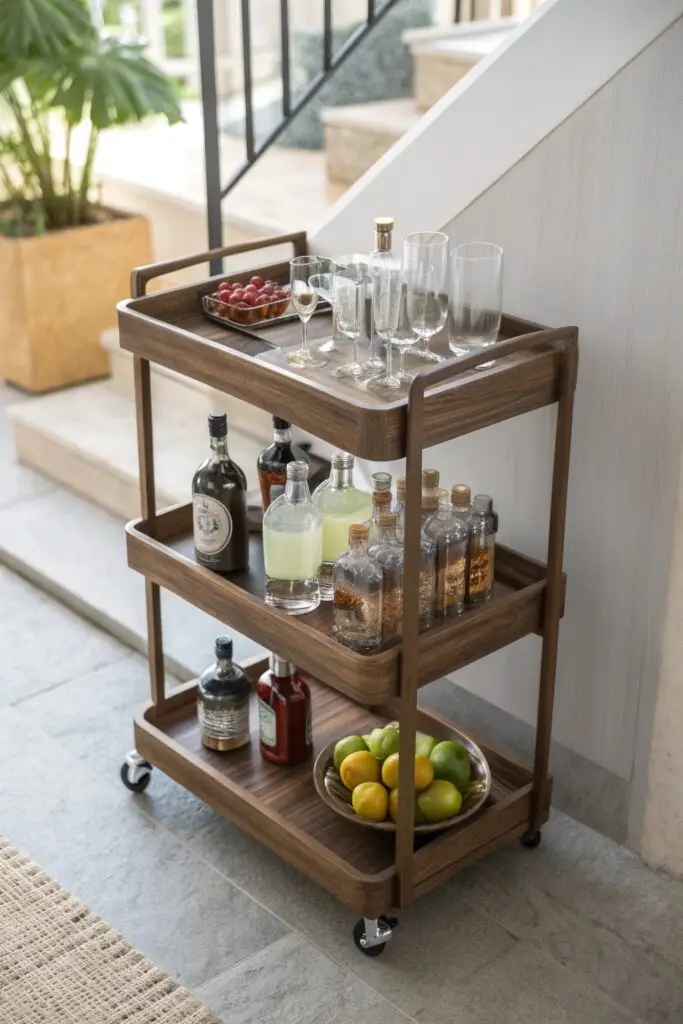
A couple of small trays ($15-30 each) group related items — spirits together, tools together, glassware together — which keeps a cart looking intentionally arranged rather than cluttered even with a genuinely full collection.
This also makes the cart considerably easier to actually use while mixing drinks, since related items are grouped rather than scattered across the cart’s full surface.
9. Personalize With Something Unexpected
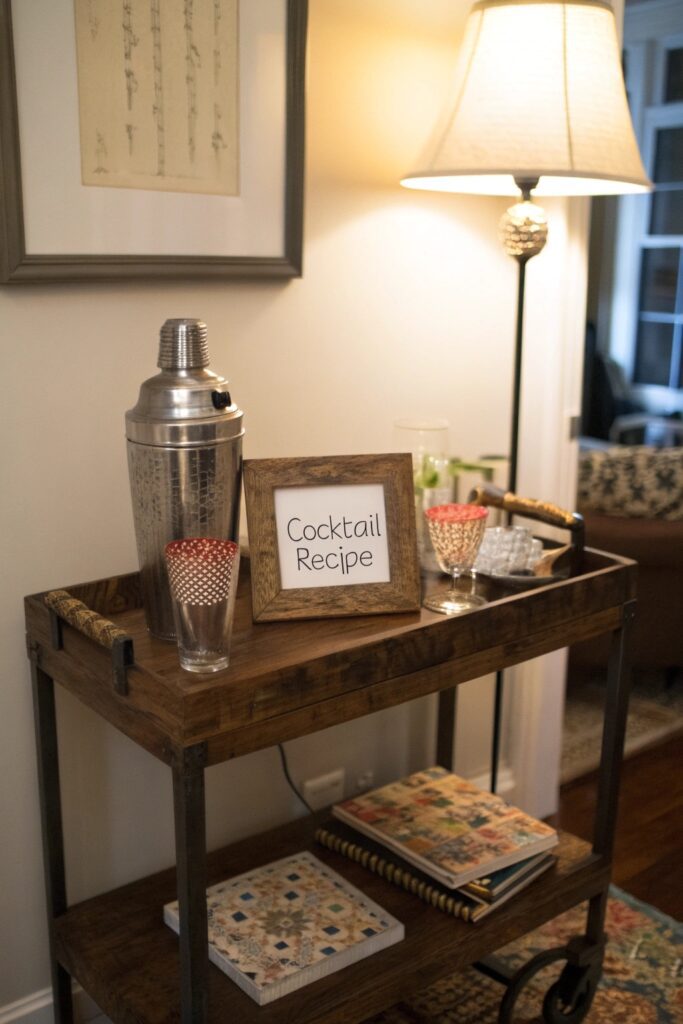
A vintage cocktail book, a personal photo, or a distinctive object unrelated to drink-making adds character that a purely functional cart setup lacks, making the space feel like a genuine part of your home rather than a generic display.
This is a low-cost way to make the cart feel personal — often the item costs nothing if it’s something you already own, just repurposed for this specific display.
10. Keep It Stocked and Rotate Seasonally
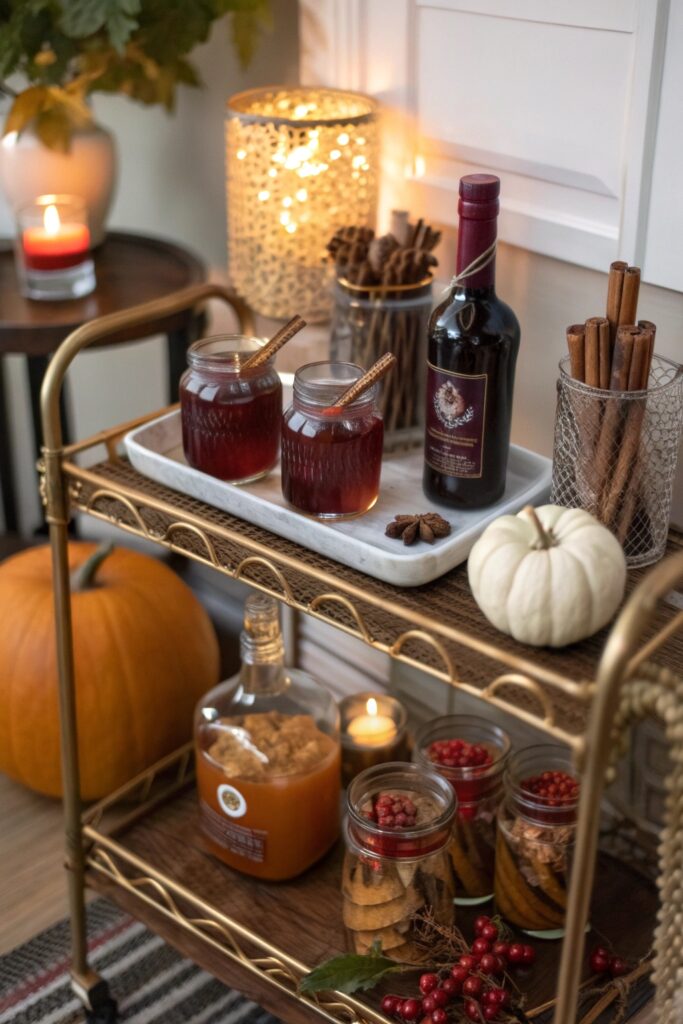
Checking spirit and mixer levels before you actually need them (rather than discovering an empty bottle mid-gathering) keeps a bar cart genuinely functional rather than just decorative.
Swapping garnish and mixer choices seasonally (citrus and mint in summer, warmer spiced elements in winter) keeps the cart feeling current and gives you a reason to periodically refresh its contents rather than letting the same setup go stale.
A Simple Order for Building Your Cart
If you’re starting completely from scratch, tackle this roughly in order: tools and a jigger first, then 2-3 base spirits you already know you enjoy, then glassware, then expand the spirits collection and add the decorative layer once the functional core is solid.
This sequencing matters because a beautifully styled cart with no functional tools or accurate measuring still won’t produce good drinks, while even a sparse cart with the right tools and a couple of well-chosen bottles can genuinely serve guests well.
Wrapping It Up
A jigger and a base spirits collection matter most if you’re starting from scratch, since accurate measuring and having the right foundational bottles on hand affect whether the drinks you actually make taste good. Everything else on this list — trays, glassware, garnish — builds on that foundation rather than substituting for it.