
A small bedroom’s organization challenges come down to making full use of vertical space and multi-functional furniture, since floor space is the one resource a small room genuinely can’t expand.
Below are 15 ways to maximize a small bedroom’s storage and organization, with real costs and practical notes for each.
1. Go Vertical With Wall-Mounted Shelving
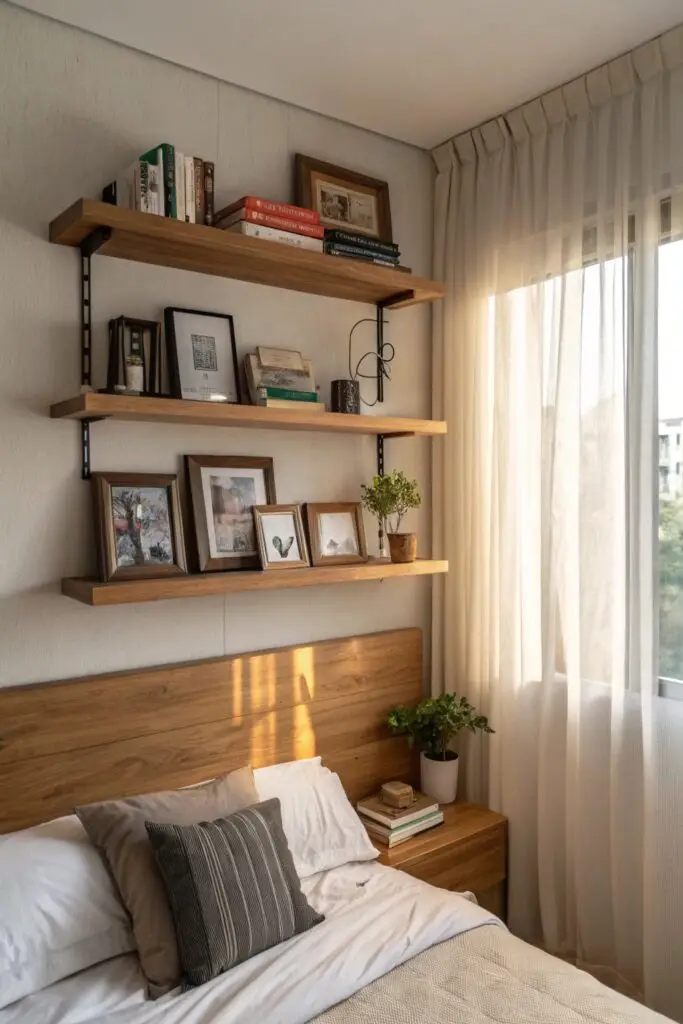
Floating shelves ($15-40 each) use wall space that a small bedroom’s limited floor plan can’t otherwise offer, and stacking them from waist height up to near the ceiling makes use of vertical space most rooms leave completely empty.
Group shelving above furniture that’s already against a wall (a dresser, a desk) rather than as a standalone installation, which keeps the room’s overall footprint from feeling more visually cluttered with additional furniture pieces.
2. Choose a Bed With Built-In Storage
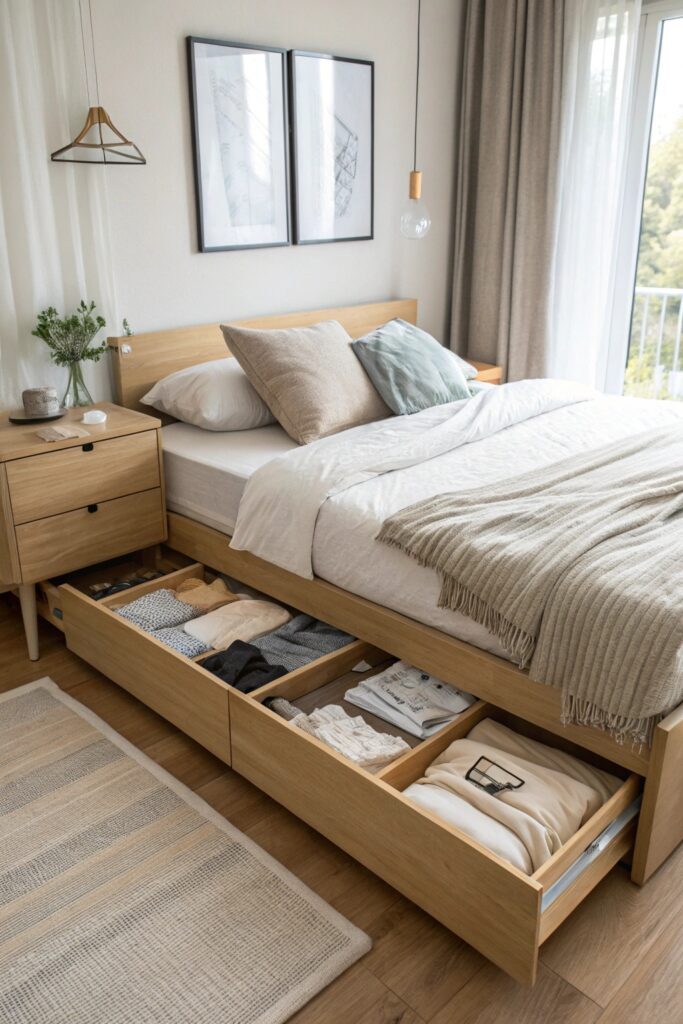
A platform bed with built-in drawers, or a frame with hydraulic lift storage underneath ($300-700 depending on size and features), uses the bed’s naturally large footprint for genuine storage capacity rather than wasted space beneath the mattress.
Lift-storage frames specifically hold considerably more than drawer-style platforms, though they require lifting the entire mattress to access, which matters for how often you’ll realistically use the storage for daily versus seasonal items.
3. Use Under-Bed Storage Bins
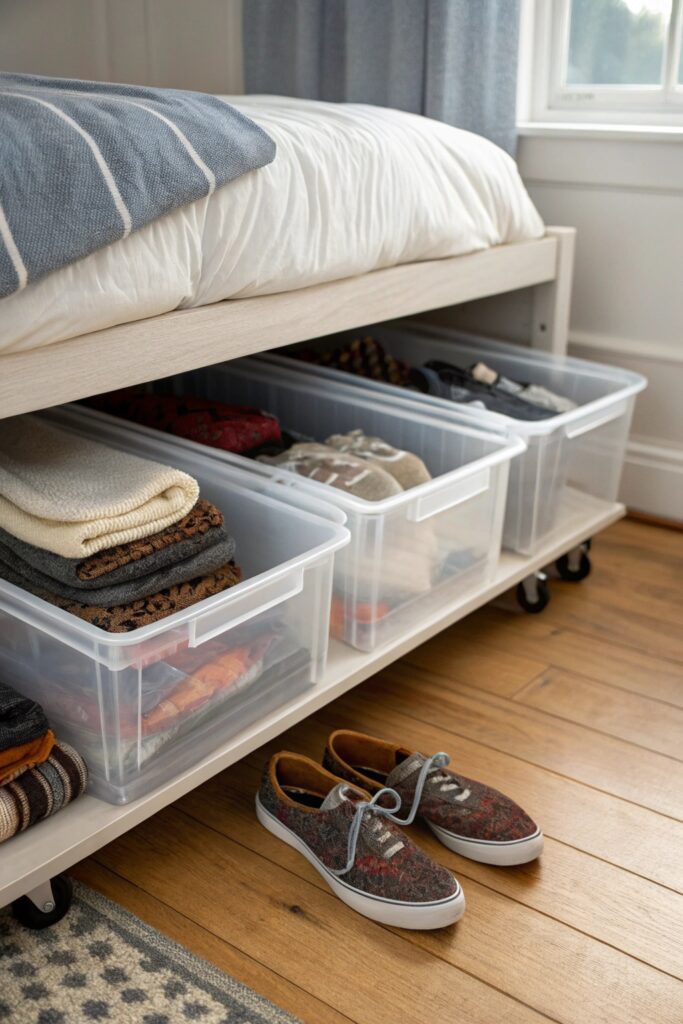
For beds without built-in storage, low-profile bins ($15-30 each) designed specifically for under-bed clearance make use of this often-overlooked space for off-season clothing, extra linens, or infrequently used items.
Check your specific bed frame’s clearance height before purchasing bins, since standard bed frames vary considerably in ground clearance and a bin that’s too tall simply won’t fit underneath.
4. Add a Wall-Mounted Desk or Fold-Down Table
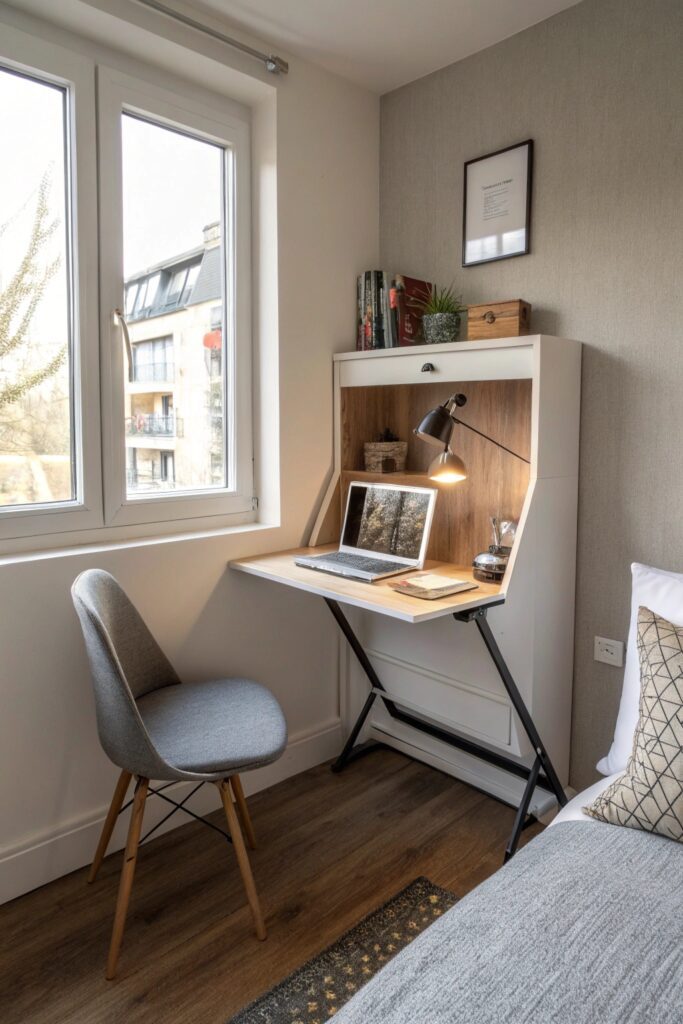
A fold-down or wall-mounted desk ($60-150) provides workspace that can be folded away when not in use, avoiding the permanent floor footprint a standard desk requires in a room where every square foot matters.
This is particularly useful for anyone needing occasional workspace (bill-paying, laptop use) rather than a dedicated home office setup, where the fold-away flexibility outweighs the reduced work surface size.
5. Install a Closet Organization System
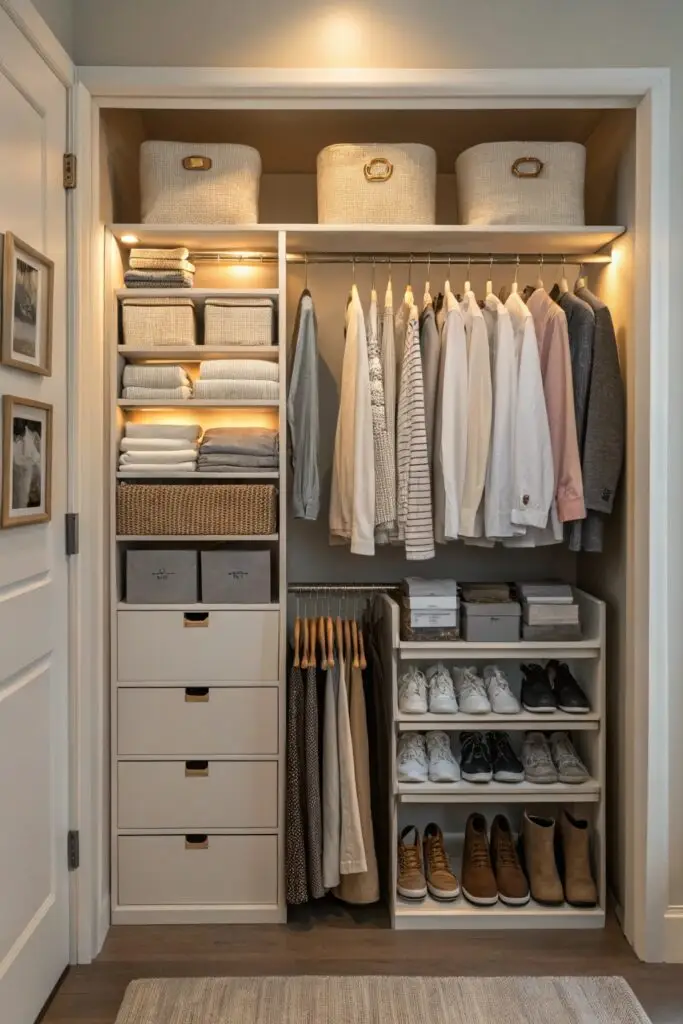
A double-hang closet system or added shelving ($50-200 depending on complexity) roughly doubles usable closet storage compared to a single hanging rod, which matters considerably more in a small bedroom where closet space is often the primary storage the room offers.
Wire or wood shelving inserts designed for standard closet widths install without professional help in most cases, making this a genuinely accessible weekend project rather than requiring a contractor.
6. Use Multi-Functional Furniture
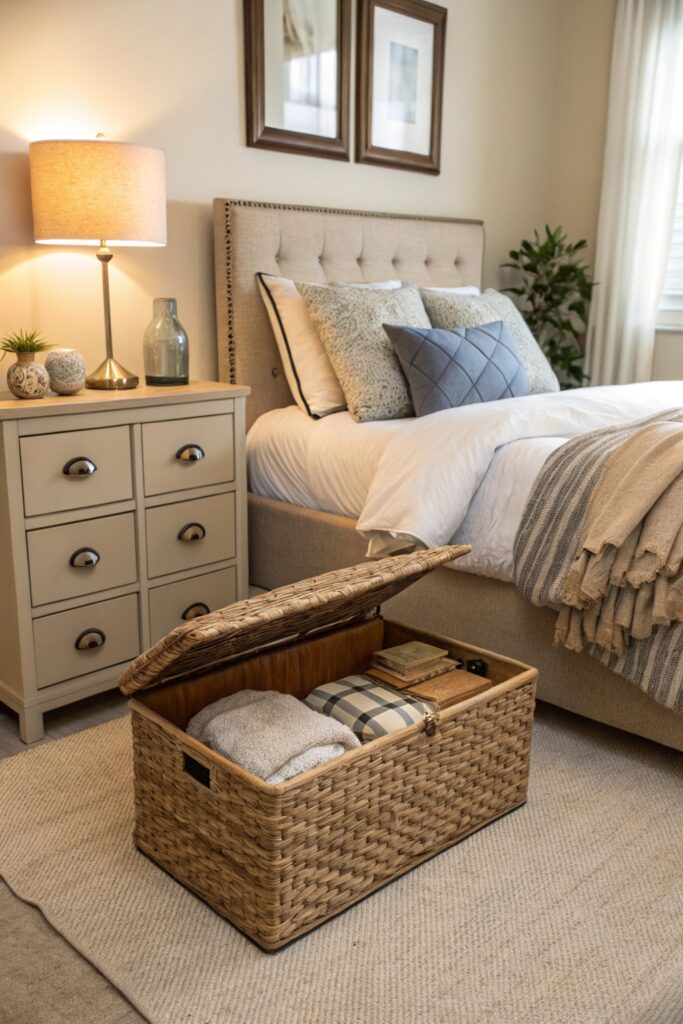
An ottoman with hidden storage, a nightstand with drawers, or a bench that opens for storage all serve dual purposes that single-function furniture doesn’t, which matters more in a small room where every piece needs to earn its footprint.
Prioritize multi-functional pieces specifically for furniture you already need regardless (seating, a nightstand) rather than buying additional pieces purely for their storage function, which adds to the room’s total footprint rather than reducing it.
7. Hang a Full-Length Mirror
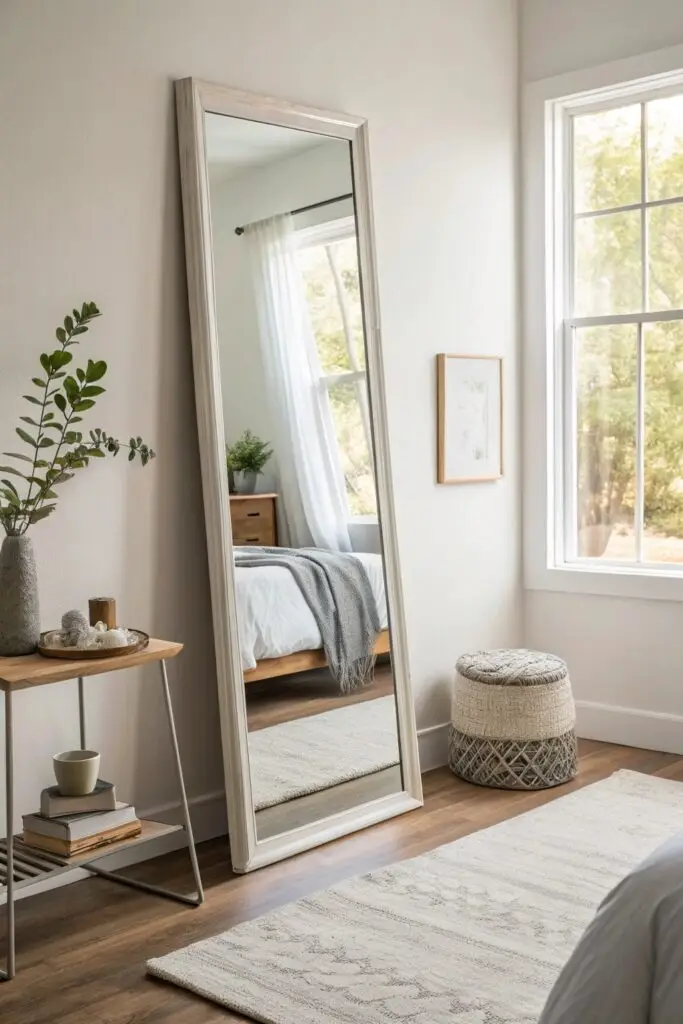
A mirror ($30-80) reflects light and adds the visual illusion of depth, which is a genuinely useful trick for making a small bedroom feel larger without any structural change, in addition to its practical function.
A door-mounted or leaning mirror uses zero additional floor space compared to a wall-mounted option requiring drilling, worth considering specifically for renters or anyone wanting an easily reversible installation.
8. Declutter With a One-In-One-Out Rule
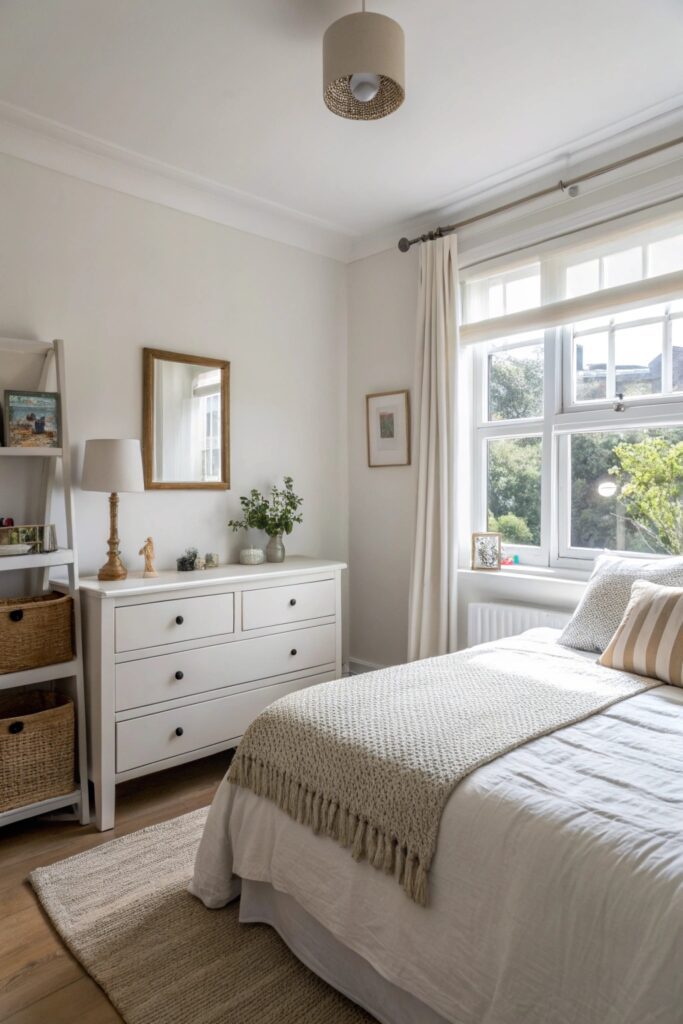
Committing to removing one item whenever a new one enters the room (particularly clothing) keeps a small bedroom’s limited storage from gradually becoming overloaded again after an initial organizing effort.
This is a genuinely sustainable long-term habit rather than a one-time fix, and it’s specifically well-suited to small spaces where storage capacity is fixed and can’t simply expand to accommodate ongoing accumulation.
9. Use Drawer Dividers and Organizers
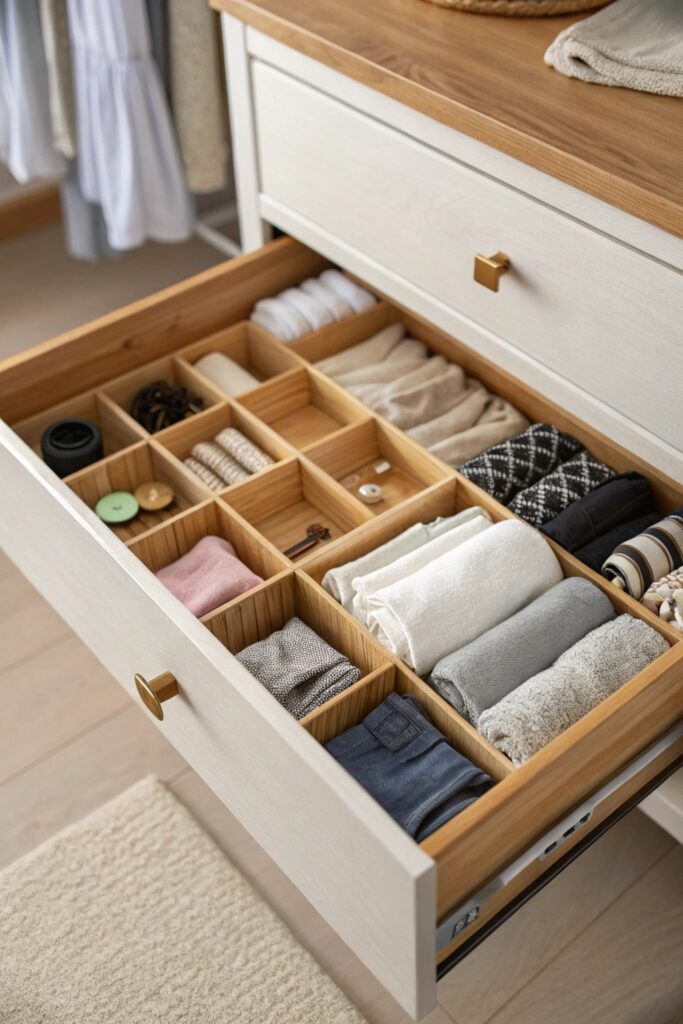
Dividers and small bins inside existing dresser drawers ($10-25 for a set) increase the effective usable capacity of storage you already own, since undivided drawers waste considerable space to items shifting and settling unevenly.
This is one of the lowest-cost organization improvements available, since it works with existing furniture rather than requiring any new pieces.
10. Add Hooks Behind the Door
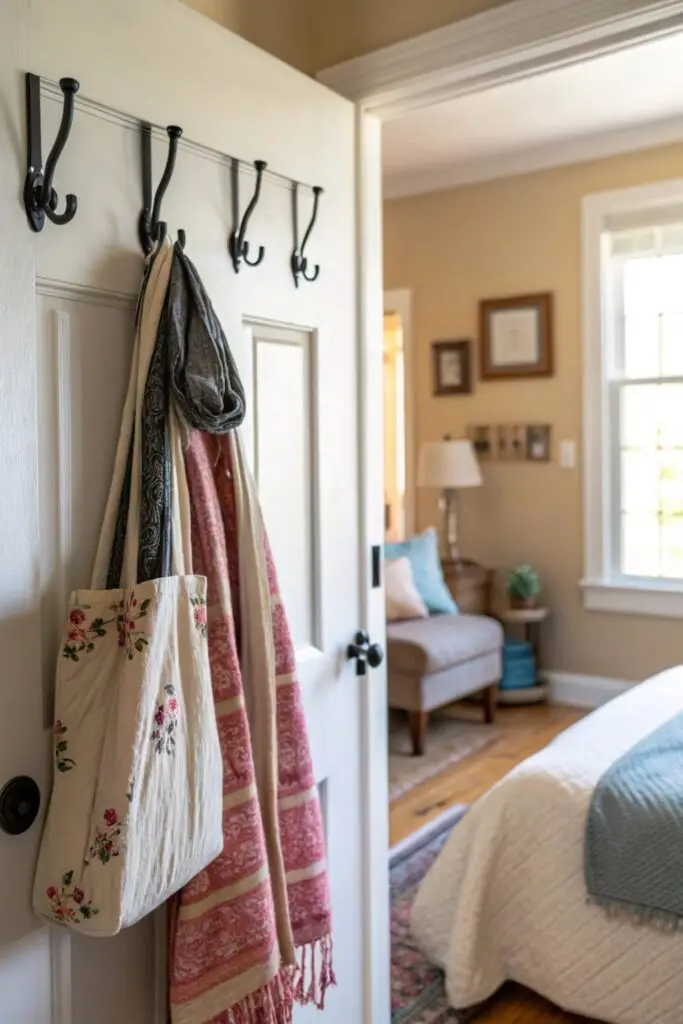
Wall or door-mounted hooks ($10-20 for a set) use the genuinely underutilized space behind a bedroom door for robes, bags, or frequently worn clothing items that don’t need full closet storage.
Command-style adhesive hooks avoid any drilling, making this a fully reversible option for renters or anyone hesitant to modify the door itself.
11. Choose Furniture With Slim Profiles
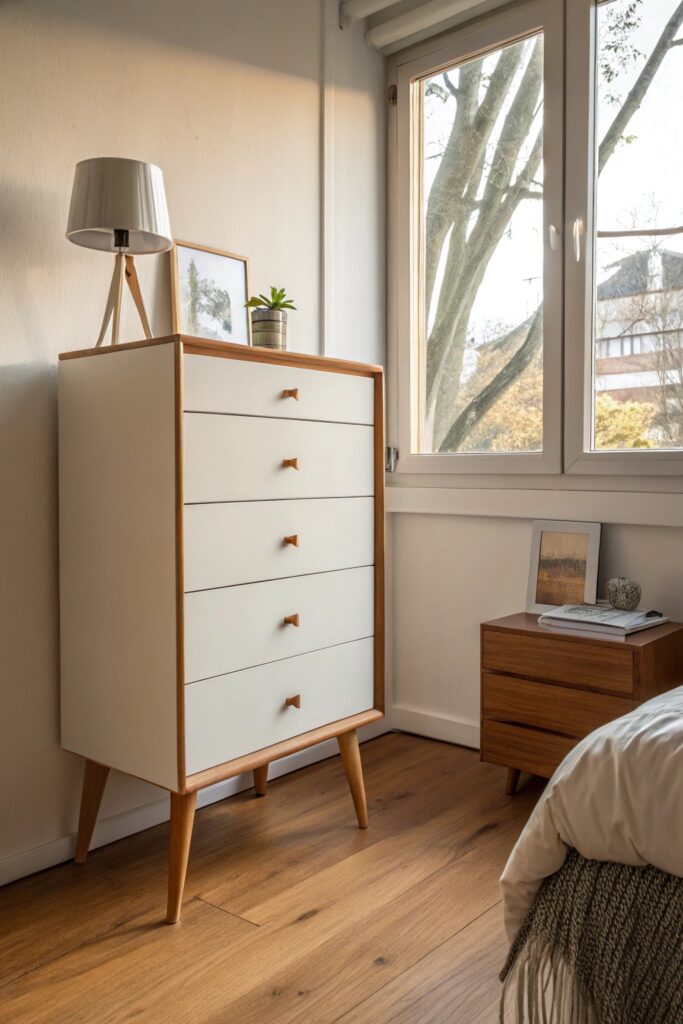
Furniture with a narrower depth or slimmer legs (rather than bulky, solid-based pieces) takes up less visual and physical space, which matters considerably in a small room where every inch of clearance affects how the space feels to move through.
This is worth prioritizing specifically for larger pieces (dressers, nightstands) where the difference between a slim and bulky profile has the most cumulative impact on the room’s overall sense of space.
12. Use Vertical Hanging Organizers for Small Items
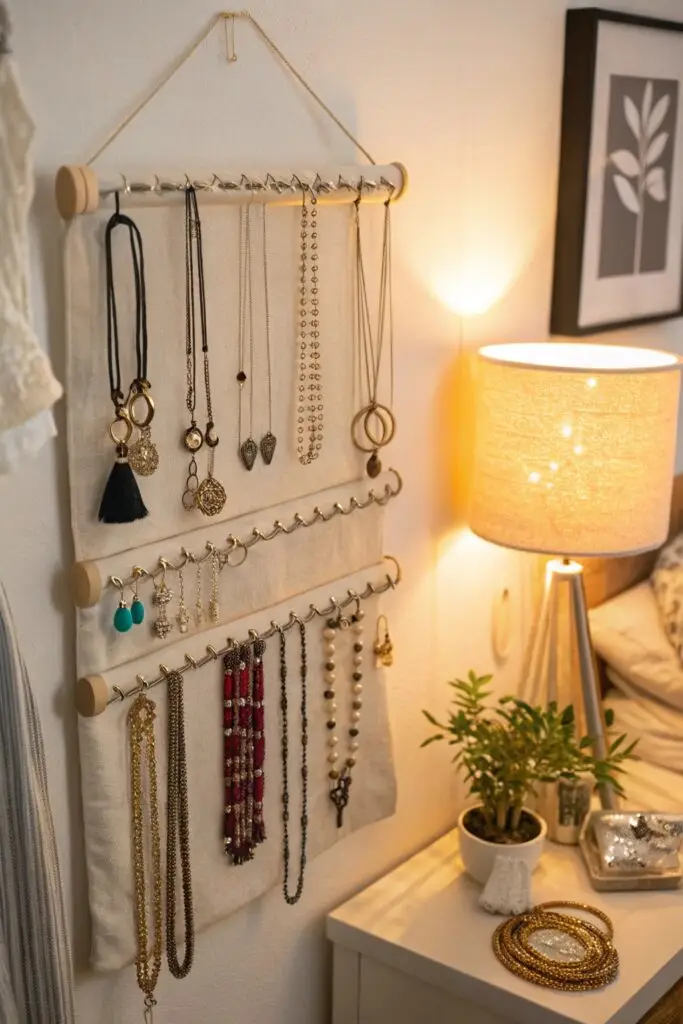
A hanging closet organizer with multiple cubby compartments ($15-30) stores folded items, shoes, or accessories vertically within existing closet space, adding storage capacity without requiring any additional floor footprint.
This works especially well for items that don’t need to be folded flat in a drawer (bulkier sweaters, shoes) where the compartment format is more practical than stacking in a traditional drawer.
13. Maximize Corner Space With Corner Shelving
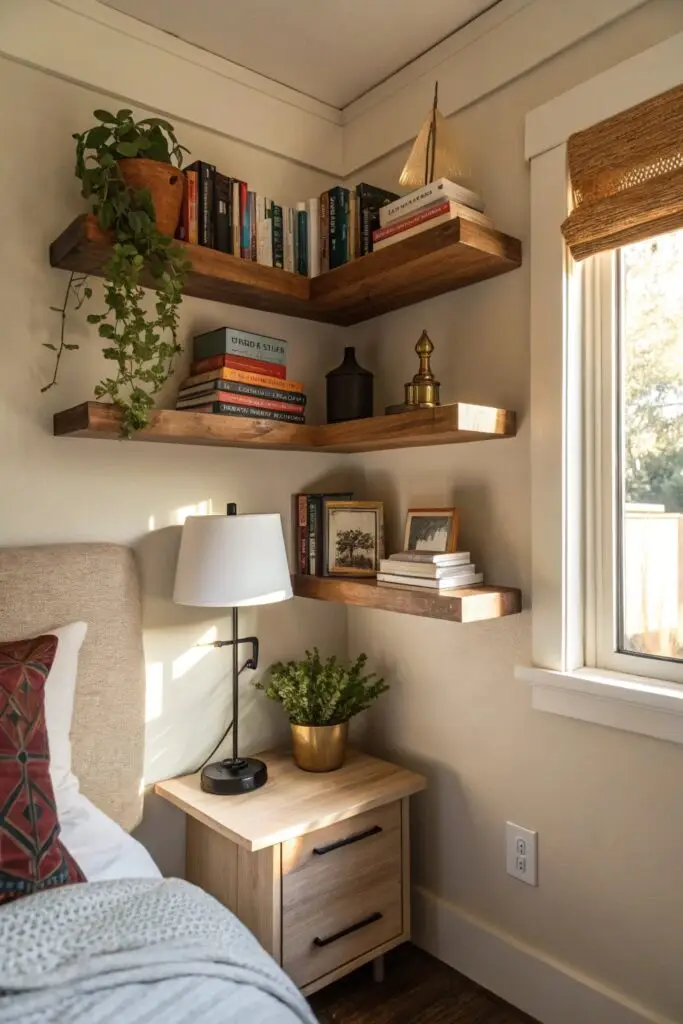
Corner shelving units ($25-60) use a genuinely underutilized area that most furniture arrangements leave entirely empty, since standard rectangular furniture doesn’t naturally fit into a room’s corners.
This is particularly effective for display storage (books, small decor) rather than heavier daily-use items, since corner shelving units are generally less structurally robust than standard flat-wall shelving.
14. Use a Daybed or Trundle for Flexible Space
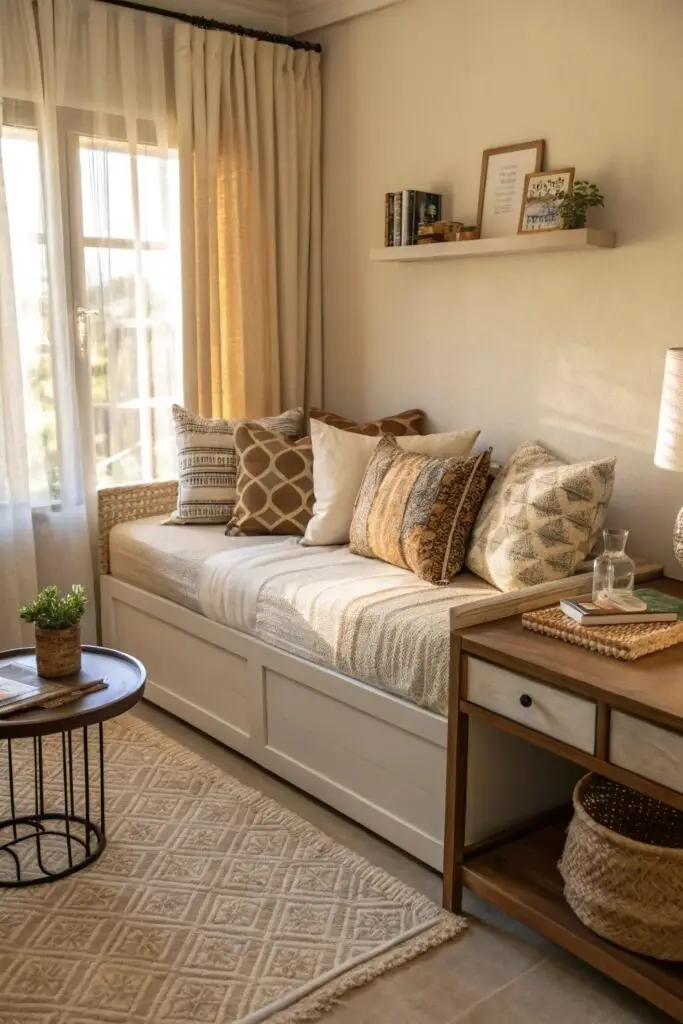
A daybed with a pull-out trundle ($300-600) functions as both regular seating during the day and additional sleeping space when needed, which is particularly useful in a small bedroom that occasionally needs to accommodate a guest without dedicating permanent floor space to a second bed.
This is a genuinely space-efficient solution specifically for rooms serving double duty (a home office that occasionally hosts guests, for instance) rather than a room used purely as a primary bedroom.
15. Keep Surfaces Clear With a “Landing Zone” Habit
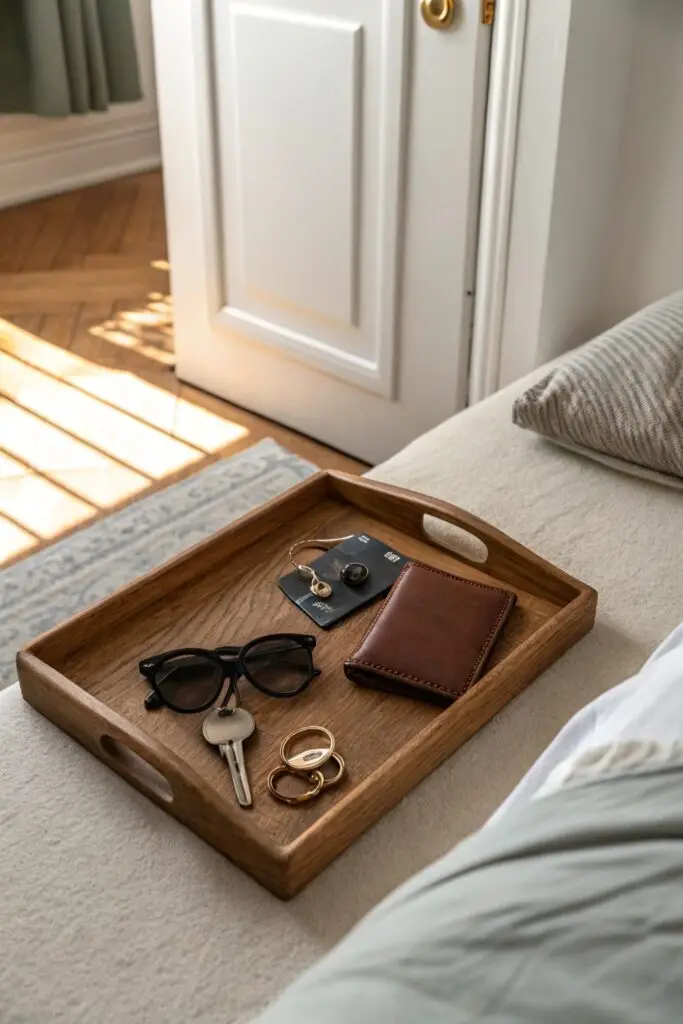
Designating one small, specific spot (a tray on the dresser, a bowl by the door) for daily items like keys and jewelry prevents the gradual surface clutter that accumulates when there’s no consistent, designated spot for these small daily items.
This costs nothing beyond a small tray or dish and is one of the most effective low-effort habits for keeping a small room’s limited surfaces from feeling perpetually cluttered.
Wrapping It Up
Vertical storage and multi-functional furniture matter most for a genuinely small bedroom, since both address the core constraint of limited floor space rather than working around it. Habits like the one-in-one-out rule and a consistent landing zone cost nothing but make a real difference in keeping any organizing effort from gradually reverting to clutter.