
Black specks from an iron almost always trace back to mineral buildup or residue accumulating somewhere in the steam system or soleplate, and most causes are preventable with a few consistent maintenance habits rather than requiring a repair or replacement.
Below are 10 causes to check, along with the specific fixes and prevention habits for each.
1. Mineral and Scale Buildup
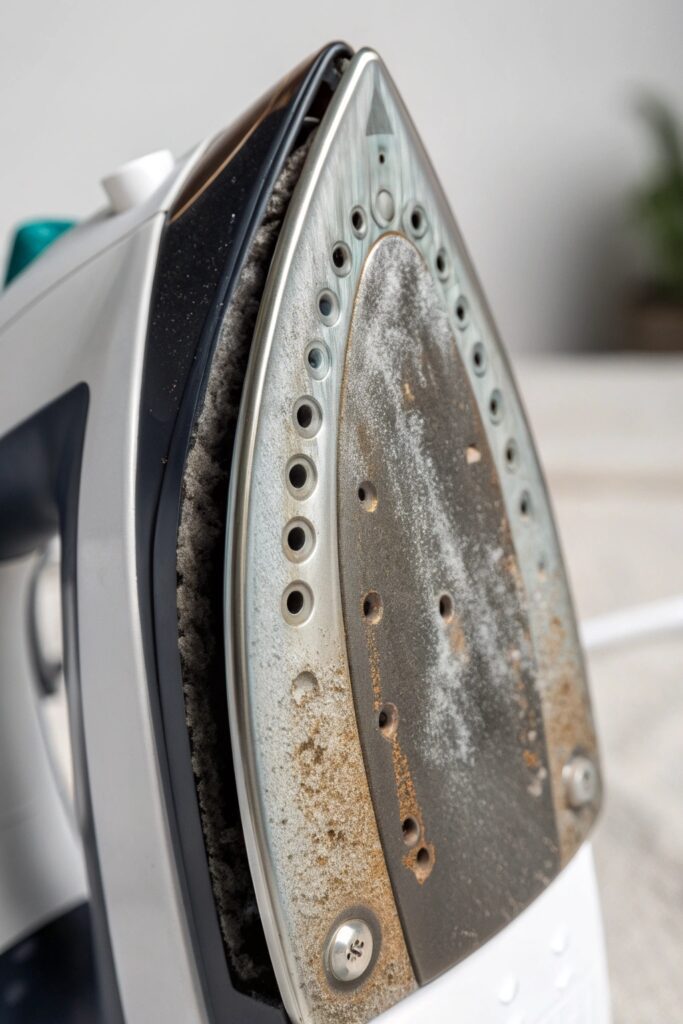
Hard water minerals accumulate inside the iron’s internal steam chamber over time, eventually breaking loose as small dark flecks that come out through the steam vents onto your fabric — this is the most common cause of black specks, especially in hard water areas.
Running a vinegar-water solution (roughly equal parts) through the iron’s self-clean or steam function, following your specific model’s instructions, dissolves much of this buildup before it has a chance to break loose during regular use.
2. Burnt Fabric Residue Stuck to the Soleplate
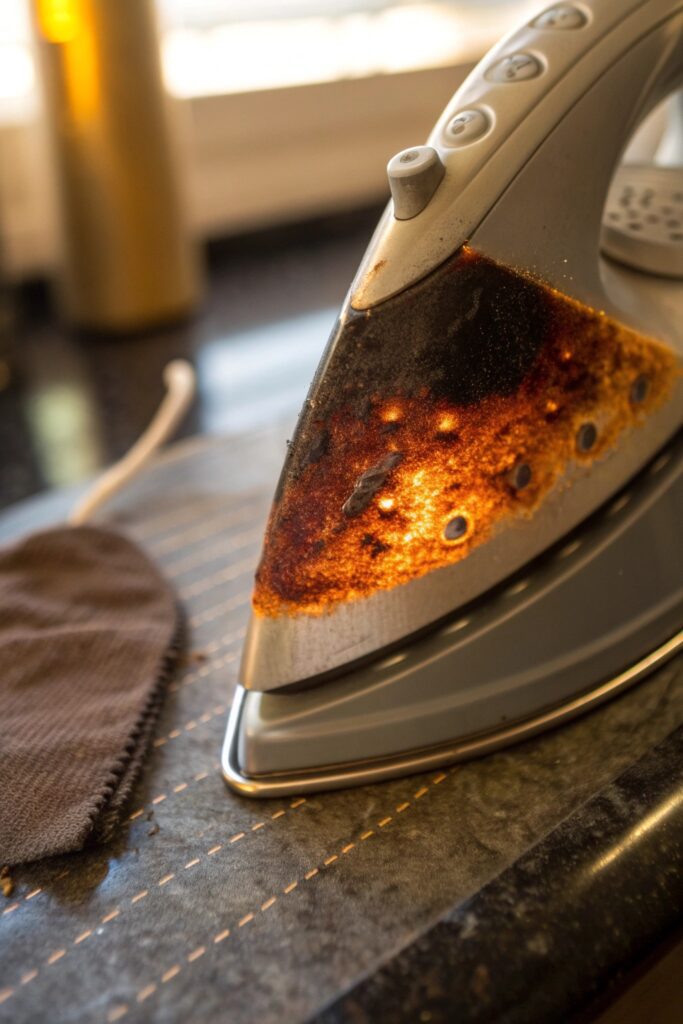
Residue from synthetic fabrics or fusible interfacing that’s melted onto the soleplate at some point can flake off in small dark bits during later use, especially if the residue wasn’t fully cleaned off after the original incident.
A soleplate cleaner (a specific paste product, $8-12) or a cooled iron wiped with a baking soda paste can lift stuck-on residue that regular wiping alone doesn’t fully remove.
3. Using Tap Water Instead of Distilled Water

Regular tap water contains minerals that accelerate scale buildup inside the iron’s steam system considerably faster than distilled water, which is essentially mineral-free and specifically recommended by most iron manufacturers for this reason.
Switching to distilled water going forward won’t remove existing buildup, but it meaningfully slows the rate of new scale formation, reducing how often you’ll need to run cleaning cycles.
4. Dirty or Clogged Steam Vents
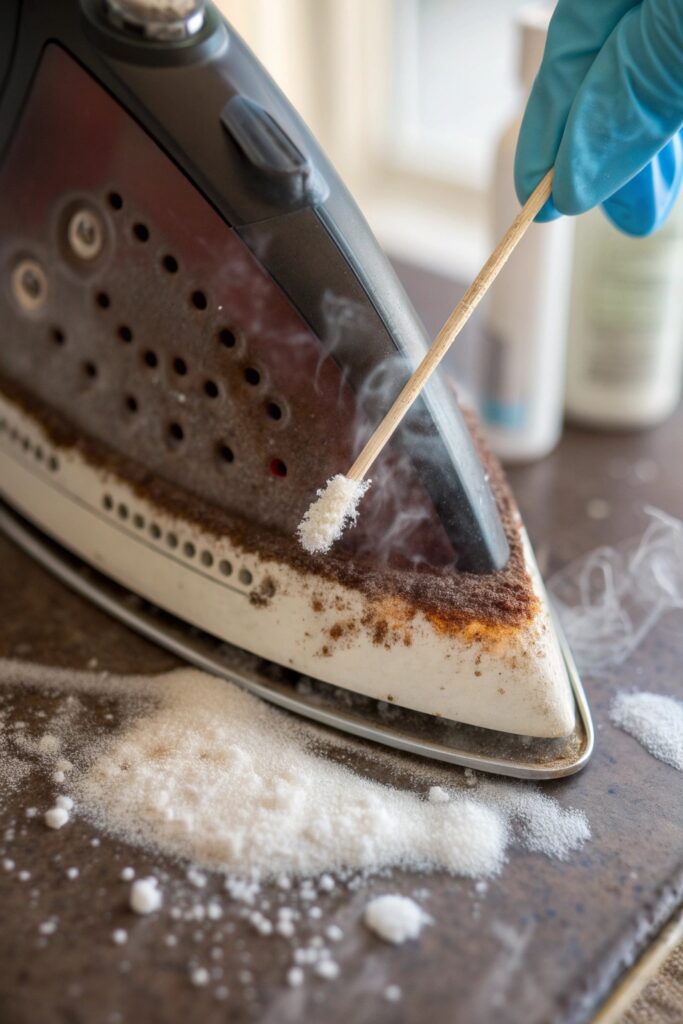
The small steam holes on the soleplate can accumulate their own buildup independent of the internal chamber, and debris lodged specifically in these vents releases as specks each time steam pushes through during use.
A cooled iron’s steam vents can be cleared with a cotton swab dampened in vinegar, worked gently into each visible vent opening to dislodge buildup without scratching the soleplate surface.
5. Old or Expired Iron Cleaning Solution
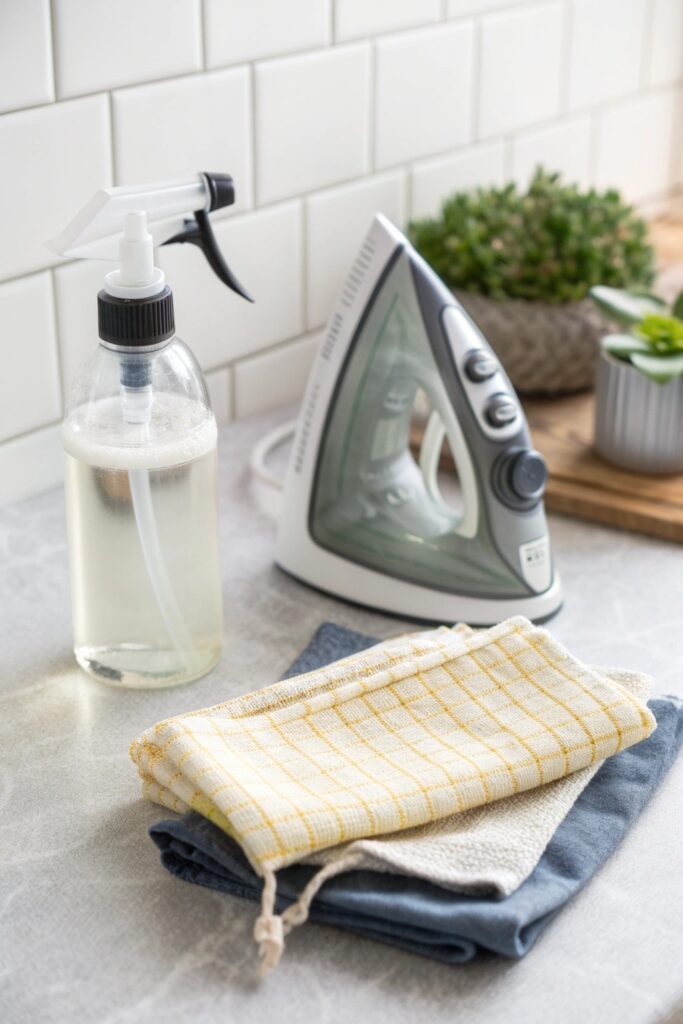
If you’ve previously used a commercial iron cleaning solution, residue from that product itself can sometimes contribute to buildup if it wasn’t fully rinsed or run through completely, particularly with older or expired cleaning products that may not perform as intended.
Always follow the specific product’s instructions for full cycles and rinsing, and replace any cleaning solution that’s past its stated shelf life rather than assuming an old product still works as effectively.
6. Ironing Over Starch Residue
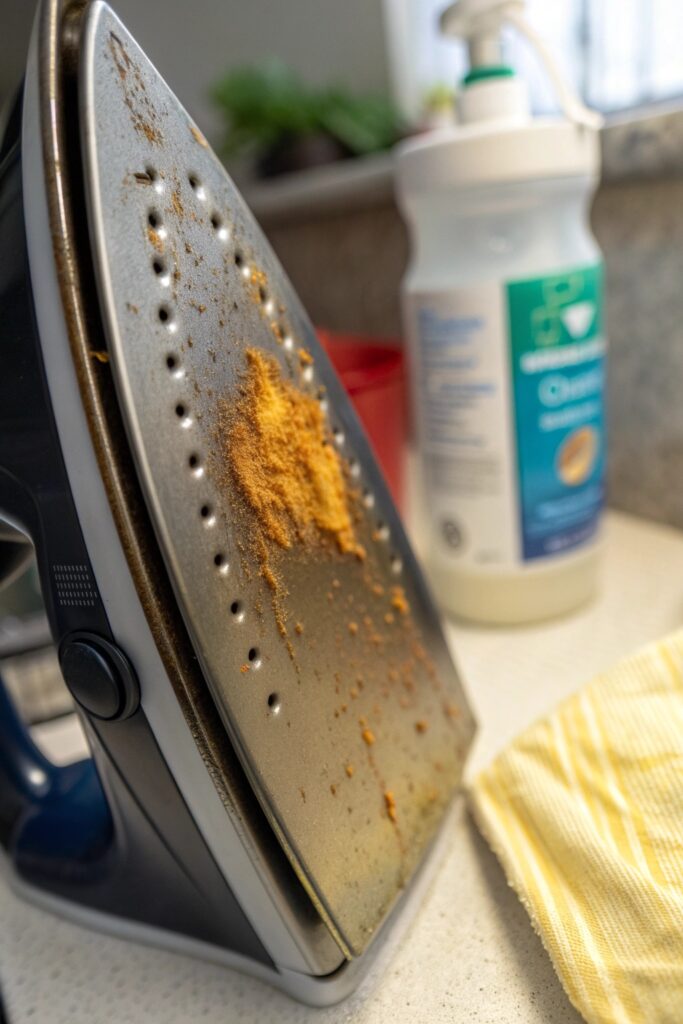
Spray starch that’s applied unevenly or in excess can build up on the soleplate over repeated uses, eventually flaking off as small residue specks, particularly if the iron is used at high heat that partially chars the accumulated starch.
Wipe the soleplate after any starch-heavy ironing session while it’s cooled, and apply starch more sparingly and evenly to reduce how much residue accumulates on the plate over time.
7. Rust Forming Inside the Water Tank
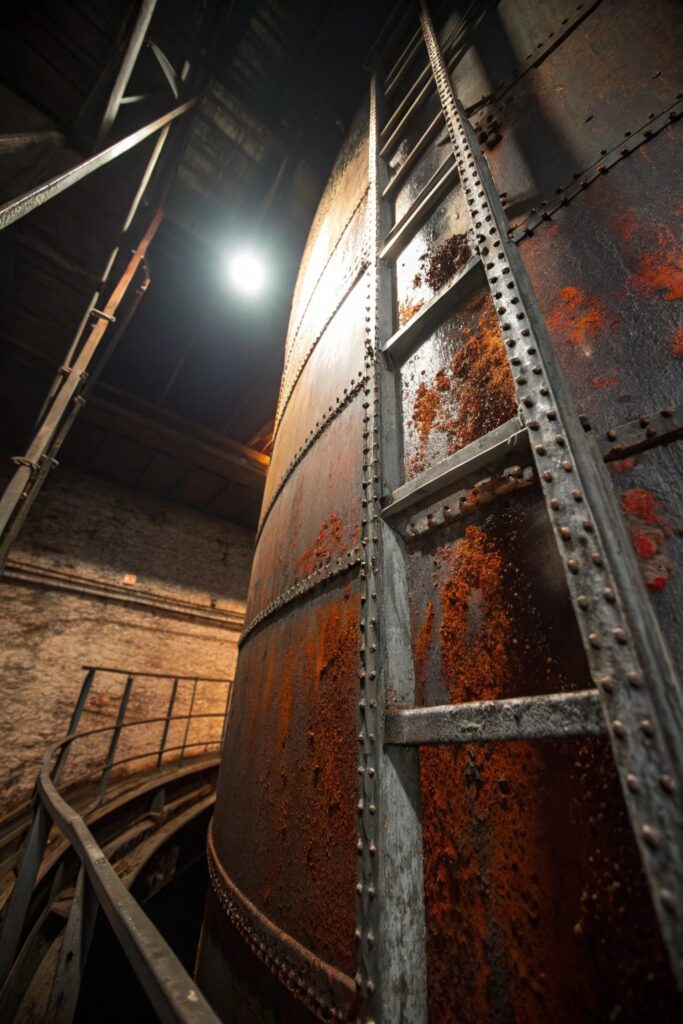
If water is left sitting in the iron’s tank between uses for extended periods, especially in older irons with any exposed metal components inside the tank, rust can develop and eventually work its way out through the steam vents as dark specks.
Empty the water tank after each use rather than leaving water sitting inside between ironing sessions, which is one of the simplest habits for preventing this specific cause.
8. Ironing at the Wrong Temperature Setting

Using too high a heat setting for a given fabric can scorch not just the fabric but also any residue already on the soleplate, turning what might have been invisible buildup into visible dark specks that then transfer onto subsequent items.
Match the iron’s temperature setting to the specific fabric being pressed, and when in doubt, start lower and increase gradually rather than defaulting to a high setting that risks both fabric damage and soleplate residue scorching.
9. Skipping Regular Self-Cleaning Cycles
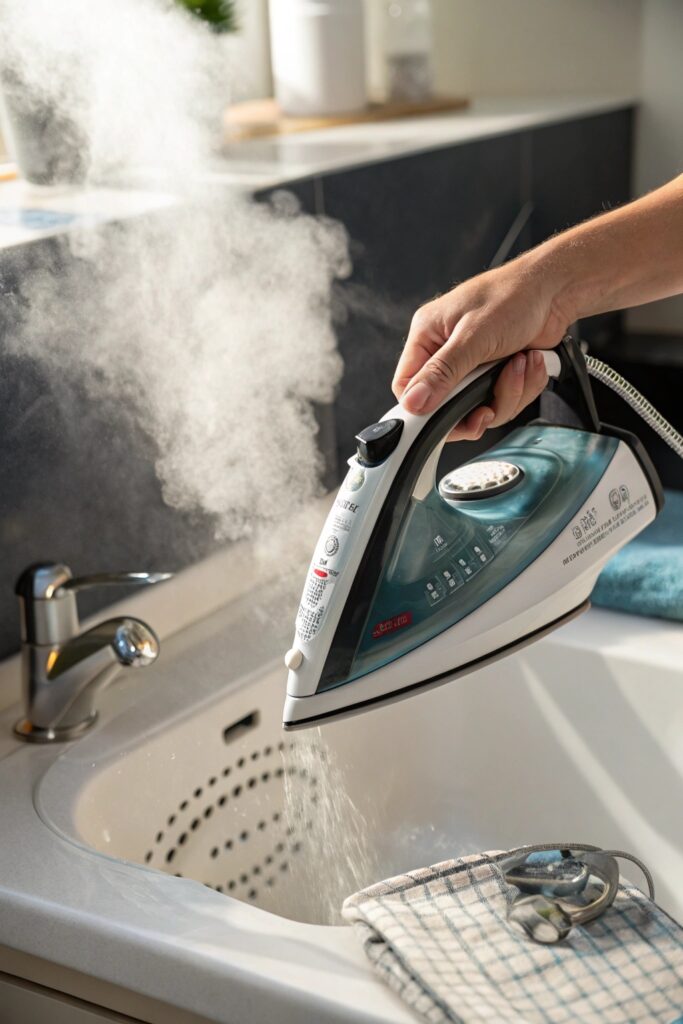
Most modern irons have a built-in self-cleaning function designed to flush loose mineral buildup out through the steam vents before it accumulates enough to cause visible specks — skipping this maintenance step regularly is a common reason buildup progresses further than it should.
Check your specific iron’s manual for the recommended self-clean frequency (often monthly with regular use) and build it into routine maintenance rather than only cleaning once specks have already appeared.
10. Using an Old, Worn-Out Iron
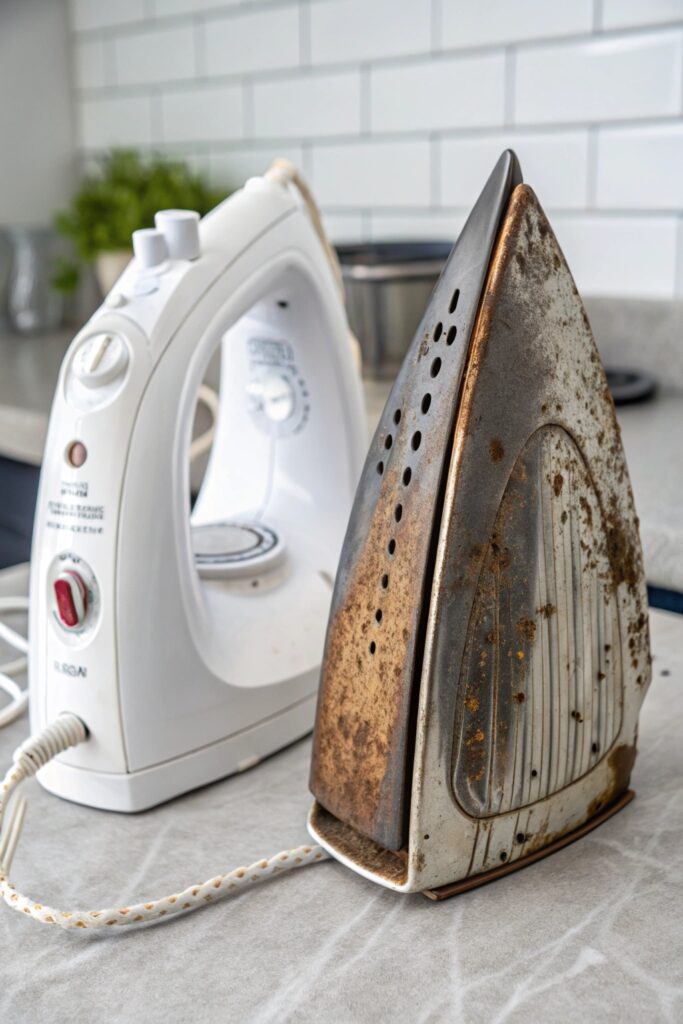
An iron that’s several years old with a soleplate showing visible pitting, scratches, or degraded coating can develop persistent speck issues that cleaning alone won’t fully resolve, since the damage itself is now part of the surface texture holding onto residue.
If regular cleaning no longer resolves recurring specks and the iron shows visible soleplate wear, replacement (irons with quality soleplates run $30-80) is often more practical than continuing to manage an aging unit’s buildup.
Testing on Scrap Fabric First
After any cleaning cycle, always test the iron on an old towel or scrap fabric before returning to your actual ironing project, since a single cleaning pass doesn’t always dislodge every bit of loosened buildup on the first attempt.
If specks continue appearing on test fabric after two or three cleaning cycles, that’s a sign the buildup is more extensive than a single vinegar treatment can resolve, and repeating the process over a few days (rather than one aggressive session) often clears stubborn internal buildup more thoroughly than trying to force it out all at once.
Wrapping It Up
Switching to distilled water and running regular self-cleaning cycles prevent the majority of speck issues before they start, since mineral buildup is the most common underlying cause. If specks are already appearing, a vinegar-based cleaning cycle followed by manual soleplate and vent cleaning resolves most cases without needing a new iron.