
Waterfall and tucked (captured) installation are both common alternatives to a bullnose-wrapped edge, differing mainly in how the carpet meets each stair’s crevice rather than in the fundamental coverage they provide. For a comparison against the third major method, our guide to bullnose vs waterfall carpet covers that specific pairing in more depth.
Below are 12 factors that differentiate waterfall and tucked installation specifically, covering style, cost, durability, and maintenance considerations.
1. Basic Installation Method
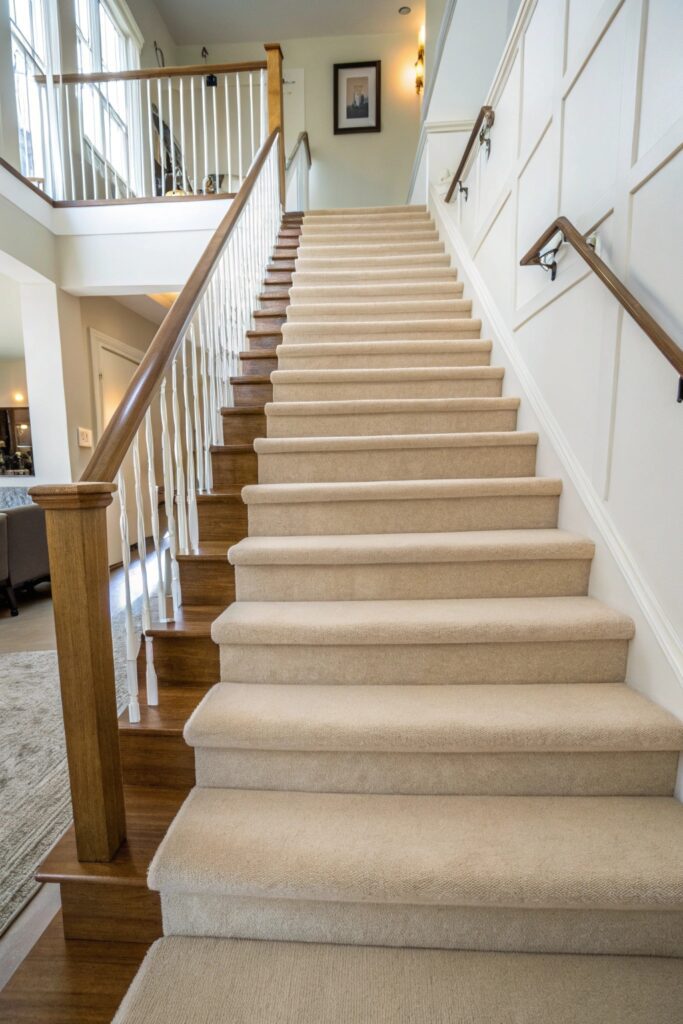
Waterfall installation drapes carpet continuously over each stair edge without tucking it into the crevice where the tread meets the riser, letting it fall naturally to the next step in one flowing piece.
Tucked (sometimes called captured) installation presses the carpet tightly into that crevice at the back of each tread, creating a crisp, defined line at the base of each riser rather than a continuous draped surface.
2. Visual Style and Aesthetic
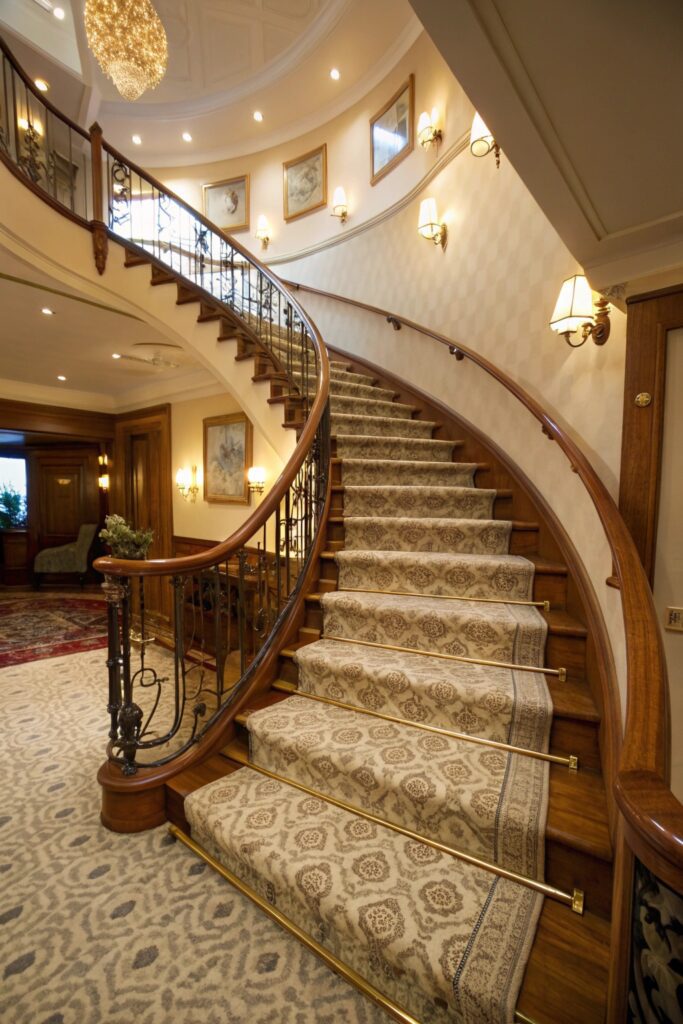
Waterfall has a softer, more continuous visual flow down the staircase, with each step’s edge creating a gentle rhythm rather than sharp definition between treads and risers.
Tucked creates crisp, defined lines at each step, giving a more tailored, precise appearance that some homeowners prefer for a cleaner, more architectural look, particularly in more traditional or formal home styles.
3. Cost Differences
Waterfall installation is generally the less labor-intensive of the two, since it doesn’t require the precise tucking work at each step, which can translate to modestly lower labor costs, roughly $1-2 less per step in many markets.
Tucked installation’s more detailed technique at each step typically adds labor time and cost, though the difference per staircase is usually modest rather than dramatic for a standard-length run of stairs.
4. Durability Over Time
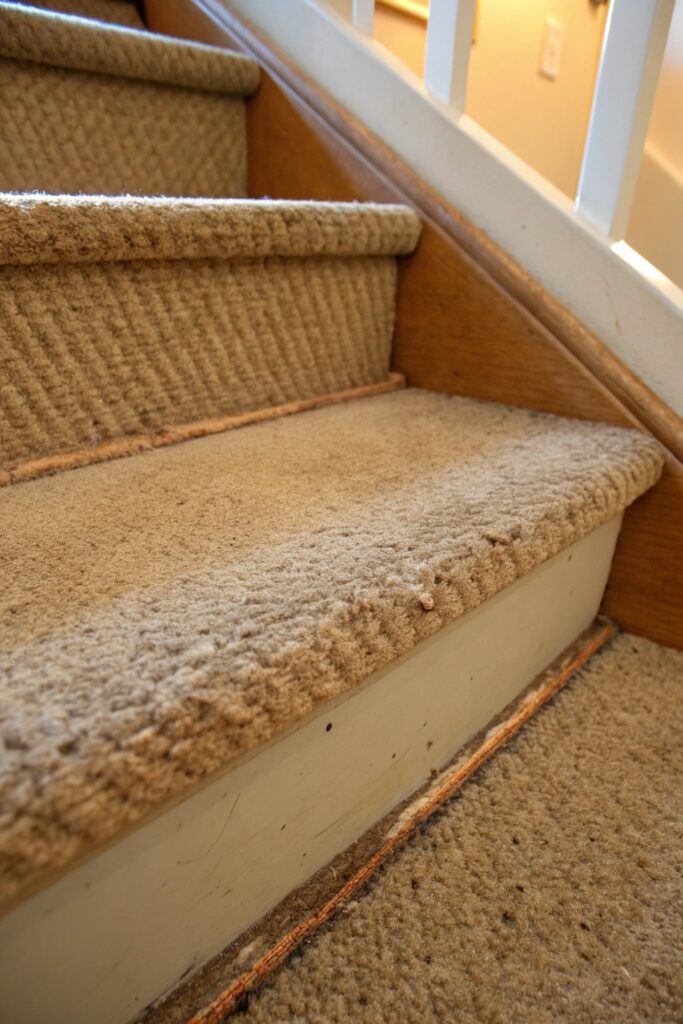
Waterfall’s draped edges see consistent wear at the step edges over time, and the carpet can gradually loosen slightly at these unsecured edges with heavy daily use.
Tucked carpet’s secured crevice fit tends to hold its shape more securely over years of use, since the tucked portion isn’t subject to the same edge-flexing that a draped waterfall edge experiences with repeated foot traffic.
5. Safety Considerations
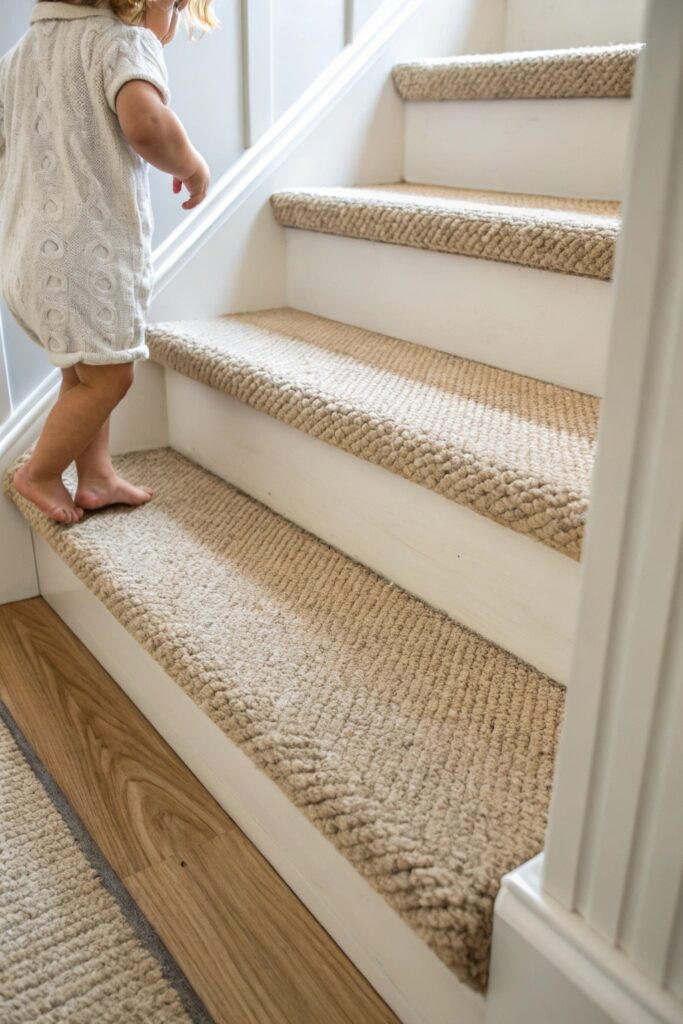
Waterfall’s continuous drape can very gradually loosen at the edges over years of heavy use, which is worth monitoring periodically, though this isn’t a significant concern for most households with normal stair use.
Tucked’s secure crevice fit stays put reliably over time, which some homeowners consider a marginal safety advantage for stairs with elderly residents or others who might be more affected by any carpet shifting underfoot.
6. Best Suited Carpet Types
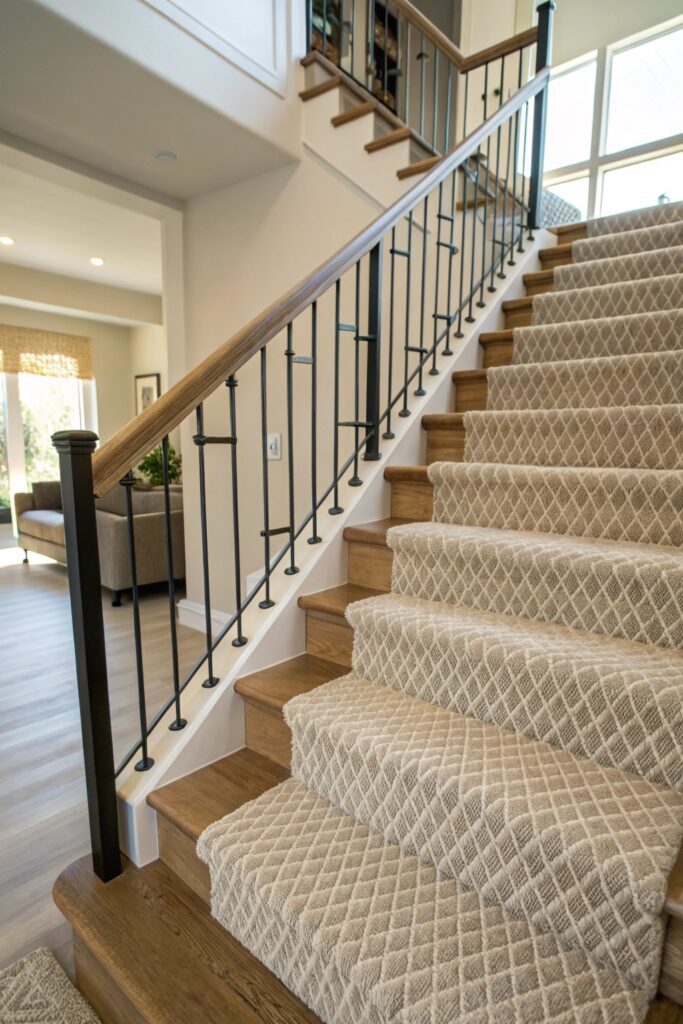
Waterfall works well with most standard carpet weights and pile heights, since it doesn’t require the material to be pressed tightly into a crevice, giving it broader compatibility across carpet types.
Tucked installation works best with carpet that has enough flexibility to be pressed into the tight crevice without excessive bulk or resistance — very thick, stiff, or heavily padded carpets can be more difficult to tuck cleanly.
7. Maintenance Requirements
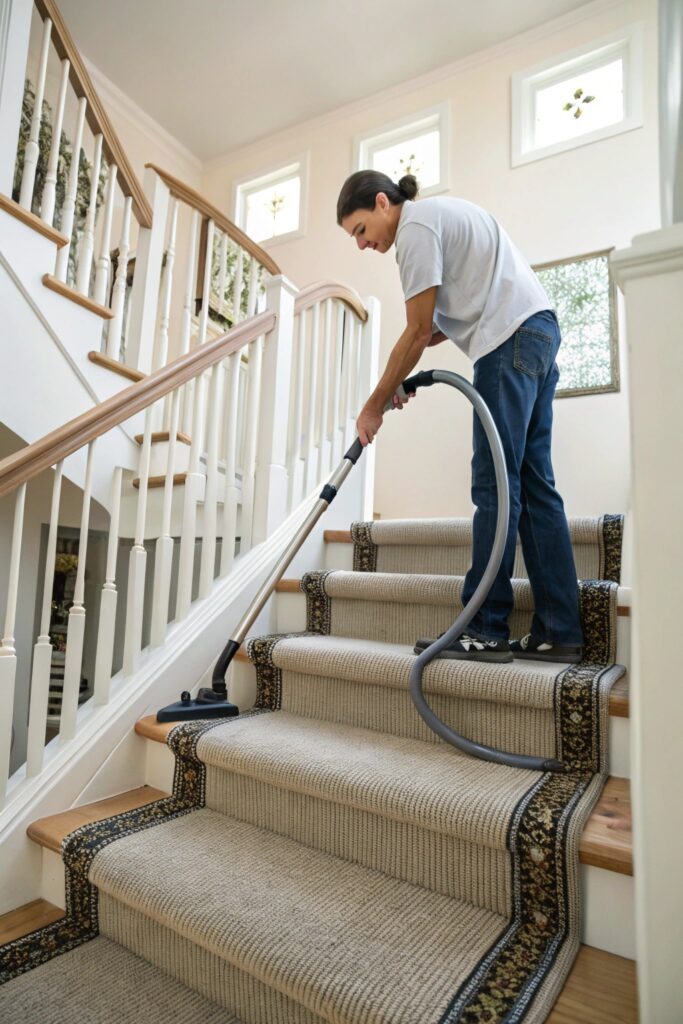
Waterfall’s open, continuous surface is straightforward to vacuum thoroughly, with no hidden crevices where debris can accumulate out of reach.
Tucked carpet’s crevice can trap debris and require more deliberate vacuuming attention at each step’s tucked edge, using a crevice tool attachment to reach fully into the tucked area rather than a standard vacuum head alone.
8. Installation Time
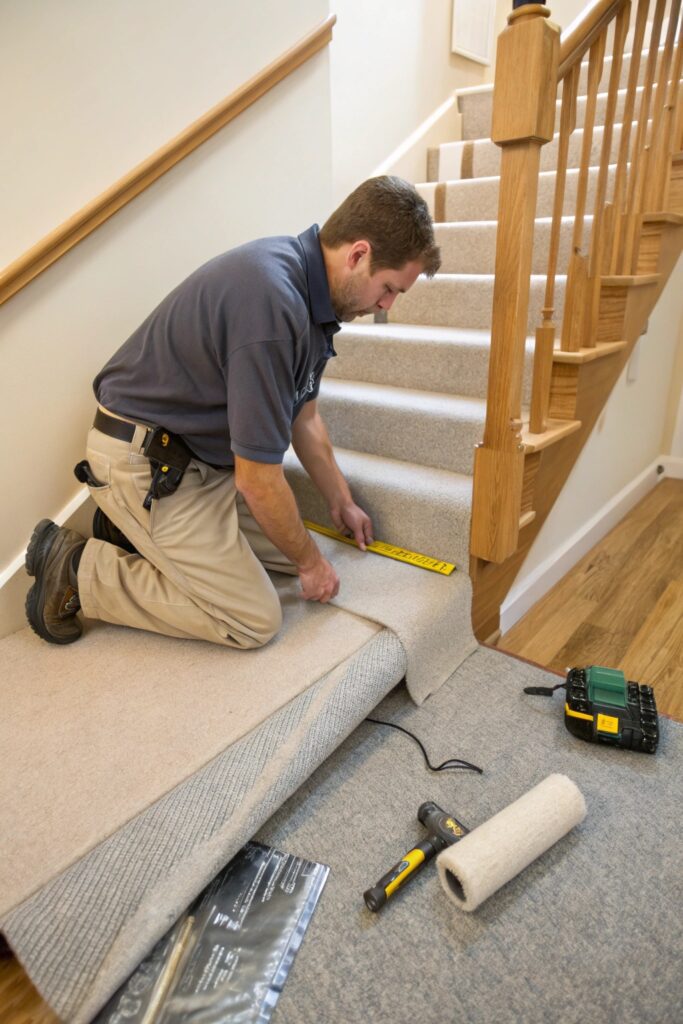
Waterfall installation is generally faster to complete, since the technique itself involves fewer precise steps per tread compared to tucked installation’s more detailed process.
Tucked installation takes longer per staircase due to the additional precision required at each step’s crevice, which matters if installation timeline is a significant consideration for your specific project.
9. Impact on Stair Longevity
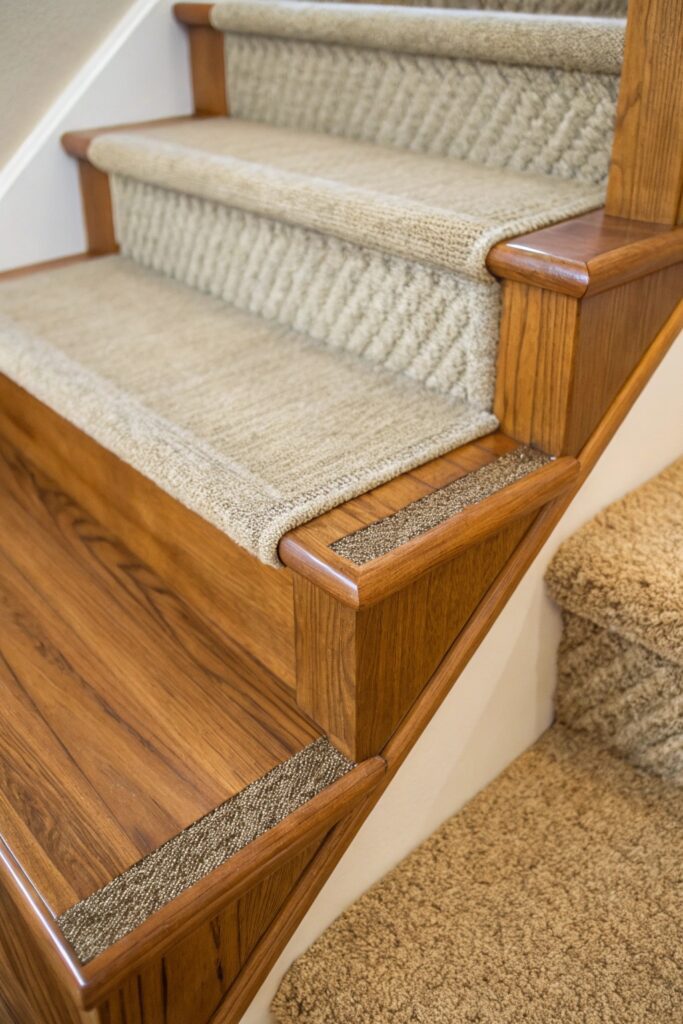
Both methods protect the underlying stair structure similarly well when properly installed, since the difference between them is primarily about the carpet’s edge treatment rather than the coverage or protection of the stair itself.
Neither method has a meaningful advantage in protecting the stairs underneath — the choice comes down to aesthetic preference, cost, and maintenance considerations rather than structural protection differences.
10. Resale and Home Value Perception
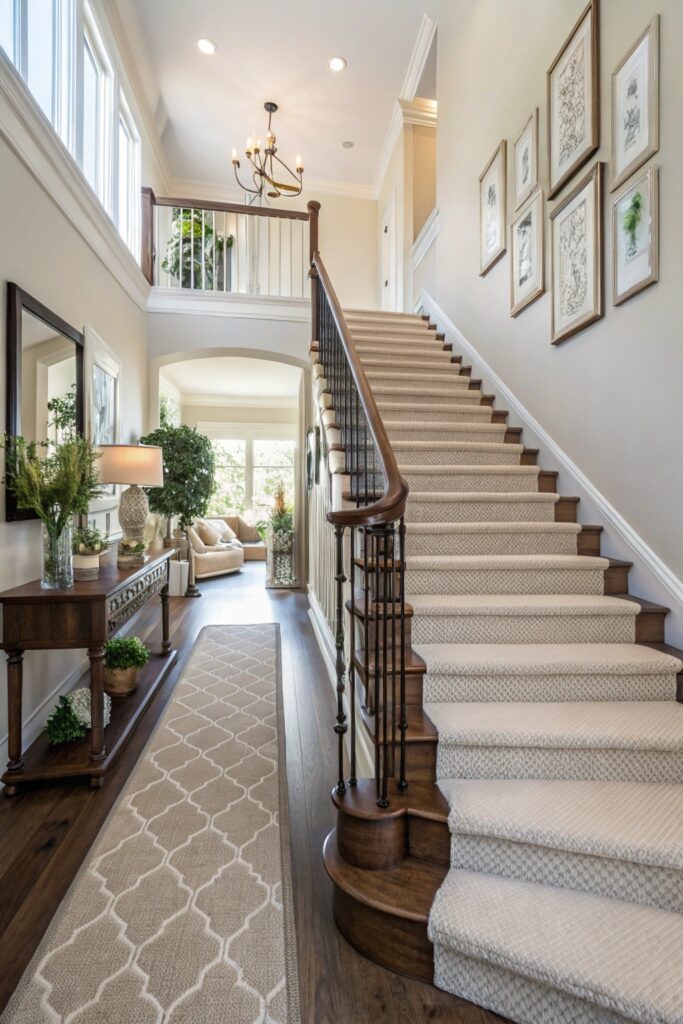
Most buyers won’t consciously notice or prioritize which specific installation method was used, making overall carpet quality and condition considerably more influential on perceived value than this particular technical choice.
Tucked’s more tailored, precise look can read as a slightly more considered detail to buyers who do notice such things, though this is a minor factor relative to broader considerations like carpet color, condition, and overall staircase appearance.
11. Compatibility With Stair Shapes
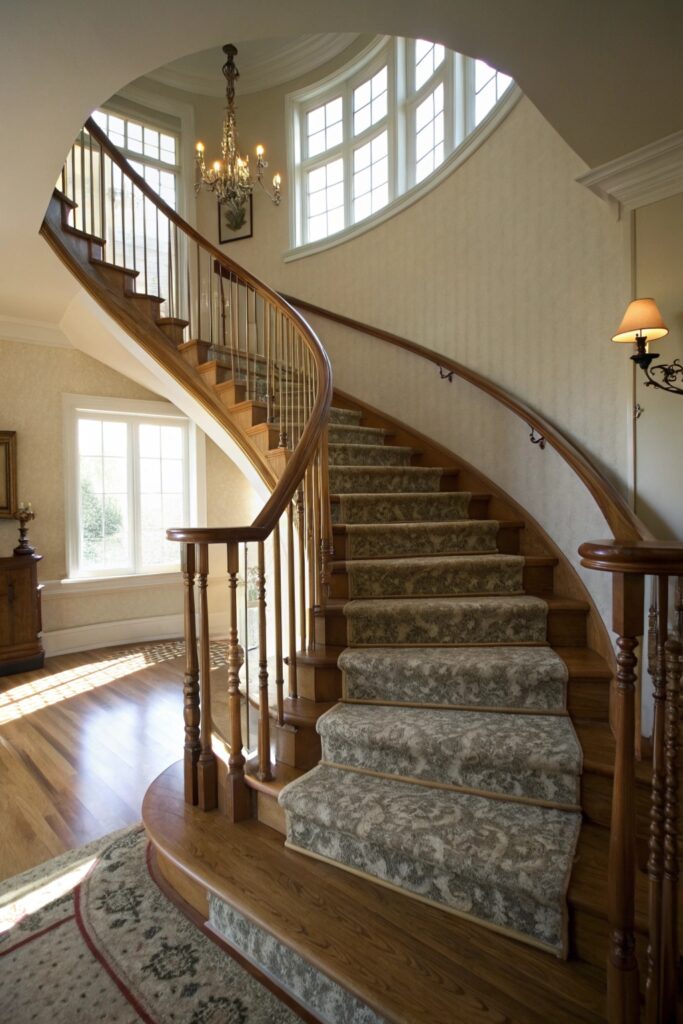
Waterfall adapts more easily to curved, winding, or irregularly shaped staircases, since the continuous drape technique doesn’t depend on a precise, uniform crevice shape at each step.
Tucked installation works best on standard straight staircases with consistent, uniform tread and riser dimensions, since the tucking technique depends on a predictable crevice shape that becomes more complex to execute well on curved or irregular stairs.
12. Personal Preference and Household Lifestyle

Households that prioritize a softer, more casual aesthetic and value slightly faster, lower-cost installation tend to lean toward waterfall as the more practical everyday choice.
Households that prefer a more tailored, precise look and don’t mind the modest additional cost and installation time often find tucked installation worth the investment for the cleaner line it creates at each step.
Wrapping It Up
Waterfall is the more broadly practical choice — faster installation, lower cost, easier maintenance, and better compatibility with any stair shape including curved staircases. Tucked is worth the added cost and installation time specifically for the more tailored, precise look it creates, particularly on a standard straight staircase where its crevice-shape requirements aren’t a limiting factor.