
PFOA (perfluorooctanoic acid) was a chemical historically used in manufacturing older nonstick coatings; U.S. manufacturers phased it out of production by 2013 under an EPA agreement, so most cookware sold today — including standard Teflon-coated pans — is already PFOA-free by default. That said, brands differ in their broader material choices (ceramic nonstick, cast iron, stainless steel) and how transparently they communicate those choices, which is what this list actually compares.
This article is for general product information, not medical or safety advice — if you have specific health concerns about cookware materials, that’s worth discussing with a healthcare provider.
What Does PFOA-Free Actually Mean?
PFOA-free specifically refers to the absence of perfluorooctanoic acid, one chemical within the broader PFAS (per- and polyfluoroalkyl substances) family. A product being PFOA-free doesn’t automatically mean it’s free of all PFAS compounds — ceramic nonstick and cast iron avoid the PFAS category entirely, while some ‘PFOA-free’ traditional nonstick coatings still use other fluoropolymers. Reading a brand’s actual material specifications, not just a ‘PFOA-free’ label, is the more reliable way to understand what you’re buying.
1. Caraway
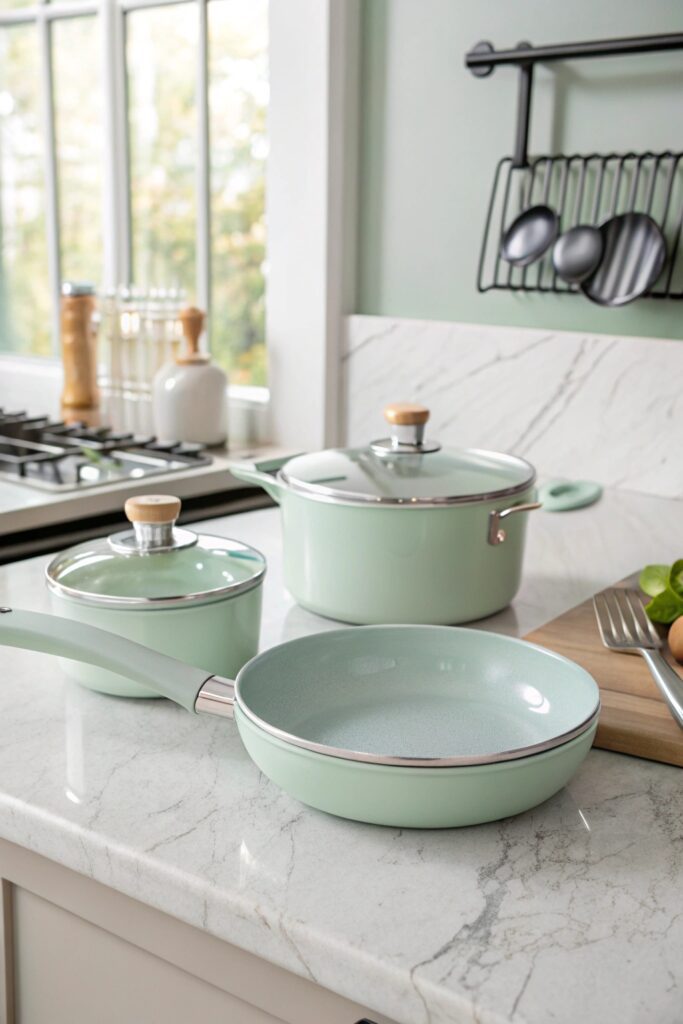
Caraway uses a mineral-based ceramic nonstick coating rather than traditional PTFE (Teflon) coatings, positioning itself specifically around a clean-label, no-PFAS marketing approach. Sets typically include matching storage racks and lid organization, which is part of the brand’s broader kitchen-organization positioning beyond just the cookware itself.
2. GreenPan
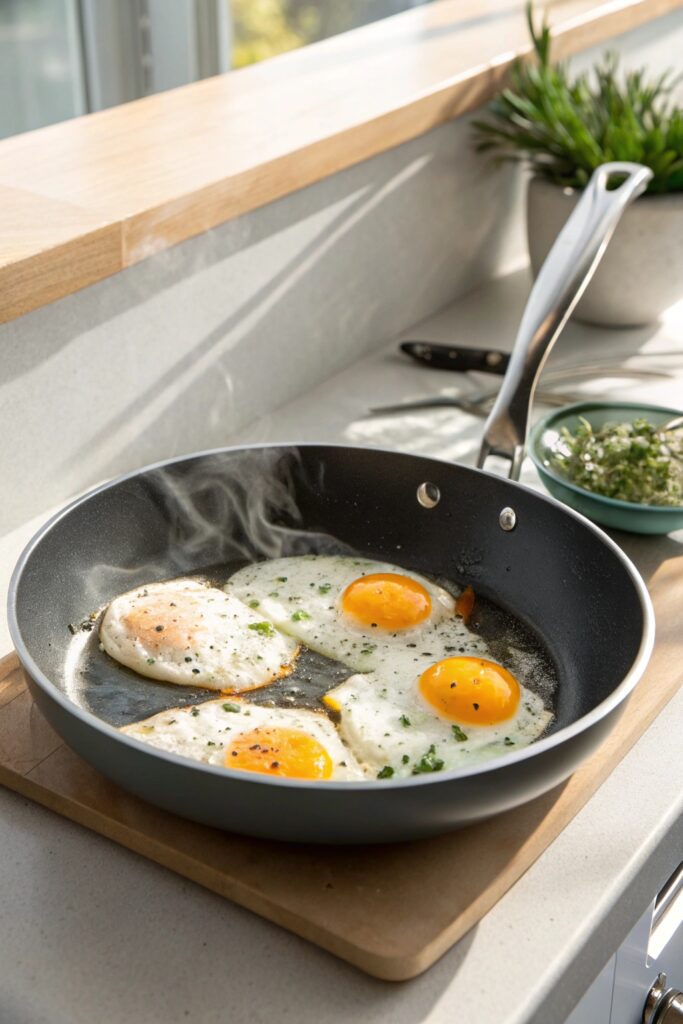
GreenPan was an early entrant in ceramic nonstick cookware, using a coating they call Thermolon, and the brand now spans a wide range of price points from entry-level to premium lines. Ceramic nonstick coatings generally have a shorter effective nonstick lifespan than traditional PTFE coatings, typically needing replacement every 2-3 years with regular use.
3. Made In
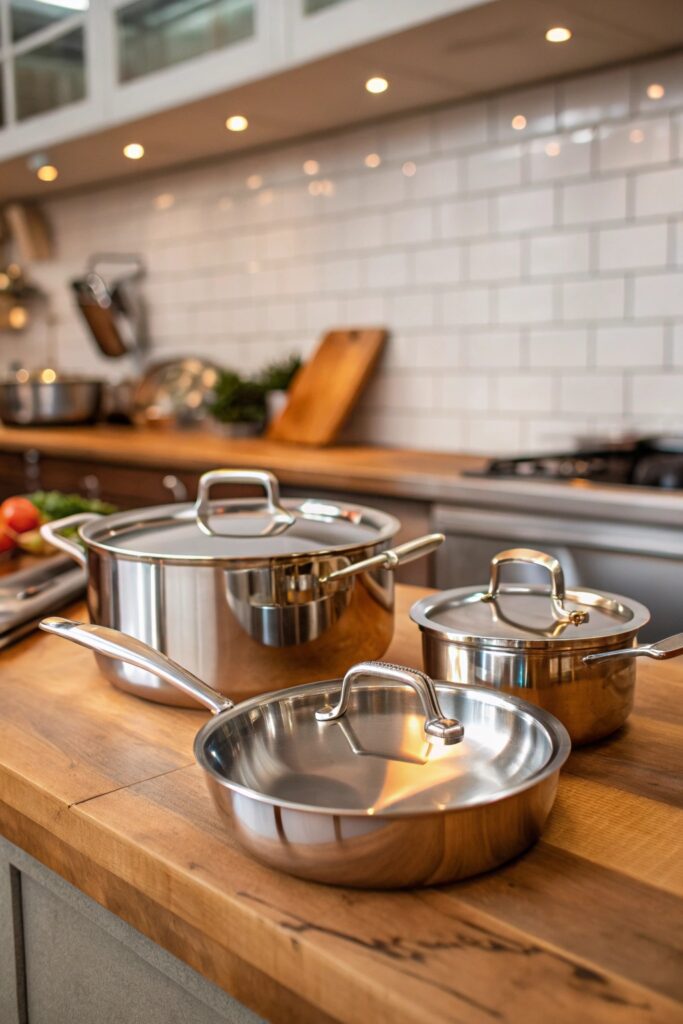
Made In focuses primarily on stainless steel and carbon steel cookware — materials that don’t involve nonstick coatings or PFAS considerations at all, since the cooking surface is the bare metal itself. This category requires more technique to prevent sticking (proper preheating, adequate oil) compared to nonstick cookware, which is worth knowing if you’re used to nonstick pans specifically.
4. All-Clad
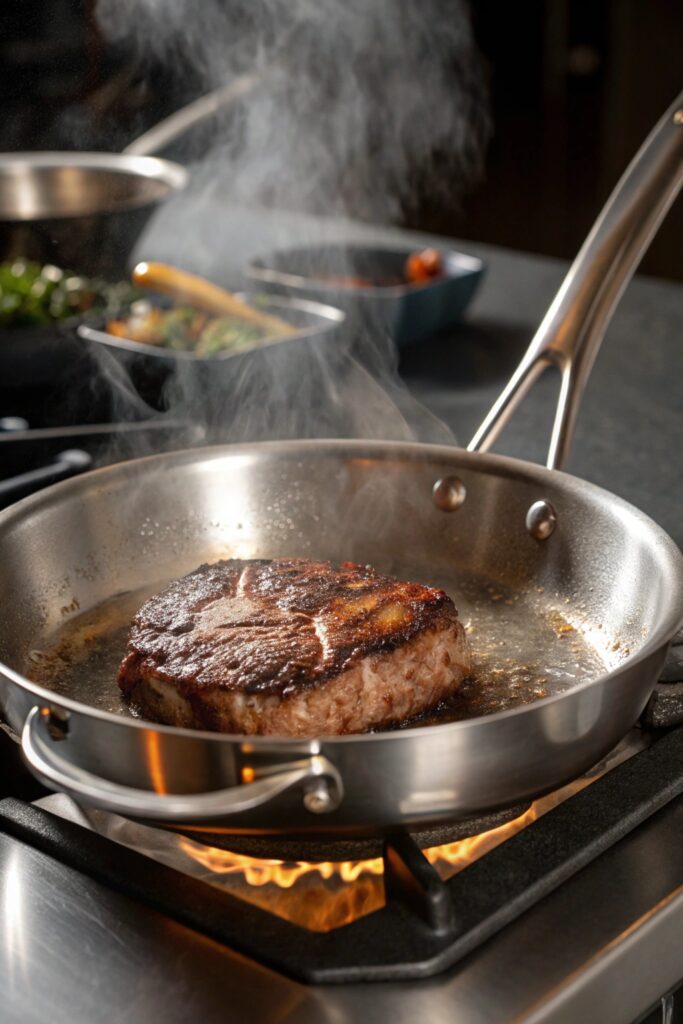
All-Clad is a long-established premium stainless steel cookware brand, known for multi-ply bonded construction (layers of stainless and aluminum for even heat distribution) rather than nonstick coatings. Like Made In, their core stainless lines sidestep PFAS entirely by not using a nonstick coating at all.
5. Lodge Cast Iron
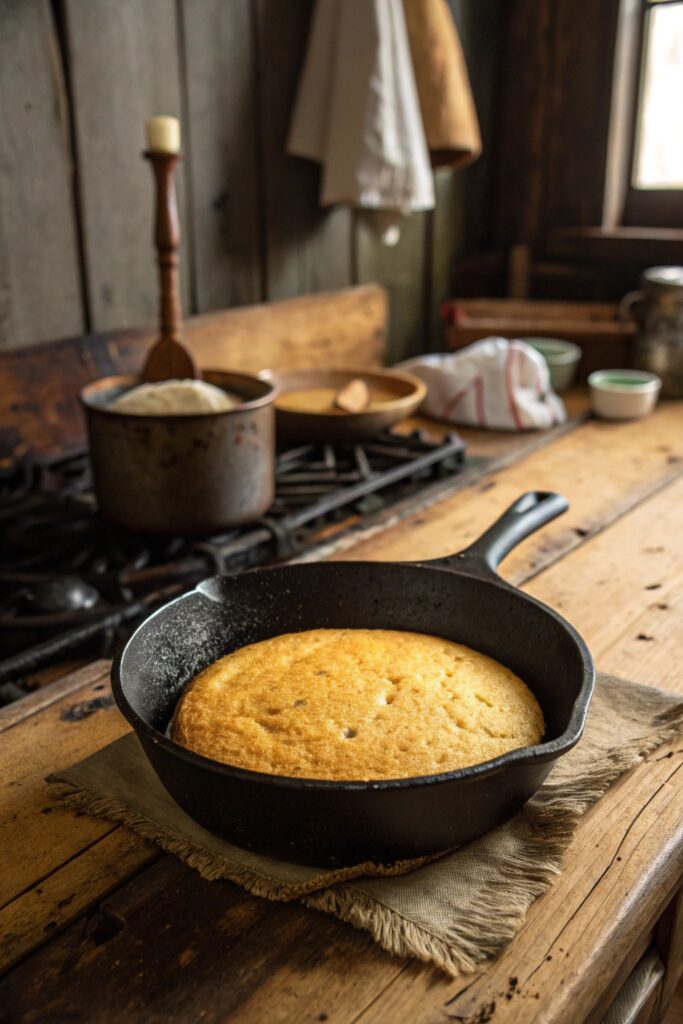
Cast iron cookware, pre-seasoned with oil rather than a manufactured coating, has never involved PFOA or PFAS compounds — Lodge is one of the most widely available and affordable cast iron brands in the U.S. Cast iron requires ongoing seasoning maintenance to stay nonstick, which is a genuinely different care routine than either ceramic or traditional nonstick cookware.
6. Xtrema
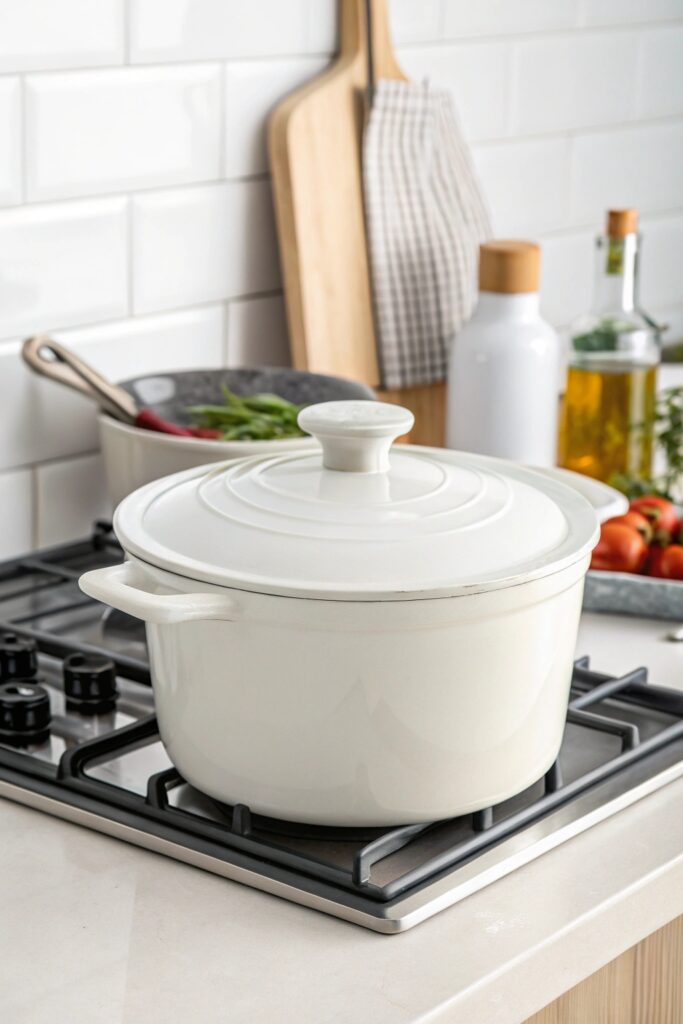
Xtrema makes 100% ceramic cookware (not a ceramic coating over metal, but solid ceramic construction), which the brand positions as free of metals and coatings entirely, not just PFAS. This construction method makes the cookware heavier and more prone to chipping if dropped compared to metal cookware, which is a real tradeoff for the material choice.
7. Scanpan
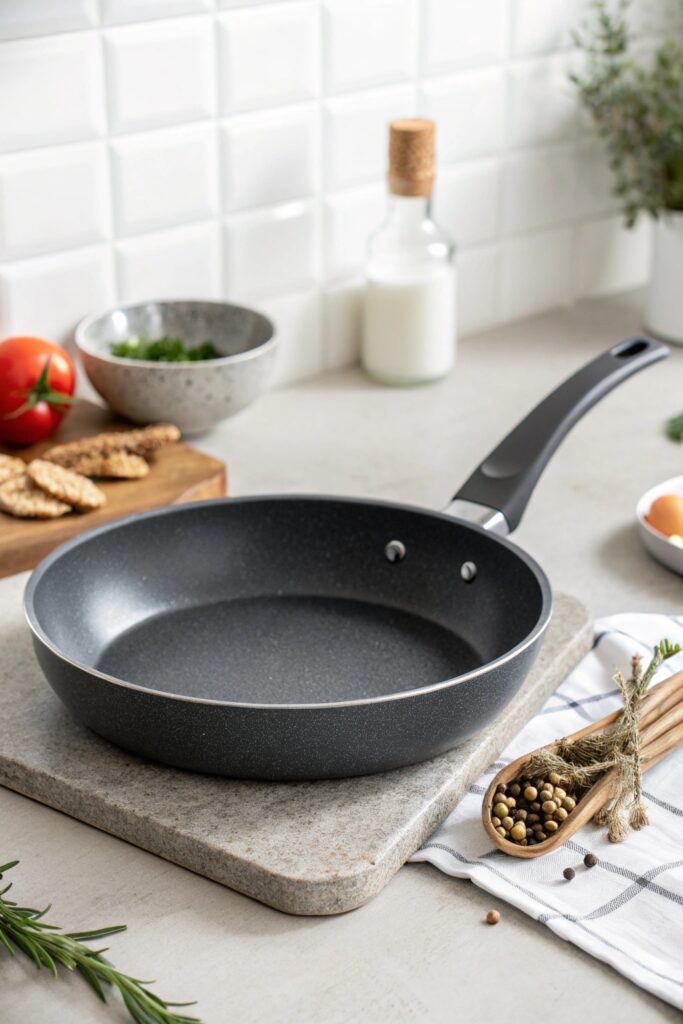
Scanpan, a Danish brand, uses a ceramic-titanium nonstick coating and has built its reputation partly around a longer nonstick lifespan than typical ceramic coatings, along with dishwasher-safe and metal-utensil-safe claims that most nonstick cookware doesn’t support.
8. Our Place
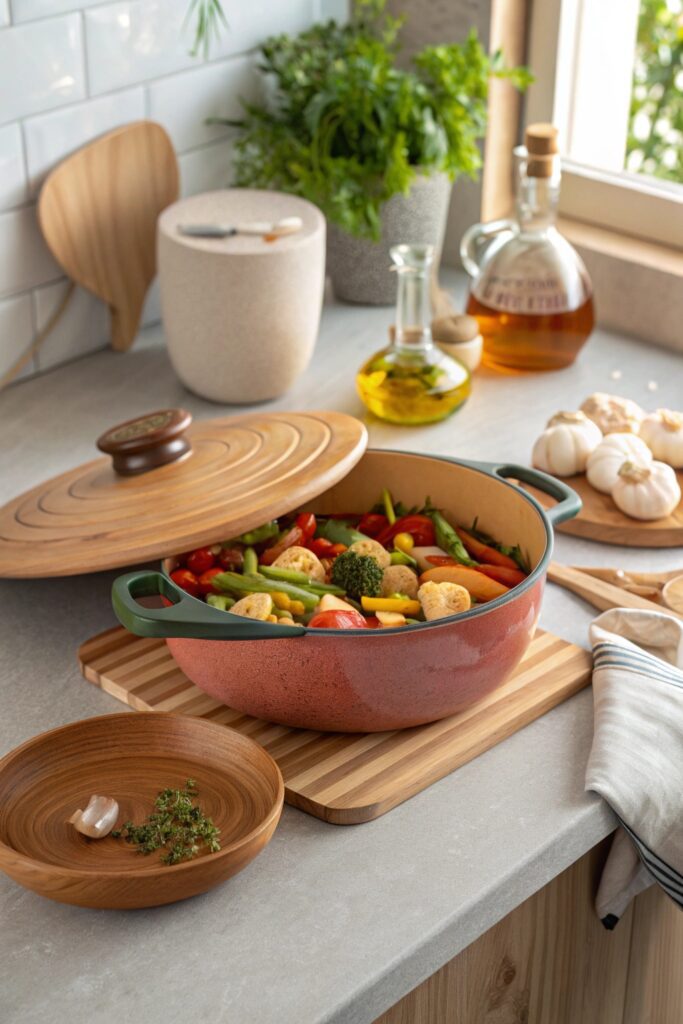
Our Place, known for the multi-function ‘Always Pan,’ uses a ceramic nonstick coating and has built significant brand recognition through direct-to-consumer marketing emphasizing clean materials and space-saving multi-use design rather than a traditional full cookware set.
9. Misen
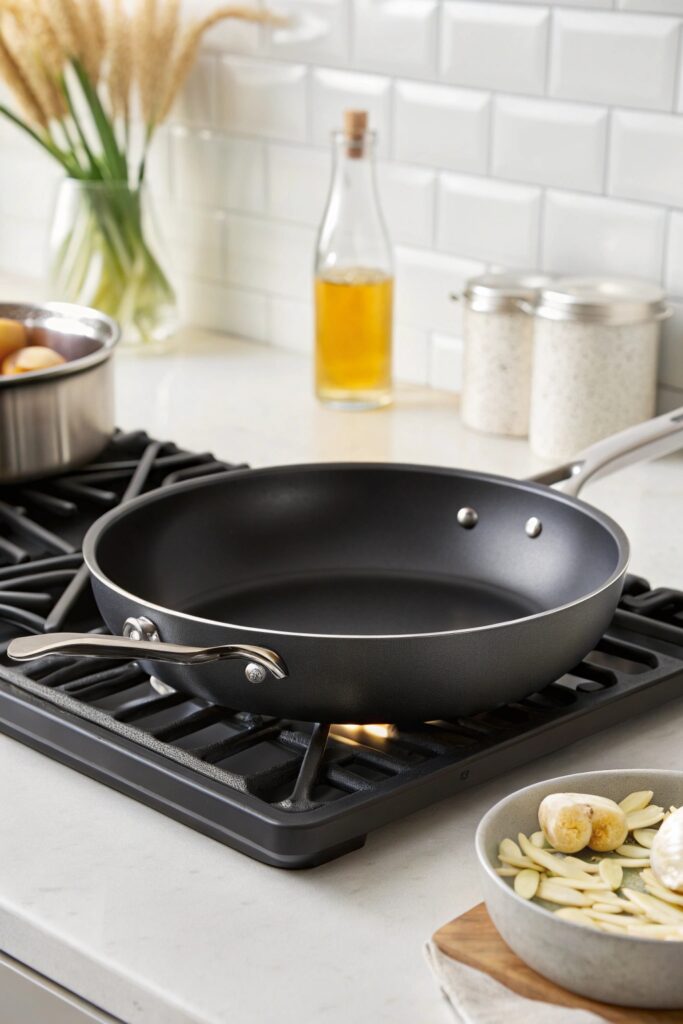
Misen offers both stainless steel and carbon steel cookware at a lower price point than brands like All-Clad or Made In, positioning itself as a value-focused option within the no-coating cookware category rather than competing directly on ceramic nonstick technology.
10. Cuisinart (GreenGourmet Line)
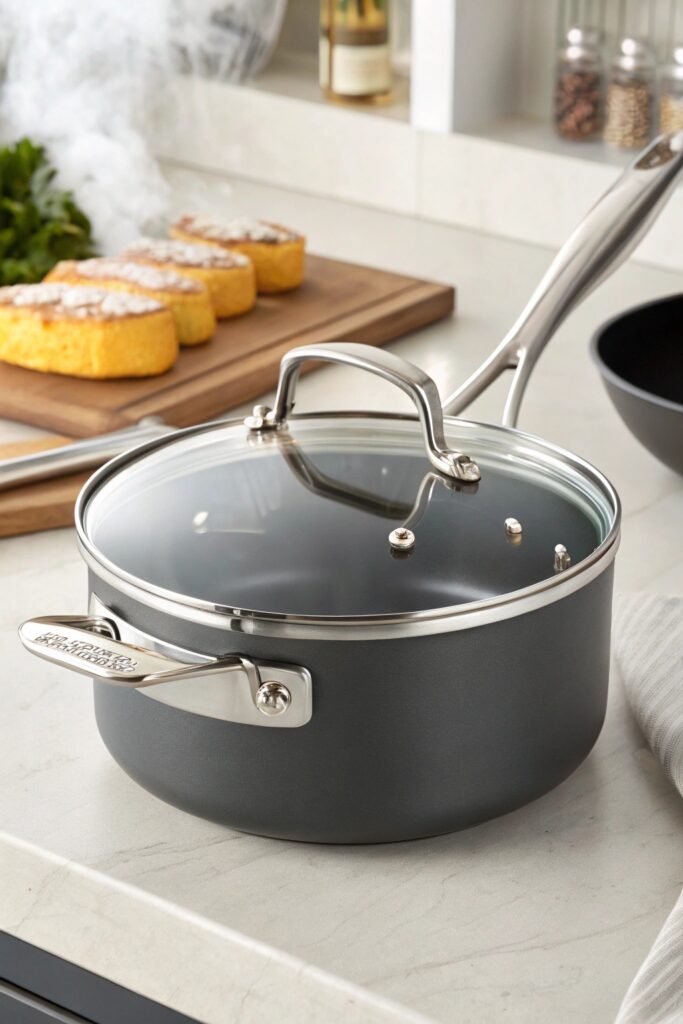
Cuisinart’s GreenGourmet line specifically uses a ceramic nonstick coating, distinct from the brand’s other traditional PTFE-coated lines — worth checking the specific product line when shopping Cuisinart, since the brand sells both coating types under one name.
11. Zwilling
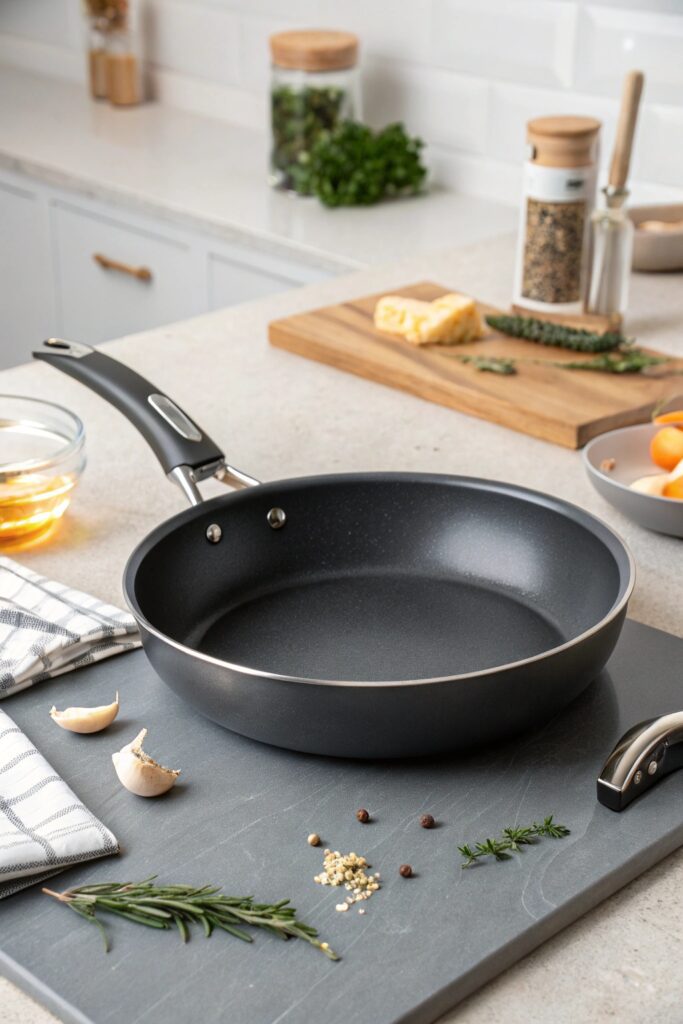
Zwilling, a German brand best known for knives, also makes stainless steel and some ceramic-coated cookware lines. Their stainless steel options follow the same no-coating, no-PFAS logic as other bare-metal cookware brands on this list.
12. Le Creuset
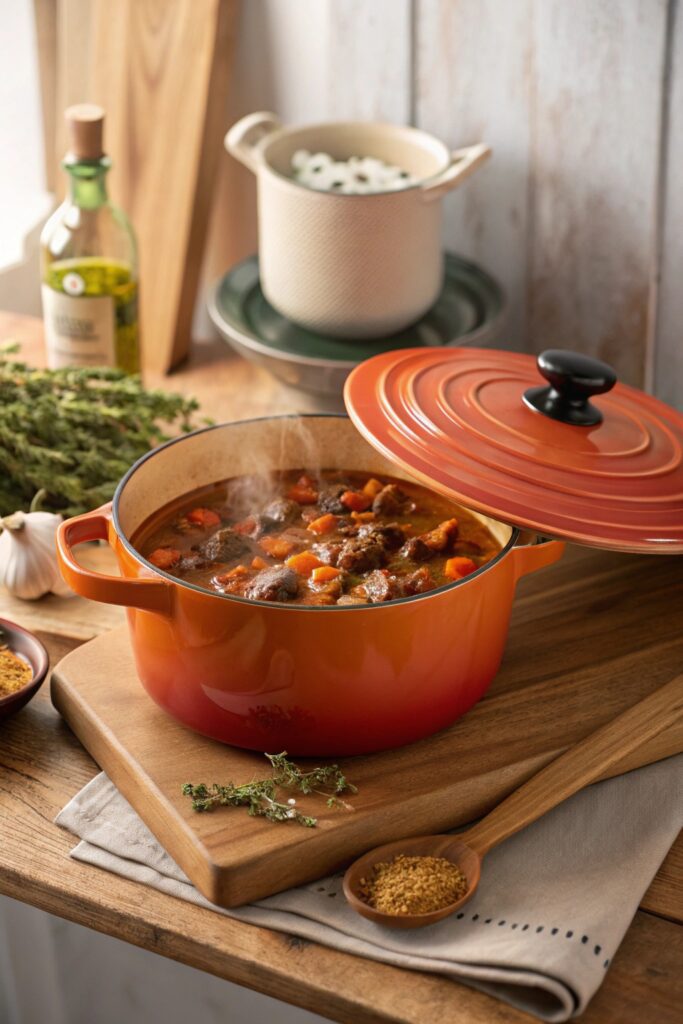
Le Creuset’s signature enameled cast iron cookware uses a glass-based enamel coating fused to cast iron at high heat, which is a fundamentally different process from PTFE or ceramic nonstick coatings and doesn’t involve PFAS chemistry. This is premium-tier pricing, generally the most expensive category on this list, reflecting the labor-intensive enameling process.
How to Choose the Right PFOA-Free Cookware for You
If you cook with high heat regularly or use metal utensils, stainless steel or cast iron will hold up better long-term than any nonstick coating, ceramic included. If you prioritize easy cleanup and lower-effort cooking (eggs, delicate fish), a ceramic nonstick line from Caraway, GreenPan, or Scanpan is worth the tradeoff of eventually needing replacement. Budget matters too — Lodge cast iron and Misen’s stainless lines offer the lowest entry cost on this list, while Le Creuset and All-Clad sit at the premium end.
Wrapping It Up
None of the brands on this list use PFOA, since it’s been out of U.S. manufacturing for over a decade — the real distinction between them is coating type (ceramic, enamel, or none at all) and how that affects cooking performance and longevity. For more on building out a full kitchen, our guide to kitchen backsplash techniques covers a related project worth pairing with new cookware.