
A wreath’s location on your porch — full sun, partial shade, or fully covered — matters more than most people realize when choosing between fresh, dried, and faux materials, since each holds up differently to sun and moisture exposure. The details below cover which material choices suit which conditions, along with the construction techniques that hold up over a season.
Below are 10 wreath styles worth trying, with the practical details for each.
1. Classic Floral Spring Wreath
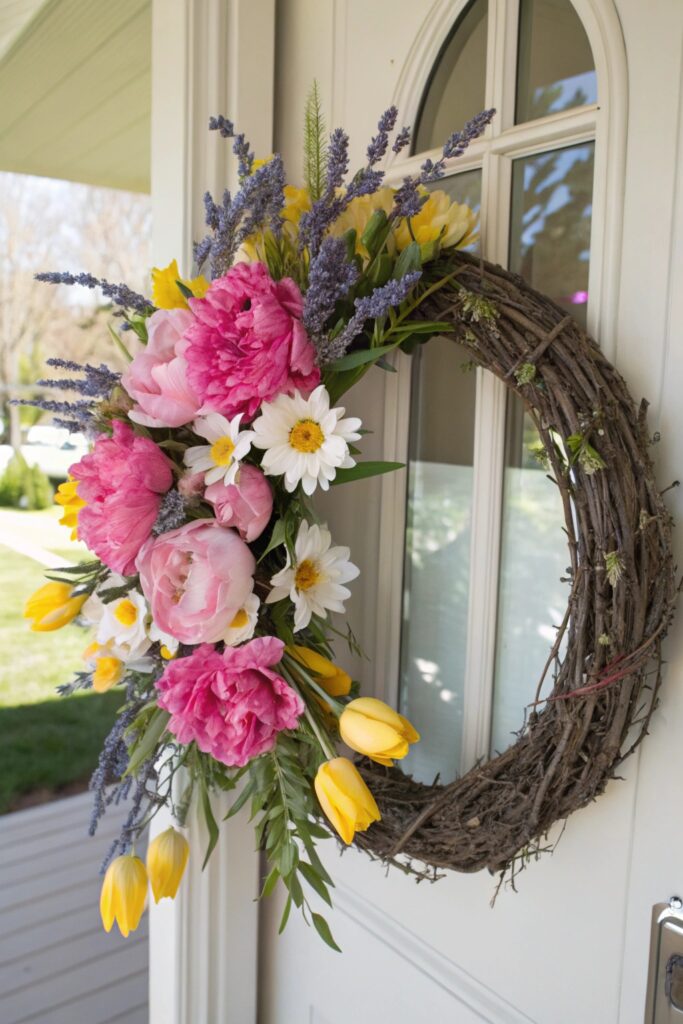
Attach stems with floral wire rather than hot glue for anything hung outdoors — glue bonds weaken in heat and humidity over a season, while wire holds through temperature swings. A 12 to 14 inch grapevine or foam base is the standard size for a front door without overwhelming it.
2. Rustic Lavender Wreath
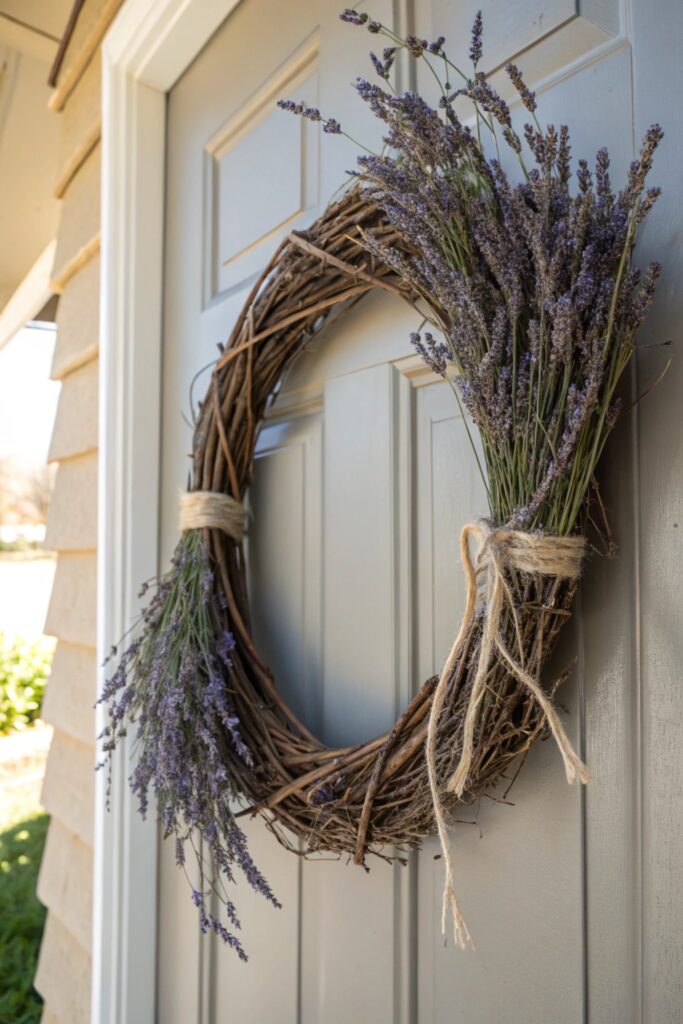
Bundle dried lavender in small clusters of 5 to 7 stems and wire each bundle before attaching it to the base, rather than adding single stems one at a time — this gives fuller coverage with less material. Real dried lavender holds its scent for months but fades in color faster than silk versions if it’s hung in direct sun.
3. Tulip Farmhouse Wreath
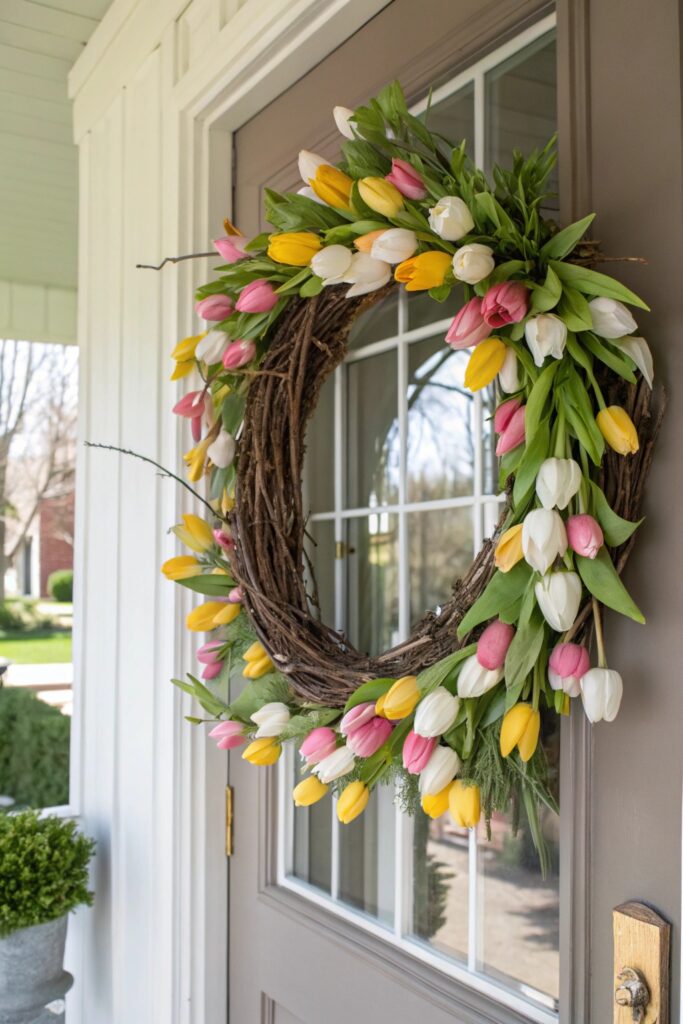
Real tulips wilt within about a week even with water picks, so silk stems are the practical choice for anything meant to last the season. Soft pastel tulips against a white or natural-toned base read as more farmhouse than saturated, bright colors.
4. Eucalyptus Greenery Wreath
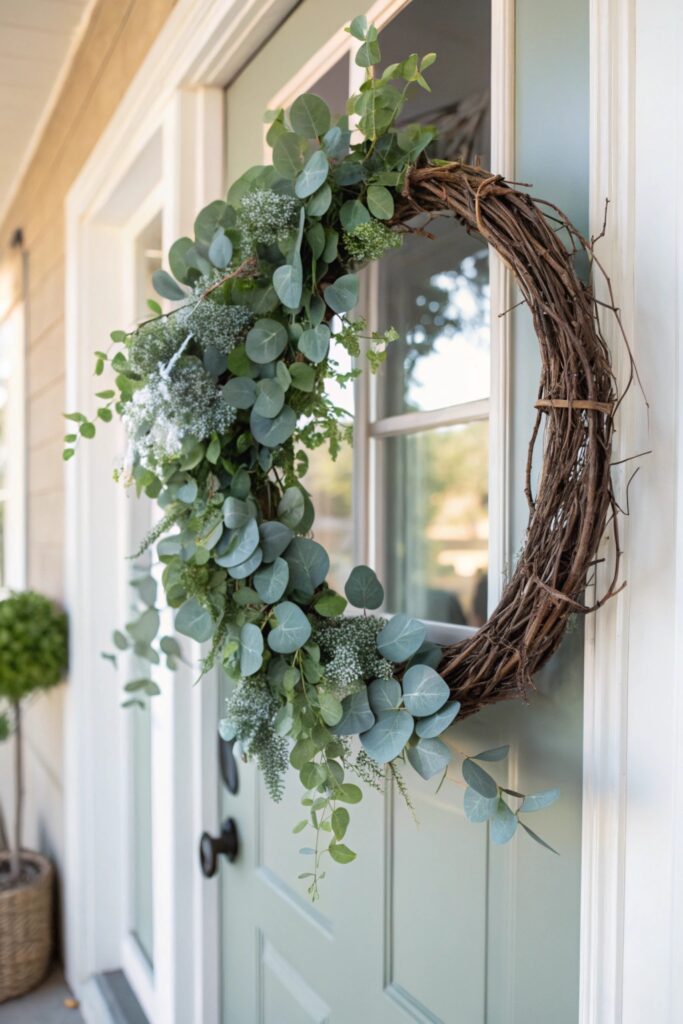
Glycerin-preserved eucalyptus stays pliable and holds its shape better than fully dried eucalyptus, which tends to crumble after a few months. It still fades with direct sun exposure, so it holds up longest on a covered porch rather than one that gets full afternoon light.
5. Wildflower Cottage Wreath
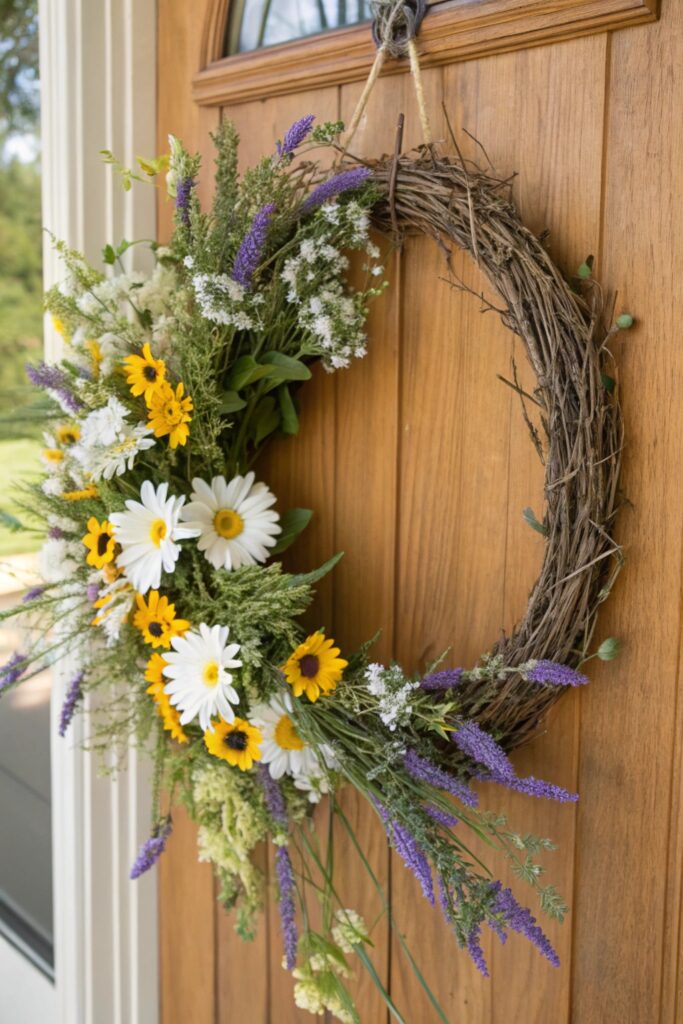
Working in one direction around the ring, and layering stems of varying heights and textures as you go, creates a more natural look than placing each flower individually and adjusting afterward.
6. Lemon and Greenery Spring Wreath
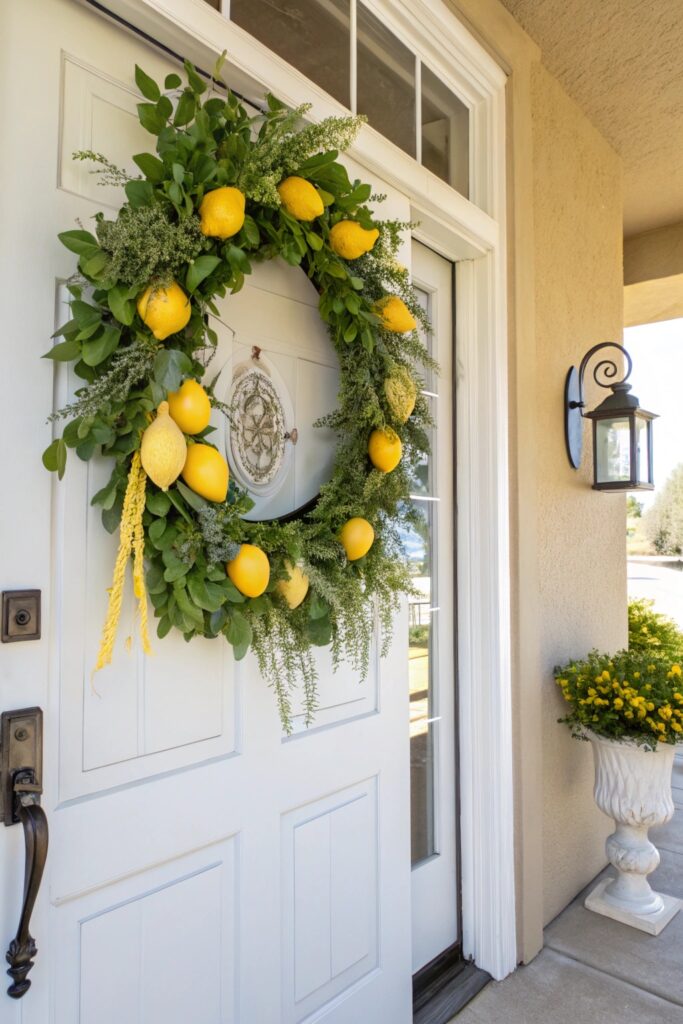
Lightweight foam lemons attach easily with hot glue or wire, but heavier resin lemons need a sturdier base and wire attachment specifically, since glue alone often can’t support the added weight over time, especially in heat.
7. Minimalist Hoop Wreath
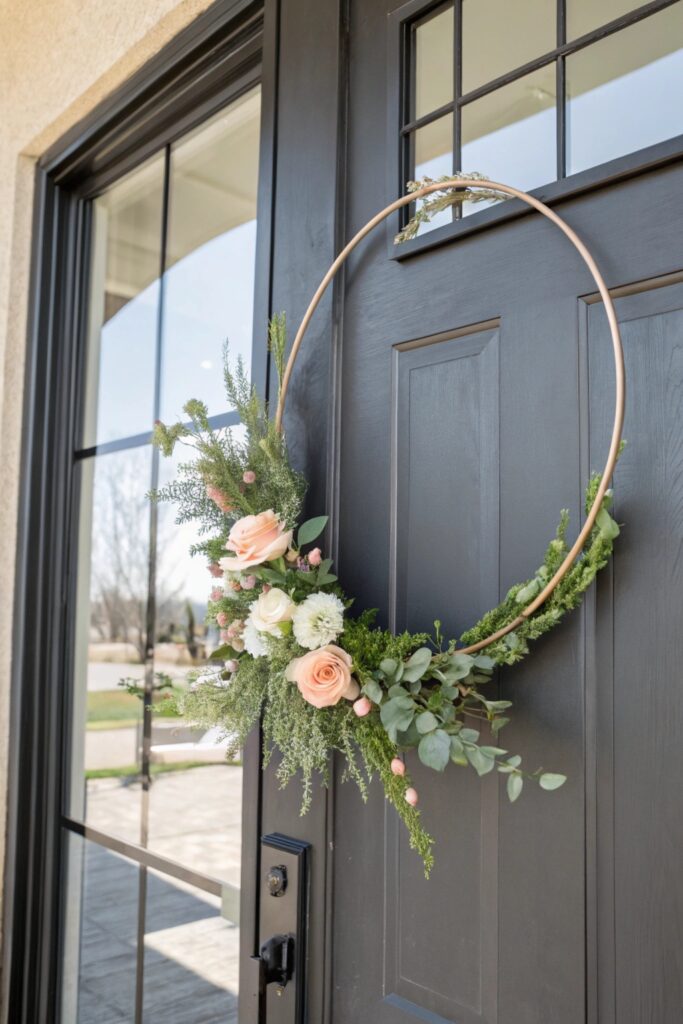
Metal rings in the 10 to 16 inch range are the most common sizes for this style. Clustering all the greenery or flowers on one side of the ring, rather than spacing evenly around it, is what gives this style its distinct asymmetrical look.
8. Burlap Ribbon Spring Wreath
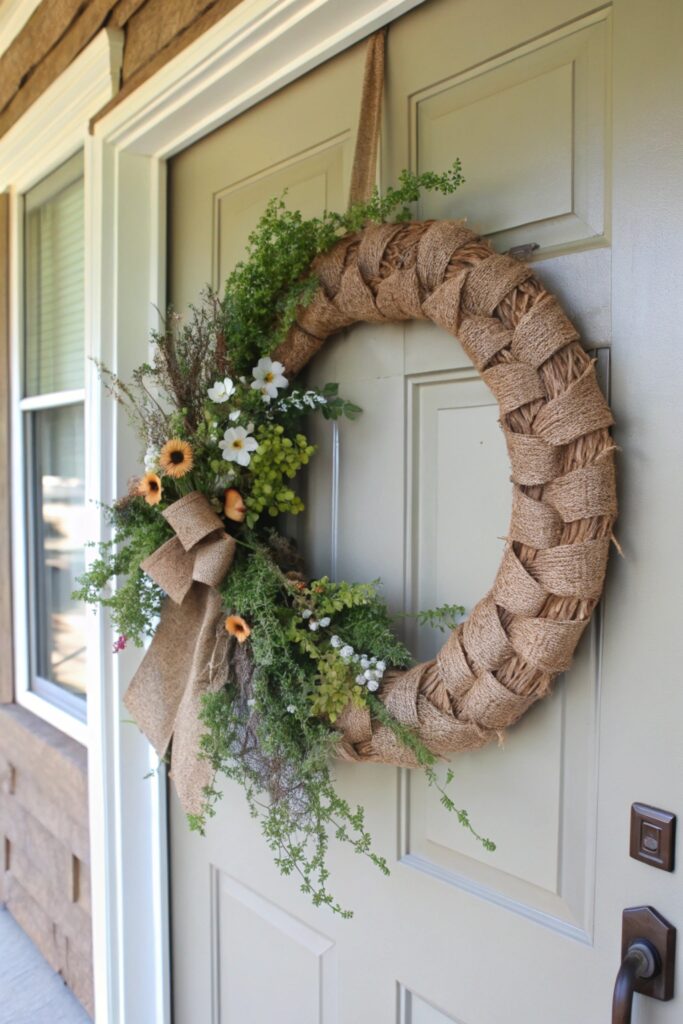
Burlap fades and frays faster than most other wreath materials when exposed to direct sun and rain, so it holds up best on a covered entry. Sealing the cut edges with a small amount of fabric glue before use helps slow the fraying.
9. Butterfly Garden Wreath
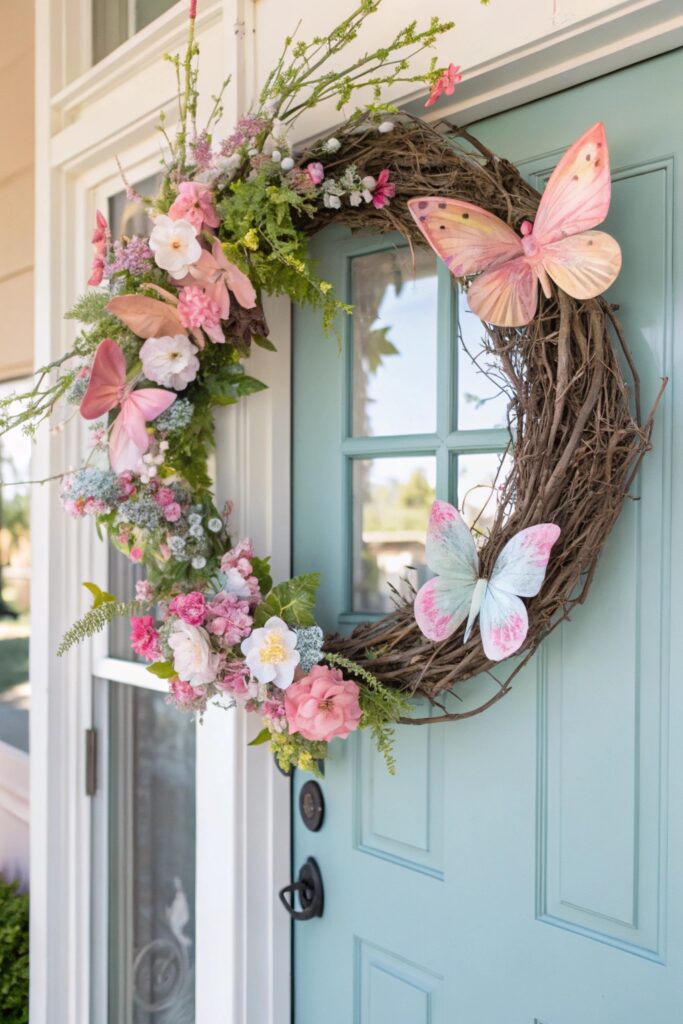
Mounting artificial butterflies on thin wire picks at varying lengths, rather than gluing them flat against the wreath base, creates the illusion that they’re floating at different depths rather than pinned in place.
10. Moss and Succulent Wreath
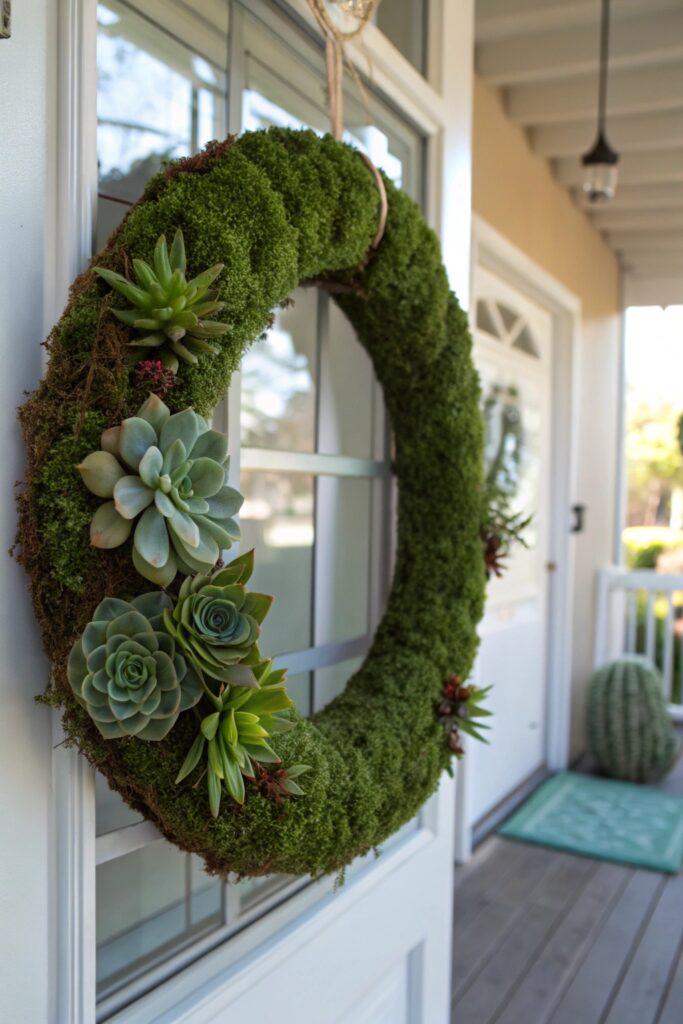
Real succulents in a wreath need occasional misting and bright indirect light — a spot with full, direct sun all day can actually scorch them, which is counterintuitive for a plant known for tolerating dry conditions. Faux succulents avoid that maintenance entirely and hold their color regardless of wreath placement.
Hanging Hardware That Actually Holds Up
A plastic over-the-door wreath hanger works fine for lightweight faux wreaths, but anything with resin fruit, moss, or a heavier grapevine base benefits from a metal hanger rated for at least 5 pounds — cheaper plastic hooks can crack or bend under sustained weight over a season, especially in cold weather when plastic becomes more brittle.
For doors without room for an over-the-door hook, a small adhesive-backed hook rated for outdoor use holds most wreaths without drilling into the door itself, though it’s worth checking the rated weight limit against your specific wreath before relying on it.
What These Wreaths Cost
A basic wreath using a foam or grapevine base with faux florals from a craft store typically costs $15 to $40 in materials.
Wreaths using preserved eucalyptus, higher-end silk florals, or resin fruit run higher, often $40 to $80, since these specialty materials cost more per stem than basic craft-store florals.
Storing a Wreath Between Seasons
Faux florals hold their shape best stored flat or hung in a garment bag rather than stacked in a box, since sustained pressure can permanently crease silk petals and bend wire stems out of shape. A large plastic storage bin with the wreath hung from a hook mounted inside the lid keeps it protected from dust without flattening the arrangement, and works for most standard 12 to 16 inch wreaths.
For any faux wreath meant to stay outside for the full season, a UV-protectant spray applied at the start of spring — and reapplied roughly every two to three months in high-sun locations — slows the color fading that untreated silk and foam materials experience with regular sun exposure.
If you’re building a wreath from a bare base rather than buying one pre-made, budget more time than you’d expect for the first attempt — a full floral wreath typically takes one to two hours to assemble once you’re working with individually wired stems and bundles, even though the finished result looks straightforward.
A wreath base alone — grapevine, foam, or a metal ring — is worth buying in a slightly larger size than you think you need, since florals and greenery take up more of the visible ring than expected once fully attached, and a base that’s too small can end up looking sparse no matter how much material you add to it.
Matching Materials to Your Porch’s Actual Conditions
Before choosing a style, it’s worth being honest about how much sun and weather exposure your specific porch gets. A fully covered entry can support burlap, dried florals, and other materials that would fade or degrade quickly in direct sun and rain. An exposed porch does better with faux silk or foam elements treated with a UV-protectant spray, which slows the fading that untreated faux materials experience within a single season outdoors.