
The real versus faux material decision is the single most important choice across every wreath style here, since it fundamentally changes the maintenance and longevity you can expect from an outdoor summer display. The details below cover both the styling direction and these practical material specifics for each idea.
Below are 12 summer wreath ideas worth considering, with the specifics for each.
1. Fresh Lavender Wreath
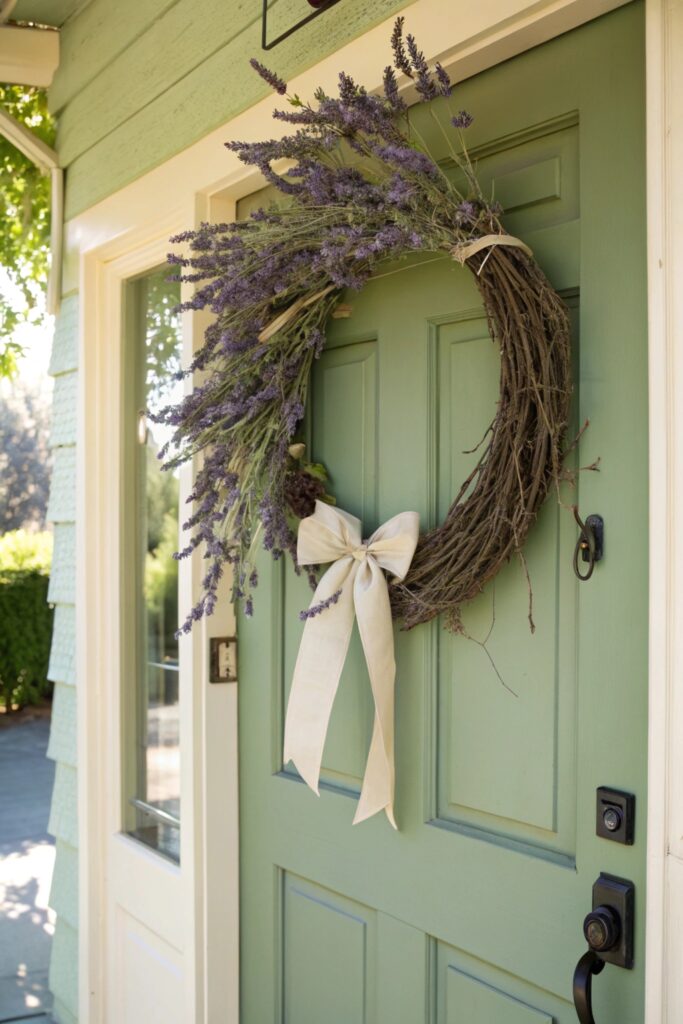
Lavender’s naturally low moisture content means a fresh wreath dries in place over time rather than wilting, so it actually holds up well through a full summer display without needing replacement the way most fresh florals do.
2. Bright Sunflower Wreath
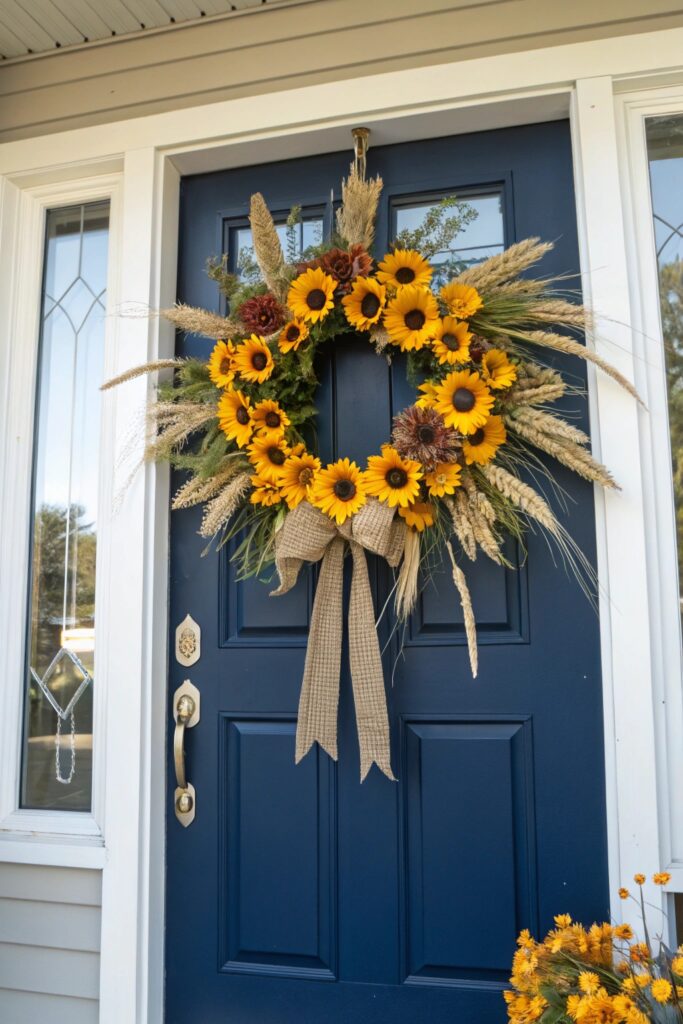
A door facing direct afternoon sun fades bright yellow faux petals faster than most other colors, so choosing UV-resistant silk material matters more here for a south- or west-facing entry.
3. Coastal Seashell and Driftwood Wreath
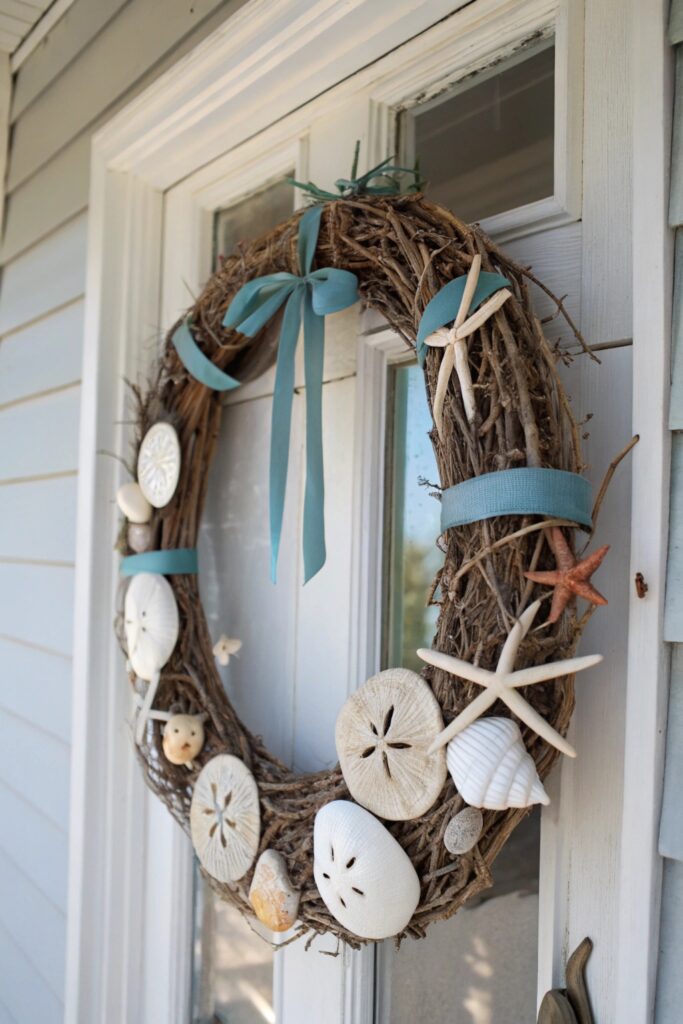
A humid coastal climate specifically calls for a rust-resistant wire frame, since salt air accelerates corrosion on standard steel wire considerably faster than it would inland.
4. Lemon and Greenery Wreath
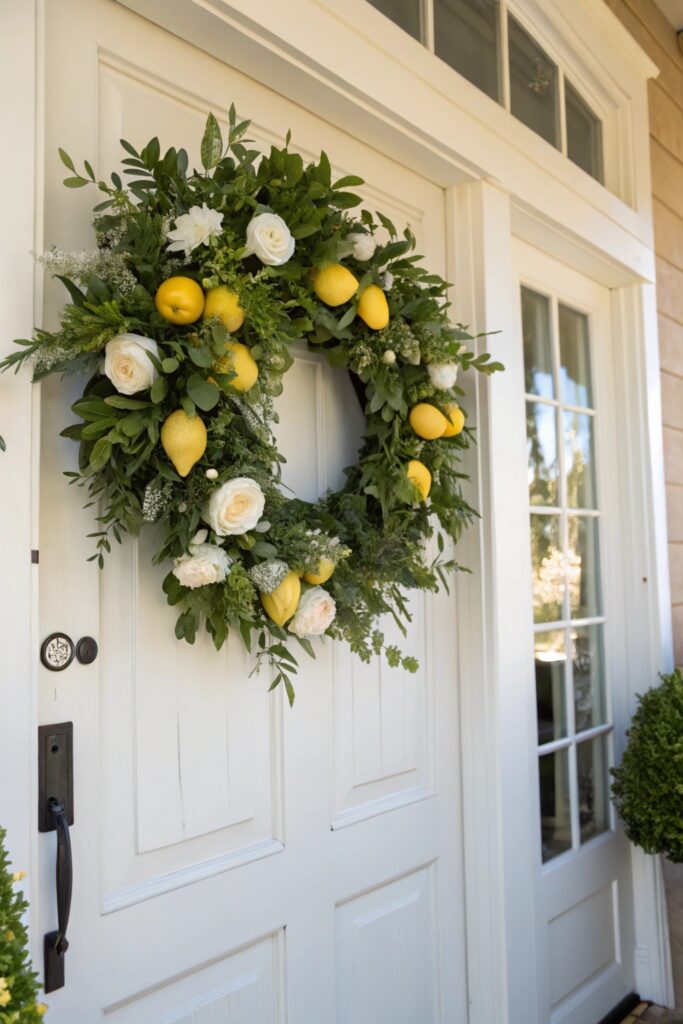
Real citrus fruit will eventually mold or rot in humid summer weather, so faux lemons hold up considerably longer for an extended display — worth deciding upfront which look you’re actually going for.
5. Wildflower Meadow Wreath
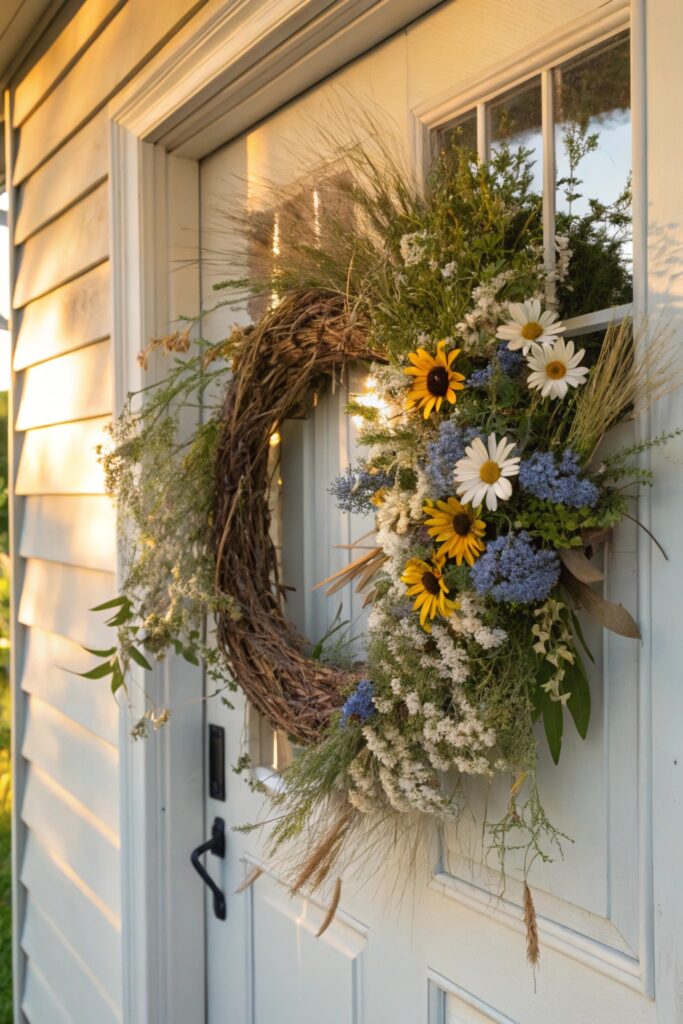
Faux wildflowers in varied, muted tones read as more naturalistic than perfectly matched artificial blooms, since real wildflowers rarely grow in uniform color and size to begin with.
6. Tropical Hibiscus and Palm Leaf Wreath
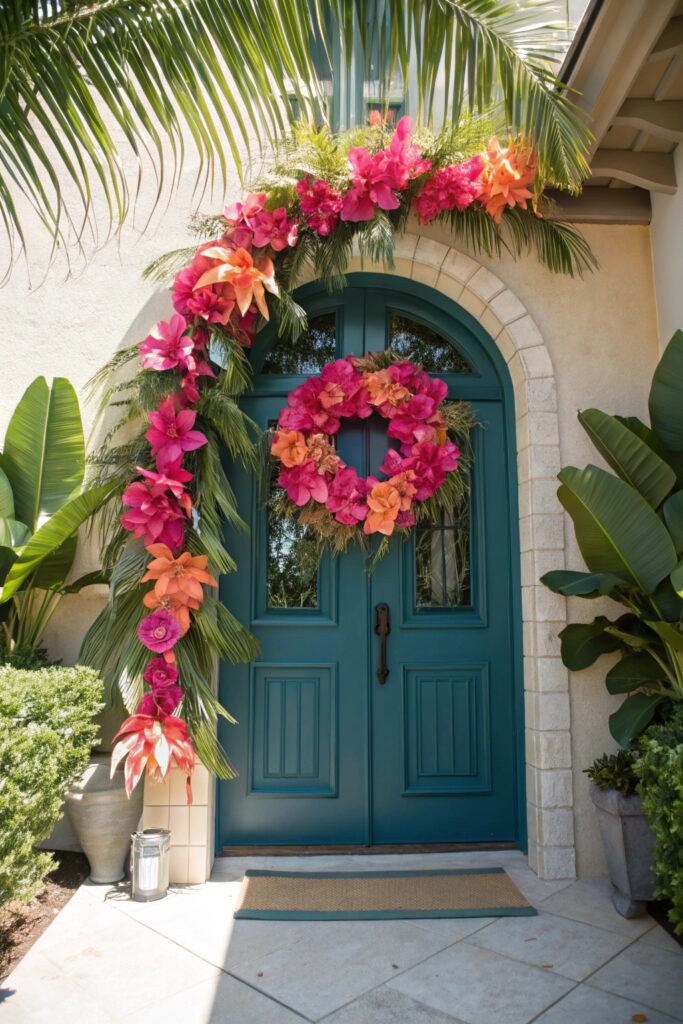
Hibiscus blooms tend to be the most delicate and expensive element in a tropical arrangement, so choosing a design where hibiscus is a smaller accent rather than the dominant material balances cost and durability better.
7. Eucalyptus and White Flower Wreath
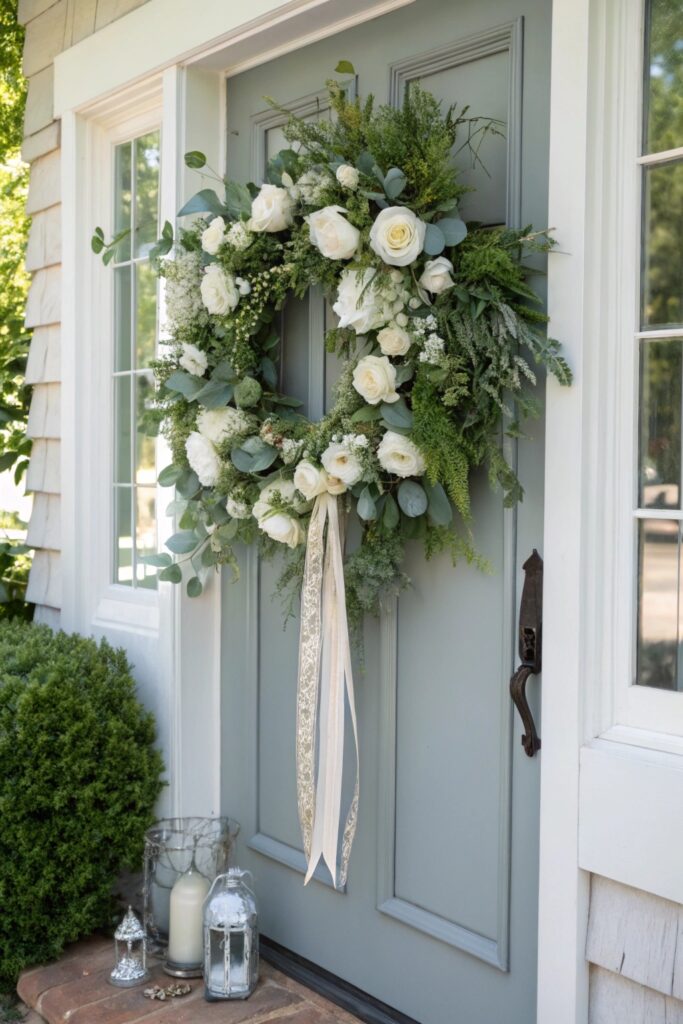
Dried eucalyptus becomes more brittle with continued heat exposure over a summer display, so expect some leaf loss and plan for minor touch-ups by season’s end on a sun-exposed door.
8. Hydrangea Wreath in Summer Blues and Whites
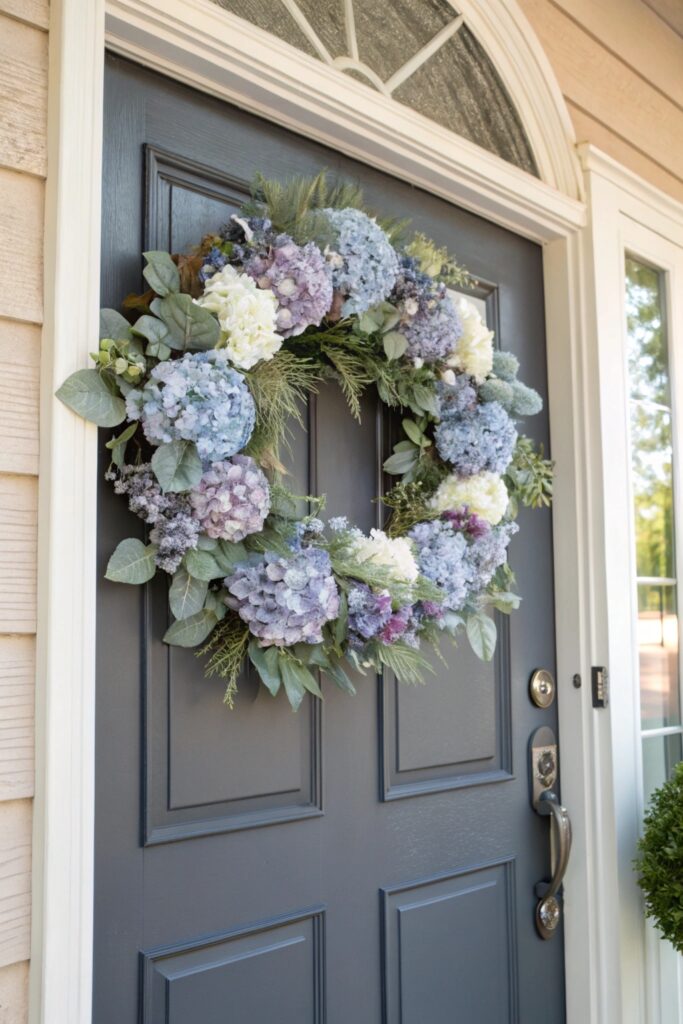
Faux hydrangea blooms run larger and heavier than most other faux flowers, so confirming the wreath frame and door hanger are rated for that concentrated added weight matters more here than with lighter florals.
9. Patriotic Red, White, and Blue Wreath
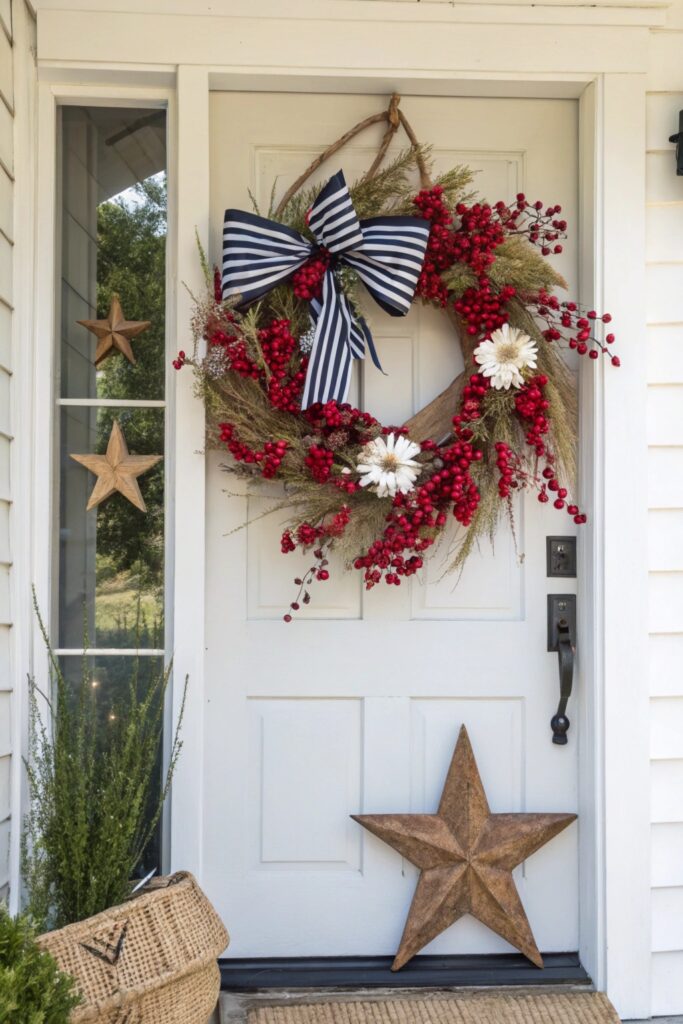
Saturated red and blue tones fade more visibly over a season than muted shades, so choosing UV-stable materials matters if the wreath will stay up through the sunniest stretch of summer.
10. Peony and Greenery Wreath
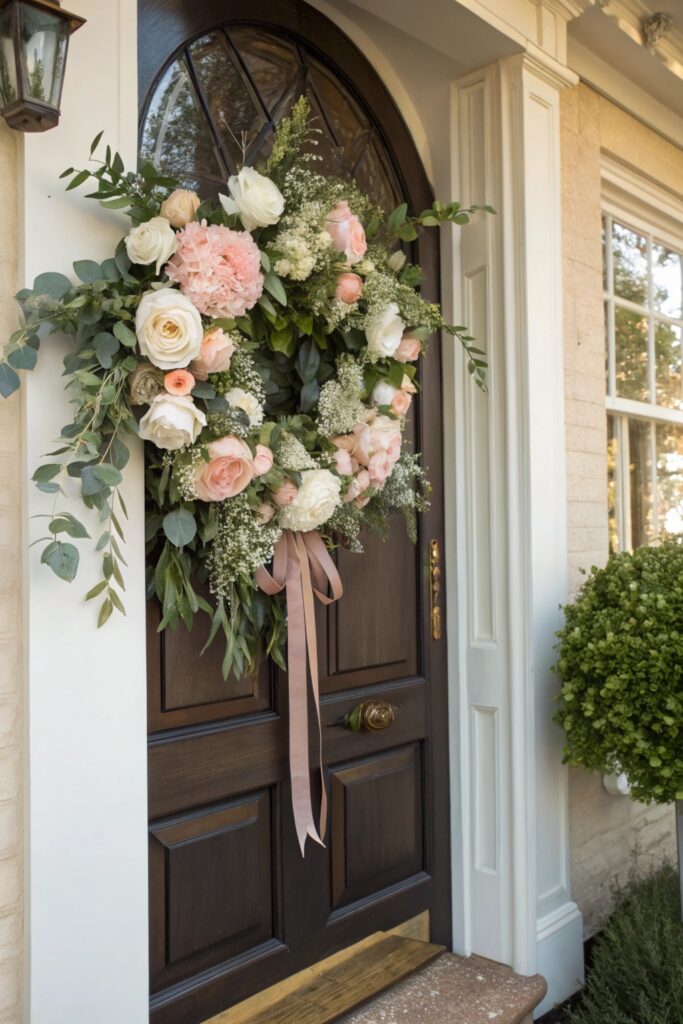
Real peonies bloom for only two to three weeks, so a peony wreath meant to last a full summer almost always uses faux blooms — worth setting that expectation before shopping for one.
11. Zucchini Blossom and Herb Wreath
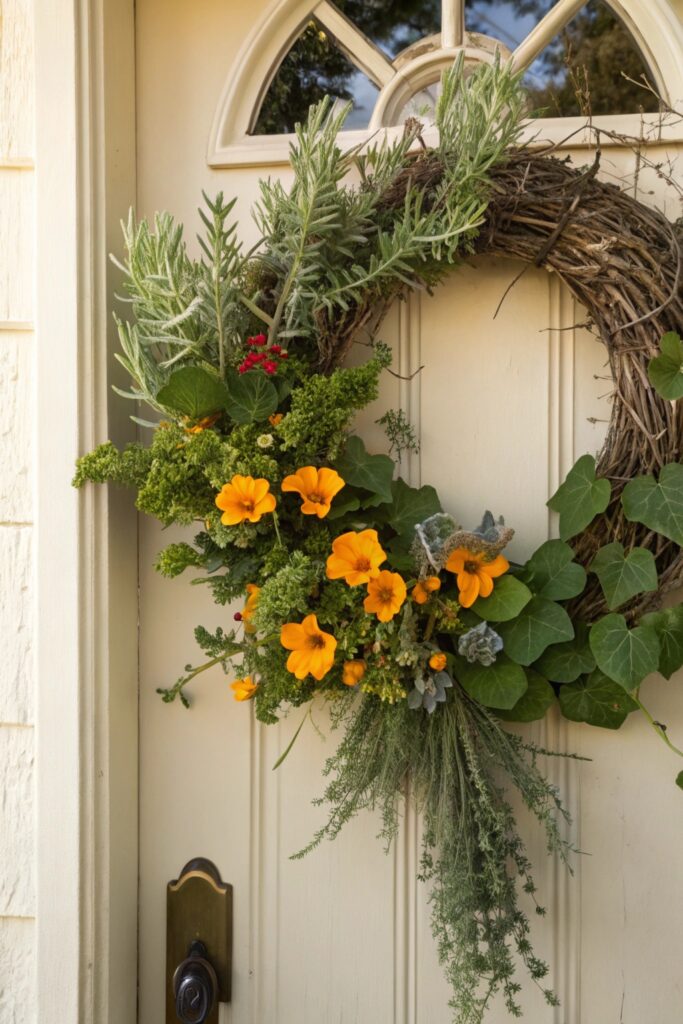
Fresh herbs used in this style need actual water access, typically through a wreath ring designed to hold moisture, or they’ll dry out and shed leaves within days — a very different maintenance commitment than a silk option.
12. Dried Pampas Grass and Boho Flower Wreath
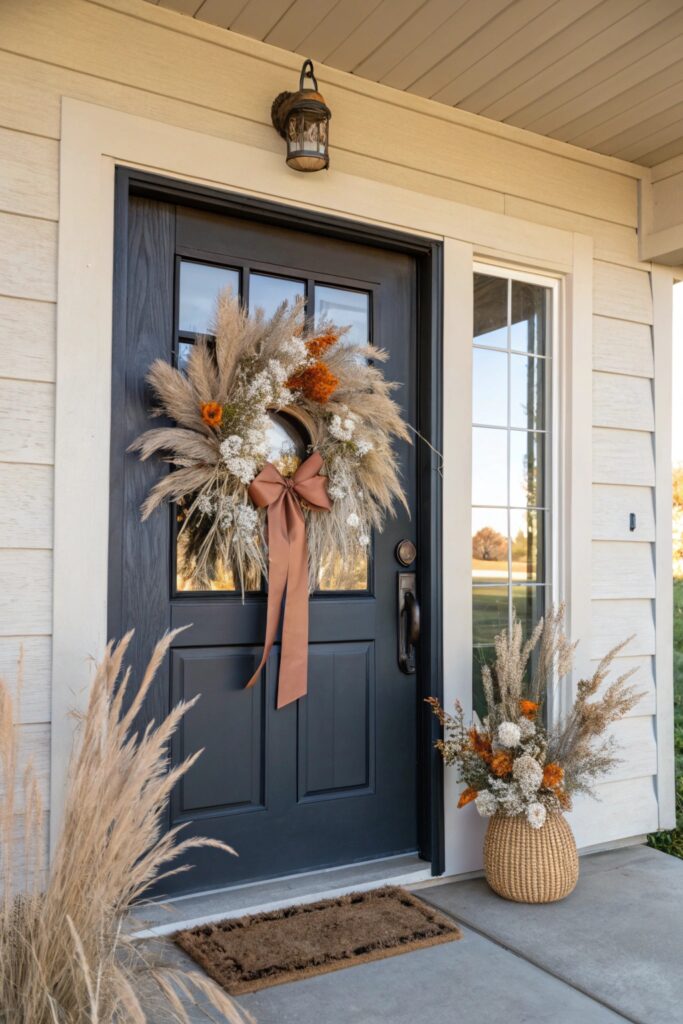
Dried pampas grass sheds fine plant fibers over time and absorbs ambient moisture in humid climates, which weakens the fibers and makes them more prone to breaking than they’d be in a drier environment.
Choosing the Right Base for Your Wreath
A grapevine base holds up to outdoor conditions considerably better than a straw base, which can shed and deteriorate faster once exposed to summer rain and humidity over an extended display period.
A foam base works well for lighter faux florals but isn’t rated for heavier elements like large hydrangea blooms or dried pampas grass, so matching the base material to your planned decorations avoids a wreath that sags or falls apart partway through the season.
What a Summer Wreath Costs
A DIY wreath using a purchased base and your own florals typically costs $15 to $40 depending on the materials chosen.
A pre-made designer wreath from a florist or specialty shop runs higher, often $60 to $150 or more depending on size and the specific flowers used.
Protecting a Door-Facing Wreath From the Elements
A door with even partial roof or porch coverage shields a wreath from the worst of direct rain and sun, which extends the life of both real and faux materials considerably compared to a fully exposed entry.
For an uncovered door in a particularly harsh climate, a UV-protectant spray designed for outdoor faux florals can slow fading, and choosing a smaller, simpler design over an elaborate one reduces the number of individual pieces that could be damaged by wind or heavy rain.
Hanging Hardware Worth Getting Right
An over-the-door hanger avoids putting any holes in the door itself, which matters for rental properties or anyone hesitant to modify the door’s finish, though it does require a door that opens away from the wreath side to avoid interference.
A wreath hanger mounted with a small screw into the door frame, rather than the door itself, holds up to wind better than an over-the-door hook alone and avoids the wreath swinging every time the door opens and closes.
Storing a faux wreath in a labeled box between seasons, rather than leaving it up year-round or discarding it after one summer, protects the investment and makes next year’s setup considerably faster than starting from scratch.
A wreath that coordinates with the rest of your porch styling, rather than standing entirely on its own, tends to read as a more intentional part of the overall entrance rather than an isolated seasonal add-on.
Whichever style you choose, a wreath sized proportionally to your door — typically 60 to 75 percent of the door’s width — reads as more intentional than one that’s noticeably too small or overwhelms the entry entirely.
Trying a few different placements before committing to a final hanging spot — centered on the door versus slightly higher, for example — can make a noticeable difference in how balanced the finished look feels against your specific door and surrounding trim.
A well-chosen summer wreath remains one of the simplest, lowest-cost ways to refresh a home’s exterior between seasons, since it takes only minutes to install but noticeably changes how the entire entrance reads to anyone approaching the door.
Final Thoughts
Checking the wreath every few weeks through the season — for fading, shedding, or loosening components — catches small issues before they become a full replacement, especially on a door that gets significant direct sun or coastal humidity exposure.
Whichever style you’re drawn to, confirming your door’s hanger or hook is rated for the wreath’s actual weight once fully assembled avoids the disappointment of a beautiful design that doesn’t stay put through a summer of wind and regular door use.