
A pool house extends a backyard’s usability well beyond swimming, whether that means adding storage, a changing space, or an entertaining area close to the water.
Below are 10 pool house styles worth considering, with practical notes for each.
1. Modern Minimalist Pool House
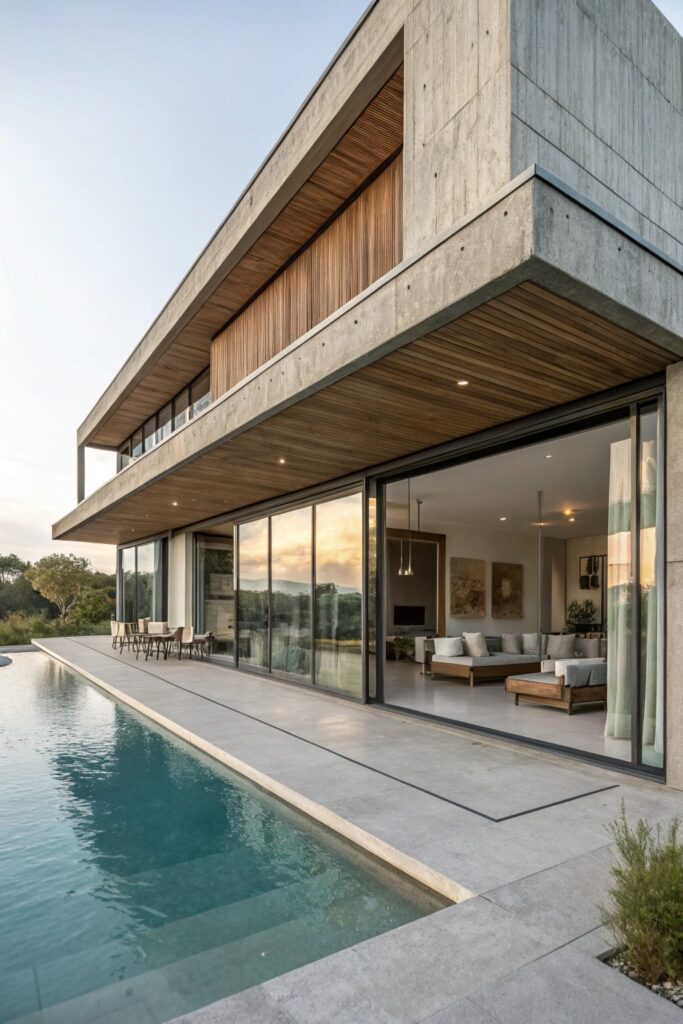
A restrained material palette — clean lines, neutral tones — keeps this style feeling current without needing frequent updates.
Choose low-maintenance materials like fiber cement siding or composite decking, which hold up well to sun and moisture exposure with minimal upkeep.
2. Pool House with Outdoor Kitchen
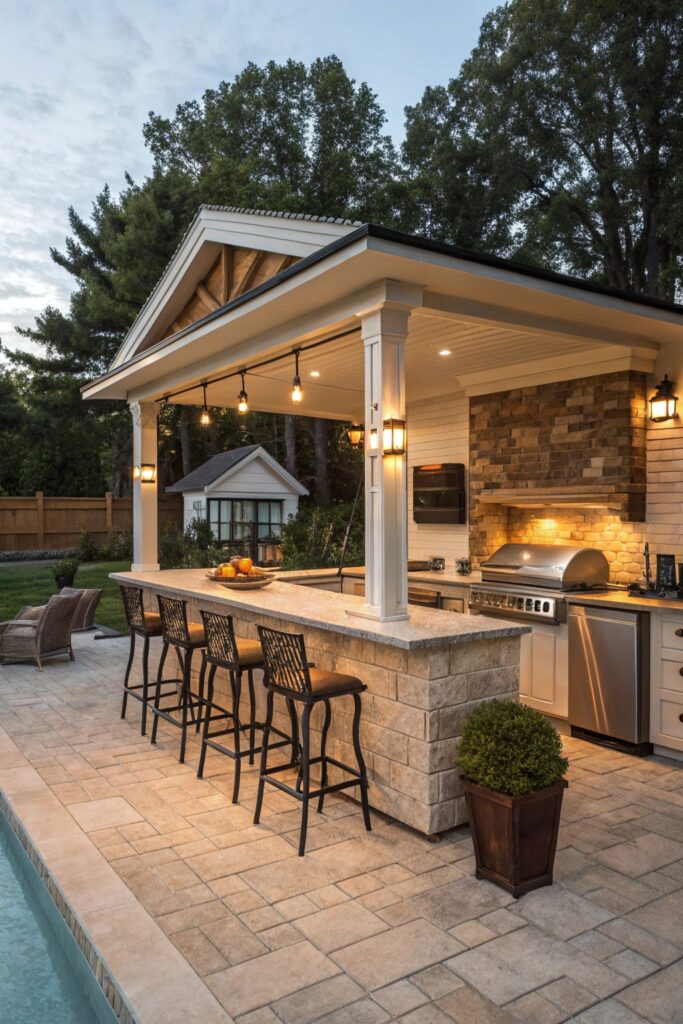
Weather-resistant appliances and countertops matter here, since this kitchen faces more temperature and moisture exposure than an indoor setup.
Confirm your local code allows a full outdoor kitchen installation before finalizing the design, since gas and plumbing hookups often require permits.
3. Cozy Lounge-Style Pool House
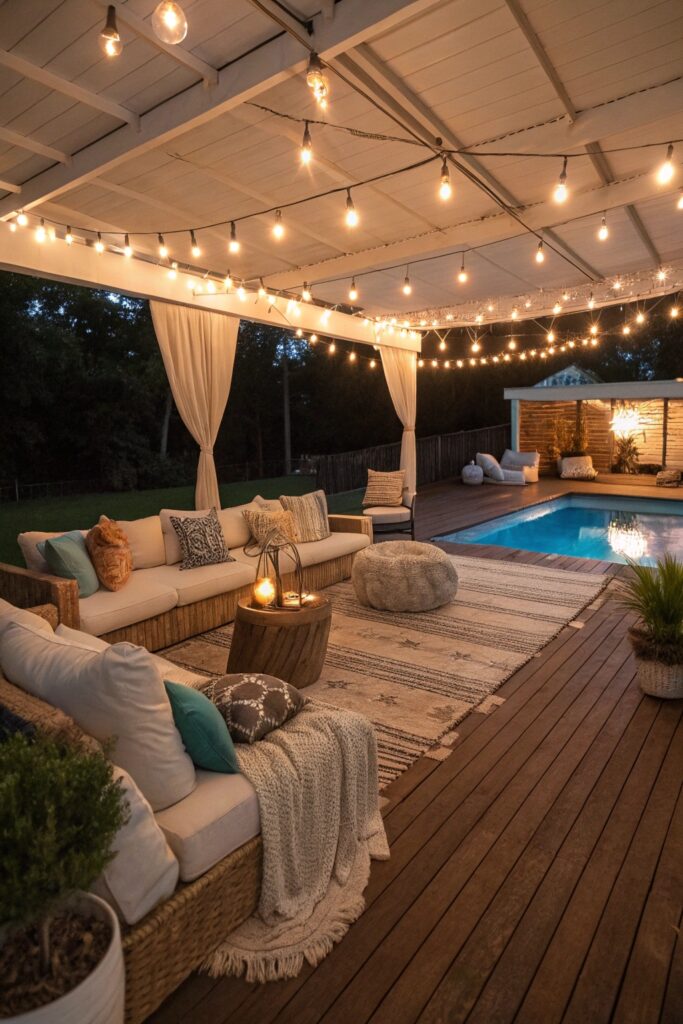
Comfortable, durable seating suits a pool house used for relaxing between swims better than more formal furniture would.
Choose fade-resistant, quick-drying fabric for cushions and pillows, since this seating faces more sun and occasional water exposure than typical indoor furniture.
4. Cabana-Inspired Pool House
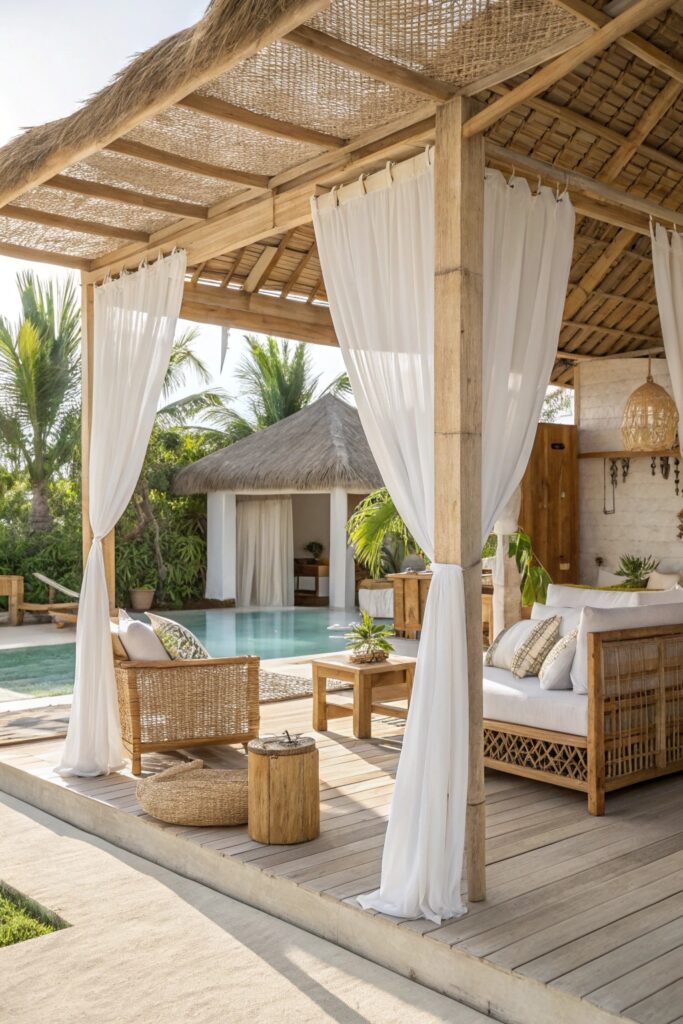
Breathable fabrics and open-air design suit warmer climates, letting airflow keep the space comfortable without full enclosure.
Choose fabric or screens in a mildew-resistant material specifically, since this style’s open-air design means more direct exposure to humidity.
5. Pool House with Changing Room & Shower
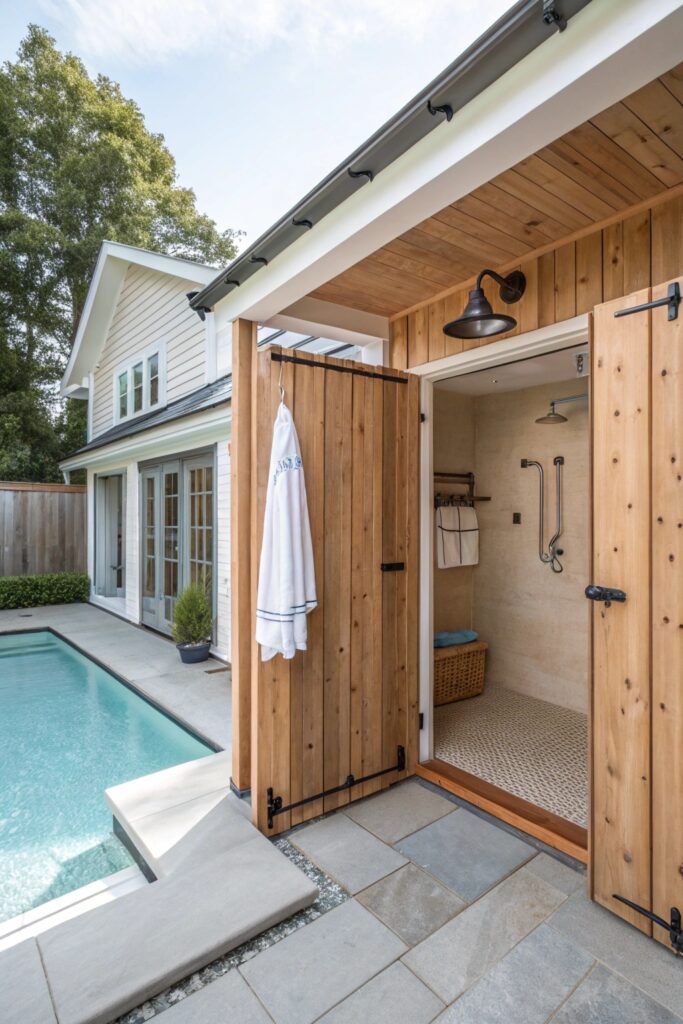
A functional changing space with a shower adds real convenience, cutting down on wet foot traffic through the main house.
Choose slip-resistant flooring for the shower area, which matters more here than in a typical bathroom given how often bare, wet feet will cross it.
6. Glass-Wall Pool House for a Luxury Look
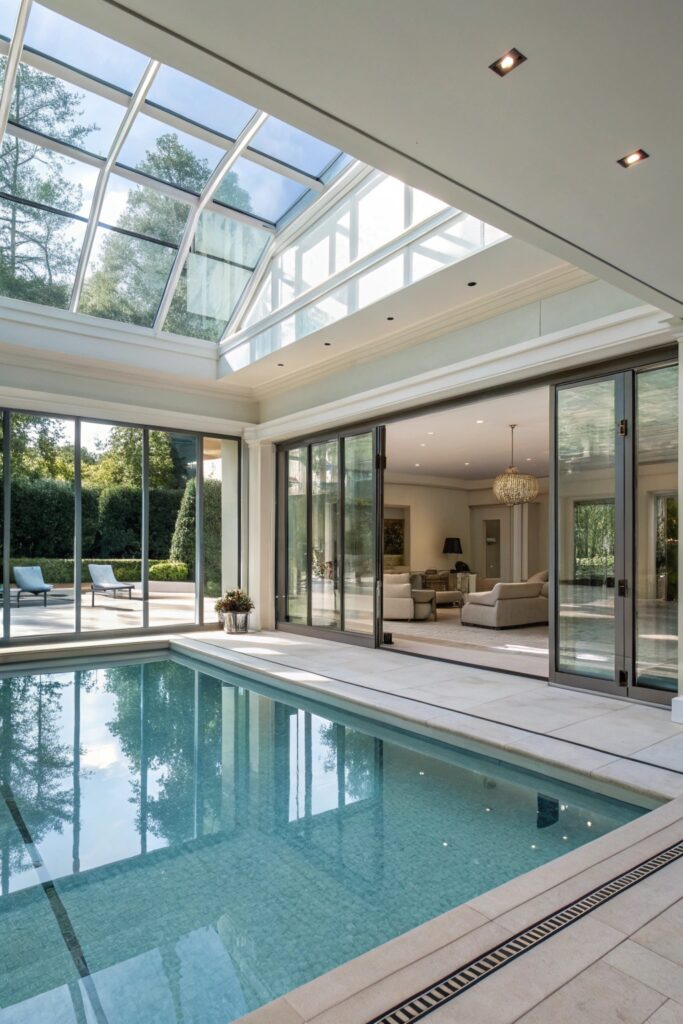
Confirm appropriate glazing for privacy and temperature control before committing to a full glass-wall design, since this affects both cost and comfort.
Choose tempered or safety glass throughout, which is both a common code requirement and a practical safety consideration near a pool.
7. Rustic Pool House Retreat
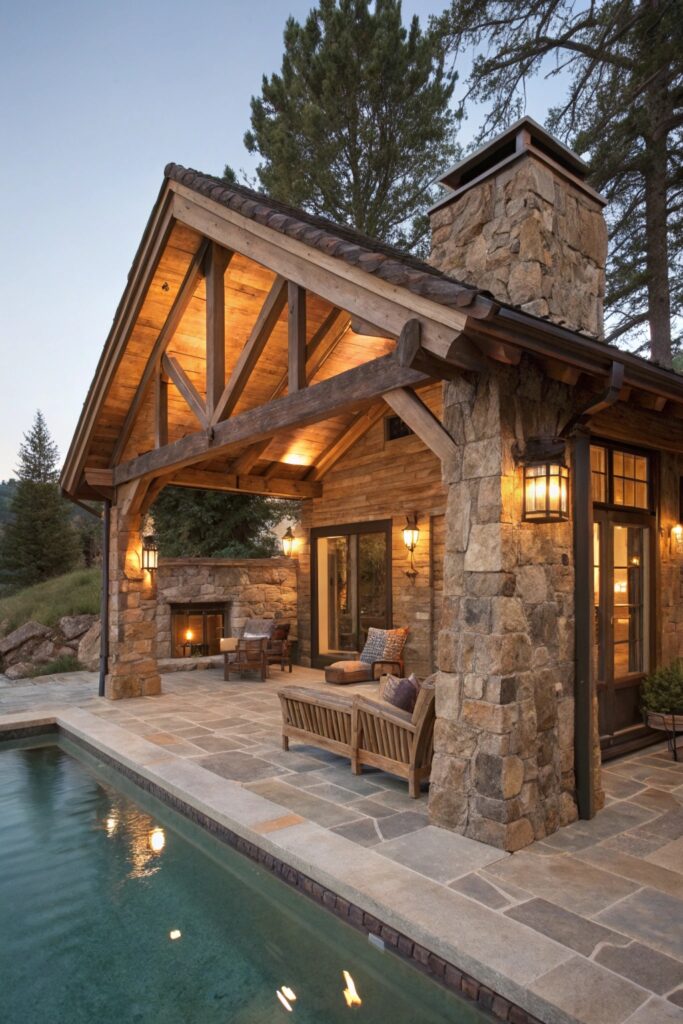
Weathered wood and stone tie this style to the surrounding landscape better than a more polished, modern material palette would.
Choose weather-sealed wood specifically, which holds up to the elements considerably longer than untreated lumber in this style.
8. Pool House Bar Setup
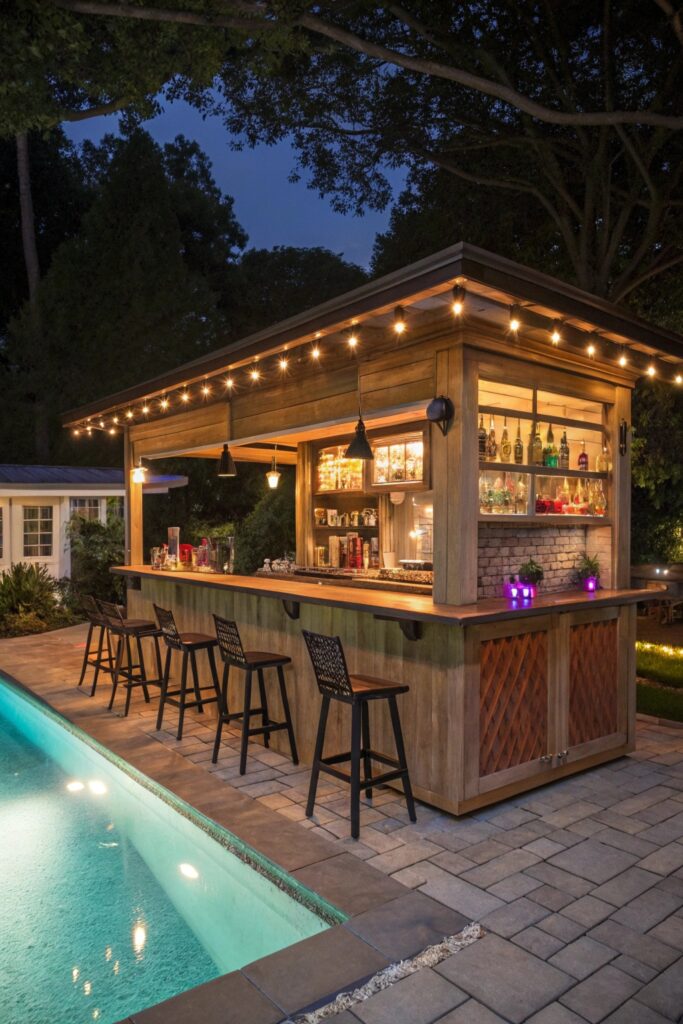
Durable, easy-to-clean surfaces matter here, since a bar area sees regular spills and heavy use during gatherings.
Choose stain-resistant countertop material, since a bar area handles more regular exposure to drinks and food than most other backyard surfaces.
9. Small Pool House with Smart Storage
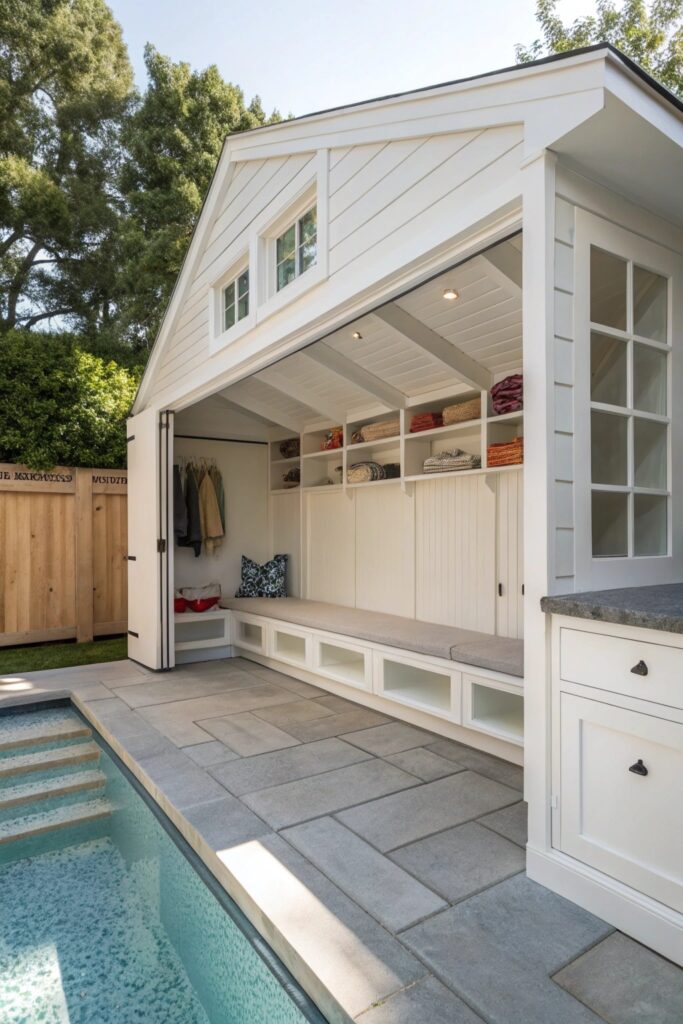
Built-in storage makes efficient use of a compact footprint, keeping pool toys and towels organized without needing a larger structure.
Measure your available footprint carefully before finalizing storage plans, since smaller structures benefit from built-ins designed around exact dimensions rather than generic shelving.
10. Multi-Purpose Pool House
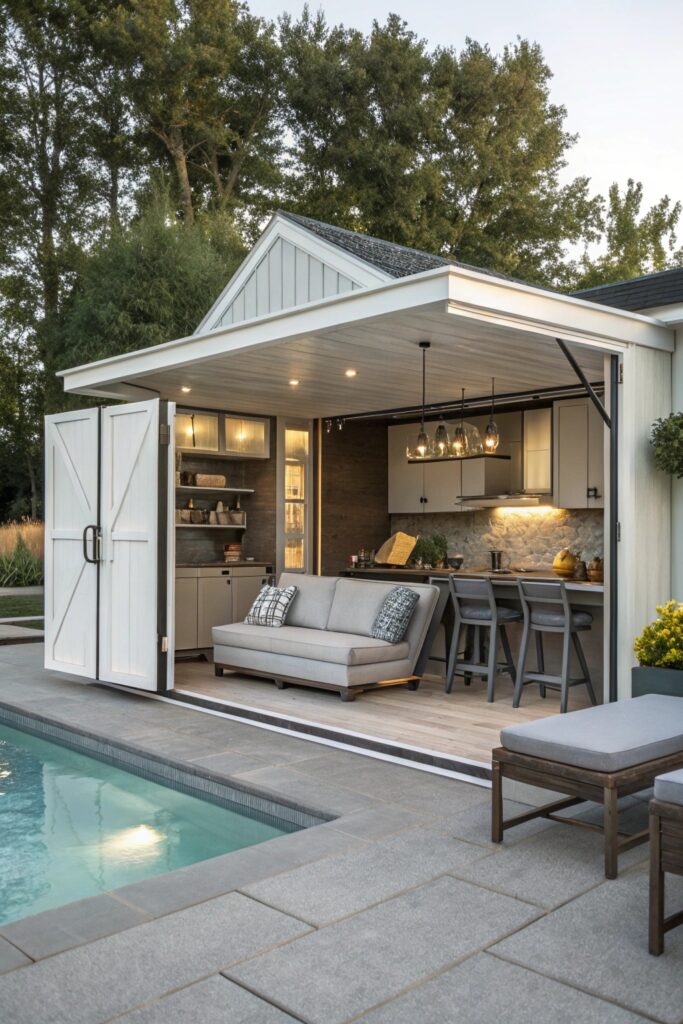
A flexible layout — foldable furniture, movable partitions — lets this space serve as a guest room, home office, or entertaining area depending on the day.
Choose modular or foldable furniture specifically, which allows the space to transition between different uses without needing separate furniture sets for each.
What This Structure Costs
A basic pool house with minimal features typically costs $10,000 to $25,000 depending on size and materials.
A fuller build including a kitchen, bathroom, and higher-end finishes runs considerably higher, often $40,000 to $100,000 or more depending on the scope of construction.
Planning for Permits and Utilities
Confirm what utility connections your specific design requires early in the planning process, since running water, electricity, or gas to a separate structure adds meaningfully to both cost and construction timeline.
Get quotes from at least two contractors before committing to a full build, since labor costs for this kind of project vary considerably based on your specific site conditions and local rates.
Check your local setback requirements before finalizing a pool house location, since these structures often need to be positioned a specific distance from property lines and the pool itself.
Consider your long-term use for the space before finalizing the design, since a pool house built with only summer swimming in mind may feel underused the rest of the year compared to one designed for year-round flexibility.
Secondhand and salvage sources are worth checking specifically for interior furnishings and fixtures, since a pool house benefits from durable, character-filled pieces that new mass-produced furniture doesn’t always offer.
Take a photo of the finished structure once complete, since it’s genuinely useful to have a record of the build, both for insurance purposes and as a reference if you plan future updates down the road.
Consider adding this structure in phases if the full budget isn’t immediately available, starting with basic shelter and storage before adding a kitchen, bathroom, or other higher-cost features in a later project.
A well-designed pool house can also add real resale value to a home, since buyers in many markets view a functional outdoor structure as a meaningful upgrade rather than just an aesthetic addition.
Walk the actual site at different times of day before finalizing placement, since sun exposure, shade patterns, and views can shift considerably between morning and evening, affecting how the finished pool house will genuinely feel to use.
Whatever style you choose, a pool house delivers the most value when it’s designed around how your household actually uses the backyard, rather than following a trend that doesn’t match your real day-to-day habits.
A well-planned pool house becomes one of the more rewarding backyard investments, extending the usable season and giving the whole outdoor space a more finished, intentional feel year after year.
Conclusion
Confirm your local zoning and permit requirements before beginning any pool house construction, since these structures often fall under different regulations than typical backyard sheds. Matching the pool house’s material and style to your main home’s exterior generally creates a more cohesive overall backyard look than a mismatched structure.