
How your porch is oriented and whether it’s covered or exposed to the elements should shape which of these ideas you lean into, since the same decor performs very differently depending on real weather exposure. The details below cover both the styling direction and these practical specifics for each idea.
Below are 12 fall front porch ideas worth considering, with the specifics for each.
1. Layered Pumpkin Displays for Instant Fall Charm
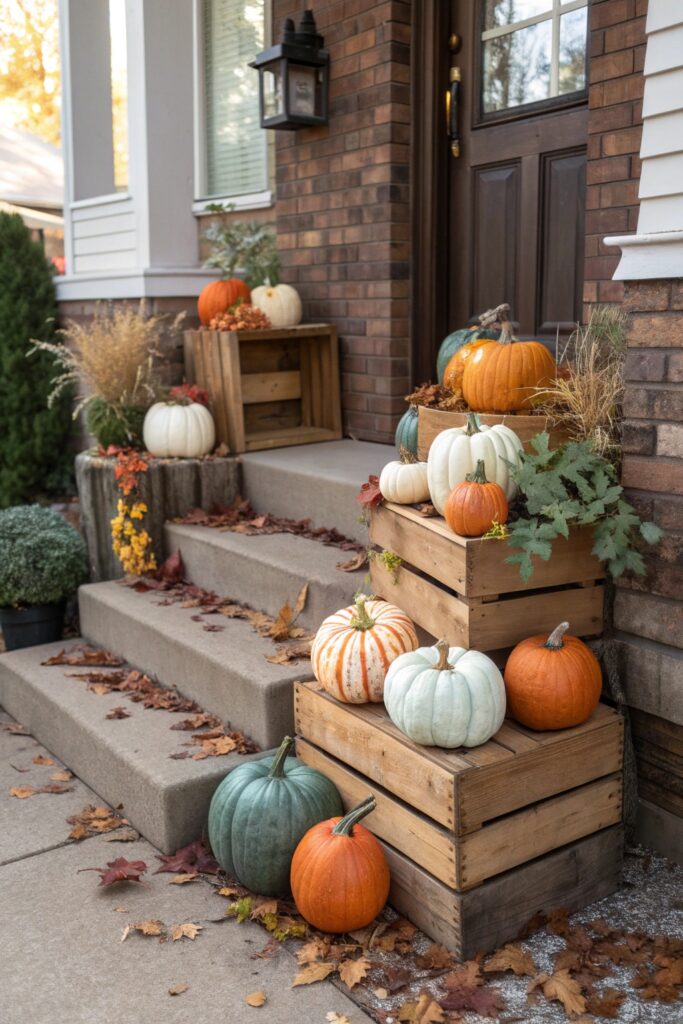
An uncovered porch exposes real pumpkins to more direct rain and sun than a covered one, so they’ll soften and need replacing sooner if your entry doesn’t have overhead protection.
2. Cozy Seating with Fall Textiles
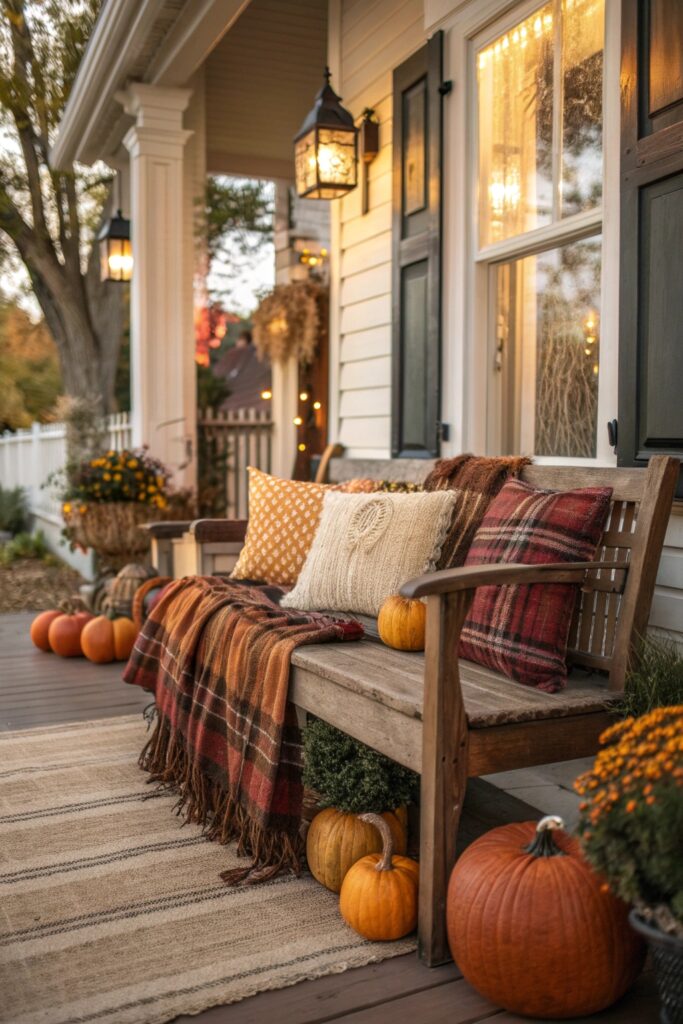
Fabric cushions on an uncovered porch need to come inside during rain, so a covered entry truly offers more flexibility for this specific element than an open one exposed to the weather.
3. Rustic Wooden Signs That Set the Mood
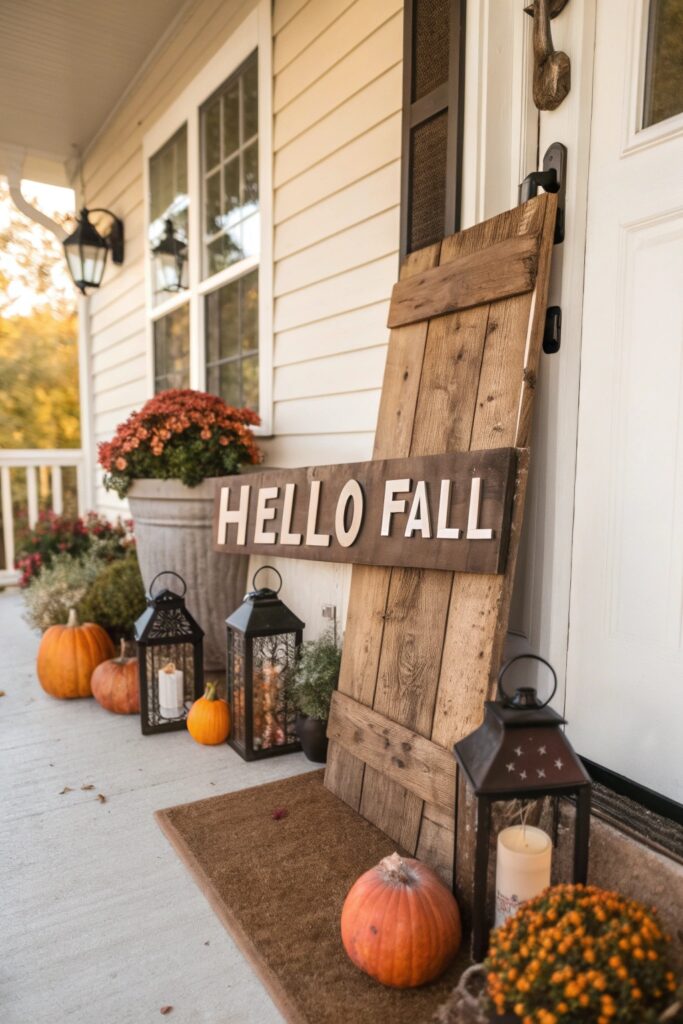
A sign facing direct afternoon sun fades faster than one in a shaded spot, worth factoring your porch’s specific orientation into where you position it if you want the design to last the full season.
4. Wreaths That Go Beyond Basic
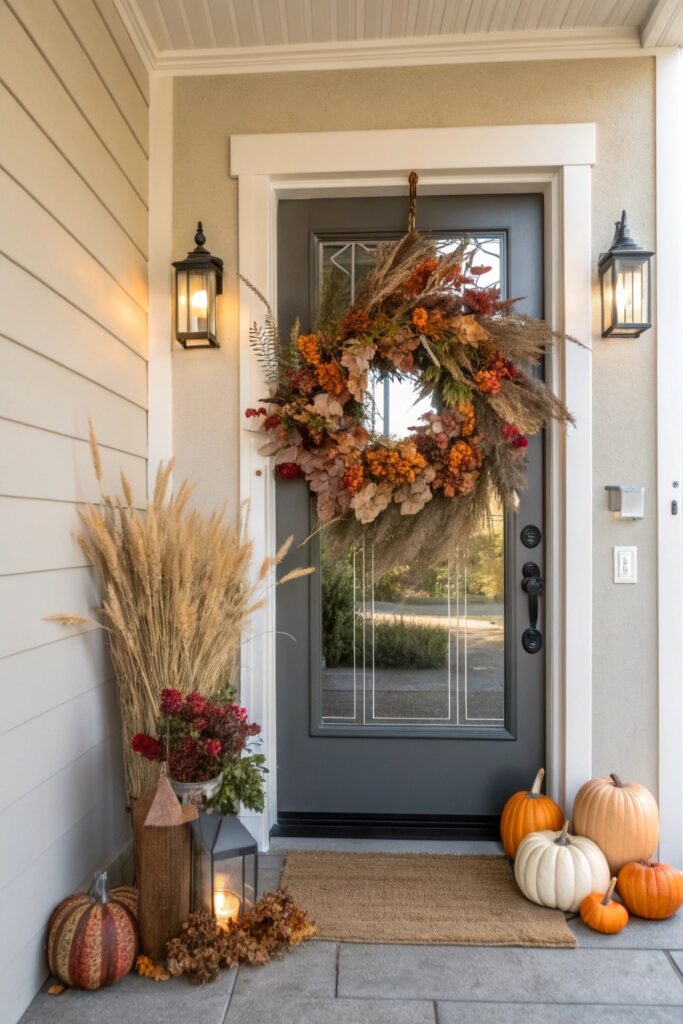
For material-specific guidance on real versus faux elements and hanging hardware, see our companion guide to fall wreath ideas.
5. Lantern Lighting for a Warm Glow
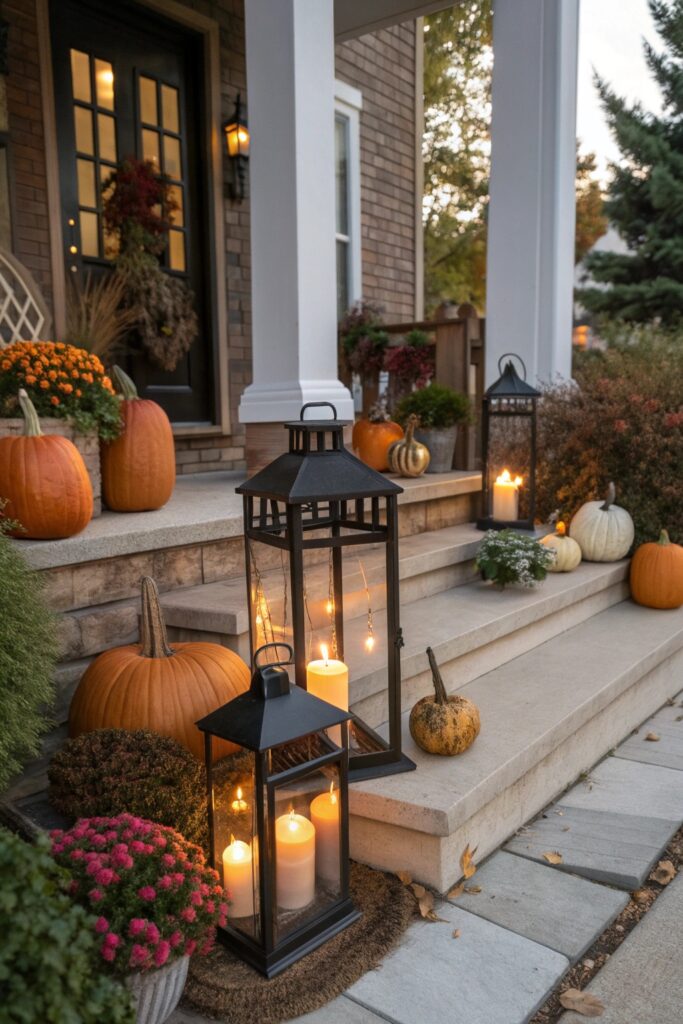
Battery-operated lanterns work well on a porch without a nearby outlet, while a covered porch with existing wiring can support a more elaborate plug-in lighting setup without needing to run an extension cord.
6. Hay Bales for a Farmhouse Feel
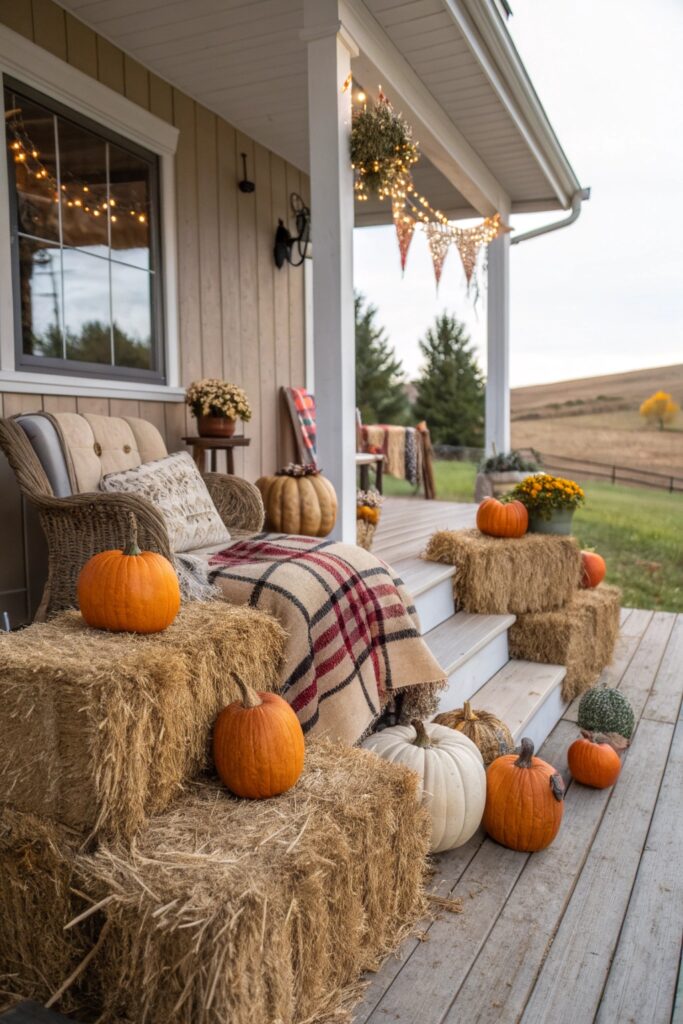
Hay left directly on a porch floor can attract insects over time, so a base layer like a tarp or platform underneath helps protect the surface and makes cleanup easier at the end of the season.
7. Seasonal Doormats That Welcome Guests
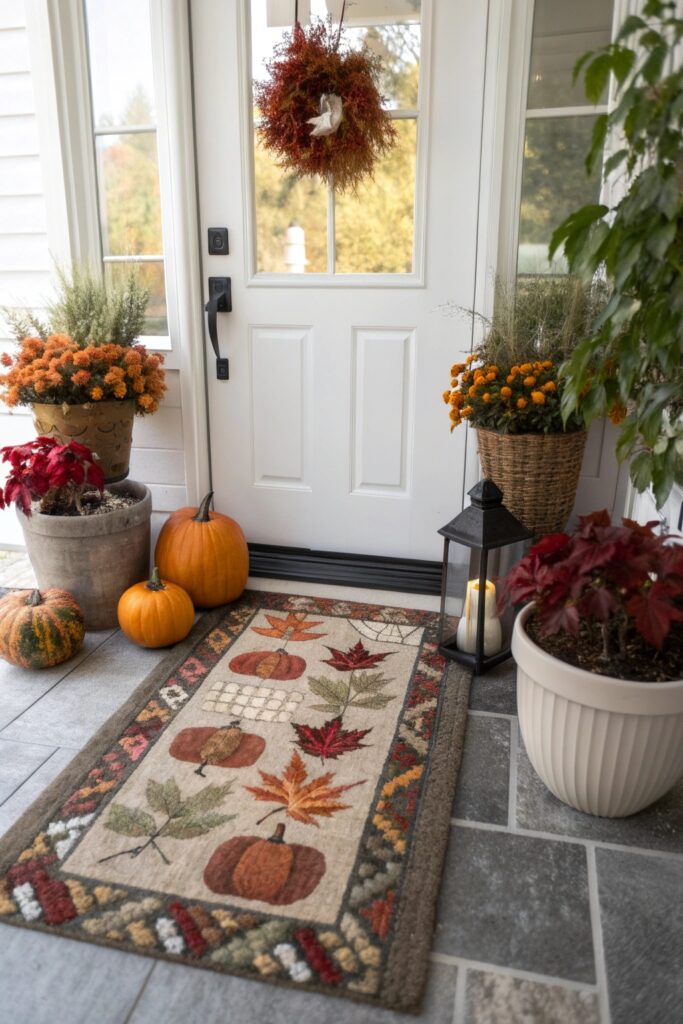
A doormat on an uncovered porch takes more direct weather exposure than one under cover, so choosing a durable, quick-drying material matters more if your entry doesn’t have overhead protection.
8. Cornstalks for Vertical Drama
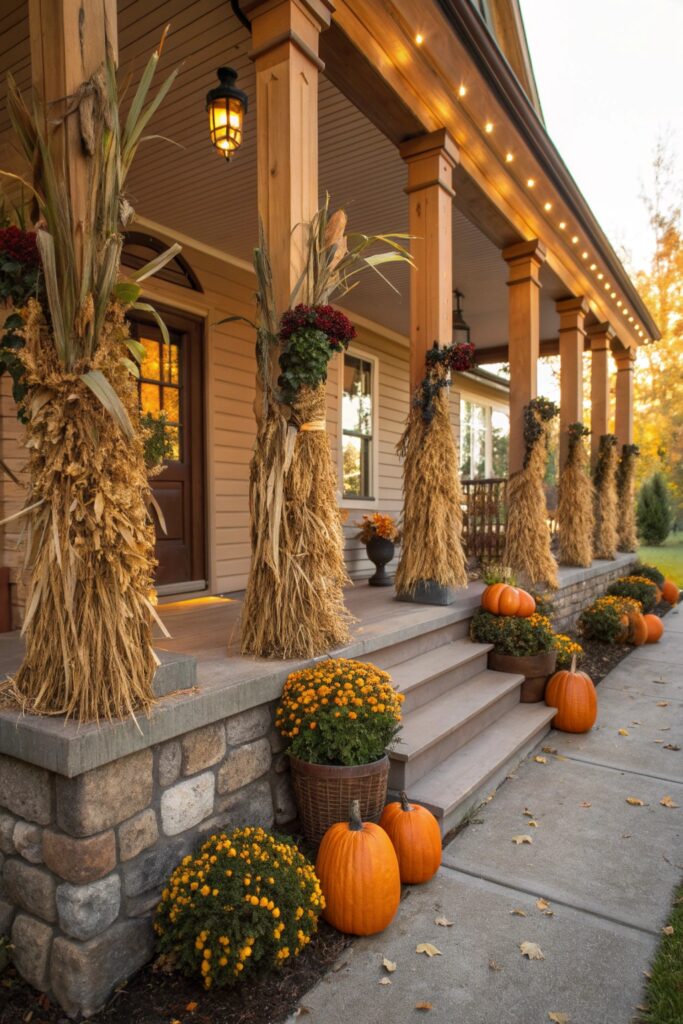
Secure tall cornstalks to a porch post or railing rather than leaning them freely, since wind can knock over an unsecured bundle, especially on a more exposed, uncovered entry.
9. Neutral Fall Palette for a Modern Look
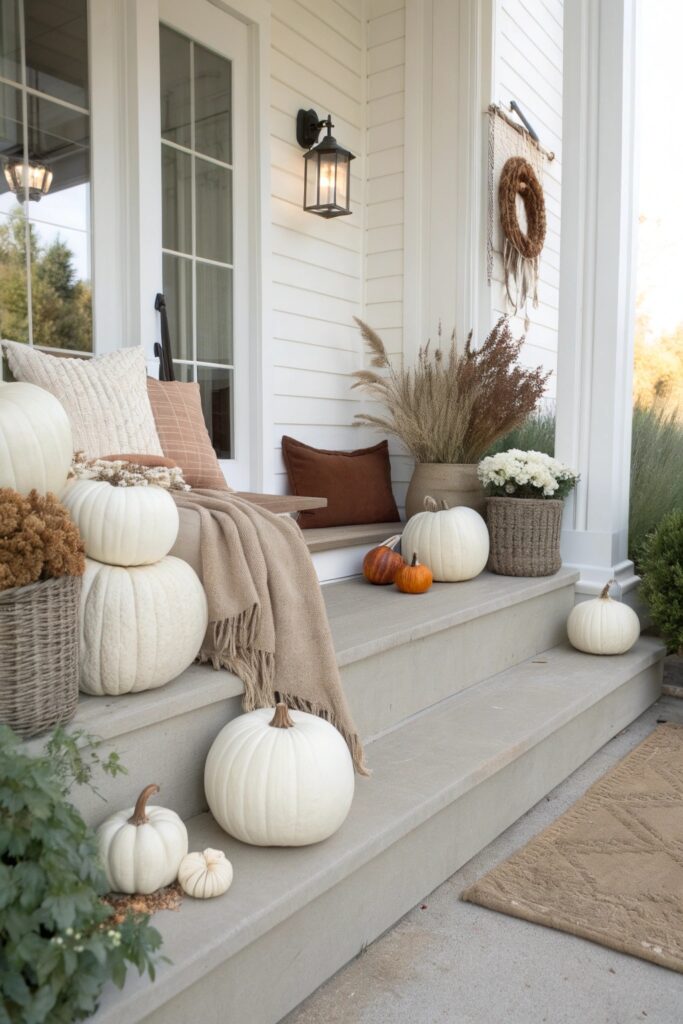
Test how a neutral palette actually reads under your porch’s specific lighting, since a covered entry with less natural light shows subtle undertone differences less clearly than a fully sun-exposed one.
10. Crate Styling for Easy Decor Layers
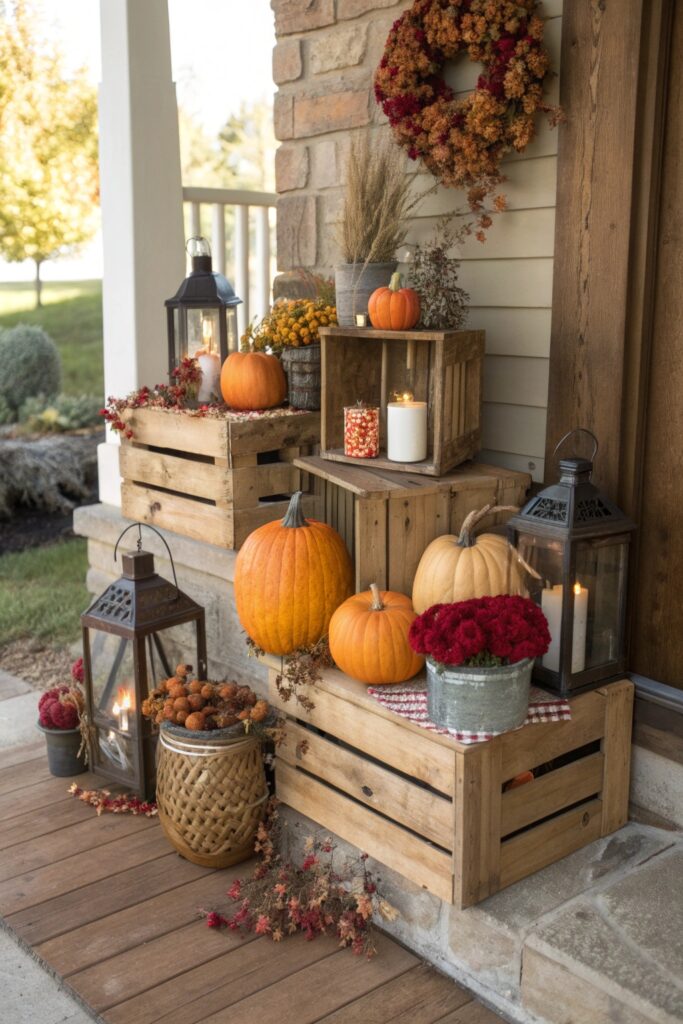
Untreated wood crates left on an uncovered porch through fall rain will warp faster than sealed ones, worth choosing a weather-treated crate specifically if your entry lacks overhead cover.
11. Potted Mums for a Pop of Color
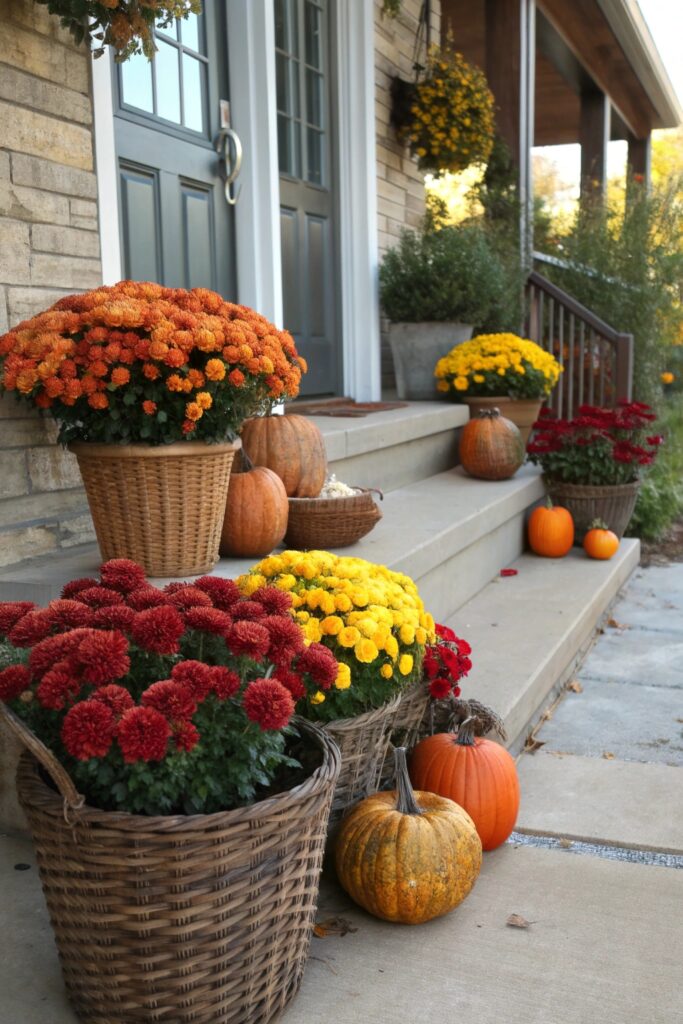
Mums on a covered porch need more frequent watering than ones getting natural rainfall, since overhead protection also means missing out on the moisture an uncovered spot receives automatically.
12. Personal Touches That Make It Yours
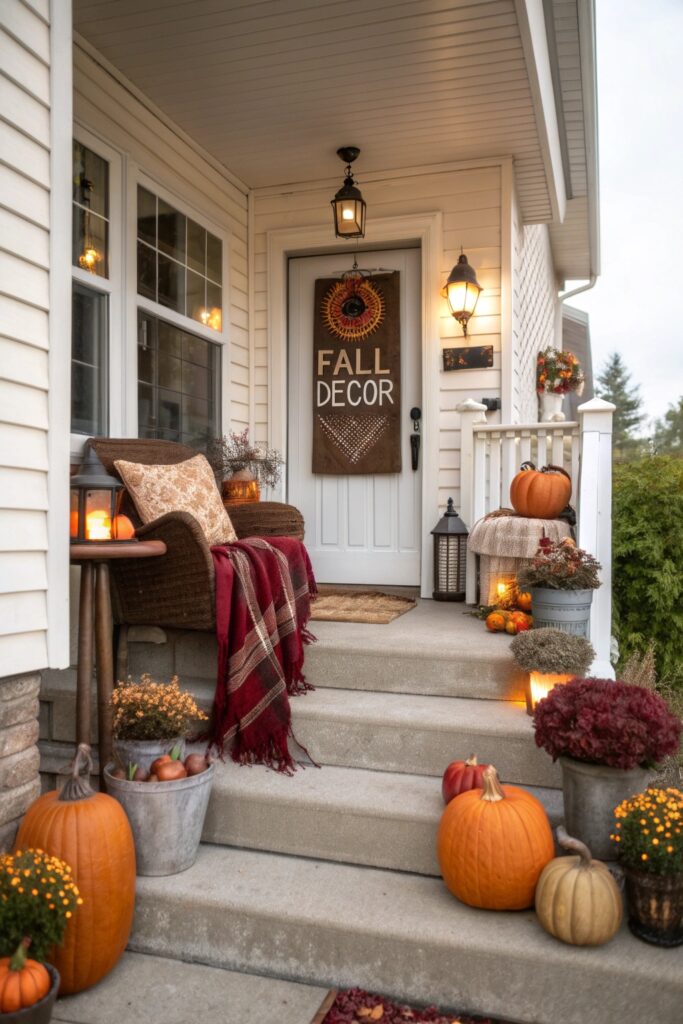
For a budget-conscious approach to pulling this look together, see our companion guide to budget fall front porch ideas.
Planning Around Trick-or-Treaters and Guests
If your fall display transitions into Halloween decor later in the season, choosing a base setup that works for both occasions — neutral pumpkins, natural elements, warm lighting — saves you from a full teardown and rebuild partway through autumn.
Keeping walkways clear of decor is worth prioritizing if you expect trick-or-treaters or regular guests, since a display that looks great in photos can become a real tripping hazard once it’s dark and people are moving quickly up your steps.
What a Fall Porch Refresh Costs
A simple seasonal update using pumpkins, a doormat, and a few accent pieces typically costs $50 to $150.
A fuller display including hay bales, cornstalks, and coordinated lighting runs higher, often $200 to $500 depending on the scale.
Checking HOA Guidelines Before You Decorate
Some homeowners associations have specific rules about seasonal decor, including restrictions on hay bales, cornstalks, or how long a display can remain up, so checking your HOA guidelines before setting up a larger arrangement saves potential headaches.
Even without an HOA, being mindful of how a display looks from the street and whether it might obstruct a shared walkway or driveway view is worth considering, particularly in closer-knit neighborhoods.
Timing Your Display for Maximum Impact
Setting up fall decor too early, before the actual season change, can look mismatched against still-green landscaping, so waiting until leaves start turning or early September in most climates tends to feel more naturally timed.
Refreshing or rotating a few elements partway through the season, like swapping fading mums for a fresh batch, keeps the display looking intentional through a stretch that often runs eight to ten weeks or longer depending on your region.
Coordinating your porch decor with what’s already blooming or thriving in your fall garden, rather than treating the two as separate projects, tends to produce a more cohesive overall look than decor chosen without regard to the surrounding landscaping.
Storing Decor Between Seasons
Faux pumpkins, lanterns, and other reusable pieces last considerably longer when stored in a dry, temperature-stable spot between seasons rather than left in a damp garage or shed where moisture and temperature swings can degrade materials over multiple years.
Labeled storage bins organized by season save real time when it’s time to set up again next year, since you’re not digging through mixed holiday decor to find what you need.
A porch that changes with the seasons signals real care to anyone approaching your home, from delivery drivers to guests, and that first impression is worth the modest time investment a seasonal refresh takes.
Photographing the finished porch before packing decor away at season’s end gives you a useful reference for next year, saving the time it would otherwise take to remember exactly which combination and placement worked well for your specific entry.
Whichever combination of these ideas fits your entry, a fall porch display remains one of the most effective seasonal updates for the effort involved, transforming your home’s exterior without requiring any structural changes or major investment.
A little planning around your porch’s real conditions goes a long way toward a display that holds up beautifully all season.
Conclusion
Walking your porch at different times of day before finalizing a layout helps you notice real sun and shade patterns that affect both plant health and how quickly certain materials fade or weather.
Whichever combination of these ideas fits your entry, choosing materials suited to your porch’s actual coverage and orientation tends to matter more to how the display holds up than the individual pieces themselves.