
This guide focuses specifically on the exterior schemes that tend to perform best for curb appeal and resale value. For a broader range of palette options including terracotta, forest green, and modern farmhouse combinations, see our companion guide to exterior color palette ideas.
Below are 11 schemes worth considering, with the practical details for each.
1. Classic White with Black Accents
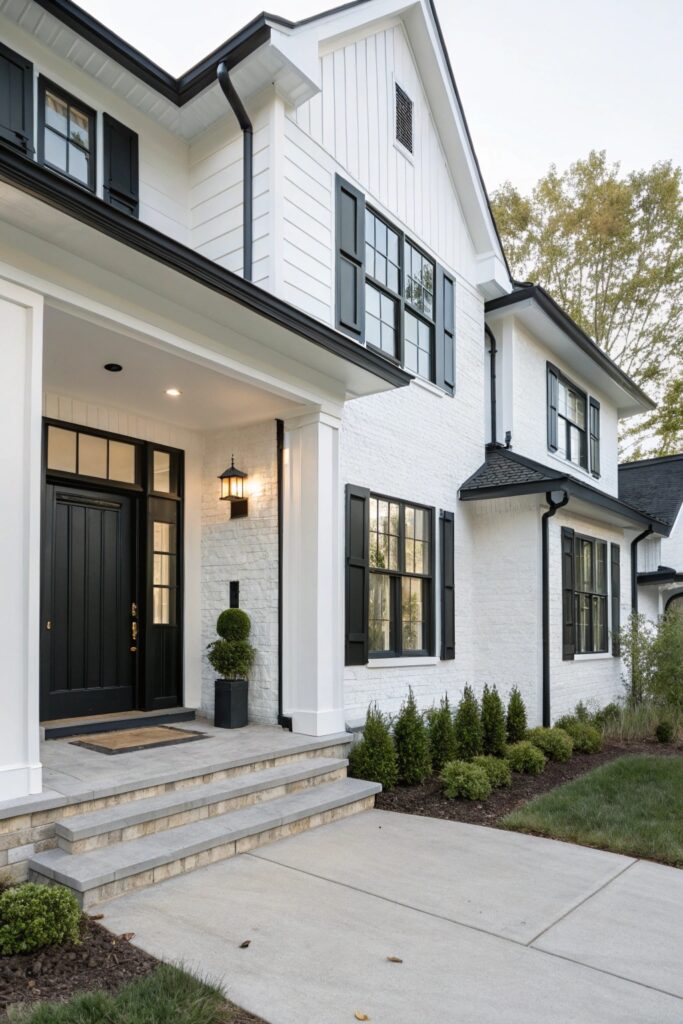
This combination consistently shows up in real estate marketing photos because it photographs well in any lighting and reads as clean and well-maintained from the street, which is part of why it’s such a common choice for homes preparing to sell.
2. Soft Gray and White Combo
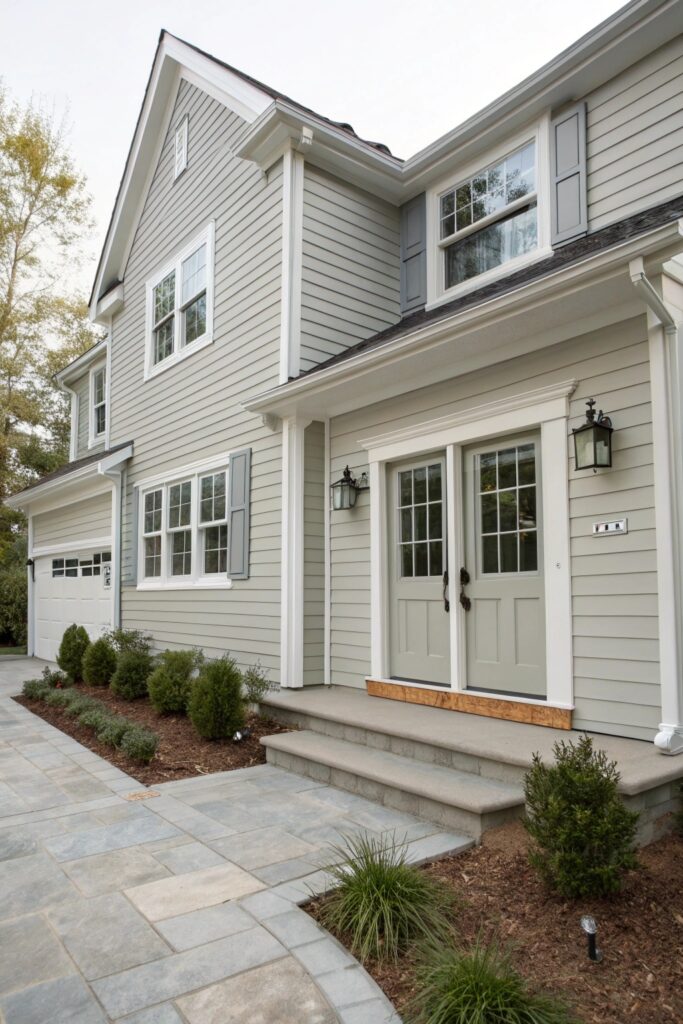
A warm gray with a slight beige undertone reads as more welcoming than a cool, blue-toned gray, which can feel sterile on some architectural styles. Testing the specific gray against your roof color matters here, since gray shifts more than most colors depending on what’s next to it.
3. Navy Blue with Crisp White
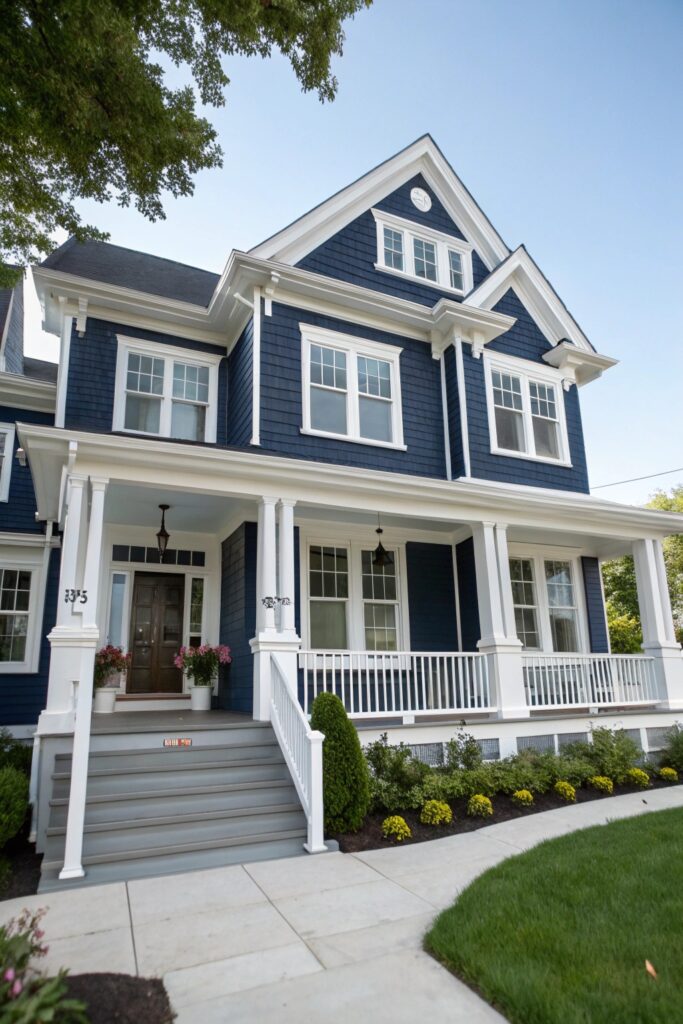
Deep navy holds up well on traditional and coastal-style homes specifically, though it absorbs more heat than lighter colors, which is worth factoring in for homes in consistently hot climates.
4. Beige and Brown Earth Tones
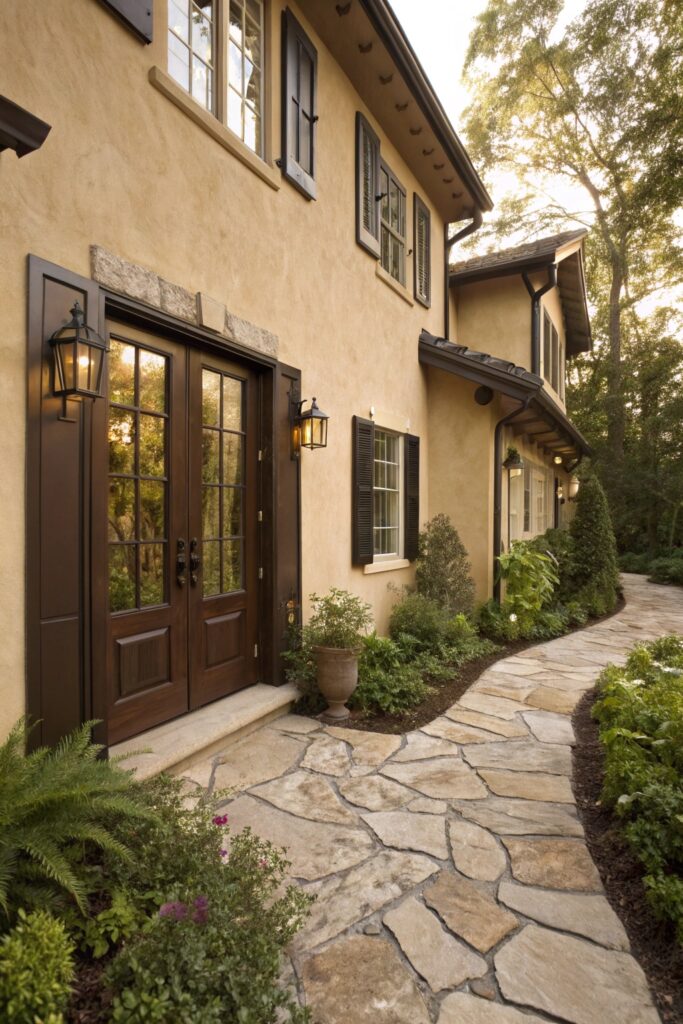
This palette blends into wooded or naturally landscaped lots more than higher-contrast schemes, making it a common choice for homes surrounded by mature trees rather than an open, exposed lot.
5. Charcoal Gray with Wood Accents
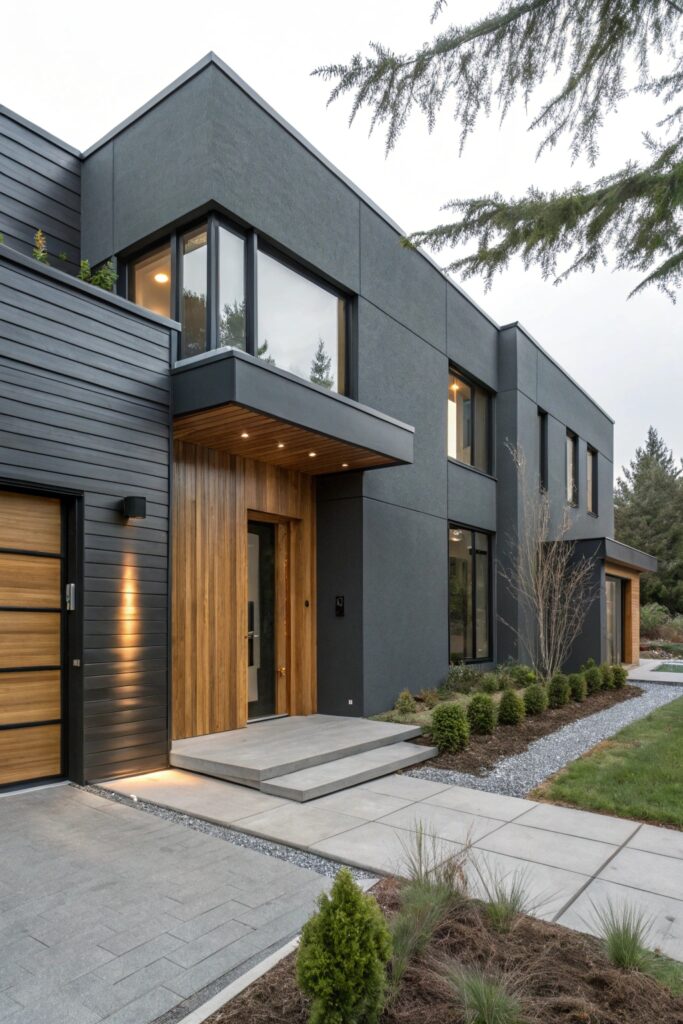
Charcoal absorbs noticeably more heat than lighter siding colors, so homes in hot, sunny climates sometimes see it used more sparingly — as trim or an accent section — rather than covering the full exterior.
6. Sage Green with Cream Trim
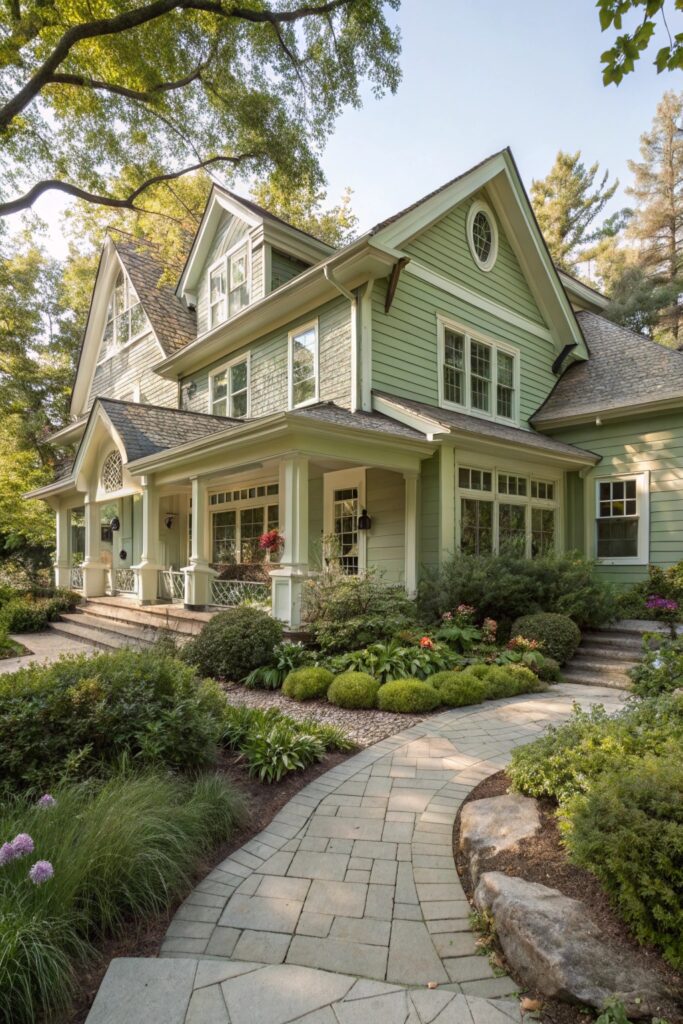
A more muted, gray-leaning sage tends to age better on an exterior than a brighter green, since exterior paint fades with UV exposure over years, and a already-muted color shows that fade less obviously than a saturated one.
7. Black Exterior with Light Accents
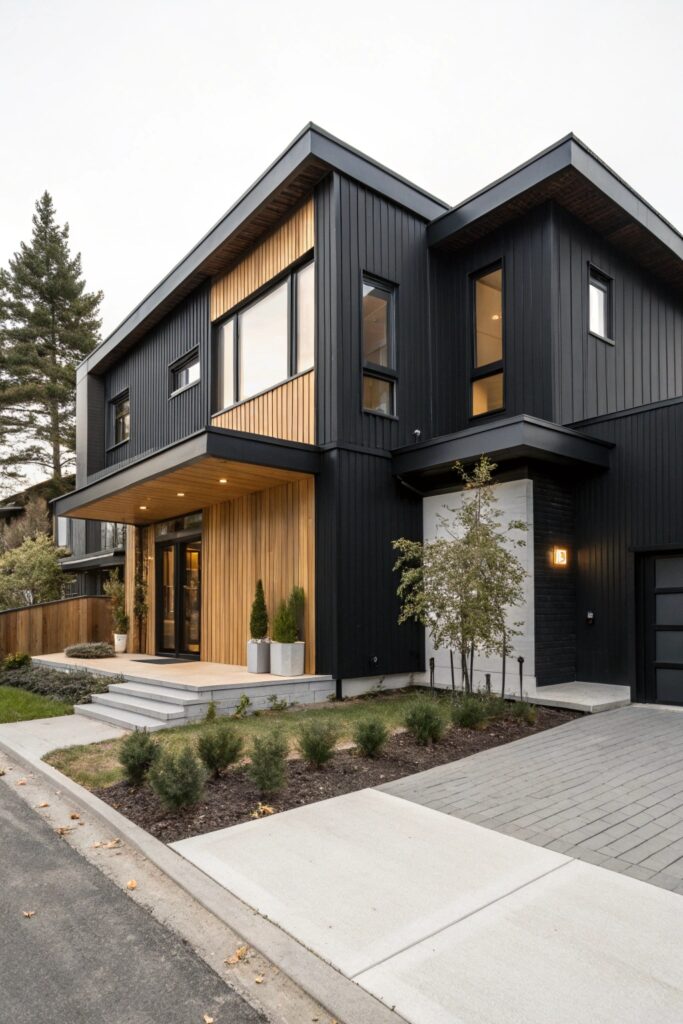
Full black exteriors need UV-stable, fade-resistant paint specifically, since dark colors show sun fading more visibly than lighter ones over the same number of years. Light-colored trim and door hardware keep the look from feeling overly heavy from the street.
8. Blue-Gray Coastal Style
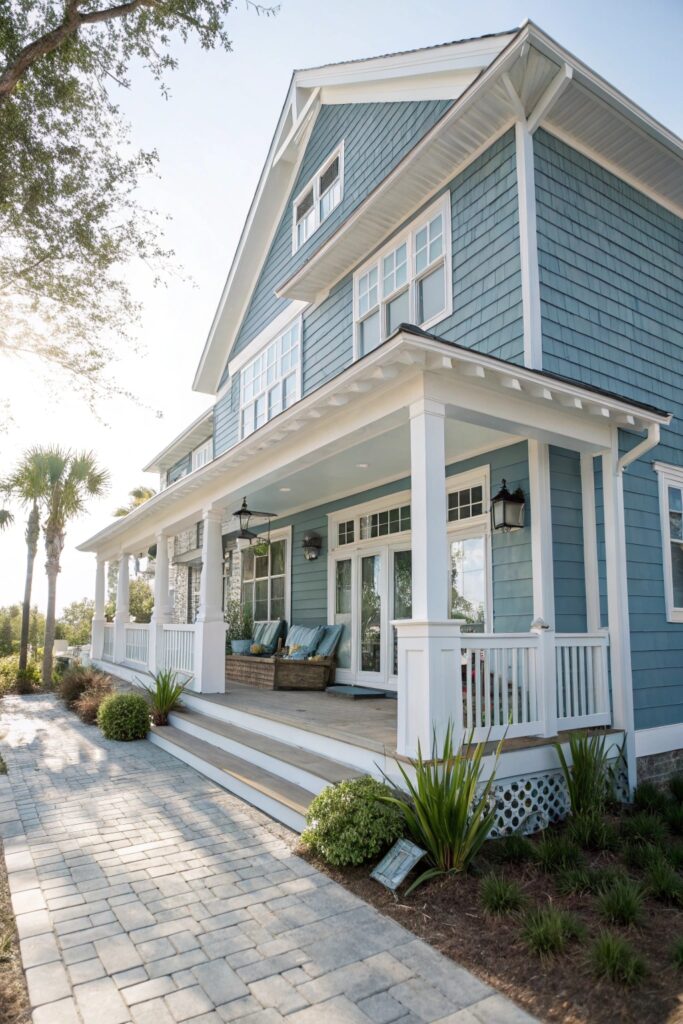
This palette suits homes near water especially well, though the same softness works inland too. Coastal or humid climates specifically benefit from mildew-resistant paint formulations, since lighter blue-grays show mildew growth more visibly than darker colors.
9. Warm Taupe with White Trim
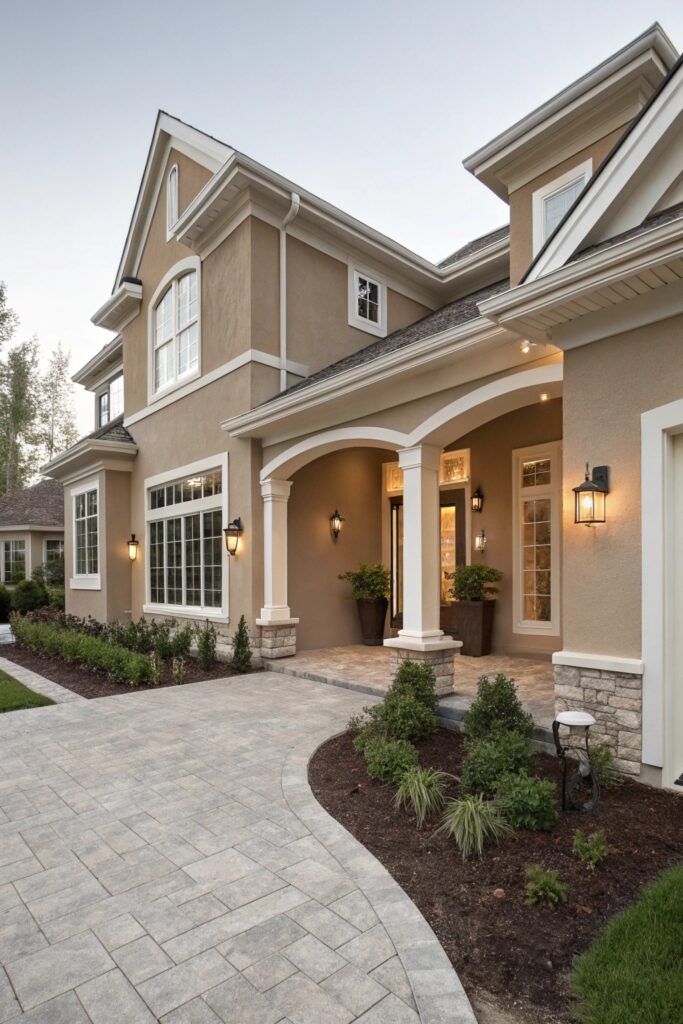
Taupe is one of the more resale-friendly exterior choices, since its neutral warmth appeals to a broad range of buyer preferences without looking as trend-specific as some of the more saturated colors on this list.
10. Pastel Yellow with White Accents
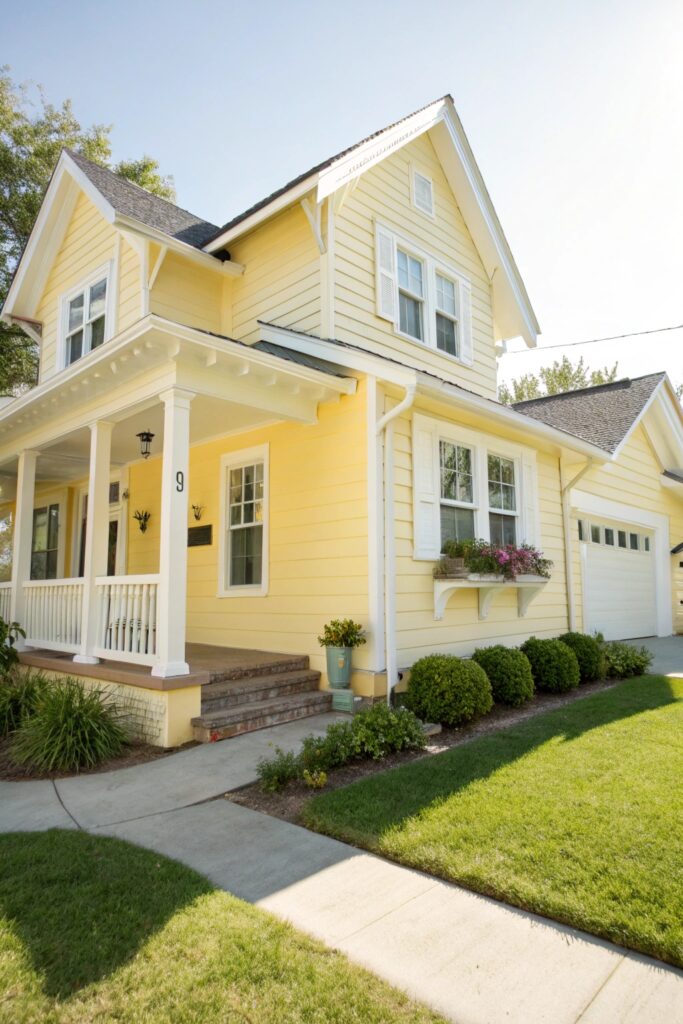
A muted, dusty yellow reads as considerably more sophisticated than a bright, saturated yellow, and holds up better against fading since less-saturated colors show UV wear less obviously over time.
11. Two-Tone Modern Contrast
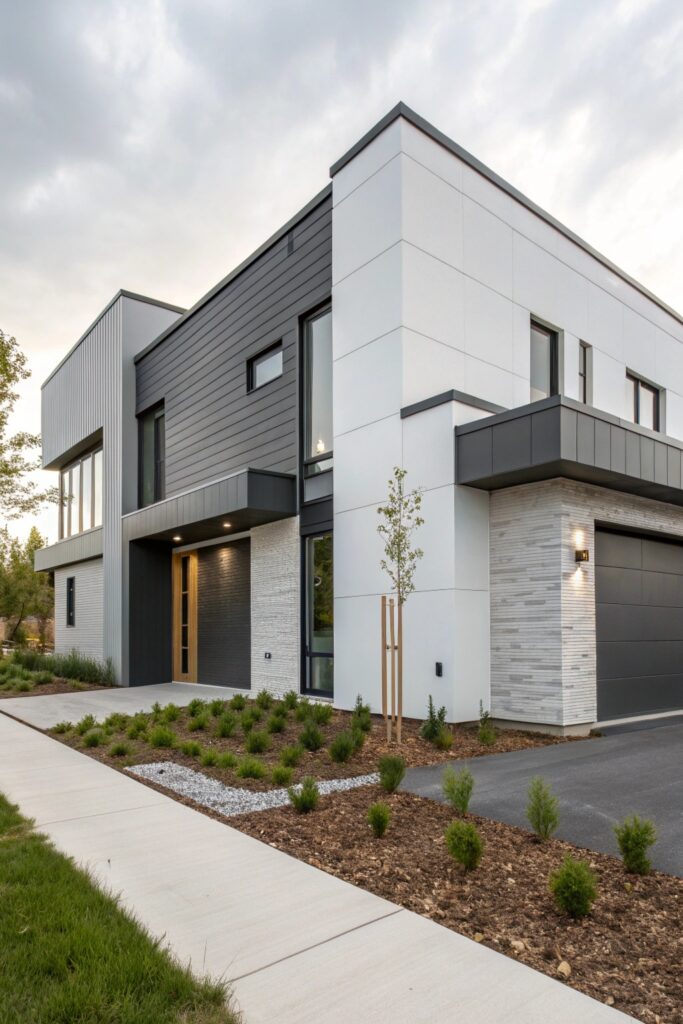
Pairing a darker body color with a lighter trim, or vice versa, adds visual depth that a single flat color across the whole exterior doesn’t achieve, and works particularly well on homes with varied architectural massing — different rooflines, bump-outs, or a mix of siding materials.
Sheen Matters for Longevity
Satin or low-luster sheens are the standard choice for exterior siding, since they resist dirt buildup and hold color better over time than flat finishes, while showing fewer surface imperfections than a higher-gloss option. Trim typically gets a semi-gloss finish, which handles the more frequent handling around doors and shutters better than a flatter sheen would.
What a Full Repaint Costs
A DIY exterior repaint typically costs $1,000 to $3,000 in materials for an average-sized home.
Hiring professional painters runs considerably higher, often $4,000 to $10,000 or more depending on your home’s size, siding material, and how much surface prep — scraping, sanding, priming over an old dark color — the job requires.
Checking HOA and Neighborhood Guidelines First
Many homeowners associations restrict exterior color choices, sometimes down to specific approved paint codes, so it’s worth checking any governing documents before settling on a scheme — this is a common reason a repaint project gets delayed after the fact. Even without an HOA, some municipalities have historic district guidelines that limit color choices on certain streets or in certain neighborhoods.
Fixed elements — roof shingles, brick, stone foundations — can’t be easily changed and should guide the paint color decision rather than the reverse. A color that clashes with an existing red brick foundation or a green-toned roof will look off regardless of how well it works in isolation, so bringing an actual photo of these fixed materials when choosing paint samples helps avoid that mismatch.
Painting a large sample swatch — at least a few feet wide — on multiple sides of the actual house, and viewing it across several days and lighting conditions, catches problems a small paint chip or a single glance can’t. This step matters more for exterior colors than interior ones, since natural light and weather shift more dramatically outdoors than in a controlled interior space.
A well-chosen exterior scheme remains one of the most cost-effective ways to improve a home’s first impression, both for daily enjoyment and for anyone viewing the property from the street.
Weather conditions during application matter too — most exterior paints need temperatures consistently above 50°F and low humidity to cure properly, which is worth planning around if you’re scheduling the work yourself rather than through a professional crew familiar with local seasonal timing.
Climate Affects These Choices More Than People Expect
Darker colors absorb more heat and show UV fading more visibly over time than lighter ones, which matters more in consistently sunny, hot climates than in milder regions. Humid or coastal climates benefit from mildew-resistant paint formulations regardless of color choice, since moisture-related growth affects lighter colors more visibly than darker ones. Factoring in your actual climate, not just the color trends, helps a scheme hold up well for the years between repaints.