
Fall table decor needs to hold up through actual active use during a real gathering — dishes being passed, chairs moving, hands reaching — not just sit still and look good in photos. The details below cover both the styling direction and these practical specifics for each idea.
Below are 12 fall table decor ideas worth considering, with the specifics for each.
1. Layered Table Runners for Depth
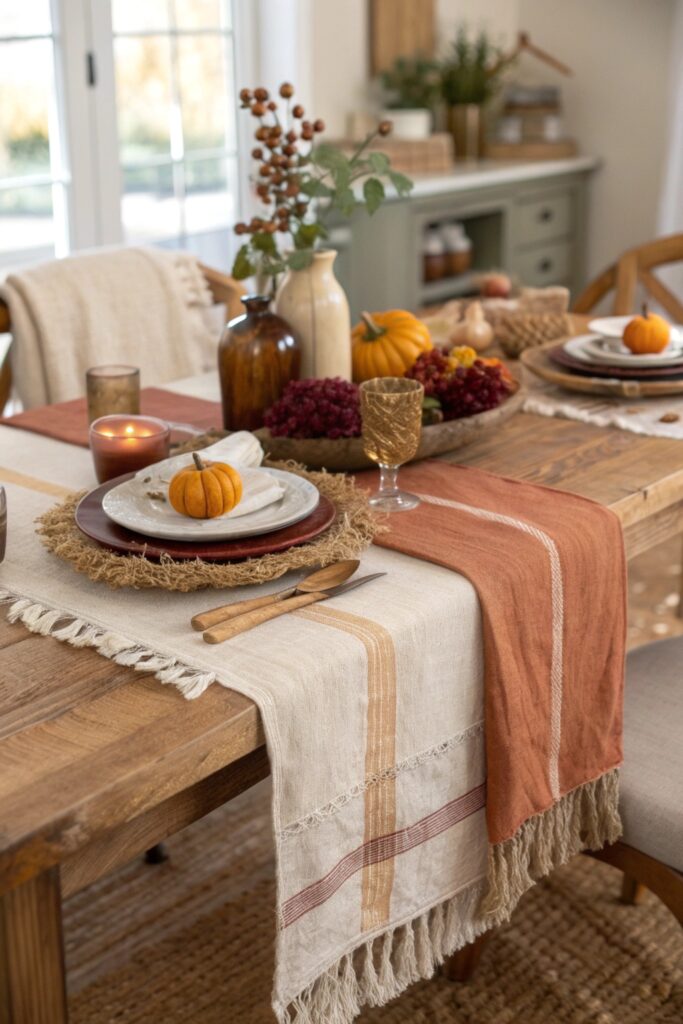
Secure multiple layered runners with weighted ends or a light tuck, since loose fabric layers can shift or catch on dishes as they’re passed during an actual gathering.
2. Pumpkin Centerpieces That Steal the Show
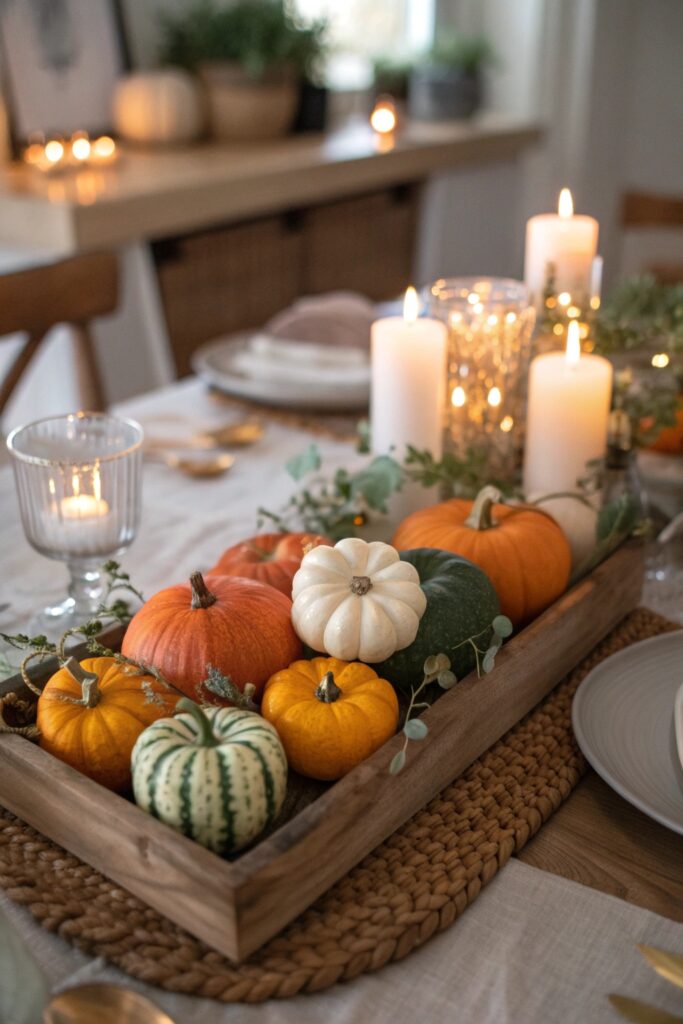
Place real pumpkins on a protective mat or tray rather than directly on a wood tabletop, since the underside traps condensation that can leave moisture rings over time.
3. Warm Candle Lighting for Atmosphere
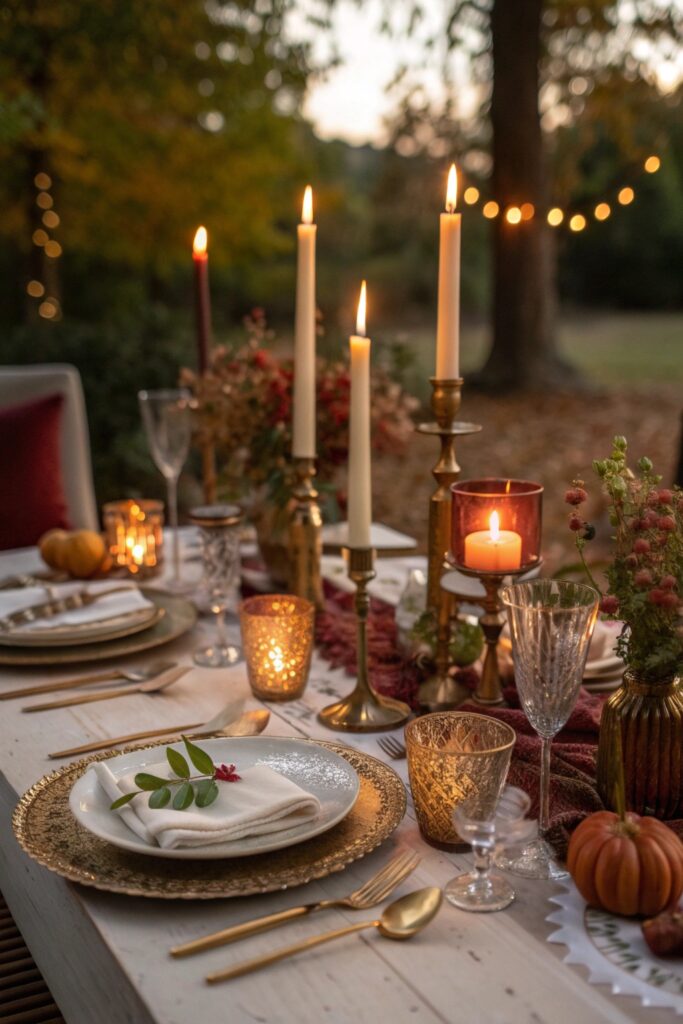
Keep candles well clear of the path where arms reach and dishes get passed, since a table actively used for eating sees far more hand movement near the centerpiece than a stationary console or shelf display.
4. Neutral Fall Color Palette for Elegance
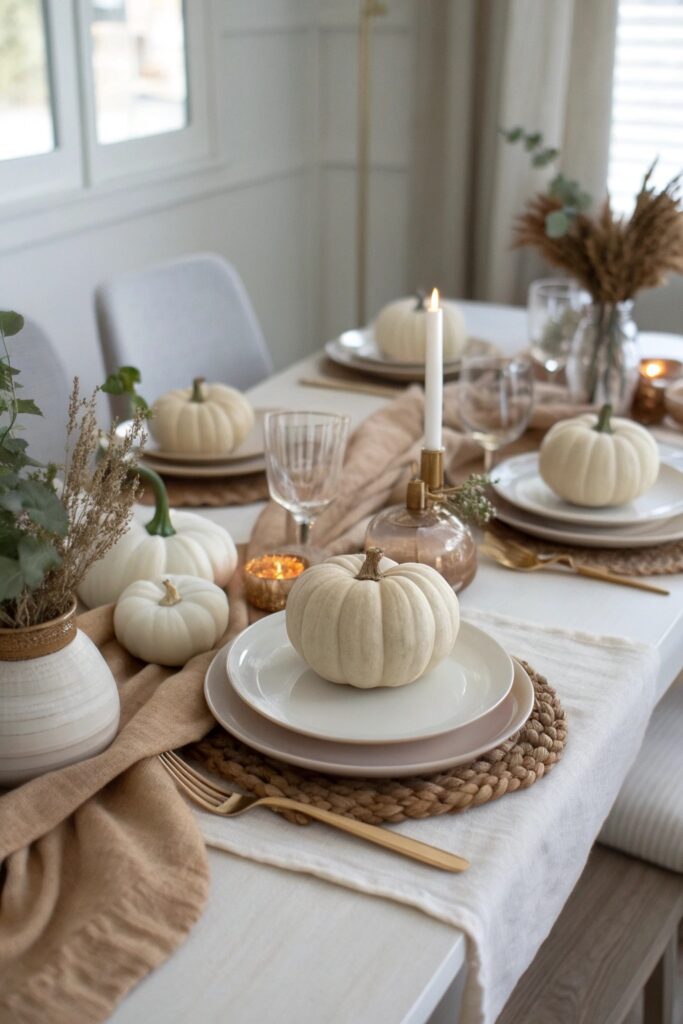
Test linens and dinnerware together under your dining room’s actual lighting, since subtle undertone mismatches between neutral pieces show up more under warm evening light than they do in daylight.
5. Personalized Place Settings for Guests
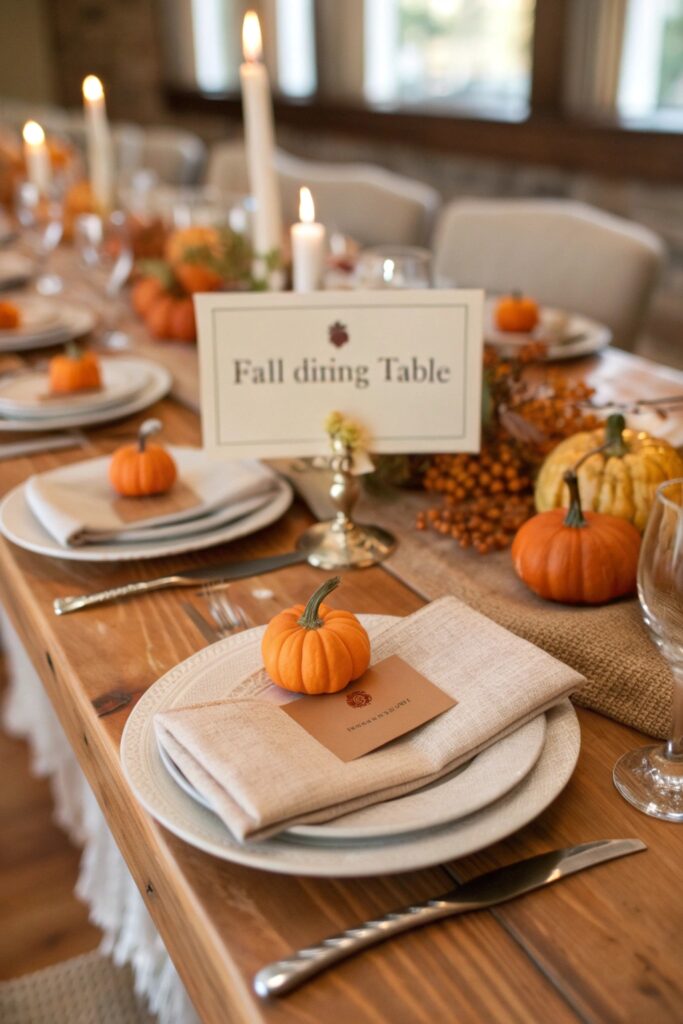
Choose place card materials and ink that won’t bleed or smear if splashed near food or drink, a real practical difference from decor that isn’t positioned this close to an active meal.
6. Rustic Wooden Elements for Warmth
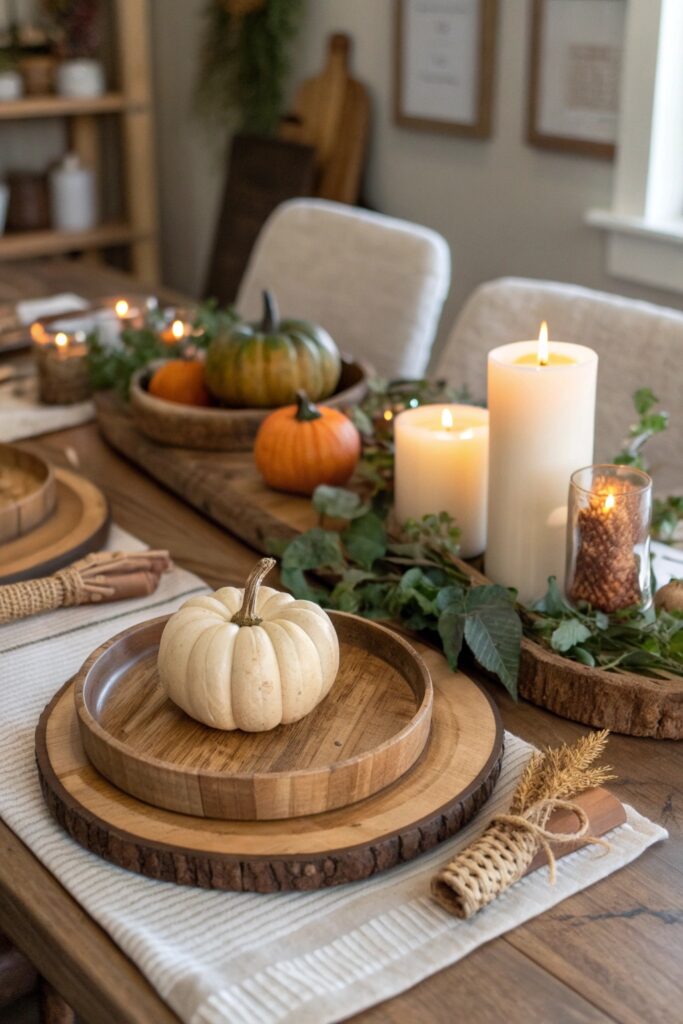
Choose sealed, finished wood specifically for any pieces sitting directly under food or drinks, since unfinished wood can stain or absorb spills in a way sealed wood resists.
7. Layered Dinnerware for a Styled Look
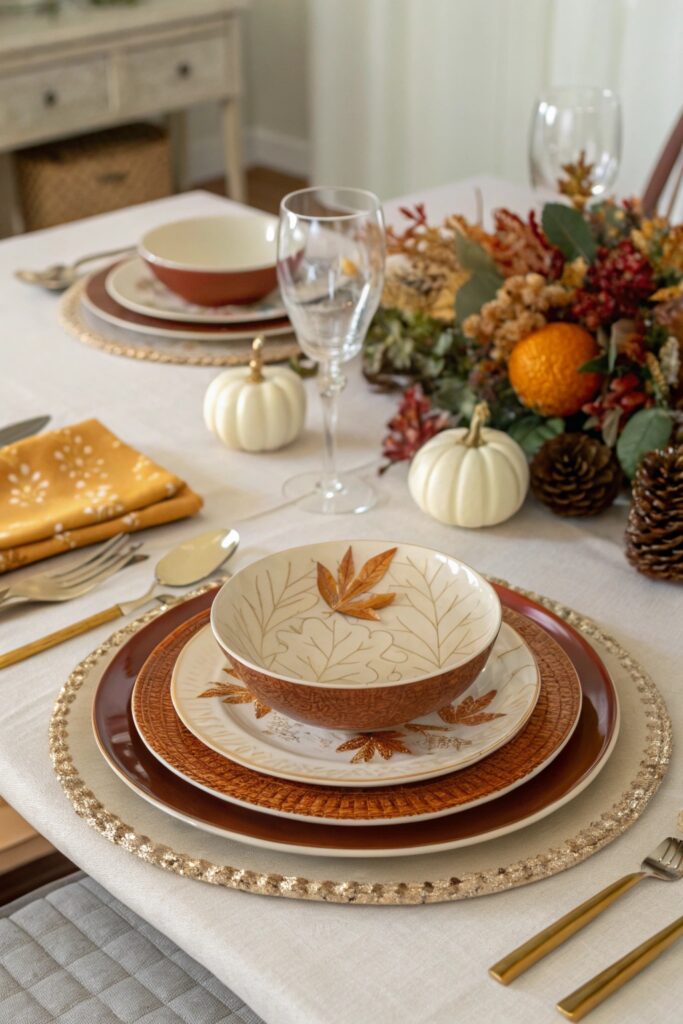
Check the added height of a charger, dinner plate, and salad plate stacked together against your chair and table height, since this combination can feel awkward to eat from and is more prone to getting knocked during a lively gathering.
8. Seasonal Greenery for Freshness
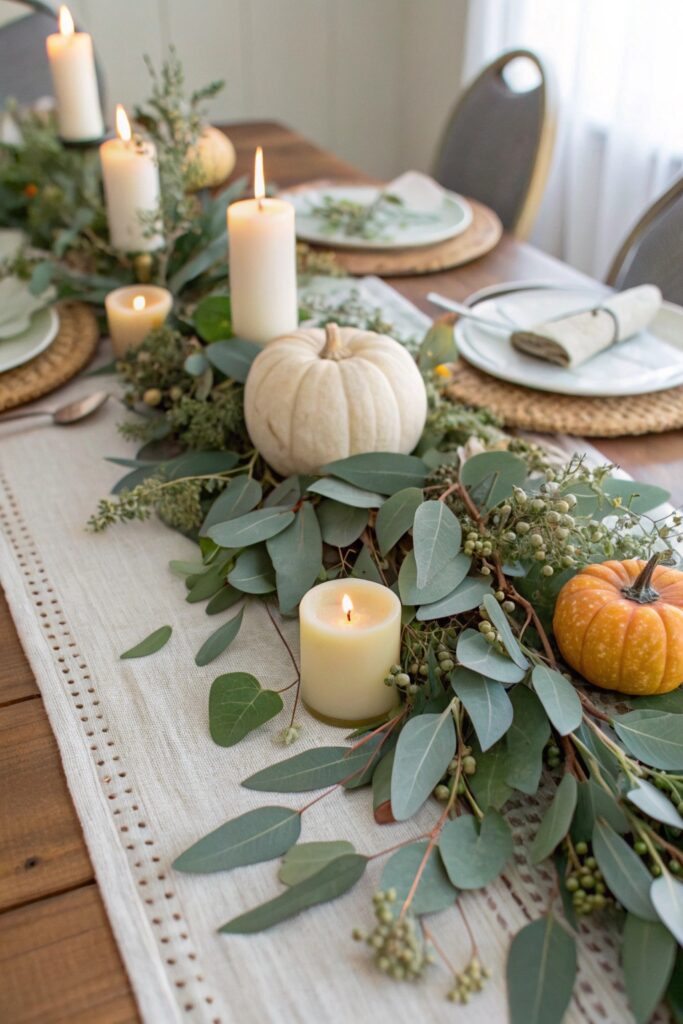
Fresh greenery positioned near where hands and elbows move during a meal crushes faster than the same greenery on a stationary display, worth choosing sturdier stems for this specific placement.
9. Textured Napkins for Extra Detail
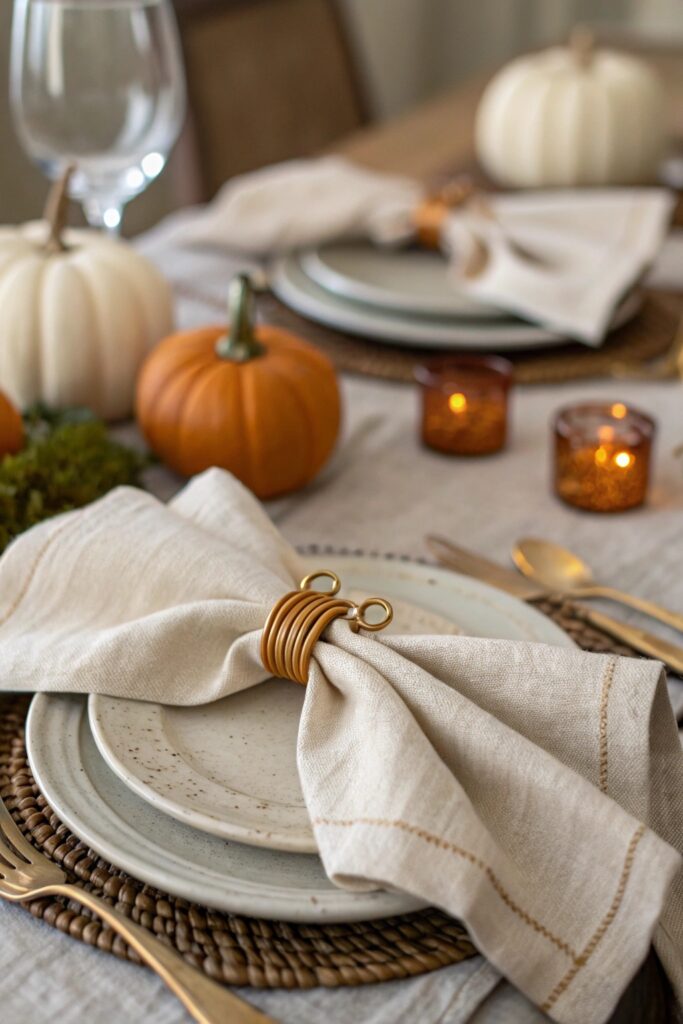
Choose a slightly more durable weave for napkins guests will actually fold and refold through the meal, since heavily textured or delicate fabrics can snag on jewelry or show wear faster with repeated handling.
10. Metallic Accents for a Touch of Glam
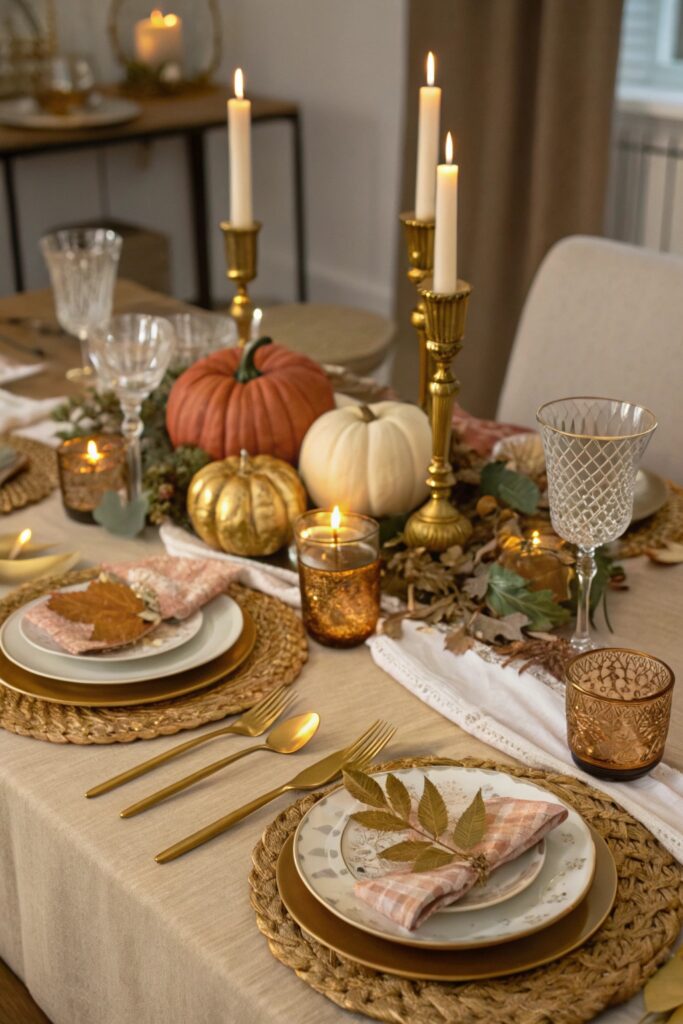
Stick to one dominant metal finish with the others used sparingly, rather than splitting evenly between gold, brass, and silver, which tends to look less intentional than a clear primary choice.
11. Mini Harvest Displays for Visual Interest
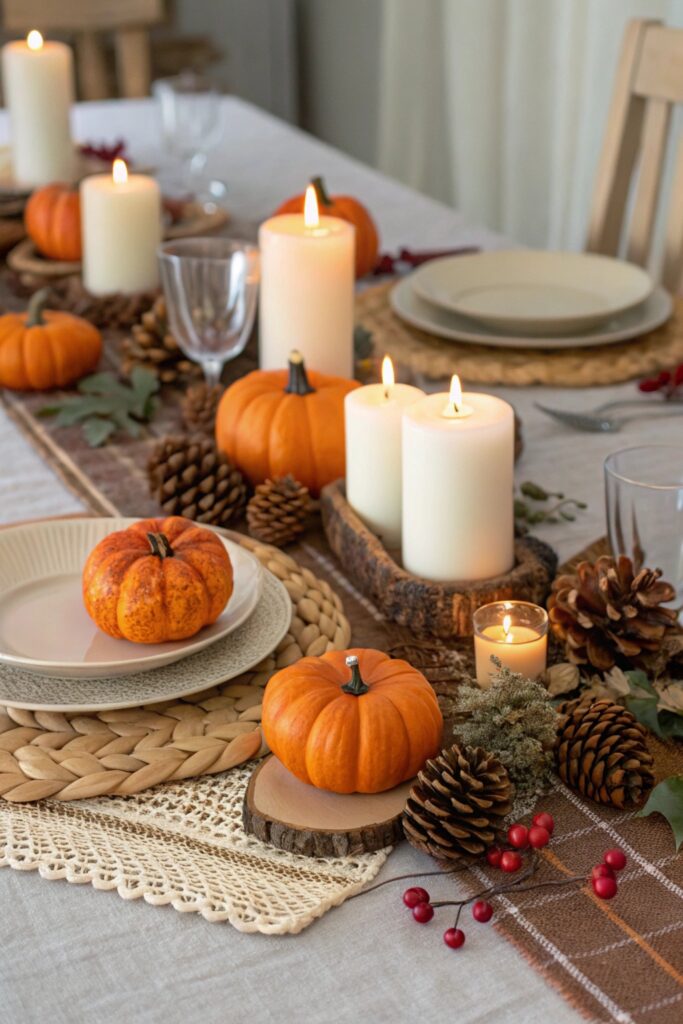
Keep small decorative gourds and harvest pieces clear of the actual place settings and food-serving path, since these aren’t meant to be handled or moved by guests reaching for dishes.
12. Cozy Textiles That Tie Everything Together
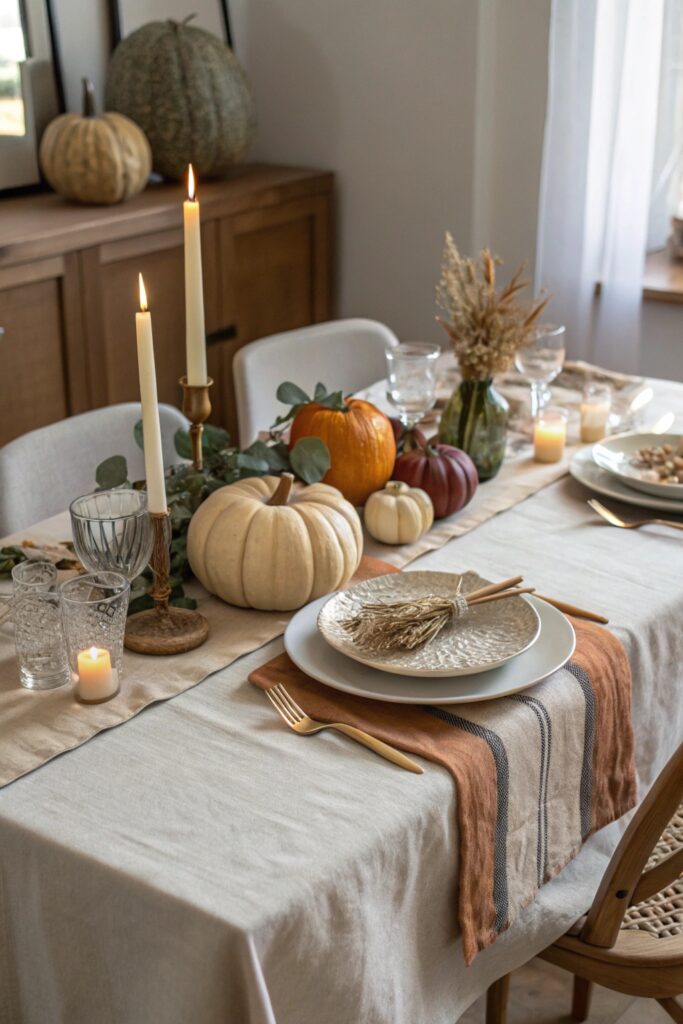
Keep any draped textile, like a table skirt, clear of where chairs get pushed in and out, since fabric in that path becomes a real snag or trip risk once guests start moving in and out of their seats.
Planning for Different Group Sizes
A tablescape designed for a small dinner needs real adjustment for a larger gathering, since squeezing the same centerpiece and place settings into a fuller table leaves less room for actual serving dishes and elbow space.
Measuring roughly 24 inches of table width per seated guest helps confirm your planned decor still leaves enough functional space once everyone is actually seated.
What Fall Table Decor Costs
A simple update using a runner, candles, and a small centerpiece typically costs $40 to $100.
A fuller tablescape including layered dinnerware, personalized place settings, and coordinated textiles runs higher, often $150 to $400 depending on the size of your table and guest count.
Timing Your Setup Around the Meal
Setting the table the night before or early on the day of a gathering, rather than rushing right before guests arrive, gives you time to notice and fix small issues, like an uneven runner or a centerpiece blocking a seat’s sightline across the table.
Leaving candle lighting and any final touches for closer to serving time keeps wax fresh and avoids extra hours of unnecessary burn time before anyone’s actually seated.
Accounting for Food Allergies and Dietary Needs
If personalized place settings are part of your tablescape, a small, discreet marker noting dietary restrictions next to a guest’s name card helps servers and other guests navigate a buffet-style spread without awkward mid-meal questions.
Keeping this detail simple and tasteful, rather than an obvious label, respects both the guest’s privacy and the overall look of the table.
Coordinating your table decor with the actual food being served, rather than choosing a palette in isolation, helps the whole meal feel cohesive — a rustic wood and greenery theme pairs naturally with a hearty roast, while a more elegant metallic setup suits a lighter, plated menu.
Cleanup Considerations Worth Planning For
Choosing washable or wipeable materials for anything within splash range of the actual meal saves real time afterward, compared to delicate pieces that need careful hand-cleaning or can’t get wet at all.
Photographing the finished table before the meal begins also gives you a reference for next year, so you’re not trying to recreate a favorite arrangement entirely from memory.
A thoughtfully set fall table sets the tone for the entire gathering before a single dish is served, giving guests an immediate sense of the occasion the moment they sit down.
Whichever combination of these ideas fits your gathering, a table decorated with actual use in mind — not just how it photographs before anyone sits down — tends to hold up gracefully through a full meal and leave guests with a truly warm impression of the evening.
Starting with just two or three of these ideas rather than attempting all twelve at once is also a reasonable approach, letting you build a signature look for your gatherings gradually over several seasons.
Conclusion
Setting the full table and doing a mock walkthrough — passing a dish, pulling out a chair, reaching for a napkin — before guests arrive reveals problems no amount of visual planning catches, like a centerpiece blocking the serving path or a runner that snags on a plate.
Whichever combination of these ideas fits your table, choosing materials and placement that can withstand a real meal in progress tends to matter more to how the gathering actually goes than any single decorative touch on this list.