
Basement stairs are one of the most overlooked spaces in a home, often left as plain, unfinished transitions rather than treated as a design opportunity in their own right.
Below are 10 ways to update this space, with practical notes for each. Always confirm any structural or code-related changes with a local professional before proceeding.
1. Paint the Risers with Bold Contrast Color
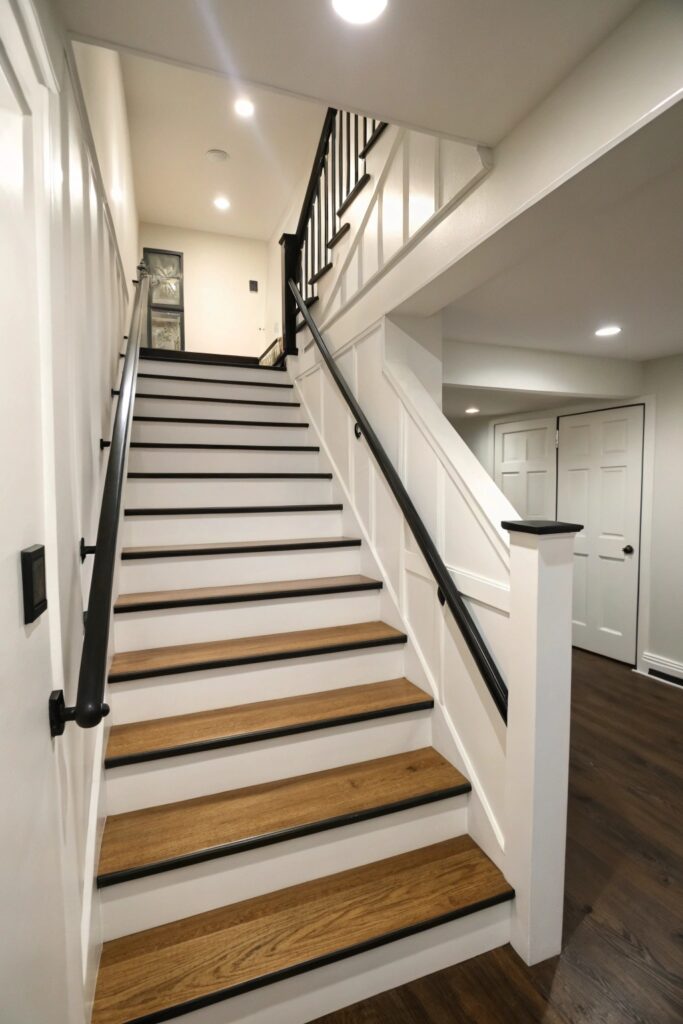
Durable floor-and-stair paint holds up better here than standard wall paint, since this surface sees direct foot traffic and impact.
Apply at least two coats for genuine durability, and allow full cure time before regular foot traffic resumes on the freshly painted risers.
2. Install Stair Runner Carpet
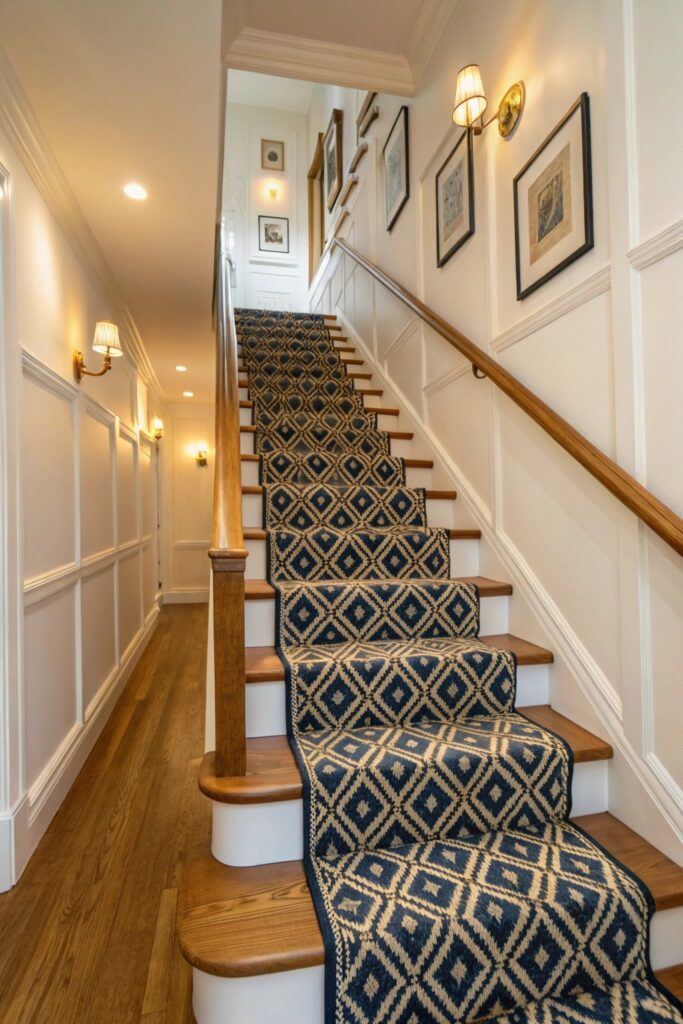
A runner adds both cushioning and slip resistance, which matters directly for safety on a basement staircase that’s often less naturally lit than others in the home.
Choose a runner width proportional to your stair width, leaving a small margin of visible tread on each side for a more finished look.
3. Add Stair Tread Lighting
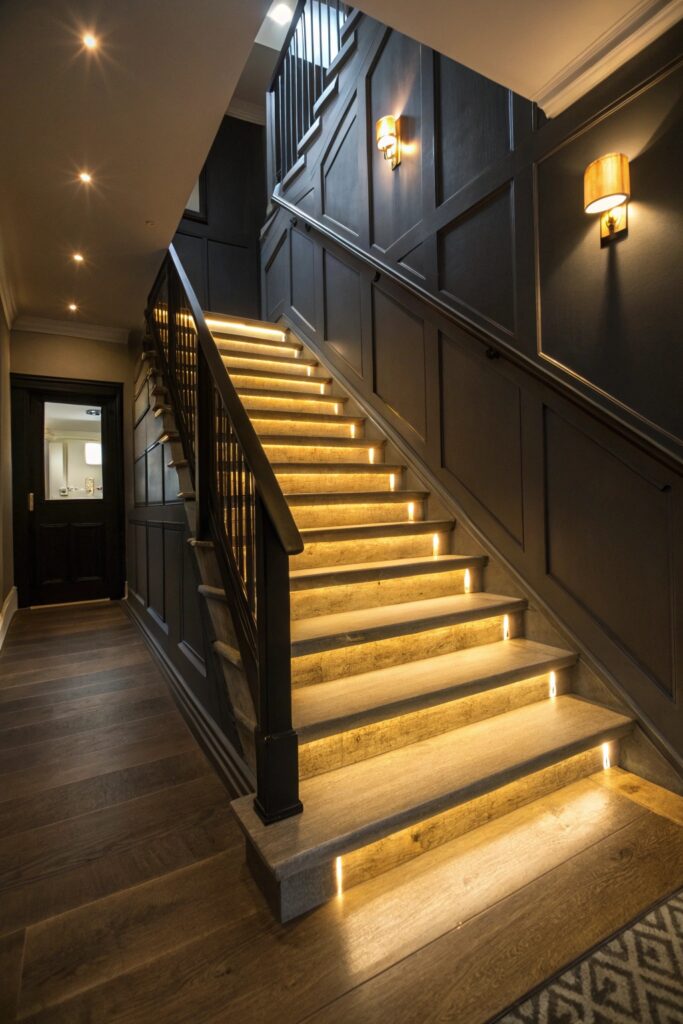
Low-voltage LED strips along each tread edge improve visibility on a staircase that often lacks natural light, which is a real safety benefit beyond the visual effect.
Choose warm-toned lighting specifically, which reads as more inviting than a stark white light in a space that’s already naturally darker.
4. Refinish or Replace Stair Treads with Hardwood
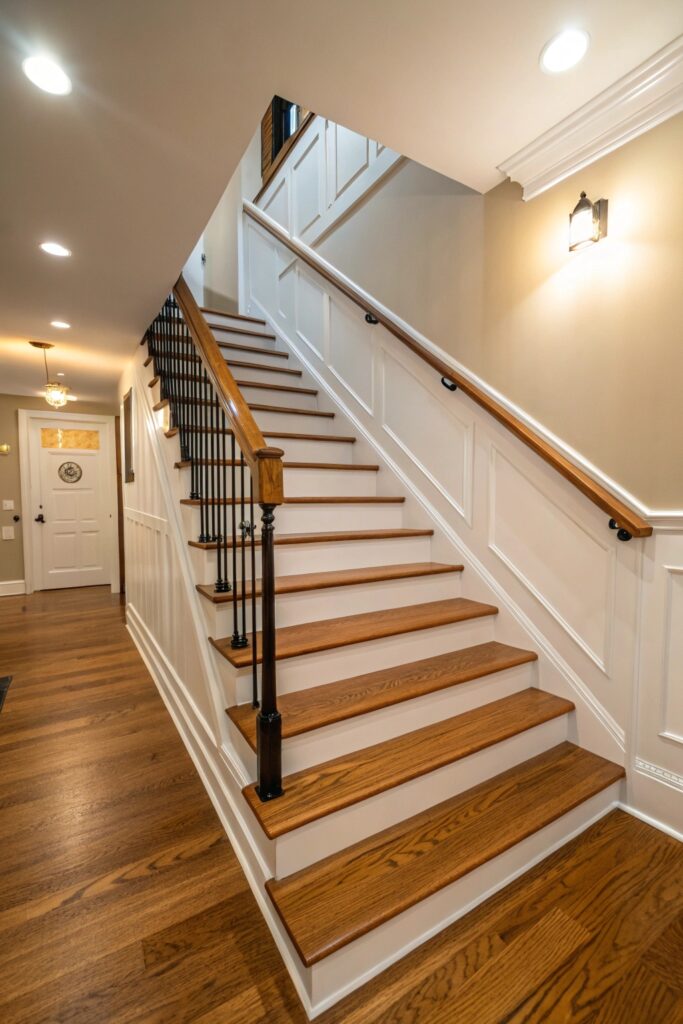
Confirm the genuine structural condition of existing treads before refinishing, since basement stairs sometimes have moisture-related wear that needs addressing first.
Confirm the existing subfloor is completely dry and free of active moisture issues before installing new hardwood, since trapped moisture can cause problems later.
5. Create an Accent Wall Along the Staircase
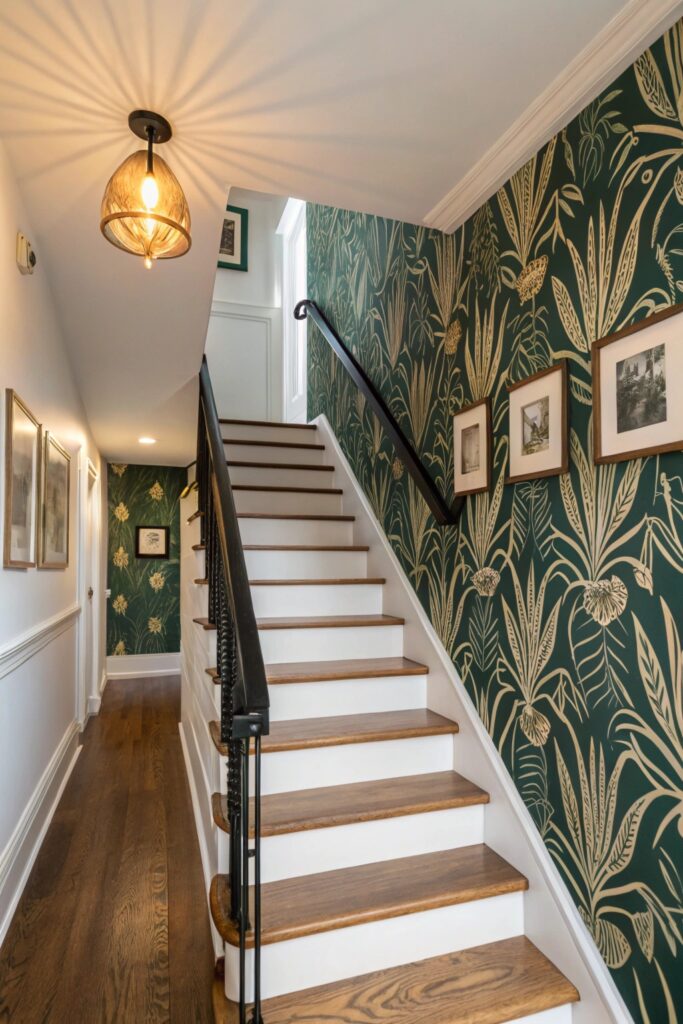
A bold color or wallpaper along this often-narrow wall adds visual interest to a space that’s typically left plain.
Test paint or wallpaper samples in the stairwell’s actual lighting, since this space often has different lighting conditions than the rooms it connects.
6. Add Open Riser Design for a Modern Look
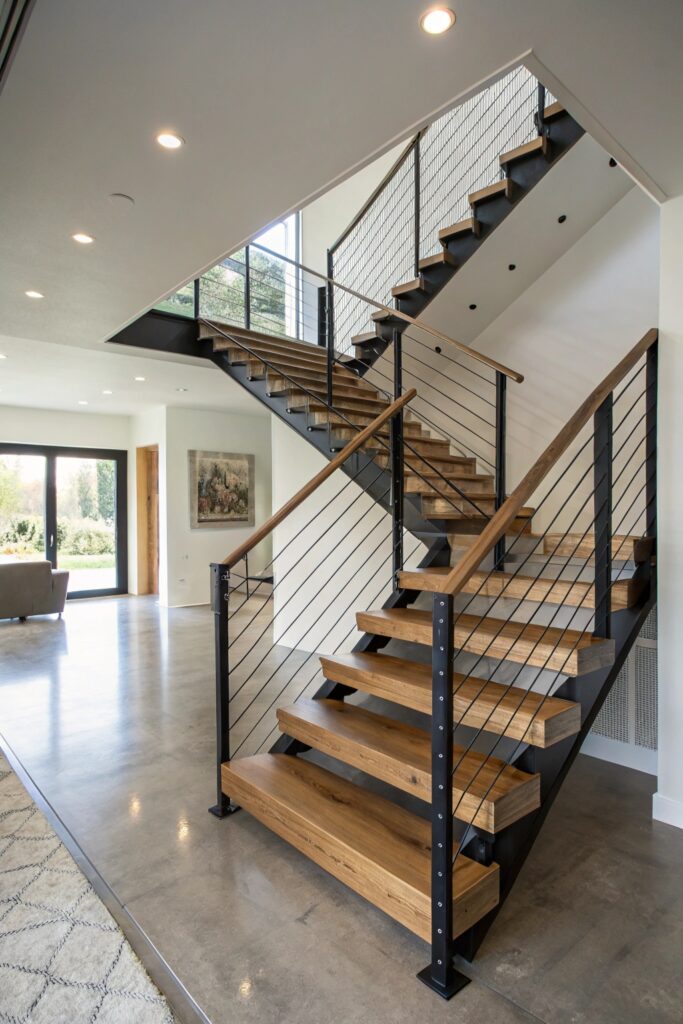
Confirm your local building code allows open risers before committing to this look, since some codes restrict the maximum gap size specifically for safety reasons.
Check with your local building department specifically for current code requirements, since open riser rules vary by location and can affect resale considerations too.
7. Install a Statement Handrail
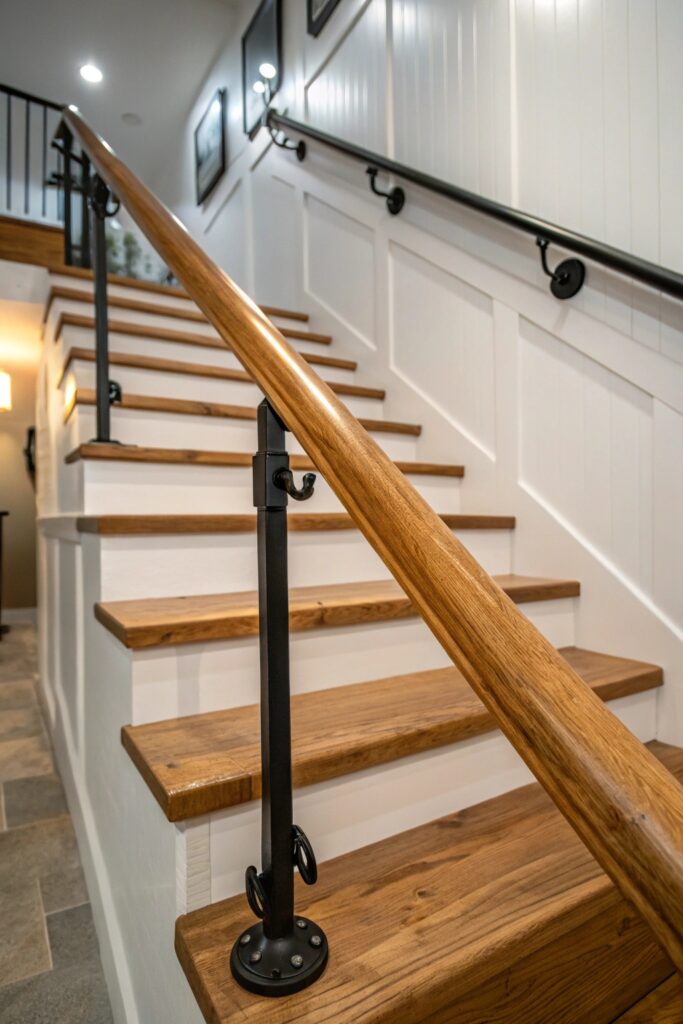
A sturdy, code-compliant handrail matters for real safety, so prioritize function alongside style when choosing a design here.
Choose a handrail height and diameter that meets current code minimums, which is worth confirming before finalizing a specific design.
8. Use Tile on the Stair Risers
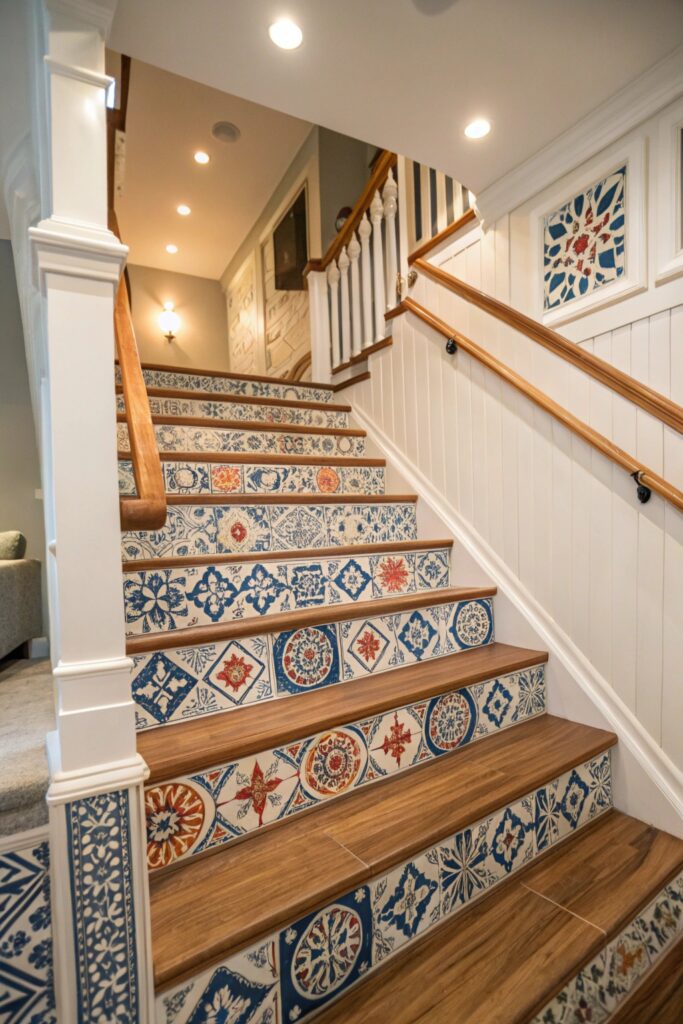
Choose a tile with texture or a matte finish specifically for risers, since a glossy surface can be more slippery underfoot.
Seal grout lines well on riser tile, since this vertical surface still faces regular contact from feet and shoes.
9. Frame the Staircase with Built-In Storage
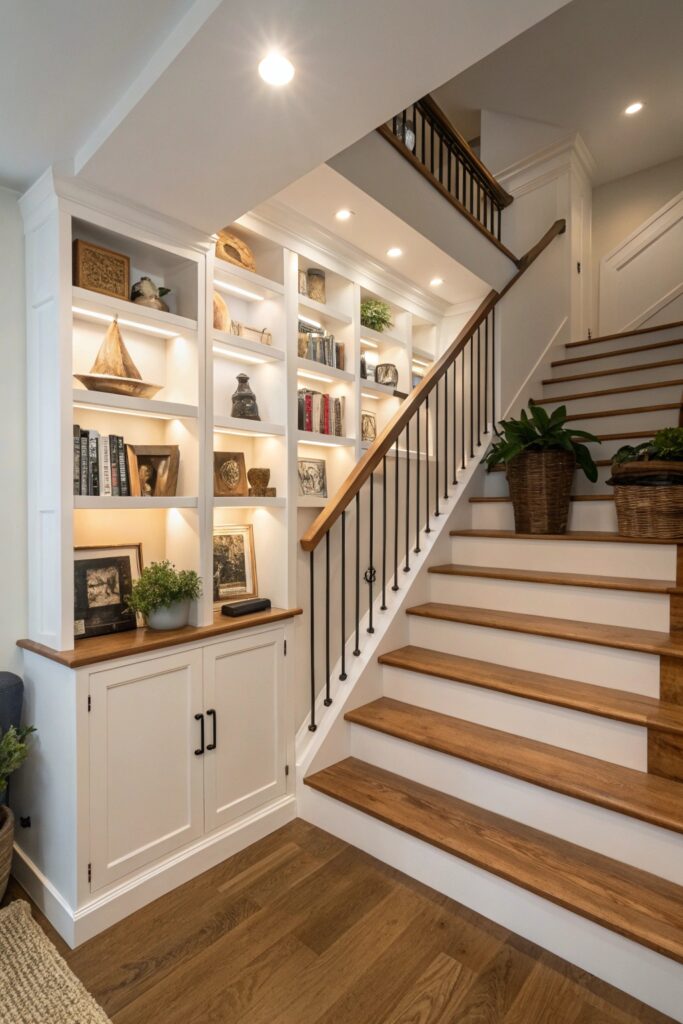
This makes efficient use of the awkward triangular space beneath most staircases, which often goes completely unused otherwise.
Measure the available space carefully before ordering any built-in storage components, since under-stair areas are often more irregularly shaped than they initially appear.
10. Paint the Entire Stairwell a Deep, Dramatic Color
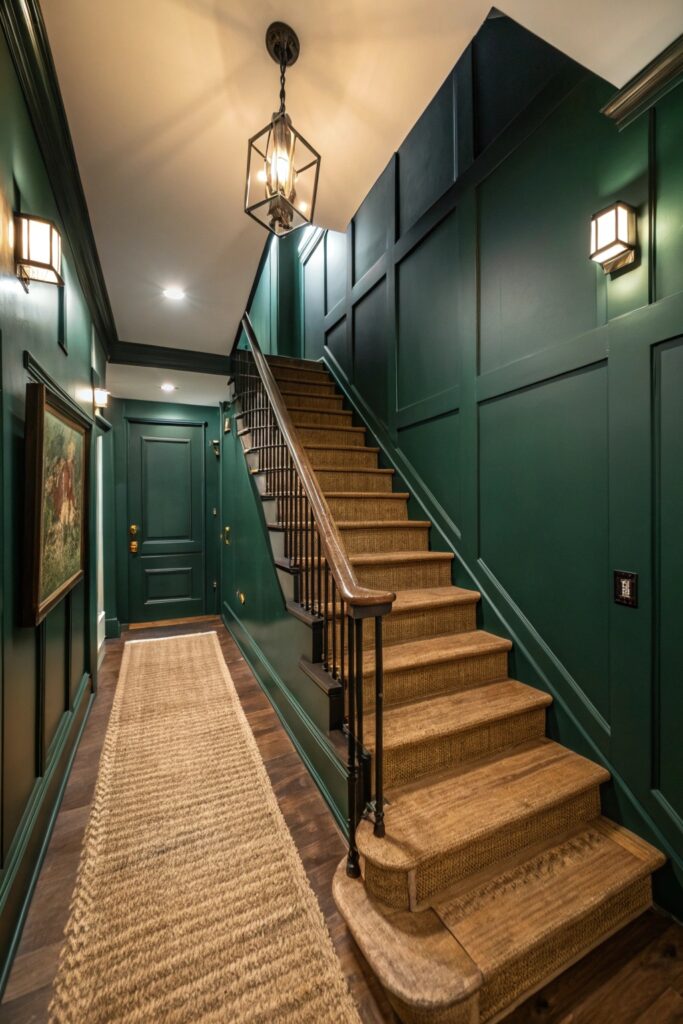
This works best paired with adequate lighting, since a fully dark stairwell without enough light sources can feel more cave-like than intentional.
Addressing Moisture Before Anything Else
Basements face more moisture exposure than upper floors, so it’s worth confirming the staircase area is dry and free of ongoing issues before investing in materials like hardwood or wallpaper that moisture can damage.
A dehumidifier or improved ventilation nearby is worth considering first if you’ve noticed any dampness, since addressing this protects whatever update you choose to make afterward.
What These Updates Cost
Smaller updates like paint or a runner typically cost $100 to $400.
Larger projects like hardwood tread replacement or built-in storage run considerably higher, often $1,000 to $4,000 depending on materials and whether the work is DIY or hired out.
Get Quotes Before Structural Changes
Get quotes from at least two contractors before committing to any structural change, like open risers or a full tread replacement, since labor costs for this kind of work vary considerably based on your home’s specific staircase construction.
A contractor can also confirm whether your specific staircase can support the changes you’re considering, which is worth knowing before purchasing any materials.
Consider how this space connects visually to both the upper floor and the basement itself, since a staircase update looks more cohesive when it bridges the two areas rather than feeling like a disconnected transition zone.
Secondhand and salvage sources are worth checking specifically for a statement handrail or unique hardware, since older pieces often carry genuine character that new reproductions take more effort to replicate.
Start with a smaller, lower-cost change like paint or lighting if you’re unsure how much to invest in this space, since it’s easier to gauge the impact before committing to a larger structural project.
Take before and after photos of the staircase, since this transformed space is one of the more satisfying small-scale projects to look back on once the update is complete.
Whatever combination you choose, view the finished staircase from both the top and bottom, since a detail that reads well from one direction can look considerably different from the opposite vantage point, and it’s worth confirming both views feel intentional.
A well-updated basement staircase changes how the whole lower level feels, since this transition space sets expectations for what’s waiting below before anyone even reaches the bottom step.
Take your time with this project, since a well-executed staircase update rewards patience over rushing to finish quickly.
Choosing Slip-Resistant Finishes
Basement stairs see more moisture and temperature swings than stairs elsewhere in the home, so any finish choice should account for slip resistance, not just appearance.
Textured stair treads, a rubber-backed runner, or a matte rather than high-gloss paint finish all reduce slip risk meaningfully, which matters more on a steep or frequently-used basement staircase than it might elsewhere.
A staircase that’s both safe and stylish makes the whole basement feel like a natural extension of the home rather than an afterthought.
Final Thoughts
Once the stairs are done, see our guides to unfinished basement ideas for the room below and stair railing ideas for more on the handrail specifically.
Lighting matters more on basement stairs than almost anywhere else in the home, given how much less natural light this space typically receives. Safety and code compliance should take priority over any purely aesthetic choice, especially for structural changes like open risers or a new handrail.