
Choosing a cohesive exterior color palette makes the biggest visual difference in curb appeal, more than almost any other single home improvement.
Below are 12 palettes worth considering, with practical notes for each. Always test paint samples on your actual home’s exterior before committing to a full repaint.
Looking specifically for the schemes that tend to perform best for curb appeal and resale? See our companion guide to best exterior color schemes for curb appeal.
Specifically drawn to dark blue? See our companion guide to dark blue house exterior ideas.
1. Classic White and Black
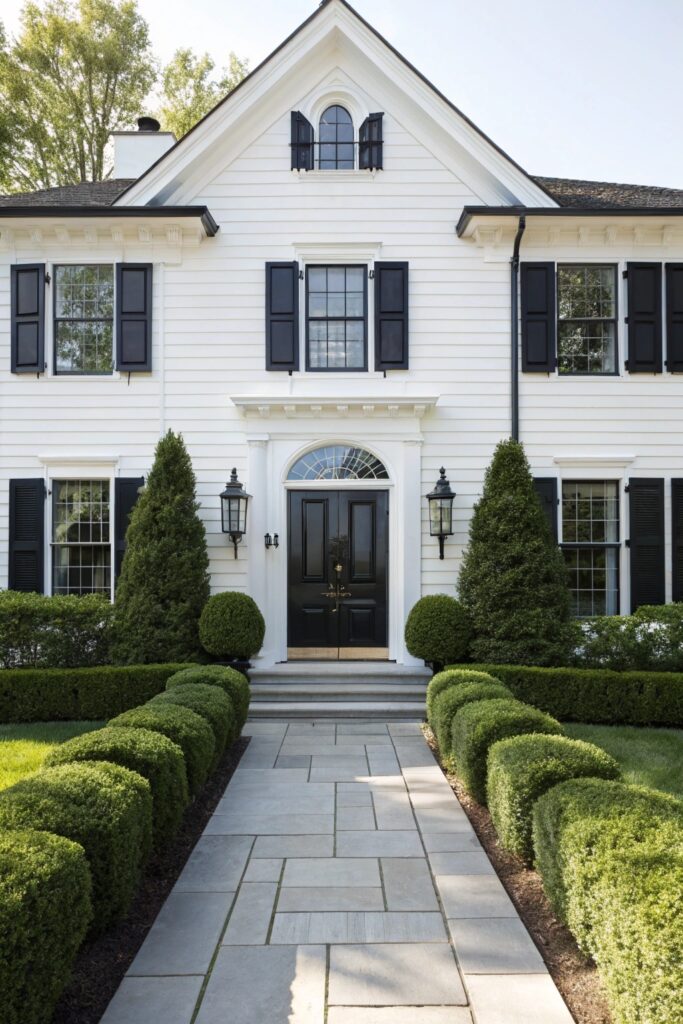
This timeless combination works across a wide range of architectural styles, from traditional to modern, without looking dated.
Choose high-quality exterior paint specifically rated for your climate, since UV exposure and temperature swings affect black and white finishes differently than lighter colors.
2. Warm Greige and White Trim
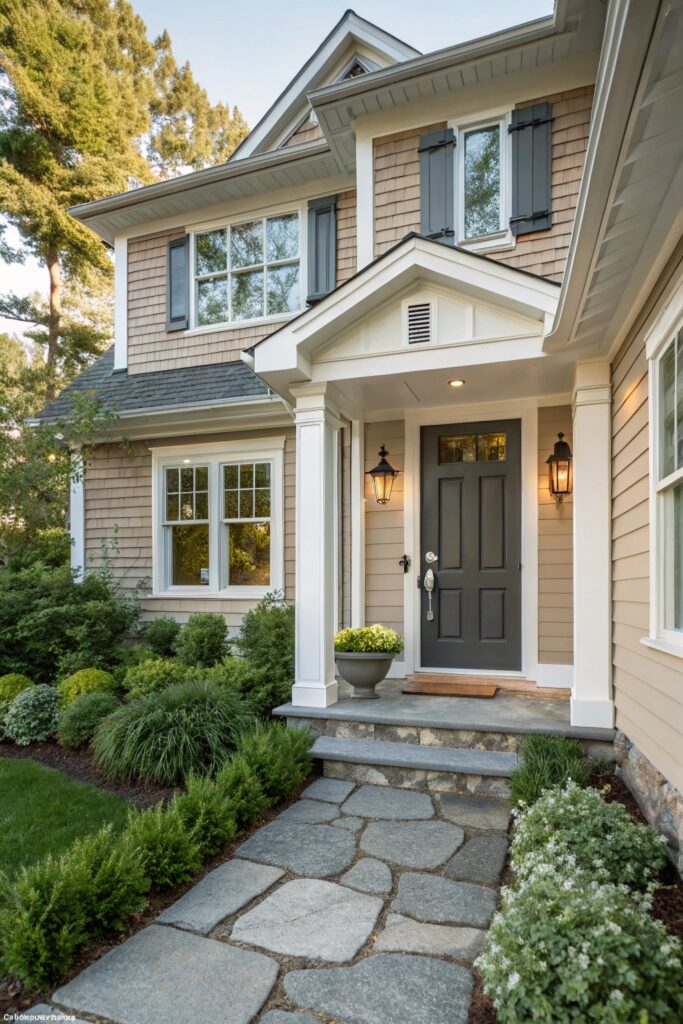
Testing this color in your actual outdoor lighting matters, since greige can shift warmer or cooler depending on the specific undertones and sun exposure.
Choose a matte or eggshell finish for the siding, which hides minor surface imperfections better than a glossier finish would.
3. Navy Blue and Crisp White
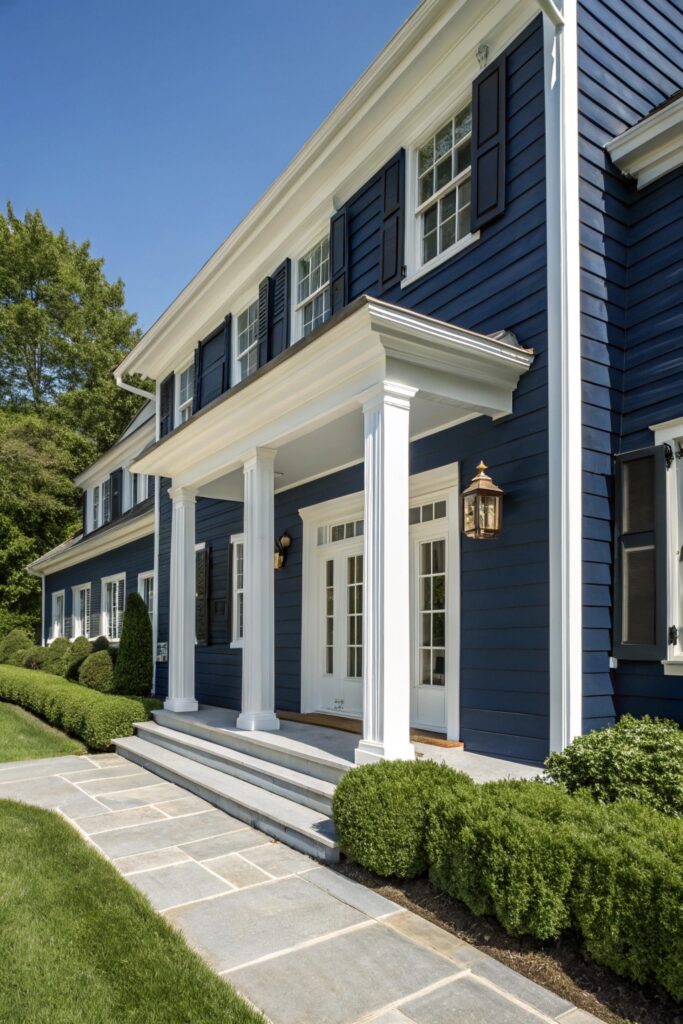
A deep navy reads as more sophisticated than a brighter blue, working especially well on traditional or coastal-style homes.
Choose durable, weather-resistant paint for the darker navy specifically, since deeper colors tend to fade faster under prolonged sun exposure than lighter ones.
4. Sage Green and Warm Wood Accents
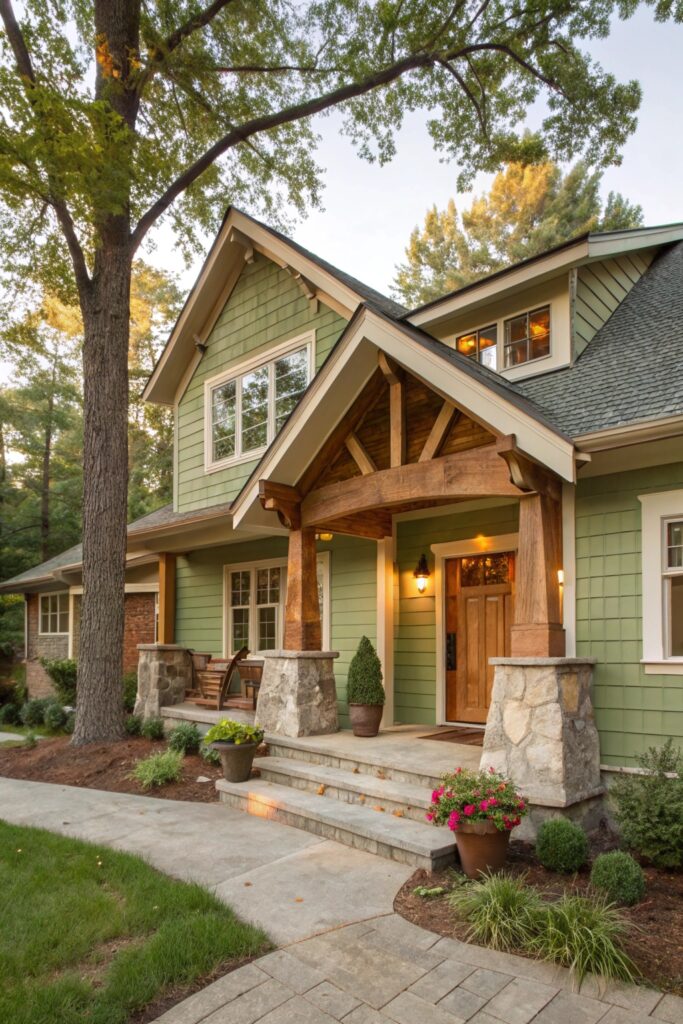
This soft, muted green pairs naturally with the surrounding landscape, working particularly well on homes with mature trees or garden beds.
Choose fade-resistant paint for this softer color, since muted greens can shift noticeably over a few years without adequate UV protection.
5. Charcoal Grey and Bold Front Door
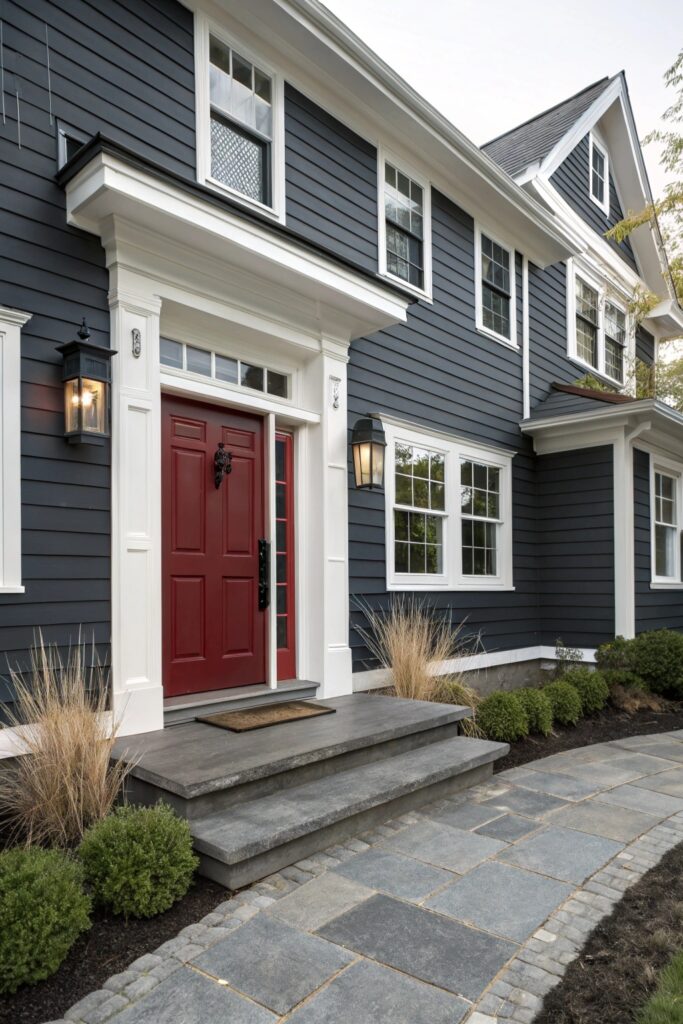
A vibrant door color against the darker body creates a clear focal point that draws the eye toward the entrance.
Choose a durable exterior door paint or stain specifically, since this surface sees more direct handling and weather exposure than the rest of the home.
6. Soft Blue and White Coastal Palette
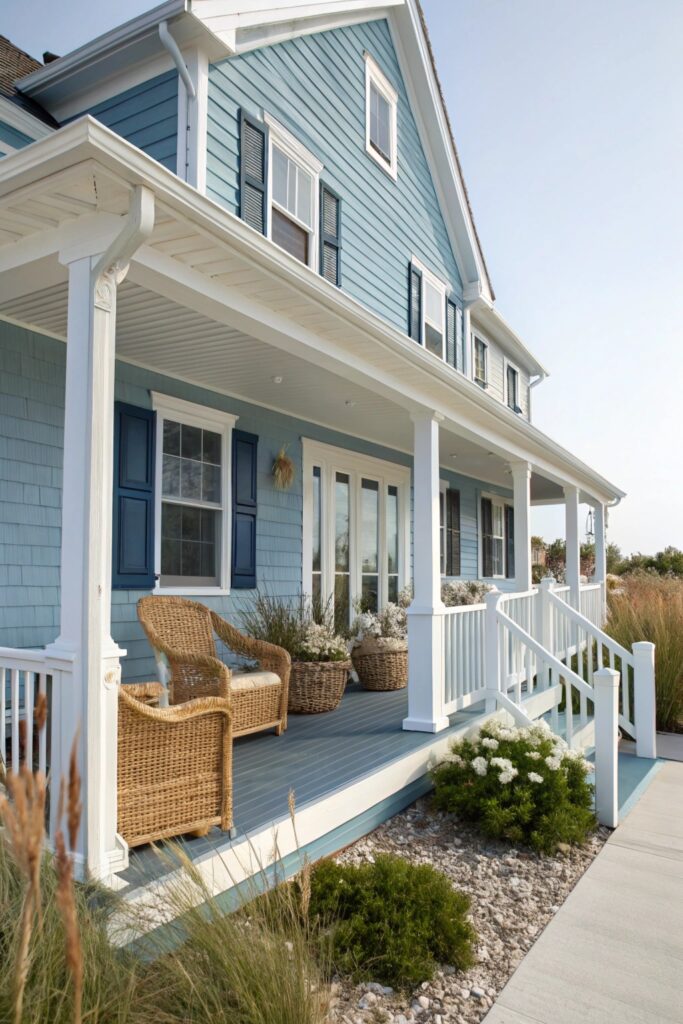
This light, airy combination suits coastal and cottage-style homes especially well, though it works in inland settings too.
Choose marine-grade or UV-resistant paint if your home is in a coastal environment specifically, since salt air accelerates wear on standard exterior paint.
7. Earthy Terracotta and Cream
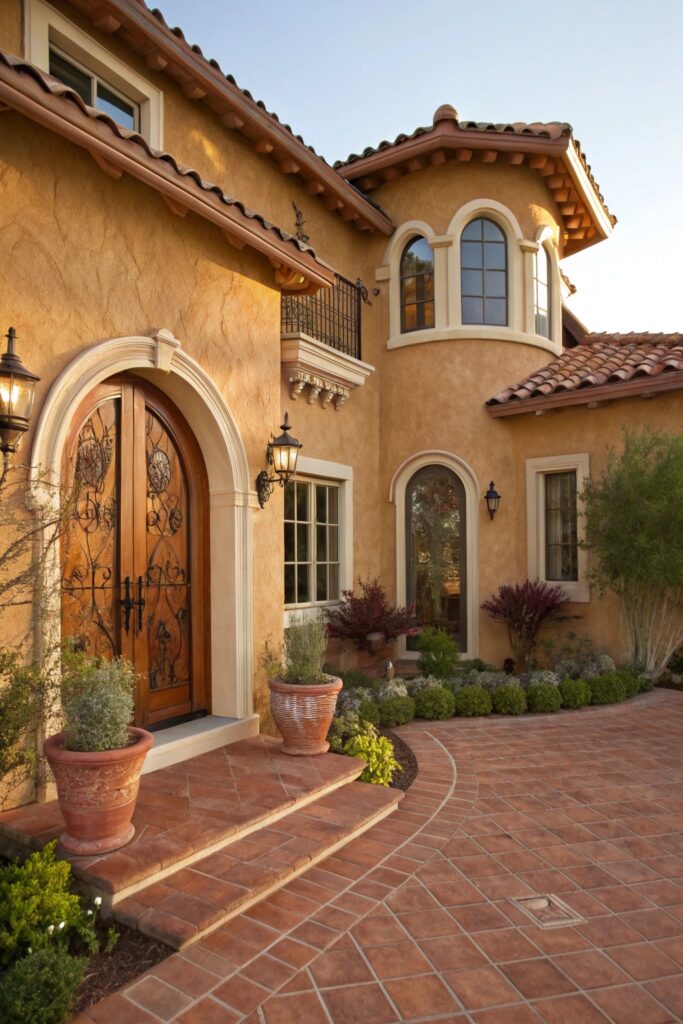
Warm terracotta tones suit homes with Mediterranean or Southwestern architectural influences particularly well.
Test how this warmer palette looks against your actual roof color, since terracotta can clash with certain roofing materials or shingle colors.
8. Black and Natural Wood Modern Farmhouse
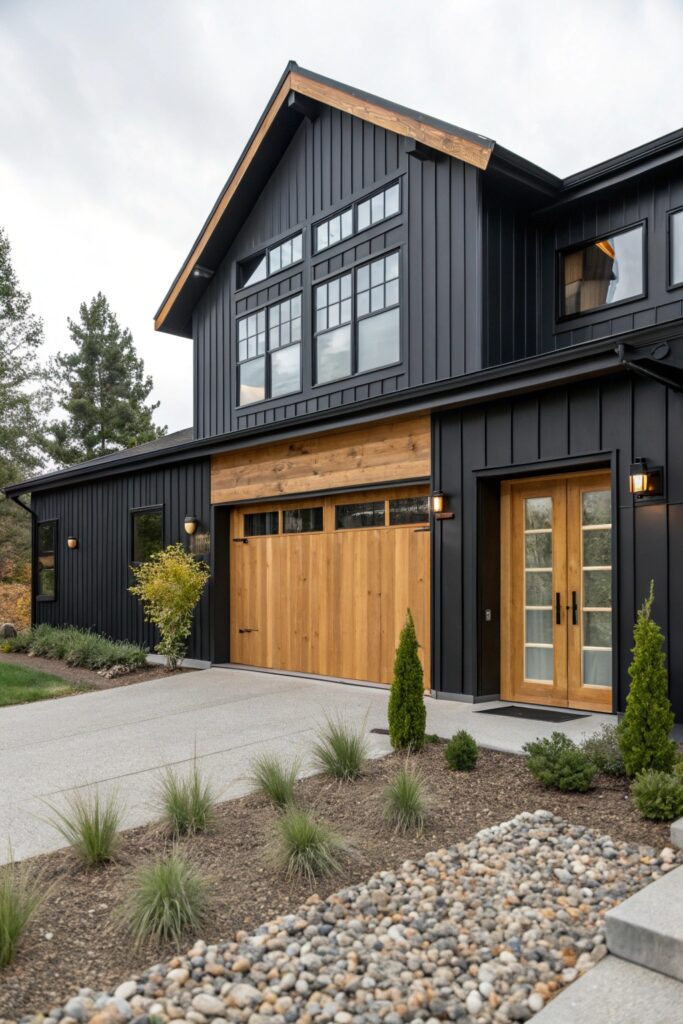
This popular combination pairs matte black siding or trim with warm, natural wood accents for contrast.
Choose real or convincing faux wood accents, since a mismatched wood tone can undercut this otherwise cohesive palette.
9. Dusty Lavender and Soft Grey
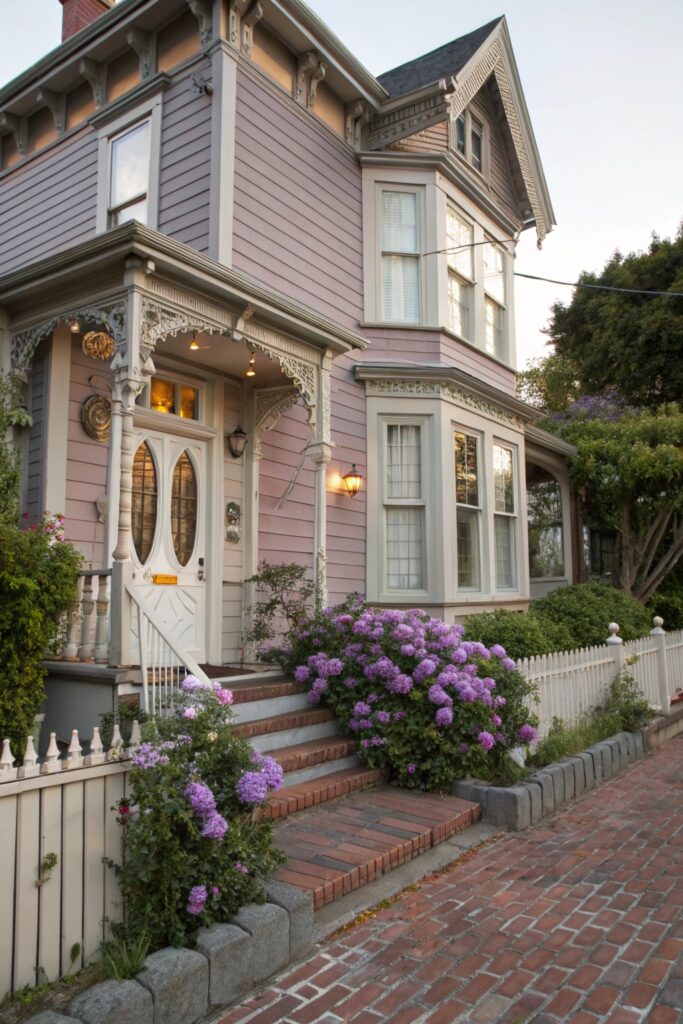
A muted, desaturated lavender reads as considerably more sophisticated than a brighter purple, avoiding an overly playful look.
Test this muted color at different times of day, since lavender tones can shift more noticeably under different lighting than more neutral colors.
10. Forest Green and Black Trim
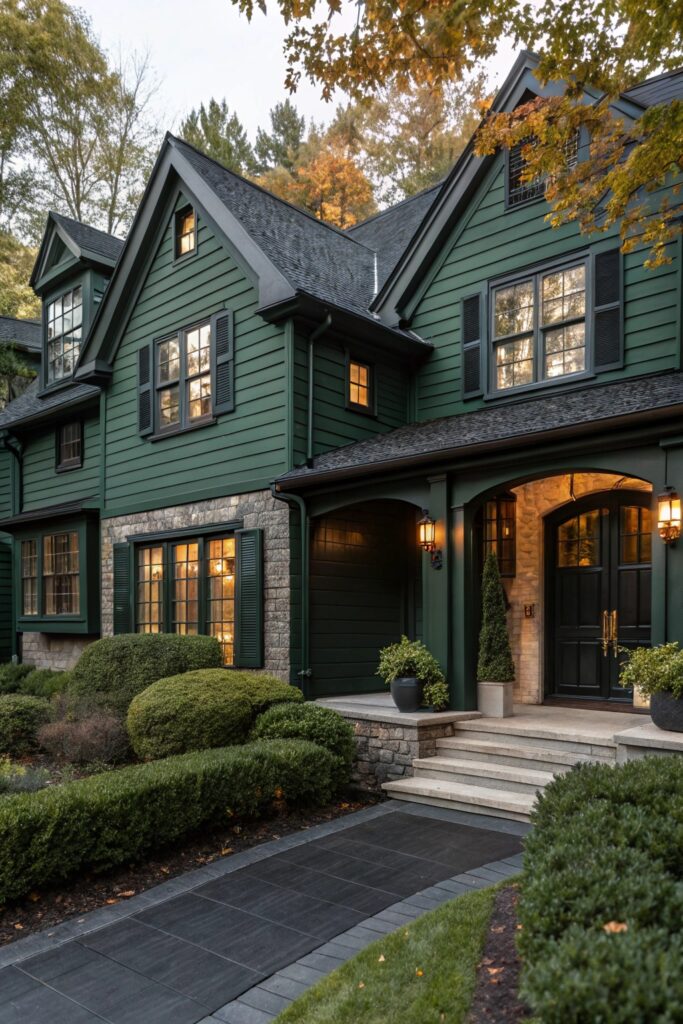
This deep, rich green works especially well on homes surrounded by trees, helping the structure blend naturally with its setting.
Choose fade-resistant paint specifically for this darker green, since deep colors in direct sun exposure tend to show wear faster than lighter tones.
11. Warm Tan and Brick Red Accents
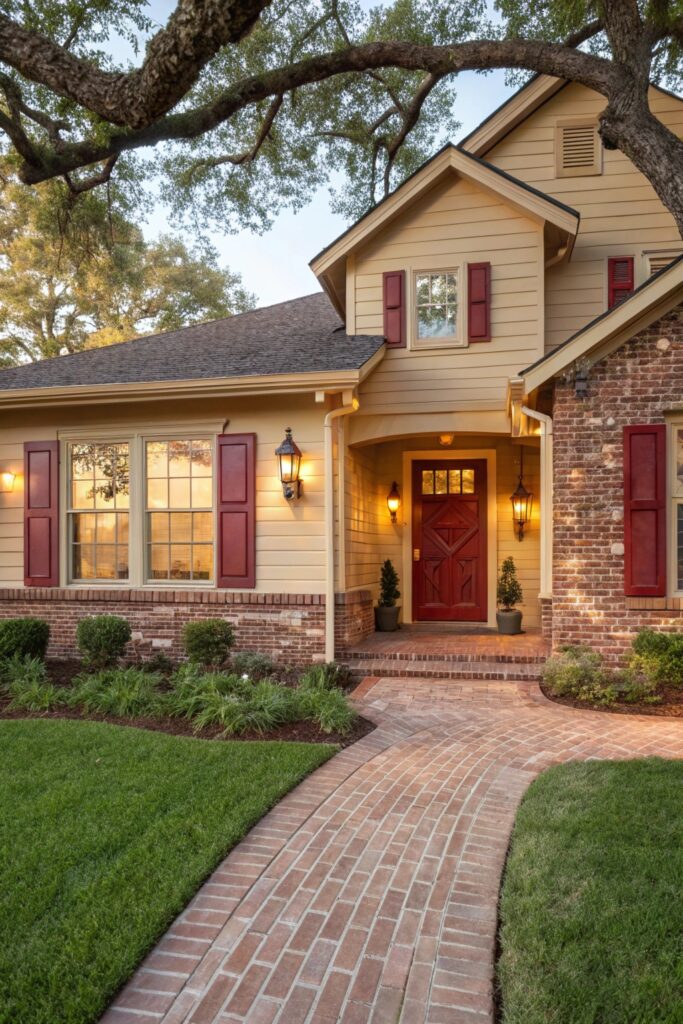
Pairing this palette with existing brick or stone elements on the home creates a more cohesive overall look than clashing tones.
Choose coordinating brick or stone tones if your home already has these elements, rather than a tan that clashes with the existing masonry.
12. Two-Tone Grey — Light Body, Dark Trim
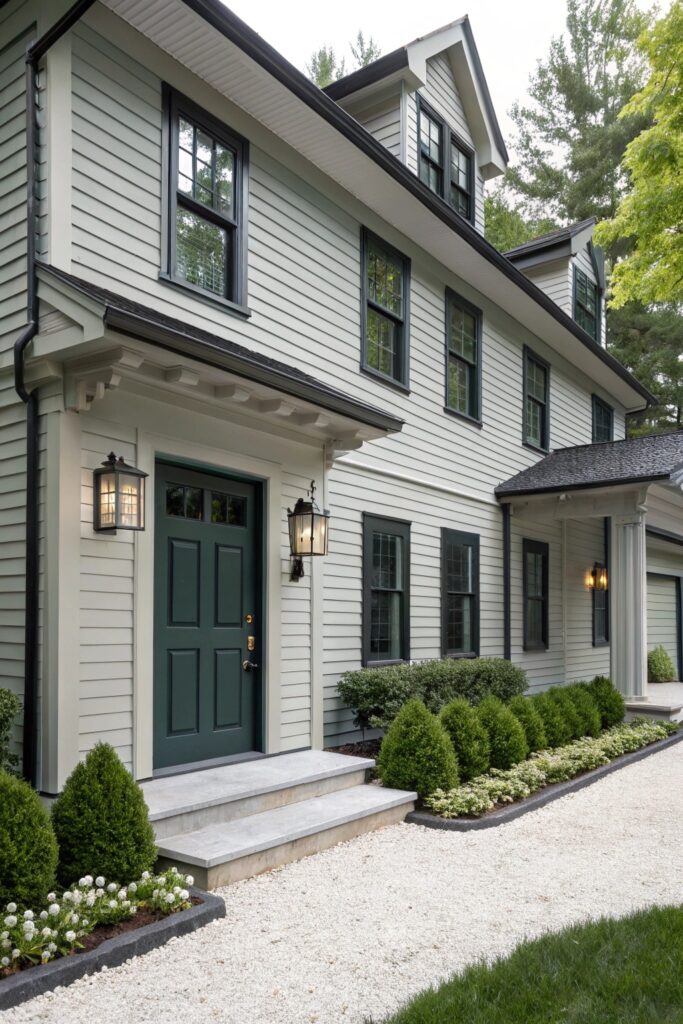
Varying grey tones between the body and trim adds dimension that a single flat grey color across the whole exterior doesn’t achieve.
Testing Colors Before You Commit
Painting a large sample swatch, at least a few feet wide, on multiple sides of your home lets you see how the color reads in both direct sun and shade throughout the day.
Viewing your samples at different times — morning, midday, evening — before making a final decision helps avoid the disappointment of a color that looked right at the store but reads differently on your actual house.
What This Project Costs
A DIY exterior repaint typically costs $1,000 to $3,000 in materials for an average-sized home.
Hiring professional painters runs considerably higher, often $4,000 to $10,000 or more depending on your home’s size, siding material, and current condition.
Get quotes from at least two professional painters before committing to a full repaint, since labor costs vary considerably based on your home’s specific size, siding material, and surface preparation needed.
Check with your homeowners association if applicable before finalizing any exterior color choice, since some communities have specific restrictions or approval processes for repainting.
Consider looking at neighboring homes and the overall street before finalizing your choice, since a color that looks great in isolation can clash or blend awkwardly depending on what surrounds it.
Take photos of your test swatches at different times of day, since it’s easier to compare options side by side later than to rely on memory once you’re actually standing in front of the paint aisle again.
A well-chosen exterior palette can also add real resale value to a home, since curb appeal is often one of the first things prospective buyers notice, well before they step through the front door.
Whatever palette you choose, a fresh exterior paint job remains one of the more cost-effective ways to transform how a home looks and feels from the outside, both for your own enjoyment and for anyone driving by.
Final Thoughts
Testing colors at different times of day matters more for exterior paint than interior, since natural light shifts considerably more outdoors and can change how a color reads throughout the day. Consider your home’s fixed elements — roof color, brick, stone — when choosing a palette, since these can’t be easily changed and should guide your paint color choices.