
Dorm room decorating comes with a genuine constraint most other living situations don’t have — walls that need to return to their original, undamaged condition at the end of the year, which is why damage-free hanging methods matter more here than almost anywhere else.
Below are 11 ways to add personality to a dorm wall without risking your deposit, with real costs and practical notes for each.
1. Command Strips Gallery Wall
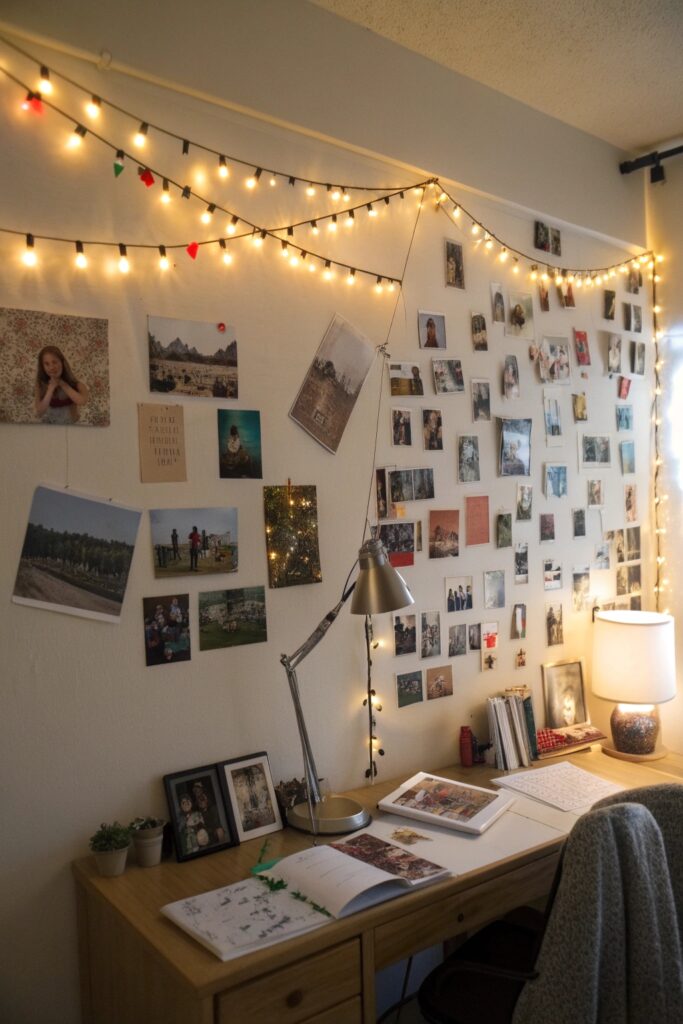
Command strips ($8-15 for a multi-pack) let you hang framed art or posters without any drilling, and they’re specifically rated to remove cleanly without damaging paint, which matters directly for security deposit return.
Choose strips rated for the actual weight of your frame before hanging, since an underrated strip is the most common reason command-strip installations fail over time.
2. Washi Tape Designs
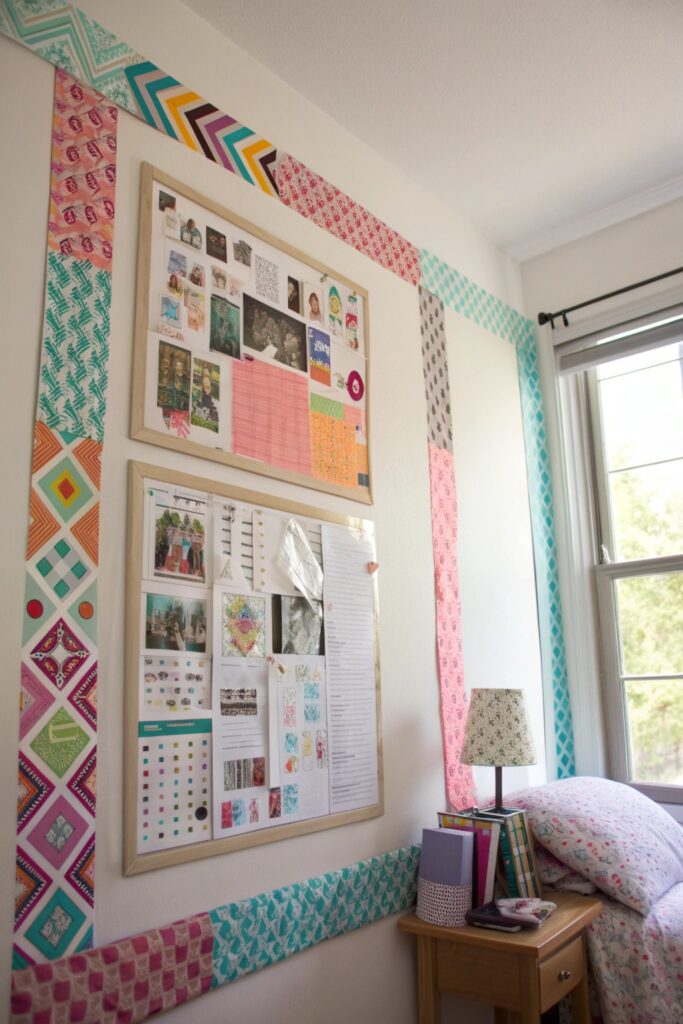
Decorative washi tape ($5-15 per roll) can create geometric patterns, borders, or even a faux headboard shape directly on the wall, and it removes cleanly without adhesive residue.
Test a small piece in an inconspicuous spot first to confirm the tape removes cleanly from your specific wall’s paint finish, since some older or textured paint can react differently than a standard smooth finish.
3. Fabric or Tapestry Backdrop
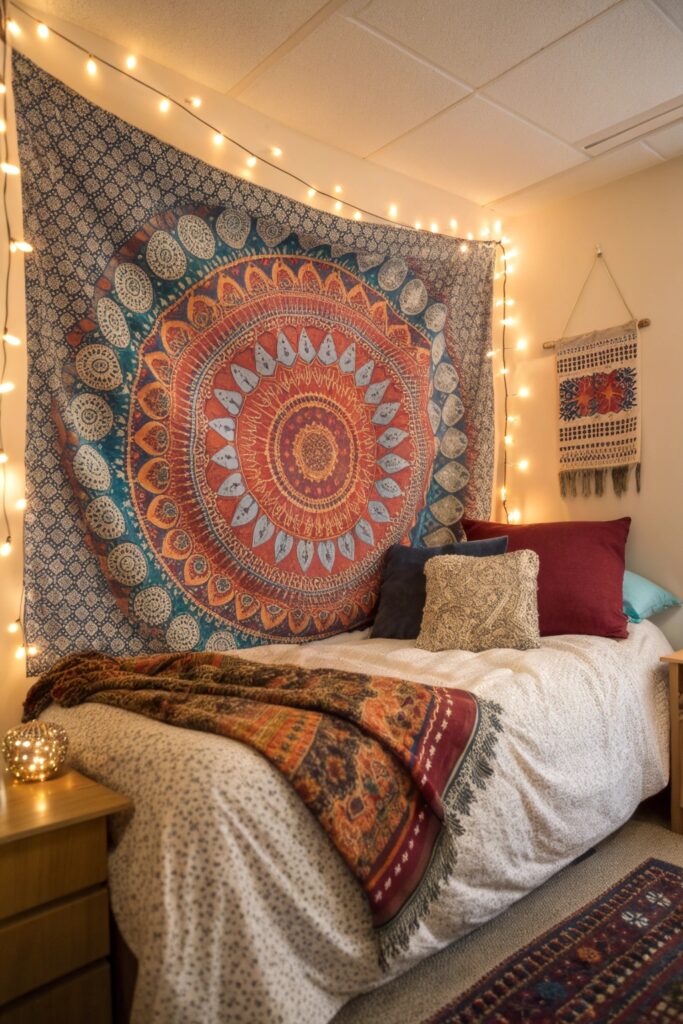
A large tapestry ($20-40) covers significant wall area with a single purchase, using removable hooks or tension rods rather than requiring any wall penetration.
Choose a tapestry in a fabric that resists wrinkling during storage, since you’ll likely be packing and unpacking it at least once between semesters.
4. Removable Wall Decals
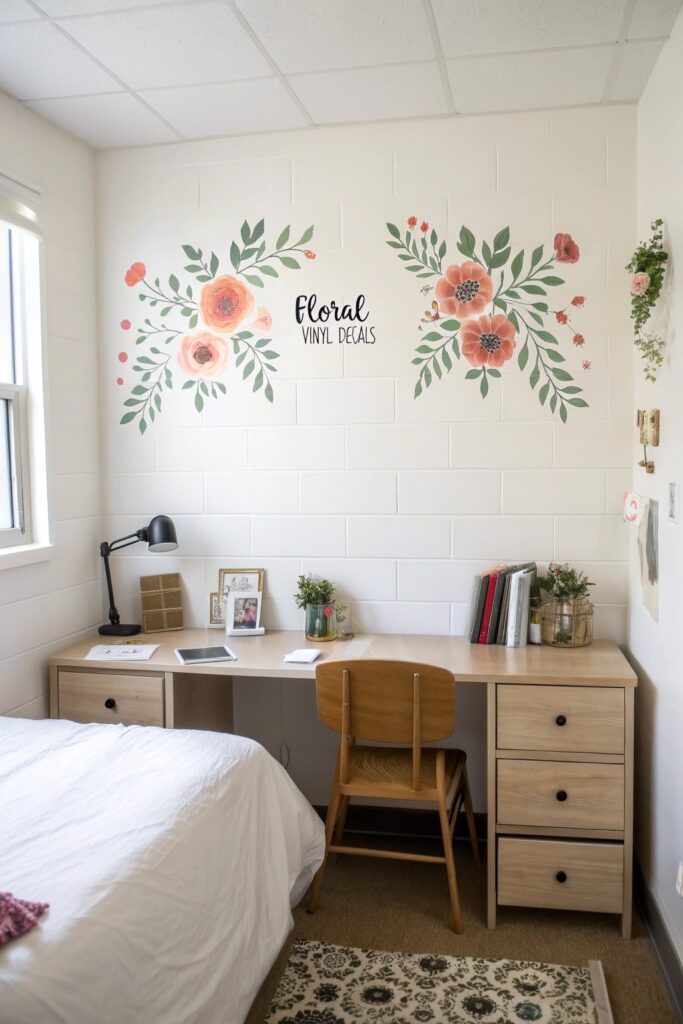
Vinyl decals ($10-25) apply and remove without residue, offering pattern or graphic options that painted walls or hung art can’t easily replicate in a temporary space.
Avoid applying decals to freshly painted walls, since paint typically needs several weeks to fully cure before adhesive products will remove cleanly without pulling paint with them.
5. String Lights on Removable Hooks
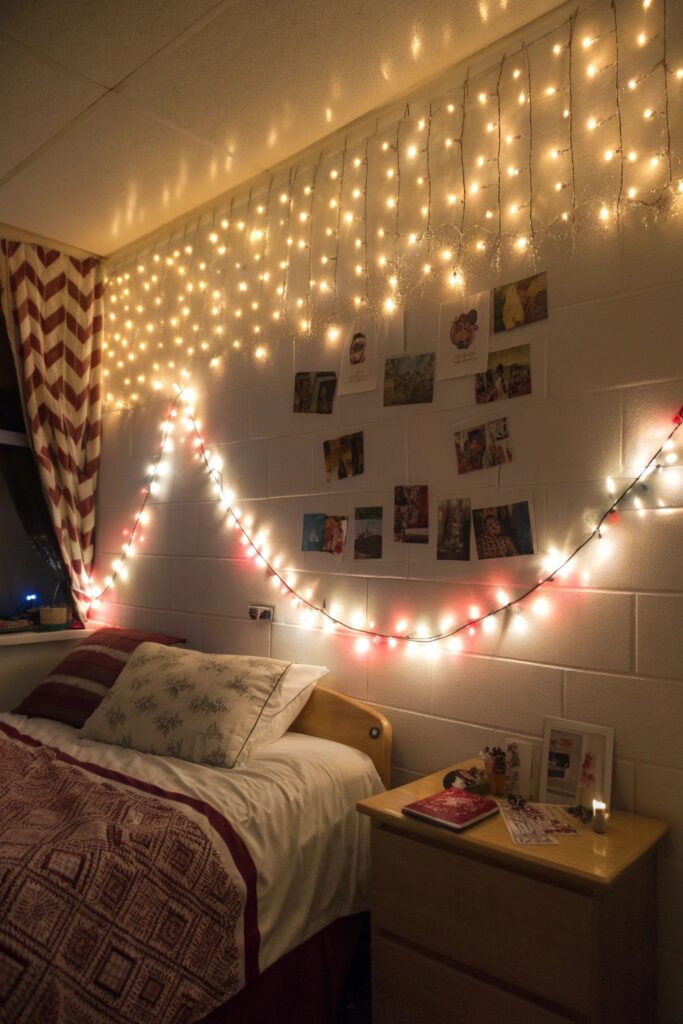
String lights hung using command hooks ($8-15) add ambient evening lighting beyond a dorm room’s typically harsh overhead fixture, without any permanent installation.
Battery-powered or USB-powered string lights avoid needing a specific outlet location, giving you more flexibility in exactly where you position them.
6. Corkboard or Pinboard Display
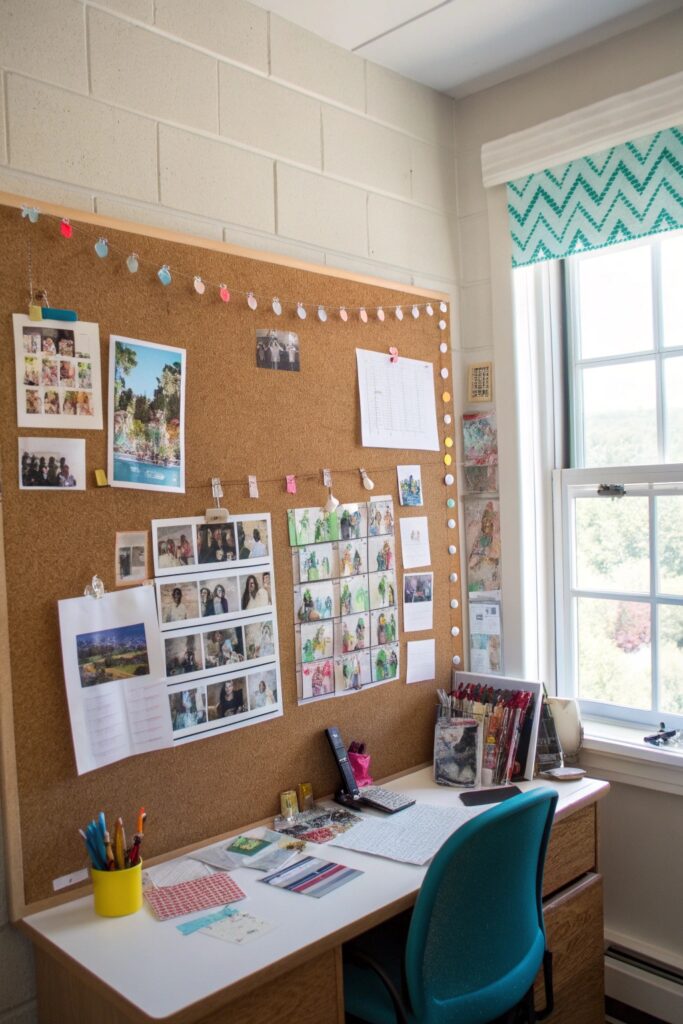
A corkboard ($15-30) mounted with removable adhesive strips provides a genuinely functional, reconfigurable display for photos, notes, and reminders that changes easily throughout the semester.
Choose a corkboard with a sturdy frame rather than a flimsy one, since thinner boards can warp or sag over a full year of regular use.
7. Poster Frames with Adjustable Clips
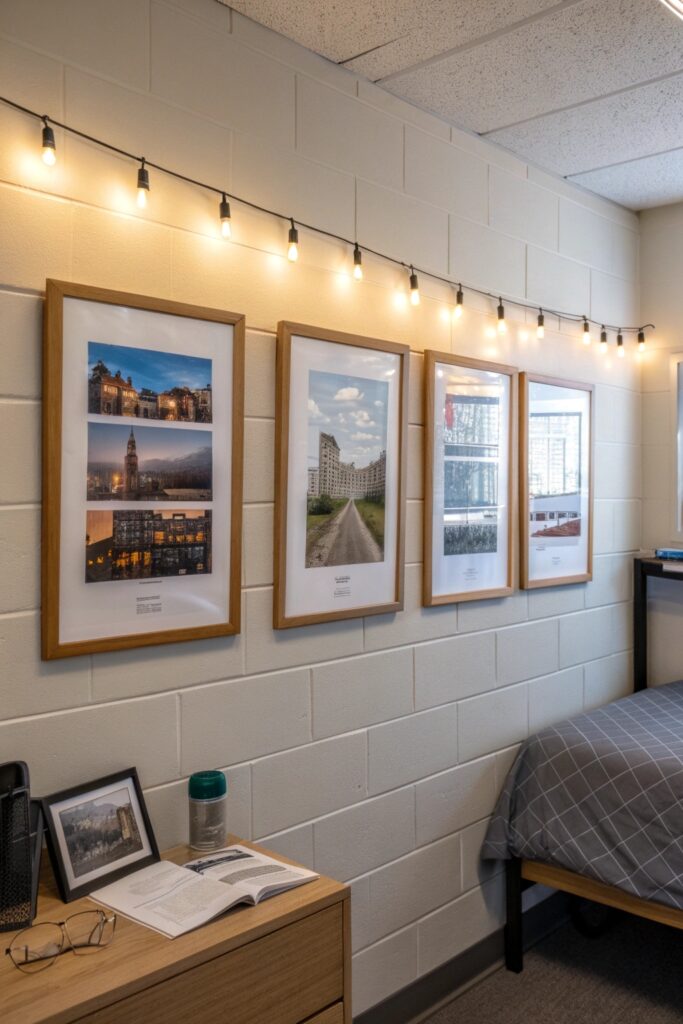
Clip frames ($10-20) hung on command hooks let you swap posters or prints without needing to buy a new frame for each piece, offering genuine flexibility for a rotating collection.
Look for frames with a genuinely secure clip mechanism, since a loose clip can let posters slip or fall, particularly with heavier paper stock.
8. Fairy Light Photo Display
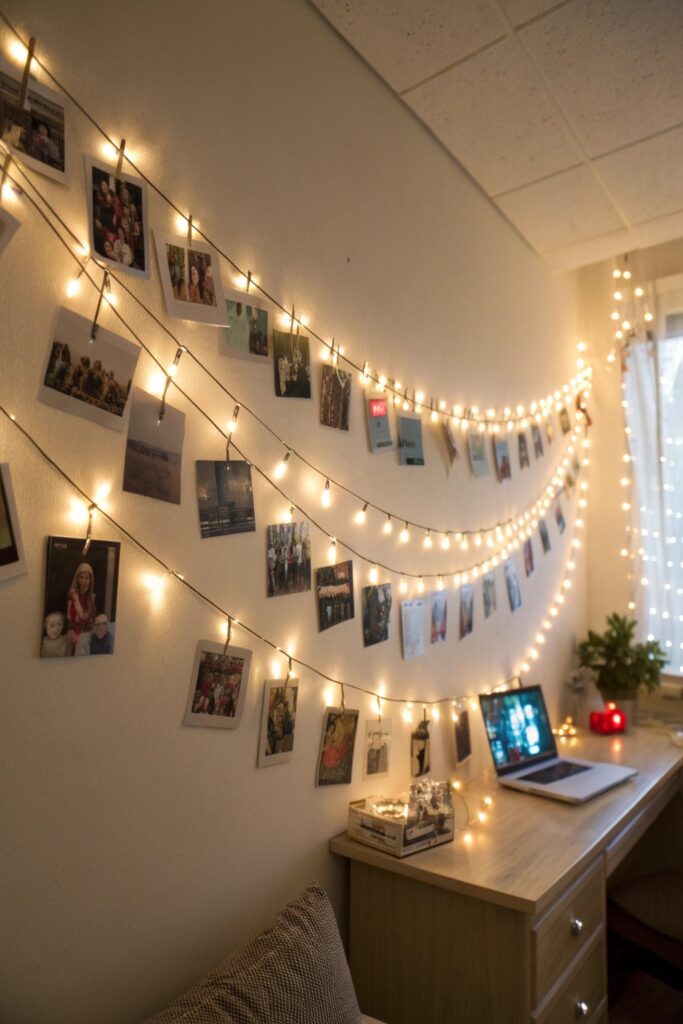
Photos clipped directly to a string of fairy lights ($10-20) combine a photo display with ambient lighting in one damage-free installation.
Use a sturdy clip type (not the thinnest paper clips) if photos will hang for an extended period, since lightweight clips can bend or lose grip over months of use.
9. Fabric Wall Hanging or Macramé
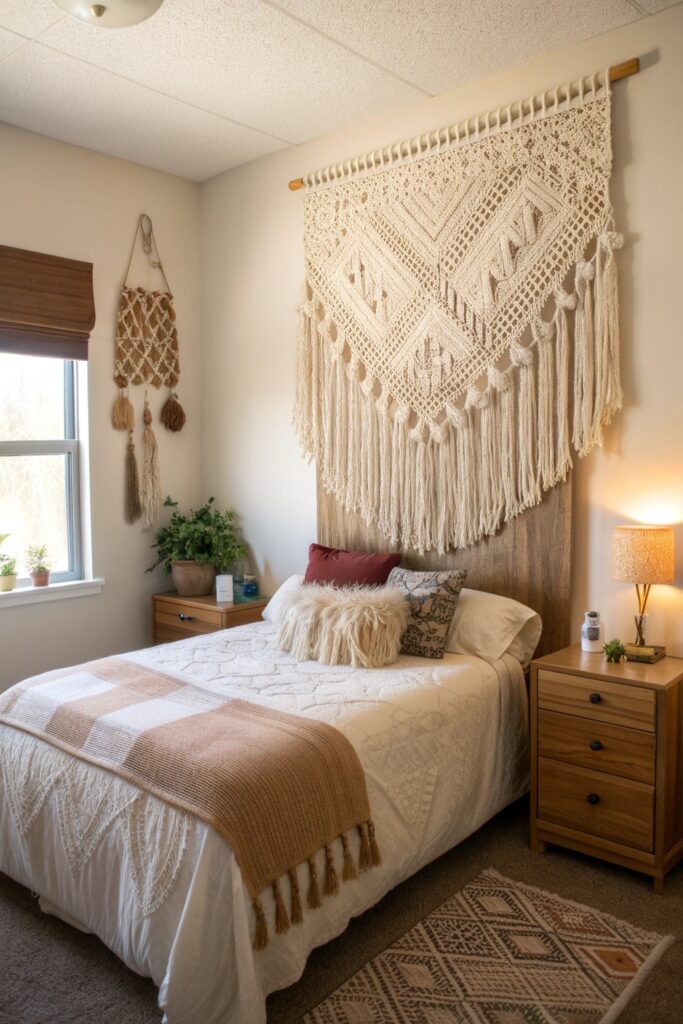
A macramé piece or fabric wall hanging ($15-35) adds handmade texture, working well hung from a single command hook rather than requiring multiple attachment points.
Check the specific weight rating before hanging anything substantial, and use more than one hook for larger or heavier pieces to distribute the load.
10. Magnetic or Whiteboard Paint Panels
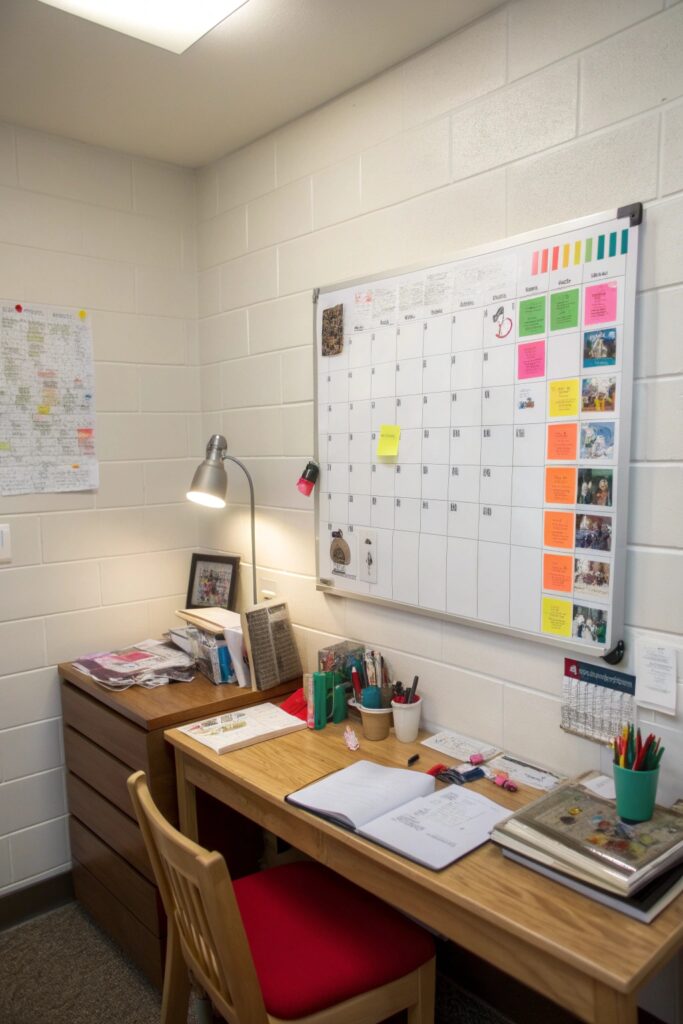
A freestanding magnetic or whiteboard panel (rather than paint applied directly to the wall) provides genuine functional display space without any permanent modification to the room itself.
A panel leaned against the wall or propped on a desk avoids needing any wall attachment at all, which is worth considering if your specific housing agreement is particularly strict about wall decorations.
11. Layered Rug or Fabric as Wall Art
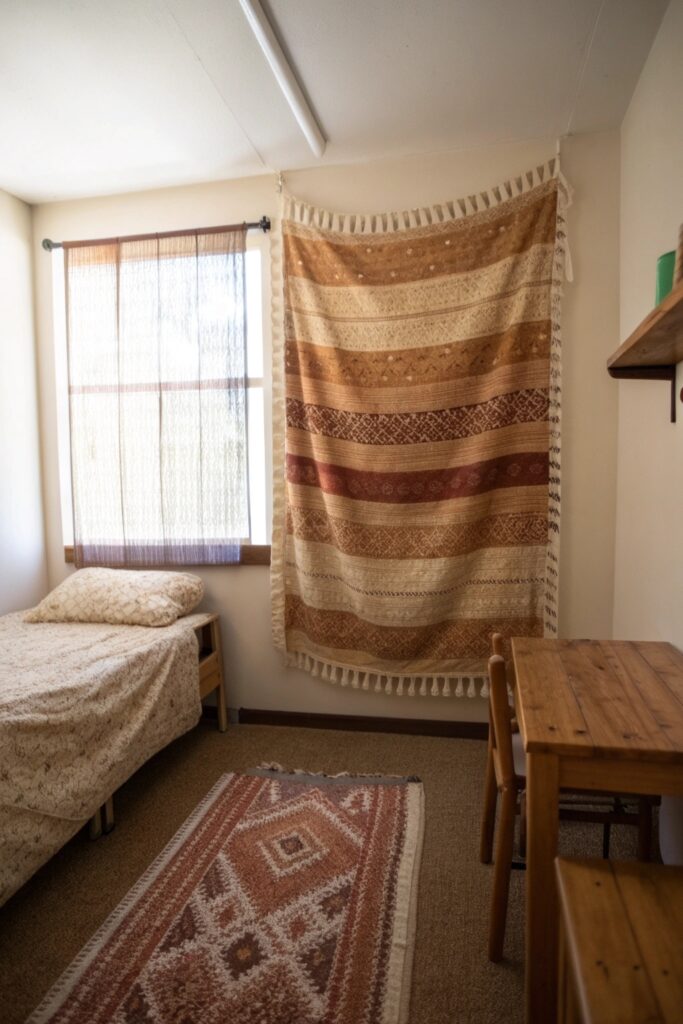
A smaller rug or textile hung as wall art, using a tension rod or command hooks, brings genuine texture and pattern that flat poster art doesn’t provide.
Choose a lightweight rug specifically for this purpose, since heavier rugs put more strain on whatever hanging method you’re using to keep it in place.
Checking Your Specific Housing Policy First
Every dorm and college housing agreement handles wall decoration policy slightly differently — some explicitly permit command strips and washi tape while restricting anything else, and others have broader restrictions that even damage-free methods can technically violate.
Reading the actual housing agreement or checking with your specific residence life office before decorating saves genuine hassle at move-out, since move-out damage charges are typically assessed against the deposit with limited room for dispute once they’ve already been applied.
If your specific housing situation restricts even removable methods more than expected, freestanding options — a corkboard on an easel, string lights draped over a bed frame rather than the wall — offer a genuine workaround that adds personality without touching the wall surface at all.
Final Thoughts
Command strips and removable hooks are worth treating as the default hanging method for genuinely everything in a dorm room, since the cost difference between damage-free and permanent hardware is minimal while the deposit risk is not. Check your specific housing agreement’s policy on wall decorations before committing to anything, since some dorms restrict even damage-free methods more than others.